


 English
 русский
 Español
 عربى
عربى

What Is Deep Drawing Process and What Are Deep-Drawn Parts The deep drawing process is a sheet metal forming operation in which a flat meta...
READ MORE

News
Home / Author / Chen Ruoxi — Overseas Product Sales Manager / Deep-Drawn Square Container with Cutouts for Strong, Clean, and Custom Metal Enclosures
Deep-Drawn Square Container with Cutouts for Strong, Clean, and Custom Metal Enclosures
2026-06-22
In modern metal component manufacturing, the demand for strong, lightweight, clean, and highly customizable parts continues to grow across industrial, appliance, automotive, electrical, and equipment assembly markets. The deep-drawn square container with cutouts is designed to meet this demand by combining seamless deep-drawing technology with precision opening customization. Unlike welded boxes, assembled sheet metal housings, or multi-piece fabricated containers, this product is formed from metal into a continuous, one-piece structure that provides superior strength, dimensional consistency, surface smoothness, and production reliability.
This deep-drawn square container belongs to the category of deep-drawn parts and is suitable for applications where structural rigidity, clean appearance, easy maintenance, and custom functional openings are important. Its square container shape makes it practical for installation, integration, storage, protection, drainage, ventilation, wiring, mounting, and mechanical assembly. Its cutouts can be adapted according to customer drawings, functional requirements, equipment layouts, and downstream assembly needs.
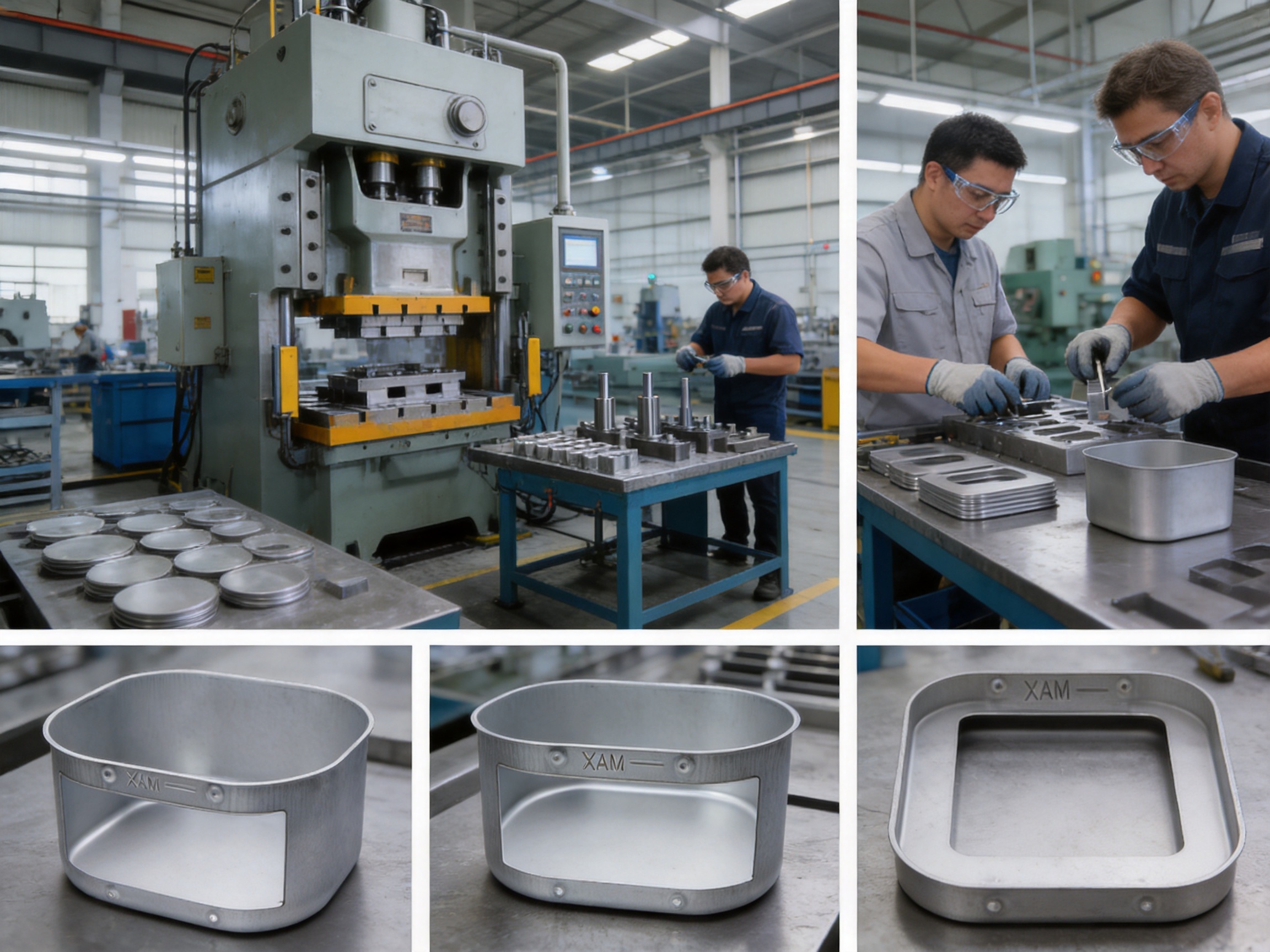
Deep drawing is a highly technical metal forming process. It uses a punch, die, blank holder, and controlled press force to transform flat metal sheet into a three-dimensional part. When performed correctly, deep drawing can produce parts with smooth corners, consistent wall thickness, reduced seams, and excellent repeatability. For square containers, the process is more demanding than simple round drawing because material flow must be controlled at corners and side walls to prevent wrinkling, tearing, uneven thickness, or springback. The ability to manufacture this kind of square deep-drawn container reflects a strong understanding of tooling design, material behavior, press operation, and quality control.
Yuyao Hongli Optoelectronics Co., Ltd. manufactures this product with more than 20 years of experience in metal stamping, deep-drawn parts, bending parts, kitchen appliance accessories, automotive stamping parts, hardware products, household appliance components, and related customized metal products. Located in Yangming Science and Technology Industrial Park, Yuyao City, Zhejiang Province, China, the company operates a 5,000-square-meter modern factory with multiple stamping workshops, more than 60 employees, and established manufacturing capabilities for OEM and ODM projects. Its background in educational instruments, optical instruments, home appliance parts, auto parts, plastic products, and metal components gives it broad experience in precision, appearance, durability, and practical assembly performance.
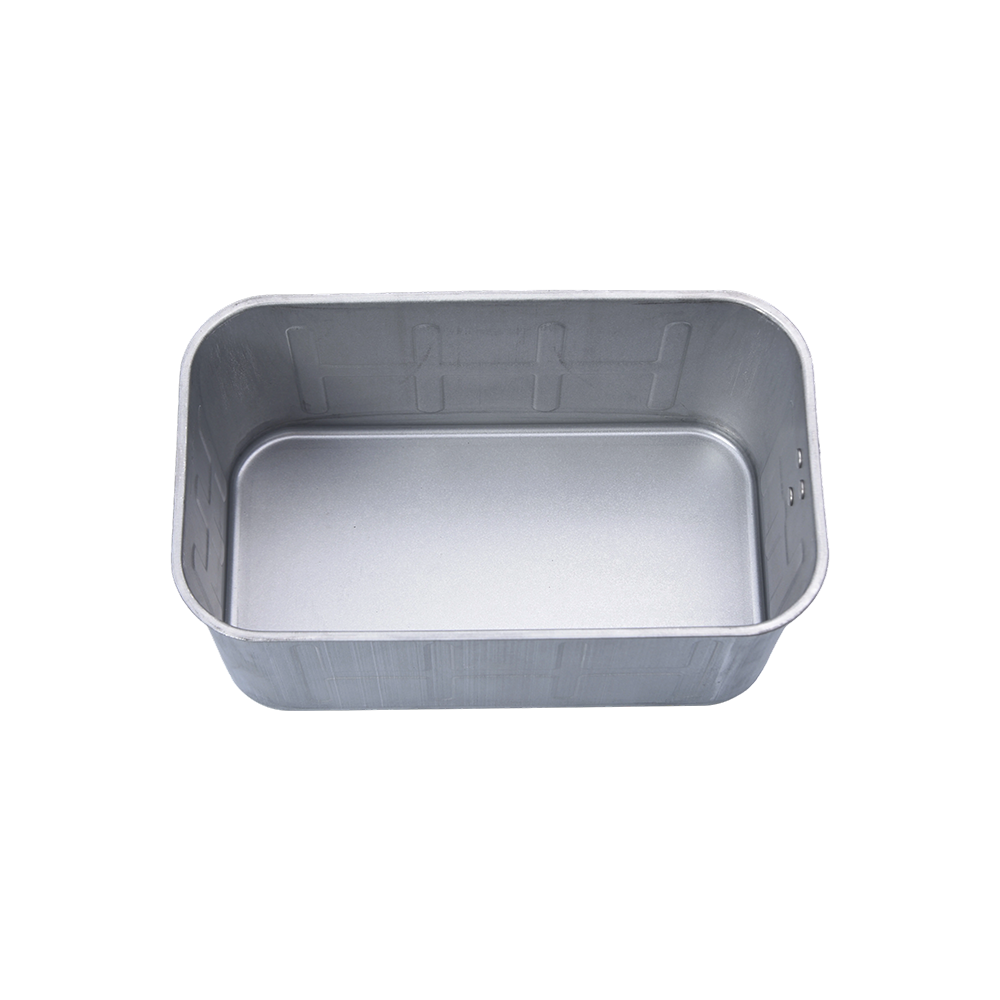
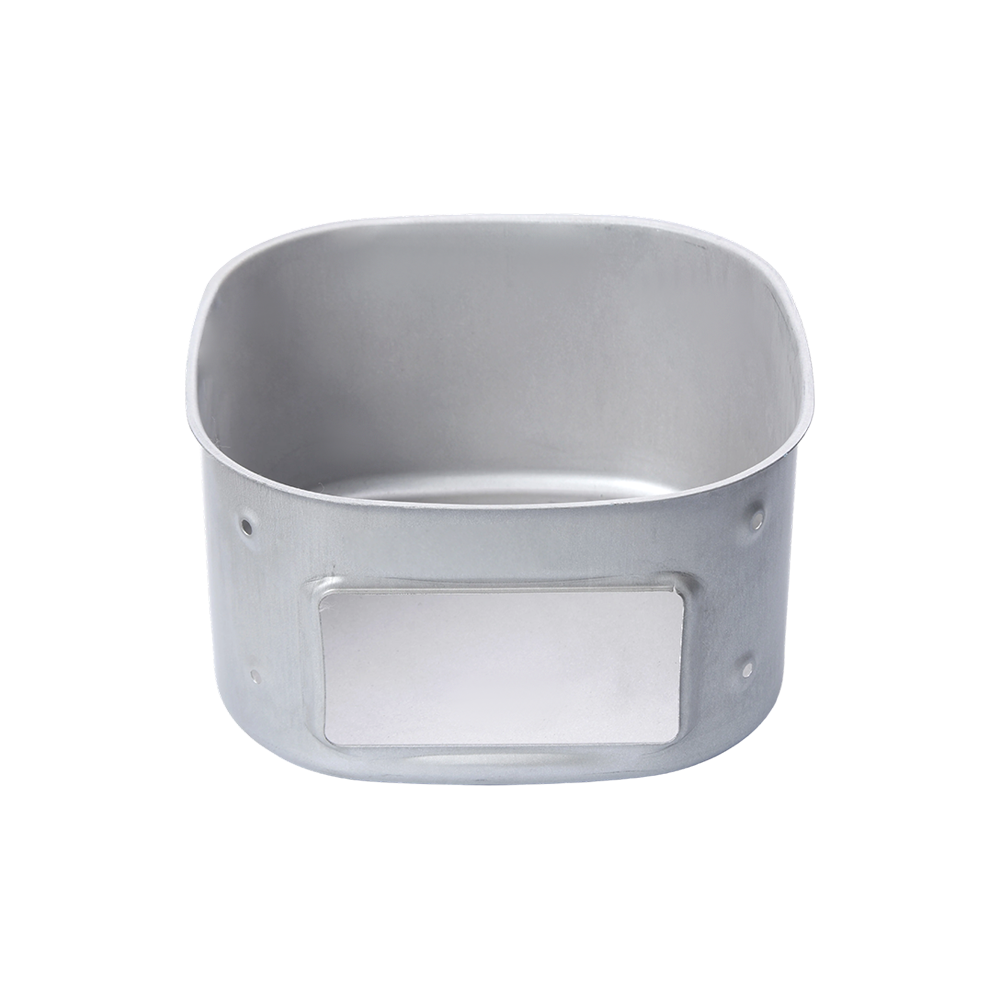
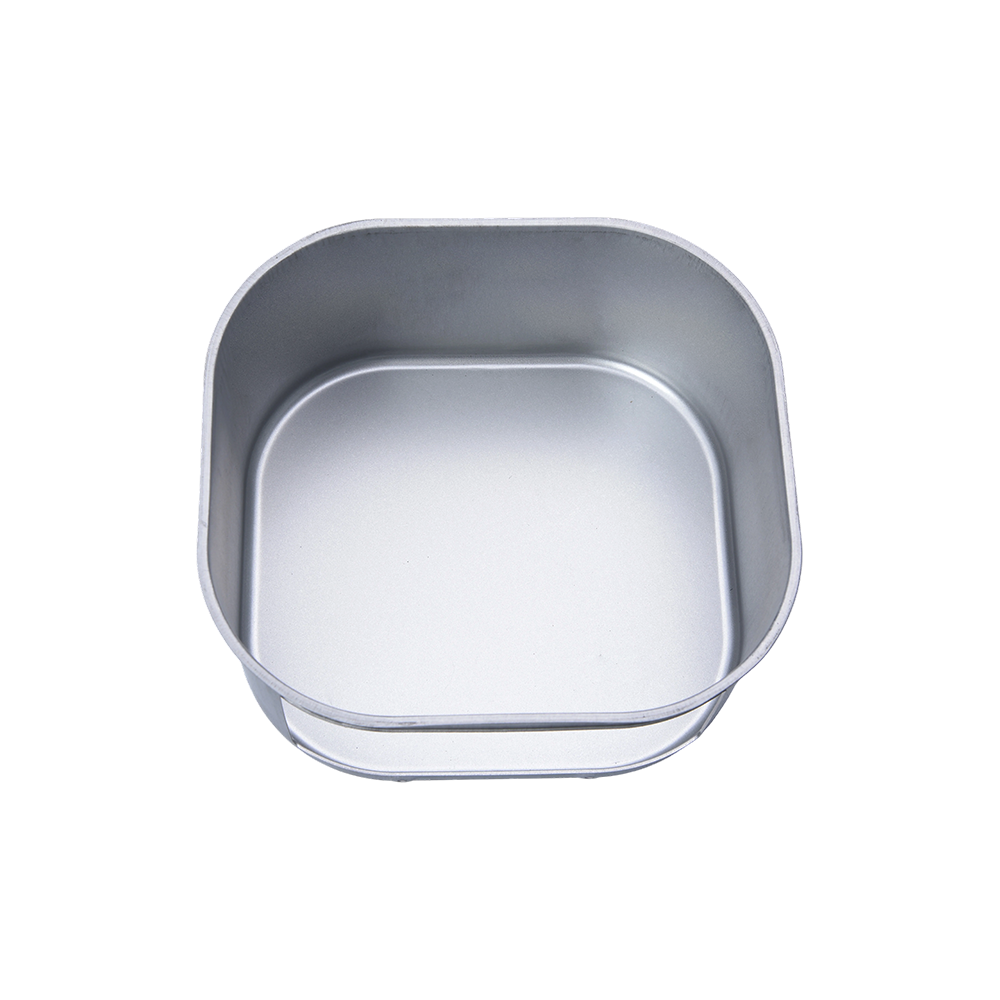
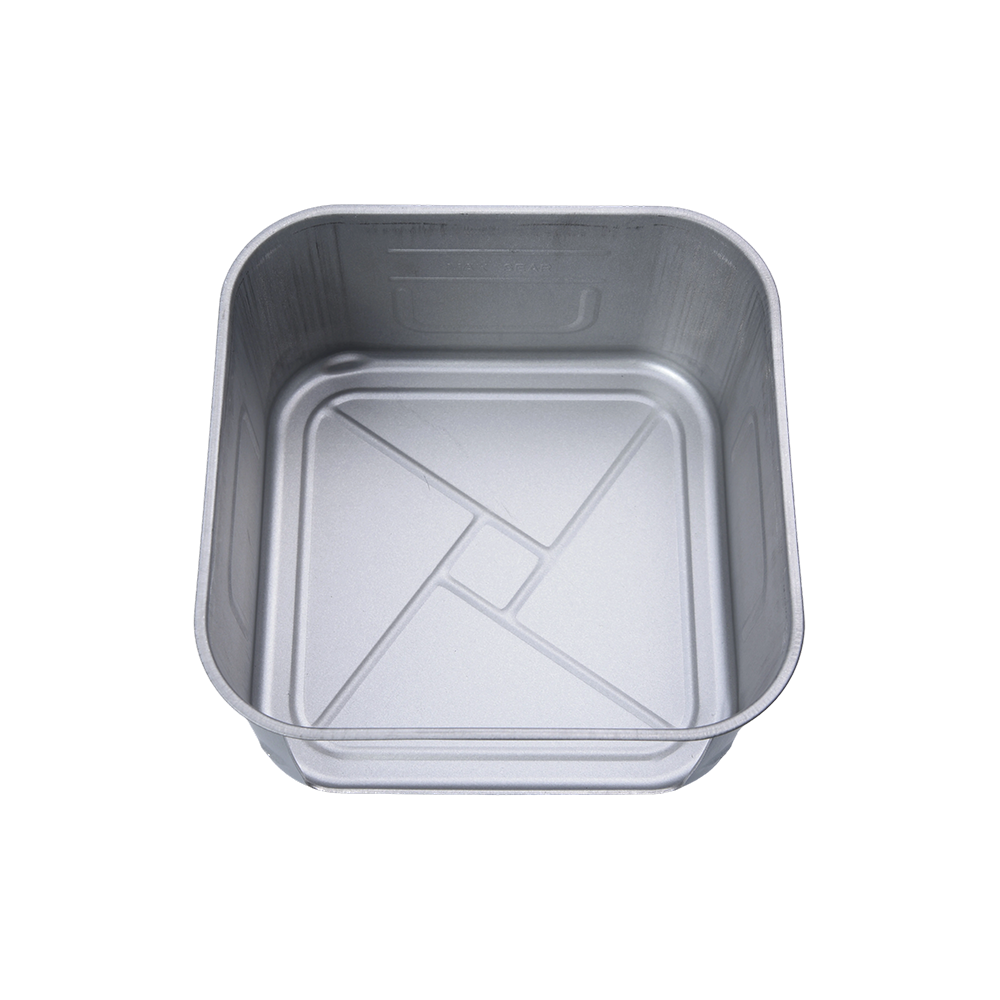
Deep-drawn square container with cutouts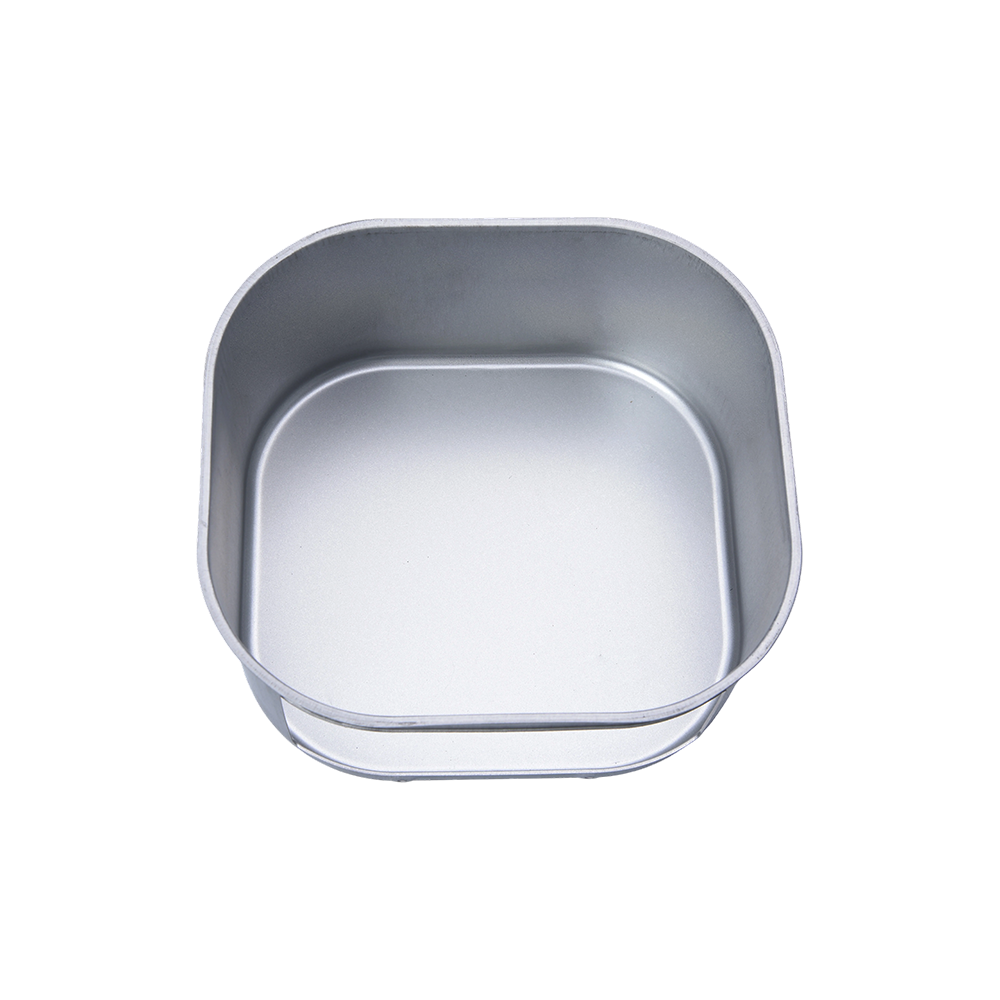
Product Overview
The deep-drawn square container with cutouts is a formed metal container made through an advanced deep-drawing process. The main body is seamless and one-piece, meaning it does not rely on welded joints to hold the side walls and bottom together. This is one of its most important advantages. Welded containers can have weak points, visible seams, heat-affected zones, distortion, corrosion risk around weld lines, and additional finishing requirements. A deep-drawn container avoids many of these issues because its structure is formed directly from sheet metal.
The container can be manufactured in various dimensions, depths, thicknesses, and materials depending on customer requirements. The cutouts can include ventilation holes, drainage holes, rectangular slots, wiring openings, positioning holes, assembly openings, mounting points, or special-shaped precision cutouts. These openings can be created according to drawings, samples, or application concepts. The result is a container that does not merely hold or protect components, but also supports the full function of the final system.
The product is especially useful when customers need a clean internal space, high strength, accurate external dimensions, and reliable long-term performance. It can be used as a housing, tray, protective shell, mounting container, equipment accessory, appliance component, automotive auxiliary part, or industrial enclosure. Its square geometry allows efficient use of space, easy stacking in some applications, and simple integration with rectangular assemblies or flat mounting surfaces.
Because deep drawing creates a continuous metal structure, the part can maintain strong resistance to load and vibration. The absence of welds also helps improve cleaning convenience, which is important for kitchen appliances, food-related accessories, household equipment, and any environment where dirt accumulation near joints is undesirable. A smooth drawn surface also improves appearance and makes subsequent surface treatments more consistent.
Why Deep Drawing Matters
Deep drawing is more than a forming operation; it is a method of producing metal parts with high structural efficiency. In conventional sheet metal fabrication, a container may be made by cutting flat sheets, bending sides, welding corners, grinding welds, and then applying finishing. This approach is flexible for low-volume production, but it often requires more labor, more process steps, and more inspection. Each weld can introduce a possible defect. Each bend can introduce dimensional deviation. Each manual operation can reduce repeatability.
By contrast, deep drawing forms the metal into shape using precisely designed tooling and press control. Once the tool is proven, the process can produce consistent parts repeatedly. The resulting geometry has integrated corners and side walls. The bottom and walls are continuous. The load path is more natural because stresses are not concentrated along welded seams. This gives the container better resistance to cracking, leakage, fatigue, and deformation under many conditions.
For square containers, deep drawing requires experienced tooling design. Unlike circular cups where material flows evenly around the circumference, square parts have corners that are prone to thinning and side walls that require balanced material distribution. The manufacturer must control blank size, lubrication, die radius, punch radius, blank holding pressure, drawing speed, and material selection. If these parameters are not carefully managed, the part may wrinkle, split, or fail dimensional inspection. A successful square deep-drawn container therefore represents both product value and manufacturing competence.
The deep-drawn square container with cutouts benefits from this process by gaining high strength without unnecessary added material. It can be light yet rigid. It can have a smooth surface without extensive post-weld polishing. It can be produced with repeatable geometry, making it suitable for batch supply and assembly-line use. For customers purchasing customized metal components, this repeatability is essential because it reduces fitting problems, rework, assembly delays, and hidden quality costs.
Seamless One-Piece Structure
The most visible and practical feature of the product is its seamless one-piece construction. A seamless container is not just more attractive; it is mechanically more reliable. Welded corners may appear acceptable at first, but they can be affected by porosity, incomplete penetration, inconsistent bead shape, and local hardness changes caused by heat. Grinding can improve appearance but may also reduce wall thickness locally or leave small surface imperfections. In humid, corrosive, or high-cleanliness environments, weld seams can become areas where contamination or corrosion starts.
A deep-drawn one-piece container eliminates these weld-related concerns. The bottom and side walls are formed from one metal blank, producing continuous corners and a uniform external appearance. This gives the product an advantage in applications requiring cleanliness, durability, and stable quality. It also reduces the need for extensive manual finishing, which can help improve production efficiency and cost control.
From a design perspective, the seamless body also allows engineers to use the container more confidently as a structural or protective element. The container can carry loads across its entire geometry rather than depending on separate joined panels. This is especially valuable in automotive stamping parts, appliance accessories, and industrial assemblies where vibration, impact, thermal cycling, or repeated handling may occur.
In kitchen appliance accessories, the smooth one-piece structure is beneficial because residues, dust, or moisture are less likely to accumulate in cracks. In equipment housings, the seamless body reduces points where loosening, leakage, or fatigue can begin. In hardware or mounting applications, the drawn geometry provides rigidity and shape retention even when the container is repeatedly installed, removed, or handled.
Custom Cutouts for Functional Integration
A square container becomes far more useful when it includes properly designed cutouts. The deep-drawn square container with cutouts is made to support such customization. Cutouts can be round, rectangular, slotted, louver-like, irregular, or arranged in patterns. They may be used for airflow, drainage, cable routing, fasteners, alignment, sensors, brackets, connectors, switches, filters, or assembly access.
Ventilation holes can help dissipate heat from electrical components, heating modules, motors, or appliance assemblies. Drainage holes can prevent liquid accumulation in environments where water, condensation, cleaning fluid, or process liquid may be present. Wiring slots can make it easier to connect internal components without adding separate brackets or adapters. Mounting holes allow the container to be fixed directly to a frame, cabinet, machine, or appliance body. Customized cutouts can also reduce secondary processing for customers, because the part arrives closer to final assembly condition.
Precision cutouts are important because they must not compromise the structural integrity of the container. Poorly placed holes may create stress concentration, weaken corners, or cause deformation during assembly. A professional manufacturer considers the relationship between cutout size, edge distance, wall thickness, material type, drawing depth, load direction, and downstream use. The goal is to provide the opening required by the application while maintaining enough strength around the cutout.
The cutout process can be integrated with stamping, punching, trimming, secondary forming, or CNC-related processing depending on the requirements. For higher-volume projects, dedicated tooling can improve efficiency and consistency. For prototype or lower-volume projects, flexible processing may help confirm design before mass production. This balance between customization and manufacturability is a key advantage for OEM and ODM customers.
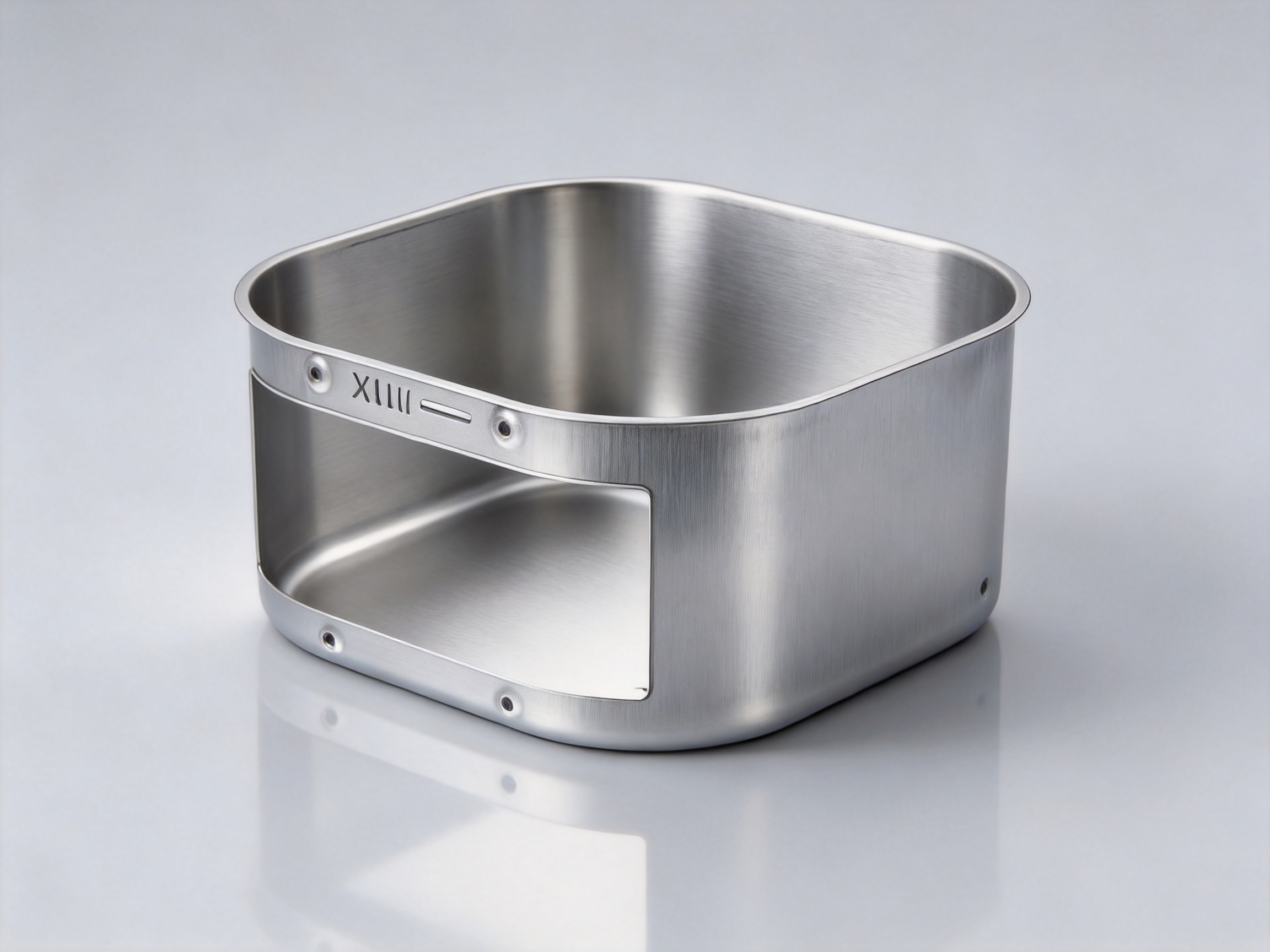
Advantages Over Common Competitor Solutions
Many competing container solutions are made by welding bent sheet metal panels. While this method can be suitable for certain projects, it has disadvantages when compared with a deep-drawn seamless design. The first disadvantage is structural discontinuity. Welded corners are joined areas, not continuous formed areas. Under load or vibration, the weld region may behave differently from the base material. Deep drawing avoids this problem by forming the container as one integrated body.
The second disadvantage of welded fabrication is appearance inconsistency. Weld marks, grinding traces, discoloration, and distortion can appear after fabrication. Even with careful finishing, it may be difficult to achieve the same clean surface quality as a well-formed deep-drawn part. For products visible to end users or used in clean equipment, the surface advantage of deep drawing is significant.
The third disadvantage is process complexity. A welded sheet metal container may require cutting, bending, fixture positioning, welding, grinding, inspection, and correction. Each step creates time, labor, and quality risk. A deep-drawn part can reduce the number of joining and finishing steps. Although tooling development requires skill, mass production can become more efficient and repeatable once tooling is established.
The fourth disadvantage is cleaning difficulty. Corners, weld seams, and overlapping joints can trap dust, grease, residue, or liquid. A seamless deep-drawn container has smoother transitions and fewer trap points. This makes it more suitable for appliance, kitchen, laboratory, equipment, and general-use applications where maintenance matters.
Compared with plastic containers, the metal deep-drawn square container provides better heat resistance, rigidity, impact resistance, and long-term dimensional stability in many operating environments. Plastic may be lighter and corrosion-resistant, but it can deform under heat, crack under aging, or lack sufficient stiffness for demanding assemblies. Metal deep-drawn parts are often preferred where durability, strength, and thermal performance are necessary.
Compared with cast metal housings, deep-drawn sheet metal containers are often lighter and can be more cost-efficient for suitable geometries. Casting may be appropriate for complex thick-walled parts, but it can involve higher material weight, porosity concerns, and different finishing requirements. Deep drawing offers a refined solution when a strong, thin-walled, smooth container is needed.
Manufacturing Strength and Process Capability
Yuyao Hongli Optoelectronics Co., Ltd. has developed its manufacturing capability through more than two decades of production experience. The company operates stamping workshops and produces deep-drawn parts, stamped parts, bending parts, kitchen appliance accessories, automotive stamping parts, hardware products, small household appliance components, household electric heater parts, and related products. This broad manufacturing background is valuable because it means the company is familiar with different metal forming challenges and application standards.
The production of a deep-drawn square container with cutouts requires coordination between engineering, tooling, press operation, inspection, and finishing. The process generally begins with customer requirements. These may include drawings, 3D models, material specifications, thickness requirements, tolerance requirements, surface treatment expectations, cutout dimensions, annual demand, packaging needs, and application details. Engineers then evaluate feasibility, forming risks, tool structure, material flow, and production efficiency.
Tooling is central to the process. A deep-drawing die must be designed to guide material flow without excessive wrinkling or tearing. For square containers, corner radii and side wall transitions must be controlled carefully. The blank holder must prevent wrinkles while allowing enough material movement. Lubrication must reduce friction but remain compatible with downstream cleaning or surface treatment. If the container requires additional trimming or cutouts, the sequence of operations must be planned so that dimensional accuracy is maintained.
After tooling preparation, trial production validates the process. Trial parts are inspected for size, depth, wall quality, corner thinning, wrinkles, burrs, surface marks, and cutout accuracy. Adjustments may be made to die clearance, blank shape, holding force, lubrication, trimming allowance, or press parameters. Once the part meets requirements, the process can move toward batch production.
The company’s 5,000-square-meter factory and experienced team support efficient conversion from sample development to production. More than 60 employees provide a flexible production base that can support customized orders, prototype evaluation, and repeat production. The company also provides manufacturing, processing, wholesale, retail, import, and export services, making it suitable for both domestic and international cooperation.
Quality Control and Consistency
Quality control is essential for deep-drawn containers because small deviations can affect assembly fit, appearance, and performance. The container may need to fit into a larger system, align with screws, match other stamped components, or maintain a specified depth. Cutouts must be positioned correctly, edges must be acceptable, and the part must not deform during handling or installation.
A strong quality approach includes incoming material inspection, tooling verification, first-piece inspection, in-process inspection, and final inspection. Material thickness, hardness, surface condition, and mechanical properties influence drawing performance. If material properties vary too much, the process can produce inconsistent parts. Therefore, stable material sourcing and incoming checks are important.
During production, operators monitor the press operation, lubrication, part appearance, burr condition, and dimensional consistency. First-piece inspection confirms that the machine setup is correct before full production continues. In-process inspection helps identify changes early, such as tool wear or material variation. Final inspection verifies that parts are ready for shipment and meet customer requirements.
For customized cutouts, inspection may include hole diameter, slot length, edge distance, pattern spacing, burr height, and positional tolerance. If the cutouts are used for assembly, even small misalignment can cause problems later. By controlling these details, the manufacturer helps customers reduce assembly rework and maintain stable production schedules.
Surface quality is also important. Deep-drawn containers may require clean surfaces for appliance or visible applications. Scratches, dents, severe draw marks, or stains can reduce product value. Careful handling, proper lubrication, appropriate die polishing, and suitable packaging all contribute to maintaining the surface condition.
Material and Thickness Options
The deep-drawn square container with cutouts can be adapted to different material and thickness requirements. Common material options for deep-drawn metal parts may include cold-rolled steel, stainless steel, galvanized steel, aluminum, and other formable sheet metals depending on the application. Material selection should consider strength, corrosion resistance, weight, thermal performance, surface treatment, cost, and drawing performance.
Stainless steel is often selected when corrosion resistance, hygiene, heat resistance, and appearance are important. It may be suitable for kitchen appliance accessories, equipment housings, and environments exposed to moisture or cleaning. Cold-rolled steel can provide good strength and cost efficiency, especially when additional coating, painting, plating, or surface treatment is planned. Galvanized steel offers improved corrosion resistance compared with ordinary carbon steel and may be useful for certain industrial or appliance uses. Aluminum is lightweight and corrosion-resistant, but deep drawing parameters must be carefully controlled due to its material behavior.
Thickness selection affects strength, weight, formability, and cost. A thicker container can provide higher rigidity and better resistance to deformation, but it may require greater forming force and may increase material cost. A thinner container can reduce weight and cost, but it must still satisfy structural and assembly requirements. The manufacturer can help customers evaluate thickness based on load, installation method, cutout size, and operating conditions.
Because cutouts remove material, the relationship between thickness and opening design is important. Large openings may require thicker material, reinforcing features, flanges, ribs, or adjusted edge distances. Small ventilation patterns may require attention to burr control and punch wear. The best solution is usually developed through practical engineering communication between customer and manufacturer.
Applications Across Industries
The deep-drawn square container with cutouts can serve many industries because its core strengths are universal: strength, cleanliness, customization, and stable geometry. In kitchen appliance accessories, it can be used as an internal tray, protective holder, heating-related support, ventilation enclosure, or component container. The seamless body improves cleaning and reduces residue accumulation, while cutouts can support airflow, drainage, or mounting.
In automotive stamping parts, the container can be used in auxiliary assemblies where strength and vibration resistance matter. Automotive environments often require components to withstand repeated vibration, temperature changes, and long service life. A seamless drawn structure can be advantageous because it avoids welded joints and provides consistent shape retention. Customized openings can support mounting, cable routing, drainage, or ventilation.
In small household appliances, the product can function as a component shell, internal support, heat-related enclosure, or mounting box. Household appliance manufacturers often require components that are reliable, easy to assemble, and consistent in appearance. Deep drawing can support repeatability for mass production, while cutouts make the part ready for integration.
In optical instruments and educational instruments, clean geometry and accurate openings may be important for installation and functional alignment. The company’s historical involvement in these fields supports its understanding of component accuracy and practical assembly needs. For hardware products and industrial equipment, the container can be used for protection, support, storage, or modular installation.
In electrical or electronic systems, ventilation and cable routing are common requirements. A metal container can provide physical protection and heat dissipation advantages. Custom cutouts allow connectors, switches, fans, wires, and fasteners to be positioned where needed. If the container is part of an enclosure system, it can also contribute to mechanical stability and internal organization.
Technical Comparison Table
| Feature | Deep-Drawn Square Container with Cutouts | Typical Welded Sheet Metal Container | Typical Plastic Container |
|---|---|---|---|
| Body Structure | Seamless one-piece metal body formed by deep drawing | Multiple panels joined by welding or fastening | Molded plastic body |
| Strength and Rigidity | High structural continuity and good load resistance | Depends on weld quality and panel thickness | Lower rigidity in many high-load or high-heat uses |
| Surface Cleanliness | Smooth surface with no weld seams | May have weld marks, grinding traces, or crevices | Smooth but may scratch, age, or deform |
| Customization | Cutouts can be customized for ventilation, drainage, wiring, and assembly | Flexible but may require more manual operations | Requires mold changes or secondary machining |
| Production Repeatability | High repeatability after tooling validation | Can vary due to welding and manual finishing | High repeatability after mold development |
| Heat Resistance | Strong, depending on selected metal | Strong, depending on selected metal | Limited by plastic material |
| Maintenance | Easy to clean because of seamless structure | Seams may trap dirt or moisture | Easy to clean but may degrade over time |
| Best Use | Durable, clean, customized metal enclosures and containers | Low-volume or simple fabricated boxes | Light-duty, non-high-temperature applications |
Design Considerations for Custom Projects
When developing a custom deep-drawn square container with cutouts, several design factors should be considered early. The first is drawing depth. Deeper parts require more material flow and may need multiple drawing steps, intermediate annealing for certain materials, or special tooling strategies. The ratio between blank size, depth, corner radius, and wall thickness affects manufacturability.
The second factor is corner radius. Sharp corners are difficult in deep drawing and can cause thinning or tearing. A reasonable radius improves material flow, increases part strength, and extends tooling life. Customers sometimes request very sharp corners for appearance or space reasons, but a professional engineering review can determine what is practical and cost-effective.
The third factor is cutout placement. Holes too close to corners, edges, or high-stress areas may weaken the part. If cutouts are made before drawing, they may deform during forming. If they are made after drawing, special fixtures and tooling may be needed to maintain accuracy. The best process sequence depends on the cutout geometry and container shape.
The fourth factor is tolerance. Very tight tolerances may increase tooling cost and inspection complexity. For many applications, functional tolerances are more important than unnecessarily strict dimensions. A good manufacturer helps customers identify critical dimensions and practical tolerances that support performance without increasing cost unnecessarily.
The fifth factor is surface treatment. Depending on the material and end use, the container may require cleaning, deburring, polishing, plating, painting, powder coating, passivation, or other finishing. Surface treatment should be considered during design because it can affect dimensions, appearance, corrosion resistance, and assembly.
The sixth factor is production volume. Prototype quantities may use more flexible tooling and secondary processing, while high-volume production may justify dedicated tooling for efficiency and consistency. The company’s support for OEM and ODM customization, rapid prototyping, and production conversion helps customers move from concept to mass production with less risk.
OEM and ODM Customization Support
OEM and ODM customization are important strengths for customers who need more than a standard container. OEM projects usually begin with customer drawings or samples. The manufacturer produces parts according to the specified design, material, thickness, tolerances, and surface requirements. ODM projects may involve more design support, where the manufacturer helps develop or optimize the product based on functional needs.
For the deep-drawn square container with cutouts, customization may include overall length and width, depth, wall thickness, corner radius, bottom shape, flange design, cutout pattern, mounting hole position, surface finish, packaging method, and inspection standard. Customers may also request prototypes before confirming production. Rapid prototyping helps verify fit, function, and appearance before investing in final tooling or large-volume production.
The company’s manufacturing experience across deep-drawn parts, stamped parts, bending parts, and appliance and automotive accessories gives it the ability to consider the entire production chain. For example, if a cutout causes deformation, the company may suggest a different radius, edge distance, forming sequence, or reinforcement feature. If a customer needs easier assembly, the part may include alignment holes, tabs, slots, or relief features. If the part needs better strength, material thickness or geometry can be adjusted.
This practical engineering support is a major advantage over suppliers who only produce exactly what is drawn without reviewing manufacturability. A drawing may look correct on paper but be difficult or costly to produce. Experienced feedback can reduce trial errors, tooling revisions, and production delays. For global buyers, this translates into smoother project development and more dependable supply.
Cost Efficiency Through Process Optimization
Cost efficiency does not only mean a low unit price. It means achieving the required function, quality, delivery, and reliability at a reasonable total cost. The deep-drawn square container with cutouts can offer cost advantages in several ways. First, its one-piece structure can reduce welding, assembly, grinding, and finishing labor. Second, repeatable tooling-based production can reduce variation and rework. Third, customized cutouts can reduce customer-side secondary processing. Fourth, stable quality can reduce inspection burden and assembly downtime.
Material utilization is another important cost factor. Precision-cut openings and optimized blank design can reduce waste. During deep drawing, the initial blank size must be large enough to form the walls and bottom, but excessive blank size increases scrap. Experienced tooling and process design can improve material efficiency while maintaining part quality.
Tooling cost should be viewed in relation to production volume and long-term savings. For very small quantities, simple fabrication may appear cheaper. However, for repeated orders, deep drawing can become more economical because it reduces labor and improves production speed. When customers plan ongoing supply, investing in a well-designed deep-drawing process can deliver strong long-term value.
Quality stability also affects cost. A low-cost supplier may produce parts with inconsistent dimensions, burrs, poor surfaces, or weak cutout edges, causing problems during assembly. These hidden costs can exceed initial savings. A reliable manufacturer with strict quality control, stable delivery, and after-sales service helps customers avoid these risks.
Cleanability and Maintenance Benefits
Cleanability is often underestimated in metal component design, but it can strongly influence product performance and user satisfaction. A container with rough weld seams or overlapping joints can collect dust, oil, metal chips, food residue, or moisture. Over time, this can cause odor, corrosion, contamination, or maintenance difficulty. The seamless deep-drawn body provides a smoother surface and fewer crevices.
For kitchen appliance accessories, this is especially important. Components used near heat, steam, oil, or food-related environments benefit from easy cleaning. A smooth container can be wiped or washed more efficiently. If stainless steel is selected, corrosion resistance and hygiene can be further improved. Drainage holes can also be customized to prevent liquid accumulation.
In industrial environments, cleanability can reduce downtime. Dust and debris accumulation may interfere with electrical components, moving parts, or airflow. Ventilation cutouts can be designed to support cooling, while access openings can help maintenance personnel inspect or service internal components. A well-designed container can therefore contribute to equipment reliability.
The smooth one-piece structure also improves visual quality. Even when the container is not fully visible to end users, a clean and professional component reflects manufacturing quality. For OEMs, component appearance can affect brand perception, assembly discipline, and customer confidence.
Structural Performance and Durability
The deep-drawn square container with cutouts is designed for strength and rigidity. Deep drawing work-hardens certain metals to some degree during forming, which can increase local strength depending on material and process conditions. The continuous corners and side walls also help distribute loads. Compared with flat panels joined at corners, the drawn structure behaves more like an integrated shell.
Structural durability is important in environments with vibration, repeated handling, or heavy loads. Automotive and appliance applications often expose parts to cycles of stress rather than a single static load. Welded seams may be vulnerable if weld quality is inconsistent. Fastened joints may loosen. Adhesive joints may degrade. A seamless drawn structure avoids many of these joint-related failure modes.
Cutouts must be designed carefully to preserve durability. The manufacturer can help ensure that openings have appropriate radii, edge conditions, and positions. Sharp internal corners in cutouts may create stress concentration, so rounded corners are often recommended. Deburring is also important because burrs can interfere with assembly, create safety risks, or initiate cracks.
Surface treatment can further enhance durability. Depending on customer requirements, the part may be protected against corrosion, wear, or environmental exposure. Proper packaging also prevents damage during transportation, helping the product arrive in usable condition.
Production Workflow
A typical production workflow for the deep-drawn square container with cutouts begins with requirement confirmation. The customer provides drawings, samples, specifications, or application needs. The engineering team reviews material, thickness, size, depth, cutout design, tolerance, quantity, and finishing. If necessary, design suggestions are made to improve manufacturability.
The next stage is tooling design and preparation. This may include blanking tools, drawing dies, trimming tools, punching tools, and fixtures. For complex parts, several progressive or transfer steps may be required. The tooling must be made accurately because it determines the final part quality.
After tooling is prepared, sample production begins. Samples are inspected and tested for fit, size, surface, and function. Customer feedback may lead to adjustment. Once samples are approved, batch production can begin. During production, operators and inspectors monitor quality according to the agreed standards.
Secondary operations may include trimming, punching, deburring, cleaning, surface treatment, or packaging. Cutouts are created with attention to accuracy and edge quality. The finished parts are then inspected, packed, and shipped. For export customers, communication, documentation, and delivery coordination are also important parts of service.
The company’s ability to provide rapid prototyping and efficient production conversion is valuable because it reduces development time. Customers can move from idea to sample, and from sample to production, with practical support from an experienced manufacturer.
Company Strengths Behind the Product
Yuyao Hongli Optoelectronics Co., Ltd. was founded in 2000 and has accumulated more than 20 years of manufacturing experience. Its evolution from Yuyao Hongli Optoelectronics Educational Instruments Co., Ltd. into a broader metal stamping and manufacturing enterprise reflects continuous development and market adaptation. The company’s product range includes educational instruments, optical instruments, household electric heaters, small household appliances, auto parts, hardware products, plastic products, deep-drawn parts, stamped parts, bending parts, kitchen appliance accessories, and automotive stamping parts.
This diverse product background strengthens its ability to serve different industries. Appliance customers may care about appearance, heat resistance, cleanliness, and assembly efficiency. Automotive customers may care about durability, tolerance, vibration performance, and stable delivery. Hardware customers may care about strength, cost, and practical usability. Instrument customers may care about precision and clean finishing. Experience across these fields helps the company understand varied customer priorities.
The company’s business philosophy emphasizes integrity, excellence, innovation, and sharing. These values are relevant to customized manufacturing because long-term cooperation depends on honest communication, stable quality, continuous improvement, and mutual benefit. Customers need a supplier who can provide realistic feedback, protect project confidentiality, respond to technical questions, and support after-sales service.
With a modern factory, multiple stamping workshops, production capacity, and an experienced team, the company is positioned to provide customized metal forming solutions for global customers. Its import and export service capability also supports international purchasing needs.
How the Product Supports Better Final Assemblies
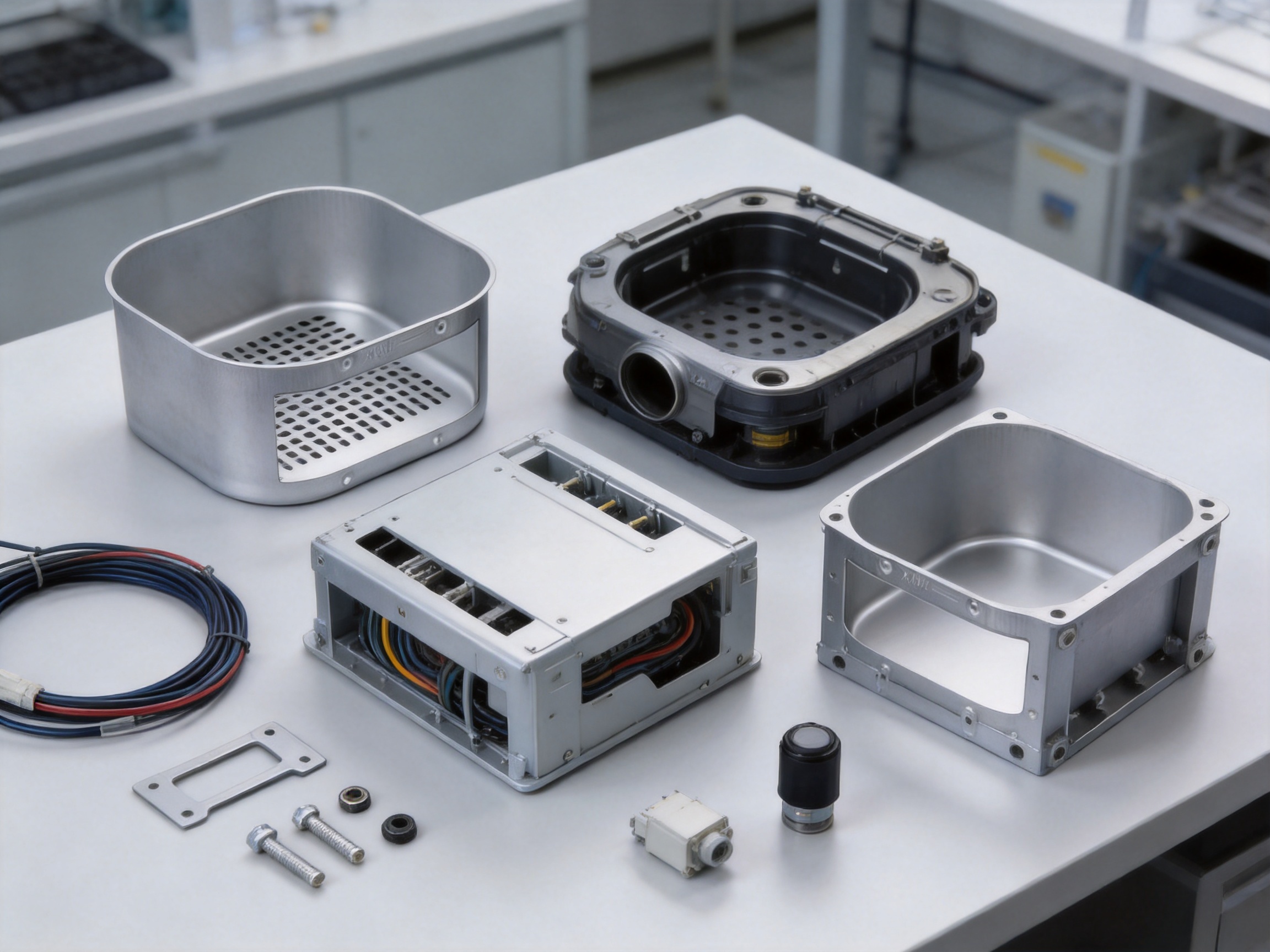
A component is valuable not only because of its individual quality but also because of how well it supports the final assembly. The deep-drawn square container with cutouts can improve final products in several ways. It can reduce assembly steps by integrating structure and openings into one part. It can improve reliability by eliminating welded seams. It can improve appearance by providing a smooth formed body. It can improve maintenance by reducing dirt-trapping joints. It can improve design flexibility by allowing custom cutouts.
For example, if an appliance manufacturer needs a metal container to hold a heating or airflow-related component, the product can be designed with ventilation holes and mounting points already included. This reduces the need for workers to drill holes or attach separate brackets. If an automotive component requires drainage and cable routing, the container can include both features while maintaining structural strength. If an industrial equipment manufacturer needs a protective metal shell, the drawn container can provide a clean, rigid body that fits into the equipment frame.
By receiving a part that is already close to final assembly condition, customers can reduce production complexity. Fewer operations mean fewer chances for mistakes. Consistent parts also make automated or semi-automated assembly easier. This is especially important for manufacturers who must maintain stable output and control labor costs.
Recommended Purchasing and Customization Information
When requesting a quotation or technical review for the deep-drawn square container with cutouts, customers should provide as much information as possible. Useful information includes the required length, width, depth, material, thickness, corner radius, surface treatment, cutout drawings, tolerance requirements, annual quantity, sample requirements, application environment, and packaging expectations. If a complete drawing is not available, a sample, sketch, or functional description can help start discussion.
Customers should also identify critical dimensions. For example, mounting hole positions may be more important than external cosmetic dimensions in some applications. In other cases, appearance surfaces may require special protection. If the container contacts heat, water, chemicals, vibration, or food-related environments, this should be explained so that material and finishing can be selected properly.
For new projects, it is often wise to begin with prototype samples. Samples allow customers to check fit, assembly, cutout function, surface, and strength. After sample approval, production tooling and batch processes can be finalized. This step-by-step approach reduces risk and supports better long-term results.
Q&A Section
What is the main advantage of a deep-drawn square container compared with a welded container?
The main advantage is its seamless one-piece structure. Because the container is formed from metal sheet rather than assembled from welded panels, it has no weld joints, fewer weak points, smoother surfaces, and better cleaning performance. This improves strength, appearance, and reliability.
Can the cutouts be customized?
Yes. The cutouts can be customized for ventilation, drainage, wiring, mounting, assembly, access, or other functional needs. Shapes can include round holes, slots, rectangular openings, patterns, or special designs according to the customer’s drawings or application requirements.
What materials can be used?
Material options may include stainless steel, cold-rolled steel, galvanized steel, aluminum, or other formable sheet metals depending on the application. The final selection depends on strength, corrosion resistance, weight, heat resistance, surface treatment, and cost requirements.
Is this product suitable for kitchen appliance accessories?
Yes. Its seamless structure, smooth surface, and customizable drainage or ventilation holes make it suitable for kitchen appliance accessories and small household appliance parts. Stainless steel or properly treated metal can be selected for applications requiring corrosion resistance and easy cleaning.
Is this product suitable for automotive applications?
Yes. The product can be used in automotive stamping-related applications where rigidity, vibration resistance, stable dimensions, and customized mounting or drainage features are needed. The one-piece structure helps reduce joint-related failure risks.
Can the container be produced in different sizes and thicknesses?
Yes. The container can be customized in size, depth, wall thickness, material, and cutout layout. Feasibility depends on the deep-drawing ratio, material formability, corner radius, and tolerance requirements.
Why is tooling design important for this product?
Tooling design controls material flow during deep drawing. For square containers, corners and side walls are challenging because uneven flow can cause wrinkling, tearing, or thinning. Good tooling design ensures stable forming, accurate dimensions, and repeatable production.
How does the product help reduce total cost?
It can reduce welding, grinding, assembly, rework, and customer-side secondary processing. Once tooling is established, repeatable production improves efficiency and quality stability. Customized cutouts also make the part easier to integrate into final assemblies.
Can prototypes be made before mass production?
Yes. Prototype development is recommended for new custom projects. Samples allow customers to verify dimensions, fit, function, cutout placement, and surface quality before confirming batch production.
What information should customers provide for a quotation?
Customers should provide drawings or samples, material requirements, thickness, dimensions, depth, cutout details, surface treatment, tolerance requirements, quantity, application environment, and packaging needs. More complete information helps the manufacturer provide accurate technical feedback and pricing.
Conclusion
The deep-drawn square container with cutouts is a practical, durable, and customizable metal component designed for modern manufacturing needs. Its seamless one-piece body gives it clear advantages over welded sheet metal containers, including stronger structural continuity, better surface cleanliness, reduced weak points, and improved appearance. Its customizable cutouts allow it to support ventilation, drainage, wiring, mounting, and assembly functions without requiring excessive downstream processing.
Behind the product is advanced deep-drawing technology and experienced metal forming capability. Yuyao Hongli Optoelectronics Co., Ltd. brings more than 20 years of manufacturing experience, a modern 5,000-square-meter factory, multiple stamping workshops, OEM and ODM customization support, rapid prototyping capability, quality control, and broad experience across appliance, automotive, instrument, hardware, deep-drawn, stamped, and bending parts. These strengths allow the company to provide not only a formed container but also a reliable customized manufacturing solution.
For customers seeking a square metal container that combines strength, clean design, customized functionality, and stable production quality, the deep-drawn square container with cutouts is a strong choice. It helps reduce assembly complexity, improve product reliability, support better maintenance, and provide long-term value in demanding applications.
References
ASM International. Sheet Metal Forming: Fundamentals and Applications.
Kalpakjian, S., and Schmid, S. Manufacturing Engineering and Technology.
Society of Manufacturing Engineers. Metal Forming Handbook.
Boljanovic, V. Sheet Metal Forming Processes and Die Design.
Totten, G. E. Steel Heat Treatment and Processing Principles.
Schuler GmbH. Metal Forming Handbook.
Product: Deep-drawn square container with cutouts
Previous Post
Stamped Small Square Parts for Precision Industrial Assembly
Next Post
Precision Stamped Square Parts with Holes for Reliable Industrial Assembly
News
-
-
When you need a metal component whose depth clearly exceeds its width, such as a one-piece battery enclosure, an air-fryer inner container,...
READ MORE -
A flat mounting plate with three punched holes and a rectangular container with a fitted lid can come off presses in the same workshop, yet...
READ MORE -
If you have ever asked yourself, “How do I find a reputable metal fabricator?” you are not alone. As a manufacturer with more than 20 years...
READ MORE
Get Fresh Updates Via Email
We promise we will never disclose your email address, and you can opt out at any time.
-
Quick Links
Home About Us Products Service News Contact Us -
Product list
Deep-drawn parts Stamped parts Bending parts Kitchen appliance accessories Automotive stamping parts -
About Us
Factory Honour FAQ -
News
Company News Industry News -
Contact Us
Address: South side of Shunke Road, Yangming Science and Technology Industrial Park, Yuyao City, Zhejiang Province, China Tel: +86-13905842349/+86-13738485724 Email: hongli@hl-stamping.com
Copyright © Yuyao Hongli Optoelectronics Co., Ltd. All Rights Reserved.
Custom Precision-Sheet/Sheet Metal Stamping Manufacturers
