


 English
 русский
 Español
 عربى
عربى

Steel is the backbone of modern manufacturing, yet it is never a single, uniform material. When engineers and buyers ask, "How can you clas...
READ MORE

News
Home / Author / Chen Ruoxi — Overseas Product Sales Manager / Stamped Small Square Parts for Precision Industrial Assembly
Stamped Small Square Parts for Precision Industrial Assembly
2026-06-30
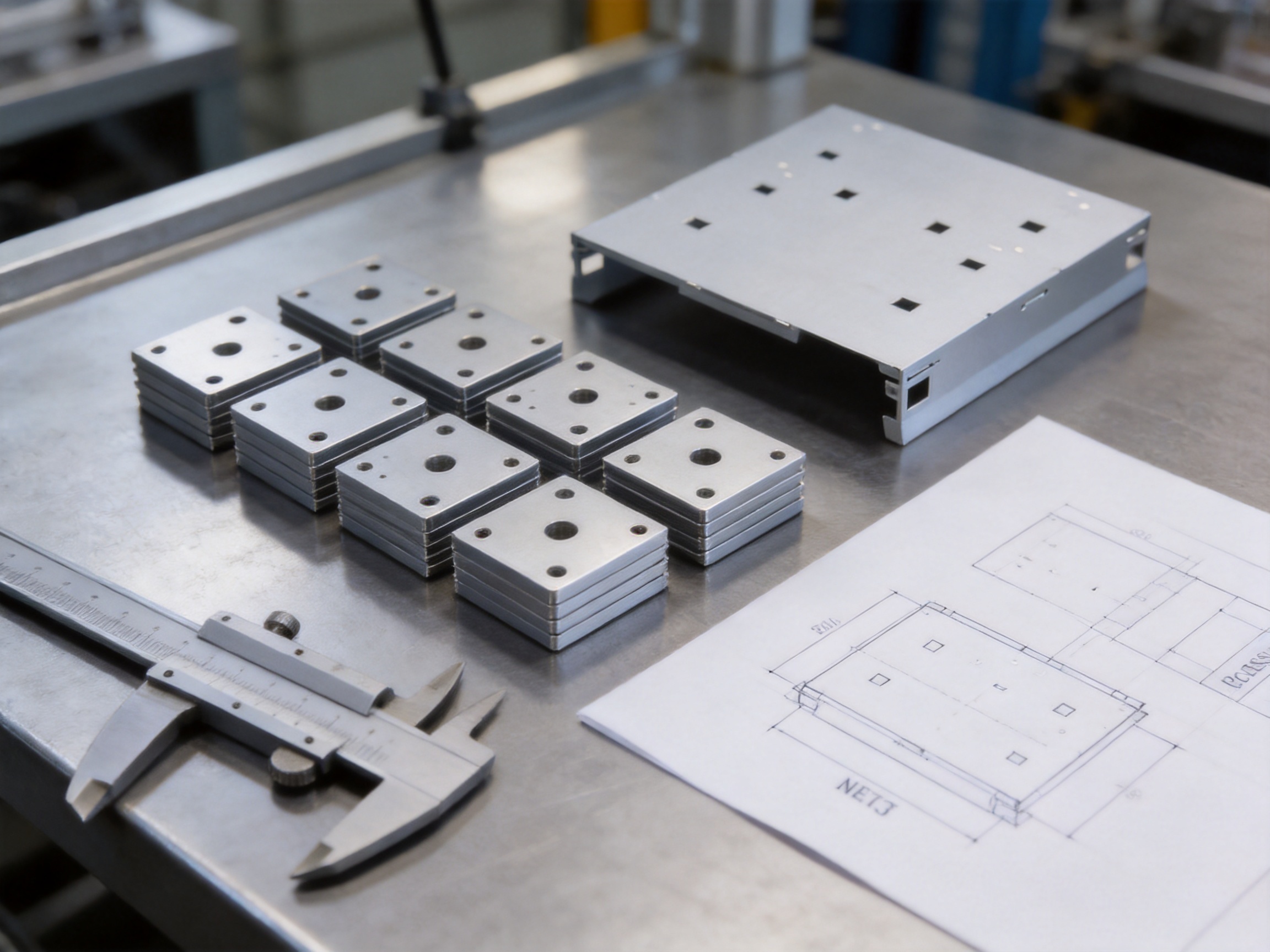
Stamped small square parts are compact metal components designed for applications where accuracy, repeatability, strength, and ease of assembly are essential. Although their shape may appear simple, these parts often perform critical functions in industrial equipment, kitchen appliance accessories, automotive assemblies, household appliances, hardware systems, optical instruments, and other mechanical products. A small dimensional deviation can affect mounting stability, electrical contact, structural alignment, or overall product performance, which is why precision stamping and strict process control are vital.
Yuyao Hongli Optoelectronics Co., Ltd. manufactures stamped small square parts using advanced stamping technology, experienced tooling practices, and a production system built for consistent quality. With more than 20 years of manufacturing experience, a modern 5,000-square-meter factory, multiple stamping workshops, and more than 60 employees, the company supports customers that require stable supply, customized production, and reliable metal stamping solutions. The company’s stamped small square parts are suitable for applications requiring compact design, tight tolerances, dependable durability, and efficient integration into larger assemblies.
Understanding Stamped Small Square Parts
Stamped small square parts are generally produced from sheet metal through a stamping process in which a press and die set cut, form, pierce, flatten, emboss, or bend the material into the required shape. Compared with machining every component individually, stamping allows high efficiency, excellent dimensional repeatability, reduced material waste, and stable production quality across large batches. For small square parts, this is especially important because customers often need thousands or millions of pieces with consistent dimensions and functional reliability.
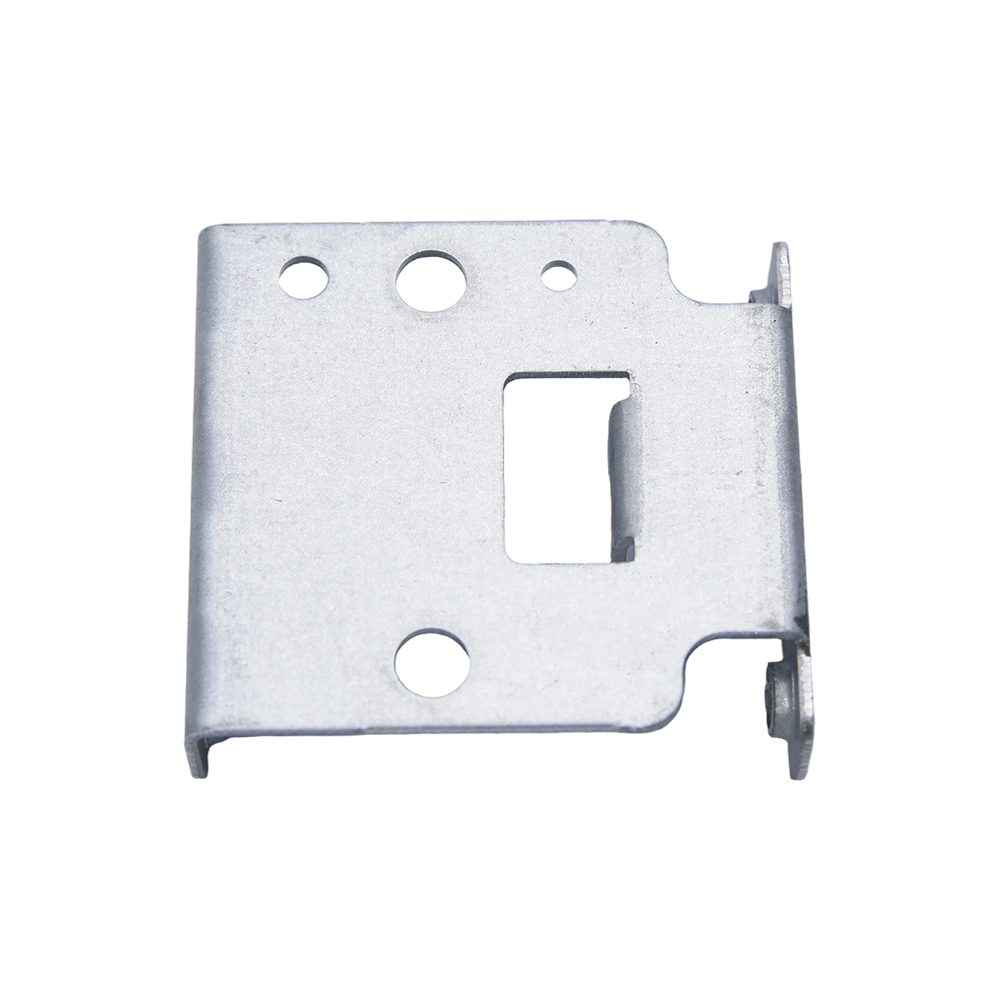
The square form offers practical advantages in many engineering designs. It can provide even load distribution, clear positioning edges, simple alignment, and convenient assembly orientation. A square part may be used as a washer-like support component, spacer, mounting plate, retaining element, electrical contact base, reinforcement piece, bracket insert, or structural interface within a mechanical system. Depending on the design, the part may include holes, slots, chamfers, embossments, bends, countersinks, or surface treatments.
In many products, small square stamping parts are hidden from the end user, but their performance directly influences the reliability of the finished item. For example, a compact mounting plate in a kitchen appliance may help stabilize heating components; a square retaining part in an automotive assembly may help maintain position under vibration; a stamped contact element in an electrical product may help achieve stable conductivity; and a small reinforced plate in a hardware product may improve durability at a fastening point.
Why Precision Matters in Small Stamped Components
Small metal parts demand high process discipline because there is less room for error. A burr that appears minor on a larger part may become a serious assembly issue on a compact component. A slight angle deviation may affect stacking, fastening, or contact pressure. A hole position error may prevent proper assembly with screws, rivets, pins, shafts, or other connecting elements. For this reason, stamped small square parts require carefully designed tooling, controlled press operations, suitable material selection, and regular quality inspection.
Precision is not only about dimensional accuracy. It also includes flatness, edge quality, hole quality, surface consistency, repeatability, and mechanical performance. A high-quality stamped part should fit properly, perform reliably, and maintain consistency from batch to batch. This is where an experienced manufacturer offers clear value. Yuyao Hongli Optoelectronics Co., Ltd. combines production experience with process control to deliver parts that meet customer specifications for size, shape, strength, and durability.
Customers in industrial markets often compare suppliers based on price alone, but low-cost production without stable control can create hidden expenses. Poor consistency may increase assembly rejection rates, delay production lines, damage customer products, or require additional sorting and inspection. By focusing on precision stamping, controlled manufacturing, and responsible quality management, the company helps customers reduce these downstream risks.
Core Product Advantages
The stamped small square parts supplied by Yuyao Hongli Optoelectronics Co., Ltd. offer several important advantages for industrial users. These advantages make them suitable for customers seeking compact metal components that can be integrated into demanding assemblies without sacrificing reliability or efficiency.
High Dimensional Accuracy
Advanced stamping equipment and well-designed dies enable the production of parts with tight tolerances and repeatable dimensions. For customers, this means better assembly fit, reduced adjustment work, and improved compatibility with mating components. Dimensional stability is especially valuable for automated assembly lines where parts must feed, orient, and install smoothly.
Compact and Practical Square Design
The square shape is simple, stable, and easy to position. It is useful in assemblies where alignment edges, balanced support surfaces, and space-saving geometry are required. The compact size allows designers to strengthen or connect components without occupying excessive space, which is important in appliances, electronics, automotive subsystems, and precision instruments.
Reliable Durability
Stamped parts can provide excellent mechanical strength when produced from suitable metal materials and processed correctly. Depending on customer requirements, the component can be designed to resist deformation, vibration, abrasion, heat, or corrosion. Durability helps extend the service life of the end product and reduces maintenance or replacement costs.
Efficient Mass Production
Stamping is one of the most efficient processes for producing small metal components in medium and large volumes. Once tooling is validated, production can be fast and consistent. This supports stable delivery schedules and competitive cost control, especially for customers requiring repeated orders or long-term supply agreements.
Flexible Customization
Although the product is described as a small square part, its design can be customized according to customer drawings, samples, application conditions, material requirements, surface treatment needs, and assembly environment. The company supports OEM and ODM customization, rapid prototyping, and efficient production conversion, helping customers move from concept to finished part more smoothly.
Applications Across Multiple Industries
Stamped small square parts are versatile because they can be adapted to many industries and product structures. Their compactness, low weight, strength, and repeatable accuracy make them suitable for both structural and functional applications.
Kitchen Appliance Accessories
Kitchen appliances often require compact metal components that can withstand heat, repeated use, fastening stress, and assembly pressure. Stamped small square parts may be used in support structures, fixing points, shielding components, brackets, heating element assemblies, and internal reinforcement areas. Their consistent shape helps improve assembly speed and product reliability.
Automotive Stamping Parts
Automotive applications require components that can tolerate vibration, temperature variation, and long service life. Small stamped square parts may serve as retainers, spacers, contact supports, mounting plates, reinforcement pieces, or alignment components. Consistency is especially important in automotive production because assembly lines are highly standardized and quality requirements are strict.
Household Appliances and Electric Heaters
In household electric heaters and small household appliances, stamped parts may support functional elements, provide fastening surfaces, help organize internal components, or protect specific areas from deformation. Because appliances are produced in large quantities, stamping offers an effective balance of cost, speed, and quality.
Optical and Educational Instruments
Precision instruments require accurate and stable components. A small square part may be used in mounting, positioning, reinforcement, or structural support. For optical instruments, alignment can be critical; therefore, flatness, dimensional control, and stable surface finish are valuable characteristics.
General Hardware Products
Hardware products often use small stamped parts as connectors, supports, clamps, washers, plates, guards, or decorative elements. The ability to customize thickness, hole patterns, edge forms, and surface treatment allows customers to match the part to many different hardware designs.
Manufacturing Strength Behind the Product
Yuyao Hongli Optoelectronics Co., Ltd. has developed into a comprehensive manufacturing enterprise with more than two decades of industry experience. Founded in 2000 and located in Yangming Science and Technology Industrial Park, Yuyao City, Zhejiang Province, China, the company has expanded from its earlier development stage into a professional manufacturer specializing in metal stamping parts and related products.
The company’s production system includes multiple stamping workshops, a 5,000-square-meter modern factory, and an experienced workforce of more than 60 employees. This capacity supports manufacturing, processing, wholesale, retail, import, and export services for a broad range of products, including deep-drawn parts, stamped parts, bending parts, kitchen appliance accessories, automotive stamping parts, household electric heater components, small household appliance parts, hardware products, plastic products, educational instrument parts, and optical instrument components.
For stamped small square parts, this broad manufacturing background is important because different industries require different design priorities. A component for an appliance may emphasize cost efficiency and corrosion resistance; a component for an automotive assembly may emphasize strength and vibration resistance; a component for an instrument may emphasize precision and flatness. The company’s experience across multiple product categories allows it to understand these differences and provide practical manufacturing solutions.
Advanced Stamping Process
The production of stamped small square parts usually begins with customer requirements, drawings, or samples. Engineers and production specialists review the part geometry, material, thickness, tolerance requirements, production volume, surface treatment needs, and application environment. Based on this information, the manufacturing team evaluates process feasibility and determines the most suitable stamping method.
Tooling is one of the most important factors in stamping quality. A precise die ensures accurate cutting, stable forming, clean hole positions, and repeatable part geometry. The die must be designed to control material flow, reduce burrs, minimize deformation, and maintain tool life. For small square parts, the tooling must also ensure smooth feeding and stable positioning of sheet material.
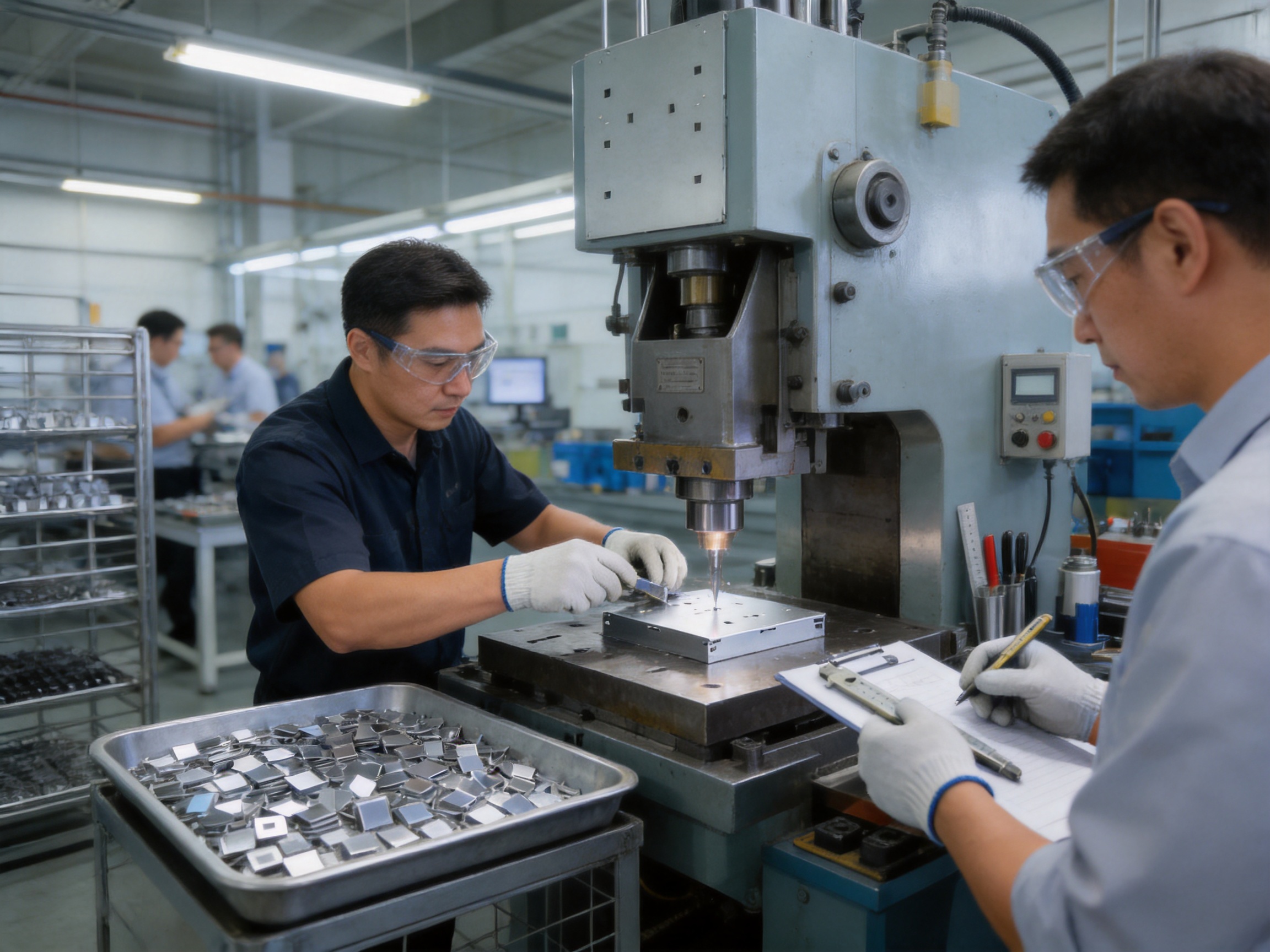
During stamping, metal sheet or strip is fed into the press, where the die performs operations such as blanking, piercing, forming, trimming, or bending. Depending on the part structure and order volume, progressive dies may be used for efficient multi-step production. Progressive stamping can complete several operations in sequence as the strip advances through the die, making it ideal for high-volume production where consistency and speed are required.
After stamping, the parts may undergo secondary processes such as deburring, cleaning, surface finishing, plating, polishing, heat treatment, inspection, or packaging. The exact process depends on the application. For example, a part used in a visible area may require a smoother finish, while a part used in a fastening system may require controlled burr direction and stable thickness. A part exposed to moisture may need corrosion-resistant treatment.
Material Selection and Performance
Material selection has a major influence on the performance of stamped small square parts. The suitable material depends on the mechanical load, environmental conditions, electrical requirements, corrosion exposure, temperature range, and cost target. Common options in metal stamping can include carbon steel, stainless steel, galvanized steel, aluminum, copper, brass, or other sheet metal materials according to customer specifications.
Carbon steel is often selected for strength and cost efficiency. Stainless steel provides improved corrosion resistance and long-term durability. Galvanized steel offers a protective zinc coating for many general-purpose applications. Aluminum provides light weight and good corrosion resistance. Copper and brass may be selected when conductivity, formability, or specific appearance is required. Each material behaves differently during stamping, so tooling and process parameters must be adjusted accordingly.
Thickness is also an important consideration. Thicker material can improve strength but may require higher press force and more robust tooling. Thinner material reduces weight and material cost but may require careful control to avoid distortion. The company can work with customers to select material and thickness suitable for the intended application.
Quality Control for Consistent Results
Quality control is a central part of precision stamping. For small square parts, inspection may include dimensional measurement, flatness checking, hole position verification, burr assessment, surface inspection, material confirmation, and functional testing when required. The goal is to ensure that parts meet customer drawings and remain consistent throughout production.
Effective quality control begins before mass production. During the sample or prototype stage, the part is evaluated to confirm tooling accuracy, process stability, and functional suitability. If adjustments are needed, the tooling or process can be refined before full-scale production. This approach reduces the risk of batch defects and helps customers approve parts with confidence.
During production, operators and quality personnel monitor key dimensions and appearance characteristics. Regular inspection helps identify tool wear, material variation, press setting deviation, or feeding issues before they cause large-scale problems. Final inspection and proper packaging further protect the product before shipment.
The company’s commitment to strict quality control, stable delivery, and comprehensive after-sales service provides customers with more than a part; it provides a reliable supply relationship. This is particularly important for customers with recurring production schedules or strict assembly timelines.
Comparison with Common Alternatives
Stamped small square parts are often compared with machined parts, laser-cut parts, cast parts, or generic low-cost stamped parts. Each method has its place, but precision stamping offers clear advantages when the part design and production volume are suitable.
| Comparison Item | Precision Stamped Small Square Parts | Common Alternative Parts | Practical Advantage |
|---|---|---|---|
| Production Efficiency | High-speed production after tooling approval | Machining or manual processes may be slower | Better for medium and large batch orders |
| Dimensional Repeatability | Stable dimensions through controlled dies | May vary depending on equipment and operator skill | Improves assembly consistency |
| Cost Control | Efficient material use and fast cycle time | Higher unit cost in large quantities | Competitive long-term production cost |
| Design Flexibility | Can include holes, slots, bends, embossing, and surface treatment | Some methods require extra secondary operations | Supports customized functional design |
| Part Weight | Lightweight sheet metal construction | Cast or machined parts may be heavier | Suitable for compact assemblies |
| Surface and Edge Control | Can be managed through tooling, deburring, and finishing | Quality may vary with low-cost suppliers | Reduces assembly problems |
This comparison shows why well-produced stamped parts are a strong choice for customers seeking quality, efficiency, and repeatability. The advantage does not come from stamping alone; it comes from stamping performed with proper tooling, process control, inspection, and manufacturing experience.
Advantages Over Competitors
In a competitive stamping market, many suppliers can produce simple metal pieces. However, customers who need dependable parts must consider more than whether a supplier can make a square shape. The real difference lies in consistency, engineering support, production control, customization ability, communication, and long-term service.
More Than 20 Years of Practical Experience
Experience allows a manufacturer to identify potential problems before they become costly. With more than 20 years in the industry, Yuyao Hongli Optoelectronics Co., Ltd. has accumulated knowledge in stamping behavior, die design, production scheduling, material handling, and quality management. This experience is valuable when customers need practical suggestions for manufacturability, cost optimization, or process improvement.
Comprehensive Manufacturing Capability
The company is not limited to one narrow product type. Its capabilities include stamped parts, deep-drawn parts, bending parts, kitchen appliance accessories, automotive stamping parts, hardware products, plastic products, and related components. This broad capability allows the company to support customers with integrated solutions rather than isolated parts. For customers developing complete assemblies, this can simplify sourcing and improve coordination.
OEM and ODM Customization
Standard parts may not always fit a customer’s exact application. OEM and ODM customization allows the part to be designed according to specific assembly requirements, including dimensions, thickness, hole position, edge radius, forming features, material grade, surface finish, and packaging method. The company can work from drawings, samples, or functional requirements to provide tailored stamping solutions.
Rapid Prototyping and Production Conversion
Speed matters in product development. A supplier that can support rapid prototyping helps customers test fit, function, and assembly before committing to full production. Once the prototype is approved, efficient production conversion helps reduce the time from trial to batch supply. This is especially helpful for appliance manufacturers, automotive component suppliers, and hardware brands working under tight project schedules.
Stable Delivery and After-Sales Support
Delivery reliability is a major factor in manufacturing supply chains. A delayed small component can stop an entire assembly line. The company emphasizes stable delivery and comprehensive after-sales service, helping customers maintain production continuity. When issues require communication or improvement, responsive service helps build long-term trust.
Design Considerations for Customers
Customers planning to order stamped small square parts can achieve better results by considering several design factors early in the project. A well-designed part is easier to manufacture, more cost-effective, and more reliable in use.
Tolerance Requirements
Not every dimension requires the tightest possible tolerance. Overly strict tolerances may increase tooling complexity, inspection time, and production cost. Customers should identify which dimensions are functionally critical and which dimensions can allow standard manufacturing variation. This helps balance performance and cost.
Hole and Slot Design
Holes and slots should be designed with suitable spacing from edges and from each other. If a hole is too close to an edge, deformation or weakness may occur. Proper hole diameter, shape, and tolerance help ensure clean punching and stable assembly.
Burr Direction
Stamping can create burrs on one side of the part. In many assemblies, burr direction matters because it may affect contact surfaces, operator handling, or mating parts. Customers should specify critical burr requirements when necessary.
Surface Treatment
Surface treatment may improve corrosion resistance, appearance, conductivity, or wear performance. Options may include plating, passivation, coating, polishing, cleaning, or other treatments depending on material and application. The intended environment should guide the selection.
Packaging Requirements
Small parts can be damaged, scratched, mixed, or difficult to handle if packaging is not planned correctly. Bulk packaging may be suitable for some components, while separated or layered packaging may be preferred for parts with cosmetic or dimensional sensitivity. Clear packaging requirements help protect quality during transport and storage.
Role in Assembly Efficiency
A high-quality stamped small square part can improve assembly efficiency in several ways. First, consistent dimensions reduce the need for adjustment or manual rework. Second, clean edges and accurate holes help operators or automated equipment install parts faster. Third, stable flatness and shape reduce jamming in feeding systems. Fourth, reliable surface quality reduces the risk of scratches, poor contact, or assembly interference.
In modern manufacturing, assembly efficiency is a key cost factor. Even if a component is inexpensive, poor quality can create high labor costs and production delays. By supplying precision-stamped parts that fit and function correctly, the company helps customers improve overall production performance.
Importance of Tooling Quality
Tooling is the foundation of a stamped part. A well-designed die produces accurate parts with stable repeatability; a poorly designed die may create dimensional drift, excessive burrs, deformation, poor feeding, and shortened tool life. For small square parts, tooling must be especially precise because minor deviations can affect the entire part geometry.
Important tooling considerations include cutting clearance, punch and die alignment, material strip layout, pilot positioning, forming sequence, waste removal, lubrication, and maintenance access. Tooling must also be designed according to the selected material because different metals have different hardness, springback behavior, and forming characteristics.
Regular tooling maintenance is equally important. Even the best die can wear after repeated production cycles. Monitoring tool condition helps maintain stable quality and prevents sudden production defects. Experienced manufacturers understand when to sharpen, adjust, clean, or repair tooling to maintain performance.
Surface Quality and Edge Control
Surface and edge quality can be critical for small stamped parts. Sharp burrs may cause injury during handling, interfere with assembly, damage wires or plastic parts, or affect contact surfaces. Scratches or stains may be unacceptable for visible parts or components used in clean assemblies. Uneven surfaces may affect stacking or fastening.
Edge quality is controlled through proper tooling clearance, material selection, press stability, and secondary finishing when necessary. Deburring, tumbling, polishing, cleaning, or coating may be applied according to customer requirements. For functional parts, the goal is not always a decorative finish; rather, it is to achieve the surface condition needed for safe, reliable, and efficient use.
Lightweight Strength for Modern Product Design
Modern product design often requires lighter components without sacrificing strength. Stamped sheet metal parts provide an excellent solution because they can be thin, strong, and shaped for reinforcement. A small square part can be designed with ribs, bends, embossments, or formed edges to increase stiffness while keeping weight low.
This lightweight strength is valuable in automotive systems, portable appliances, compact electrical products, and equipment where space and weight are limited. When properly designed, a stamped part can replace heavier machined or cast components, contributing to cost savings and improved product efficiency.
Customization Workflow
The customization process generally begins with communication. Customers provide drawings, samples, application descriptions, material preferences, expected quantity, tolerance requirements, and surface treatment needs. If the customer does not have a complete drawing, the company can discuss functional requirements and help clarify manufacturable specifications.
After reviewing the requirements, the technical team evaluates material suitability, tooling structure, stamping sequence, possible risks, and cost factors. A quotation and production plan can then be prepared. For new designs, sample production or prototyping may be arranged to verify the part before mass production.
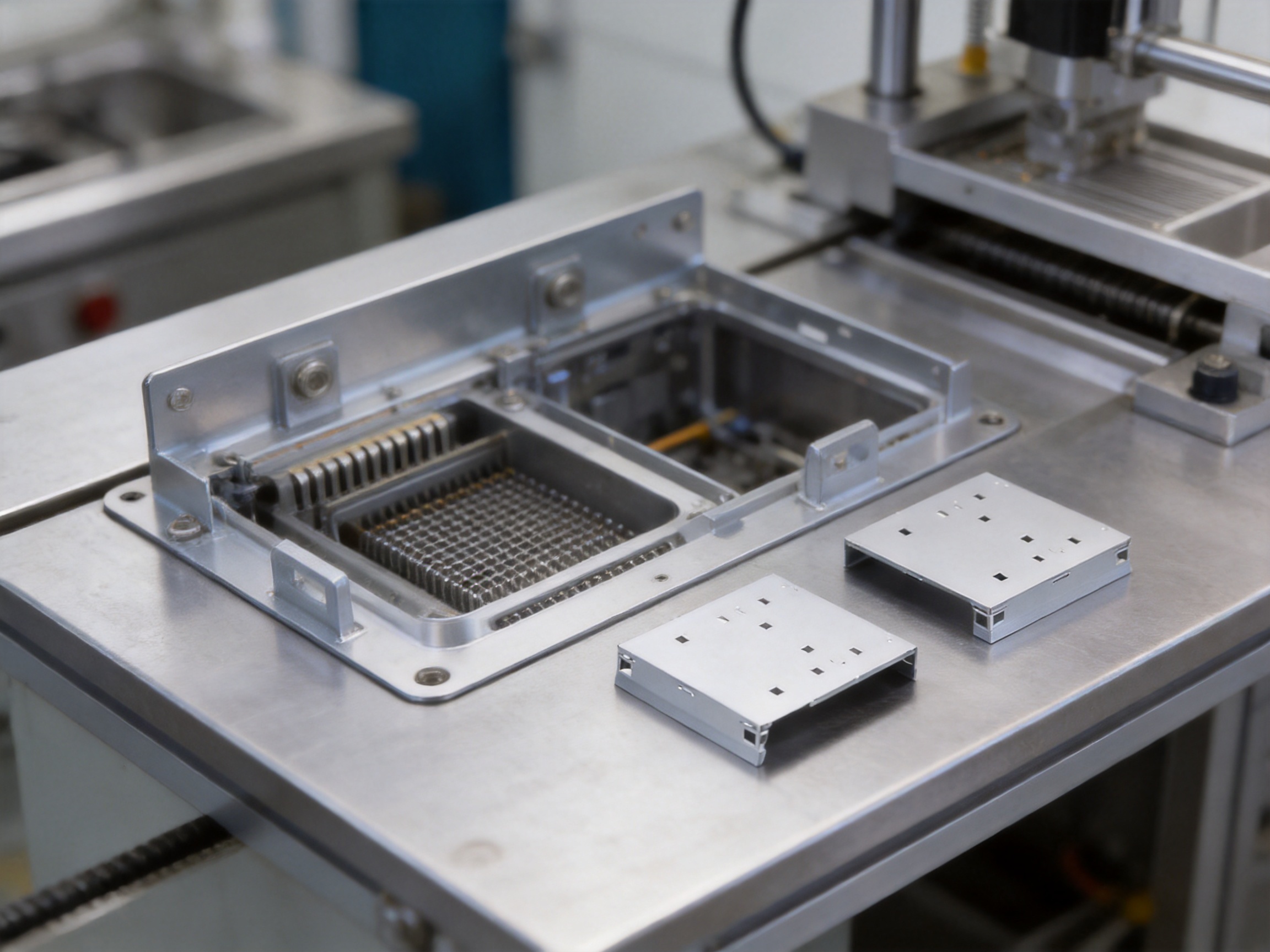
Once samples are approved, the project moves into batch production. During production, quality checks are performed to ensure the approved standard is maintained. Finished parts are packaged according to requirements and delivered to the customer. After delivery, the company can provide after-sales support and continue improving the product if customer feedback requires adjustments.
Product Value in Long-Term Supply Chains
For many customers, the best supplier is not simply the one who can produce a sample. The best supplier is one who can maintain stable quality over repeated orders, respond to changing requirements, and support long-term production planning. Stamped small square parts may be small, but they often become recurring items in a customer’s bill of materials. A stable supplier helps reduce purchasing risk.
Yuyao Hongli Optoelectronics Co., Ltd. offers value through manufacturing capacity, customization support, stable delivery, and quality responsibility. Customers can benefit from working with a supplier that understands both the technical side of stamping and the practical needs of industrial procurement.
Typical Specifications and Custom Options
Because stamped small square parts are often customized, exact specifications depend on customer requirements. However, several common options can be discussed during project development.
| Specification Category | Common Custom Options | Purpose |
|---|---|---|
| Material | Carbon steel, stainless steel, galvanized steel, aluminum, copper, brass, or specified sheet metal | Meets strength, corrosion, conductivity, and cost requirements |
| Thickness | Customized according to function and forming feasibility | Balances strength, weight, and production cost |
| Shape Features | Square profile, rounded corners, chamfers, holes, slots, bends, embossments | Improves assembly fit and functional performance |
| Tolerance | Controlled according to critical dimensions and application needs | Ensures reliable fit with mating parts |
| Surface Treatment | Cleaning, polishing, plating, coating, passivation, or other specified treatments | Enhances corrosion resistance, appearance, or function |
| Packaging | Bulk, bagged, boxed, layered, or customized packaging | Protects parts during transport and supports customer handling |
Why Small Parts Require Serious Manufacturing Discipline
Small square stamping parts may look simple, but simplicity in appearance does not mean simplicity in production. A tiny component can require very careful control because it must match other parts precisely. In high-volume production, even a small defect rate can create a large number of rejected pieces. If defective parts enter an assembly line, the cost of sorting, rework, and downtime can exceed the cost of the part itself.
Serious manufacturing discipline includes clear drawings, correct material sourcing, accurate tooling, stable press operation, operator training, in-process inspection, final inspection, and responsible packaging. It also includes honest communication with customers when design improvements or tolerance adjustments are recommended. The company’s business philosophy of integrity, excellence, innovation, and sharing supports this disciplined approach.
Environmental and Cost Efficiency
Stamping can be an efficient manufacturing method from both cost and material-use perspectives. Proper strip layout can reduce scrap, and high-speed production reduces labor time per part. When scrap metal is managed responsibly, material waste can be recycled. Efficient production also supports competitive pricing for customers who require large quantities.
Cost efficiency is not achieved by reducing quality; it is achieved by designing the right process. A manufacturable part with suitable tolerances, appropriate material, and efficient tooling can reduce total cost while maintaining performance. The company’s ability to provide rapid prototyping and production conversion helps customers test and improve designs before committing to large-scale production.
Quality Expectations for Global Customers
Customers worldwide expect parts that meet specifications, arrive on time, and perform reliably. For export-oriented manufacturing, communication, documentation, packaging, and consistency are important. The company provides import and export services and is positioned to support customers in different markets.
Global customers may have different standards for material certification, inspection reporting, packaging labels, or production traceability. Clear communication at the beginning of a project helps ensure that all expectations are understood. A reliable stamping partner should be able to adapt to customer requirements and maintain stable cooperation over time.
Practical Benefits for Engineers and Buyers
Engineers benefit from stamped small square parts because they can design compact, strong, and repeatable components that fit neatly into larger products. Buyers benefit because stamping offers scalable production and competitive unit cost after tooling approval. Production managers benefit because consistent parts reduce assembly interruptions. Quality managers benefit because controlled processes reduce variation and improve traceability.
When a supplier combines technical capability with responsive service, the entire customer organization benefits. This is why choosing a stamping manufacturer should involve evaluating experience, tooling capability, quality control, delivery stability, and willingness to support customization.
Q&A Section
What are stamped small square parts used for?
Stamped small square parts are used for mounting, fastening, supporting, spacing, reinforcing, positioning, electrical contact support, and integration into larger mechanical assemblies. They are suitable for kitchen appliance accessories, automotive stamping parts, household appliances, optical instruments, educational instruments, hardware products, and other industrial applications.
Why choose stamped parts instead of machined parts?
Stamping is usually more efficient for medium and large production volumes. It provides repeatable dimensions, fast cycle times, good material utilization, and competitive unit cost after tooling is completed. Machining may be suitable for very low quantities or complex three-dimensional shapes, but stamping is often better for flat or formed sheet metal components required in large batches.
Can the size and shape be customized?
Yes. The parts can be customized according to customer drawings, samples, or functional requirements. Custom options may include dimensions, thickness, hole position, slot design, corner radius, bending features, embossments, material, surface treatment, and packaging.
What materials can be used?
Material selection depends on the application. Common stamping materials may include carbon steel, stainless steel, galvanized steel, aluminum, copper, brass, and other sheet metals specified by the customer. The final material should be selected according to strength, corrosion resistance, conductivity, weight, appearance, and cost requirements.
How is quality controlled during production?
Quality control may include material confirmation, dimensional inspection, hole position checking, flatness inspection, burr assessment, surface inspection, sample approval, in-process monitoring, final inspection, and proper packaging. The purpose is to ensure that parts meet customer specifications and remain consistent across the production batch.
Are these parts suitable for automated assembly?
Yes, precision-stamped small square parts can be suitable for automated assembly when dimensions, flatness, edge quality, and packaging are properly controlled. Customers should communicate feeding, orientation, and assembly requirements during the design stage so that the parts can be produced and packaged accordingly.
What information should customers provide for a quotation?
Customers should provide drawings or samples, material requirements, thickness, dimensions, tolerances, surface treatment needs, expected order quantity, application environment, packaging requirements, and any special inspection standards. More complete information helps the manufacturer provide accurate pricing and production recommendations.
Can prototypes be produced before mass production?
Yes. Rapid prototyping can help customers verify fit, function, and appearance before full production. After sample approval, the process can be converted efficiently into batch manufacturing.
What makes Yuyao Hongli Optoelectronics Co., Ltd. a reliable supplier?
The company has more than 20 years of industry experience, a 5,000-square-meter factory, multiple stamping workshops, more than 60 employees, OEM and ODM customization capability, rapid prototyping support, strict quality control, stable delivery, and comprehensive after-sales service. These strengths help customers obtain reliable stamped parts and long-term manufacturing support.
Conclusion
Stamped small square parts are essential components for many industrial products. Their value lies in precision, compactness, durability, and reliable integration into larger assemblies. When manufactured with advanced stamping technology, accurate tooling, suitable material selection, and strict quality control, these small parts can significantly improve product stability and assembly efficiency.
Yuyao Hongli Optoelectronics Co., Ltd. offers strong manufacturing advantages for customers seeking dependable stamped parts. With more than two decades of experience, modern factory capacity, multiple stamping workshops, broad product capabilities, OEM and ODM support, rapid prototyping, stable delivery, and after-sales service, the company is positioned to provide high-quality stamped small square parts for customers worldwide.
For applications in kitchen appliances, automotive systems, household electric heaters, small household appliances, optical instruments, educational instruments, hardware products, and mechanical assemblies, precision stamped small square parts provide a practical and cost-effective solution. Choosing an experienced manufacturer helps ensure that every small component contributes to the strength, accuracy, and reliability of the finished product.
References
1. Kalpakjian, S., and Schmid, S. R. Manufacturing Engineering and Technology. Pearson Education.
2. Lange, K. Handbook of Metal Forming. Society of Manufacturing Engineers.
3. Altan, T., and Tekkaya, A. E. Sheet Metal Forming: Processes and Applications. ASM International.
4. Boljanovic, V. Sheet Metal Forming Processes and Die Design. Industrial Press.
5. ASM International. Metals Handbook: Forming and Forging. ASM International.
6. Society of Manufacturing Engineers. Tool and Manufacturing Engineers Handbook: Forming. SME.
Product: Stamped small square parts
Previous Post
Red Bent Parts with Fabric Strap for Durable Custom Applications
Next Post
Deep-Drawn Square Container with Cutouts for Strong, Clean, and Custom Metal Enclosures
News
-
-
What Are Stamped Parts? Stamped parts are metal components produced by pressing flat sheet metal between a die and a punch to cut, bend, or...
READ MORE -
Sheet metal is one of those materials that quietly holds everyday life together. The tray inside your air fryer, the bracket behind a car b...
READ MORE -
Sheet metal bending is one of the most fundamental processes in metal fabrication. It turns a flat sheet of steel, aluminum, or copper into...
READ MORE
Get Fresh Updates Via Email
We promise we will never disclose your email address, and you can opt out at any time.
-
Quick Links
Home About Us Products Service News Contact Us -
Product list
Deep-drawn parts Stamped parts Bending parts Kitchen appliance accessories Automotive stamping parts -
About Us
Factory Honour FAQ -
News
Company News Industry News -
Contact Us
Address: South side of Shunke Road, Yangming Science and Technology Industrial Park, Yuyao City, Zhejiang Province, China Tel: +86-13905842349/+86-13738485724 Email: hongli@hl-stamping.com
Copyright © Yuyao Hongli Optoelectronics Co., Ltd. All Rights Reserved.
Custom Precision-Sheet/Sheet Metal Stamping Manufacturers
