


 English
 русский
 Español
 عربى
عربى

What Are Stamped Parts? Stamped parts are metal components produced by pressing flat sheet metal between a die and a punch to cut, bend, or...
READ MORE

News
Home / Author / Chen Ruoxi — Overseas Product Sales Manager / Red Bent Parts with Fabric Strap for Durable Custom Applications
Red Bent Parts with Fabric Strap for Durable Custom Applications
2026-07-10
In modern manufacturing, a small metal component can determine whether a product feels secure, functions smoothly, and lasts through years of demanding use. Red bent parts with red fabric straps are designed for exactly that purpose: to combine strong metal forming, reliable surface protection, convenient handling, and a visually distinctive finish in one adaptable accessory. These parts are suitable for machinery, automotive components, furniture, outdoor equipment, kitchen appliance accessories, and many other applications where a bent metal element must provide support, fastening, positioning, hanging, pulling, guiding, or protective functionality.
The product is categorized as a bending part, but its value goes far beyond a simple bent bracket. It represents a complete solution that includes precise metal forming, durable coating, comfortable fabric integration, custom dimensional capability, and industrial-grade production control. The red coating improves corrosion resistance and product recognition, while the red fabric strap increases usability, comfort, and safe operation. Together, they create a component that can support both technical performance and product appearance.
For buyers, engineers, sourcing managers, and product developers, this type of component offers a practical path to customization. It can be produced in different shapes, lengths, hole positions, thicknesses, bend angles, surface finishes, and strap configurations. Whether used as a handle, hanger, pull tab, positioning accessory, protective connector, appliance support, or special-purpose bracket, the design can be adapted according to assembly requirements. Compared with ordinary bent metal parts, this product provides a stronger combination of appearance, function, and manufacturability.
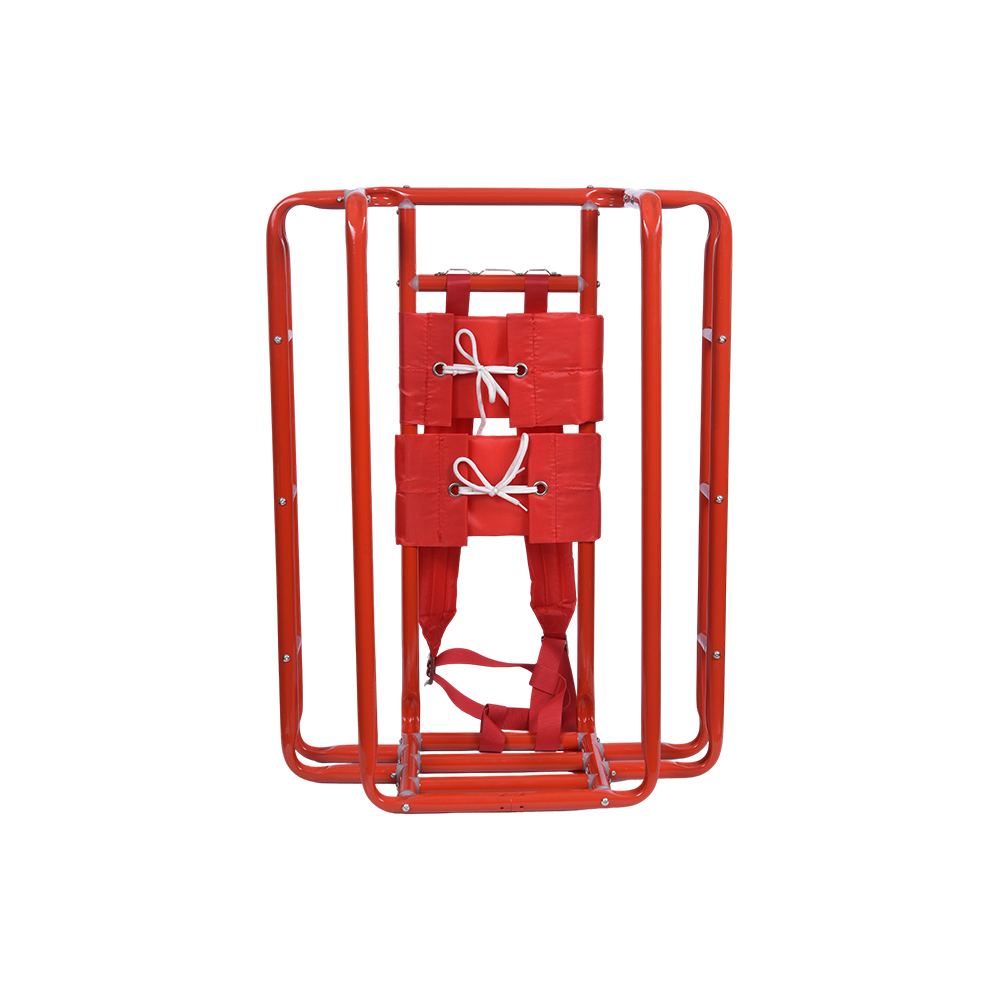
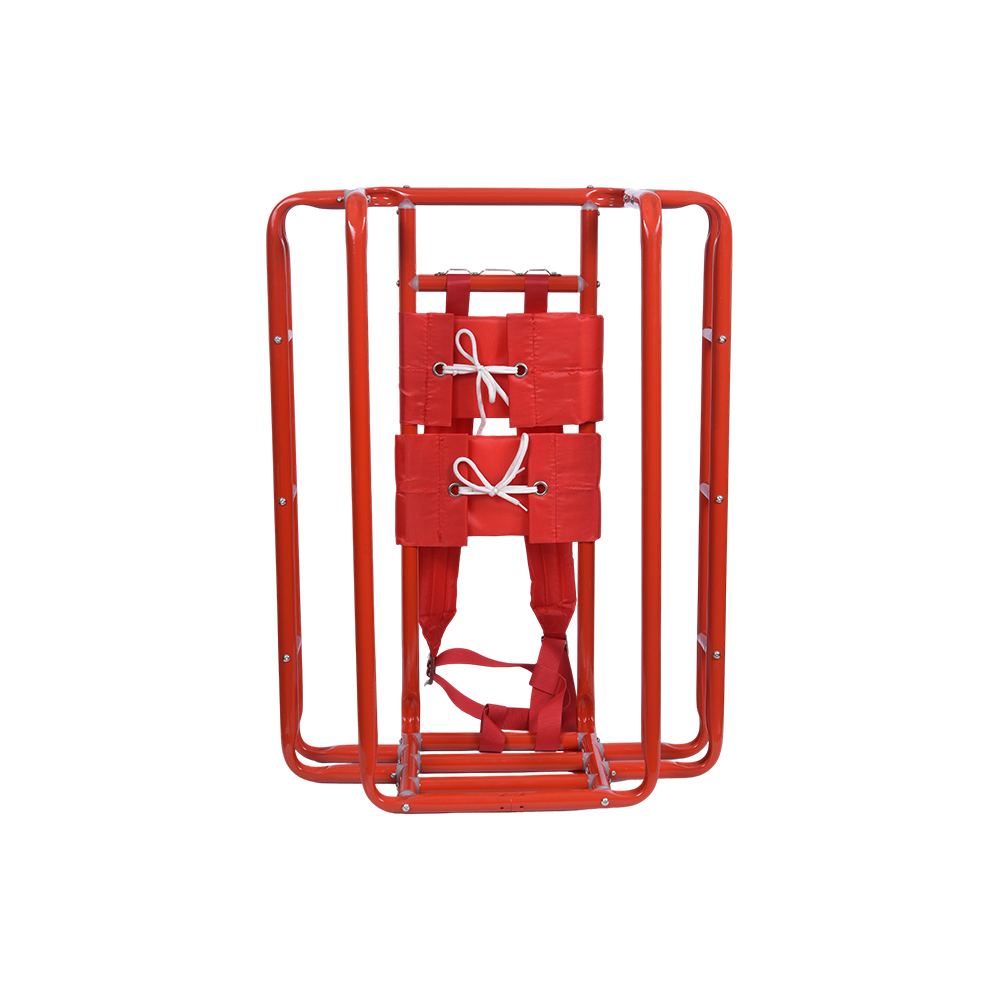
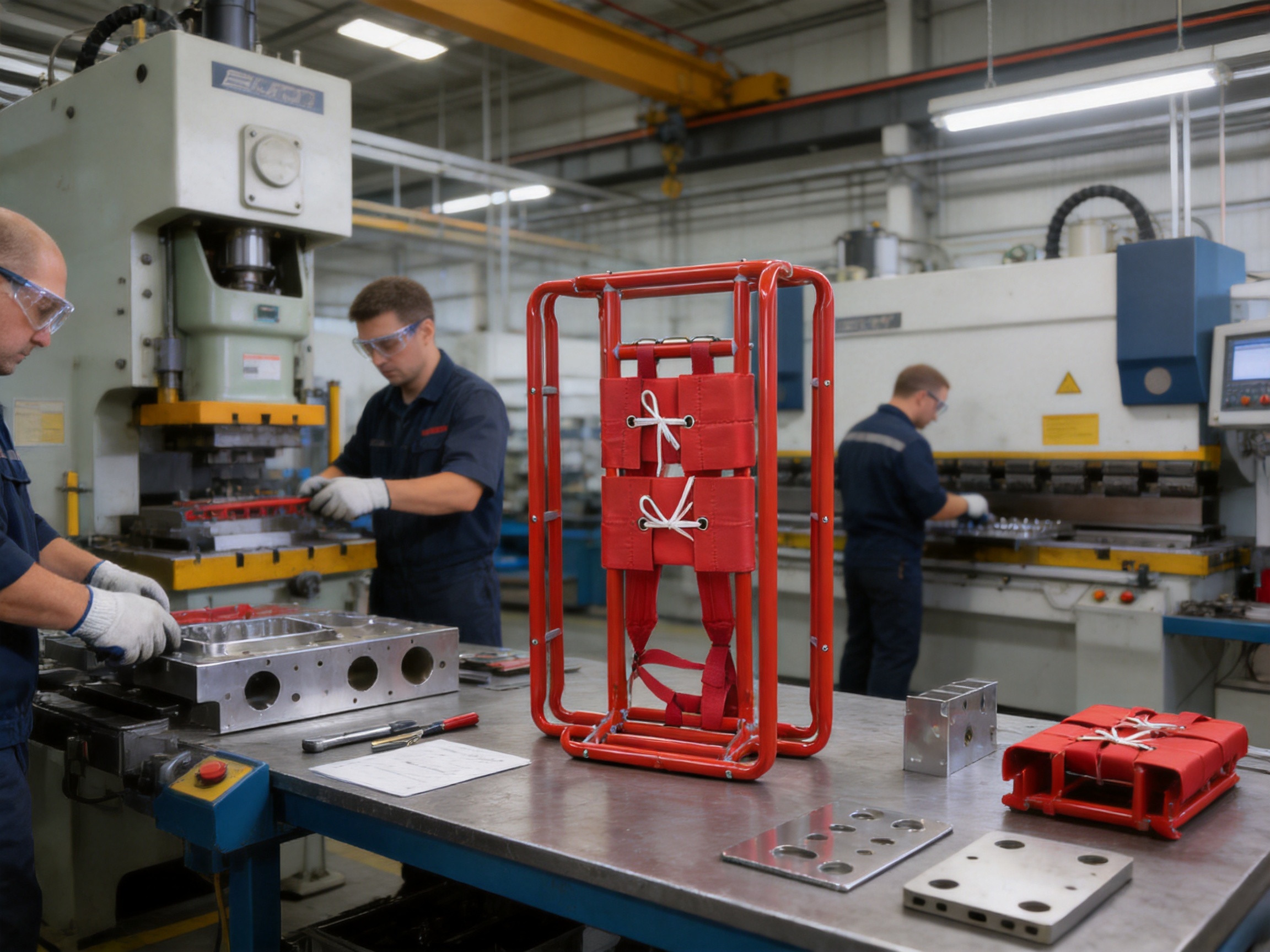
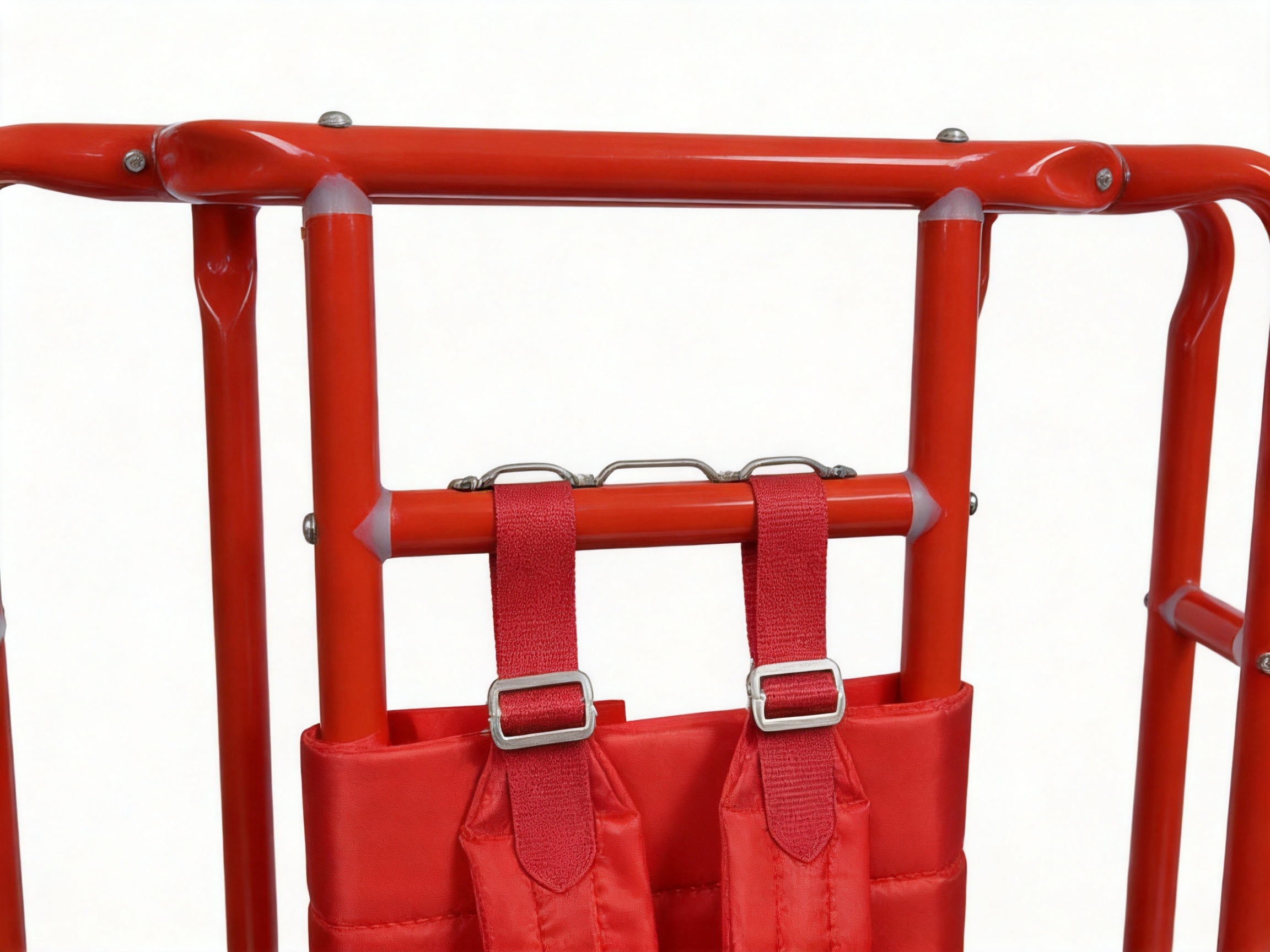
Red bent parts with red fabric strap
Product Overview
Red bent parts with red fabric straps are formed metal components designed through bending processes and finished with a red protective coating. The addition of a fabric strap makes the part easier to hold, pull, hang, or secure, depending on the intended application. The combination of rigid metal and flexible textile creates a useful hybrid component: the metal body provides strength and structure, while the strap provides comfort, convenience, and a safer user interface.
The product can be applied in industrial equipment, automotive assemblies, furniture systems, outdoor products, household appliances, kitchen appliance accessories, hardware tools, storage systems, and custom mechanical structures. Its bright red appearance is not only decorative; it can also help users quickly identify operating points, emergency access areas, removable parts, or functional accessories in equipment and consumer products.
The metal portion can be produced through controlled stamping, cutting, punching, deburring, bending, and surface finishing. Depending on the design requirements, the component may include mounting holes, slots, ribs, tabs, folds, rounded edges, or specialized contours. The bending geometry ensures that the part fits precisely into its target assembly and maintains the required mechanical function under repeated use.
The red fabric strap may be used to improve ergonomics, protect the user’s hand, simplify pulling action, reduce direct contact with hard metal edges, or provide a flexible suspension function. In comparison with metal-only components, the strap increases usability and makes the part more practical in situations where frequent manual operation is required.
Why This Product Matters in Modern Assemblies
Many modern products require components that are compact, strong, easy to install, and visually consistent with the final assembly. A bent metal part is often selected when a flat sheet component must be transformed into a three-dimensional functional part. However, traditional bent parts may lack user comfort or visual distinction. By adding a red fabric strap and a corrosion-resistant red coating, this product addresses both performance and user experience.
In machinery, the part may act as a positioning element, a pull point, a protective bracket, or a quick-access accessory. In automotive applications, it may serve as a supporting, fastening, or convenience component. In furniture or outdoor equipment, it may be used as a handle-like accessory, a latch support, or a suspended connector. In kitchen appliance accessories, it can provide secure mounting, controlled movement, or simplified operation. Because it is customizable, the same product concept can be adapted to many industries without requiring a completely new manufacturing platform.
This flexibility is especially valuable for companies seeking OEM or ODM support. Instead of relying on standard off-the-shelf components that may only partially fit the design, customers can request tailored dimensions, bend angles, hole arrangements, surface finishes, and strap specifications. This improves product integration and reduces the need for secondary modification during assembly.
Core Advantages Over Ordinary Competitor Products
The red bent part with fabric strap has several advantages when compared with basic bent brackets or generic stamped parts. First, it offers a more complete functional design. A common bent part may only provide a mounting or support function, while this product integrates a fabric strap that improves operation and handling. This makes it more suitable for products that require user interaction.
Second, the red coating improves both appearance and protection. Many low-cost metal parts are supplied with minimal finishing, which can lead to corrosion, scratches, inconsistent color, or poor appearance after installation. A durable red coating helps protect the metal substrate and provides a uniform visual effect. In applications exposed to humidity, outdoor conditions, workshop environments, or frequent handling, this surface protection becomes a meaningful advantage.
Third, the bending precision supports better assembly reliability. A poorly formed bent part can create alignment problems, loose installation, stress concentration, or interference with surrounding components. Precision bending improves dimensional repeatability, allowing the part to fit consistently across production batches. This reduces assembly labor, improves quality stability, and supports efficient mass production.
Fourth, customization makes the product more competitive. Some suppliers only provide standard bending parts with limited design support. In contrast, a manufacturer with strong stamping and bending capabilities can adapt the product to exact customer drawings, samples, or application requirements. Customization may include material grade, thickness, width, curvature, hole size, slot geometry, strap length, coating color, and packaging method.
Fifth, the integrated production strength behind the part helps ensure consistent supply. A reliable manufacturer with multiple stamping workshops, experienced technical staff, and established quality control can support rapid prototyping, small-batch testing, and larger production conversion. This reduces sourcing risk for customers that need long-term cooperation rather than one-time procurement.
Material and Structural Considerations
The performance of a bent metal part depends heavily on the material selected, the thickness, the bending radius, the forming method, and the surface treatment. Although specific materials can be customized according to customer requirements, the product concept is typically compatible with commonly used sheet metals suitable for stamping and bending. These may include carbon steel, stainless steel, galvanized steel, or other metallic materials selected for strength, formability, cost efficiency, and corrosion resistance.
For bending parts, material ductility is important. If the material is too brittle, cracks may occur at the bend line. If it is too soft, the component may deform under load. A qualified manufacturer evaluates the bending direction, material grain orientation, inner bend radius, and springback behavior to ensure that the final geometry meets the required tolerance. This is especially important for parts with multiple bends or tight assembly requirements.
The red coating is another important structural and functional element. A properly applied coating can improve corrosion resistance, reduce surface oxidation, enhance appearance, and provide a smoother touch. Surface preparation before coating is essential. Cleaning, degreasing, deburring, and surface conditioning help coating adhesion and reduce defects. When coating is controlled correctly, the finished component is more durable and attractive than untreated or poorly finished alternatives.
The fabric strap should be chosen according to expected load, abrasion resistance, comfort, and appearance. A red fabric strap that matches or complements the metal coating creates a unified visual style. The strap may be attached through holes, slots, rivets, stitching, folding, or other assembly methods depending on the product structure. For user-operated components, strap softness and edge quality are important because they influence comfort and safety.
Manufacturing Process: From Sheet Metal to Finished Component
The manufacturing process begins with product analysis. Engineers review drawings, samples, application requirements, material preferences, surface treatment expectations, tolerance requirements, and quantity targets. If the customer only has a concept, the manufacturer may assist with design optimization to make the part easier to produce, stronger in use, and more cost-effective. This early stage is essential because decisions about bend radius, hole location, and material thickness affect both performance and manufacturing efficiency.
After design confirmation, the metal sheet is prepared for production. Cutting or blanking processes create the initial flat shape. Stamping may be used to produce holes, slots, outlines, embossments, or other features. For high-volume production, dedicated dies can improve speed, repeatability, and cost efficiency. For prototype or small-batch orders, flexible processing methods may be used to shorten lead time and reduce tooling investment.
Deburring and edge treatment are important after cutting and stamping. Sharp edges can damage the fabric strap, injure users, scratch adjacent components, or interfere with coating quality. Proper deburring improves safety, coating adhesion, and final product appearance. This step is sometimes overlooked by low-cost competitors, but it is critical for parts that will be handled manually or integrated into visible assemblies.
The bending operation transforms the flat blank into the required three-dimensional shape. Precision bending equipment and experienced operators help control bend angle, bend radius, and dimensional consistency. Because sheet metal tends to spring back after bending, process knowledge is needed to compensate and achieve the target geometry. For complex designs, trial production and inspection may be carried out before mass production begins.
Surface treatment follows forming. The component is cleaned and prepared for coating. The red coating is then applied according to the required finish. The coating must be consistent, sufficiently adhered, and free from obvious defects. A quality coating improves durability and makes the product suitable for visible or semi-visible applications.
The fabric strap is integrated during final assembly. The strap must be positioned correctly and secured firmly. The attachment method should prevent loosening during normal use. If the component is intended for pulling or load-bearing action, the strap connection must be evaluated according to expected stress. Final inspection verifies dimensions, appearance, coating quality, strap placement, and packaging condition.
Advanced Manufacturing Strengths Behind the Product
Yuyao Hongli Optoelectronics Co., Ltd. has more than 20 years of industry experience and operates as a comprehensive manufacturing enterprise in Yuyao, Zhejiang Province, China. The company has developed strong capabilities in metal stamping parts, deep-drawn parts, bending parts, kitchen appliance accessories, automotive stamping parts, hardware products, plastic products, optical instrument parts, educational instrument parts, household electric heater components, and small household appliance accessories.
The company operates a modern factory of approximately 5,000 square meters, with multiple stamping workshops and more than 60 employees. This production foundation allows the company to manage custom manufacturing, processing, wholesale, retail, import, and export services. The company supports OEM and ODM customization, rapid prototyping, and efficient transition from sample development to stable batch production.
For red bent parts with fabric straps, this manufacturing background is especially important. The product is not merely a standard accessory; it may require customized tooling, accurate stamping, controlled bending, surface finishing, textile integration, and batch inspection. A manufacturer with broad experience in stamping and bending can better understand how to prevent cracking, deformation, coating defects, dimensional drift, and assembly inconsistency.
Another strength is production flexibility. Customers may require different versions of the same product for different markets, equipment models, or assembly positions. A capable manufacturer can adjust drawings, create prototypes, test assembly fit, optimize tooling, and then move into mass production. This flexibility helps customers reduce development time and avoid the delays associated with suppliers that cannot adapt quickly.
The company’s business philosophy emphasizes integrity, excellence, innovation, and sharing. For international customers, this means more than product delivery. It means technical communication, stable cooperation, quality awareness, and after-sales support. When sourcing customized metal parts, reliable communication and consistent execution are often as important as the component itself.
Design Flexibility and Customization Options
One of the strongest advantages of this product is its ability to be customized. The red bent part can be produced in various sizes, shapes, and structural configurations. Customers may request a narrow strip-like design, a wide support plate, a multi-bend profile, a hook-like form, a bracket structure, or a part with special holes and slots. Bend angles can be adjusted according to assembly space and functional needs.
Material thickness can also be selected based on load requirements. A lightweight part may be suitable for furniture or appliance accessories, while a thicker part may be needed for automotive or mechanical equipment. The manufacturer can help evaluate whether a design requires reinforcement ribs, wider mounting areas, larger radii, or additional fastening points.
The red coating can be selected to meet appearance and protection requirements. While the featured product uses a striking red finish, customers may request different coating specifications depending on the environment. However, the red version provides a strong visual identity and is particularly useful when the part should be easy to identify or coordinate with other red elements in the final product.
The fabric strap can also be customized. Strap length, width, thickness, texture, and attachment method can be adjusted. A longer strap may improve pulling access in confined areas, while a shorter strap may be preferred for compact assemblies. The strap may be designed for comfort, visibility, grip, or hanging convenience. The red color creates a coordinated design with the coated metal part.
Packaging can be customized as well. For industrial customers, bulk packaging may be suitable. For retail or service parts, individual packaging, protective wrapping, labeling, or kit packaging may be required. Proper packaging prevents coating scratches and strap contamination during transportation.
Application Scenarios
In machinery, red bent parts with fabric straps can serve as pull handles, access tabs, guide brackets, equipment positioning parts, or protective accessories. The red color helps operators identify interactive points quickly. The fabric strap provides a comfortable grip and may reduce the risk of hand injury when compared with pulling directly on a hard metal edge.
In automotive stamping-related applications, the part may be used as a support component, removable panel accessory, fastening aid, emergency access pull, or interior functional element. Automotive parts require consistent dimensions and dependable quality, making precision stamping and bending important. A red fabric strap can also be useful for components that require quick recognition or manual access.
In furniture, the part can be integrated into folding systems, storage units, adjustable structures, or decorative hardware. The red finish may be used as a design accent, while the metal body provides structural support. The fabric strap can make hidden or recessed components easier to operate.
In outdoor equipment, corrosion resistance and usability are both important. A coated bent metal component can resist environmental exposure better than untreated metal. The fabric strap offers convenient handling when users wear gloves or operate equipment in cold or wet conditions. The red color also improves visibility in outdoor environments.
In kitchen appliance accessories, bent metal parts are often used for mounting, support, heat shield positioning, internal assembly, or removable component handling. The product’s smooth coating, controlled geometry, and customizable design make it suitable for appliance manufacturers that require reliable production and consistent assembly behavior.
In consumer products, the combination of red metal and red fabric can make the component visually appealing. A well-finished part can improve perceived product quality. This is important because users often judge product reliability not only by function but also by touch, color consistency, and surface quality.
Technical Comparison Table
| Feature | Red Bent Parts with Fabric Strap | Ordinary Bent Metal Parts | Customer Benefit |
|---|---|---|---|
| Surface Finish | Durable red coating for visual appeal and corrosion resistance | Often untreated, plain, or inconsistently finished | Longer service life and better appearance |
| User Handling | Integrated red fabric strap improves grip and comfort | Usually metal-only with limited ergonomic value | Safer and more convenient operation |
| Customization | Sizes, shapes, holes, bends, materials, and strap designs can be customized | Frequently limited to standard shapes | Better fit for unique assemblies |
| Manufacturing Support | Produced by an experienced stamping and bending manufacturer with OEM/ODM capability | May come from suppliers with limited process control | More stable quality and smoother project development |
| Application Range | Suitable for machinery, automotive, furniture, outdoor equipment, appliances, and hardware | Often designed for narrow single-purpose use | Greater design flexibility and purchasing efficiency |
| Assembly Reliability | Precision bending supports repeatable installation | Dimensional variation may create fitting issues | Reduced assembly problems and rework |
Quality Control and Inspection
Quality control is essential for bending parts because small dimensional errors can cause significant assembly issues. Inspection begins with material verification. The material should match the required grade, thickness, and surface condition. If the wrong material is used, the part may crack during bending, fail under load, or show poor coating adhesion.
Dimensional inspection checks the blank outline, hole locations, slot dimensions, bend angles, overall length, width, height, and critical installation points. For customized parts, inspection may be based on customer drawings, samples, or agreed tolerances. Measuring tools may include calipers, gauges, angle measuring devices, fixtures, or custom inspection jigs.
Surface inspection evaluates coating uniformity, color consistency, adhesion, scratches, dents, exposed metal, and contamination. Because the red finish is visually prominent, appearance control is important. A high-quality surface improves the customer’s final product and reduces rejection during incoming inspection.
Strap inspection verifies length, alignment, attachment security, fabric condition, edge quality, and color consistency. If the strap is intended for pulling or holding, the connection must be strong enough for the expected operating conditions. The strap should not be damaged by sharp metal edges, which is why deburring and edge finishing are important earlier in the process.
Packaging inspection ensures that parts are protected during transportation. Coated metal parts can rub against each other if poorly packed, causing scratches or coating wear. Proper packaging can include separation, wrapping, layering, cartons, or customized packing solutions according to shipping distance and customer requirements.
Durability and Corrosion Resistance
The red coating plays an important role in durability. Metal parts used in industrial and consumer environments may be exposed to moisture, hand oils, dust, mild chemicals, temperature changes, and mechanical contact. Without surface protection, oxidation and corrosion can reduce both appearance and performance. A protective coating helps isolate the metal surface from the environment.
Durability also depends on the quality of forming. If a bend is too sharp for the selected material, cracks can appear at the bend line. These cracks may not only weaken the part but also create coating failure points. Proper bend radius selection and process control help maintain material integrity. This is an area where experienced manufacturing knowledge provides a competitive advantage.
The fabric strap contributes to long-term usability. When users repeatedly operate a component, direct contact with a rigid metal edge may cause discomfort or wear. A fabric strap distributes force more comfortably and can reduce localized stress on the hand. For applications involving repeated pulling, this improves the user experience and may reduce accidental misuse.
Although the product is easy to install and requires minimal maintenance, proper application design is still important. Customers should ensure that the component is not overloaded beyond its intended function and that the strap is not exposed to sharp cutting surfaces, excessive heat, or aggressive chemicals unless specifically designed for those conditions.
Ease of Installation
The product is designed to support convenient installation. Mounting holes, slots, tabs, or other features can be added according to assembly needs. Because the bending geometry can be customized, the part can be made to fit the required mounting surface, clearance envelope, and operating direction. This reduces installation difficulty and improves production efficiency.
For manufacturers assembling products at scale, ease of installation has direct financial value. A part that fits correctly and requires no modification saves labor time. It also reduces the chance of assembly errors. When parts are supplied with consistent dimensions and predictable coating thickness, fastening and alignment become more reliable.
The fabric strap can also simplify installation or later operation. For example, if the part is installed in a recessed location, the strap can provide an accessible pull point. If the part must be removed during maintenance, the strap can help technicians operate it without tools. If the component is used in a product handled by consumers, the strap can provide a more intuitive interaction point.
OEM and ODM Project Support
OEM and ODM customization is highly relevant for this product. Many customers do not need a standard part; they need a component that matches their product structure, assembly process, and performance expectation. A manufacturer with stamping and bending experience can help turn a drawing, sample, or concept into a manufacturable product.
During OEM development, the customer may provide a detailed drawing with dimensions, tolerances, material requirements, coating requirements, and packaging instructions. The manufacturer then evaluates tooling, production method, cost, and delivery schedule. Samples may be produced for approval before mass production.
During ODM development, the customer may provide the intended function rather than a complete drawing. The manufacturer can assist with structural design, material selection, process planning, and prototype development. This is useful for startups, appliance makers, equipment manufacturers, and product designers that need manufacturing support.
Rapid prototyping is another advantage. Before committing to large-scale production, customers may need samples to test fit, strength, appearance, and usability. A responsive manufacturer can produce prototypes, collect feedback, adjust the design, and prepare for batch production. This shortens development cycles and helps prevent costly design mistakes.
Cost Efficiency Through Process Integration
Cost efficiency does not mean choosing the cheapest component. It means achieving the required quality, function, and delivery stability at a reasonable total cost. A low-priced part that fails inspection, causes assembly delays, or requires rework can become more expensive than a properly manufactured component. Red bent parts with fabric straps are designed to provide practical value through durability, customization, and stable manufacturing.
Process integration helps control cost. When cutting, stamping, bending, finishing, assembly, and inspection are coordinated by an experienced manufacturer, production flow becomes more efficient. Tooling can be optimized, waste can be reduced, and quality issues can be identified early. This is preferable to a fragmented supply chain where different suppliers handle different steps without unified control.
For high-volume orders, dedicated tooling and repeatable production processes reduce unit cost. For small-batch or prototype orders, flexible production methods can reduce initial investment. Customers benefit from being able to start with samples and scale up when the design is confirmed.
The product’s multi-functional nature can also reduce overall system cost. Because the component combines metal structure with a fabric handling element, it may replace separate brackets, handles, straps, or identification parts. Reducing part count can simplify procurement and assembly.
Visual Appeal and Product Identity
The red color gives the part a strong visual identity. In industrial settings, red is often associated with visibility, access, caution, or operational importance. In consumer products, it can serve as a design accent. The consistent red appearance of both the metal component and the fabric strap creates a coordinated, intentional look.
Visual quality matters because many bent parts are visible or touched by users. A rough, scratched, or poorly coated component can reduce confidence in the entire product. A clean red finish, smooth edges, and well-attached fabric strap communicate professionalism and attention to detail. This can be especially important in appliances, furniture, outdoor products, and equipment where customers interact directly with the component.
For brands that want custom colors or private designs, the product platform can be adapted. However, the red version remains a strong choice when visibility, easy identification, and distinctive appearance are desired.
Reliability in Long-Term Cooperation
When selecting a supplier for customized bending parts, long-term reliability is a key consideration. Buyers need more than a single delivery. They need stable quality, consistent communication, repeatable production, and the ability to respond to design changes. Yuyao Hongli Optoelectronics Co., Ltd. has built its manufacturing foundation over more than two decades, supporting customers in multiple product categories and markets.
The company’s capabilities in manufacturing, processing, import, export, and after-sales service allow it to support both domestic and international customers. Its experience with educational instruments, optical instruments, household electric heaters, small household appliances, auto parts, hardware products, plastic products, deep-drawn parts, stamped parts, bending parts, kitchen appliance accessories, and automotive stamping parts gives it a broad technical perspective.
This breadth is valuable because many modern projects combine several processes. A customer may need stamped parts, bent parts, deep-drawn parts, plastic components, and assembled accessories. Working with a manufacturer that understands multiple categories can simplify sourcing and improve coordination.
How to Specify a Custom Red Bent Part with Fabric Strap
To receive an accurate quotation and efficient technical support, customers should provide as much information as possible. A drawing is ideal, especially if it includes dimensions, tolerances, material grade, thickness, bend angles, hole sizes, surface treatment, strap specifications, quantity, packaging requirements, and application conditions. If a drawing is not available, a physical sample or clear photos with key measurements can be helpful.
Customers should also explain the intended function. For example, is the part used for pulling, mounting, supporting, hanging, guiding, or protection? Will it be used indoors or outdoors? Will it be handled frequently? Does it need to resist moisture, heat, vibration, or abrasion? These details help the manufacturer select suitable materials, coating methods, strap types, and attachment structures.
Expected annual quantity is another important factor. Prototype, small-batch, and mass-production projects may require different tooling and process strategies. The manufacturer can recommend an economical approach based on demand. If the product will later scale to high volume, it is useful to design with mass production in mind from the beginning.
Packaging and shipping requirements should not be ignored. Coated parts with fabric straps need protection from scratches, compression, moisture, and contamination. Proper packaging improves the condition of parts upon arrival and reduces handling issues during assembly.
Q&A Section
What are red bent parts with red fabric straps used for?
They are used as customized metal accessories for machinery, automotive components, furniture, outdoor equipment, kitchen appliance accessories, hardware products, and other assemblies. Depending on the design, they can function as pull parts, support brackets, positioning elements, hanging accessories, fastening aids, or user-operated components.
What makes this product different from ordinary bent metal parts?
The product combines a precision-bent metal body, a durable red coating, and an integrated red fabric strap. Ordinary bent parts often provide only a basic structural function, while this product improves user comfort, visibility, corrosion resistance, and appearance. It also supports extensive customization for specific applications.
Can the size and shape be customized?
Yes. The metal shape, bend angle, length, width, thickness, hole position, slot design, coating requirement, and fabric strap specification can be customized according to drawings, samples, or application needs.
Why is the red coating important?
The red coating enhances appearance, improves corrosion resistance, and increases visibility. It helps protect the metal substrate from environmental exposure and gives the component a clean, professional finish.
Is the fabric strap only decorative?
No. The fabric strap can improve grip, comfort, handling, pulling convenience, and user safety. It may also make the part easier to locate or operate, especially in recessed or confined positions.
What industries can use this product?
Relevant industries include machinery manufacturing, automotive parts, furniture, outdoor equipment, kitchen appliances, small household appliances, hardware products, storage systems, and custom industrial assemblies.
How does precision bending improve product performance?
Precision bending ensures that the part maintains accurate angles, dimensions, and fit. This reduces assembly problems, improves repeatability, prevents interference with surrounding components, and supports stable long-term performance.
Can prototypes be produced before mass production?
Yes. Prototype development is useful for testing fit, appearance, strength, strap position, and installation method. After the sample is approved, production can be scaled according to order requirements.
What information should be provided for a quotation?
Customers should provide drawings or samples, dimensions, material requirements, thickness, surface treatment, strap specifications, quantity, application environment, tolerance requirements, and packaging expectations.
Why choose an experienced stamping and bending manufacturer for this product?
An experienced manufacturer can control material selection, blanking, stamping, deburring, bending, coating, strap assembly, inspection, and packaging. This reduces quality risks and supports stable production for customized projects.
Conclusion
Red bent parts with red fabric straps offer a practical and attractive solution for customers who need more than a basic metal bracket. The product combines strength, precision, corrosion resistance, comfort, visibility, and customization. Its bent metal body provides structural reliability, while the red fabric strap improves user handling and functional convenience. The red coating enhances appearance and helps protect the component in demanding environments.
Compared with ordinary competitor products, this component delivers stronger value through integrated design, better surface protection, ergonomic improvement, and flexible customization. It is suitable for machinery, automotive parts, furniture, outdoor equipment, kitchen appliance accessories, and many custom assemblies. Its ability to be adapted to specific customer requirements makes it especially useful for OEM and ODM projects.
Behind the product is a manufacturing foundation built on more than 20 years of experience in stamping, bending, deep drawing, appliance accessories, automotive stamping parts, hardware products, and customized production. With a modern factory, multiple workshops, skilled employees, quality control, rapid prototyping support, and export service capability, Yuyao Hongli Optoelectronics Co., Ltd. provides customers with reliable manufacturing support and long-term cooperation potential.
For product developers and purchasing teams seeking a durable, visually distinctive, and user-friendly metal accessory, the red bent part with red fabric strap is a strong choice. It transforms a simple metal component into a refined functional solution that supports performance, appearance, assembly efficiency, and customer satisfaction.
References
Kalpakjian, S., and Schmid, S. R. Manufacturing Engineering and Technology. Pearson Education.
Groover, M. P. Fundamentals of Modern Manufacturing: Materials, Processes, and Systems. Wiley.
Boljanovic, V. Sheet Metal Forming Processes and Die Design. Industrial Press.
ASM International. ASM Handbook: Forming and Forging. ASM International.
Suchy, I. Handbook of Die Design. McGraw-Hill Education.
Smith, D. A. Die Design Handbook. Society of Manufacturing Engineers.
Product: Red bent parts with red fabric strap
Previous Post
Deep-Drawn Square Containers with Custom Cutouts for Durable Industrial Applications
Next Post
Stamped Small Square Parts for Precision Industrial Assembly
News
-
-
When you need a metal component whose depth clearly exceeds its width, such as a one-piece battery enclosure, an air-fryer inner container,...
READ MORE -
If you have ever asked yourself, “How do I find a reputable metal fabricator?” you are not alone. As a manufacturer with more than 20 years...
READ MORE -
Steel is the backbone of modern manufacturing, yet it is never a single, uniform material. When engineers and buyers ask, "How can you clas...
READ MORE
Get Fresh Updates Via Email
We promise we will never disclose your email address, and you can opt out at any time.
-
Quick Links
Home About Us Products Service News Contact Us -
Product list
Deep-drawn parts Stamped parts Bending parts Kitchen appliance accessories Automotive stamping parts -
About Us
Factory Honour FAQ -
News
Company News Industry News -
Contact Us
Address: South side of Shunke Road, Yangming Science and Technology Industrial Park, Yuyao City, Zhejiang Province, China Tel: +86-13905842349/+86-13738485724 Email: hongli@hl-stamping.com
Copyright © Yuyao Hongli Optoelectronics Co., Ltd. All Rights Reserved.
Custom Precision-Sheet/Sheet Metal Stamping Manufacturers
