


 English
 русский
 Español
 عربى
عربى

When you need a metal component whose depth clearly exceeds its width, such as a one-piece battery enclosure, an air-fryer inner container,...
READ MORE

News
Home / Author / Chen Ruoxi — Overseas Product Sales Manager / Deep-Drawn Square Containers with Custom Cutouts for Durable Industrial Applications
Deep-Drawn Square Containers with Custom Cutouts for Durable Industrial Applications
2026-07-18
In modern metal component manufacturing, the demand for strong, clean, dimensionally stable, and application-specific enclosures continues to grow across industrial, appliance, automotive, electrical, and equipment sectors. A deep-drawn square container with cutouts represents a highly practical solution for manufacturers that need a compact metal body with excellent rigidity, a seamless structure, and customized openings for ventilation, drainage, cable routing, fastening, or assembly integration. Unlike fabricated boxes assembled by welding multiple panels together, this type of container is formed from a sheet metal blank through a controlled deep-drawing process, creating a one-piece structure with smooth surfaces, consistent geometry, and enhanced mechanical performance.
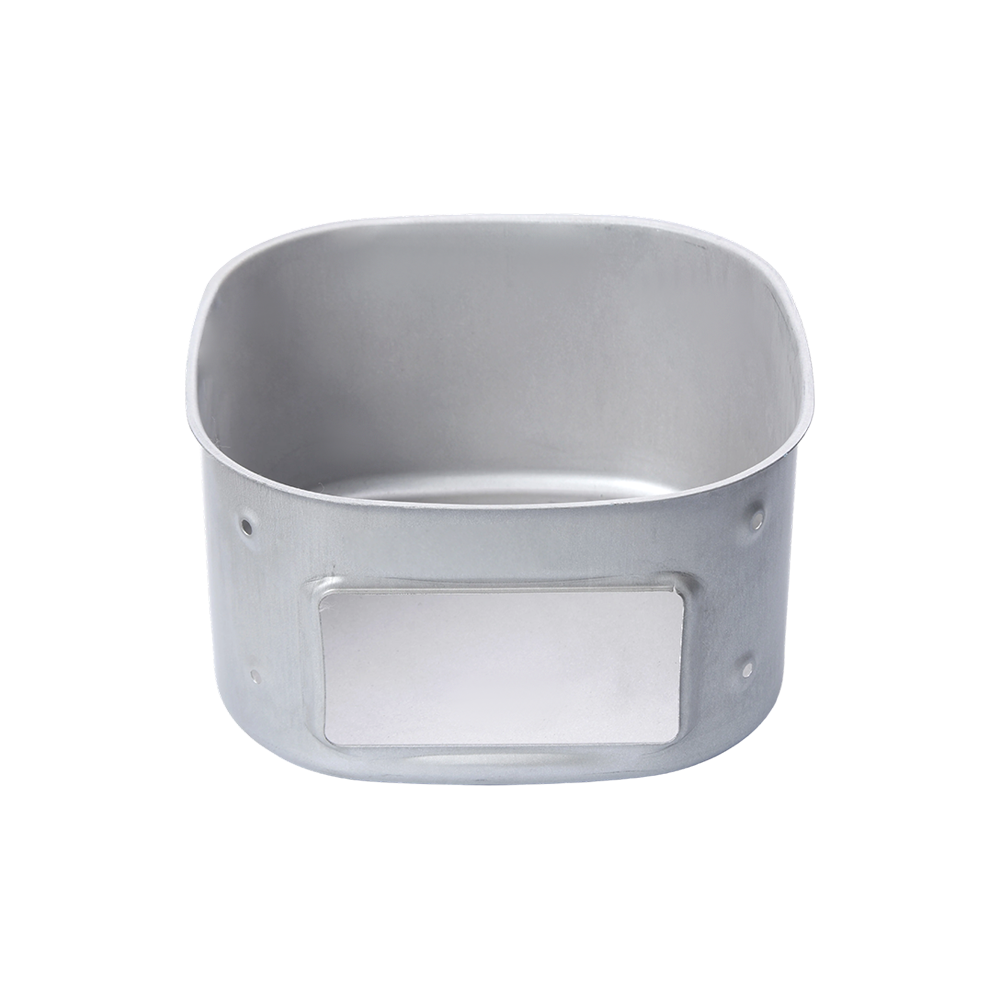
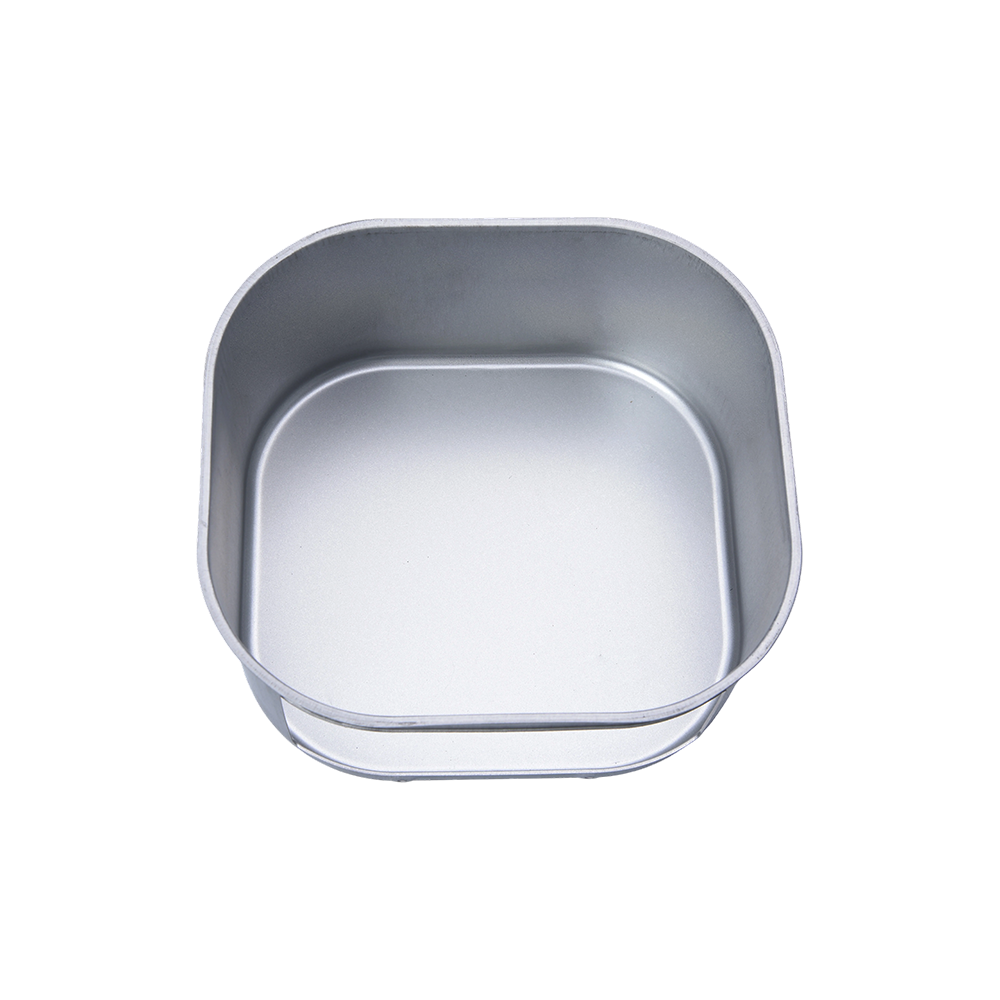
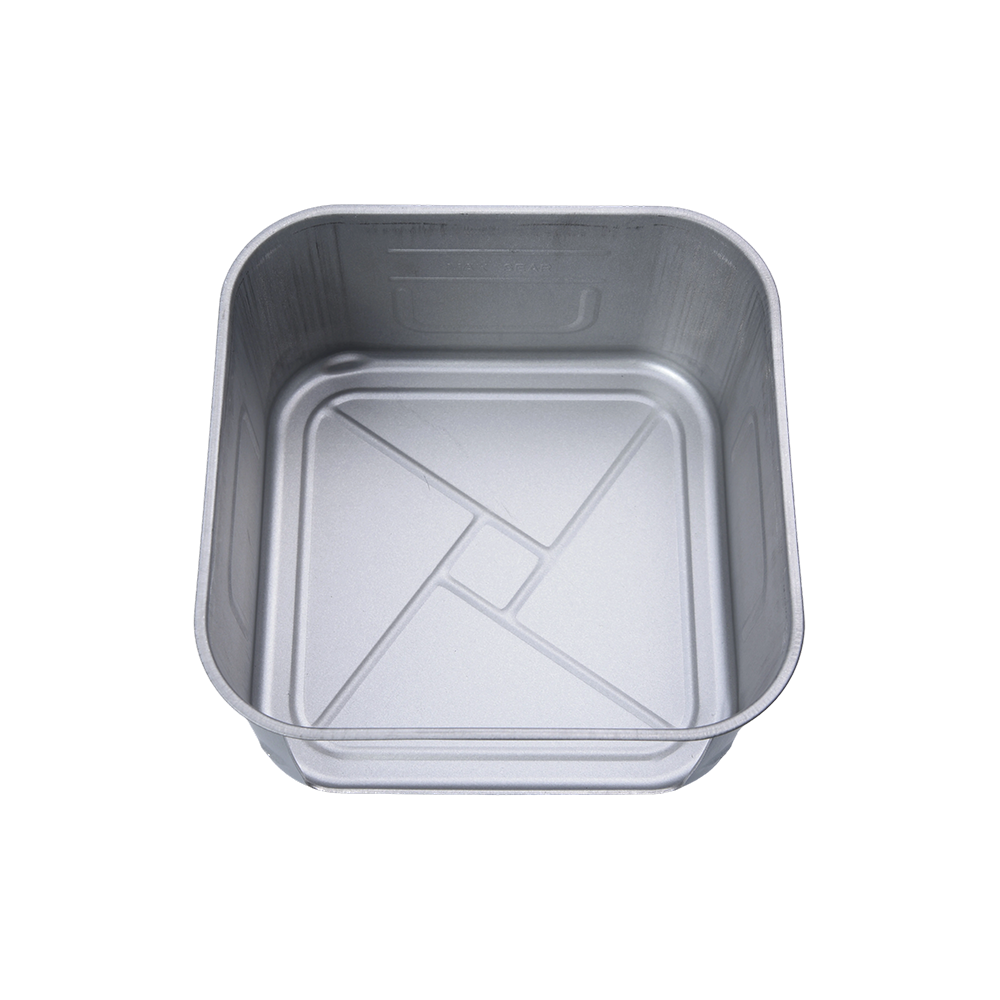
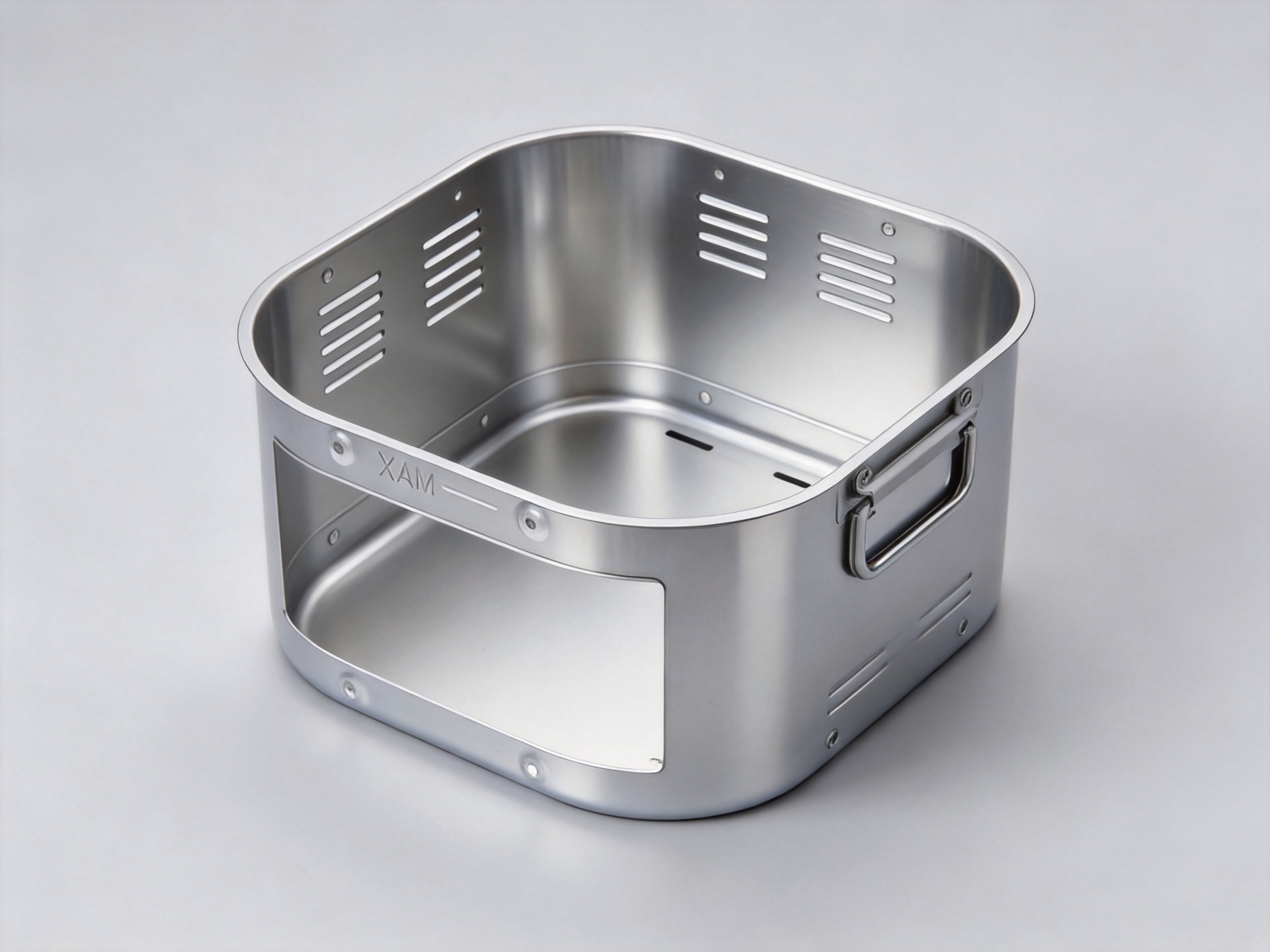
The product discussed in this article is a deep-drawn square container with cutouts designed for demanding applications where strength, cleanliness, precision, and customization matter. It belongs to the category of deep-drawn parts and is closely related to stamped parts, bending parts, kitchen appliance accessories, and automotive stamping parts. Its square form provides practical internal space, while its deep-drawn construction delivers high structural integrity. The customizable cutouts expand its usability by allowing the container to meet different functional requirements without sacrificing durability or efficiency.
For buyers comparing this solution with conventional welded containers, bent sheet metal boxes, plastic housings, or low-precision stamped shells, the advantages are clear. The deep-drawn square container provides a seamless one-piece body, fewer failure points, superior surface continuity, excellent repeatability, and strong resistance to deformation. When produced by an experienced manufacturer with advanced stamping and deep-drawing capabilities, it can also achieve excellent consistency from prototype to mass production. This combination of product design flexibility and manufacturing strength makes it an efficient choice for both OEM and ODM projects.
Deep-drawn square container with cutouts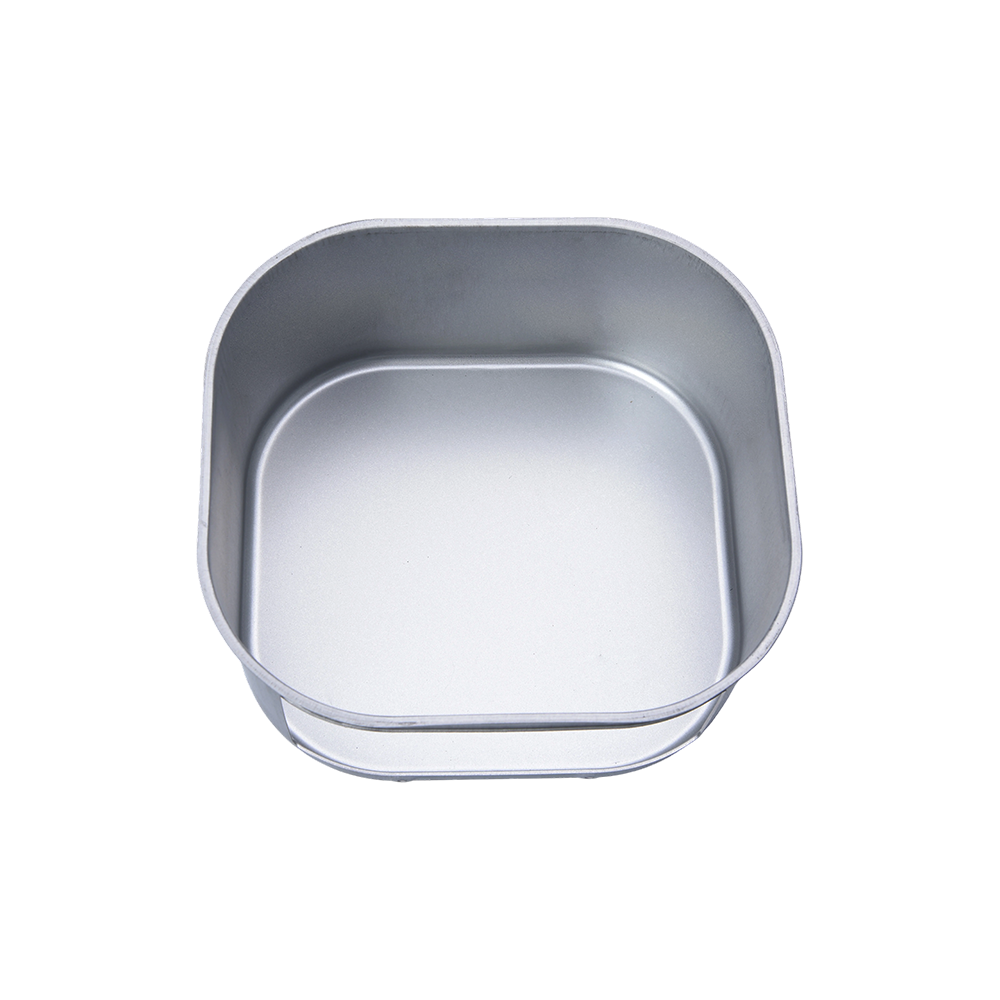
Understanding the Deep-Drawn Square Container with Cutouts
A deep-drawn square container is formed by placing a metal sheet blank into a die and using a punch to draw the material into a cavity. During this process, the metal flows plastically into the desired shape rather than being joined from separate pieces. The result is a continuous, seamless metal container with walls and a base formed as one integrated part. This technique is especially valuable for containers that need strength, compactness, clean edges, and dependable performance under load.
The addition of cutouts turns the container from a simple drawn shell into a functional component ready for integration into a larger assembly. These cutouts may include circular ventilation holes, elongated slots, drainage openings, cable passages, mounting holes, sensor openings, or assembly notches. Because the openings can be customized according to customer drawings or application requirements, the container can be adapted for many different industries. Precision-cut openings also reduce the need for secondary manual modification, which helps improve production efficiency and quality consistency.
The square shape offers a balance between space utilization and manufacturability. Compared with cylindrical containers, square containers often fit better into equipment layouts, appliance housings, automotive modules, and cabinet assemblies. Compared with a simple bent box, a deep-drawn square body provides smoother corners and fewer seams, resulting in improved strength and a more professional appearance. This is especially important when the component is visible to end users or when it must be cleaned frequently.
The product can be customized in size, material, thickness, depth, corner radius, surface finish, and cutout arrangement. Depending on the final application, it may be manufactured from materials such as stainless steel, carbon steel, galvanized steel, aluminum, or other formable sheet metals. Thickness selection depends on the required strength, weight target, cost expectation, and forming feasibility. A reliable manufacturer evaluates these factors before production to ensure that the final container satisfies mechanical, dimensional, and functional requirements.
Why a Seamless One-Piece Structure Matters
One of the strongest advantages of deep drawing is the ability to create a container without welded joints. Welded constructions can be effective in many applications, but they also introduce potential weaknesses. Weld seams may create stress concentration, uneven surfaces, discoloration, distortion, corrosion-prone zones, or cleaning difficulties. In applications involving moisture, food-related environments, appliance interiors, electrical assemblies, or automotive components, eliminating unnecessary welds can greatly improve reliability and appearance.
A one-piece deep-drawn container distributes stress more evenly throughout its body. The corners and sidewalls are formed continuously from the original sheet, helping the component resist bending, vibration, and impact. This is valuable in applications where the container may hold internal parts, support loads, or withstand repeated handling. The seamless base also helps prevent leakage paths in drainage or containment applications, depending on the selected cutout design and sealing requirements.
Smooth surfaces are another important benefit. Because there are no welded joints inside the container body, cleaning is easier and residue accumulation is reduced. This matters for kitchen appliance accessories, small household appliance parts, heating equipment components, and many industrial enclosures. A smooth internal structure can also protect wires, insulation materials, electronic components, and mechanical parts from abrasion caused by rough weld beads or sharp joined edges.
From a production perspective, one-piece deep drawing can reduce assembly steps. Instead of cutting multiple panels, bending them, positioning them, welding them, grinding the welds, and inspecting the joints, the container body can be formed in a controlled die process. Although tooling design requires expertise, the resulting mass production efficiency can be very high. For medium and large production volumes, this can lower unit cost, improve repeatability, and shorten production cycles.
Custom Cutouts for Practical Functionality
The cutouts in the container are not decorative additions; they are functional features that define how the component performs in its final application. Ventilation holes can help release heat from electrical components, motors, heaters, or appliance assemblies. Drainage holes can allow liquids to escape, preventing pooling, corrosion, or contamination. Wiring slots can guide cables through the container while maintaining organized assembly. Mounting holes allow the part to be fastened to frames, brackets, panels, or other housings.
Precision is essential when creating these cutouts. If openings are poorly positioned, oversized, undersized, or distorted, they can cause assembly problems and reduce structural strength. An experienced stamping manufacturer can control these features through accurate die design, punching, trimming, laser cutting, or secondary machining depending on the part requirements. The goal is to create clean, repeatable openings while preserving the strength of the drawn body.
Customization also supports product differentiation. Many customers do not need a generic metal container; they need a container that fits a specific product design. The number, position, shape, and size of cutouts may be different for each project. Some customers may require a row of ventilation holes on one side, while others may require cable slots on the base and mounting holes near the corners. The flexibility of customized cutouts allows the same deep-drawing concept to serve many industries without forcing customers to redesign their equipment around a standard part.
Another advantage is material optimization. Accurate cutout planning minimizes unnecessary waste and avoids excessive removal of material from high-stress areas. Engineers can review the relationship between the cutouts, corner radii, sidewall depth, and load-bearing requirements. Proper design prevents weakening around critical zones and helps the container maintain its rigidity even after openings are added. This is a major advantage over improvised post-processing methods that may compromise component quality.
Advantages Over Competing Container Solutions
When compared with welded sheet metal boxes, the deep-drawn square container offers a cleaner construction, fewer process steps in mass production, and improved consistency. Welded boxes depend heavily on operator skill, fixture quality, and weld control. Even with advanced welding equipment, thermal distortion may occur, requiring additional straightening or finishing. Deep drawing reduces these risks by forming the major container geometry in a die, which helps ensure repeatable dimensions and smooth surfaces.
When compared with simple bent sheet metal parts, the deep-drawn container provides better corner continuity and structural rigidity. Bent boxes often require open seams, rivets, spot welds, or folded joints at the corners. These features may be acceptable for low-cost enclosures, but they can introduce gaps or weak points. A deep-drawn square container has integrated corners that improve strength and appearance. This can be especially important for appliance components, equipment housings, and automotive-related parts where both durability and aesthetics matter.
When compared with plastic containers, the metal deep-drawn design offers higher heat resistance, better mechanical strength, improved dimensional stability, and greater suitability for harsh environments. Plastic housings can be lightweight and economical, but they may deform under heat, crack under impact, or degrade in certain chemical environments. Metal containers are better suited for applications involving heat, load, vibration, or long service life. In kitchen appliances, household electric heaters, automotive modules, and industrial equipment, metal often provides a more reliable long-term solution.
When compared with low-precision stamped shells, a properly engineered deep-drawn container offers superior depth, smoother geometry, and more stable performance. Deep drawing requires careful control of material flow, blank holding force, lubrication, punch radius, die radius, and drawing sequence. Manufacturers with strong tooling capability can produce deeper, cleaner, and more complex components than suppliers limited to simple stamping. This gives customers more freedom in product design and helps reduce the number of separate components in an assembly.
The product also offers advantages over machined metal boxes. Machining a container shape from solid material is usually expensive, material-intensive, and slow. Deep drawing forms the desired shape from sheet metal, using material more efficiently and supporting high-volume production. For many applications, deep drawing provides the ideal balance between strength, weight, cost, and production speed.
Key Product Benefits
The deep-drawn square container with cutouts provides a combination of mechanical, functional, and production advantages. Its seamless structure improves durability and reduces potential leakage or failure points. Its smooth surface supports easier cleaning and better appearance. Its customizable openings make it adaptable to different designs. Its rigid square form provides useful internal space and reliable support for other components.
The container can be produced in multiple sizes and thicknesses, allowing customers to choose the most appropriate balance between strength and weight. Thicker materials can improve load capacity and resistance to deformation, while thinner materials may reduce weight and cost for less demanding applications. Material selection can also be adapted according to corrosion resistance, conductivity, surface finish, and environmental exposure.
For OEM and ODM buyers, the product supports efficient integration. Instead of purchasing a basic shell and modifying it later, customers can request a finished or semi-finished container with the necessary cutouts already included. This reduces assembly time, lowers the risk of rework, and improves consistency across production batches. When paired with professional prototyping and engineering support, customers can move from concept to production more smoothly.
| Feature | Practical Advantage | Typical Customer Benefit |
|---|---|---|
| Seamless deep-drawn body | No welded joints in the main container structure | Improved strength, cleaner appearance, and fewer weak points |
| Custom cutouts | Openings can be designed for ventilation, drainage, wiring, or mounting | Better fit with customer equipment and fewer secondary operations |
| Square geometry | Efficient use of internal space and easy assembly into rectangular systems | Practical integration into appliances, equipment, and automotive modules |
| Adjustable material and thickness | Part strength, weight, and cost can be optimized | Flexible solutions for different operating conditions |
| Precision manufacturing | Stable dimensions and repeatable production quality | Reduced assembly problems and improved batch consistency |
| Smooth surface | Reduced residue accumulation and easier cleaning | Better usability in appliance, electrical, and industrial environments |
Manufacturing Process and Technical Control
Producing a reliable deep-drawn square container requires more than a press and a die. It requires a complete understanding of sheet metal behavior, tooling design, lubrication, press control, trimming, cutout processing, inspection, and surface treatment. Each step influences final part quality. Poorly controlled deep drawing can lead to wrinkling, tearing, uneven wall thickness, springback, or dimensional deviation. A capable manufacturer manages these risks through experience, engineering review, and process discipline.
The process usually begins with customer requirements. Drawings, samples, dimensions, material preferences, quantity expectations, and functional requirements are reviewed. Engineers evaluate whether the proposed container depth, corner radius, material thickness, and cutout positions are suitable for deep drawing. If necessary, they recommend design adjustments to improve manufacturability while maintaining the customer's intended function.
Tooling design is one of the most important stages. The punch and die must guide material flow smoothly into the square container shape. The blank holder must apply appropriate pressure to prevent wrinkles without restricting material movement excessively. Radii must be designed carefully to avoid tearing at the corners and sidewalls. For deeper parts, multiple drawing operations may be required. Tooling precision directly affects final accuracy, surface quality, and production stability.
Material preparation is also critical. The sheet metal must have suitable formability, thickness tolerance, surface condition, and mechanical properties. The blank size must be calculated accurately so the material can flow into the desired shape without excessive thinning or waste. Lubrication reduces friction during drawing and helps protect the surface. In high-quality production, these details are monitored to ensure repeatable results.
After the body is drawn, trimming and cutout processing are performed. Depending on the design, cutouts may be created through stamping, punching, laser cutting, or other precision methods. The sequence is chosen to protect part geometry and achieve clean edges. If cutouts are made before drawing, their shapes may distort during forming. If they are made after drawing, fixturing and positioning become important. An experienced manufacturer selects the most suitable process based on the specific part structure.
Deburring and finishing may be applied to remove sharp edges and improve safety. Surface treatment may include cleaning, polishing, plating, painting, powder coating, passivation, or other finishes depending on the material and application. Inspection verifies dimensions, cutout positions, surface quality, wall thickness, and general appearance. For production orders, batch control and stable process parameters help ensure that each container meets the required standard.
Company Manufacturing Strengths
Yuyao Hongli Optoelectronics Co., Ltd. is a comprehensive manufacturing enterprise with more than 20 years of industry experience. Located in Yangming Science and Technology Industrial Park, Yuyao City, Zhejiang Province, China, the company has developed strong capabilities in metal stamping, deep-drawn parts, bending parts, kitchen appliance accessories, automotive stamping parts, hardware products, plastic products, educational instruments, optical instruments, household electric heaters, small household appliances, and auto parts. This broad manufacturing background allows the company to understand the diverse requirements of different industries and provide practical customized solutions.
The company operates a modern factory of approximately 5,000 square meters and maintains multiple stamping workshops. With more than 60 employees and stable production capacity, it can support manufacturing, processing, wholesale, retail, import, and export services. Its experience in both domestic and international business helps it respond to different customer expectations, including product customization, delivery reliability, and quality control.
One of the company's important strengths is its ability to support OEM and ODM customization. Many customers require parts that are not available as standard catalog products. They need components built according to their drawings, samples, assembly needs, and performance requirements. The company can assist with design review, prototyping, production conversion, and batch manufacturing. This is especially valuable for deep-drawn square containers with cutouts, because small design changes can affect forming behavior, tooling cost, structural strength, and assembly performance.
Rapid prototyping capability is another advantage. Before committing to mass production, customers often need samples to test fit, strength, installation, ventilation, drainage, wiring, or surface finish. A manufacturer that can respond quickly during the prototyping stage helps customers reduce development time and identify design improvements early. Efficient production conversion then allows validated prototypes to move into stable batch manufacturing with fewer delays.
Strict quality control is central to the company's manufacturing philosophy. Deep-drawn parts require dimensional stability, surface consistency, and repeatable forming quality. Stamping parts require accurate hole positions, clean edges, and stable geometry. Bending parts require controlled angles and predictable springback compensation. By applying quality control throughout production, the company can help customers reduce assembly defects, minimize rework, and maintain product reliability.
The company is guided by the business philosophy of integrity, excellence, innovation, and sharing. For customers, this philosophy is reflected in long-term cooperation, practical technical communication, and attention to product quality. In competitive manufacturing, the ability to provide stable quality and responsive service is often as important as equipment capability. A supplier that understands both engineering and customer communication can become a long-term production partner rather than only a parts vendor.
Applications Across Industries
The deep-drawn square container with cutouts can serve many different application environments. In kitchen appliances, it may be used as a metal housing, support cup, protective enclosure, heater-related component, drainage container, or internal structural part. The smooth seamless body is useful where cleaning, corrosion resistance, and heat resistance are important. Cutouts can support airflow, fastening, or liquid management in appliance assemblies.
In household electric heaters and small household appliances, the container may protect internal components, support heating elements, guide airflow, or organize wiring. Metal construction provides better heat resistance than plastic and can help improve product durability. Ventilation cutouts can be designed to support safe heat dissipation, while mounting holes ensure secure assembly inside the product.
In automotive applications, deep-drawn and stamped metal parts are valued for strength, precision, and volume production efficiency. A square container with cutouts may be used in brackets, covers, protective housings, sensor-related components, electrical modules, or structural accessories. Automotive environments often involve vibration, temperature changes, and strict assembly requirements. A seamless deep-drawn component can provide dependable performance under these conditions.
In industrial equipment, the container may function as a protective shell, drainage tray, component holder, electrical box insert, or mechanical enclosure. Custom cutouts allow it to fit specific machinery layouts. The ability to choose material and thickness makes it suitable for light-duty or heavy-duty applications. Compared with fabricated enclosures, the deep-drawn structure can provide improved repeatability for equipment manufacturers that need consistent parts across production batches.
In optical instruments and educational instruments, precision and clean appearance are often important. Metal containers and housings may support assemblies, protect delicate components, or provide structural support. A smooth, accurate deep-drawn part can contribute to both performance and product appearance. The manufacturer's background in educational and optical instruments gives it additional experience in precision-oriented production.
Design Considerations for Buyers
When specifying a deep-drawn square container with cutouts, buyers should consider several important design factors. The first is material selection. Stainless steel may be preferred for corrosion resistance, hygiene, and appearance. Carbon steel may be suitable for strength and cost efficiency when surface treatment is applied. Aluminum may be chosen for lightweight applications, though its forming behavior and strength requirements must be evaluated. Galvanized steel may be useful where corrosion protection is needed at a competitive cost.
The second factor is material thickness. A thicker wall can increase strength and rigidity but may require higher forming force and more robust tooling. A thinner wall can reduce weight and material cost but may be more vulnerable to deformation. The correct thickness depends on loading conditions, container size, mounting method, and service environment. A professional manufacturer can provide guidance based on experience with similar parts.
The third factor is corner radius. Deep-drawn square containers cannot always have perfectly sharp corners because material must flow around the corners during forming. Proper radii help prevent tearing and excessive thinning. Customers should work with the manufacturer to define a radius that satisfies both functional and manufacturing needs. In many cases, a slightly larger radius improves production stability and part durability.
The fourth factor is cutout placement. Holes and slots should not be placed too close to high-stress corners or edges unless the design has been carefully evaluated. Openings can weaken the structure if they remove too much material from critical zones. The spacing between holes, distance from edges, and orientation of slots all influence strength. Precision design helps maintain rigidity while providing the required functionality.
The fifth factor is surface finish. If the container will be visible, a clean and attractive finish may be necessary. If it will be used in a corrosive environment, protective coating or corrosion-resistant material may be needed. If it will contact food-related or kitchen appliance environments, easy cleaning and safe edges may be important. Finishing decisions should be made early because they can affect material choice, tooling, and cost.
The sixth factor is production volume. For low-volume prototypes, flexible processing methods may be preferred. For mass production, dedicated tooling can improve speed and consistency. Buyers should communicate expected annual quantities, sample needs, and future scaling plans. This allows the manufacturer to recommend the most cost-effective production approach.
How the Product Supports Cost Efficiency
Cost efficiency in metal parts is not only about the lowest unit price. It also includes tooling suitability, material utilization, production stability, assembly efficiency, defect reduction, packaging, delivery reliability, and long-term maintenance. A deep-drawn square container with cutouts can support cost efficiency in several ways. Its one-piece body reduces the need for welding and related finishing. Its customized cutouts reduce secondary modification by the customer. Its repeatable geometry helps reduce assembly time and rework.
Material efficiency is another cost factor. Deep drawing uses sheet metal blanks rather than machining from solid blocks. Proper blank design and cutout planning can reduce waste. When production volumes are sufficient, the tooling investment can be spread across many parts, lowering the average cost. The more consistent the process, the lower the risk of scrap and production delays.
Quality consistency also affects cost. A low-cost part that requires frequent rework or causes assembly problems may become expensive in practice. Dimensional deviations can slow assembly lines, damage related components, or lead to customer complaints. A stable deep-drawing and stamping process helps prevent these hidden costs. This is why working with a manufacturer experienced in deep-drawn parts and stamped parts can provide long-term value.
Another cost advantage comes from design integration. A deep-drawn square container can combine functions that might otherwise require multiple parts. For example, the container body can provide structural support, enclosure protection, mounting points, ventilation, and drainage in a single component. Reducing part count simplifies purchasing, inventory, assembly, and quality management. This integration is a significant advantage for appliance and automotive manufacturers that aim to improve production efficiency.
Quality Control and Inspection Focus
Quality control for a deep-drawn square container begins before production. Drawings and specifications must be clearly defined, including critical dimensions, tolerances, material grade, thickness, surface requirements, cutout positions, burr limitations, and packaging expectations. Clear documentation helps prevent misunderstanding and ensures that inspection standards match customer needs.
During production, forming parameters must be controlled. Excessive drawing force, insufficient lubrication, incorrect blank size, or worn tooling can cause defects. Operators and technicians monitor the process and identify issues such as cracking, wrinkling, wall thinning, uneven edges, and surface scratches. Preventive maintenance of tooling and presses helps maintain stable quality over time.
Dimensional inspection verifies the square container's length, width, depth, wall height, corner radius, flange condition if applicable, and cutout positions. Cutout inspection is especially important because holes and slots often interact with screws, wires, pipes, clips, or other assembly features. Even a small positional error may affect final installation. Edge quality is also checked to reduce safety risks and prevent damage to cables or adjacent components.
Surface inspection checks scratches, dents, oxidation, stains, coating defects, and other visual issues. For visible parts or appliance components, appearance standards may be stricter. For internal industrial parts, functional quality may be more important than cosmetic perfection. A good supplier aligns inspection intensity with customer expectations and application requirements.
Packaging control protects the containers during transportation. Deep-drawn parts with smooth surfaces and precision cutouts should be packed to prevent deformation, scratching, and contamination. Proper packaging is part of overall quality because a well-made part can still become unusable if damaged during shipping.
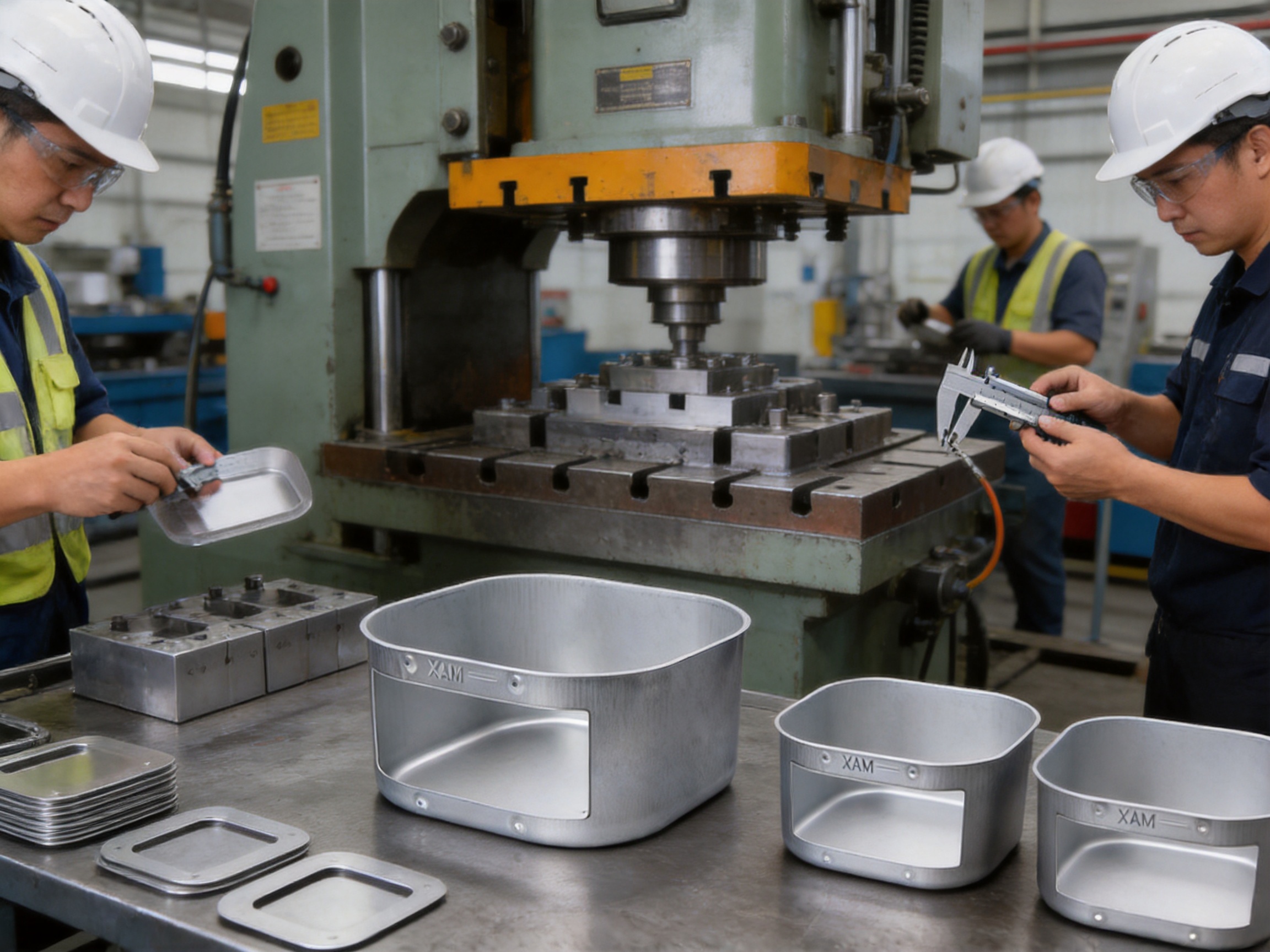
OEM and ODM Customization Support
OEM and ODM customization is highly relevant for this product because each customer's container may have different dimensions, openings, material requirements, and performance expectations. In OEM projects, the customer may provide a complete drawing and ask the manufacturer to produce exactly according to specification. In ODM projects, the customer may provide a concept, sample, or functional requirement, and the manufacturer helps develop a practical production design.
The customization process usually includes requirement communication, engineering evaluation, quotation, tooling planning, sample production, sample testing, adjustment, and mass production. This step-by-step approach helps reduce risk. If a cutout needs to be moved, a corner radius needs adjustment, or a thickness needs improvement, it is better to discover this during the sample stage than after full production begins.
A manufacturer with experience in deep drawing, stamping, and bending can provide useful suggestions. For example, it may recommend changing a sharp corner to a rounded corner to improve forming, increasing the distance between a hole and an edge to preserve strength, or selecting a different material to improve corrosion resistance. Such recommendations help customers obtain a product that is not only functional on paper but also stable in real production.
Customization also includes surface treatment, packaging, labeling, and delivery planning. Some customers may need parts delivered as semi-finished components for further assembly. Others may need finished parts ready for installation. The ability to adapt to different supply chain needs is an important advantage for customers seeking long-term cooperation.
Performance in Harsh Operating Environments
The deep-drawn square container is designed to withstand heavy loads and harsh operating environments when properly specified. The seamless structure helps resist deformation because stress is distributed through a continuous metal body. The square geometry provides stable support, while material and thickness choices can be tailored to the operating conditions. For demanding environments, stainless steel or protected carbon steel may be selected to improve corrosion resistance.
Vibration resistance is important in automotive and industrial applications. Welded joints, fasteners, or assembled seams may loosen or fatigue over time if not designed properly. A one-piece drawn body reduces the number of joined areas in the main structure. When mounting holes and cutouts are positioned correctly, the container can remain stable under repeated movement and vibration.
Heat resistance is important in kitchen appliances, heaters, and electrical equipment. Metal containers can tolerate higher temperatures than many plastic alternatives. Ventilation cutouts can help manage heat buildup and improve airflow. If the container supports heating elements or is installed near hot components, material selection and surface treatment should be reviewed carefully.
Moisture management is another common requirement. Drainage holes can be added to prevent liquid accumulation. Smooth internal surfaces help reduce residue buildup. When corrosion resistance is critical, stainless steel or suitable coatings can be used. These options make the container suitable for environments where moisture, cleaning, condensation, or outdoor exposure may occur.
Why Manufacturing Experience Matters
Deep drawing appears simple from the outside, but producing a stable square container is technically demanding. Square geometries can be more challenging than round shapes because material flow is different at corners and straight walls. The corners are prone to thinning or tearing if the tooling is not properly designed. Flat walls may wrinkle if blank holding is not controlled. Cutouts can introduce additional complexity because they must be accurate without weakening the part.
Manufacturing experience helps solve these challenges. An experienced team understands how material behaves during forming, how to adjust tooling, how to control lubrication, and how to identify risks before they become production problems. Experience also helps in choosing the right process sequence. For example, some features should be formed before trimming, while others should be processed afterward. The correct sequence improves quality and reduces scrap.
The company behind this product has more than two decades of manufacturing experience and a broad product portfolio. This is valuable because many customers require more than one type of metal component. A project may include deep-drawn parts, stamped brackets, bent supports, appliance accessories, and automotive stamping parts. A supplier with multiple capabilities can support integrated sourcing and reduce coordination complexity.
Stable delivery is another result of manufacturing maturity. Customers depend on suppliers not only for samples but also for repeat orders. Delays in one component can affect an entire assembly line. A manufacturer with established workshops, trained employees, and organized production systems is better positioned to provide consistent delivery. For international customers, import and export service experience further supports smooth cooperation.
Sustainability and Material Responsibility
Metal deep-drawn containers can contribute to responsible manufacturing when designed and produced efficiently. Sheet metal is often recyclable, and efficient blank planning can reduce waste. Compared with machined containers, deep drawing typically removes less material, making it a more resource-efficient process for many component designs. Long service life also supports sustainability because durable components need replacement less frequently.
Precision cutouts help minimize unnecessary material removal. Instead of over-processing a generic container, the manufacturer can create openings according to actual functional needs. This reduces waste and improves part performance. In addition, stable production reduces scrap caused by defects such as cracks, wrinkles, or dimensional errors.
Surface treatments can be selected according to environmental and application requirements. For example, stainless steel may reduce the need for additional coatings in some applications, while coated carbon steel may provide a cost-effective balance between protection and material use. Customers should discuss sustainability goals, performance requirements, and cost targets with the manufacturer to choose the most appropriate solution.
Purchasing Guidance for International Customers
International buyers considering this product should prepare clear technical information before requesting a quotation. Useful details include drawings, three-dimensional models if available, material specifications, thickness, dimensions, tolerance requirements, surface treatment, annual quantity, sample quantity, application environment, and packaging expectations. If exact drawings are not available, samples or reference photos can help the manufacturer understand the requirement.
Communication about application is important. A container used for ventilation in a heater may require different cutout patterns than a container used for drainage in an appliance. A component used in an automotive assembly may need tighter tolerances or stronger material than a general industrial holder. Explaining the final use allows the manufacturer to provide better technical recommendations.
Buyers should also discuss tooling ownership, sample approval, inspection standards, delivery schedule, and after-sales support. For customized deep-drawn parts, tooling is a key investment, and expectations should be clear. Sample approval should include fit testing and functional testing before mass production. Inspection standards should be documented to avoid disagreement later.
For inquiries, Yuyao Hongli Optoelectronics Co., Ltd. can be contacted by email at hongli@hl-stamping.com or by phone at +86-13905842349 and +86-13738485724. The company address is on the south side of Shunke Road, Yangming Science and Technology Industrial Park, Yuyao City, Zhejiang Province, China. Customers seeking customized deep-drawn parts, stamped parts, bending parts, kitchen appliance accessories, or automotive stamping parts can communicate their project requirements for evaluation.
Q&A Section
What is a deep-drawn square container with cutouts?
It is a one-piece metal container formed from sheet metal through a deep-drawing process, with customized openings added for functions such as ventilation, drainage, wiring, fastening, or assembly. The square shape provides useful space, while the seamless structure improves strength and cleanliness.
Why is deep drawing better than welding for this type of container?
Deep drawing forms the main body from a single sheet of metal, eliminating welded joints in the container structure. This reduces weak points, improves surface smoothness, minimizes distortion, and supports better consistency in mass production. Welded boxes may require additional finishing and can have seams that affect appearance, cleaning, and durability.
Can the cutouts be customized?
Yes. Cutouts can be customized according to customer drawings or functional needs. They may include round holes, slots, drainage holes, ventilation patterns, mounting holes, cable openings, or assembly notches. Proper engineering review ensures that the openings provide the required function while preserving structural strength.
What materials can be used?
Common options include stainless steel, carbon steel, galvanized steel, aluminum, and other formable sheet metals. The best material depends on the required strength, corrosion resistance, weight, surface finish, heat resistance, and cost target.
What industries use this type of product?
Typical industries include kitchen appliances, household electric heaters, small household appliances, automotive components, industrial equipment, optical instruments, educational instruments, and general hardware assemblies. The product is suitable wherever a strong, clean, customized metal container is needed.
How does the product compare with plastic containers?
Metal deep-drawn containers generally provide better heat resistance, stronger mechanical performance, improved dimensional stability, and longer service life in demanding environments. Plastic may be suitable for lightweight or low-temperature applications, but metal is often preferred where heat, vibration, load, or durability is important.
What information is needed for a quotation?
Buyers should provide drawings, dimensions, material requirements, thickness, cutout details, surface finish, quantity, tolerance expectations, and application information. If drawings are not available, a sample or detailed description can help the manufacturer evaluate feasibility.
Is this product suitable for mass production?
Yes. Deep drawing is well suited for repeatable production after tooling and process parameters are confirmed. It can provide stable dimensions, efficient production cycles, and consistent quality for medium and large production volumes.
Can prototypes be made before mass production?
Yes. Prototyping is recommended for customized designs. Samples allow customers to test fit, function, strength, cutout placement, and surface finish before approving full production. This reduces development risk and helps optimize the final design.
Why choose an experienced manufacturer for this component?
Deep drawing square parts requires careful control of material flow, tooling, lubrication, trimming, and cutout processing. An experienced manufacturer can prevent defects such as tearing, wrinkling, distortion, and inaccurate openings. Experience also supports better customization, quality control, and delivery reliability.
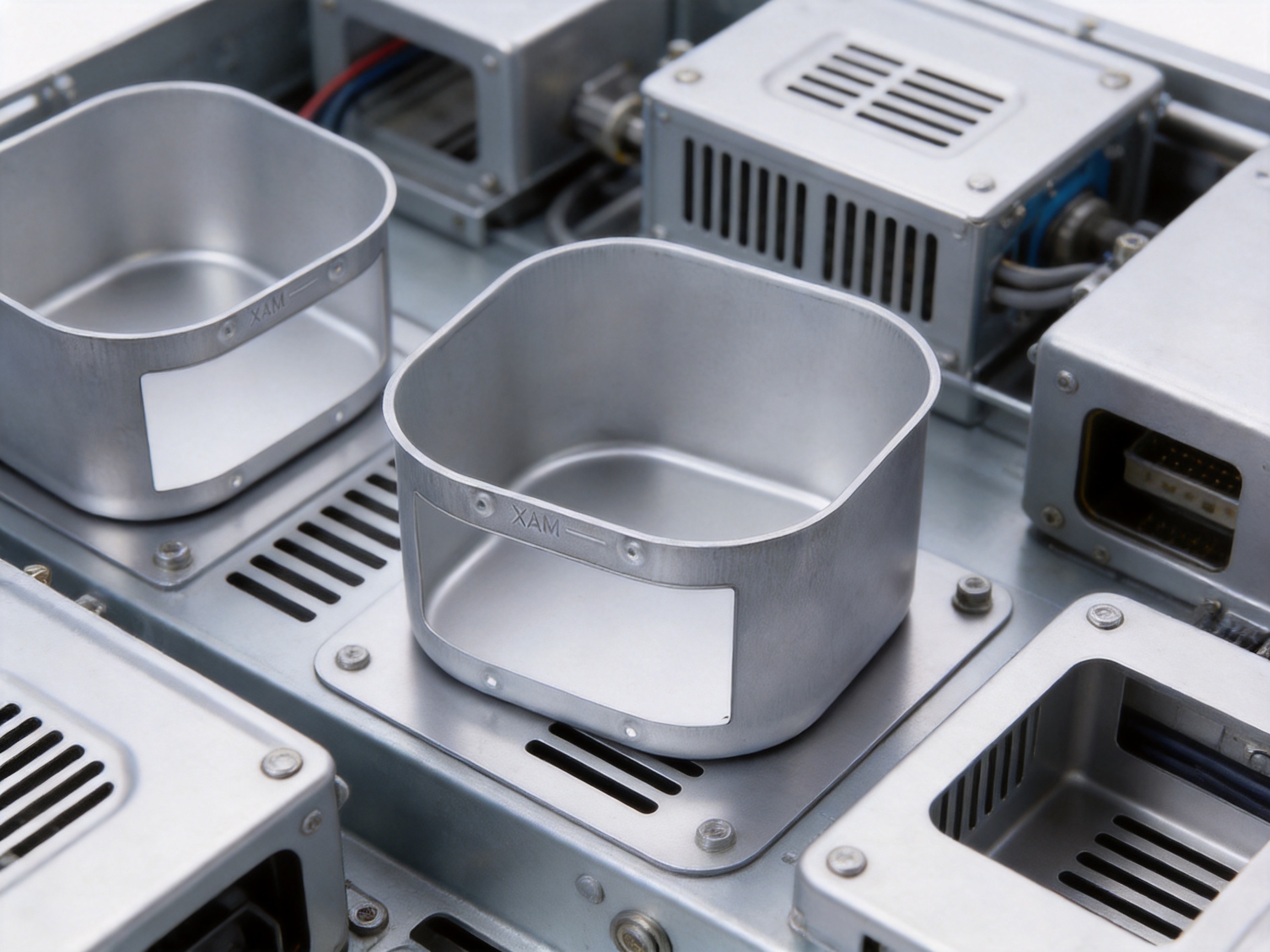
Conclusion
The deep-drawn square container with cutouts is a practical, durable, and highly customizable metal component for modern manufacturing. Its seamless one-piece construction provides clear advantages over welded boxes, bent sheet metal assemblies, plastic housings, and machined containers. It offers strength, smooth surfaces, dimensional repeatability, clean appearance, and efficient integration into larger assemblies. Custom cutouts further expand its value by supporting ventilation, drainage, wiring, mounting, and specialized product functions.
For customers in kitchen appliances, household electric heaters, automotive components, industrial equipment, optical instruments, educational instruments, and general hardware manufacturing, this product provides a strong balance of performance and cost efficiency. It can be tailored in size, material, thickness, surface finish, and cutout design to match specific application requirements. When produced by a capable manufacturer with deep-drawing and stamping expertise, it can help customers improve product reliability, reduce assembly complexity, and support stable mass production.
Yuyao Hongli Optoelectronics Co., Ltd. brings more than 20 years of experience, a 5,000-square-meter factory, multiple stamping workshops, OEM and ODM support, rapid prototyping, strict quality control, and stable delivery capability. These strengths make the company a reliable partner for customized deep-drawn parts, stamped parts, bending parts, kitchen appliance accessories, and automotive stamping parts. For buyers seeking a durable square metal container with precision cutouts and dependable manufacturing support, this deep-drawn solution offers both technical value and long-term cooperation potential.
References
Boljanovic, V. Sheet Metal Forming Processes and Die Design. Industrial Press.
Schuler GmbH. Metal Forming Handbook. Springer.
Kalpakjian, S., and Schmid, S. Manufacturing Engineering and Technology. Pearson.
ASM International. ASM Handbook, Volume 14B: Metalworking: Sheet Forming.
Hosford, W. F., and Caddell, R. M. Metal Forming: Mechanics and Metallurgy. Cambridge University Press.
Altan, T., and Tekkaya, A. E. Sheet Metal Forming: Processes and Applications. ASM International.
Product: Deep-drawn square container with cutouts
Previous Post
Deep-Drawn Rectangular Containers with Lids: Design, Performance, and Manufacturing Excellence
Next Post
Red Bent Parts with Fabric Strap for Durable Custom Applications
News
-
-
What Is Deep Drawing Process and What Are Deep-Drawn Parts The deep drawing process is a sheet metal forming operation in which a flat meta...
READ MORE -
A flat mounting plate with three punched holes and a rectangular container with a fitted lid can come off presses in the same workshop, yet...
READ MORE -
What Are Stamped Parts? Stamped parts are metal components produced by pressing flat sheet metal between a die and a punch to cut, bend, or...
READ MORE
Get Fresh Updates Via Email
We promise we will never disclose your email address, and you can opt out at any time.
-
Quick Links
Home About Us Products Service News Contact Us -
Product list
Deep-drawn parts Stamped parts Bending parts Kitchen appliance accessories Automotive stamping parts -
About Us
Factory Honour FAQ -
News
Company News Industry News -
Contact Us
Address: South side of Shunke Road, Yangming Science and Technology Industrial Park, Yuyao City, Zhejiang Province, China Tel: +86-13905842349/+86-13738485724 Email: hongli@hl-stamping.com
Copyright © Yuyao Hongli Optoelectronics Co., Ltd. All Rights Reserved.
Custom Precision-Sheet/Sheet Metal Stamping Manufacturers
