


 English
 русский
 Español
 عربى
عربى

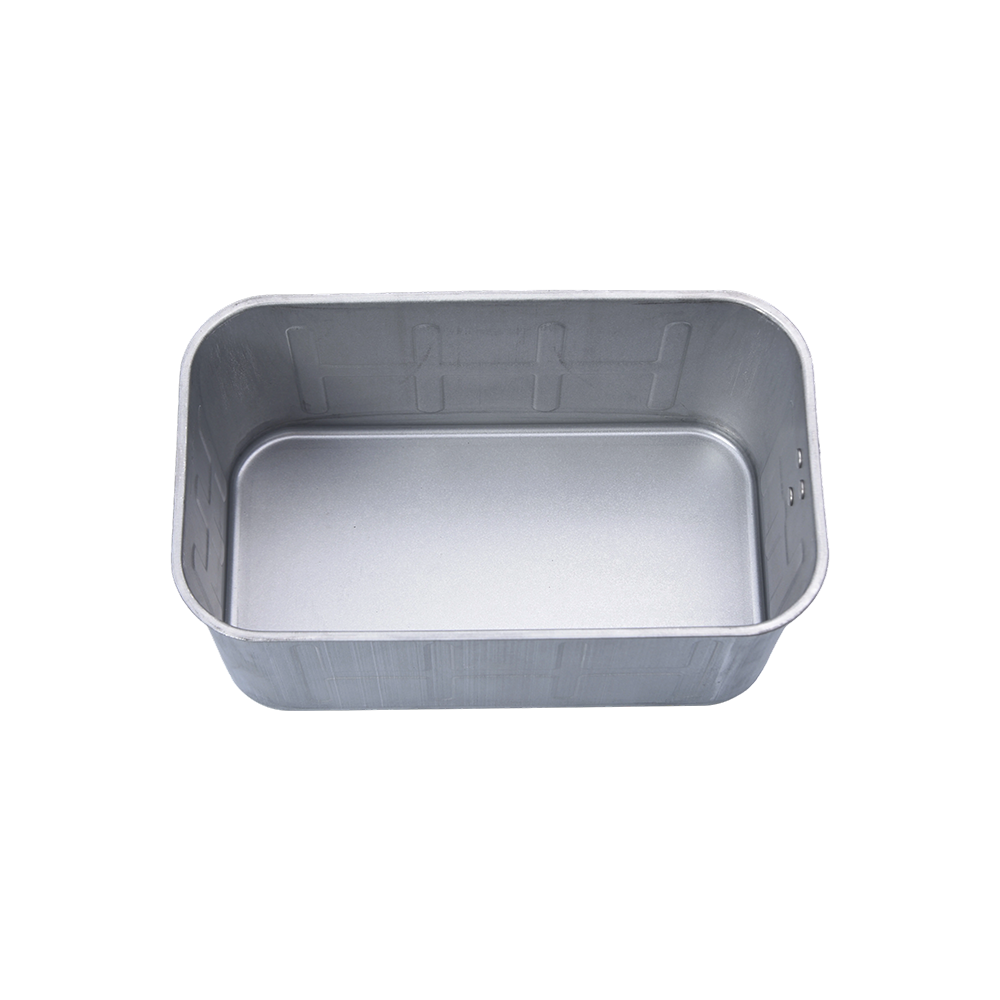
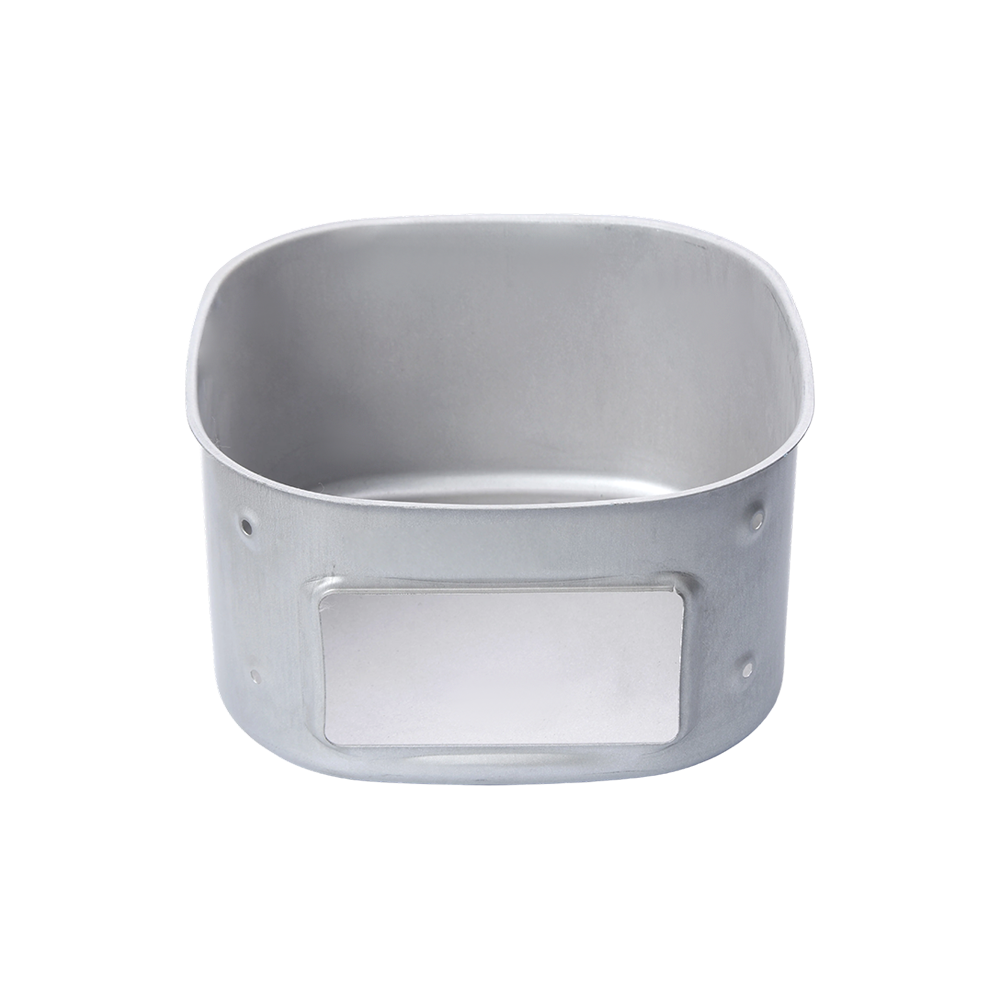
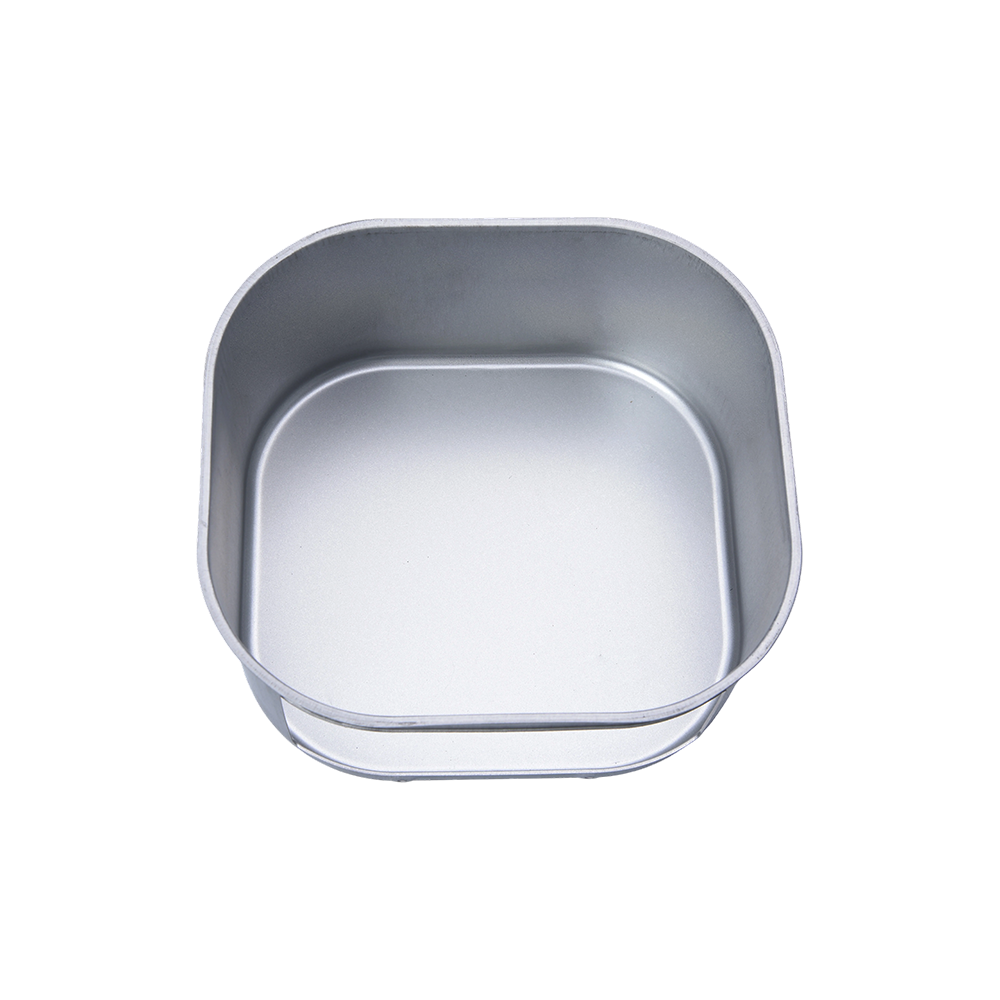
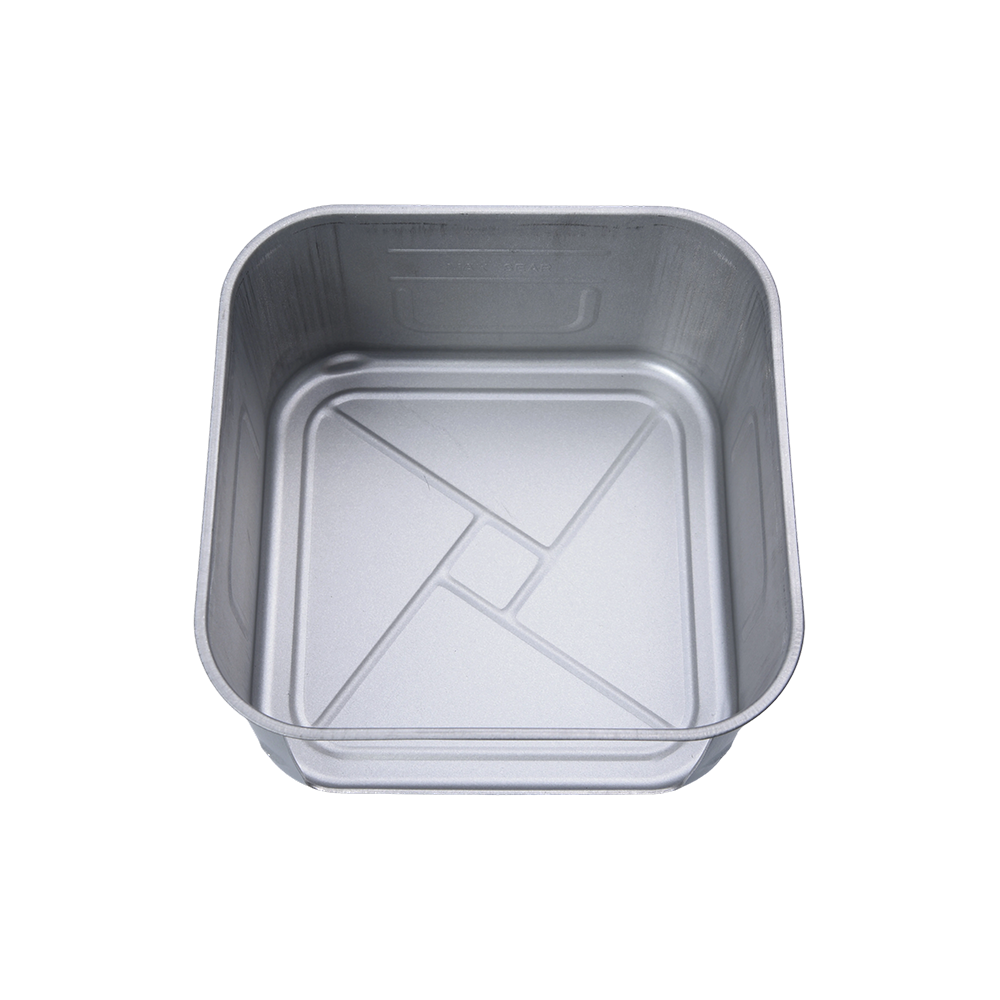
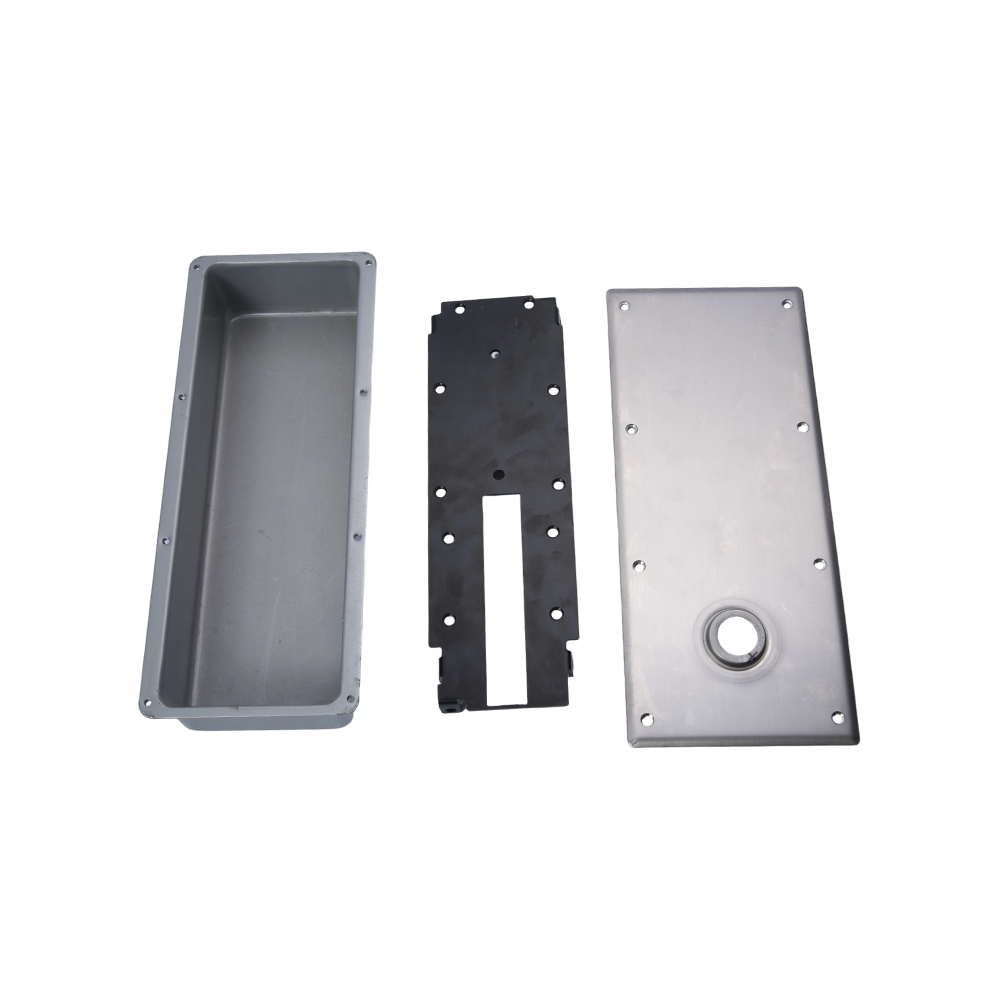
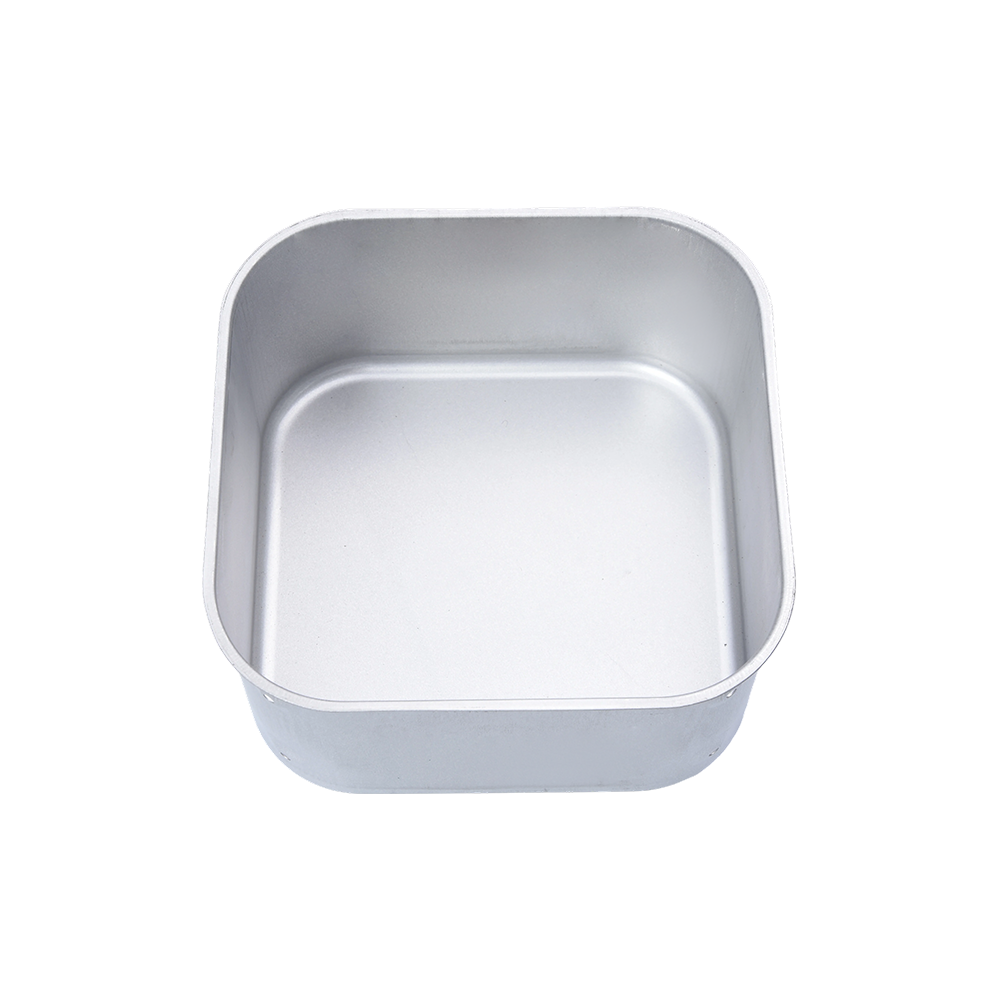
When you need a metal component whose depth clearly exceeds its width, such as a one-piece battery enclosure, an air-fryer inner container,...
READ MORE

News
Home / Author / Chen Ruoxi — Overseas Product Sales Manager / Deep-Drawn Rectangular Containers with Lids: Design, Performance, and Manufacturing Excellence
Deep-Drawn Rectangular Containers with Lids: Design, Performance, and Manufacturing Excellence
2026-08-04
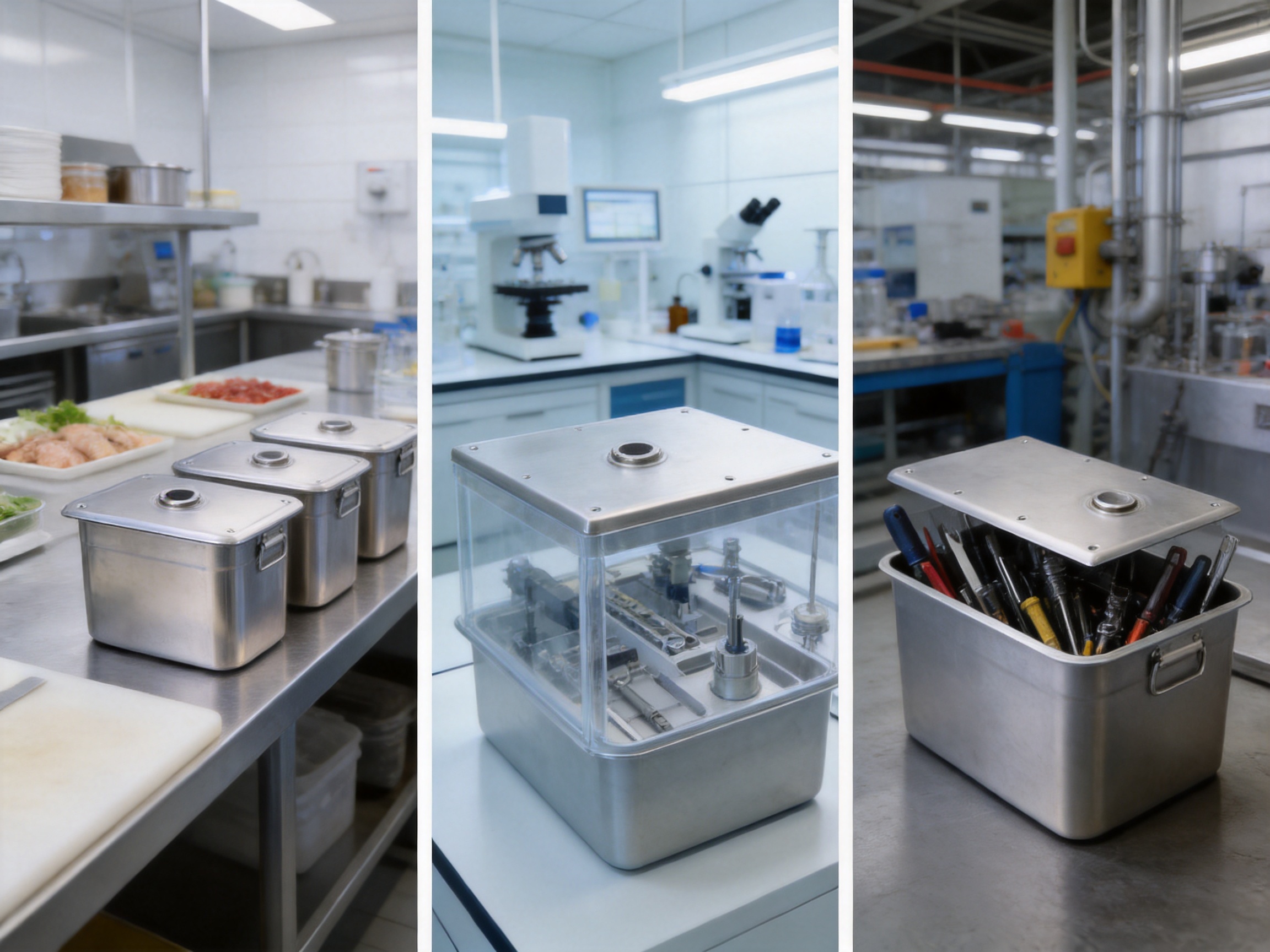
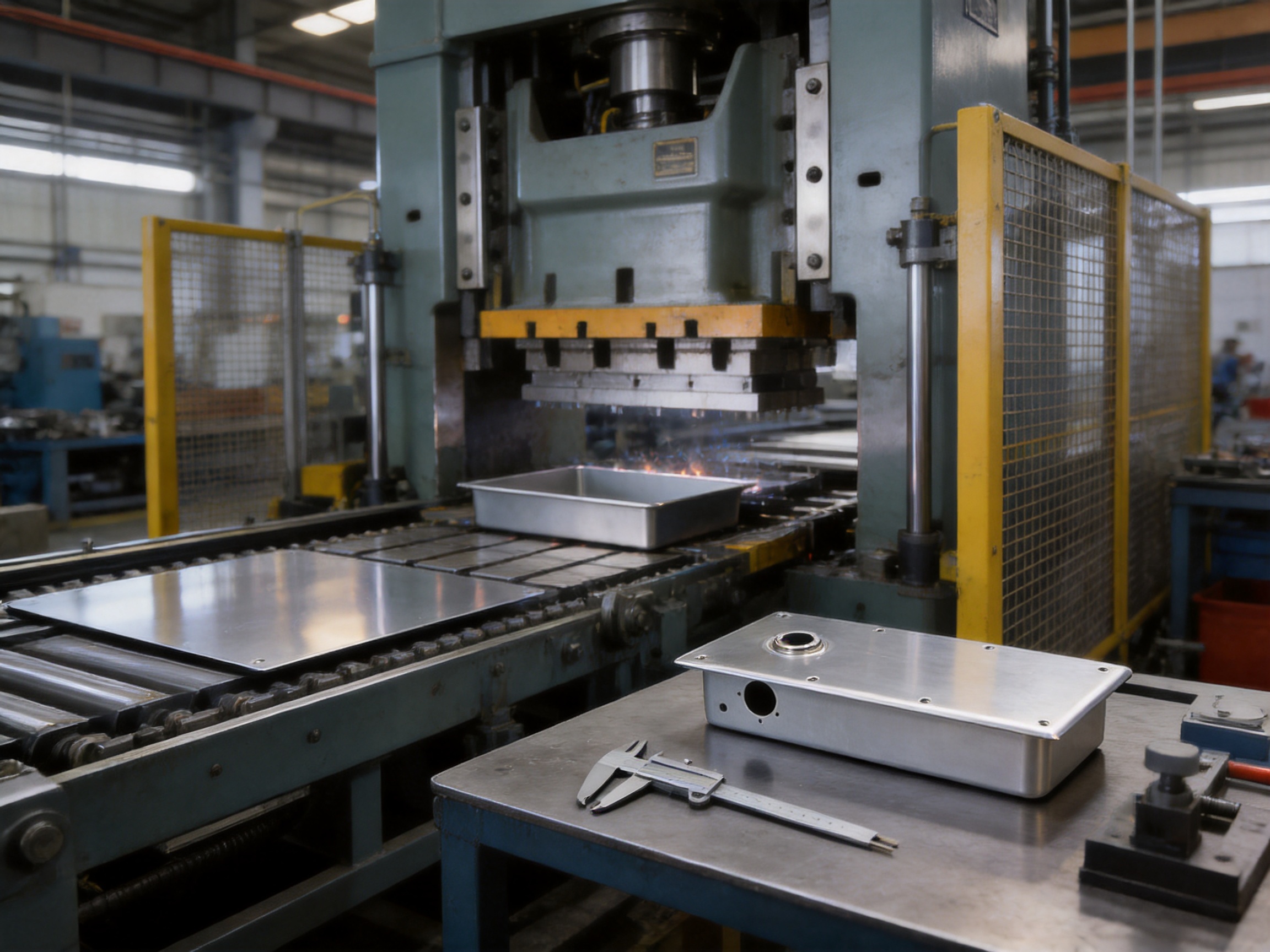
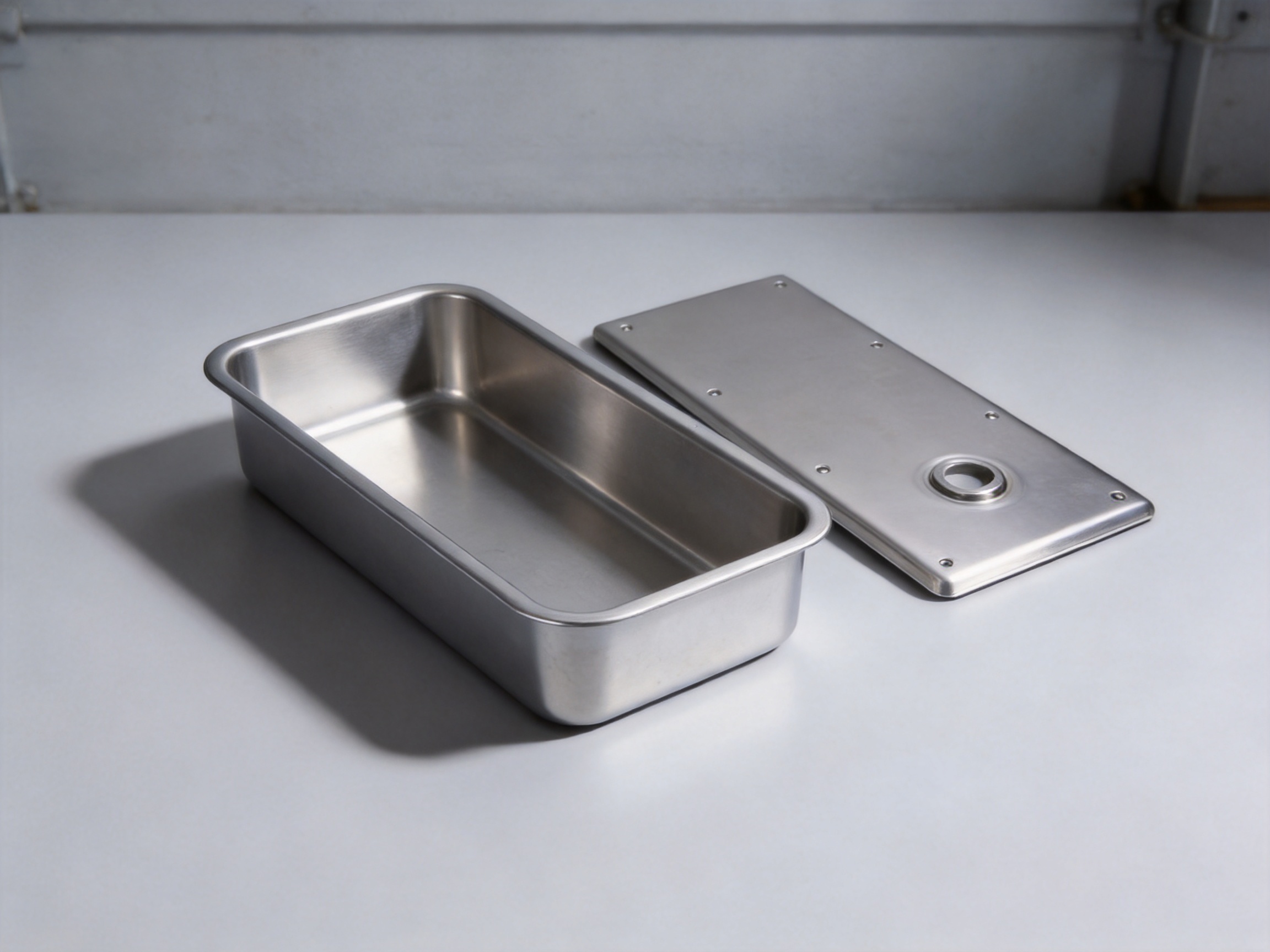
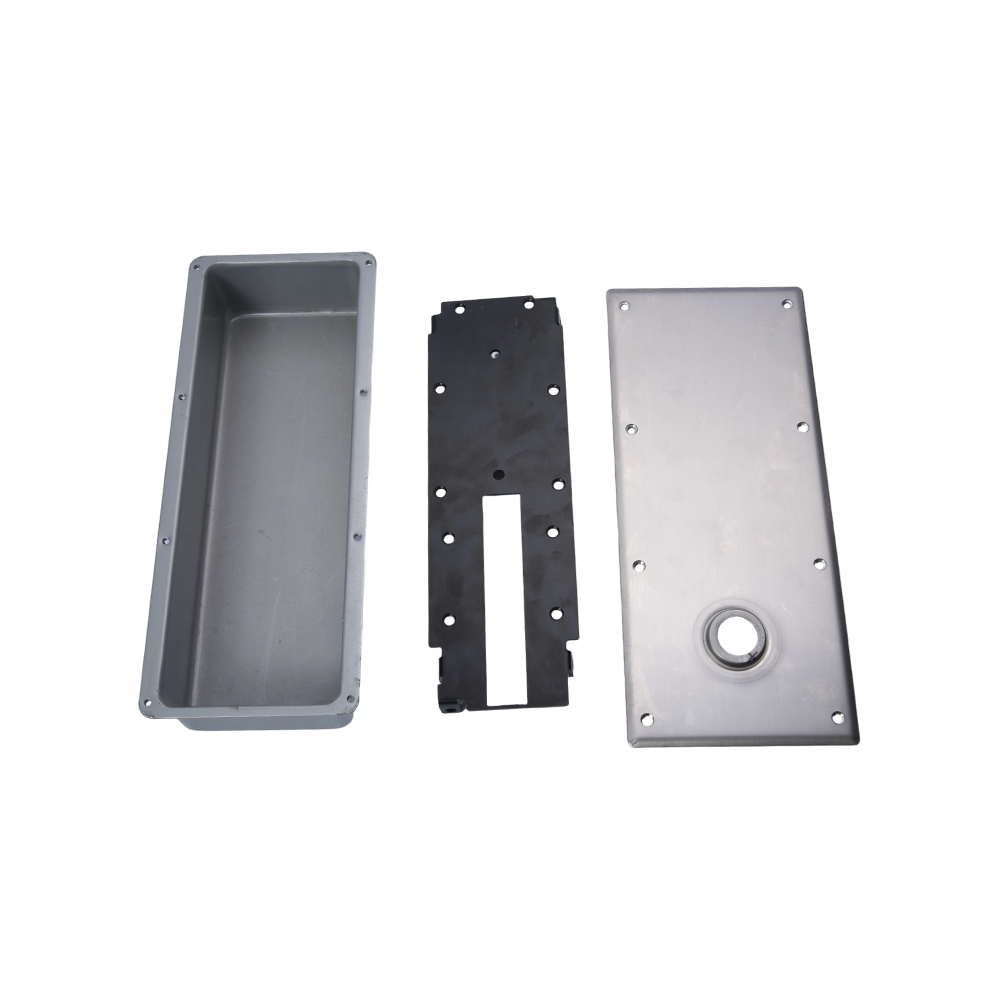
Deep-drawn rectangular container with lid
Deep-drawn rectangular containers with lids are engineered metal components designed to combine structural strength, dimensional accuracy, hygiene, and dependable protection for enclosed contents. Unlike containers assembled from several cut and welded panels, a deep-drawn container is formed from a single sheet of metal through a controlled forming process. This approach can create a seamless body with fewer joints, fewer potential leakage points, and a smooth internal surface that is easier to clean and maintain.
The rectangular container described in this article is manufactured for applications that require more than simple storage. Its design is suitable for food-processing environments, medical storage, laboratory use, household equipment, industrial systems, and other demanding applications in which durability and reliable closure are important. The matching lid is designed to fit securely over the container, helping protect contents against contamination, accidental spills, moisture, dust, and exposure to the surrounding environment.
Behind the product is a manufacturing organization with more than two decades of experience in metal processing and customized component production. Its capabilities include deep-drawn parts, stamped parts, bending parts, kitchen appliance accessories, automotive stamping parts, hardware products, optical instruments, educational instruments, small household appliances, and related products. A modern production facility, multiple stamping workshops, an experienced workforce, and support for OEM and ODM projects enable the manufacturer to provide both standard production and customized solutions.
This article examines the product’s construction, performance advantages, manufacturing process, quality considerations, application potential, customization options, and the strengths that distinguish it from less advanced container solutions.
1. Product Overview
A deep-drawn rectangular container with a lid consists of two primary elements: the formed container body and the fitted cover. The body is produced from a flat metal blank that is pressed into a die to create the required length, width, depth, corners, and wall profile. The lid is manufactured to match the opening geometry, allowing it to sit securely and provide reliable protection.
The deep-drawing process makes it possible to create a container with a continuous body rather than one assembled from separate side panels. This one-piece construction contributes to the product’s strength and provides a clean, uninterrupted surface. Depending on the selected material and final treatment, the container can be adapted for applications involving moisture, repeated handling, temperature variation, cleaning agents, abrasion, or demanding industrial service.
The rectangular shape makes the product especially practical where space utilization matters. Compared with round containers, rectangular containers can usually be arranged more efficiently on shelves, worktables, trays, production lines, transport pallets, and storage racks. Their straight sides also make them convenient for integration into equipment housings and organized workspaces.
The lid adds another important functional dimension. A properly designed lid helps preserve the contents and reduces the risk of accidental opening during transportation or handling. When combined with a suitable gasket, locking feature, folded edge, or interference-fit design, the lid can support an airtight or leak-resistant closure appropriate to the intended application.
Because the container is produced through a controlled metal-forming process, it can be manufactured in repeatable batches with consistent dimensions. This is essential for customers who need interchangeable covers, repeatable assembly, predictable fit, and stable performance across multiple production orders.
2. Seamless Construction and Structural Integrity
One of the most important advantages of deep-drawn construction is the reduction of seams in the container body. Conventional fabricated containers may require several panels to be cut, bent, joined, and welded. Every joint introduces an additional manufacturing operation and may create a potential area for leakage, corrosion, distortion, or contamination. A deep-drawn body reduces these risks by forming the main structure from one continuous blank.
The continuous body also supports better load distribution. During use, forces are transferred across the formed walls instead of being concentrated only at multiple welded seams. This can improve resistance to handling impacts and reduce the likelihood of deformation when the container is exposed to moderate external pressure or repeated movement.
Deep drawing also allows the bottom and side walls to be formed as one integrated structure. The bottom can be engineered with suitable corner radii and reinforcement features to improve stability. The wall profile can be designed to balance rigidity, material usage, drawability, and the available internal volume. These design factors are evaluated together because an excessively sharp corner, unsuitable depth-to-width ratio, or poorly selected material thickness can create forming problems.
The resulting body offers a strong foundation for applications in which the container must remain stable during use. It may be placed on a work surface, installed in a machine, integrated into a kitchen appliance, or used as a protective enclosure for components. Its structural integrity is especially useful when contents must be protected from external impact or when the container will be moved frequently.
The strength of the finished product is influenced by several factors, including material selection, blank thickness, tooling design, press capacity, lubrication, forming speed, intermediate operations, and quality inspection. An experienced manufacturer can adjust these variables to achieve the required balance between strength, appearance, weight, and production efficiency.
3. Performance Advantages Over Conventional Containers
3.1 Fewer Potential Leakage Points
A container constructed from a single drawn blank has fewer joints than a fabricated box made from multiple panels. This is an important advantage in applications where moisture, liquid, dust, or contamination must be controlled. A reduced number of seams simplifies sealing and can improve the reliability of the overall enclosure.
The lid design also contributes to containment performance. A close-fitting cover can help reduce exposure to the external environment, while an optional sealing element may provide additional protection. The exact level of airtightness or leak resistance depends on material, lid geometry, closure method, gasket design, and application conditions. These factors can be customized according to customer requirements.
3.2 Improved Cleanability
The smooth surface of a deep-drawn container is easier to wipe, wash, and sterilize than a structure with numerous internal joints, weld beads, or fasteners. In food, laboratory, and medical environments, easy cleaning can help support hygienic operation and reduce the accumulation of residue.
A cleanable surface is also valuable in industrial environments. Dust, oil, metal particles, and other contaminants can be removed more efficiently when the internal walls are continuous and accessible. The absence of complicated internal corners or unnecessary hardware can simplify maintenance procedures and reduce downtime.
3.3 Resistance to Impact and Abrasion
Metal deep-drawn containers can offer excellent resistance to normal handling impacts, abrasion, and mechanical wear. The formed body is not dependent on adhesive bonding or fragile plastic clips for its primary structural function. When suitable material and thickness are selected, the container can withstand repeated handling in production, storage, and transportation environments.
The rectangular form can also be reinforced through carefully designed corners, rims, beads, ribs, or folded edges. These features may increase stiffness without requiring a large increase in material thickness. Properly designed reinforcement helps the body retain its shape and protects the lid interface from excessive deformation.
3.4 Long Service Life
Durability is a key reason customers choose metal containers for demanding applications. A properly formed and finished container can remain in service for a long period, especially when it is used within its intended temperature, load, chemical, and cleaning conditions.
Corrosion resistance depends on the selected metal and surface treatment. Stainless steel, coated steel, aluminum, and other sheet metals may be considered based on the operating environment. The manufacturer can help evaluate the relationship between material selection, forming characteristics, surface appearance, corrosion protection, and cost.
3.5 Efficient Use of Space
The rectangular configuration provides efficient use of storage and installation space. Straight sides can be positioned close to adjacent containers or equipment, while the lid can be designed to remain within the overall footprint. This is particularly valuable in kitchens, laboratories, workshops, equipment cabinets, and vehicle-related applications where available space is limited.
Rectangular containers may also be stacked or placed in trays when the geometry and lid design support such use. Stackability should be evaluated during the design stage because the strength of the lid, rim alignment, center of gravity, and expected load all affect safe stacking performance.
4. Manufacturing Process
The manufacturing process begins with product requirements. Before tooling is designed, the manufacturer reviews the desired length, width, height, wall thickness, internal capacity, lid arrangement, material, surface finish, tolerances, production quantity, and intended application. This engineering review is essential because deep drawing is not simply a matter of pressing a flat sheet into any desired shape. The geometry must be compatible with the material and forming equipment.
4.1 Material Selection
Material selection is based on the required strength, corrosion resistance, appearance, weight, thermal performance, cost, and forming behavior. Stainless steel may be selected for applications requiring hygiene, corrosion resistance, and a durable surface. Aluminum may be considered when low weight and corrosion resistance are priorities. Carbon steel can provide strength and cost efficiency when an appropriate protective coating or finish is applied.
The material must also be suitable for deep drawing. Important characteristics include ductility, elongation, grain structure, yield strength, tensile strength, and thickness consistency. Material that is too brittle may crack during forming, while material with unsuitable mechanical properties may produce excessive thinning, wrinkling, or dimensional instability.
For repeat production, stable material sourcing is important. Consistent sheet thickness and mechanical performance help maintain predictable forming results. The manufacturer’s experience in stamping and deep drawing supports the evaluation of material behavior during product development and production planning.
4.2 Tool and Die Development
The die is one of the most important elements in the deep-drawing process. It controls the final shape of the container and influences surface quality, wall distribution, corner formation, dimensional accuracy, and production efficiency. The die must be designed around the blank size, draw depth, material properties, press capacity, and required production volume.
Corner radii are carefully considered. A radius that is too small can increase material stress and create a risk of cracking, while a radius that is too large may affect the internal capacity or appearance. The transition between the bottom and side walls must also be smooth enough to support material flow during forming.
The die may include guide components, blank holders, draw beads, ejectors, and other features that help control the sheet during the operation. These elements work together to reduce wrinkling and maintain a stable forming process. For more complex geometries, multiple drawing stages may be used rather than attempting to reach the final depth in one operation.
4.3 Blank Preparation
The flat sheet is cut into a blank with a carefully calculated shape and size. Blank preparation can be performed through shearing, laser cutting, punching, or another suitable process. The blank dimensions must provide enough material for the container walls, bottom, and trimming allowance while avoiding unnecessary waste.
Accurate blank preparation contributes to stable production. An incorrectly sized blank may result in insufficient material, excessive scrap, uneven wall thickness, or difficulty maintaining the required height. The blank edge must also be controlled because burrs or irregularities can affect material flow and surface quality.
4.4 Deep-Drawing Operation
During deep drawing, the blank is positioned over the die and held under controlled pressure. A punch moves the material into the die cavity, transforming the flat sheet into a three-dimensional container body. The material flows inward and downward rather than being simply stretched. Maintaining the correct balance between punch movement, blank-holder pressure, lubrication, and material flow is essential.
If the blank-holder pressure is too low, wrinkles may develop in the flange or walls. If it is too high, the material may not flow properly and could tear. Excessive forming speed can increase heat and stress, while insufficient lubrication can cause friction marks, galling, or surface damage. Experienced operators and process engineers monitor these conditions to achieve consistent results.
For deeper or more complex containers, the body may pass through several drawing operations. Intermediate annealing or other treatment may be considered when the material has undergone significant deformation. Additional operations may include redrawing, ironing, flanging, beading, piercing, trimming, and calibrating.
4.5 Trimming and Edge Formation
After the primary draw, the upper edge may require trimming to establish a uniform height and clean opening. Edge formation is especially important because the lid must fit accurately around the rim. A properly formed rim improves appearance, handling safety, and closure performance.
The upper edge may be rolled, folded, flanged, or otherwise shaped according to the lid design. A folded edge can improve rigidity and reduce the risk of sharp exposed metal. It may also provide a suitable surface for a gasket or locking arrangement. The precise edge geometry is selected according to the intended use and required sealing performance.
4.6 Lid Production
The lid can be produced through stamping, shallow drawing, bending, forming, or a combination of these processes. Its design must correspond closely to the container opening. Excessive looseness may reduce protection, while an overly tight fit may make the lid difficult to remove or cause deformation during use.
Depending on the application, the lid may include a stepped profile, reinforcing ribs, folded edges, handles, latches, hinge features, or a gasket channel. These additions can improve rigidity and usability. The manufacturer can develop the cover as a separate component or integrate it into a larger assembly supplied to the customer.
4.7 Secondary Operations
Secondary operations may include hole punching, threading, spot welding, riveting, bending, deburring, polishing, brushing, passivation, plating, coating, or assembly. The exact sequence depends on the product specification.
Deburring is important for safe handling and clean assembly. Sharp edges can damage gaskets, create injury risks, or interfere with the lid. Surface finishing may be selected to achieve a particular appearance or functional requirement. Brushed, polished, coated, or passivated finishes can each offer different advantages.
4.8 Inspection and Quality Control
Quality control begins with incoming material inspection and continues through forming, finishing, assembly, and final packaging. Typical checks may include material verification, thickness measurement, dimensional inspection, visual examination, edge inspection, lid fit testing, surface quality assessment, and functional testing.
Critical dimensions may include overall length, width, height, opening size, corner radius, rim profile, lid clearance, flatness, and wall thickness distribution. Inspection methods can include calipers, gauges, height gauges, coordinate measuring equipment, templates, and application-specific fixtures.
When the product is intended for liquid containment or controlled environments, additional testing may be appropriate. Depending on the customer’s requirements, this may include leak testing, closure testing, pressure-related evaluation, corrosion testing, cleaning validation, or repeated opening and closing tests.
5. Advanced Manufacturing Strengths
The manufacturer’s broad experience in metal stamping and related manufacturing provides a strong foundation for producing deep-drawn rectangular containers. More than 20 years of industry experience has allowed the organization to develop knowledge across different product categories, materials, tooling conditions, and customer requirements.
Its production facility covers approximately 5,000 square meters and includes multiple stamping workshops. A workforce of more than 60 employees supports engineering, production, inspection, administration, logistics, and customer service activities. This combination of facilities and personnel enables the company to coordinate product development and volume manufacturing within one organization.
The company’s product range includes deep-drawn parts, stamped parts, bending parts, kitchen appliance accessories, automotive stamping parts, educational instruments, optical instruments, household electric heater components, small household appliance parts, hardware products, plastic products, and other customized items. This diversity is beneficial because many container projects involve more than one manufacturing process.
For example, a customer may require a deep-drawn body, a stamped lid, bent brackets, punched mounting holes, welded hardware, and a finished assembly. A manufacturer with experience in several related processes can coordinate these operations more efficiently than a supplier that performs only one type of forming.
The company also supports OEM and ODM customization. OEM production allows a customer to provide drawings, specifications, samples, or approved designs for manufacture. ODM support can involve product development assistance, design suggestions, tooling development, prototype production, and process optimization. This flexibility is valuable for customers that have a functional concept but need manufacturing expertise to turn it into a stable production product.
Rapid prototyping and efficient production conversion can help shorten the path from initial concept to production approval. Prototype samples allow customers to evaluate dimensions, lid fit, handling, surface finish, and compatibility with related equipment before committing to larger quantities.
| Product or manufacturing feature | Practical benefit | Typical customer value |
|---|---|---|
| One-piece deep-drawn body | Fewer joints and continuous structural surfaces | Improved strength, cleanability, and containment potential |
| Precisely formed rim | More consistent interface between body and lid | Reliable fit and easier repeat assembly |
| Customized lid design | Cover geometry can match the application | Better protection, handling, and integration |
| Multiple stamping workshops | Support for different forming and secondary operations | More efficient project coordination |
| OEM and ODM capability | Production from drawings or collaborative development | Flexible support for standard and custom projects |
| Quality control throughout production | Inspection is integrated into the manufacturing process | More stable dimensions and dependable delivery |
| Experience across several industries | Knowledge of different functional requirements | Better adaptation to specialized applications |
6. Product Advantages in Food-Processing Applications
Food-processing environments require containers that are easy to clean, resistant to repeated handling, and capable of protecting ingredients or components from contamination. A deep-drawn metal body is suitable for these requirements because its seamless construction minimizes areas where residue can collect.
The rectangular shape can improve organization around preparation stations, processing equipment, storage racks, and transport carts. Containers can be positioned in an orderly arrangement, helping operators use workspace efficiently. A fitted lid can protect contents during temporary storage or movement between work areas.
Surface finish is an important consideration in food-related use. Smooth, properly finished surfaces are easier to inspect and clean. Material selection should be based on the type of food contact, cleaning chemicals, temperature conditions, and applicable regulatory requirements. The customer should confirm the specific compliance requirements for the intended market and application.
The container may also be customized with handles, stacking features, identification areas, mounting points, or other accessories. These additions should be designed so they do not compromise cleanability or create unnecessary contamination traps.
7. Medical and Laboratory Storage Potential
Medical and laboratory environments often require organized storage with dependable protection from dust, moisture, accidental contact, and external contamination. The deep-drawn container’s continuous surface and close-fitting lid can support these objectives when the material, finish, closure, and cleaning procedure are appropriately specified.
Laboratory users may require containers for instruments, samples, test components, tools, or process materials. A metal body can provide better protection against impact than many lightweight alternatives. It can also tolerate frequent wiping or disinfection when the selected material and finish are compatible with the cleaning agents used.
For medical or laboratory applications, the container should be evaluated as part of the complete storage system. Factors such as sterilization temperature, chemical exposure, internal labeling, gasket compatibility, and closure repeatability must be reviewed. If the container is intended for direct contact with sensitive materials, the customer may require additional documentation and validation.
The manufacturer’s ability to provide customized dimensions is useful in these environments. A container can be designed to fit a particular instrument, tray, cabinet, laboratory rack, or equipment compartment. This avoids unnecessary empty space and can improve organization during handling and storage.
8. Use in Kitchen Appliances and Household Equipment
Kitchen appliance accessories and household equipment often require compact metal components with consistent shape, clean appearance, and good resistance to heat or repeated handling. A deep-drawn rectangular body can be incorporated into appliance assemblies, removable trays, ingredient compartments, protective housings, collection containers, or internal support structures.
The product’s smooth form can contribute to a professional appearance, while the metal construction can provide a sense of durability and quality. Depending on material and finish, the container may be designed to withstand routine cleaning and exposure to normal household operating conditions.
Integration into an appliance requires attention to dimensional tolerance, clearance, thermal expansion, vibration, user access, and assembly sequence. The lid may need to include a handle, hinge, latch, or locating feature. The manufacturer can develop the container and associated parts according to assembly drawings or samples supplied by the customer.
Because the company also produces bending parts, stamped parts, and other hardware components, it can support related appliance projects beyond the container body itself. This may simplify supplier management and help maintain consistency among connected components.
9. Automotive and Industrial Applications
Automotive stamping parts and industrial equipment often require components that can withstand vibration, handling, temperature variation, and exposure to dust or moisture. A deep-drawn rectangular enclosure may be used for protective storage, fluid-related containment, equipment shielding, tool organization, or structural support, depending on the design.
Automotive applications typically place strong emphasis on repeatability and dimensional control. A component must fit within a defined assembly envelope and maintain its position during operation. The lid, rim, mounting points, and fastening features must therefore be designed together rather than treated as separate details.
Industrial customers may also require specific surface treatments, corrosion protection, identification marks, drain holes, ventilation openings, brackets, or fastening points. These features can be added through secondary stamping, punching, bending, welding, or assembly operations.
The product’s resistance to abrasion and impact makes it suitable for environments where containers may be moved, loaded, unloaded, or installed repeatedly. Nevertheless, the final design should be validated against the actual mechanical and environmental conditions rather than relying only on general material descriptions.
10. Customization Options
Customization begins with the product’s external dimensions and internal capacity. Customers can specify the required length, width, height, corner geometry, wall thickness, and opening configuration. These dimensions should be evaluated together because changes to depth or corner radius can affect drawability, material usage, and tooling cost.
Material customization is another important option. The choice may depend on corrosion resistance, weight, appearance, thermal conditions, hygiene requirements, magnetic properties, and cost. The manufacturer can review the intended use and recommend a suitable sheet material for evaluation.
Lid customization may include a loose cover, close-fit cover, gasketed cover, hinged cover, sliding cover, or latching cover. Handles can be added for improved transport, while locating features can support stacking or assembly. The lid may also include formed ribs to improve stiffness and reduce vibration-related movement.
Surface treatment can be selected according to appearance and performance. Options may include polishing, brushing, passivation, plating, painting, powder coating, or other protective finishes. The final treatment must be compatible with the base material and operating environment.
Additional features may include punched holes, mounting tabs, threaded points, welded nuts, brackets, logos, markings, labels, drain openings, or inspection windows. Every additional feature should be reviewed for its effect on forming, strength, sealing, cleaning, and production cost.
Packaging can also be customized. Protective separators, individual wrapping, cartons, pallets, and export packaging may be selected according to the product’s surface finish, transportation method, and customer logistics requirements.
11. Design Considerations for Reliable Production
Successful deep-drawn products are usually designed with manufacturing conditions in mind from the beginning. A drawing that looks simple in a digital model may be difficult or expensive to form if the wall depth, corner radius, or material flow is unsuitable. Early communication between the customer and manufacturer helps avoid unnecessary redesign.
Uniform wall thickness is desirable, but some variation may occur during forming, especially near corners, the bottom transition, and the upper wall. The manufacturer can evaluate the expected material distribution and identify areas that may require design adjustment or additional operations.
Generous and consistent corner radii generally support smoother material flow. Sharp corners can increase stress concentration and may require special tooling or multiple drawing stages. If a sharp internal corner is functionally necessary, the design should be reviewed carefully to determine whether it can be achieved without reducing reliability.
Tolerances should be realistic for the selected process. Extremely tight tolerances may require additional calibration, machining, or inspection and can increase cost. The most critical dimensions should be identified so that resources are focused on the features that affect assembly and performance.
The lid and body should be designed as a matched system. The opening dimension, rim profile, lid clearance, gasket compression, closure force, and user access all influence the final result. A lid that is designed independently from the body may fit poorly even if both parts meet their individual drawings.
Customers should also identify the cleaning method, expected service temperature, exposure to chemicals, stacking conditions, and frequency of use. These factors influence material, finish, thickness, and closure selection.
12. Quality, Delivery, and Customer Support
Stable quality depends on more than final inspection. It requires coordinated control of materials, tooling, machine settings, operator procedures, secondary operations, and packaging. A manufacturer with an established production system can monitor these factors throughout the order cycle.
Tooling maintenance is particularly important for deep-drawn products. Wear on a die, punch, guide, or trimming tool can gradually affect dimensions and surface quality. Regular inspection and maintenance help keep production within specification and reduce unexpected interruptions.
Clear documentation supports repeat orders. Drawings, approved samples, inspection standards, material records, packaging instructions, and revision information should be maintained so that future production remains consistent with the customer’s expectations.
The company emphasizes strict quality control, stable delivery, and comprehensive after-sales service. These capabilities are important for customers that depend on regular supply rather than one-time prototype production. Efficient production conversion can help move approved samples into repeat manufacturing with fewer delays.
Communication is also a practical strength. Customers can provide drawings, photographs, samples, material requirements, target quantities, or application details for evaluation. The manufacturer can then assess feasibility, suggest modifications, prepare tooling, and organize production according to the project’s requirements.
13. Sustainability and Material Efficiency
Deep drawing can provide material efficiency because the main body is formed from a single blank rather than assembled from multiple panels. Reduced joining operations may also reduce the need for welding consumables, adhesives, and additional hardware. The actual material efficiency depends on blank design, product geometry, trimming allowance, tooling layout, and production yield.
Metal products can often be recycled at the end of their service life. Long service life also reduces the frequency of replacement, which may lower the material and energy associated with repeated purchasing and disposal. These benefits are maximized when the container is designed for durability and used within appropriate operating conditions.
Efficient production conversion can reduce setup waste and improve equipment utilization. Tooling that is properly designed for the expected production volume can help balance initial investment against long-term process efficiency.
Environmental performance should be evaluated across the product life cycle. Material sourcing, forming energy, surface treatments, transportation, cleaning requirements, service life, and end-of-life recycling all contribute to the overall impact. Customers with specific sustainability targets can discuss material and finish options during the quotation and engineering stages.
14. Comparison with Alternative Container Constructions
Plastic containers may offer low weight and low initial cost, but they may be less suitable where high impact resistance, heat resistance, dimensional stability, or long-term abrasion resistance is required. The correct choice depends on the application, but a metal deep-drawn container can provide a more durable solution for demanding environments.
Welded metal boxes can be strong, but weld seams may require additional finishing and inspection. Welded corners can also create internal areas that are more difficult to clean. A one-piece deep-drawn body reduces the number of such joints and can provide a more uniform internal surface.
Die-cast or machined metal containers can achieve complex features, but they may involve higher tooling, machining, or material costs depending on the dimensions and production volume. Deep drawing is often attractive for sheet-metal products requiring relatively thin walls, efficient repeat production, and a clean formed appearance.
Folded sheet-metal containers can be economical for simple geometries, but they usually require seams, fasteners, or welded corners. Deep drawing may offer advantages where a continuous bottom and side-wall structure is important.
| Container type | Potential advantages | Considerations |
|---|---|---|
| Deep-drawn metal container | Seamless body, strong construction, smooth surface, repeatable production | Requires suitable tooling and draw-compatible geometry |
| Welded sheet-metal container | Flexible geometry and suitability for large or irregular shapes | More seams, weld finishing, and potential distortion |
| Folded sheet-metal container | Simple tooling and efficient production for shallow forms | May require joints, fasteners, or additional sealing |
| Plastic molded container | Low weight and broad shape flexibility | May have lower resistance to heat, impact, or abrasion depending on material |
| Machined metal container | High precision and complex feature capability | May involve greater machining time, material waste, and cost |
This comparison does not mean that one manufacturing method is universally superior. The best process depends on volume, geometry, material, tolerance, service conditions, and budget. The advantage of deep drawing is strongest when the product requires a durable sheet-metal body with a continuous structure and repeatable dimensions.
15. Why an Experienced Manufacturer Matters
Deep drawing combines design, material science, tooling, press operation, inspection, and finishing. A supplier with limited experience may produce an initial sample but struggle to maintain consistent quality during larger production runs. Experience helps identify forming risks before they become costly production problems.
An experienced manufacturer understands how blank size, draw depth, punch radius, die radius, blank-holder force, lubrication, and press speed interact. This knowledge supports more reliable tooling development and process adjustment.
Experience across multiple product categories is also valuable. A company that produces automotive stamping parts, kitchen appliance accessories, bending parts, and hardware components is familiar with different standards of appearance, strength, fit, and durability. These lessons can be applied to new container projects.
In addition, a manufacturer with OEM and ODM capabilities can contribute practical suggestions rather than simply reproducing a drawing. It may identify a corner that should be enlarged, a rim that should be reinforced, a lid clearance that should be adjusted, or a secondary operation that could be simplified.
This collaborative approach can improve product performance while reducing unnecessary manufacturing complexity. It may also help customers control tooling investment, production time, and long-term maintenance costs.
16. Recommended Customer Information for Quotation
Customers seeking a quotation should provide as much information as possible about the intended product. Useful details include a drawing or sketch, external dimensions, internal dimensions, material preference, wall thickness, annual or order quantity, lid requirements, surface finish, tolerance, packaging, and delivery destination.
Application information is equally useful. The manufacturer should know whether the container will hold food, liquids, instruments, components, powders, chemicals, or other materials. Temperature range, cleaning method, exposure to moisture, expected impact, stacking requirements, and frequency of use can affect the recommended construction.
Samples, photographs, or existing products can help clarify functional expectations. If the customer is replacing an existing container, information about current problems—such as lid looseness, deformation, corrosion, difficult cleaning, or excessive weight—can guide improvements.
Customers should also identify the most important performance priorities. These may include low cost, light weight, maximum strength, high corrosion resistance, premium appearance, airtight closure, easy cleaning, rapid delivery, or long service life. Defining priorities helps the manufacturer develop a balanced solution rather than optimizing one feature at the expense of another.
17. Frequently Asked Questions
What is a deep-drawn rectangular container?
It is a metal container formed from a flat sheet blank using a punch and die. The material is drawn into a rectangular cavity to create the bottom and side walls, usually as one continuous body with minimal seams.
What are the main advantages of a seamless body?
A seamless body can provide improved structural continuity, fewer potential leakage points, easier cleaning, and a smoother internal surface. It can also reduce the number of welding and joining operations required during production.
Can the container be supplied with a customized lid?
Yes. The lid can be customized in terms of dimensions, fit, edge profile, gasket arrangement, handle, hinge, latch, stacking feature, and surface finish. The lid should be developed together with the container opening to ensure compatibility.
Is the product suitable for food-processing applications?
It can be suitable for food-processing use when the selected material, surface finish, cleaning method, and production controls meet the requirements of the specific application. Customers should confirm applicable food-contact standards and validation requirements for their market.
Can it be used in laboratories or medical environments?
It may be used for storage or protection of instruments, components, samples, or supplies when the material and finish are compatible with the required cleaning and sterilization procedures. Medical or laboratory use may require additional testing, documentation, and compliance review.
Which materials can be used?
Potential materials include stainless steel, aluminum, carbon steel with a protective finish, and other deep-drawable sheet metals. The correct choice depends on corrosion resistance, strength, weight, appearance, temperature, chemical exposure, and cost.
Can holes, brackets, or threaded features be added?
Yes. Secondary operations such as punching, bending, welding, riveting, tapping, and assembly can be used to add mounting holes, brackets, threaded points, handles, and other features. Their effect on strength, sealing, and cleanability should be considered during design.
How is the lid made leak-resistant?
Leak resistance depends on the lid-to-body interface, rim geometry, closure force, gasket material, and dimensional control. A gasket, folded rim, locking feature, or close-fit design may be used depending on the required performance.
Can the container be stacked?
Stacking may be possible if the body and lid are designed with suitable locating and load-bearing features. The expected stack height, load, vibration, and handling conditions should be provided so that stacking performance can be evaluated properly.
What production quantities are supported?
The manufacturer can evaluate prototype, small-batch, and larger repeat-production requirements. The most suitable tooling and process plan depend on geometry, quantity, tolerance, material, and expected order frequency.
Does the manufacturer support OEM and ODM projects?
Yes. Customers may provide drawings or samples for OEM production, or work with the manufacturer on design development, tooling, prototyping, and process optimization for ODM projects.
How can customers begin a project?
Customers can submit drawings, sketches, samples, material requirements, application information, target quantities, and delivery expectations. The manufacturer can then review feasibility, recommend process details, prepare a quotation, and discuss sample development.
18. Conclusion
The deep-drawn rectangular container with lid is a practical solution for applications that require strength, cleanability, space efficiency, and dependable protection. Its one-piece body reduces the number of seams and supports a smooth internal surface, while the fitted lid helps protect contents from contamination, spills, dust, and external exposure.
Compared with many conventional fabricated or lightweight alternatives, the product offers a strong combination of structural integrity, impact resistance, abrasion resistance, corrosion-protection potential, and long service life. Its rectangular geometry also makes it suitable for organized storage, equipment integration, production environments, and applications where available space must be used efficiently.
The manufacturing process involves careful material selection, die development, blank preparation, controlled deep drawing, trimming, edge formation, lid production, secondary operations, surface treatment, and quality inspection. Each stage influences the final product’s dimensions, appearance, sealing performance, and reliability.
The manufacturer’s more than 20 years of industry experience, 5,000-square-meter facility, multiple stamping workshops, workforce of more than 60 employees, broad product range, OEM and ODM support, rapid prototyping, and quality-control practices provide a solid foundation for customized production. Its combined capabilities in deep drawing, stamping, bending, hardware processing, appliance accessories, and automotive components can help customers coordinate complete projects more efficiently.
For customers seeking a durable, hygienic, customizable, and professionally manufactured metal container, this deep-drawn rectangular design offers a reliable starting point. By defining the application requirements early and working closely with an experienced production partner, customers can achieve a container that performs effectively in food processing, laboratories, medical storage, household equipment, automotive systems, industrial applications, and many other demanding environments.
References
1. ASM International, ASM Handbook: Forming and Forging.
2. Schuler GmbH, Metal Forming Handbook.
3. American Society of Mechanical Engineers, general guidance on dimensional inspection and manufactured component quality.
4. International Organization for Standardization, principles of quality management systems for manufacturing organizations.
5. International Organization for Standardization, general guidance concerning stainless steel products and corrosion-resistant materials.
6. American Society for Testing and Materials, standard practices for sheet-metal testing, material characterization, and corrosion evaluation.
7. Society of Automotive Engineers, general principles for stamped and formed automotive components.
8. Manufacturing engineering literature on deep drawing, blank-holder control, die design, lubrication, wrinkling prevention, and forming-limit evaluation.
9. General industrial guidance on hygienic equipment design, cleanable surfaces, material compatibility, and maintenance planning.
10. Product and manufacturing information supplied for the deep-drawn rectangular container with lid and its customized metal-forming production capabilities.
Product: Deep-drawn rectangular container with lid
Previous Post
Precision Stamped Part Extension Cover for Reliable Industrial Protection
Next Post
Deep-Drawn Square Containers with Custom Cutouts for Durable Industrial Applications
News
-
-
What Is Deep Drawing Process and What Are Deep-Drawn Parts The deep drawing process is a sheet metal forming operation in which a flat meta...
READ MORE -
A flat mounting plate with three punched holes and a rectangular container with a fitted lid can come off presses in the same workshop, yet...
READ MORE -
What Are Stamped Parts? Stamped parts are metal components produced by pressing flat sheet metal between a die and a punch to cut, bend, or...
READ MORE
Get Fresh Updates Via Email
We promise we will never disclose your email address, and you can opt out at any time.
-
Quick Links
Home About Us Products Service News Contact Us -
Product list
Deep-drawn parts Stamped parts Bending parts Kitchen appliance accessories Automotive stamping parts -
About Us
Factory Honour FAQ -
News
Company News Industry News -
Contact Us
Address: South side of Shunke Road, Yangming Science and Technology Industrial Park, Yuyao City, Zhejiang Province, China Tel: +86-13905842349/+86-13738485724 Email: hongli@hl-stamping.com
Copyright © Yuyao Hongli Optoelectronics Co., Ltd. All Rights Reserved.
Custom Precision-Sheet/Sheet Metal Stamping Manufacturers
