


 English
 русский
 Español
 عربى
عربى

Steel is the backbone of modern manufacturing, yet it is never a single, uniform material. When engineers and buyers ask, "How can you clas...
READ MORE

News
Home / Author / Liu Yanan — Product After-Sales Service Specialist / Circular Stamped Parts with Central Holes for Precision Industrial Assembly
Circular Stamped Parts with Central Holes for Precision Industrial Assembly
2026-07-08
Circular stamped parts with central holes are essential metal components used wherever a reliable mounting point, stable rotational alignment, controlled spacing, load distribution, or mechanical connection is required. Although their geometry may appear simple at first glance, their performance depends on a demanding combination of material selection, die accuracy, stamping control, burr management, surface finish, dimensional consistency, and application-specific customization. For industries such as automotive manufacturing, electrical equipment, machinery, construction, appliance production, aerospace-related assemblies, and hardware systems, these components often serve as small but critical parts within larger mechanical structures.
Yuyao Hongli Optoelectronics Co., Ltd. manufactures circular stamped parts with central holes using advanced metal stamping technology supported by more than 20 years of production experience. Located in Yangming Science and Technology Industrial Park in Yuyao, Zhejiang Province, China, the company operates a modern 5,000-square-meter factory with multiple stamping workshops, experienced technical personnel, and flexible OEM/ODM customization capability. The company’s manufacturing background covers stamped parts, deep-drawn parts, bending parts, kitchen appliance accessories, automotive stamping parts, optical instrument parts, educational instrument components, household electric heater parts, small appliance hardware, auto parts, plastic products, and related metal hardware solutions.
This article explores the product’s structure, advantages, manufacturing process, customization possibilities, industrial applications, quality control methods, and purchasing considerations. It also explains why well-manufactured circular stamped parts with central holes can outperform ordinary commodity washers, discs, spacers, brackets, and flat metal components in terms of precision, durability, assembly efficiency, and lifecycle value.
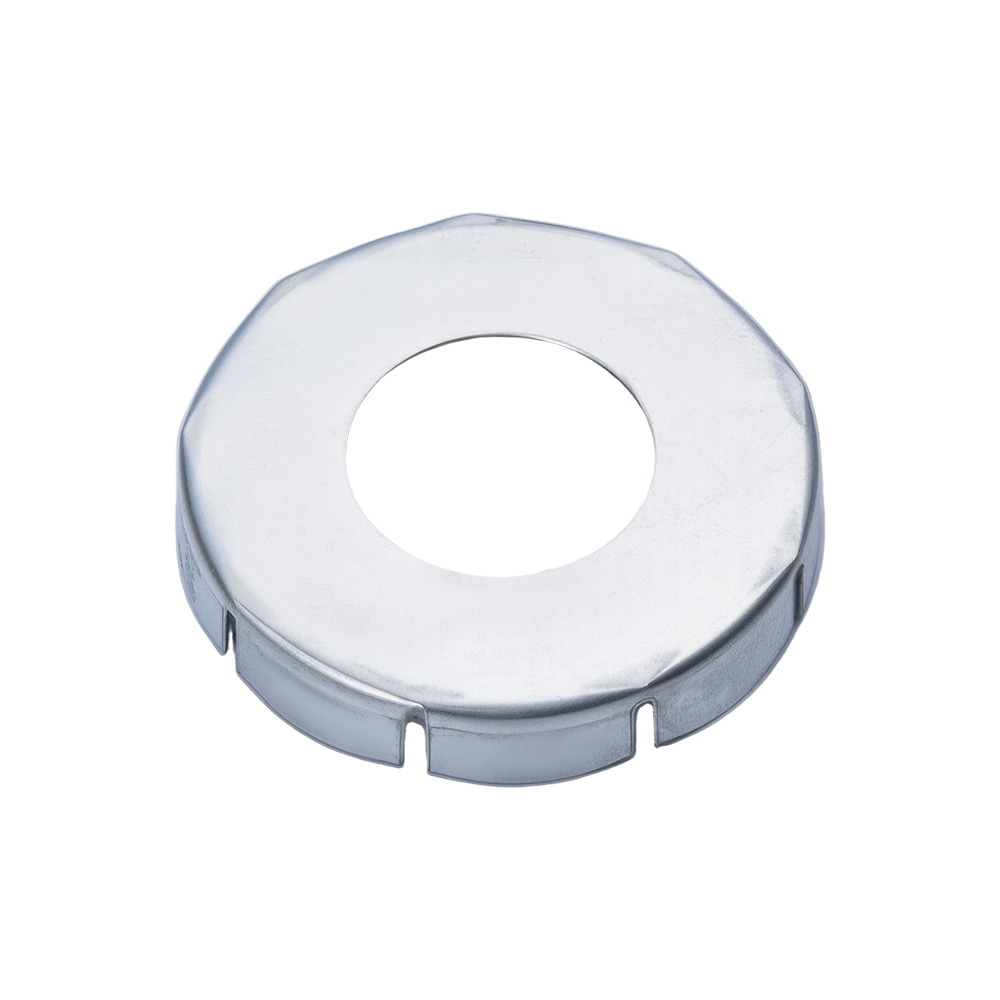
Circular stamped parts with a central hole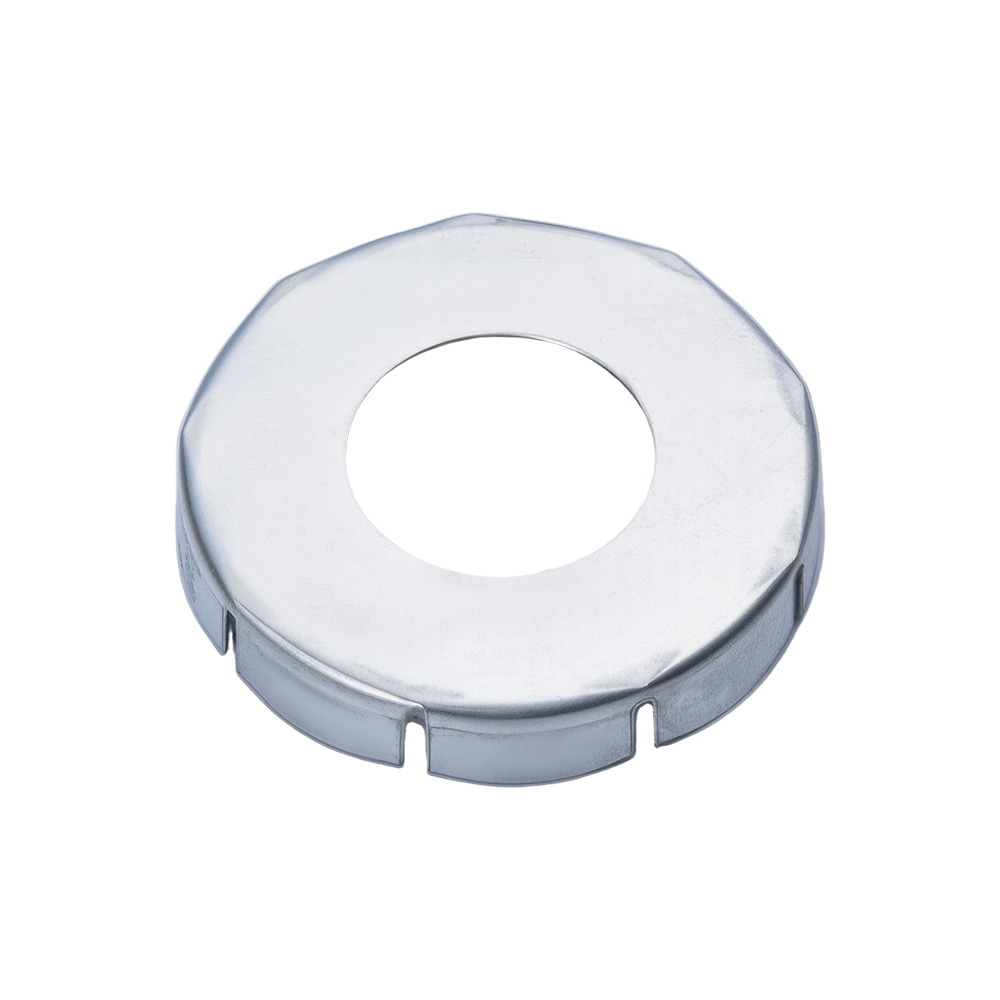
Understanding Circular Stamped Parts with Central Holes
A circular stamped part with a central hole is typically produced from sheet metal or strip material through a controlled stamping operation. The outer contour is circular, while the center includes a punched or formed hole designed for a shaft, fastener, rivet, pin, screw, bolt, bearing seat, locating feature, cable passage, or assembly fixture. Depending on its final application, the part may be flat, slightly formed, embossed, flanged, countersunk, deep-drawn, reinforced, surface-treated, or combined with additional holes, slots, tabs, ribs, or bends.
In many assemblies, this kind of part plays the role of a washer, spacer, retainer, mounting plate, contact disc, bearing support, protective cover, load-spreading element, or alignment component. In more complex designs, the circular stamped part may be integrated into an electrical, automotive, appliance, or mechanical system as a functional part that must maintain stable performance under repeated load, vibration, thermal expansion, corrosion exposure, or long-term operating stress.
The central hole is the defining feature. It must be accurately positioned relative to the outer diameter because eccentricity can cause imbalance, misalignment, assembly difficulty, uneven load transfer, or noise during operation. A well-produced circular stamped component maintains concentricity, flatness, surface quality, and hole consistency across large batches. This is where experienced stamping manufacturers provide value beyond basic sheet metal processing.
Why Precision Matters in a Simple-Looking Part
The market often treats circular metal components as generic parts, but high-performance industries understand that accuracy in small components can determine the reliability of an entire product. If the center hole is undersized, the part may not fit during assembly. If it is oversized, the joint may loosen under vibration. If the burr is too sharp, it may damage wires, coatings, seals, hands, or adjacent parts. If the part is warped, it may fail to sit flush against the mating surface. If the material hardness is inconsistent, the part may deform too quickly or fail under load.
Precision stamping solves these problems by using well-designed tooling, controlled press parameters, accurate material feeding, proper die clearance, stable punching force, and inspection at multiple process stages. Yuyao Hongli Optoelectronics applies its manufacturing experience to produce circular stamped parts that meet the requirements of repeatability, smooth assembly, and long service life. The company’s ability to customize hole diameter, outer diameter, material thickness, surface finish, and structural details allows customers to obtain components that are matched to actual engineering conditions rather than relying on loosely standardized alternatives.
For OEM customers, this precision can reduce assembly line stoppages, rework, customer complaints, maintenance costs, and warranty risks. For distributors and industrial buyers, consistent quality improves inventory reliability and customer satisfaction. For engineering teams, precise stamped components support better product design and easier production scaling.
Main Product Features
The circular stamped parts with central holes offered by Yuyao Hongli Optoelectronics are designed to combine strength, accuracy, and production efficiency. The exact specifications can be customized according to drawings, samples, application requirements, and material standards. Common product features include controlled outer diameter, customizable center hole, stable roundness, good flatness, reliable dimensional tolerance, clean edge quality, and compatibility with multiple surface treatments.
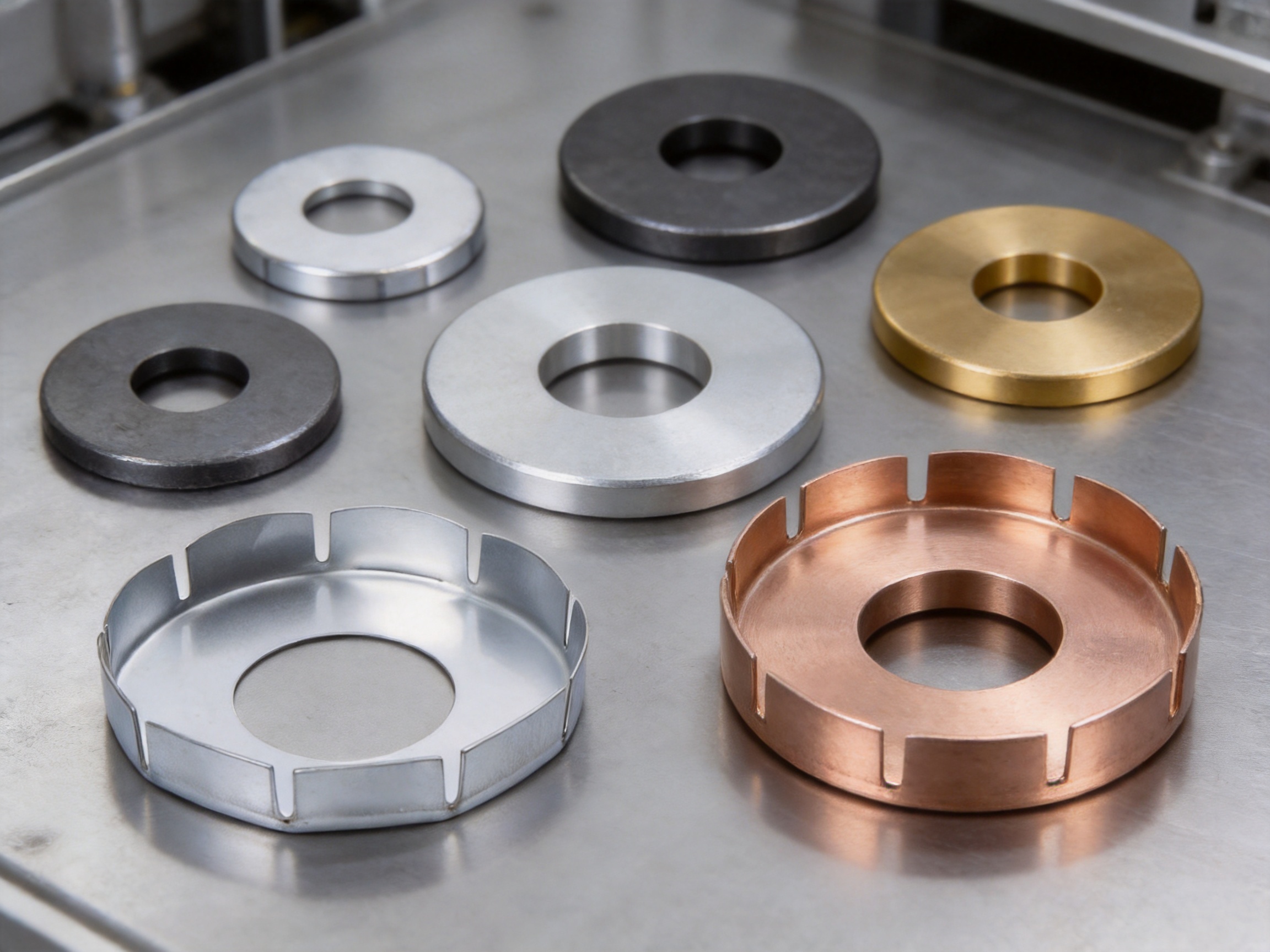
Depending on customer needs, the parts can be manufactured from carbon steel, stainless steel, galvanized steel, aluminum, copper, brass, or other sheet metal materials suitable for stamping. The material choice depends on strength, corrosion resistance, conductivity, appearance, weight, cost, and forming requirements. For example, stainless steel is often selected for corrosion resistance and long life, carbon steel for strength and cost efficiency, aluminum for lightweight applications, copper or brass for electrical conductivity, and galvanized steel for balanced corrosion protection in general industrial environments.
The central hole can be configured for bolts, screws, rivets, shafts, bushings, pins, electrical terminals, or mounting posts. The edge can be deburred, chamfered, rounded, flanged, countersunk, or treated according to the assembly requirement. Additional forming operations may include embossing, shallow drawing, bending, curling, strengthening ribs, marking, or multi-hole punching. This flexibility makes the product suitable for both simple standard hardware use and highly engineered customized assemblies.
Key Advantages Over Ordinary Competitor Products
Higher Dimensional Consistency
One of the strongest advantages of precision-stamped circular parts is consistent dimensional repeatability. In high-volume production, even a small deviation can create serious assembly problems. Compared with many ordinary stamped or laser-cut circular parts, components produced through carefully controlled stamping dies can maintain more stable outer diameter, hole diameter, concentricity, thickness utilization, and edge profile. This consistency is particularly valuable for automated assembly lines, where parts must feed smoothly, align correctly, and fit without manual correction.
Better Concentricity and Fit
The relationship between the outer circle and the central hole is critical. If the hole is off-center, the component may rotate unevenly, apply load incorrectly, or interfere with adjacent parts. Yuyao Hongli Optoelectronics emphasizes precision die design and process control to improve concentricity. This gives the parts an advantage in applications involving rotation, positioning, fastening, or balanced assembly.
Improved Edge Quality
Inferior stamped products often have excessive burrs, torn edges, rough shear zones, or inconsistent hole walls. These defects may lead to safety issues, coating damage, premature wear, electrical insulation failure, or installation difficulty. Well-controlled stamping and secondary finishing can provide cleaner edges and safer handling. Depending on the requirement, the company can provide deburring, polishing, surface treatment, or other finishing processes to enhance the final part quality.
Custom Engineering Support
Many competitors offer only standard sizes or limited modifications. Yuyao Hongli Optoelectronics supports OEM/ODM customization, rapid prototyping, and efficient conversion from sample development to mass production. Customers can provide drawings, samples, technical specifications, or application descriptions. The manufacturer can then help determine feasible stamping methods, material options, tolerance targets, surface finish choices, and production plans.
Balanced Cost and Performance
Stamping is highly efficient for medium and high-volume production because it reduces cycle time and material waste when compared with many machining methods. A well-designed stamping process can achieve strong accuracy while maintaining competitive unit cost. This balance is important for automotive, appliance, hardware, and electrical industries where part quality must be reliable but cost control is also essential.
Reliable Long-Term Production Capacity
With a 5,000-square-meter factory, multiple stamping workshops, more than 60 employees, and over 20 years of industry experience, the company has the organizational and technical foundation required for stable supply. For buyers seeking a long-term manufacturing partner, production reliability is as important as individual part quality. Stable delivery, quality control, and after-sales service reduce procurement uncertainty.
Manufacturing Process Overview
The production of circular stamped parts with central holes requires more than simply cutting a disc from metal sheet. A professional process includes engineering review, material selection, tooling design, stamping operation, dimensional inspection, surface finishing, packaging, and delivery management. Each stage affects the final quality and usability of the part.
Engineering Review and Requirement Confirmation
The process begins with understanding the customer’s requirements. Important details include outer diameter, center hole diameter, material grade, thickness, tolerance, flatness, surface finish, burr direction, hardness, coating, assembly environment, annual volume, packaging method, and performance expectations. If the customer provides a sample instead of a drawing, the sample can be measured and analyzed to develop production specifications.
At this stage, experienced engineers evaluate whether the design is suitable for stamping and whether any adjustment can improve manufacturability, reduce cost, or improve durability. For example, modifying hole-to-edge distance, adjusting thickness, selecting a different material temper, or changing the burr direction may significantly improve the final result.
Material Selection
Material selection is central to product performance. Carbon steel offers strength and affordability. Stainless steel provides corrosion resistance and a clean appearance. Aluminum reduces weight and provides good formability. Copper and brass offer electrical conductivity and attractive surface properties. Galvanized or plated materials provide additional environmental protection.
The company can manufacture parts using a range of sheet materials based on application requirements. Material thickness may vary depending on the required load capacity and forming characteristics. Choosing the correct material helps prevent cracking, deformation, rusting, electrical failure, and premature wear.
Tooling and Die Design
Tooling is the heart of stamping accuracy. The die must be designed to control the outer shape, central hole, clearance, punch force, scrap flow, material positioning, and part release. For high-volume production, progressive dies can be used to complete multiple operations in sequence. For lower-volume or special components, single-operation dies or compound dies may be more suitable.
Good die design improves production speed, tolerance control, material utilization, and edge quality. It also reduces tool wear and maintenance frequency. A poorly designed die can produce burrs, dimensional drift, part deformation, and unstable output. Yuyao Hongli Optoelectronics draws on long-term stamping experience to design and manage tooling suitable for customized circular parts.
Stamping Operation
During stamping, metal sheet or coil is fed into a press where the die cuts, punches, forms, or shapes the material. For circular stamped parts with a central hole, the process may include blanking the outer circle and punching the center hole either simultaneously or in separate stages. Depending on design complexity, additional forming steps may be performed.
Press speed, tonnage, feeding accuracy, die clearance, lubrication, and material condition all influence the final part. Stable machine operation supports consistent dimensions and reduces defects. Skilled operators monitor production, check sample parts, and make adjustments when necessary.
Deburring and Edge Finishing
After stamping, some parts may require deburring or edge finishing to remove sharp edges and improve safety. Burr control is especially important for components used near wires, seals, hands, painted surfaces, or moving assemblies. Finishing methods can include tumbling, brushing, polishing, grinding, or other processes based on the material and requirement.
Surface Treatment
Surface treatment may be applied to improve corrosion resistance, appearance, conductivity, wear performance, or assembly compatibility. Common surface options may include zinc plating, nickel plating, passivation, anodizing for aluminum, blackening, painting, powder coating, oiling, or customized finishes. The correct surface treatment extends service life and improves product performance in harsh environments.
Inspection and Quality Control
Quality control is applied throughout production. Typical inspection items include outer diameter, center hole diameter, thickness, concentricity, flatness, burr height, surface defects, hardness, coating quality, and packaging condition. Tools may include calipers, micrometers, gauges, height gauges, optical inspection devices, and custom fixtures. For mass production, sampling plans and process records support consistency and traceability.
Product Specification Considerations
When designing or ordering circular stamped parts with central holes, buyers should consider several key specifications. Each specification affects cost, manufacturing method, and performance. A precise drawing and clear requirement list help the manufacturer quote accurately and produce efficiently.
| Specification Item | Common Options | Why It Matters |
|---|---|---|
| Outer Diameter | Customized circular size according to drawing or sample | Determines fit, coverage area, load distribution, and assembly space |
| Center Hole Diameter | Customized for bolt, shaft, rivet, pin, or mounting post | Controls fastening accuracy, rotational alignment, and installation ease |
| Material | Carbon steel, stainless steel, aluminum, copper, brass, galvanized steel | Affects strength, corrosion resistance, conductivity, weight, and cost |
| Thickness | Selected according to load and forming requirements | Influences rigidity, durability, stamping force, and product weight |
| Tolerance | Standard or precision tolerance based on application | Ensures assembly compatibility and repeatable performance |
| Edge Condition | As-stamped, deburred, rounded, chamfered, polished | Improves safety, assembly quality, and protection of adjacent parts |
| Surface Finish | Oiled, plated, passivated, painted, polished, customized | Improves corrosion resistance, appearance, and environmental suitability |
| Additional Features | Embossing, flanging, ribs, slots, marks, countersinks | Adds functional value for special mechanical or electrical applications |
Applications in Automotive Manufacturing
Automotive applications demand components that can withstand vibration, temperature variation, mechanical stress, corrosion exposure, and long-term use. Circular stamped parts with central holes may be used as mounting washers, reinforcing discs, spacers, bracket elements, retainers, shields, seat components, chassis-related washers, electrical grounding parts, sensor mounting elements, or assembly supports.
In vehicles, dimensional consistency is essential because assembly is often automated or semi-automated. Parts must fit quickly without forcing, rework, or adjustment. A central hole must align precisely with bolts, screws, shafts, or pins. If a stamped part is warped or dimensionally unstable, it may create noise, looseness, misalignment, or premature failure. High-quality stamping helps reduce these risks.
Yuyao Hongli Optoelectronics has experience in automotive stamping parts and can support customized production for automotive-related hardware. The company’s ability to provide stable quality and efficient production conversion is valuable for automotive suppliers that require dependable batches and long-term repeat orders.
Applications in Electrical and Appliance Products
Electrical equipment and household appliances often use stamped circular parts as mounting plates, conductive discs, shielding elements, support washers, heating component accessories, motor parts, switch hardware, small appliance fittings, or structural retainers. In these applications, the product may require corrosion resistance, electrical conductivity, heat resistance, smooth edges, and stable mechanical performance.
For kitchen appliance accessories and small household appliances, appearance and cleanliness can also matter. Parts may need bright plating, stainless steel finish, polishing, or oil-free packaging. The central hole may be used to connect heating elements, rotating components, handles, housings, or fastening structures. The company’s broader production experience in household electric heaters, small appliances, and kitchen appliance accessories supports its understanding of these application needs.
Applications in Machinery and Construction
Machinery and construction industries use circular stamped parts with central holes in structural assemblies, mounting systems, support frameworks, covers, spacers, protective discs, hardware kits, and equipment accessories. These environments may involve heavy loads, dust, moisture, outdoor exposure, and repeated maintenance. Strength, thickness, coating quality, and hole precision are especially important.
Compared with machined parts, stamped circular parts can offer a more economical solution for large quantities while still providing reliable performance. Compared with low-quality generic components, precision-stamped parts provide better fit and fewer assembly issues. When parts are used in construction hardware, safety and durability are essential, making quality control a practical necessity rather than an optional benefit.
Applications in Aerospace-Related and Precision Equipment
In aerospace-related equipment, optical instruments, educational instruments, and precision assemblies, small components often require high dimensional accuracy and reliable finish. Circular stamped parts may serve as alignment discs, retainers, covers, optical instrument hardware, fastener supports, or protective elements. The company’s historical experience in optoelectronics and educational instruments provides a foundation for producing smaller, more precise components where clean edges and stable dimensions are important.
While aerospace-grade applications may require special documentation, material certification, and strict process validation, the underlying principles remain the same: precise geometry, suitable material, controlled production, and consistent inspection. For customers developing precision equipment, working with a manufacturer that understands both stamping and customization can improve development speed.
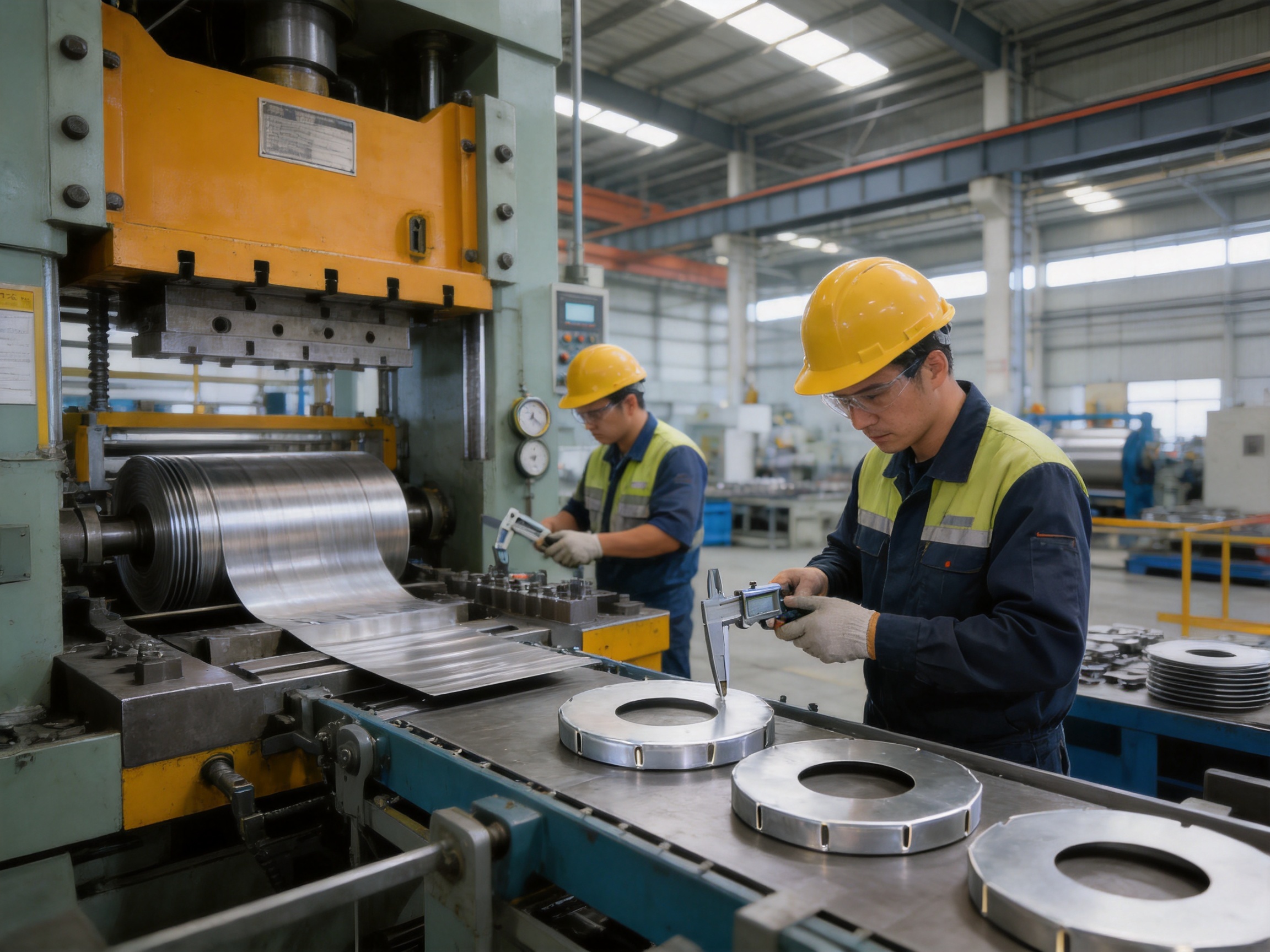
Customization Capabilities
Customization is one of the most important benefits of sourcing circular stamped parts from an experienced manufacturer. Standard components may be suitable for general fastening, but many industrial products require special dimensions, hole patterns, surface finishes, or structural features. Yuyao Hongli Optoelectronics supports OEM/ODM manufacturing, meaning the product can be adapted to customer drawings, sample parts, and performance requirements.
Dimensional Customization
Customers can specify the outer diameter, inner hole diameter, thickness, tolerance, and flatness. If the component needs to fit a specific bolt, pin, shaft, or housing, the central hole can be adjusted accordingly. If the part must distribute load over a larger area, the outer diameter and thickness can be modified. For restricted assembly spaces, compact dimensions can be designed.
Material Customization
Different applications require different material properties. A low-cost carbon steel part may be suitable for indoor mechanical use, while stainless steel may be preferred for humid or corrosive environments. Aluminum can reduce weight in mobile equipment. Copper and brass may support electrical conductivity. The company can advise on materials based on stamping feasibility and performance expectations.
Functional Feature Customization
Beyond a simple round disc with a hole, the part can include extra functions. Embossed areas can increase rigidity. Flanged holes can improve strength around the center opening. Countersunk shapes can accommodate screw heads. Additional holes can support multi-point fastening. Slots can allow adjustment. Raised ribs can prevent deformation. Surface marks can help identification or assembly orientation.
Surface Customization
Surface treatment can be selected for corrosion protection, appearance, conductivity, or wear resistance. Zinc plating is common for steel hardware. Nickel plating can improve appearance and corrosion resistance. Passivation can protect stainless steel. Painting or powder coating can add color and environmental protection. Oiling can provide temporary rust prevention for industrial components.
Packaging Customization
Packaging matters when parts are used in automated assembly or must arrive without scratches, deformation, or contamination. Options may include bulk packaging, small bag packaging, layered packaging, protective paper, carton packaging, palletizing, or customer-specific labeling. Proper packaging reduces damage during transportation and improves handling efficiency.
Quality Control as a Competitive Advantage
Quality control is not only a final inspection activity; it is a production philosophy that begins before manufacturing starts. For stamped parts, prevention is usually more effective than sorting defects after production. Stable quality depends on correct material, accurate tooling, disciplined machine setup, operator skill, inspection frequency, and continuous improvement.
Yuyao Hongli Optoelectronics emphasizes strict quality control, stable delivery, and comprehensive after-sales service. These strengths are especially important for customers who require repeated orders over time. If every batch differs slightly from the previous one, customers may face assembly trouble and production delays. Consistency across batches supports reliable procurement and production planning.
Important inspection points for circular stamped parts include center hole accuracy, outside diameter, concentricity, roundness, thickness, flatness, burr height, surface scratches, coating defects, and deformation. In some applications, mechanical performance such as hardness, tensile strength, or coating adhesion may also be checked. Custom gauges can be used for fast go/no-go inspection during volume production.
How Advanced Stamping Improves Cost Efficiency
Cost efficiency is one of the reasons stamping is widely used for circular metal parts. Once tooling is prepared, stamping can produce large volumes quickly with stable repeatability. Compared with CNC machining, stamping often reduces cycle time, material removal, and labor cost for flat or formed sheet metal parts. Compared with laser cutting, stamping can be more efficient for high-volume production and can create formed features in the same process.
However, true cost efficiency comes from more than low unit price. A low-cost part that creates assembly problems is expensive in practice. Precision-stamped circular parts reduce hidden costs such as sorting, rework, machine downtime, warranty claims, operator injury from burrs, and customer dissatisfaction. Good tooling design also improves material utilization, reducing waste and supporting more stable pricing.
For OEM customers, the ability to convert prototypes into mass production quickly is valuable. Yuyao Hongli Optoelectronics supports rapid prototyping and efficient production conversion, helping customers move from concept or sample to stable supply. This capability reduces development delays and allows buyers to respond quickly to market demand.
Durability in Harsh Environments
Industrial components often operate in challenging conditions. Automotive parts may face vibration, road salt, oil, humidity, and heat. Construction hardware may face outdoor weather and mechanical loading. Electrical and appliance components may face heat cycles, moisture, and repeated assembly. Machinery parts may face dust, grease, impact, and maintenance handling.
Durability depends on the correct combination of material, thickness, geometry, surface treatment, and manufacturing quality. For example, stainless steel may be chosen for corrosion resistance, while thicker carbon steel may be chosen for strength. A plated finish can protect steel from rust. A smooth edge can prevent crack initiation or damage to nearby parts. A precisely formed central hole can reduce stress concentration and improve assembly stability.
The circular stamped parts described here are designed for reliable operation over extended periods, even in demanding environments. Customization allows the part to be matched to the expected service conditions, improving safety and reducing replacement frequency.
Comparison with Alternative Manufacturing Methods
Circular metal parts can be produced by several methods, including stamping, laser cutting, waterjet cutting, CNC machining, casting, forging, and powder metallurgy. Each method has advantages, but stamping is often the best choice when the part is made from sheet metal, the geometry is suitable, and production volume is moderate to high.
Laser cutting is flexible for prototypes and low-volume production, but edge quality, speed, and cost may be less favorable for large quantities. CNC machining offers high precision and complex features but usually costs more for simple flat parts. Casting is suitable for thicker three-dimensional shapes but may not be economical or precise for thin circular discs. Forging provides strength for heavy-duty components but is unnecessary for many sheet metal applications. Stamping offers a strong combination of speed, repeatability, material efficiency, and forming capability.
When customers need large quantities of circular parts with central holes, stamping can deliver excellent value. With well-designed tooling, the process can also produce features such as embossing, flanging, shallow drawing, countersinking, or additional holes, making it versatile enough for many industrial products.
Design Tips for Buyers and Engineers
To obtain the best results from stamped circular parts, buyers and engineers should consider manufacturability early in the design process. Providing a clear drawing with tolerances, material specification, surface finish requirements, and application information helps avoid misunderstandings. If the part will be used in a safety-critical or high-vibration assembly, the required mechanical performance should be communicated.
It is also useful to define which dimensions are critical and which are less critical. Overly tight tolerances on non-critical dimensions can increase tooling cost and inspection complexity. At the same time, tolerances that are too loose on critical features can cause assembly problems. A practical tolerance strategy balances performance and cost.
Burr direction should be considered. In some assemblies, burrs must face away from a sealing surface, wire harness, plastic housing, or operator contact area. If the part requires both sides to be smooth, secondary deburring should be specified. Surface treatment should be selected according to the environment rather than appearance alone. For example, an indoor part may only require oiling, while an outdoor part may require plating or stainless steel.
Why Choose an Experienced Manufacturer
Choosing a stamping supplier is not only a price decision. The best supplier understands materials, tooling, process control, customization, inspection, packaging, and delivery. An experienced manufacturer can identify potential problems before production begins and recommend practical solutions. This reduces risk for the customer.
Yuyao Hongli Optoelectronics has more than 20 years of industry experience and a production background that includes metal stamping parts, deep-drawn parts, bending parts, kitchen appliance accessories, automotive stamping parts, and related hardware. Its factory scale, multiple workshops, skilled workforce, OEM/ODM capability, rapid prototyping support, and after-sales service create a complete manufacturing foundation. Customers benefit from both technical capability and stable cooperation.
The company’s business philosophy emphasizes integrity, excellence, innovation, and sharing. In practical terms, this means focusing on dependable quality, customized solutions, and long-term partnerships. For buyers who require consistent circular stamped parts with central holes, this manufacturing approach offers advantages beyond simple part production.
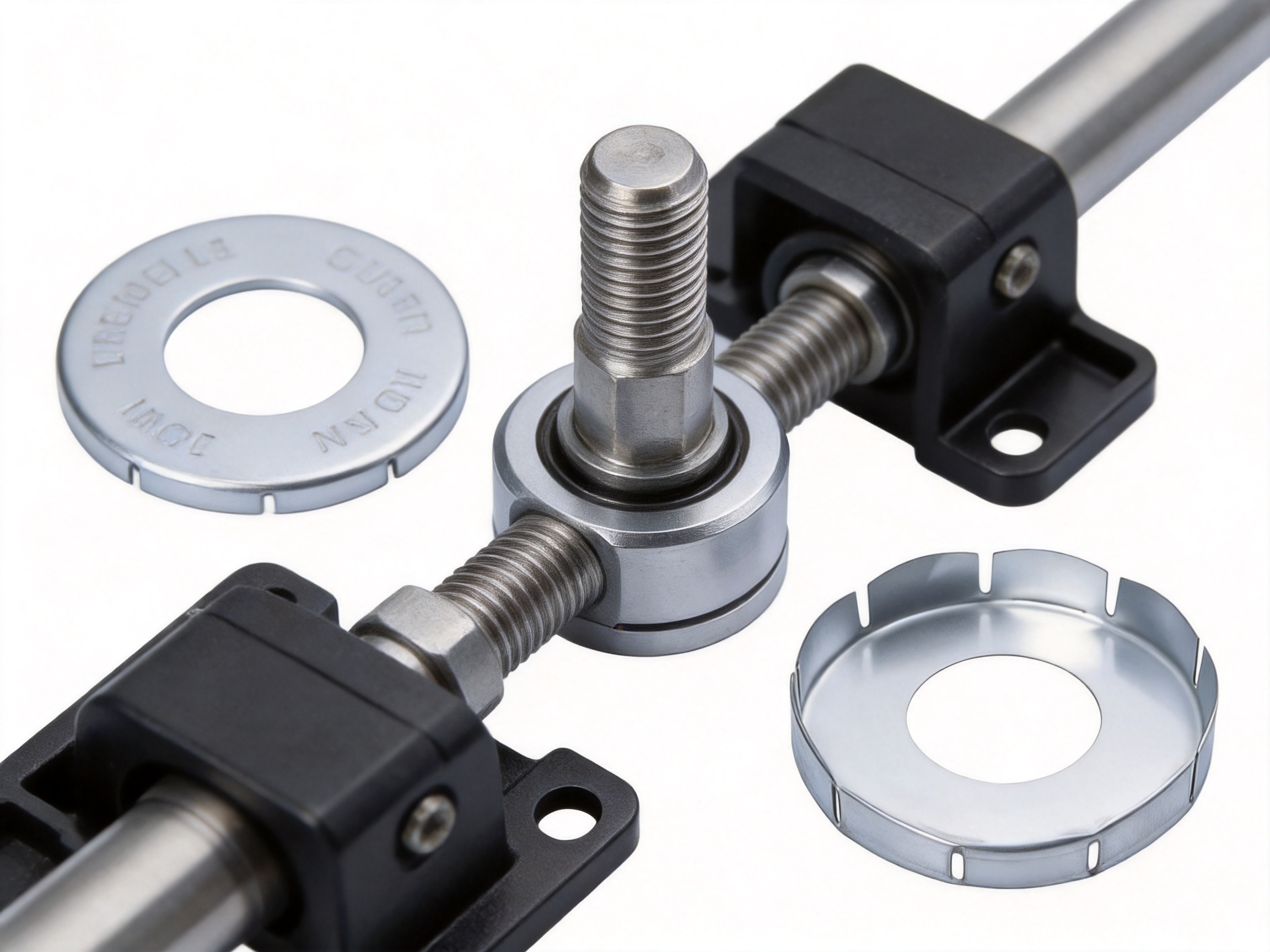
Ordering and Communication Guide
To request a quotation or begin a project, customers should prepare as much information as possible. A technical drawing is ideal. If no drawing is available, a sample part, sketch, or detailed description can be used. Important information includes material, thickness, outer diameter, center hole diameter, tolerance, quantity, surface treatment, intended use, packaging preference, and delivery requirement.
For customized parts, the manufacturer may review the design and suggest improvements. Prototype samples may be produced for confirmation before mass production. Once the sample is approved, tooling and production planning can proceed. During mass production, inspection and packaging are managed according to agreed standards.
Customers can contact Yuyao Hongli Optoelectronics Co., Ltd. by email at hongli@hl-stamping.com or by phone at +86-13905842349 and +86-13738485724. The company is located on the south side of Shunke Road, Yangming Science and Technology Industrial Park, Yuyao City, Zhejiang Province, China.
Frequently Asked Questions
What are circular stamped parts with central holes used for?
They are used for fastening, mounting, spacing, alignment, load distribution, shielding, retaining, electrical connection, and structural support. Common industries include automotive, machinery, construction, electrical equipment, household appliances, kitchen appliance accessories, and precision instruments.
Can the center hole size be customized?
Yes. The central hole can be customized according to bolt size, shaft diameter, rivet design, pin location, mounting post, or other assembly requirements. Hole tolerance and edge condition can also be specified.
What materials are available?
Common materials include carbon steel, stainless steel, galvanized steel, aluminum, copper, and brass. The best material depends on strength, corrosion resistance, conductivity, weight, surface appearance, and cost requirements.
Are these parts suitable for harsh environments?
Yes, when the correct material and surface treatment are selected. Stainless steel, galvanized steel, plating, passivation, painting, or oiling can improve resistance to corrosion, humidity, heat, and industrial exposure.
What is the difference between stamped parts and machined parts?
Stamped parts are formed or cut from sheet metal using dies and presses, making them efficient for medium and high-volume production. Machined parts are cut from solid material using machine tools, which can be highly precise but often more expensive for simple flat components. Stamping usually offers better cost efficiency for circular sheet metal parts with central holes.
Can additional features be added beyond the central hole?
Yes. Additional holes, slots, flanges, embossing, ribs, countersinks, markings, and bends can be added depending on the design. These features can improve rigidity, assembly convenience, positioning, or functionality.
How are burrs controlled?
Burrs are controlled through proper die clearance, tool maintenance, process setup, and optional secondary finishing. Deburring, polishing, tumbling, or brushing can be used when smoother edges are required.
What information is needed for a quotation?
A drawing or sample is best. Useful details include material, thickness, outer diameter, center hole diameter, tolerance, quantity, surface treatment, edge requirements, application, packaging, and delivery schedule.
Is OEM or ODM customization available?
Yes. The manufacturer supports OEM/ODM customization, rapid prototyping, and production conversion. Customers can provide drawings, samples, or requirements for customized development.
Why is concentricity important?
Concentricity ensures that the central hole is accurately aligned with the outer circular shape. Poor concentricity can cause misalignment, uneven load distribution, rotational imbalance, and assembly problems.
Conclusion
Circular stamped parts with central holes are small components with significant industrial importance. Their value lies in precision, consistency, strength, edge quality, material suitability, and reliable assembly performance. In automotive, electrical, machinery, appliance, construction, and precision equipment applications, these parts can influence the durability and efficiency of the entire product.
Compared with ordinary low-precision alternatives, well-manufactured circular stamped parts offer better dimensional consistency, improved concentricity, smoother edges, stronger customization possibilities, and more stable long-term supply. Advanced stamping processes make it possible to achieve high production efficiency while maintaining controlled quality and competitive cost.
Yuyao Hongli Optoelectronics Co., Ltd. combines more than 20 years of experience, a modern 5,000-square-meter factory, multiple stamping workshops, OEM/ODM customization, rapid prototyping, quality control, and after-sales service to provide dependable stamped metal solutions. For customers seeking durable circular stamped parts with accurately positioned central holes, the company offers the manufacturing capability and technical support needed for reliable industrial cooperation.
References
Boljanovic, V. Sheet Metal Forming Processes and Die Design. Industrial Press.
Altan, T., and Tekkaya, A. E. Sheet Metal Forming: Fundamentals. ASM International.
Kalpakjian, S., and Schmid, S. R. Manufacturing Engineering and Technology. Pearson.
ASM International. ASM Handbook: Forming and Forging. ASM International.
Suchy, I. Handbook of Die Design. McGraw-Hill Education.
Product: Circular stamped parts with a central hole
Previous Post
Deep-Drawn Rectangular Container with Lid for Hygienic, Durable Storage
Next Post
Stamped Bendable Strip-Shaped Parts for Precision Applications
News
-
-
What Are Stamped Parts? Stamped parts are metal components produced by pressing flat sheet metal between a die and a punch to cut, bend, or...
READ MORE -
Sheet metal is one of those materials that quietly holds everyday life together. The tray inside your air fryer, the bracket behind a car b...
READ MORE -
Sheet metal bending is one of the most fundamental processes in metal fabrication. It turns a flat sheet of steel, aluminum, or copper into...
READ MORE
Get Fresh Updates Via Email
We promise we will never disclose your email address, and you can opt out at any time.
-
Quick Links
Home About Us Products Service News Contact Us -
Product list
Deep-drawn parts Stamped parts Bending parts Kitchen appliance accessories Automotive stamping parts -
About Us
Factory Honour FAQ -
News
Company News Industry News -
Contact Us
Address: South side of Shunke Road, Yangming Science and Technology Industrial Park, Yuyao City, Zhejiang Province, China Tel: +86-13905842349/+86-13738485724 Email: hongli@hl-stamping.com
Copyright © Yuyao Hongli Optoelectronics Co., Ltd. All Rights Reserved.
Custom Precision-Sheet/Sheet Metal Stamping Manufacturers
