


 English
 русский
 Español
 عربى
عربى


Manufacturing & Materials Engineering Why Deep Draw Components Outperform Fabricated Sheet Metal Parts in Leak-Proof Applications Seam...
READ MORE

News
Home / Author / Liu Yanan — Product After-Sales Service Specialist / Replaceable Baking Tray for Air Fryers: Durable, Efficient, and Built for Better Everyday Cooking
Replaceable Baking Tray for Air Fryers: Durable, Efficient, and Built for Better Everyday Cooking
2026-05-29
Modern air fryers have changed the way households prepare meals, offering faster cooking, reduced oil use, and convenient operation in compact kitchen spaces. Yet the real performance of an air fryer depends not only on the appliance itself but also on the accessories used inside it. Among these accessories, the replaceable baking tray plays a central role. It directly contacts food, guides airflow, supports heat transfer, and determines how evenly ingredients bake, grill, roast, or crisp.
The replaceable baking tray for air fryers introduced here is designed as a durable, practical, and high-performance kitchen appliance accessory. It is suitable for repeated daily use, with heat-resistant and corrosion-resistant properties that help maintain stable performance even under high cooking temperatures. Its structure supports efficient airflow, even heat distribution, easy cleaning, and hygienic food preparation. For users who want to extend the life of their air fryer, replace a worn tray, or improve cooking results, this product provides a dependable solution.
Beyond its kitchen value, this baking tray also reflects the strength of precision metal manufacturing. Produced by Yuyao Hongli Optoelectronics Co., Ltd., a manufacturer with more than 20 years of experience in metal stamping parts, deep-drawn parts, bending parts, kitchen appliance accessories, and automotive stamping parts, the product benefits from mature processing knowledge, stable production capacity, and strict quality control. The result is an accessory that combines practical cooking performance with reliable industrial workmanship.
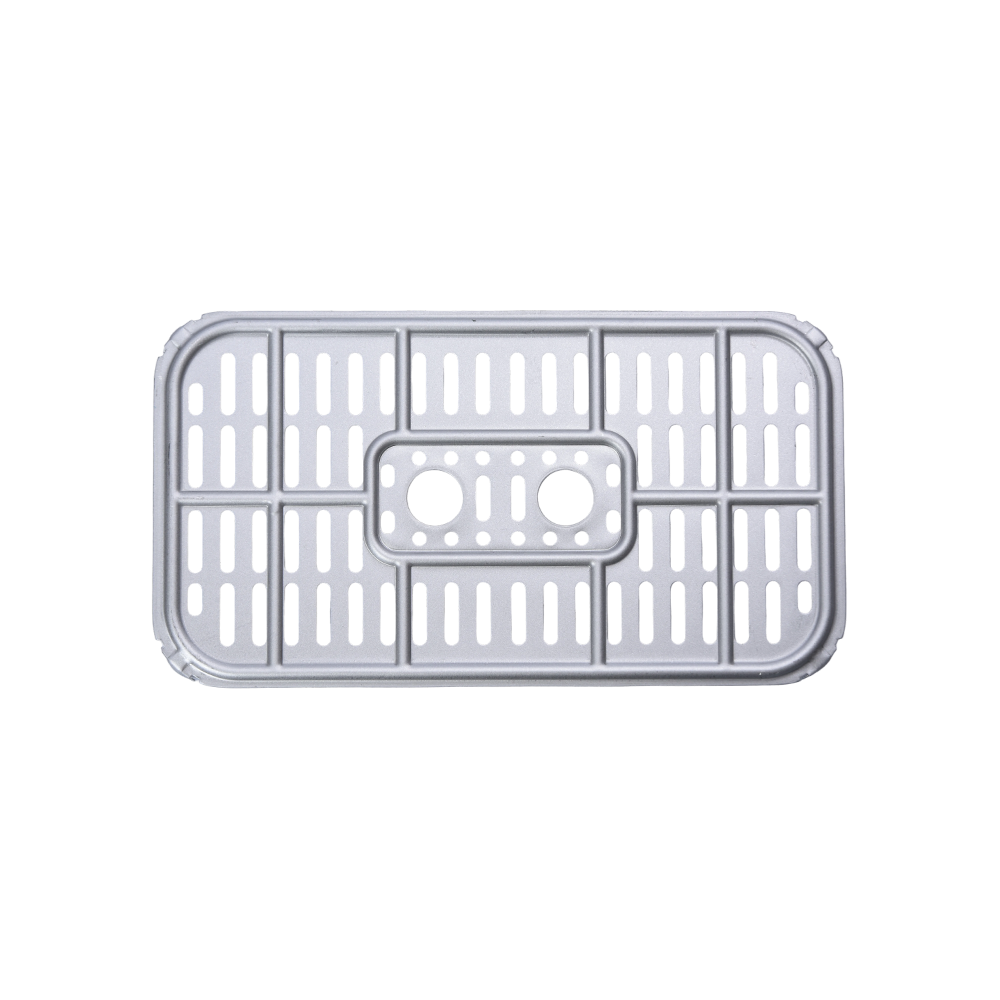
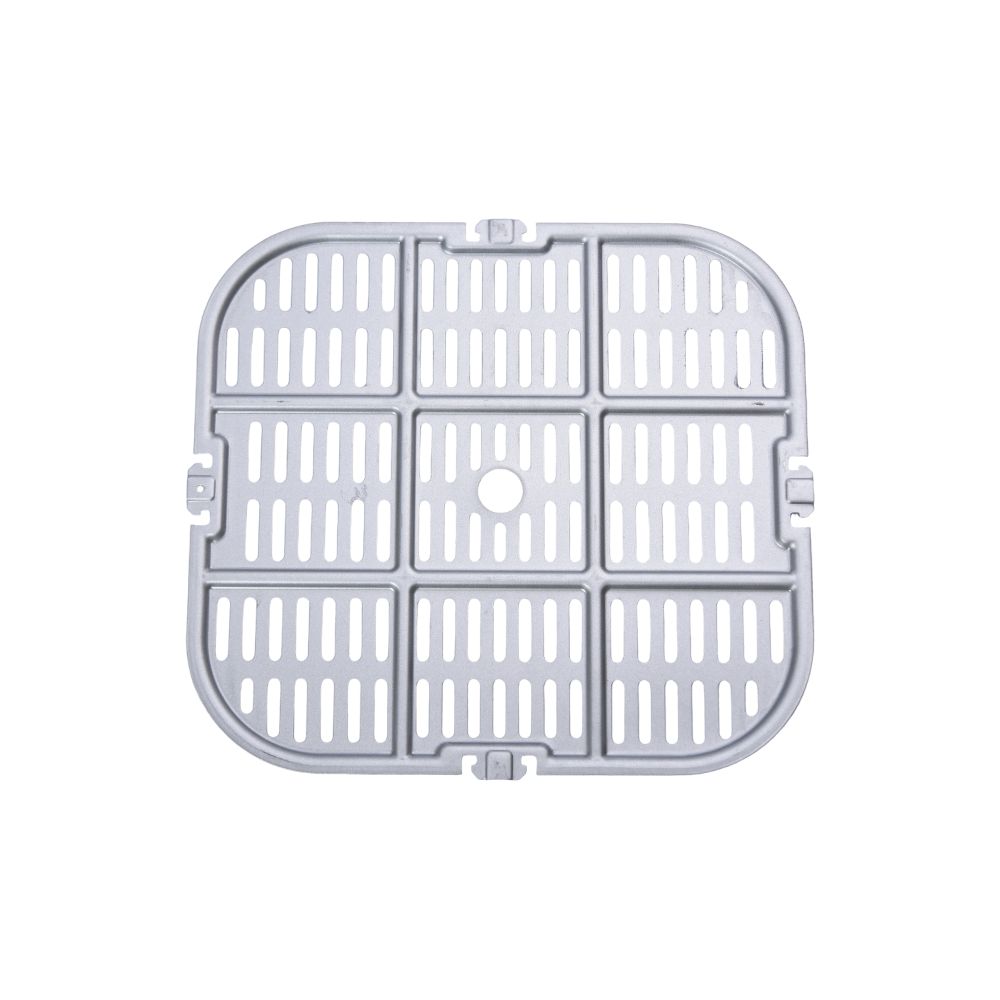
Replaceable baking tray for air fryers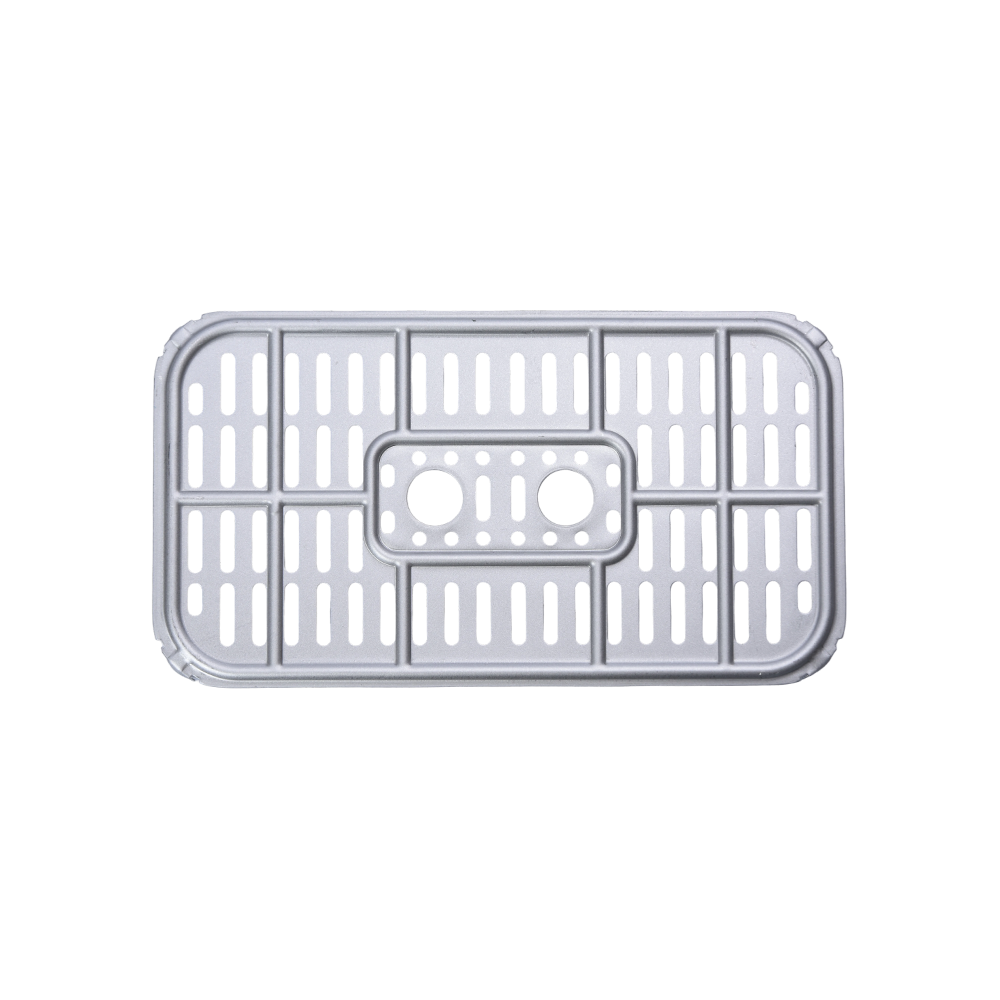
Why a Replaceable Baking Tray Matters in an Air Fryer
An air fryer works by circulating hot air rapidly around food. Unlike conventional deep frying, which immerses ingredients in oil, air frying depends on airflow, temperature stability, and food surface exposure. The tray inside the fryer therefore becomes more than a simple support platform. It acts as a heat pathway, a ventilation component, a drainage surface, and a food-contact cooking tool.
When a tray is poorly designed, several problems may occur. Food may cook unevenly, with one side becoming too dry while another remains undercooked. Grease may collect around ingredients, reducing crispness. Weak surface treatment may lead to staining, corrosion, or difficult cleaning. Thin or unstable materials may deform after repeated high-temperature cycles. These issues reduce the value of the air fryer and create inconvenience for users.
A replaceable baking tray solves many of these problems. It allows consumers to restore the original performance of their air fryer when the old tray is damaged, scratched, or stained. It also gives appliance manufacturers and accessory distributors an opportunity to provide practical spare parts that extend appliance service life. In today’s market, where consumers increasingly value sustainability and repairability, replaceable accessories are important.
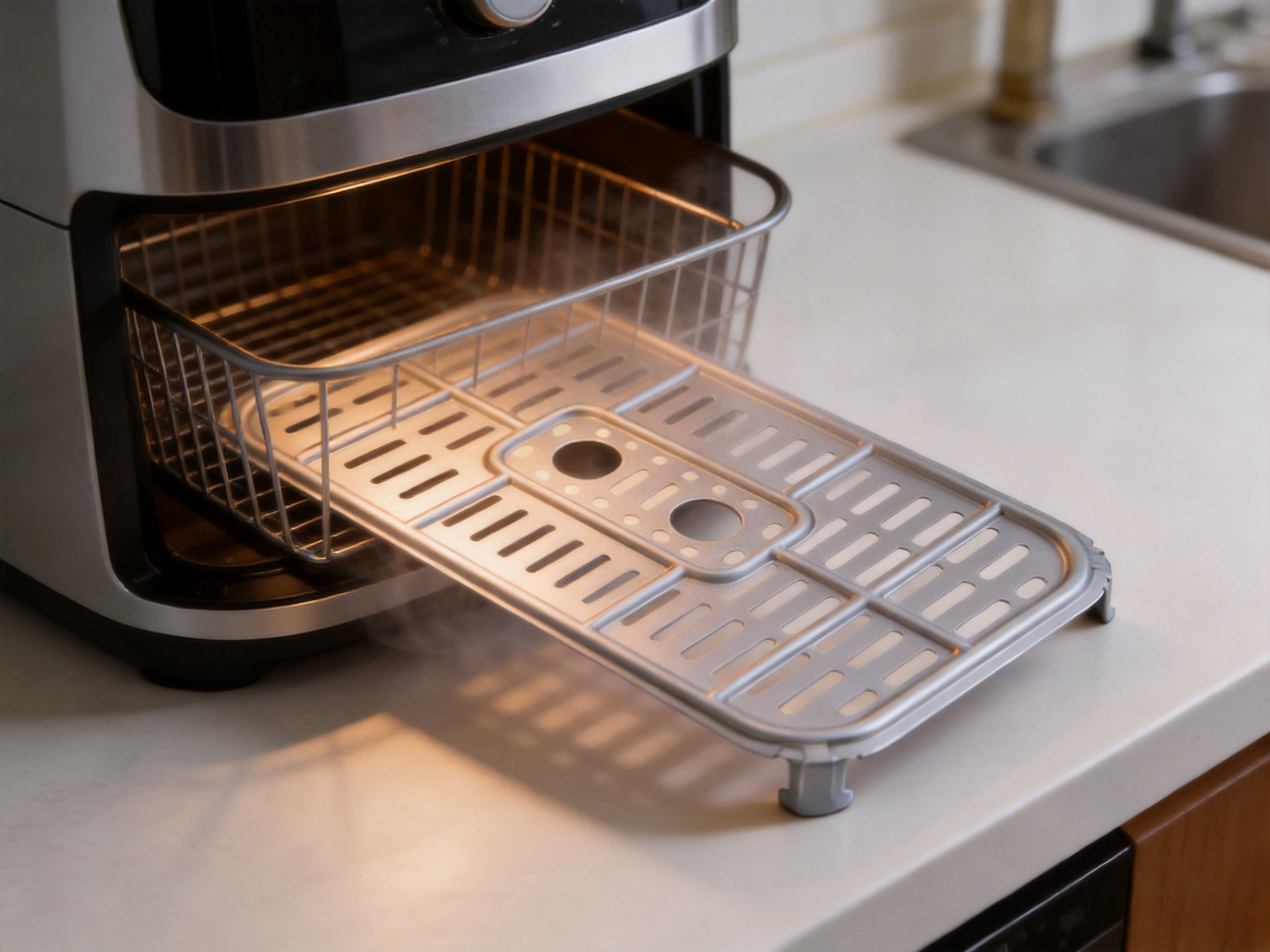
This baking tray is designed for common air fryer cooking tasks, including baking cakes and cookies, grilling meat, roasting vegetables, reheating pizza, preparing frozen foods, and making crispy snacks with minimal oil. Its heat-resistant structure helps the tray maintain integrity during repeated heating and cooling. Its corrosion-resistant surface supports long-term kitchen use. Its perforated or mesh-style design promotes airflow, allowing hot air to pass around and beneath food for more uniform cooking.
Core Product Features
The replaceable baking tray for air fryers offers a combination of durability, practical use, and cooking efficiency. While many accessories look similar at first glance, differences in material selection, forming accuracy, hole pattern, surface quality, and edge finishing can significantly affect performance. This product focuses on the details that matter in daily cooking.
Heat-Resistant Construction
Air fryer accessories must endure repeated exposure to high temperatures. During normal cooking cycles, the inner chamber of an air fryer may reach temperatures suitable for roasting, baking, and crisping foods. A tray that cannot handle thermal stress may warp, discolor excessively, lose shape, or develop surface defects. This baking tray is built with a robust structure intended to withstand the demanding conditions of air fryer cooking.
Heat resistance is important not only for durability but also for cooking stability. If a tray deforms under heat, food may slide to one side, airflow may become uneven, and contact points may change. A stable tray helps maintain predictable results from one cooking session to the next. For households, this means better meals. For appliance brands and distributors, this means fewer complaints and stronger customer satisfaction.
Corrosion Resistance for Long-Term Use
Air fryer trays are exposed to moisture, salt, oil, sauces, marinades, and acidic ingredients. Over time, these factors can attack low-quality materials or poorly treated surfaces. Corrosion not only shortens product life but may also create hygiene concerns. This tray is designed with corrosion resistance in mind, helping it remain practical after repeated washing and exposure to food residues.
Corrosion resistance is especially valuable for users who cook marinated meats, vegetables with seasoning, seafood, or foods containing vinegar, lemon juice, or tomato-based sauces. A tray that resists corrosion remains easier to maintain, better looking, and more dependable over time. It also supports the product’s role as a replaceable accessory that should deliver value beyond a few uses.
Optimized Airflow Through Perforated or Mesh Design
Airflow is the defining principle of air frying. A solid tray may support food, but it can block hot air from reaching the lower surface of ingredients. This may result in soft bottoms, uneven browning, and longer cooking times. The perforated or mesh design of this tray allows air to move through and around food, supporting crisp texture and more balanced heat exposure.
For foods such as French fries, chicken wings, vegetables, breaded snacks, and pizza slices, airflow under the food is essential. The tray’s open structure helps reduce moisture accumulation and allows excess oil or liquid to drain away from ingredients. This supports a crispier surface without requiring excessive oil. It also helps users enjoy the main advantage of air frying: fried-style texture with a lighter cooking method.
Easy Cleaning and Grease Resistance
Convenience is one of the main reasons consumers buy air fryers. If an accessory is difficult to clean, the overall cooking experience becomes less enjoyable. This baking tray is designed to resist grease, stains, and food residue. Its surface and structure support easier washing after cooking, helping users maintain a hygienic kitchen environment.
Easy cleaning also helps protect the tray’s service life. When food residue remains stuck to a cooking surface, users may scrub aggressively with hard tools, which can damage coatings or surfaces. A tray that releases residue more easily reduces the need for harsh cleaning and supports better long-term appearance.
Robust Structure and Stable Heat Distribution
A good baking tray should not feel flimsy. The structure should remain stable when holding food, when being inserted or removed, and when exposed to high temperatures. This product is made with attention to structural strength, supporting a reliable user experience. Stable construction also contributes to better heat distribution, reducing the likelihood of localized hot spots or uneven cooking zones.
In appliance accessories, small design improvements can make a large difference. Accurate forming, smooth edges, consistent perforations, and stable flatness all improve product function. These details depend on manufacturing capability, tooling control, and quality inspection, areas in which experienced metal processing suppliers offer clear advantages.
Competitive Advantages Compared with Ordinary Air Fryer Trays
The market contains many air fryer trays, but not all products deliver the same quality. Some are made with low material thickness, weak surface treatment, poor edge finishing, or inconsistent hole patterns. These weaknesses may not be obvious in product photos, but they become apparent after repeated use. The replaceable baking tray described here is positioned to compete through durability, precision, practicality, and customization potential.
| Comparison Factor | High-Quality Replaceable Baking Tray | Common Low-Cost Alternative |
|---|---|---|
| Heat Performance | Designed to withstand frequent high-temperature air fryer use with stable shape and reliable function. | May warp, discolor, or lose stability after repeated heating cycles. |
| Airflow Efficiency | Perforated or mesh-style design promotes circulation for even cooking and crisp texture. | Poor hole layout or blocked airflow can cause uneven browning and soft food surfaces. |
| Corrosion Resistance | Built to resist moisture, grease, salt, and food acids during regular kitchen use. | Surface may degrade faster when exposed to sauces, washing, or seasoning residues. |
| Cleaning Convenience | Resists grease, stains, and food residue, making routine cleaning easier. | Residue may stick more strongly, requiring heavy scrubbing and reducing service life. |
| Structural Strength | Robust metal processing supports stable use and dependable handling. | Thin or poorly formed trays may bend, flex, or feel unstable. |
| Manufacturing Support | Backed by experienced stamping, bending, deep drawing, and OEM/ODM capability. | Limited process control may result in inconsistent batches or fewer customization options. |
The most important advantage is balance. A premium tray must be strong enough to last, open enough for airflow, smooth enough for cleaning, and accurate enough to fit the air fryer properly. Overemphasis on one feature may weaken another. For example, a tray with too many openings may lose strength, while a tray with too few openings may restrict airflow. Experienced manufacturing helps achieve the correct balance between strength, ventilation, and usability.
Another competitive advantage is the ability to support replacement and customization needs. Air fryer models vary in size, inner chamber shape, tray support structure, handle design, and clearance requirements. A supplier with OEM/ODM capabilities can adapt tray dimensions, hole patterns, edge profiles, and surface treatments for different appliance designs. This flexibility is valuable for appliance manufacturers, spare parts suppliers, kitchenware brands, and distributors.
Applications in Everyday Cooking
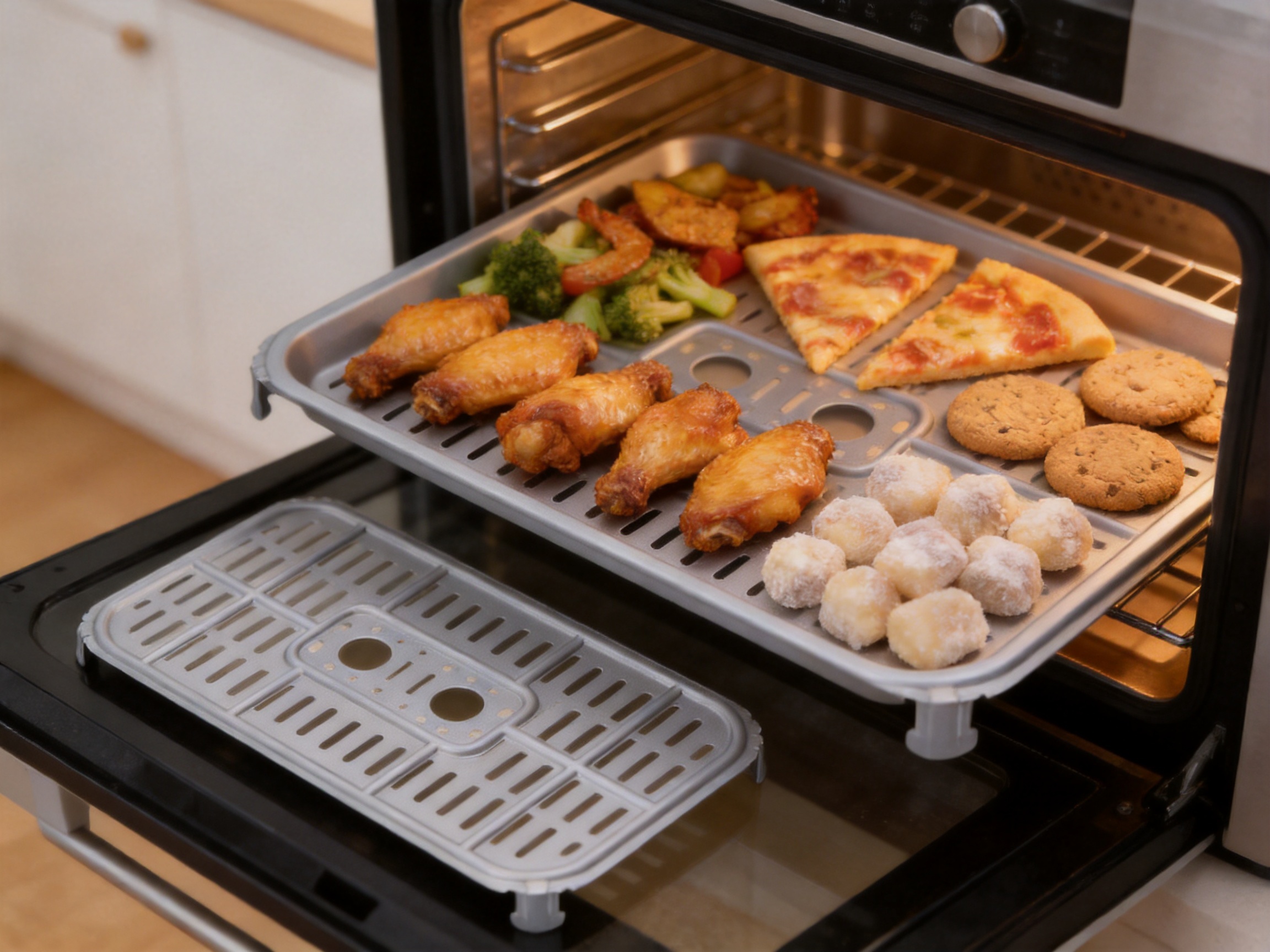
This baking tray is suitable for a wide variety of foods and cooking styles. Its design supports baking, grilling, frying-style air cooking, roasting, and reheating. Because air fryers are popular among busy households, small apartments, students, families, and health-conscious users, a reliable tray can become one of the most frequently used kitchen accessories.
Baking Cakes, Cookies, and Pastries
Although air fryers are often associated with crispy snacks, they can also be used for baking. A stable tray helps support small cakes, cookies, pastries, and dough-based foods. Even airflow and heat distribution contribute to more consistent baking results. For small-batch baking, the tray allows users to prepare desserts without heating a full-size oven.
For cookies and pastries, airflow is especially important because it helps manage surface texture and moisture release. A well-designed tray can help the bottom of baked items cook more evenly instead of becoming soggy. This makes the accessory useful for families who want quick desserts or small portions.
Grilling Meat and Seafood
Meat, poultry, and seafood release oil and juices during cooking. A perforated or mesh tray allows these liquids to drain away, reducing excessive grease contact and supporting better browning. Chicken wings, pork slices, sausages, fish fillets, shrimp, and kebabs can benefit from airflow around the food surface.
Because air frying uses circulating heat, the tray must allow hot air to reach as much of the food as possible. This helps develop a grilled or roasted texture without requiring large amounts of oil. For users seeking convenient protein preparation, the tray supports quick cooking with reduced mess.
Roasting Vegetables
Vegetables such as potatoes, carrots, mushrooms, peppers, broccoli, cauliflower, eggplant, and zucchini roast well in an air fryer. The tray helps separate vegetables from collected moisture, supporting better caramelization and texture. It also helps prevent vegetables from sitting in oil, which can make them heavy or greasy.
For health-conscious cooking, this is an important advantage. Users can season vegetables lightly and rely on airflow to create appealing texture. The tray’s easy-clean characteristics also matter because roasted vegetables can leave seasoning, sugar, or oil residue.
Reheating Pizza, Bread, and Frozen Foods
Many people use air fryers to reheat pizza, bread, pastries, frozen fries, chicken nuggets, spring rolls, and other convenience foods. The tray’s airflow design helps restore crispness better than a microwave, which often leaves reheated food soft or rubbery. By allowing air to circulate beneath the food, the tray helps maintain texture on both top and bottom surfaces.
For frozen foods, even heat exposure reduces the chance of cold centers or overcooked edges. A stable tray also makes loading and unloading easier, improving safety and convenience during quick meals.
Materials, Forming, and Surface Considerations
A food-contact air fryer tray must be designed with careful attention to material behavior. The product must resist heat, handle oil and moisture, maintain shape, and remain easy to clean. While the specific material and surface treatment may vary according to customer requirements, the manufacturing approach must always consider durability, hygiene, and cooking performance.
Metal trays are widely used because metals provide strength, formability, thermal stability, and efficient heat transfer. However, performance depends on material grade, thickness, surface condition, forming precision, and finishing quality. A tray that appears simple may actually require multiple controlled processes, including cutting, stamping, punching, bending, forming, trimming, deburring, surface treatment, cleaning, and inspection.
For perforated trays, hole quality is especially important. Burrs around holes can trap food residue, scratch surfaces, or create safety concerns. Inconsistent perforation patterns can affect airflow and product appearance. Proper tooling and punching control help produce clean openings with consistent spacing. Edge treatment is also critical because users handle the tray during cooking and cleaning. Smooth, well-finished edges improve safety and perceived quality.
Thermal cycling is another important factor. During use, the tray repeatedly heats and cools. Materials expand and contract, and weak structures may gradually deform. A well-designed stamping or forming process helps reduce internal stress and maintain dimensional stability. This is where advanced manufacturing experience becomes essential.
Manufacturing Strength Behind the Product
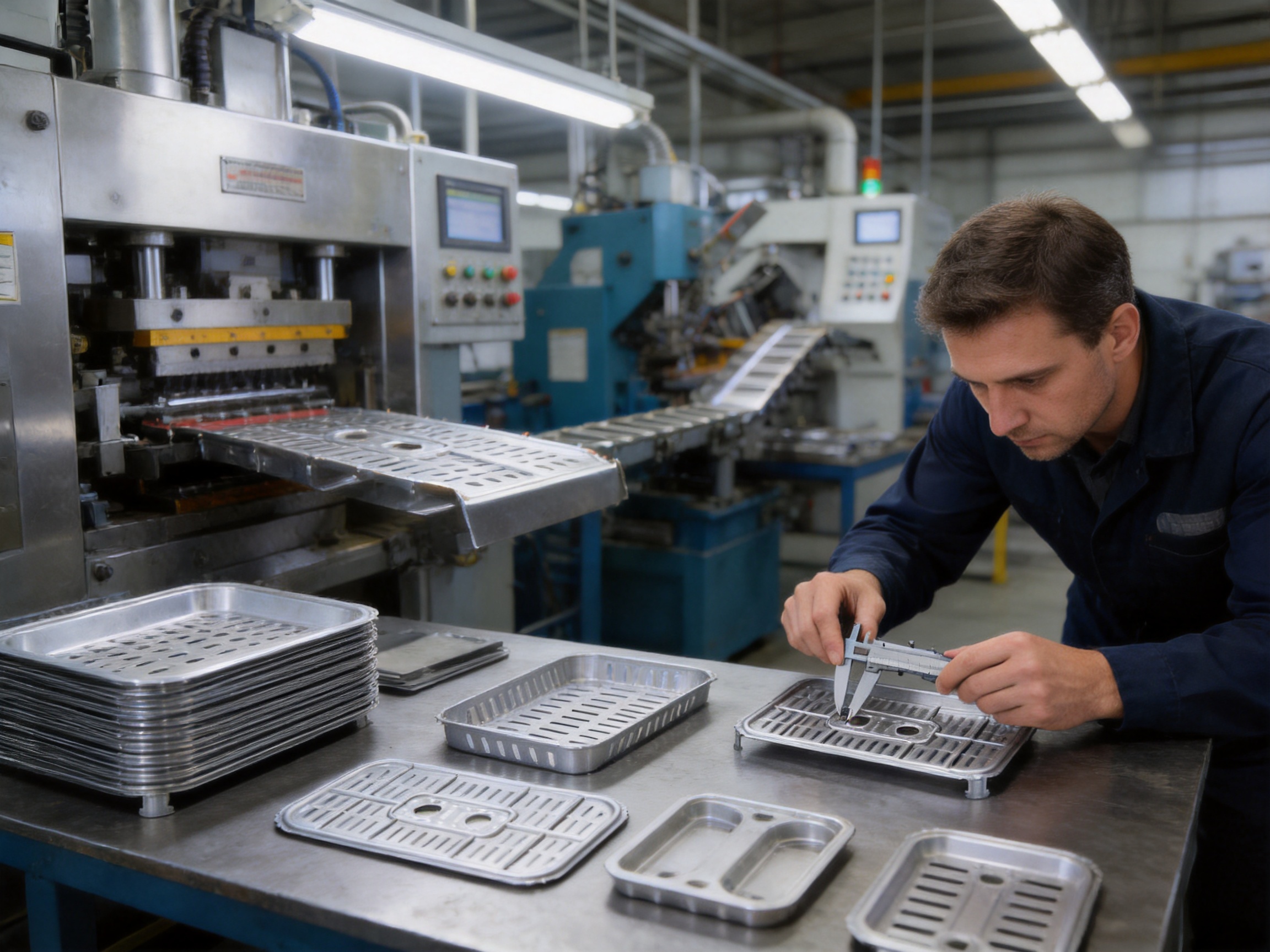
Yuyao Hongli Optoelectronics Co., Ltd. is a comprehensive manufacturing enterprise located in Yangming Science and Technology Industrial Park, Yuyao City, Zhejiang Province, China. Founded in 2000 and developed from its former name, Yuyao Hongli Optoelectronics Educational Instruments Co., Ltd., the company has accumulated more than 20 years of industry experience. Its capabilities cover metal stamping parts, deep-drawn parts, bending parts, kitchen appliance accessories, automotive stamping parts, hardware products, plastic products, small household appliance components, educational instruments, optical instruments, household electric heater components, and related products.
The company operates a modern factory of approximately 5,000 square meters and has multiple stamping workshops, more than 60 employees, and stable production capacity. This foundation allows it to support manufacturing, processing, wholesale, retail, import, and export services. For a product such as a replaceable baking tray for air fryers, this industrial background is highly relevant. The tray requires accurate sheet metal processing, stable forming, reliable surface quality, and efficient batch production, all of which align with the company’s core strengths.
Unlike trading-only suppliers, a manufacturing enterprise can better control production details. Tooling adjustments, sample development, process optimization, inspection standards, and delivery schedules can be managed directly. This improves consistency and supports communication with customers who require customized dimensions, specific tolerances, packaging options, or product improvements.
Stamping Expertise
Stamping is one of the key processes used for metal parts. It allows flat sheet material to be cut, punched, shaped, or formed with repeatable accuracy. For an air fryer baking tray, stamping may be used to create the tray outline, perforations, edge details, support features, or shaped areas. The quality of stamping affects appearance, fit, safety, and performance.
Experienced stamping manufacturers understand how tooling design influences burr formation, material deformation, hole consistency, and production efficiency. They also know how to manage material feeding, press parameters, tool wear, and quality checks. This knowledge helps reduce defects and maintain stable production across batches.
For customers, strong stamping capability means better product uniformity and more reliable large-volume supply. It also means quicker development when a new tray size or design is required. If a customer needs a modified hole pattern, rounded edge, reinforced rim, or different geometry, experienced tooling and stamping teams can evaluate feasibility and support prototyping.
Deep Drawing and Forming Knowledge
Deep drawing is a forming process used to create deeper or more complex metal shapes from sheet material. Although not every baking tray requires deep drawing, knowledge of this process is valuable for kitchen appliance accessories because many components require smooth curves, stable walls, or three-dimensional forms. A manufacturer with deep drawing capability can better understand material flow, forming stress, and shape retention.
This expertise benefits tray development by helping engineers design structures that avoid cracking, excessive thinning, wrinkling, or distortion. It also supports related accessory development, such as baskets, pans, covers, liners, and housing components. For customers who source multiple kitchen appliance parts, a supplier with broad forming capabilities can provide integrated solutions instead of only one simple product.
Bending and Edge Forming
Bending is essential for creating raised edges, support flanges, handles, reinforcing rims, and safe borders. In an air fryer tray, edge design influences strength, safety, fit, and user comfort. A well-formed edge reduces sharpness, improves rigidity, and helps the tray sit correctly in the appliance.
Precise bending also supports dimensional compatibility. If a tray is too large, it may jam inside the air fryer. If it is too small, it may rattle, tilt, or fail to sit securely. Consistent bending helps maintain reliable fit across production batches. This is particularly important for replacement accessories, where customers expect the tray to match the intended appliance model.
Quality Control and Inspection
Kitchen appliance accessories require practical quality control. Dimensional accuracy, surface quality, edge smoothness, flatness, hole consistency, and cleanliness all matter. A manufacturer with strict inspection procedures can reduce risks before products reach customers. Quality control may include incoming material checks, in-process inspections, tooling condition monitoring, dimensional measurements, surface inspection, and final product evaluation.
For a replaceable baking tray, inspection should confirm that the tray shape is stable, the perforations are clean, the surface is free of unacceptable defects, the edges are safe, and the product meets customer specifications. Consistency is especially important for wholesale and export customers who require repeat orders and stable product quality.
OEM and ODM Customization Potential
Air fryer designs vary widely. Some models use square trays, while others use round, oval, or rectangular forms. Some require raised feet, side handles, specific locking structures, special rim heights, or customized hole patterns. For this reason, OEM and ODM support is a major advantage. Yuyao Hongli Optoelectronics supports customization, rapid prototyping, and efficient production conversion, making it possible to adapt this baking tray to different market needs.
OEM customization may involve producing a tray according to a customer’s existing drawings or samples. The manufacturer focuses on achieving the required dimensions, structure, material, finish, and packaging. ODM development may involve more design support, where the manufacturer helps improve a product concept, optimize manufacturability, or create a new accessory design based on customer requirements.
Customization options may include tray size, shape, material thickness, perforation diameter, mesh density, edge profile, handle design, surface treatment, logo-free packaging, retail packaging, bulk packaging, and product sets. For appliance brands, distributors, and aftermarket accessory sellers, this flexibility helps create products that match specific air fryer models and target markets.
Rapid prototyping is also valuable. Before mass production, customers may need samples to test fit, cooking performance, airflow, cleaning convenience, and user handling. A manufacturer with strong processing capacity can help reduce development time. Efficient production conversion then helps move from approved sample to batch manufacturing with controlled quality.
Advantages for Different Customer Groups
The replaceable baking tray serves several types of customers, including household users, appliance manufacturers, kitchen accessory brands, distributors, retailers, and repair service providers. Each group benefits in a different way.
For Household Users
For consumers, the main benefits are better cooking performance, easier cleaning, and longer appliance usefulness. If an original tray becomes scratched, stained, lost, or deformed, a replacement tray can restore convenient air fryer use. Users can continue preparing favorite foods without buying a new appliance. This reduces cost and supports a more sustainable lifestyle.
Household users also benefit from improved hygiene. A worn or damaged tray may collect residue in scratches or corroded areas. Replacing it with a clean, durable tray makes daily cooking more pleasant. For families that use an air fryer frequently, having a reliable replacement tray can also make meal preparation smoother.
For Air Fryer Manufacturers
Air fryer manufacturers need accessories that fit accurately, perform reliably, and support brand reputation. A poor-quality tray can damage the user’s perception of the entire appliance. By sourcing from a manufacturer experienced in stamping and kitchen appliance accessories, appliance producers can improve consistency and reduce after-sales issues.
Manufacturers may also require spare parts for warranty service, accessory packages, or upgraded product versions. OEM/ODM capability allows trays to be matched to specific models. Stable production capacity supports ongoing supply, which is important for appliance product lines that remain on the market for multiple years.
For Kitchen Accessory Brands and Distributors
Accessory brands and distributors compete on product reliability, compatibility, price-performance value, and delivery stability. A well-made replaceable baking tray can become a practical catalog item because it addresses a real consumer need. Many air fryer owners search for replacement parts after their original accessories wear out. A durable tray with good airflow and easy cleaning can earn repeat customers and positive feedback.
Distributors also value suppliers who can support packaging, batch consistency, export documentation, and timely delivery. A manufacturer with import and export experience is better positioned to serve international customers. Stable communication and after-sales service further reduce procurement risk.
For Repair and Aftermarket Service Providers
Repair service providers and aftermarket part sellers need compatible, practical, and dependable replacement accessories. A tray that fits well and performs correctly helps restore appliance function quickly. Because air fryers are widely used, replacement trays have strong aftermarket potential. Working with a capable manufacturer makes it easier to source consistent products over time.
Design Details That Improve User Experience
Good kitchen accessories are built around everyday behavior. Users want a tray that is easy to place, easy to remove, easy to wash, and reliable during cooking. They may not describe these needs in technical language, but they notice when a product fails. The design of this baking tray focuses on details that support user satisfaction.
First, stable flatness helps food sit evenly. This is useful for pizza slices, cookies, bread, and delicate foods. Second, consistent perforations support balanced airflow. Third, rounded or finished edges improve safety during handling and cleaning. Fourth, a grease-resistant surface reduces cleaning effort. Fifth, heat-resistant construction supports long-term shape stability.
These design details also influence perceived quality. A tray that feels sturdy, looks clean, and fits properly gives users confidence. For retailers and brands, this translates into stronger product reviews and lower return rates. In competitive accessory markets, small differences in quality often determine long-term success.
Hygiene and Maintenance
Because the tray directly contacts food, hygiene is an important concern. Users should clean the tray after each cooking session to remove oil, crumbs, seasonings, and residues. A tray that resists grease and stains helps make this process easier. Regular cleaning also protects surface quality and prevents odors from building up.
For best results, users should allow the tray to cool before washing. Sudden temperature changes may stress materials, especially if the tray is placed under cold water immediately after high-temperature cooking. Soft sponges or non-abrasive cleaning tools are generally preferred to protect the surface. Strong metal scrapers should be avoided unless the product specification allows them.
Soaking the tray briefly in warm water can help loosen stubborn residue. Mild detergent is usually sufficient for daily cleaning. After washing, the tray should be dried thoroughly before storage to support long-term corrosion resistance. These simple maintenance habits help preserve both appearance and function.
Sustainability and Replacement Value
Replaceable accessories contribute to more sustainable appliance use. Instead of discarding an entire air fryer because one internal tray is damaged or worn, users can replace the tray and continue using the appliance. This reduces waste, saves money, and supports responsible consumption.
In many households, the air fryer body and heating system may remain functional long after the tray shows signs of wear. Food-contact accessories experience the most direct exposure to heat, oil, cleaning, and mechanical handling. Making these accessories replaceable extends the practical life of the appliance. This is an increasingly important selling point as consumers pay more attention to repairability and product longevity.
Manufacturers and distributors can also benefit from offering replacement trays as part of after-sales service. Spare parts improve customer support and strengthen brand trust. A customer who can easily replace a worn tray is more likely to remain satisfied with the appliance and the supplier.
Production Capacity and Supply Reliability
Reliable production is essential for B2B customers. A good product design is only valuable if it can be produced consistently and delivered on schedule. Yuyao Hongli Optoelectronics has a 5,000-square-meter factory, multiple stamping workshops, and more than 60 employees, providing a practical foundation for stable manufacturing. The company’s experience in metal stamping, deep drawing, bending, hardware products, plastic products, auto parts, and kitchen appliance accessories supports diversified production needs.
For customers sourcing replaceable baking trays, supply reliability includes several aspects. The first is consistent product quality from batch to batch. The second is the ability to handle repeat orders. The third is responsiveness when specifications change. The fourth is support for export and logistics coordination. The fifth is after-sales communication when technical questions arise.
The company’s business philosophy emphasizes integrity, excellence, innovation, and sharing. In manufacturing partnerships, these values matter because customers need more than a one-time transaction. They need reliable cooperation, honest communication, continuous improvement, and practical problem-solving. For international buyers, a supplier with stable service and export capability can reduce sourcing complexity.
How Advanced Manufacturing Enhances the Tray
The performance of a replaceable baking tray comes from the connection between design and process. Advanced manufacturing is not only about machines; it is about understanding how each process affects the final product. Material selection affects heat resistance and strength. Stamping affects hole quality and dimensions. Bending affects fit and edge safety. Surface treatment affects cleaning and corrosion resistance. Inspection affects consistency.
When these factors are controlled together, the final product performs better than a generic low-cost tray. It fits more accurately, cooks more evenly, cleans more easily, and lasts longer. This creates practical advantages for both end users and business customers.
Manufacturing experience also helps avoid common production problems. For example, punching many perforations can cause sheet distortion if the tooling and process are not well managed. Bending edges can create springback, where the metal tries to return slightly toward its original shape. High-temperature use can reveal hidden forming stress. Surface finishing must be compatible with food-contact use and repeated cleaning. A mature manufacturer understands these risks and develops processes to control them.
Key Purchase Considerations
When selecting a replaceable baking tray for air fryers, customers should consider several practical factors. The first is compatibility. The tray must match the intended air fryer size and internal structure. Measurements should include length, width, diameter, corner radius, edge height, support point position, and clearance.
The second factor is airflow design. A good tray should allow hot air to circulate effectively without sacrificing strength. Perforation size, spacing, open area, and pattern all influence cooking results. The third factor is material and surface performance. Heat resistance, corrosion resistance, and cleanability determine long-term value.
The fourth factor is edge safety. Food-contact accessories are handled frequently, so smooth edges and stable rims are important. The fifth factor is supplier capability. A manufacturer with stamping, bending, deep drawing, prototyping, and quality control strengths can provide better customization and more stable supply.
For B2B buyers, packaging and delivery should also be considered. Retail products may require individual packaging with clear model compatibility information. Wholesale orders may require protective bulk packaging to prevent scratches or deformation during transportation. Export buyers may need documentation, labeling, and delivery coordination.
Q&A Section
Q1: What is the main purpose of a replaceable baking tray for air fryers?
A replaceable baking tray supports food inside the air fryer while allowing hot air to circulate around it. It helps improve cooking uniformity, crispness, grease drainage, and convenience. It also allows users to replace a worn or damaged original tray without replacing the entire appliance.
Q2: What foods can be cooked on this tray?
The tray is suitable for cakes, cookies, pizzas, vegetables, meats, seafood, frozen snacks, bread, pastries, and reheated foods. It supports baking, grilling, roasting, and air frying-style cooking with reduced oil use.
Q3: Why is the perforated or mesh design important?
The perforated or mesh design allows hot air to move through the tray and reach the bottom of the food. This improves airflow, helps food heat evenly, reduces moisture accumulation, and supports a crisp texture without excessive oil.
Q4: How does this tray compare with ordinary low-cost trays?
This tray emphasizes heat resistance, corrosion resistance, robust construction, airflow efficiency, easy cleaning, and manufacturing consistency. Ordinary low-cost trays may warp, stain, corrode, block airflow, or show inconsistent quality after repeated use.
Q5: Is the tray easy to clean?
Yes. The tray is designed to resist grease, stains, and food residue, making routine cleaning easier. Users should clean it after use with mild detergent and a soft sponge, then dry it thoroughly before storage.
Q6: Can the tray be customized for different air fryer models?
Yes. With OEM and ODM support, the tray can be customized in size, shape, hole pattern, edge profile, material thickness, surface treatment, and packaging according to customer requirements.
Q7: Why is manufacturing experience important for this product?
Manufacturing experience affects dimensional accuracy, hole quality, edge safety, flatness, heat stability, and batch consistency. A supplier skilled in stamping, bending, deep drawing, and quality control can produce a more reliable tray.
Q8: Who can benefit from sourcing this product?
Household users, air fryer manufacturers, kitchen accessory brands, distributors, retailers, repair service providers, and aftermarket parts sellers can all benefit from a durable and compatible replaceable baking tray.
Conclusion
The replaceable baking tray for air fryers is a practical accessory that directly improves cooking performance, convenience, and appliance longevity. Its heat-resistant and corrosion-resistant structure supports frequent use. Its perforated or mesh design promotes airflow for even heating and crisp texture. Its easy-clean surface helps maintain hygiene. Its robust construction provides stability during daily cooking.
Compared with ordinary alternatives, this tray offers stronger overall value through durability, airflow efficiency, cleanability, structural reliability, and customization potential. It is suitable for a wide range of foods, including baked goods, pizza, vegetables, meats, seafood, and frozen snacks. It also supports sustainable appliance use by allowing users to replace a worn tray rather than discard a functional air fryer.
Behind the product is the manufacturing strength of Yuyao Hongli Optoelectronics Co., Ltd., a company with more than 20 years of experience, a 5,000-square-meter factory, multiple stamping workshops, and capabilities in metal stamping, deep drawing, bending, kitchen appliance accessories, and automotive stamping parts. With OEM/ODM customization, rapid prototyping, efficient production conversion, strict quality control, stable delivery, and comprehensive after-sales service, the company is well positioned to support global customers seeking dependable air fryer accessories.
For consumers, the tray means better meals and easier maintenance. For brands and distributors, it means a competitive accessory with real market demand. For appliance manufacturers, it means reliable spare part support and improved customer satisfaction. As air fryers continue to grow in popularity, high-quality replaceable trays will remain essential components in modern kitchens.
References
1. McGee, Harold. On Food and Cooking: The Science and Lore of the Kitchen. Scribner.
2. Fellows, P. J. Food Processing Technology: Principles and Practice. Woodhead Publishing.
3. Kalpakjian, Serope, and Steven R. Schmid. Manufacturing Engineering and Technology. Pearson.
4. Groover, Mikell P. Fundamentals of Modern Manufacturing: Materials, Processes, and Systems. Wiley.
5. Totten, George E. Steel Heat Treatment: Metallurgy and Technologies. CRC Press.
6. International Organization for Standardization. Quality Management Systems: Fundamentals and Vocabulary.
7. Brown, Amy. Understanding Food: Principles and Preparation. Cengage Learning.
Product: Replaceable baking tray for air fryers
Previous Post
Deep-Drawn Square Container with Custom Cutouts for Reliable Industrial Integration
Next Post
High-Performance Stamped Square Lids with Custom Hole Patterns for Industrial Applications
News
-
-
If you have ever asked yourself, “How do I find a reputable metal fabricator?” you are not alone. As a manufacturer with more than 20 years...
READ MORE -
Steel is the backbone of modern manufacturing, yet it is never a single, uniform material. When engineers and buyers ask, "How can you clas...
READ MORE -
Sheet metal bending is one of the most fundamental processes in metal fabrication. It turns a flat sheet of steel, aluminum, or copper into...
READ MORE
Get Fresh Updates Via Email
We promise we will never disclose your email address, and you can opt out at any time.
-
Quick Links
Home About Us Products Service News Contact Us -
Product list
Deep-drawn parts Stamped parts Bending parts Kitchen appliance accessories Automotive stamping parts -
About Us
Factory Honour FAQ -
News
Company News Industry News -
Contact Us
Address: South side of Shunke Road, Yangming Science and Technology Industrial Park, Yuyao City, Zhejiang Province, China Tel: +86-13905842349/+86-13738485724 Email: hongli@hl-stamping.com
Copyright © Yuyao Hongli Optoelectronics Co., Ltd. All Rights Reserved.
Custom Precision-Sheet/Sheet Metal Stamping Manufacturers
