


 English
 русский
 Español
 عربى
عربى

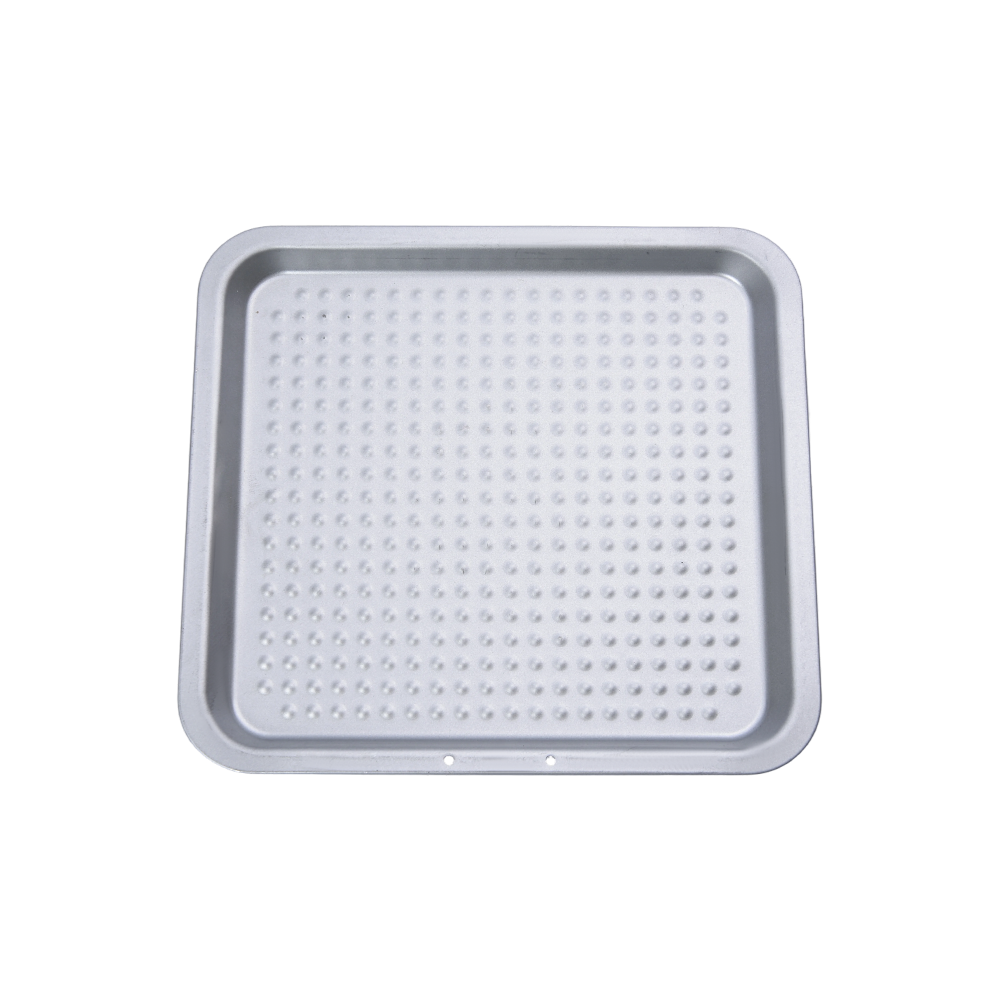
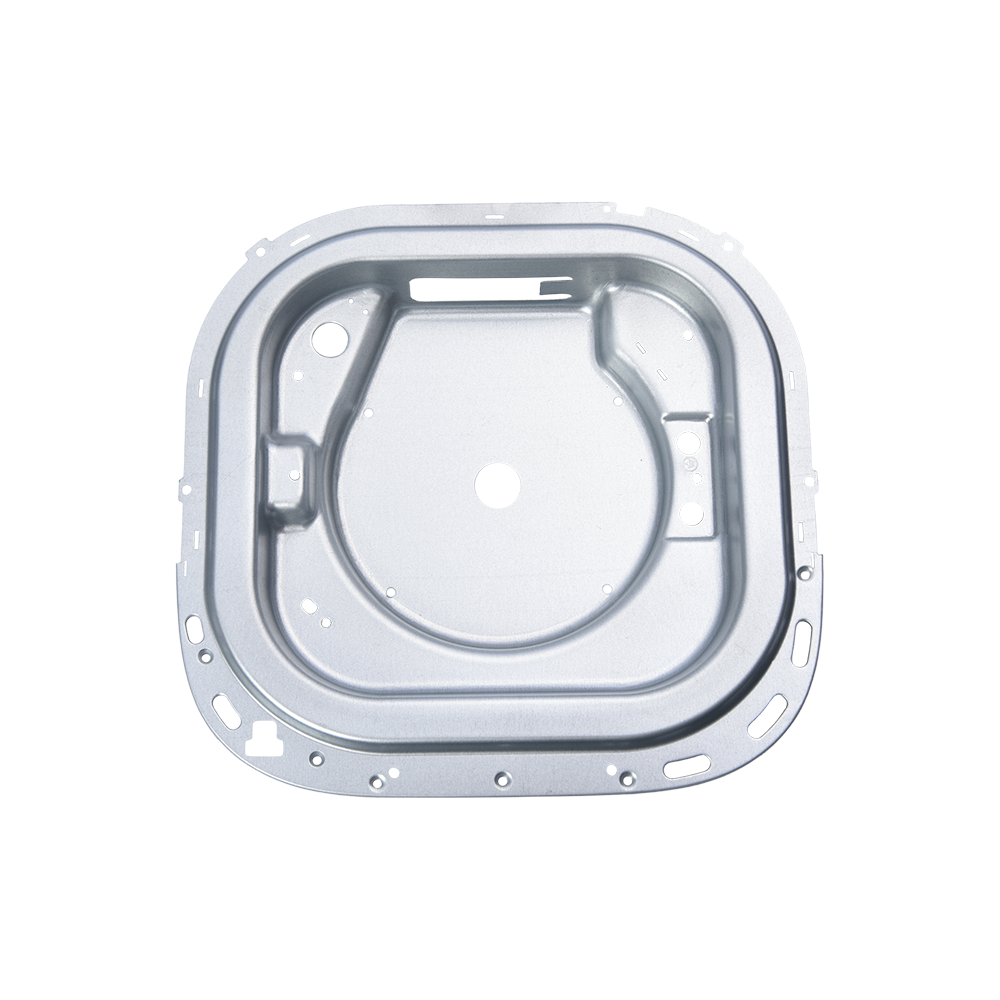
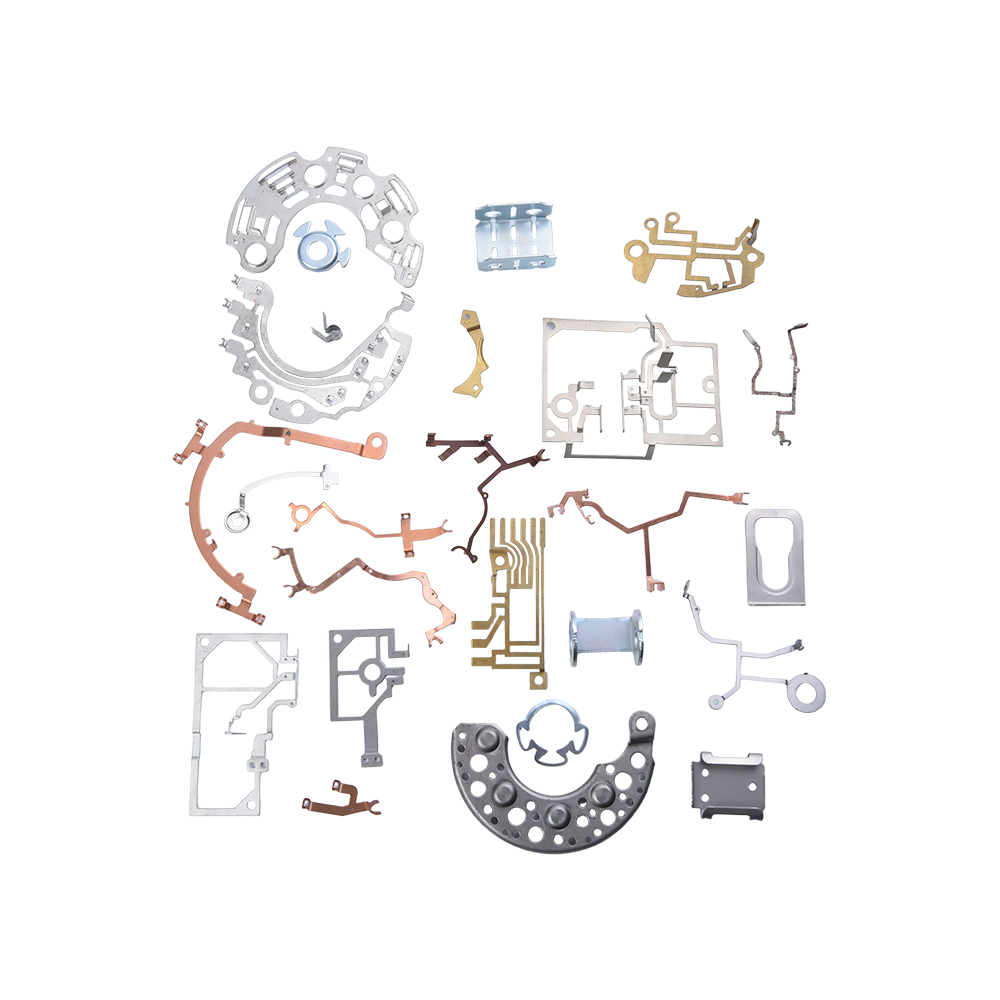
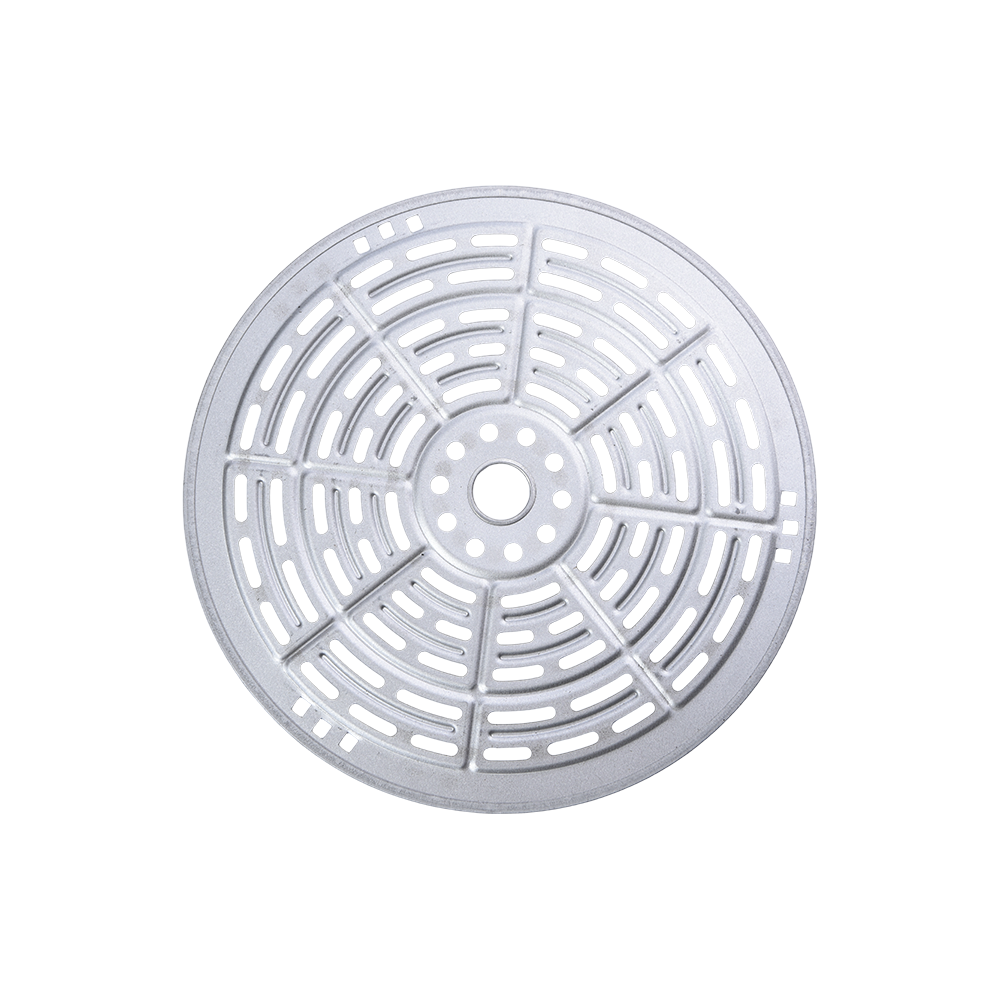
What Are Stamped Parts? Stamped parts are metal components produced by pressing flat sheet metal between a die and a punch to cut, bend, or...
READ MORE

News
Home / Author / Wang Xinyi — Senior After-Sales Coordinator / Black Stamped Parts with Connectors for Reliable Precision Assembly
Black Stamped Parts with Connectors for Reliable Precision Assembly
2026-05-21
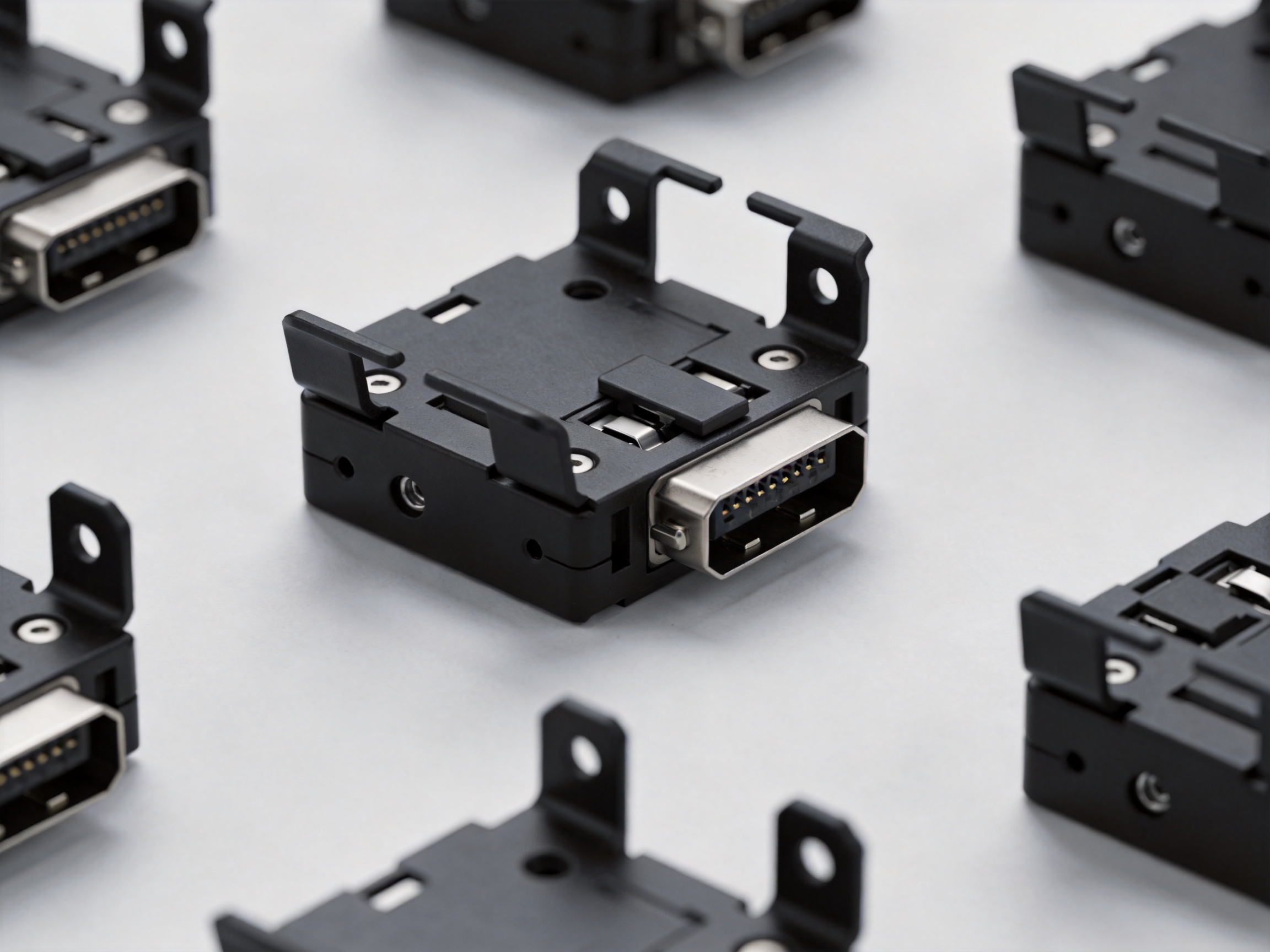
Black stamped parts with connectors are engineered metal components designed for applications where dimensional accuracy, surface durability, assembly efficiency, and long-term reliability are all essential. These components combine the structural benefits of precision stamping with integrated connector features, making them suitable for electrical, mechanical, automotive, appliance, hardware, and structural systems. With a refined black surface finish, tight tolerance control, and flexible customization options, they offer a dependable solution for manufacturers seeking parts that are both functional and visually professional.
In modern manufacturing, a stamped part is no longer evaluated only by its shape. Customers increasingly require parts that reduce assembly time, improve compatibility with connected systems, resist corrosion, maintain stability under repeated use, and support scalable production. Black stamped parts with connectors address these needs by integrating several advantages into one component: accurate stamped geometry, durable surface treatment, connector-ready design, and adaptability to OEM and ODM requirements.
Yuyao Hongli Optoelectronics Co., Ltd. manufactures black stamped parts with connectors using advanced stamping technology, strict quality control, and more than 20 years of industry experience. Located in Yangming Science and Technology Industrial Park, Yuyao City, Zhejiang Province, China, the company operates a modern 5,000-square-meter factory with multiple stamping workshops and more than 60 employees. Its production scope covers stamped parts, deep-drawn parts, bending parts, kitchen appliance accessories, automotive stamping parts, hardware products, plastic products, household appliance components, optical instrument parts, and related customized metal products.
Product Overview
Black stamped parts with connectors are precision-formed metal components produced through stamping operations such as blanking, punching, bending, forming, piercing, drawing, and secondary processing. The integrated connector design allows the part to interface with other components more easily, whether the connection is electrical, mechanical, positional, structural, or assembly-based. This helps simplify product architecture and reduces the need for additional brackets, adapters, fasteners, or separate terminal parts.
The black surface finish provides both practical and aesthetic value. Functionally, it enhances resistance to corrosion, abrasion, and high-temperature exposure depending on the coating or treatment selected. Visually, it gives the component a clean, modern, and professional appearance, which is especially valuable in visible assemblies, consumer products, appliances, instrument housings, and automotive interior or under-hood components.
The parts are typically produced to tight tolerances, commonly around ±0.1 mm depending on product geometry, material, thickness, forming complexity, and customer requirements. This level of precision supports reliable assembly, stable positioning, and consistent interchangeability across batches. In mass production environments, tolerance stability is one of the most important indicators of manufacturing quality, because even a small deviation can cause assembly difficulty, connector misalignment, noise, vibration, functional failure, or shortened service life.
Unlike ordinary stamped pieces that only provide a basic formed profile, black stamped parts with connectors are designed for immediate integration into larger systems. They can be customized according to drawings, samples, 3D models, application conditions, load requirements, installation methods, and surface performance expectations. This makes them highly suitable for customers who require product-specific solutions rather than generic off-the-shelf parts.
Key Advantages Over Conventional Stamped Components
One of the strongest advantages of black stamped parts with connectors is the combination of multiple functions in one manufactured component. Traditional stamped parts may require separate connector elements, additional fastening hardware, welding, riveting, or post-assembly adjustment. By integrating connector features directly into the stamped structure, the component can reduce the number of parts in the final product and improve assembly efficiency.
Another major advantage is repeatability. Stamping is highly suitable for medium- and high-volume production because once the tooling is verified, the production process can generate large quantities of consistent parts. Compared with manually fabricated or loosely controlled sheet metal parts, precision-stamped components offer better dimensional consistency and lower variation between batches. This consistency is especially important for connector alignment, electrical contact positioning, and mechanical engagement.
The black finish also gives these components an advantage over untreated or simply galvanized parts in applications where appearance and environmental resistance matter. A uniform black surface can reduce visual defects, improve product perception, and support integration into modern designs. Depending on the selected treatment, the black surface can also help protect against oxidation, moisture, abrasion, and heat-related discoloration.
Compared with machined metal parts, stamped components often deliver better cost efficiency at scale. Machining removes material from a solid block or bar, which may produce more waste and require longer processing time. Stamping forms sheet metal rapidly through dies, allowing high-speed production and efficient material utilization. For many connector-integrated brackets, terminals, supports, shields, clips, plates, and functional hardware pieces, stamping provides an ideal balance of accuracy, strength, speed, and cost control.
Compared with plastic alternatives, black stamped metal parts offer superior strength, heat resistance, dimensional stability, and grounding or shielding potential when metallic conductivity is required. In automotive, appliance, and electrical applications, plastic parts may deform under heat or load, while metal stamped parts maintain shape and performance over longer periods. When the connector function is load-bearing or exposed to vibration, stamped metal is often the more reliable choice.
Material and Surface Performance
The performance of a stamped part depends strongly on the selected base material and surface treatment. Common materials for stamped parts may include cold-rolled steel, stainless steel, galvanized steel, aluminum, copper alloys, or other sheet metals according to application requirements. For black stamped parts with connectors, material selection should consider strength, springback, corrosion resistance, conductivity, weldability, bendability, fatigue performance, and compatibility with the black finish.
Cold-rolled steel is often selected when strength, formability, and cost efficiency are key considerations. Stainless steel may be chosen for superior corrosion resistance and long-term durability. Aluminum can be useful where lightweight construction is important. Copper alloys may be preferred for electrical connector or conductive applications. The final selection depends on the customer’s operating environment and functional expectations.
The black surface may be achieved through processes such as black electrophoresis, black oxide, powder coating, painting, anodizing for aluminum, or other customized treatments. Each method has different characteristics. Some finishes emphasize corrosion protection, while others emphasize wear resistance, electrical insulation, visual quality, or heat resistance. A professional manufacturing partner evaluates these needs before recommending the most suitable finish.
Surface uniformity is critical for both appearance and function. Poor coating control can lead to uneven color, peeling, cracking at bends, reduced corrosion resistance, poor adhesion, or interference with connector fit. For parts that include precise connector regions, coating thickness must be considered carefully so that functional dimensions remain within tolerance after finishing. Yuyao Hongli Optoelectronics Co., Ltd. supports customized manufacturing with attention to both forming accuracy and post-treatment compatibility.
A durable black finish can help extend service life by protecting the metal substrate from environmental exposure. In appliance and automotive applications, components may encounter humidity, temperature cycling, cleaning chemicals, vibration, and contact friction. A well-selected surface treatment helps the stamped part maintain its performance and appearance throughout its intended use.
Connector Integration and Functional Design
The connector feature is the defining characteristic of this product. A connector may take many forms, including tabs, slots, terminals, locking tongues, insertion points, positioning holes, spring clips, mating edges, cable-support structures, mounting interfaces, or mechanical engagement elements. The design depends on how the part interacts with the surrounding assembly.
Integrated connectors improve assembly convenience because workers or automated equipment can position and secure the part more quickly. Instead of managing multiple individual pieces, the assembly process can use one stamped component with built-in connection functionality. This reduces assembly steps, lowers the risk of missing parts, and improves manufacturing efficiency for the customer’s final product.
Connector precision is especially important in electrical and electromechanical systems. If a connector tab or contact region is misaligned, it can lead to poor contact, increased resistance, intermittent failure, overheating, or difficulty during installation. Precision stamping and controlled tooling help ensure that connector geometry remains stable from part to part.
In mechanical applications, the connector feature may provide positioning, locking, retention, or load transfer. For example, a black stamped part may connect with a housing, bracket, panel, appliance frame, heater assembly, sensor mount, automotive support, or hardware fixture. The connector shape must be designed to resist vibration, repeated installation, pull-out forces, and environmental stresses.
Design-for-manufacturability support is important when developing connector-integrated stamped parts. A connector geometry that appears simple in a drawing may be difficult to stamp if bend radii are too tight, material flow is restricted, hole-to-edge distances are insufficient, or springback is not considered. Experienced engineers can help optimize the design so that the final part is manufacturable, reliable, and cost-effective.
Advanced Manufacturing Process
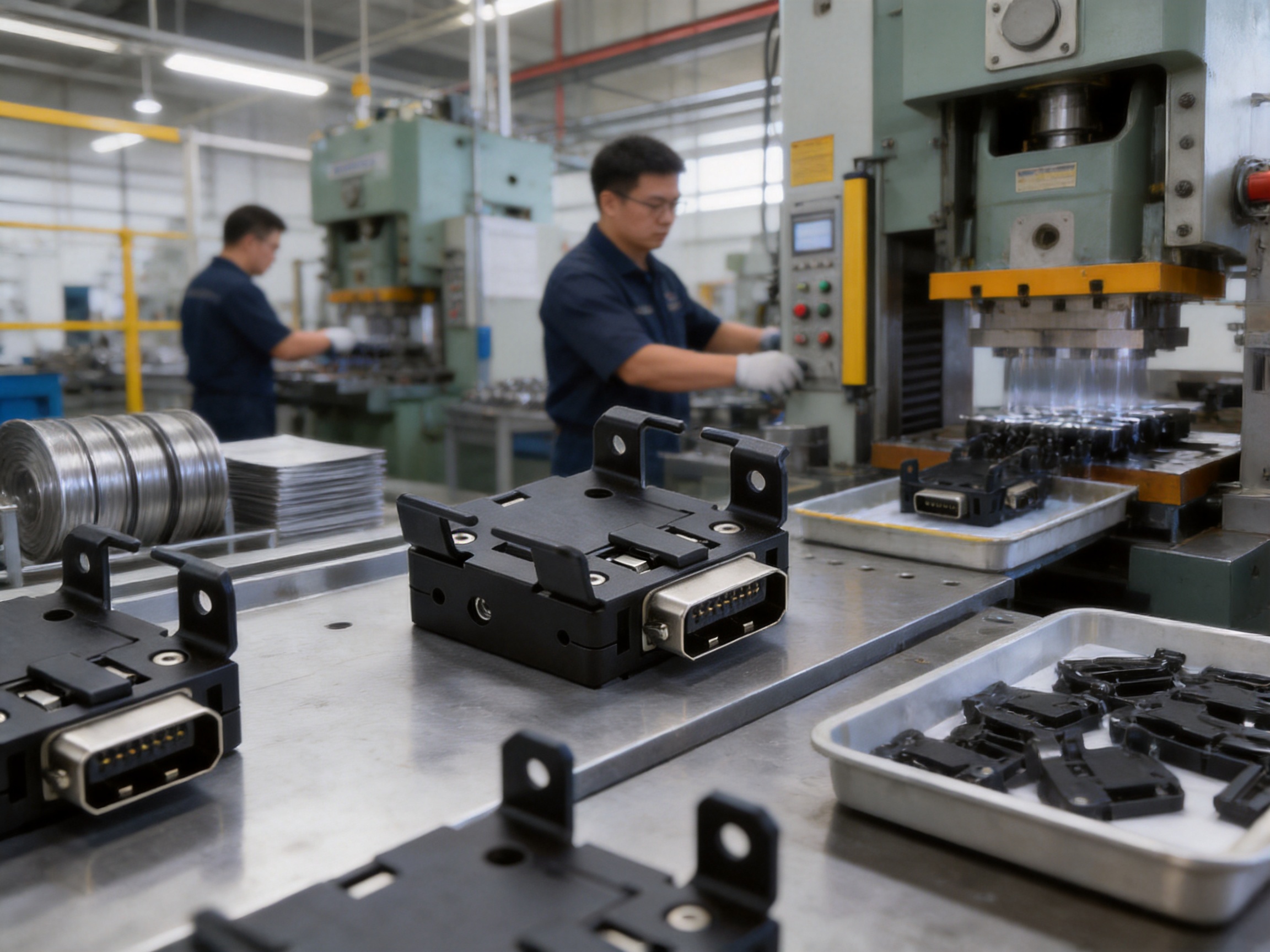
The manufacturing process for black stamped parts with connectors usually begins with customer communication. The manufacturer reviews product drawings, samples, technical specifications, materials, surface requirements, tolerance targets, production volume, inspection standards, and application conditions. This stage is essential because it determines how the tooling, process flow, and quality controls should be planned.
After technical review, the engineering team evaluates the stamping feasibility. This includes analyzing part geometry, bend sequence, forming depth, punching features, connector shape, material thickness, burr direction, coating allowance, and critical dimensions. For complex components, prototype production or trial tooling may be used to verify performance before mass production.
Tooling design is one of the most important steps in stamped part manufacturing. A well-designed die ensures stable forming, repeatable dimensions, high production efficiency, and long tool life. Depending on part complexity and production volume, the manufacturer may use single-operation dies, compound dies, progressive dies, or customized forming tools. For high-volume parts, progressive dies can perform multiple operations in sequence, allowing efficient and consistent output.
Material preparation follows tooling planning. Sheet metal or coil material must meet the required grade, thickness, hardness, surface quality, and mechanical properties. Incoming material inspection helps prevent production issues caused by inconsistent thickness, surface defects, improper hardness, or unsuitable mechanical behavior. Stable material quality is the foundation of stable stamped part quality.
During stamping, press machines apply controlled force to shape the material through the die. Operations may include blanking, piercing, bending, flanging, embossing, forming, or connector shaping. Process parameters such as press speed, lubrication, feeding accuracy, die clearance, and tool alignment must be controlled. Even small variations can affect burr height, bend angle, hole accuracy, or connector fit.
After stamping, parts may undergo deburring, cleaning, heat treatment, tapping, riveting, welding, surface finishing, or assembly depending on the product requirements. For black stamped parts, surface treatment is carefully controlled so that the coating or finish provides the desired appearance and protection without compromising functional dimensions.
Quality inspection is performed throughout the process. Critical dimensions may be checked with calipers, gauges, fixtures, height gauges, projectors, or coordinate measuring equipment depending on the complexity of the part. Surface quality, coating adhesion, burr levels, hole positions, bend angles, connector fit, and packaging condition may also be inspected. The objective is to ensure that every batch meets the customer’s requirements before shipment.
Manufacturing Strengths of Yuyao Hongli Optoelectronics Co., Ltd.
Yuyao Hongli Optoelectronics Co., Ltd. has more than 20 years of manufacturing experience and has developed strong capabilities in metal stamping and related products. Since its founding in 2000, the company has grown from its earlier business foundation into a professional manufacturing enterprise serving multiple industries, including household appliances, automotive parts, hardware products, optical instruments, educational instruments, electric heaters, and customized metal components.
The company’s 5,000-square-meter modern factory provides the space and infrastructure needed for stable production, tooling support, material storage, inspection, packaging, and order management. Multiple stamping workshops allow the company to manage different product types and production volumes efficiently. With more than 60 employees, the company combines practical workshop experience with responsive production coordination.
A key strength of the company is its ability to support OEM and ODM customization. Customers can provide drawings, samples, functional requirements, or conceptual needs, and the company can assist with manufacturing conversion. This is valuable for customers developing new products, replacing existing suppliers, improving part quality, reducing cost, or localizing production.
Rapid prototyping is another important capability. In competitive markets, customers often need samples quickly for design verification, assembly testing, performance evaluation, or customer approval. By supporting prototype development and efficient production conversion, the company helps shorten product development cycles and reduce the risk of delayed launches.
Strict quality control is central to the company’s value. For stamped parts with connectors, quality is not only about appearance; it directly affects assembly performance, safety, durability, and customer satisfaction. Stable delivery and comprehensive after-sales service further support long-term cooperation. Customers benefit from a manufacturing partner that understands both production efficiency and product responsibility.
Technical Features and Performance Summary
| Feature | Performance Value | Customer Benefit |
|---|---|---|
| Precision stamping | Typical tolerance control around ±0.1 mm depending on design | Improves assembly fit, repeatability, and production reliability |
| Integrated connector design | Connector features formed or incorporated into the stamped part | Reduces extra components, simplifies assembly, and improves compatibility |
| Black surface finish | Corrosion, abrasion, and heat resistance depending on treatment | Enhances service life and provides a clean professional appearance |
| Custom material options | Steel, stainless steel, aluminum, copper alloy, and other sheet metals | Allows matching of strength, weight, conductivity, and environmental needs |
| OEM and ODM support | Manufacturing based on drawings, samples, or custom specifications | Supports product-specific engineering and brand-specific requirements |
| Scalable production | Suitable for prototyping, small batches, and mass production | Helps customers move from development to stable supply efficiently |
Applications Across Industries
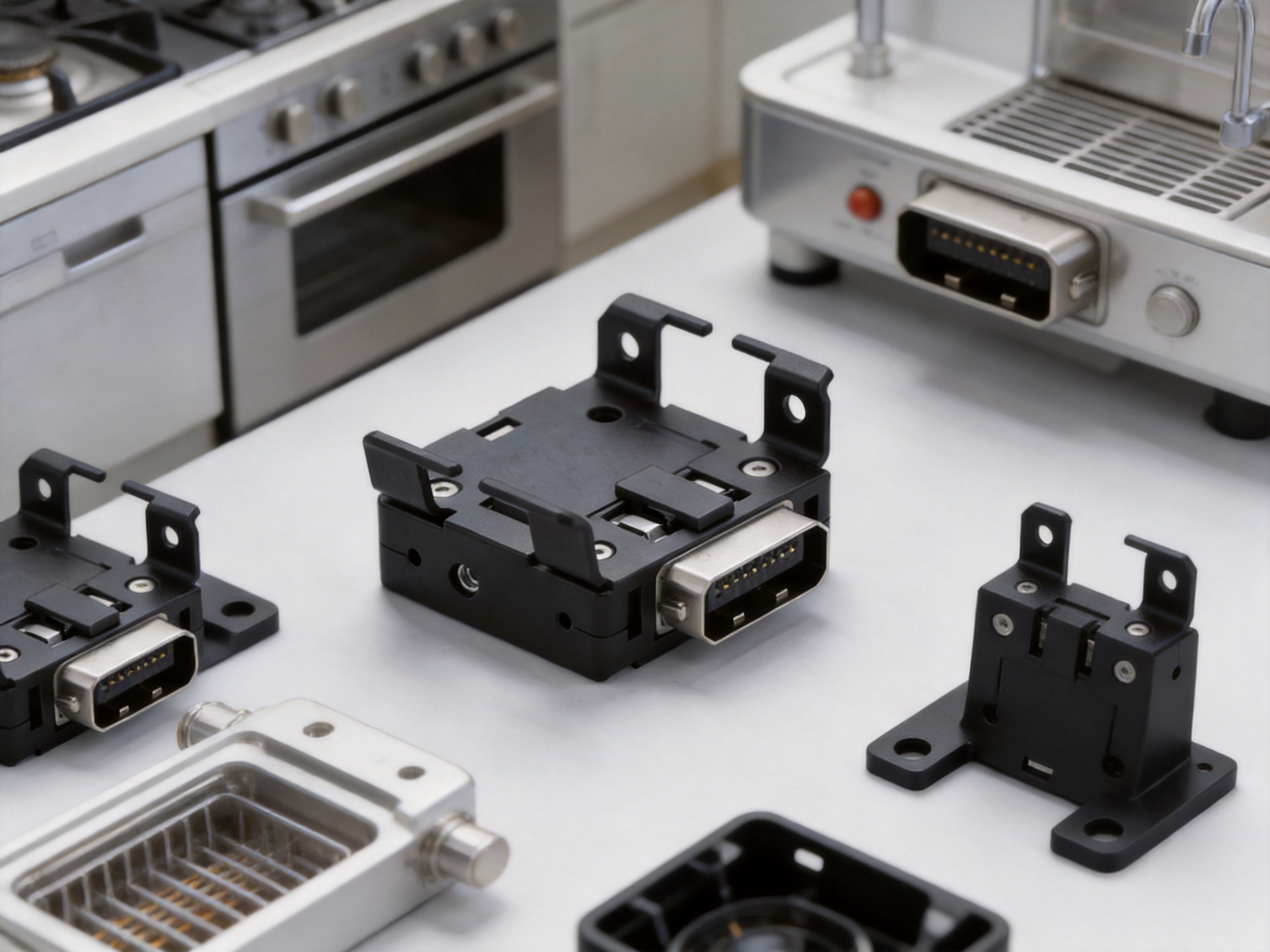
Black stamped parts with connectors are widely applicable because they combine structure, connection, appearance, and durability. In kitchen appliances, they can be used as brackets, mounting plates, heating element supports, switch supports, shielding pieces, clips, covers, or connector interfaces. The black finish fits well with modern appliance designs and can withstand demanding operating conditions when properly specified.
In household electric heaters and small household appliances, stamped parts may support heating assemblies, electrical contacts, housings, protective structures, and internal mechanisms. Dimensional stability is essential because heating products may experience thermal expansion, vibration, and repeated user operation. A connector-integrated stamped part can reduce internal assembly complexity and improve consistency.
In automotive applications, stamped parts are used in brackets, clips, terminals, shields, supports, sensor mounts, interior assemblies, and structural hardware. Automotive components require stable quality, reliable surface protection, and resistance to vibration. The black surface can also help reduce glare or improve appearance in visible areas. Connector integration is particularly useful where parts must interface with wiring, panels, modules, or mechanical systems.
In optical instruments and educational instruments, precision and clean appearance are important. Stamped parts with connectors can provide accurate alignment, compact assembly, and professional surface quality. Their repeatability helps maintain consistency across instrument units, which is especially important when components affect positioning or function.
In general hardware and industrial equipment, these parts can be used for fastening, supporting, shielding, positioning, and connection tasks. The ability to customize shape, hole pattern, bend angle, connector style, material, and surface finish allows customers to use one manufacturing process for many product variations.
Why Precision Tolerance Matters
Tolerance control is one of the most important reasons customers choose precision stamped parts instead of basic sheet metal fabrications. A tolerance such as ±0.1 mm may seem small, but in real assembly environments it can determine whether a connector inserts smoothly, whether a mounting hole aligns correctly, whether a bracket sits flat, or whether an electrical contact maintains stable pressure.
When tolerances are unstable, customers may experience hidden costs. Workers may spend extra time adjusting parts during assembly. Automated equipment may reject components. Finished products may fail functional tests. Rework and scrap may increase. Customer complaints may occur after the product enters the market. Therefore, precision is not merely a technical specification; it is a cost-control and reliability factor.
Stamping accuracy depends on tooling precision, material consistency, press condition, process control, and inspection discipline. For connector-integrated parts, dimensional control must consider both the stamped profile and the connector’s functional interface. A connector that is too loose may fail during vibration, while a connector that is too tight may damage mating parts or slow assembly.
Experienced manufacturers understand that tolerance planning should focus on critical-to-function dimensions. Not every dimension requires the same tight control, and unnecessary over-tightening can increase tooling cost or production difficulty. A practical manufacturing partner helps customers define appropriate tolerances so the product performs reliably while remaining cost-effective.
Surface Finish as a Competitive Differentiator
The black finish of these stamped parts provides a competitive advantage because it supports both function and product image. In many industries, internal components are increasingly visible during product maintenance, installation, or customer inspection. A clean, consistent black part can improve the perceived quality of the entire product.
Surface protection is equally important. Metal parts may encounter humidity, oils, heat, dust, cleaning agents, and mechanical contact. Without proper surface treatment, corrosion or wear can weaken the component, affect appearance, contaminate nearby parts, or reduce connector performance. A suitable black finish helps protect the substrate and extend useful service life.
In high-temperature environments, surface treatment must be selected carefully. Some coatings may soften, discolor, crack, or lose adhesion if exposed to heat beyond their design limits. The product description emphasizes resistance to high temperatures, corrosion, and abrasion, but the exact finishing method should always be matched to the customer’s operating conditions. This practical approach ensures realistic performance and avoids overpromising.
Coating thickness control is also essential. If the black finish builds up too heavily on connector surfaces, holes, slots, or insertion tabs, the part may become difficult to assemble. Skilled manufacturers consider finishing allowance during design and inspection. This is especially important for precision parts where the final coated dimension must remain within tolerance.
Customization Capabilities
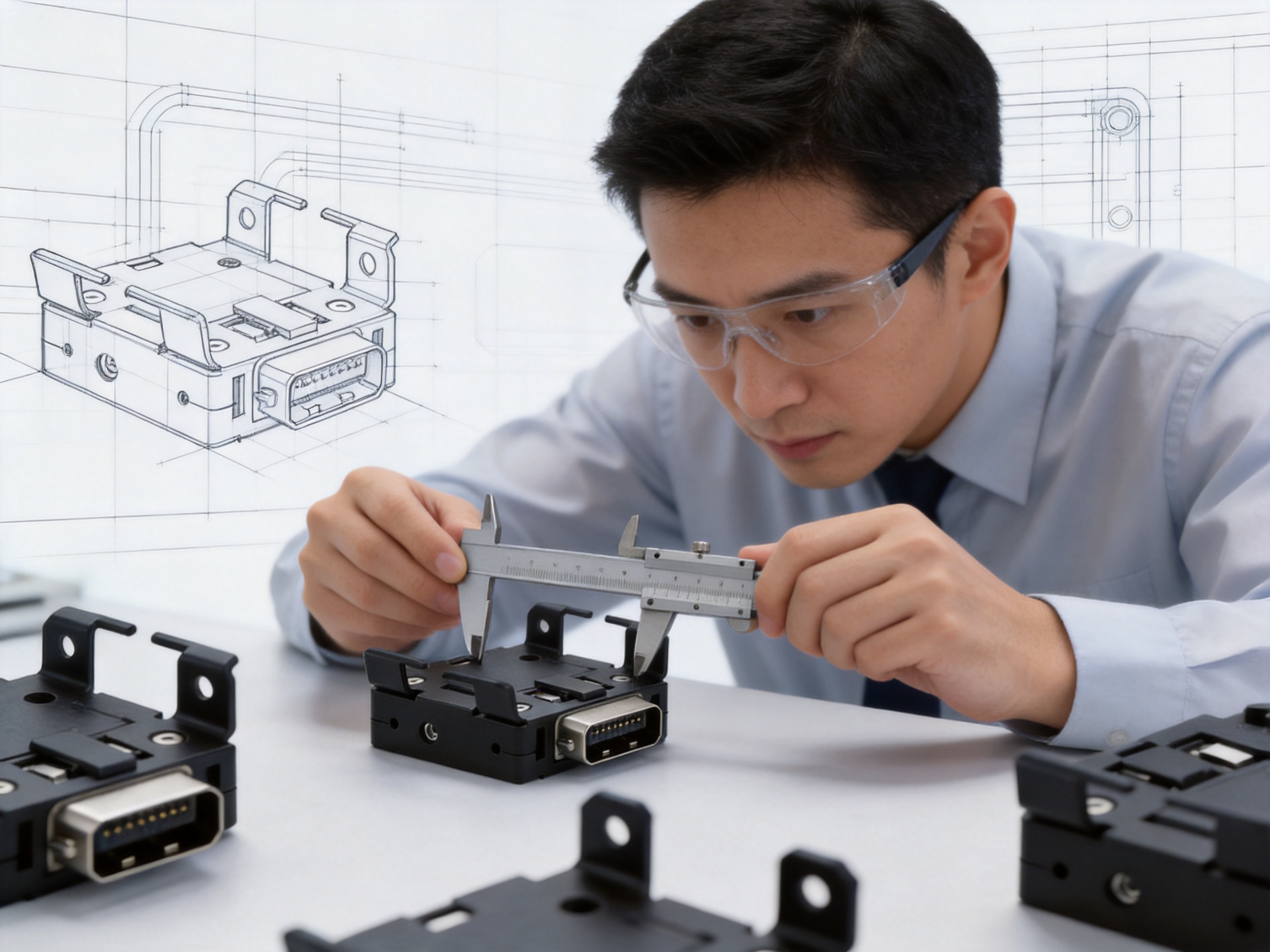
Custom design is one of the primary reasons customers choose black stamped parts with connectors. Every application may require a different material, thickness, shape, connector style, surface finish, mechanical strength, packaging method, and inspection standard. A flexible manufacturer can adjust these factors to match the final product requirements.
Customization may begin with a customer drawing. The drawing can define material grade, thickness, geometry, tolerances, surface finish, burr direction, heat treatment, and packaging. If the customer has only a sample, the manufacturer can evaluate the sample and discuss reverse engineering, measurement, improvement, and manufacturability. If the customer has a new idea but no finalized drawing, early technical discussion can help transform the concept into a manufacturable part.
Connector customization is especially important. A connector may need to lock into a plastic housing, contact an electrical terminal, align with a frame, support a wire, fit into a slot, or connect with another stamped part. Each function requires different geometry and tolerance control. The manufacturer must understand how the part will be used, not just how it looks on paper.
Surface customization allows the product to meet different operating environments. Customers may request matte black, glossy black, anti-corrosion black coating, heat-resistant black finish, electrically conductive or insulating surfaces, or specific coating thickness requirements. Packaging can also be customized to protect visible surfaces and prevent deformation during transportation.
Yuyao Hongli Optoelectronics Co., Ltd. supports OEM and ODM orders, making it suitable for customers who need proprietary designs or private-label product integration. This capability is valuable for appliance manufacturers, automotive suppliers, hardware brands, equipment producers, and engineering companies seeking stable customized metal part supply.
Production Efficiency and Cost Control
Stamped parts are often chosen because they offer excellent production efficiency after tooling is completed. A stamping press can produce components rapidly and consistently, especially when progressive dies or automated feeding systems are used. This makes stamping an economical choice for repeat orders and large production volumes.
Cost control is achieved through several factors. Efficient material nesting reduces scrap. Stable tooling reduces rework. Repeatable process control reduces inspection failures. Integrated connector design reduces secondary assembly. Durable surface finishing reduces warranty risk. Together, these advantages can lower the total cost of ownership for the customer, even when the initial part price is not the only consideration.
Compared with suppliers that focus only on low unit price, a professional manufacturer creates value by reducing hidden costs. Poorly made stamped parts may appear inexpensive at first, but they can cause assembly delays, quality failures, field complaints, and supplier switching costs. A reliable part with consistent tolerance, good surface quality, and stable delivery can be more economical over the full product life cycle.
For customers transitioning from prototype to production, efficient production conversion is critical. A part that works as a handmade prototype may not be suitable for mass stamping without design adjustments. Experienced manufacturers can help refine bend radii, hole locations, material thickness, connector details, and surface specifications to ensure stable mass production.
Quality Control and Inspection Priorities
Quality control for black stamped parts with connectors includes both dimensional and functional inspection. Dimensional checks confirm that the part matches the drawing, while functional checks confirm that it performs correctly in the intended assembly. Both are necessary because a part can appear dimensionally acceptable but still fail if the connector fit is not tested properly.
Incoming material inspection is the first control point. The manufacturer verifies material type, thickness, surface condition, and mechanical suitability. Incorrect material can lead to cracking, springback problems, weak connectors, poor coating adhesion, or insufficient strength.
During production, operators and inspectors monitor critical dimensions, hole positions, bend angles, burrs, deformation, cracks, and surface defects. First-article inspection is often used after tool setup to confirm that the process is ready for batch production. In-process inspection helps detect tool wear or process drift before large quantities are affected.
Surface inspection after black finishing checks color consistency, adhesion, coverage, scratches, coating buildup, exposed metal, and contamination. For parts with visible black surfaces, cosmetic standards may be defined with the customer. For functional surfaces, coating thickness and fit must be controlled carefully.
Final inspection verifies the complete part before packaging and shipment. Packaging must protect the parts from scratches, moisture, deformation, and mixing. For connector-integrated parts, deformation during shipping can be particularly harmful, so packaging design may include trays, dividers, protective film, cartons, or customized methods depending on the part geometry.
Design Considerations for Buyers
When sourcing black stamped parts with connectors, buyers should provide as much technical information as possible. Important details include part drawings, 3D files, material requirements, thickness, surface treatment, tolerance standards, annual volume, application environment, connector mating requirements, load requirements, heat exposure, corrosion exposure, and inspection expectations.
Buyers should identify which dimensions are critical to function. For example, connector tab width, hole diameter, center distance, bend angle, flatness, and insertion depth may be more important than non-functional external edges. Defining critical dimensions helps the manufacturer focus control where it matters most.
Material selection should be based on real operating conditions. If the part must support load, the material must have adequate strength. If the part is used near heat, both material and finish must resist temperature. If conductivity is needed, surface finish and material selection must not prevent electrical function. If corrosion resistance is critical, the coating and base material must be selected accordingly.
Buyers should also consider production volume. For very low quantities, simple tooling or prototype methods may be more practical. For high-volume orders, investment in better tooling can reduce unit cost and improve consistency. A qualified manufacturer can recommend a tooling strategy based on quantity, budget, precision requirements, and long-term production plans.
Comparison With Common Alternatives
Black stamped parts with connectors compete with machined parts, plastic molded parts, welded assemblies, generic sheet metal parts, and purchased connector brackets. Each alternative has strengths, but stamped connector-integrated parts often provide the best combination of cost, strength, repeatability, and assembly efficiency for suitable applications.
Machined parts may offer excellent precision and complex geometry, but they are often slower and more expensive for thin metal components produced in large quantities. They may also create more material waste. Stamping is usually more efficient when the part can be formed from sheet metal.
Plastic molded parts can be lightweight and suitable for complex shapes, but they may not provide the same heat resistance, strength, conductivity, or dimensional stability as metal. In high-temperature appliance or automotive environments, stamped metal can be more reliable.
Welded assemblies may be necessary for some structural parts, but welding adds processing steps, heat distortion, inspection requirements, and potential failure points. If a connector or bracket feature can be stamped as one integrated piece, the result may be simpler, cleaner, and more consistent.
Generic sheet metal parts may lack precise connector features or consistent black finishing. Off-the-shelf components often require design compromises. Customized black stamped parts with connectors allow customers to optimize the component for their exact system, improving fit and reducing unnecessary complexity.
Reliability in Real Operating Conditions
Reliability is not created by one feature alone. It comes from the right combination of material, design, tooling, stamping control, surface treatment, inspection, and packaging. Black stamped parts with connectors must maintain their shape, protect against environmental damage, connect securely, and support repeatable assembly throughout the product’s life.
In environments with vibration, such as automotive systems or motorized appliances, connector features must resist loosening. The stamped geometry may include locking structures, spring tension, support ribs, or reinforced bends to improve retention. Material hardness and forming control influence how well these features perform.
In humid or corrosive environments, surface finish and base material become critical. A black finish that looks good at shipment must also provide protection during storage, transport, assembly, and use. Proper packaging and handling help preserve the surface before installation.
In heated environments, both metal and coating must remain stable. A part used near a heating element, motor, or power module must not warp, soften, peel, or lose connector function. This is why application-specific material and finish selection are important during the early design stage.
Supply and Service Advantages
Reliable supply is a major purchasing concern for manufacturers. Even a well-designed part can create production problems if delivery is unstable. Yuyao Hongli Optoelectronics Co., Ltd. emphasizes stable delivery, efficient production conversion, and comprehensive after-sales service. These strengths are important for customers managing ongoing production schedules.
The company’s location in Yuyao, Zhejiang Province, China, provides access to an established manufacturing environment with industrial resources, supplier networks, and export capabilities. The company provides manufacturing, processing, wholesale, retail, import, and export services, supporting both domestic and international cooperation.
Communication is another important part of service. Custom stamped parts often require technical discussion, drawing confirmation, sample approval, production updates, and quality feedback. A responsive manufacturer can help solve problems before they become costly. For long-term cooperation, this responsiveness is often as valuable as production equipment.
Customers can contact the company by email at hongli@yyhlgd.net or by phone at +86-13905842349 and +86-13738485724. The company address is South side of Shunke Road, Yangming Science and Technology Industrial Park, Yuyao City, Zhejiang Province, China.
Q&A Section
What are black stamped parts with connectors?
They are precision metal components produced by stamping processes and designed with integrated connector features. The black surface finish improves appearance and can provide corrosion, abrasion, and heat resistance depending on the selected treatment.
What tolerance can these parts typically achieve?
The parts can typically be manufactured with tight tolerances around ±0.1 mm, depending on material, shape, thickness, tooling, and specific customer requirements.
Why choose stamped parts instead of machined parts?
Stamping is often more efficient and cost-effective for sheet metal components, especially in medium- and high-volume production. It provides excellent repeatability, fast production speed, and efficient material usage.
What is the benefit of an integrated connector?
An integrated connector reduces the need for extra components, simplifies assembly, improves alignment, and can lower total production cost. It also helps create a more compact and reliable product design.
Can the product be customized?
Yes. The parts can be customized according to drawings, samples, application requirements, material needs, surface finish expectations, connector style, and production volume.
Which industries commonly use these parts?
They are suitable for kitchen appliances, small household appliances, electric heaters, automotive systems, hardware products, optical instruments, educational instruments, industrial equipment, and other mechanical or electrical assemblies.
What surface treatments are available?
The black finish may be achieved through different processes depending on the material and application. Options may include black electrophoresis, black oxide, powder coating, painting, anodizing for aluminum, or other customized treatments.
How does the manufacturer ensure quality?
Quality is controlled through material inspection, tooling verification, first-article inspection, in-process checks, dimensional measurement, surface inspection, functional fit evaluation, final inspection, and protective packaging.
Can the parts be used in high-temperature applications?
Yes, they can be designed for high-temperature applications when the correct material and surface treatment are selected. The exact temperature resistance should be confirmed based on the operating environment.
What information should customers provide for quotation?
Customers should provide drawings or samples, material and thickness requirements, surface treatment needs, tolerance expectations, application details, connector mating information, order quantity, and inspection standards.
Conclusion
Black stamped parts with connectors offer a strong combination of precision, durability, appearance, and assembly efficiency. Their integrated connector features make them more practical than ordinary stamped pieces, while their black surface finish enhances both protection and visual quality. With typical tolerance control around ±0.1 mm, these parts support reliable assembly and consistent production performance.
Compared with machined parts, plastic alternatives, welded assemblies, and generic sheet metal components, black stamped parts with connectors can provide superior cost efficiency, structural strength, repeatability, and customization flexibility in suitable applications. They are especially valuable for kitchen appliances, automotive components, household electric heaters, hardware products, optical instruments, and industrial systems requiring dependable metal parts.
Yuyao Hongli Optoelectronics Co., Ltd. brings more than 20 years of manufacturing experience, a 5,000-square-meter modern factory, multiple stamping workshops, OEM and ODM support, rapid prototyping capability, strict quality control, and stable delivery. By combining advanced stamping processes with customer-focused customization, the company provides a reliable manufacturing solution for customers seeking high-quality black stamped parts with connectors.
For manufacturers aiming to improve product reliability, reduce assembly complexity, control cost, and maintain consistent quality, black stamped parts with connectors represent a practical and competitive choice. Their value lies not only in the stamped metal shape, but also in the way precision design, connector integration, surface protection, and professional manufacturing work together to support long-term product success.
References
Kalpakjian, S., and Schmid, S. R. Manufacturing Engineering and Technology. Pearson Education.
Boljanovic, V. Sheet Metal Forming Processes and Die Design. Industrial Press.
Suchy, I. Handbook of Die Design. McGraw-Hill Education.
ASM International. Metals Handbook: Forming and Forging. ASM International.
Davies, G. Materials for Automobile Bodies. Butterworth-Heinemann.
Grote, K. H., and Antonsson, E. K. Springer Handbook of Mechanical Engineering. Springer.
Previous Post
Precision Red Bent Parts with Integrated Fabric Straps for Reliable Industrial and Commercial Use
Next Post
No next article
News
-
-
Steel is the backbone of modern manufacturing, yet it is never a single, uniform material. When engineers and buyers ask, "How can you clas...
READ MORE -
Sheet metal is one of those materials that quietly holds everyday life together. The tray inside your air fryer, the bracket behind a car b...
READ MORE -
Sheet metal bending is one of the most fundamental processes in metal fabrication. It turns a flat sheet of steel, aluminum, or copper into...
READ MORE
Get Fresh Updates Via Email
We promise we will never disclose your email address, and you can opt out at any time.
-
Quick Links
Home About Us Products Service News Contact Us -
Product list
Deep-drawn parts Stamped parts Bending parts Kitchen appliance accessories Automotive stamping parts -
About Us
Factory Honour FAQ -
News
Company News Industry News -
Contact Us
Address: South side of Shunke Road, Yangming Science and Technology Industrial Park, Yuyao City, Zhejiang Province, China Tel: +86-13905842349/+86-13738485724 Email: hongli@hl-stamping.com
Copyright © Yuyao Hongli Optoelectronics Co., Ltd. All Rights Reserved.
Custom Precision-Sheet/Sheet Metal Stamping Manufacturers
