


 English
 русский
 Español
 عربى
عربى

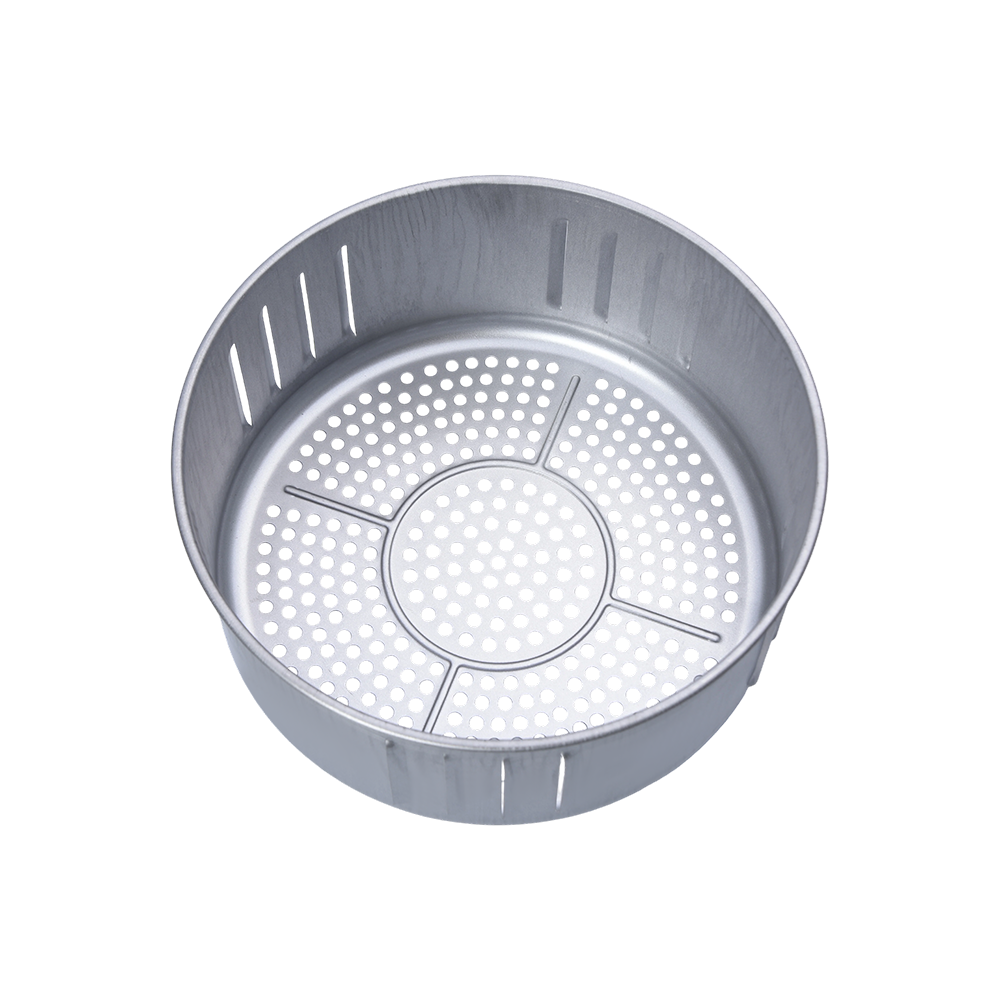
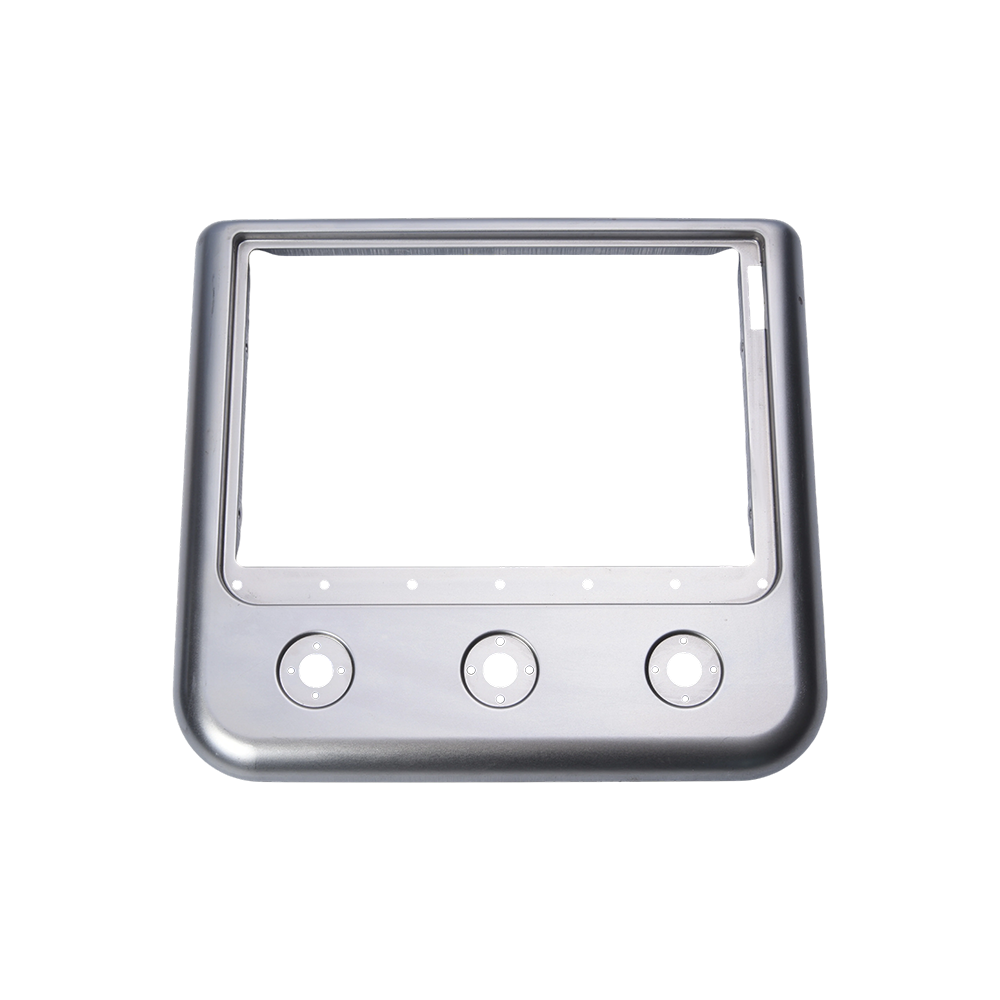
What Are Stamped Parts? Stamped parts are metal components produced by pressing flat sheet metal between a die and a punch to cut, bend, or...
READ MORE

News
Home / Author / Wang Xinyi — Senior After-Sales Coordinator / Precision Red Bent Parts with Integrated Fabric Straps for Reliable Industrial and Commercial Use
Precision Red Bent Parts with Integrated Fabric Straps for Reliable Industrial and Commercial Use
2026-05-27
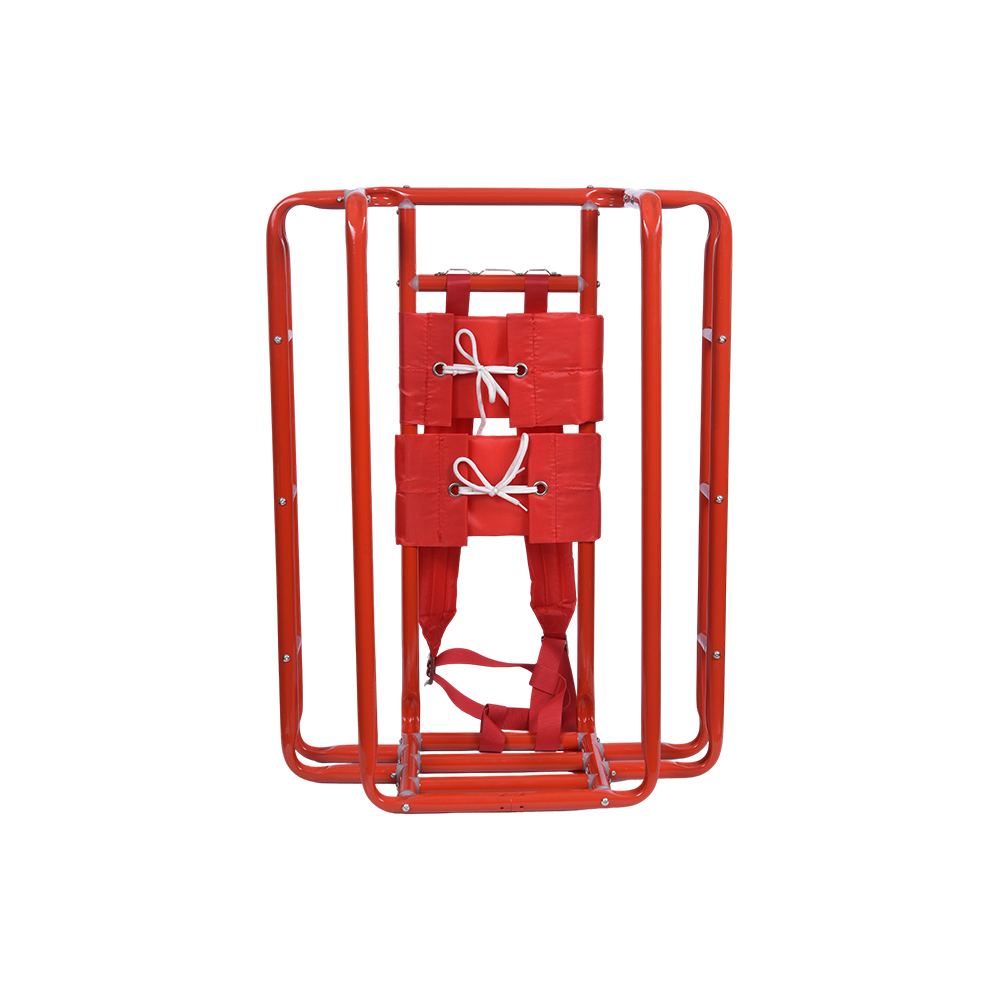
Red bent parts with red fabric straps are practical, durable, and visually distinctive metal accessories designed for applications that require stable form, convenient handling, reliable fastening, and long service life. By combining a precisely formed bent metal component with a comfortable fabric strap, this product provides both structural performance and user-friendly operation. It is suitable for machinery, automotive parts, furniture, outdoor equipment, commercial assemblies, and customized industrial systems where compact metal hardware must be strong, easy to install, and resistant to daily wear.
The product belongs to the category of bending parts, but its value is not limited to basic bending. It represents a complete manufacturing solution that may include material selection, precision cutting, stamping, forming, bending, surface treatment, strap assembly, inspection, packaging, and customization. The red coating improves appearance while also contributing to corrosion resistance and durability. The red fabric strap adds comfort, visibility, and practical convenience, especially in applications where the part may be pulled, secured, lifted, adjusted, or handled frequently.
In competitive markets, many bent metal parts are evaluated only by their shape and price. However, high-quality bending parts must also be judged by dimensional accuracy, coating stability, surface finish, repeatability, ease of installation, resistance to deformation, and the ability to integrate with other materials. This is where a professionally manufactured red bent part with fabric strap offers clear advantages. It is not simply a bent piece of metal; it is an engineered accessory designed to perform consistently across varied conditions.
Yuyao Hongli Optoelectronics Co., Ltd. provides manufacturing strength based on more than two decades of industry experience, modern stamping workshops, a 5,000-square-meter production facility, skilled employees, and a broad capability range covering stamped parts, deep-drawn parts, bending parts, kitchen appliance accessories, automotive stamping parts, small household appliance parts, hardware products, and related customized components. The company supports OEM and ODM projects, rapid prototyping, efficient production conversion, strict quality control, and stable delivery, making it a suitable manufacturing partner for customers who require both standard and customized metal component solutions.
Product Overview
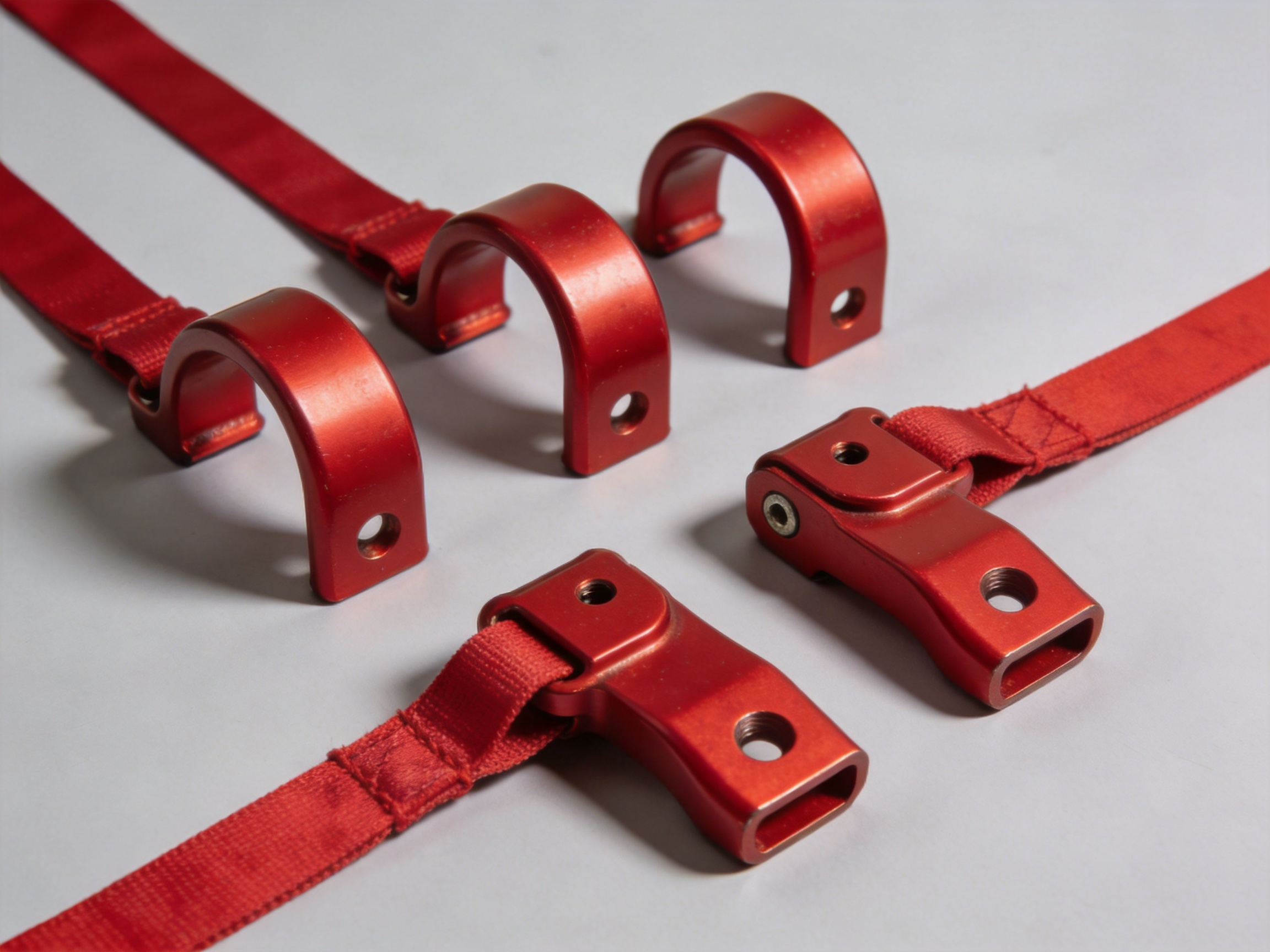
The red bent parts with red fabric straps are designed as multi-functional accessories for both industrial and commercial use. Their main structure consists of a bent metal component formed to a specific angle, contour, or functional geometry. The red surface coating enhances corrosion resistance, improves wear performance, and gives the part a clear visual identity. The integrated red fabric strap provides an additional handling or fastening function while improving comfort and convenience for the end user.
The bending shape is carefully designed to ensure a precise fit and excellent adaptability. Depending on customer requirements, the part can be made in various sizes, thicknesses, hole patterns, edge shapes, bend angles, and surface finishes. It can be used as a bracket, connector, support part, pull part, holding accessory, securing element, or customized assembly component. Because it is both functional and visually appealing, it is suitable for products where performance and appearance must work together.
The product is especially valuable in applications that need a strong metal part but also require easy manual operation. The fabric strap can reduce direct contact with hard metal edges, assist in pulling or positioning, provide a visible user interface, or help connect the part with another object. This combination gives the product a wider practical range than ordinary bent metal parts.
The red coating also has functional benefits beyond appearance. A consistent coating layer helps protect the metal substrate from moisture, oxidation, and surface abrasion. In outdoor equipment, furniture hardware, automotive accessories, or machinery-related environments, this protective surface can extend service life and reduce maintenance requirements. The red color improves visibility, which may be useful for safety, identification, branding coordination, or operational convenience.
Key Product Advantages
The most important advantage of this product is the integration of precision metal bending and fabric strap functionality. Many competing products provide either a bent metal part or a separate strap component, requiring additional assembly or creating compatibility issues. This product offers a more complete accessory solution that can be customized and supplied as a ready-to-use component.
Another advantage is design flexibility. Custom sizes and shapes are available to meet specific project needs. Customers can request different bend angles, hole locations, slot shapes, metal thicknesses, coating requirements, and strap lengths. This flexibility allows the product to be adapted for machinery, automotive systems, furniture structures, outdoor tools, equipment covers, appliances, and other assemblies.
Durability is also a major strength. The metal base provides structural support, while the coating helps resist corrosion and surface damage. The fabric strap is selected for comfortable handling and convenient use. When properly matched to the application, the combined structure provides reliable long-term performance with minimal maintenance.
The product is easy to install. Depending on the design, it may be mounted by screws, rivets, bolts, clips, welding, or other fastening methods. Pre-formed holes, slots, or custom attachment points can be added during manufacturing. Because the part is produced by controlled bending and forming processes, it can maintain consistent dimensions across batches, which simplifies assembly and reduces installation problems.
Compared with generic low-cost bent parts, this product offers better consistency, better surface quality, better functional integration, and more customization options. A part that appears simple can create major problems if its angle is inaccurate, coating peels, holes are misaligned, edges are sharp, or the strap attachment is weak. By focusing on controlled manufacturing and inspection, the product reduces such risks and provides greater reliability in actual use.
Applications Across Multiple Industries
Red bent parts with fabric straps can be used in many industries because they combine strength, visibility, comfort, and adaptability. In machinery, they may serve as small support brackets, pull handles, locating parts, cover fasteners, retaining accessories, or adjustable connection pieces. Their red color can make them easier to identify during operation, inspection, or maintenance.
In automotive-related applications, bent parts can be used in accessories, interior fittings, equipment holders, protective assemblies, or custom aftermarket components. Automotive stamping and bending parts require stable quality because vibration, temperature changes, and repetitive use can expose weaknesses in design or manufacturing. A properly coated and accurately bent part can improve assembly quality and durability.
In furniture, the product may function as a connection bracket, securing part, decorative hardware, support accessory, or user-operated pull component. The fabric strap can soften the user experience and make the part easier to operate by hand. For modern furniture designs, metal-and-fabric combinations can also create a stylish and practical appearance.
Outdoor equipment applications may include camping accessories, garden tools, sports equipment, protective covers, portable structures, storage systems, or utility devices. Outdoor products need corrosion resistance, secure handling, and reliable performance. The red coating contributes to protection and visibility, while the strap supports convenient handling in active environments.
Kitchen appliance accessories and household appliances can also benefit from this type of part when a compact bent metal structure is needed. The product can be adapted for brackets, retaining parts, handles, support clips, or custom components in small household appliances. With proper material and coating selection, it can meet requirements for durability, appearance, and assembly efficiency.
Industrial and commercial equipment manufacturers often need special metal parts that cannot be purchased as standard catalog items. The ability to customize these red bent parts makes them suitable for OEM and ODM projects. Whether the customer requires a small prototype batch or mass production, a capable manufacturer can convert drawings, samples, or concepts into stable finished parts.
Manufacturing Process and Technical Strength
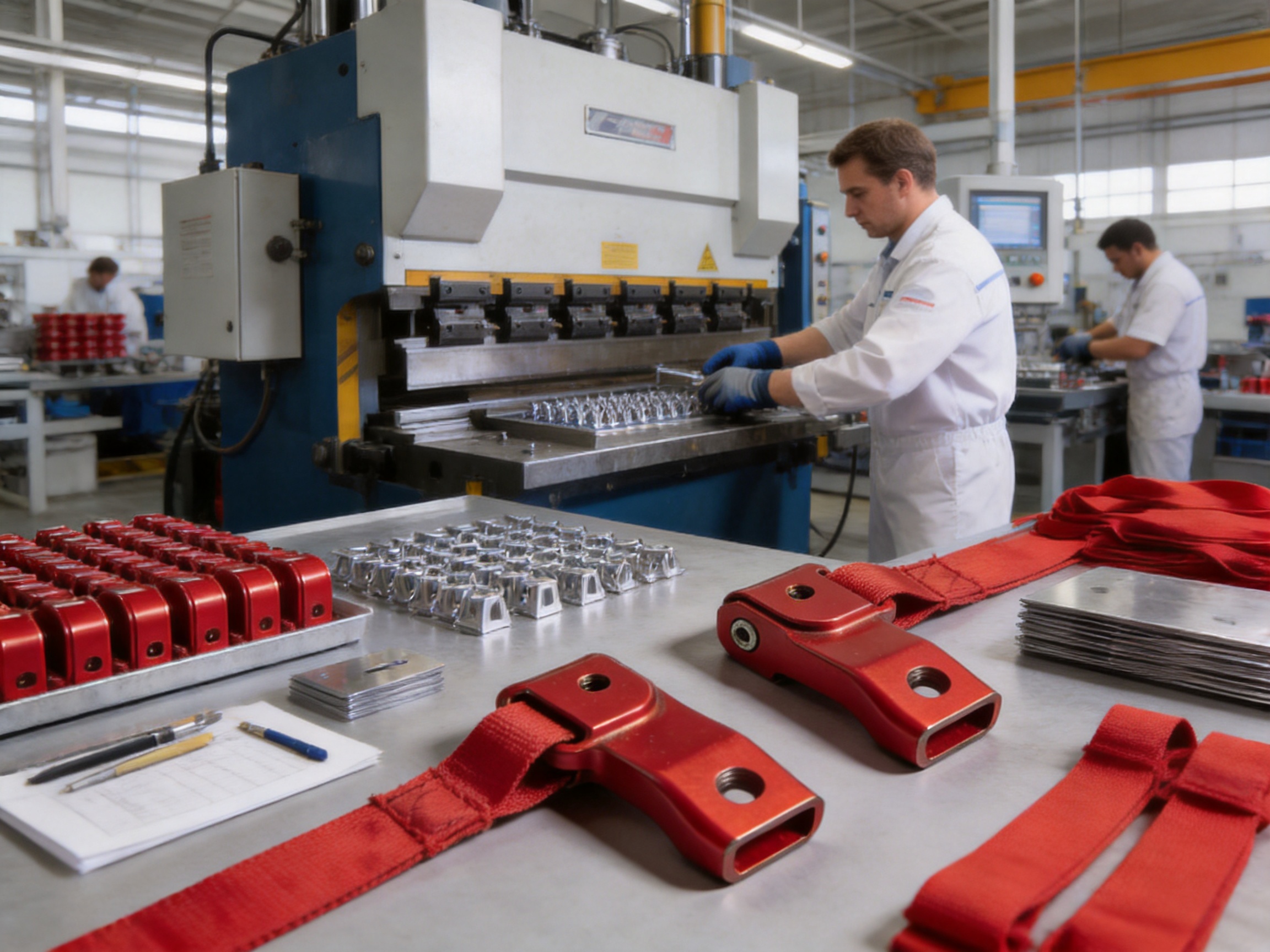
High-quality bending parts depend on disciplined manufacturing. A well-formed part begins with understanding the customer’s drawing, sample, or application requirement. Engineers review material type, thickness, bend radius, tolerance needs, surface treatment, strap connection method, load direction, assembly environment, and production volume. This early analysis helps prevent defects and ensures that the final product is practical, manufacturable, and cost-effective.
Material selection is the foundation. Depending on the application, the metal substrate may need strength, ductility, corrosion resistance, formability, or cost efficiency. A material that is too brittle may crack during bending, while a material that is too soft may deform during use. Proper selection ensures stable bending results and reliable product performance.
Cutting and blanking processes prepare the initial metal shape before forming. In stamping production, dies are used to cut blanks accurately and efficiently. Hole punching, slot forming, edge shaping, and other features can be completed before bending when the process plan requires it. Accurate blank preparation is essential because any error at this stage will affect final dimensions after bending.
Stamping and forming operations may be used to create functional shapes, ribs, recesses, embossed features, holes, or special profiles. For bending parts that require added strength, stamped reinforcement features can improve rigidity without significantly increasing material thickness. This helps reduce weight while maintaining performance.
The bending process gives the part its functional geometry. Controlled tooling, correct bend radius, proper die clearance, and stable press operation are necessary to prevent cracking, springback, uneven angles, and surface marks. Experienced technicians understand that different metals respond differently during bending. The process must be adjusted to maintain accuracy across production batches.
After bending, surface treatment is applied according to product requirements. The red coating may be produced through processes such as powder coating, painting, or other suitable finishing methods. The goal is to create a uniform, attractive, and protective surface. Good coating quality requires proper cleaning, surface preparation, coating control, curing, and inspection. Poor coating can peel, bubble, fade, or wear prematurely, so process control is essential.
The fabric strap is then integrated with the metal part. The attachment method may vary depending on the design. It may involve riveting, sewing, looping, mechanical locking, press fitting, or another fastening solution. The strap must be securely attached and positioned correctly so that it performs reliably during use. The strap material should be selected for strength, comfort, flexibility, and appearance.
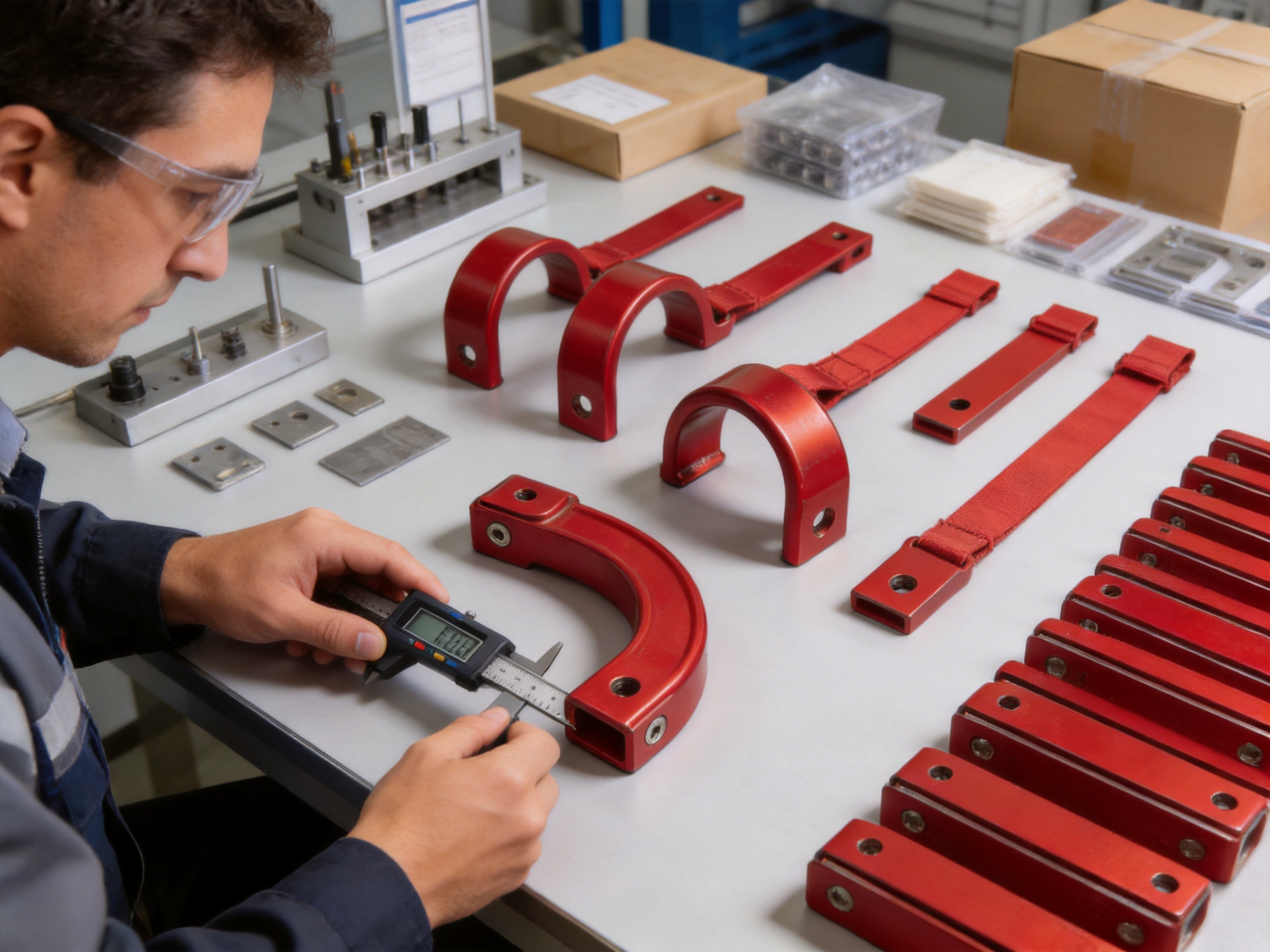
Final inspection verifies that the product meets dimensional, visual, and functional requirements. Inspectors may check bend angle, hole position, surface finish, coating uniformity, edge condition, strap attachment strength, packaging condition, and overall appearance. For customized production, inspection standards can be adjusted according to customer drawings or agreed specifications.
Yuyao Hongli Optoelectronics Co., Ltd. has developed manufacturing capabilities through more than 20 years of experience. Its production scope covers metal stamping parts, deep-drawn parts, bending parts, kitchen appliance accessories, automotive stamping parts, hardware products, plastic products, optical instrument parts, educational instrument parts, household electric heater parts, and small household appliance components. This wide manufacturing background gives the company strong process knowledge and practical problem-solving ability.
The company’s 5,000-square-meter modern factory, multiple stamping workshops, and skilled workforce support stable production. With more than 60 employees and established processing capability, the company can handle customized orders, batch production, and efficient production conversion. Customers benefit from a supplier that understands both product development and mass manufacturing.
Why Precision Bending Matters
Although bending may look simple, it is a technically important process. A small deviation in angle can prevent a part from fitting correctly. A bend radius that is too sharp can create cracks. A poor tool surface can damage the coating or leave visible marks. Incorrect material grain direction can reduce strength. For products that will be assembled with other parts, accuracy is not optional; it is essential.
Precision bending improves assembly efficiency. When parts are consistent, workers spend less time adjusting, correcting, or rejecting components. This reduces labor costs and improves production speed for the customer. In OEM manufacturing, consistent parts also reduce downstream quality complaints and warranty risks.
Precision bending also improves load performance. A correctly formed bend distributes stress more predictably. If the bend is distorted or weakened, the part may fail under repeated use. For a product with an integrated fabric strap, the bending structure must be strong enough to withstand the forces transmitted through the strap during pulling, lifting, securing, or adjustment.
Accurate bending supports better coating performance. If the bending process damages the metal surface or creates microcracks, the coating may not adhere properly. Proper process sequencing and surface preparation help ensure that the red coating remains smooth and protective.
Surface Finish and Red Coating Benefits
The red coating is one of the most recognizable features of the product. It creates an attractive appearance and helps the part stand out. In many settings, visibility is not only aesthetic but also functional. A red component can be located quickly during maintenance, assembly, or emergency operation. For outdoor equipment, sports products, or machinery accessories, visibility can improve user convenience and safety.
The coating also protects the metal substrate. Corrosion can weaken metal parts, damage appearance, and shorten service life. A quality coating helps form a protective barrier against moisture, air, and environmental contaminants. This is especially important for parts used in outdoor equipment, automotive accessories, furniture hardware, or humid environments.
A stable coating can also reduce surface wear. When parts are handled frequently, a durable finish helps resist scratches and abrasion. While no coating is indestructible, proper material preparation and curing can significantly improve resistance to daily use.
The red finish can also support product identity. For customers who want a consistent color theme in their equipment or consumer products, the coating can be matched to design requirements. Custom colors may also be available depending on production needs, but the red version provides a strong visual effect and a clear practical identity.
Role of the Fabric Strap
The red fabric strap adds a functional layer that differentiates this product from ordinary metal bending parts. A bare metal bracket may be strong, but it is not always comfortable or convenient to use. By adding a fabric strap, the product becomes easier to pull, hold, secure, or operate.
The strap can improve user comfort by reducing direct contact with the metal component. This is helpful when the part is used as a pull accessory, handling point, fastening aid, or portable equipment feature. Fabric is softer and more flexible than metal, making the product more suitable for repeated manual operation.
The strap also increases flexibility in installation and use. It can be looped, connected, tightened, or positioned in ways that a rigid metal part cannot. When combined with a stable bent metal base, the strap creates a hybrid solution that is both strong and adaptable.
Color matching between the red coating and red strap creates a unified appearance. This is useful for consumer-facing products, furniture, tools, sporting goods, outdoor equipment, and other applications where design matters. The product looks intentional and coordinated rather than assembled from unrelated parts.
Comparison with Common Competing Products
Many competing bent parts are produced as simple low-cost hardware. They may be adequate for basic uses, but they often lack customization, coating quality, strap integration, and consistent production control. The red bent part with fabric strap is designed to provide a more complete solution.
Generic parts may use inconsistent material thickness, resulting in weak areas or poor fit. They may have burrs, sharp edges, inaccurate bends, or weak surface treatment. In contrast, a professionally manufactured part is designed with controlled material, tooling, bending accuracy, and finishing.
Some competitors supply separate metal and fabric components, forcing customers to assemble them independently. This increases labor time and introduces quality risks. Integrated production reduces these problems by delivering a more finished component.
Lower-quality coatings may fade, crack, peel, or scratch easily. A carefully managed coating process improves durability and visual consistency. For visible parts, poor finish quality can damage the perceived value of the final product. A stable red coating helps the customer’s end product look professional.
Customization is another advantage. Standard parts often require customers to modify their designs around available hardware. Custom bending parts allow the hardware to fit the customer’s product instead. This improves design freedom and can reduce assembly complexity.
| Feature | Red Bent Parts with Fabric Strap | Typical Low-Cost Bent Parts |
|---|---|---|
| Functionality | Combines formed metal strength with convenient fabric strap handling | Usually metal-only with limited user comfort |
| Appearance | Coordinated red coating and red strap for strong visual identity | Often plain, inconsistent, or unfinished |
| Customization | Supports custom size, shape, bend angle, holes, and strap design | Usually limited to standard dimensions |
| Durability | Protective coating and controlled forming support long-term use | May have weaker coating, burrs, or inconsistent material |
| Assembly Efficiency | Can be supplied as a ready-to-use integrated accessory | May require separate strap assembly or additional processing |
| Quality Control | Inspected for fit, finish, bend accuracy, and strap security | Inspection standards may be basic or inconsistent |
Customization Capabilities
Customization is one of the most important strengths of this product. Different customers may need different shapes, sizes, materials, hole patterns, coating finishes, and strap specifications. A flexible manufacturing partner can transform a concept, drawing, or sample into a finished product that meets practical requirements.
Custom dimensions can include length, width, thickness, bend angle, bend radius, hole diameter, slot length, edge profile, and overall geometry. For parts that must fit into an existing assembly, dimensional accuracy is critical. Engineers can review the customer’s drawing and recommend process adjustments to improve manufacturability while preserving function.
Custom materials may be selected based on strength, corrosion resistance, formability, weight, and cost. For example, a part used in furniture may prioritize appearance and moderate strength, while a part used in machinery may require greater durability and tighter tolerances. The material should match the operating environment and expected load.
Custom strap options can include length, width, fabric type, color, stitching method, attachment style, and strength requirement. The strap should be comfortable to handle but strong enough for the intended use. For high-frequency use, abrasion resistance and secure attachment become especially important.
Custom surface treatment can support special performance goals. The red coating is standard for this product concept, but customers may request specific coating thickness, gloss level, texture, corrosion resistance level, or color matching. Surface finish requirements should be defined clearly during project development.
Packaging can also be customized. Some parts may need individual wrapping to protect the coating, while others may be packed in bulk for industrial assembly. Export packaging should protect the product during transportation and storage. Clear labeling can help customers manage inventory and production flow.
OEM and ODM Support
OEM and ODM support allows customers to develop products efficiently. OEM manufacturing focuses on producing parts according to the customer’s design, drawing, or sample. ODM support can involve additional design assistance, process recommendations, and product development based on functional requirements.
For OEM projects, the manufacturer must understand tolerances, materials, surface treatment, and delivery requirements. Consistent communication is essential. Drawings should be reviewed carefully to identify potential manufacturing challenges, such as sharp bends, difficult hole locations, tight tolerances, or coating-sensitive areas.
For ODM projects, the customer may provide an idea or application requirement rather than a complete drawing. The manufacturer can help develop a practical design by considering metal forming limits, tooling cost, assembly method, strap attachment, coating durability, and production efficiency. This can shorten the development cycle and reduce trial-and-error costs.
Rapid prototyping is valuable for both OEM and ODM work. Before mass production, samples allow the customer to test fit, function, strength, appearance, and user experience. Adjustments can be made before tooling and batch production are finalized. This approach reduces risk and improves final product quality.
Quality Control from Raw Material to Finished Product
Quality control must begin before production starts. Raw materials should be checked for specification, thickness, surface condition, and suitability for bending. If the incoming material is inconsistent, the final part will also be inconsistent. Reliable raw material management helps maintain stable production quality.
During blanking and stamping, operators check dimensions and tooling condition. Burrs, deformation, or misaligned holes can affect later assembly. Preventive maintenance of tools and presses helps reduce defects and improves production efficiency.
During bending, angle and shape are monitored. Because metal can spring back after bending, process parameters must be controlled. Regular inspection helps ensure that each batch remains within tolerance. For critical parts, gauges or fixtures may be used to verify shape quickly and accurately.
Before coating, the surface must be properly prepared. Oil, dust, oxidation, or residues can reduce coating adhesion. Cleaning and preparation are therefore important steps. After coating, the part should be checked for color consistency, coverage, adhesion, scratches, bubbles, and other visible defects.
After strap assembly, the connection must be inspected. A weak strap attachment can compromise the entire product. Depending on the application, pull testing or functional checking may be used to confirm security. The strap should be positioned correctly and should not interfere with installation unless the design intentionally requires it.
Final inspection confirms that the part meets agreed requirements. This may include measurement, visual inspection, functional testing, packaging inspection, and quantity confirmation. Quality control protects both the manufacturer and the customer by reducing returns, complaints, and assembly delays.
Manufacturing Strength of Yuyao Hongli Optoelectronics Co., Ltd.
Yuyao Hongli Optoelectronics Co., Ltd. is a comprehensive manufacturing enterprise located in Yangming Science and Technology Industrial Park, Yuyao City, Zhejiang Province, China. Founded in 2000, the company has accumulated more than 20 years of industry experience. It has developed from its former name into a professional manufacturer specializing in metal stamping parts and related products.
The company operates a modern factory of approximately 5,000 square meters and has multiple stamping workshops. With more than 60 employees and strong production capacity, it provides manufacturing, processing, wholesale, retail, import, and export services. Its product scope includes educational instruments, optical instruments, household electric heaters, small household appliances, auto parts, hardware products, plastic products, deep-drawn parts, stamped parts, bending parts, kitchen appliance accessories, and automotive stamping parts.
This broad manufacturing background is an advantage for customers purchasing red bent parts with fabric straps. The product may require knowledge of stamping, bending, coating, assembly, and quality control. A manufacturer with experience in many related categories can provide better technical support and more reliable production decisions.
The company’s business philosophy emphasizes integrity, excellence, innovation, and sharing. In practical manufacturing, these values translate into responsible communication, continuous process improvement, flexible customization, and long-term cooperation. Customers looking for stable supply need more than a one-time transaction; they need a supplier that can support future product changes, repeat orders, and quality consistency.
Stable delivery is another important strength. Industrial customers often operate according to strict production schedules. If a small component is delayed, the final assembly may also be delayed. A manufacturer with organized production planning and efficient production conversion can help customers maintain supply chain stability.
Comprehensive after-sales service supports long-term cooperation. If the customer needs design adjustments, packaging changes, additional samples, quality analysis, or new product development, responsive support can reduce communication friction and improve project success.
Design Considerations for Buyers
When selecting red bent parts with fabric straps, buyers should first define the application clearly. The expected load, installation method, operating environment, and frequency of use will influence material, thickness, bend geometry, coating, and strap design. A part used only as a light pull accessory may have different requirements from a part used in machinery or outdoor equipment.
Buyers should also consider whether the part will be visible in the final product. If appearance matters, surface finish, coating color, gloss, and strap consistency should be specified. If the part is hidden inside equipment, functional requirements may be more important than cosmetic standards.
Tolerance requirements should be realistic. Very tight tolerances can increase cost and production complexity. A good manufacturer can help identify which dimensions are critical and which can be controlled with standard production tolerances. This improves cost efficiency without compromising function.
Strap function should be carefully defined. Is the strap used for pulling, lifting, hanging, tightening, identification, or comfort? The answer determines strap strength, length, attachment method, and fabric type. If the strap will be exposed to outdoor conditions, moisture, abrasion, and UV resistance may need to be considered.
Buyers should also provide information about assembly. If screws, bolts, rivets, clips, or welding will be used, the hole sizes and positions must be compatible. If the part must fit into a narrow space, clearance around the strap and bend must be checked.
For custom projects, samples are strongly recommended. A physical sample allows the customer to confirm real-world fit and feel. The fabric strap, red coating, and bent metal shape can be evaluated together. Any design adjustments can be made before mass production.
Installation and Maintenance
The product is designed for easy installation. Depending on its structure, it can be mounted with mechanical fasteners, inserted into a matching slot, attached to an assembly, or integrated into a larger system. Proper installation ensures that the load is distributed as intended and that the strap remains convenient to use.
During installation, users should avoid scratching the coating unnecessarily. If tools are used near the surface, protective measures can help preserve appearance. Fasteners should be tightened appropriately, but excessive force should be avoided if it may deform the part or damage the coating.
The strap should be positioned so that it does not twist, rub against sharp edges, or become trapped between moving parts unless the design specifically accounts for such contact. Repeated abrasion can shorten strap life. If the product is used in a high-wear environment, periodic inspection is recommended.
Maintenance is generally minimal. The coated metal surface can usually be cleaned with a soft cloth and mild cleaning method suitable for the coating. Harsh chemicals or abrasive tools should be avoided unless the coating specification allows them. The strap can be checked for fraying, loosening, or damage during routine equipment inspection.
If the product is used outdoors, periodic inspection helps ensure long service life. Look for coating damage, corrosion at exposed edges, strap wear, and fastener loosening. Early maintenance can prevent small issues from becoming larger failures.
Sustainability and Production Efficiency
Modern manufacturing must balance performance, cost, and responsible resource use. Precision stamping and bending can support efficient material utilization by optimizing blank layout and reducing waste. Tooling design and production planning can improve consistency and reduce rejected parts.
Durable products also support sustainability by reducing replacement frequency. A part with good coating adhesion, stable geometry, and reliable strap attachment is less likely to fail prematurely. Longer service life means fewer replacements, less waste, and better value for the customer.
Efficient production conversion is important for customized projects. When a manufacturer can move from prototype to batch production smoothly, fewer resources are wasted on repeated corrections. Good communication, clear drawings, and process experience all contribute to efficient manufacturing.
Packaging can also be designed responsibly. Protective packaging should prevent damage, but excessive packaging may increase cost and waste. The right balance depends on coating sensitivity, transportation distance, order quantity, and customer handling requirements.
Typical Use Scenarios
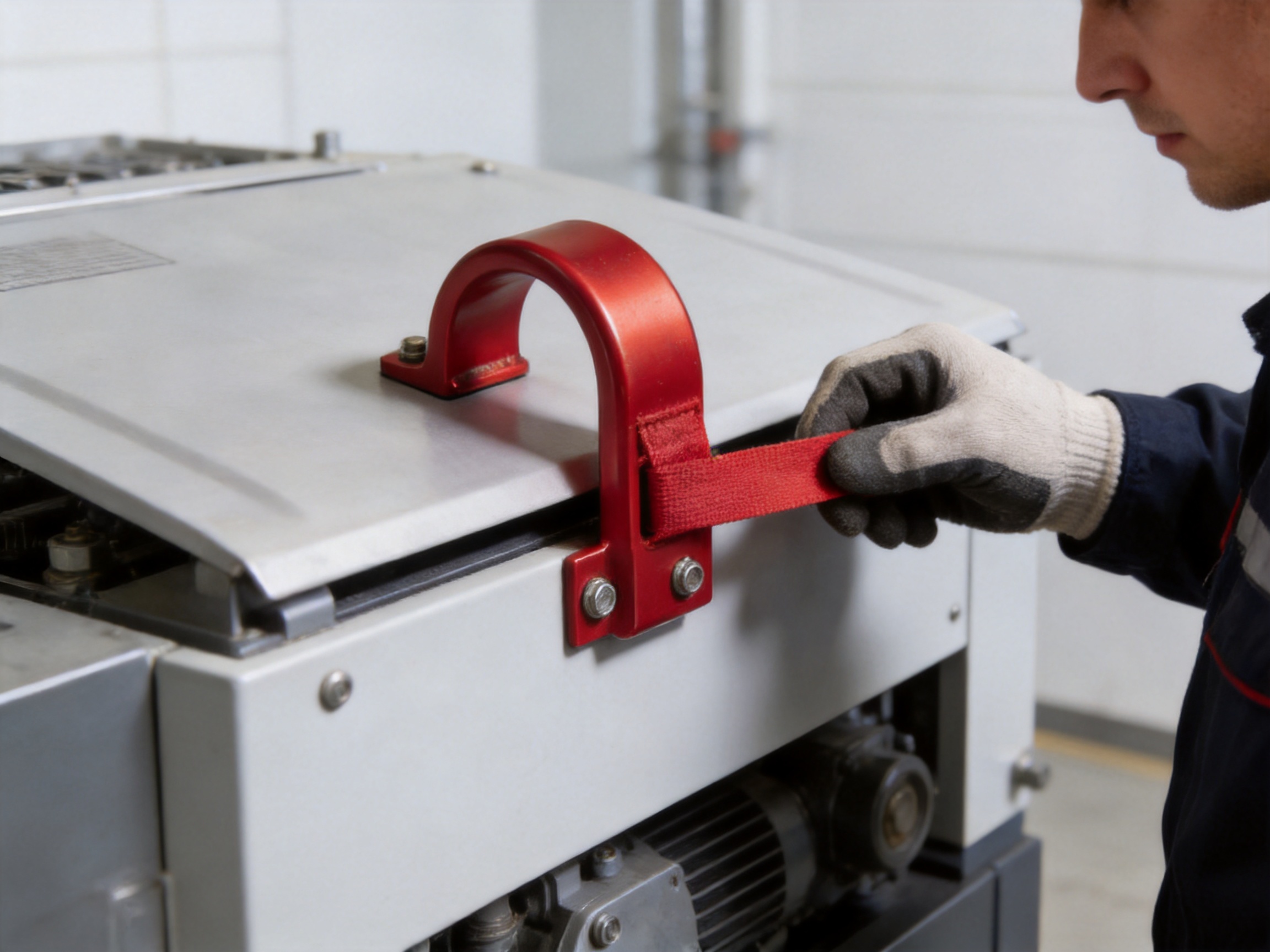
In machinery covers, the red bent part can serve as a visible pull or retaining accessory. The strap allows the operator to access or adjust the cover more comfortably. The red color helps identify the operating point quickly.
In automotive accessory assemblies, the part can act as a compact bracket or pull element. The bent metal structure provides support, while the strap can improve manual operation. Surface coating helps protect against corrosion and improves visual quality.
In furniture, the product can be used as a decorative and functional hardware component. The combination of red metal and red fabric can suit modern, sporty, industrial, or customized designs. It can act as a pull tab, support part, or connection accessory.
In outdoor equipment, visibility and corrosion resistance are especially useful. A red component is easier to locate in grass, storage areas, campsites, or work zones. The strap offers quick handling, and the coated metal base provides durability.
In small household appliances or kitchen-related accessories, the part can be adapted as a bracket, retainer, or user interface component. With suitable material and coating selection, it can provide both practical performance and a clean appearance.
Value for Distributors and OEM Buyers
For distributors, this product offers a differentiated item that is more attractive than ordinary bent metal hardware. Its red coating and integrated strap make it easy to present as a premium accessory. Customization options also allow distributors to serve different market segments.
For OEM buyers, the main value is integration. Instead of purchasing separate metal parts and straps, then managing secondary assembly, customers can source a finished or semi-finished component. This reduces internal handling and helps simplify the supply chain.
OEM buyers also benefit from engineering support. A manufacturer experienced in stamping, bending, and assembly can help optimize the part for production. This can lower cost, improve quality, and reduce development time.
Stable repeatability is essential for OEM production. When a product enters mass production, every batch must fit the same assembly. Consistent tooling, controlled processes, and quality inspection help ensure that the red bent parts perform reliably order after order.
How the Product Supports Better End-User Experience
End users often judge a product by small details. A part that feels comfortable, looks clean, and operates smoothly can improve the overall perception of quality. The red fabric strap adds a tactile element that makes the metal component easier and more pleasant to use.
The red color can also guide user interaction. If the part is intended to be pulled, adjusted, or opened, the bright red design naturally attracts attention. This can reduce confusion and improve usability.
Safety can be improved when users can easily see and operate the correct component. In machinery or outdoor equipment, clear visual cues are valuable. A durable red part can function as both a mechanical component and an intuitive user interface.
The product’s low maintenance requirement also benefits end users. A component that remains functional and attractive over time reduces frustration and replacement costs. Reliable performance builds confidence in the final product.
Q&A Section
What are red bent parts with red fabric straps used for?
They are used as functional metal accessories in machinery, automotive components, furniture, outdoor equipment, household appliances, and customized assemblies. The bent metal provides strength and structure, while the fabric strap improves handling, pulling, fastening, or user comfort.
Can the size and shape be customized?
Yes. Custom sizes, bend angles, hole patterns, thicknesses, edge shapes, strap lengths, and surface finishes can be produced according to drawings, samples, or application requirements.
Why is the red coating important?
The red coating improves appearance, increases visibility, and helps protect the metal from corrosion and surface wear. It can also support product identity and make the part easier to locate during use or maintenance.
How does the fabric strap improve the product?
The fabric strap makes the part easier and more comfortable to handle. It can be used for pulling, holding, securing, or adjusting. It also adds flexibility that a rigid metal component alone cannot provide.
What makes this product better than ordinary bent metal parts?
It combines precision bending, protective coating, strap integration, customization capability, and controlled quality inspection. Ordinary bent parts may lack comfort, visual appeal, coating durability, or consistent dimensions.
Is this product suitable for outdoor use?
It can be suitable for outdoor use when the material, coating, and strap are selected according to the environment. Corrosion resistance, moisture exposure, UV exposure, and abrasion should be considered during customization.
What information should customers provide for a custom order?
Customers should provide drawings, samples, dimensions, material requirements, coating requirements, strap specifications, load expectations, installation method, application environment, quantity, and packaging needs.
Can samples be made before mass production?
Yes. Sample production is recommended for customized projects. Samples allow customers to confirm fit, function, appearance, strap comfort, and installation before batch production.
What industries can benefit most from this product?
Machinery, automotive accessories, furniture, outdoor equipment, kitchen appliance accessories, household appliances, hardware products, and OEM equipment manufacturers can all benefit from this product’s strength and adaptability.
How does the manufacturer ensure quality?
Quality is controlled through raw material checking, stamping and blanking inspection, bending accuracy control, surface preparation, coating inspection, strap assembly verification, final dimensional inspection, and packaging checks.
Conclusion
Red bent parts with red fabric straps are versatile, durable, and practical components that combine the strength of formed metal with the comfort and convenience of fabric. Their red coating provides visual appeal, visibility, and corrosion protection, while the precisely bent structure supports reliable installation and long-term use. The integrated strap expands functionality and improves the end-user experience.
Compared with ordinary bent metal parts, this product offers stronger differentiation through customization, surface quality, integrated assembly, and consistent manufacturing control. It can be adapted for machinery, automotive accessories, furniture, outdoor equipment, household appliances, kitchen appliance accessories, and many other applications.
Yuyao Hongli Optoelectronics Co., Ltd. brings more than 20 years of manufacturing experience, modern production facilities, multiple stamping workshops, OEM and ODM support, rapid prototyping, strict quality control, and stable delivery capabilities. Its broad expertise in stamped parts, deep-drawn parts, bending parts, automotive stamping parts, kitchen appliance accessories, and related hardware products makes it a reliable partner for customers seeking customized metal component solutions.
For buyers who need a part that is strong, attractive, easy to install, comfortable to use, and adaptable to specific applications, red bent parts with red fabric straps provide an excellent balance of function and design. With professional manufacturing support, they can become a dependable component in both industrial and consumer products.
References
Kalpakjian, S., and Schmid, S. R. Manufacturing Engineering and Technology. Pearson Education.
Boljanovic, V. Sheet Metal Forming Processes and Die Design. Industrial Press.
ASM International. ASM Handbook: Forming and Forging. ASM International.
Suchy, I. Handbook of Die Design. McGraw-Hill Education.
Groover, M. P. Fundamentals of Modern Manufacturing: Materials, Processes, and Systems. Wiley.
Oberg, E., Jones, F. D., Horton, H. L., and Ryffel, H. H. Machinery’s Handbook. Industrial Press.
Previous Post
Precision Stamped Circular Parts with Holes for Durable Industrial Assemblies
Next Post
Black Stamped Parts with Connectors for Reliable Precision Assembly
News
-
-
What Is Deep Drawing Process and What Are Deep-Drawn Parts The deep drawing process is a sheet metal forming operation in which a flat meta...
READ MORE -
When you need a metal component whose depth clearly exceeds its width, such as a one-piece battery enclosure, an air-fryer inner container,...
READ MORE -
If you have ever asked yourself, “How do I find a reputable metal fabricator?” you are not alone. As a manufacturer with more than 20 years...
READ MORE
Get Fresh Updates Via Email
We promise we will never disclose your email address, and you can opt out at any time.
-
Quick Links
Home About Us Products Service News Contact Us -
Product list
Deep-drawn parts Stamped parts Bending parts Kitchen appliance accessories Automotive stamping parts -
About Us
Factory Honour FAQ -
News
Company News Industry News -
Contact Us
Address: South side of Shunke Road, Yangming Science and Technology Industrial Park, Yuyao City, Zhejiang Province, China Tel: +86-13905842349/+86-13738485724 Email: hongli@hl-stamping.com
Copyright © Yuyao Hongli Optoelectronics Co., Ltd. All Rights Reserved.
Custom Precision-Sheet/Sheet Metal Stamping Manufacturers
