


 English
 русский
 Español
 عربى
عربى

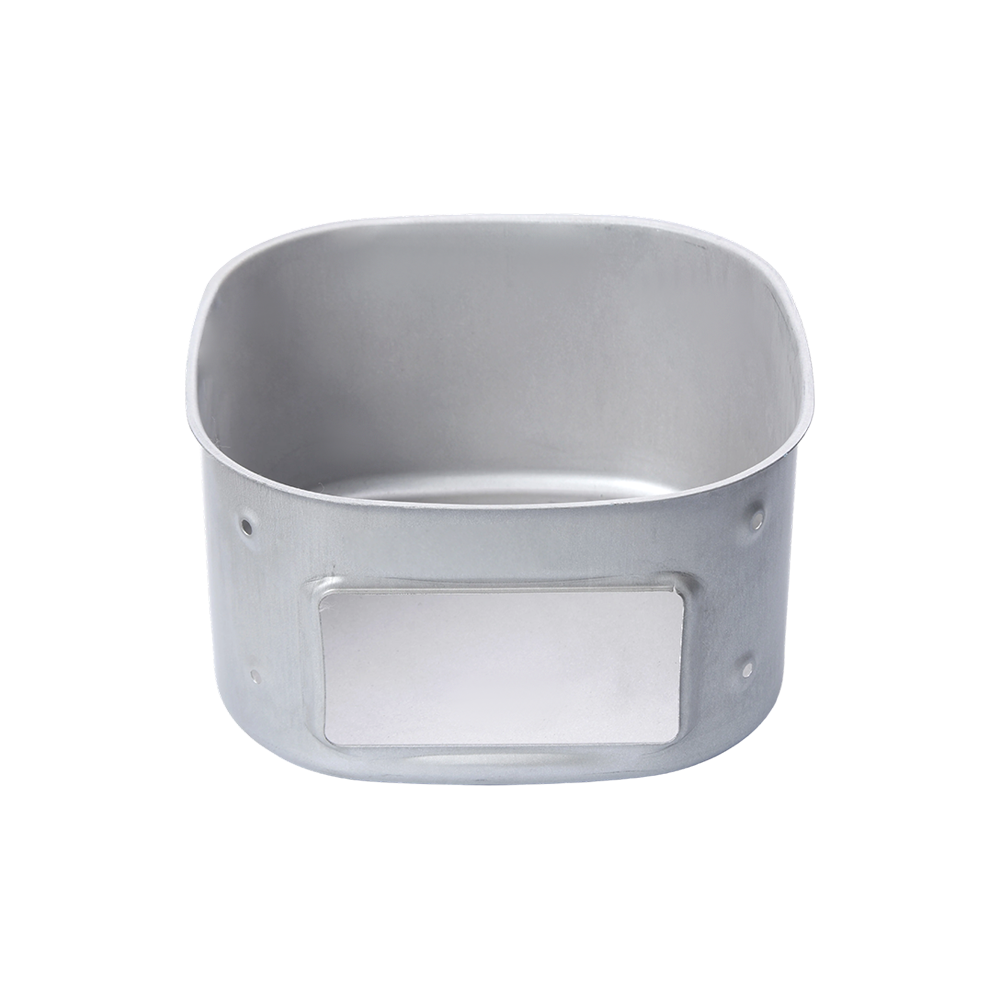
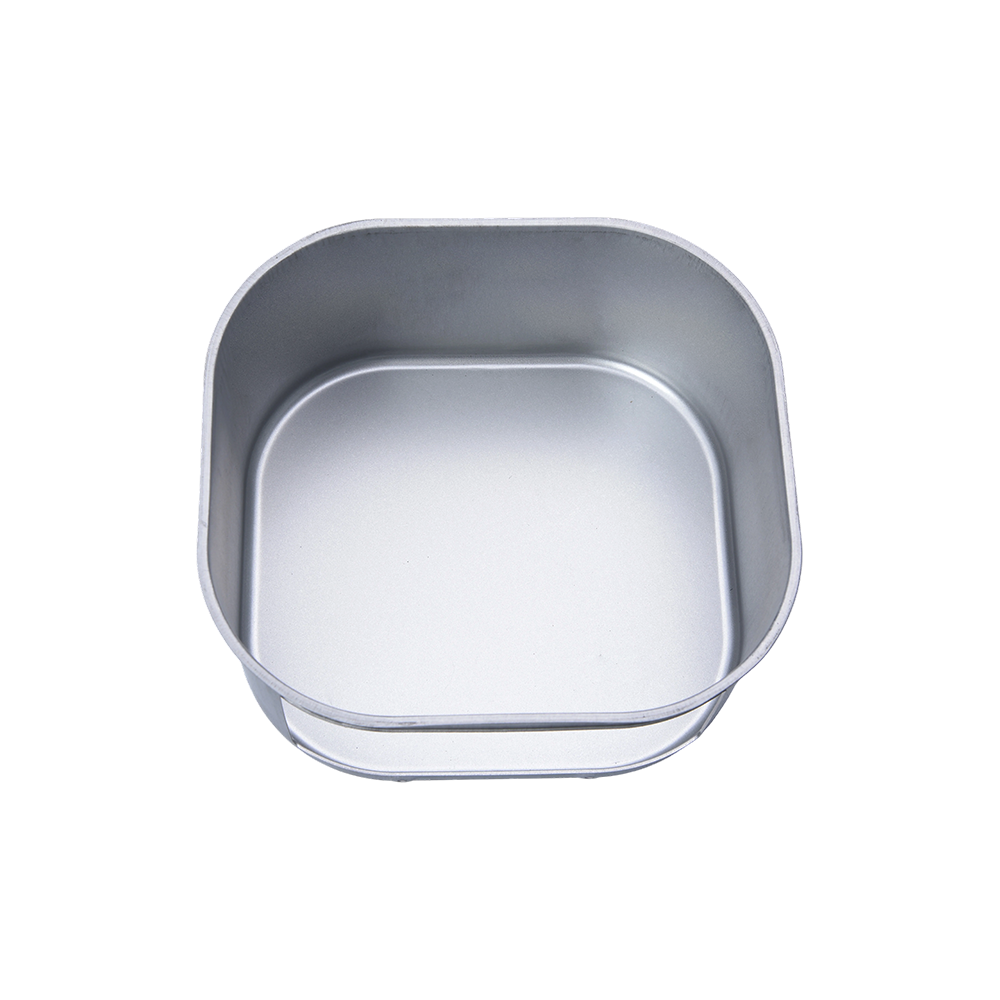
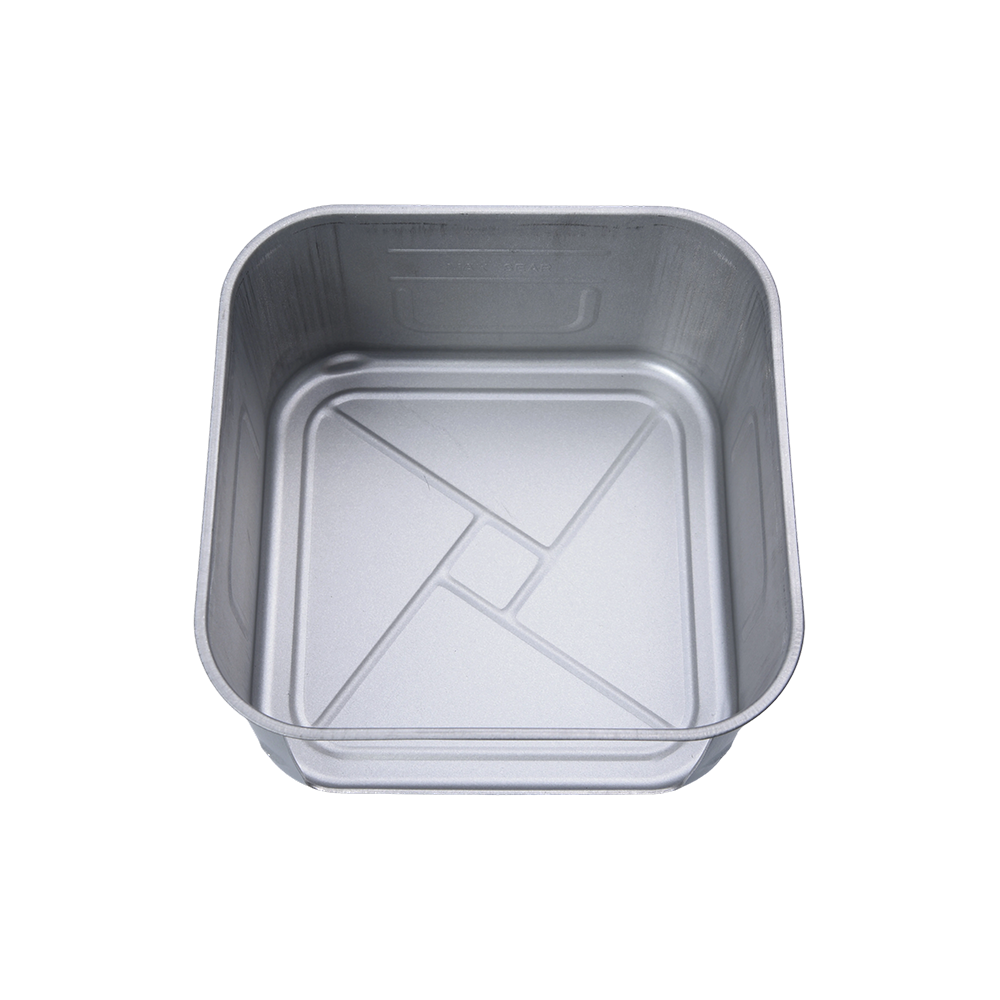
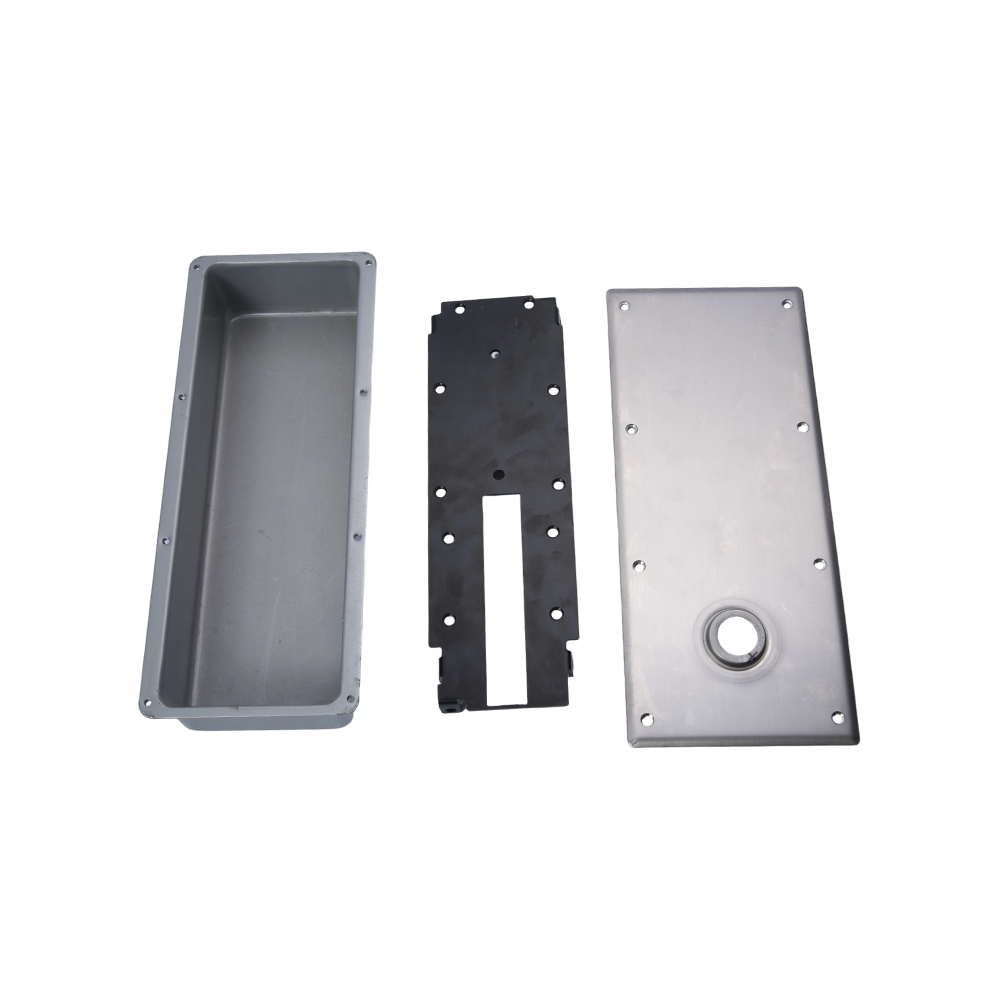
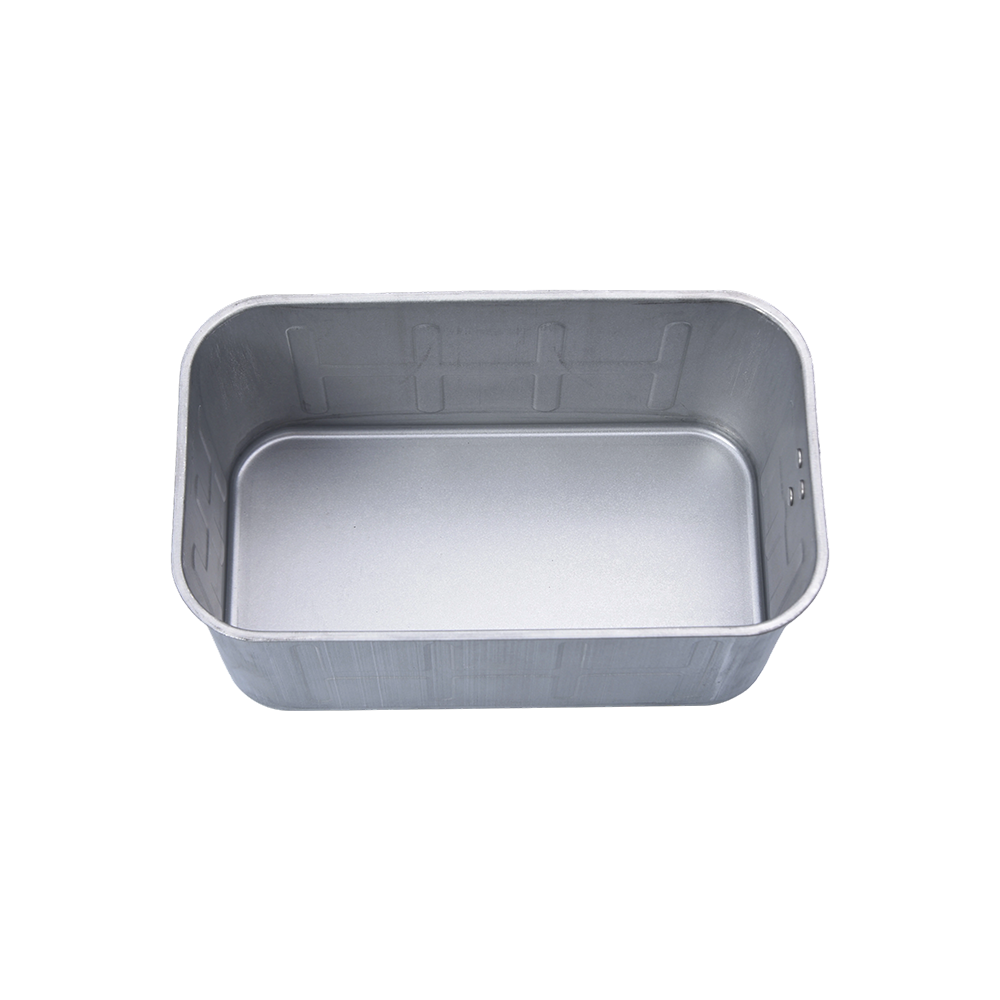
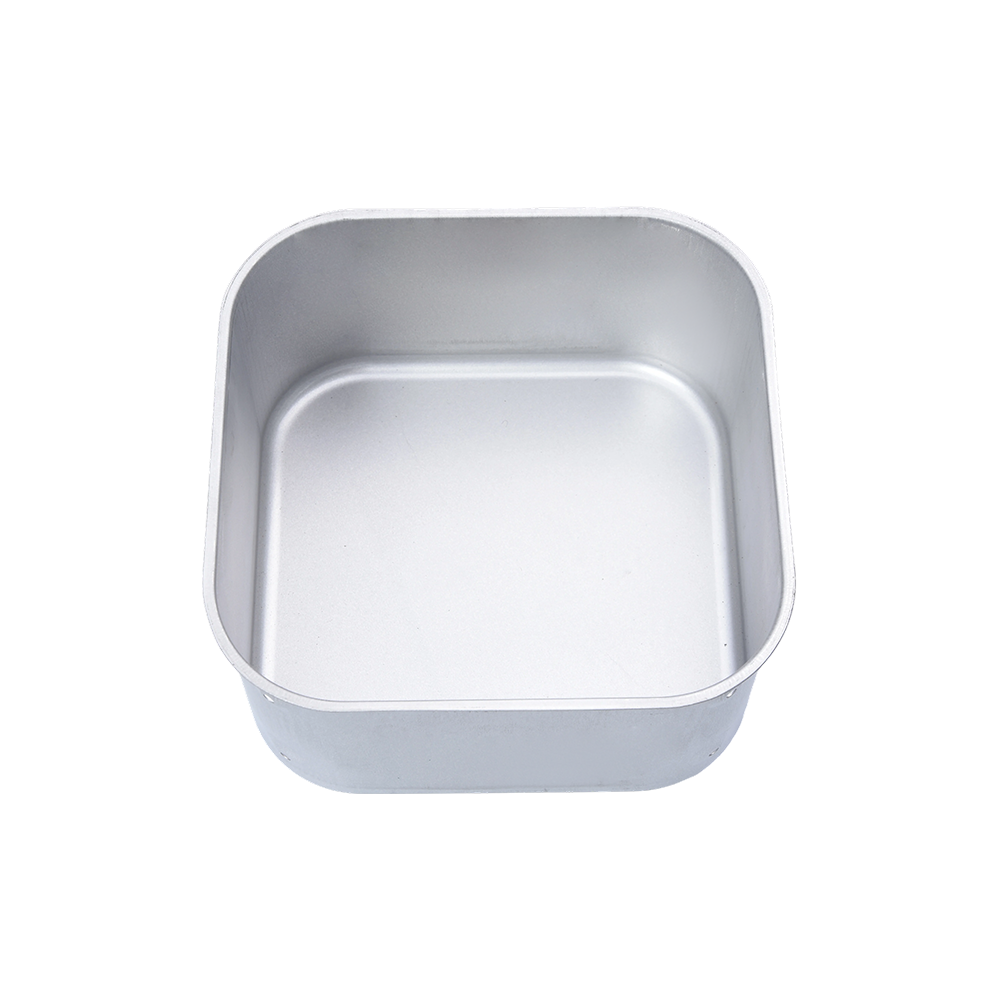
When you need a metal component whose depth clearly exceeds its width, such as a one-piece battery enclosure, an air-fryer inner container,...
READ MORE

News
Home / Author / Zhang Meilin — Product Sales Consultant / Deep-Drawn Container with Cutouts for Precision Industrial Applications
Deep-Drawn Container with Cutouts for Precision Industrial Applications
2026-05-21
In modern manufacturing, the demand for durable, clean, lightweight, and precisely formed metal components continues to rise across industrial, food processing, medical, electronics, kitchen appliance, and automotive sectors. Among the many metal forming solutions available, the deep-drawn container with cutouts stands out as a practical and highly adaptable component. It combines seamless one-piece construction, customized cutout design, corrosion-resistant material options, and excellent dimensional consistency. For engineers, purchasing managers, appliance designers, and industrial equipment manufacturers, this type of container offers an effective balance of strength, hygiene, customization, and production efficiency.
A deep-drawn container with cutouts is produced by forcing sheet metal into a die cavity through controlled pressure, creating a hollow three-dimensional shape without welding or assembly seams. After forming, custom cutouts can be added according to application needs. These cutouts may serve as drainage holes, air vents, wiring passages, fastening slots, inspection windows, mounting interfaces, or assembly clearance features. Compared with welded boxes, cast housings, plastic containers, or multi-piece stamped assemblies, a deep-drawn container offers a cleaner structure, improved strength-to-weight performance, fewer failure points, and more reliable repeatability in medium- and large-scale production.
Yuyao Hongli Optoelectronics Co., Ltd. manufactures deep-drawn parts, stamped parts, bending parts, kitchen appliance accessories, and automotive stamping parts with more than 20 years of experience. Located in Yangming Science and Technology Industrial Park, Yuyao City, Zhejiang Province, China, the company operates a modern 5,000-square-meter factory with multiple stamping workshops, a skilled workforce, and flexible OEM/ODM production capability. Its experience in metal stamping, deep drawing, tooling, prototyping, and production conversion enables the company to support customers from concept validation to mass production.
Product Overview
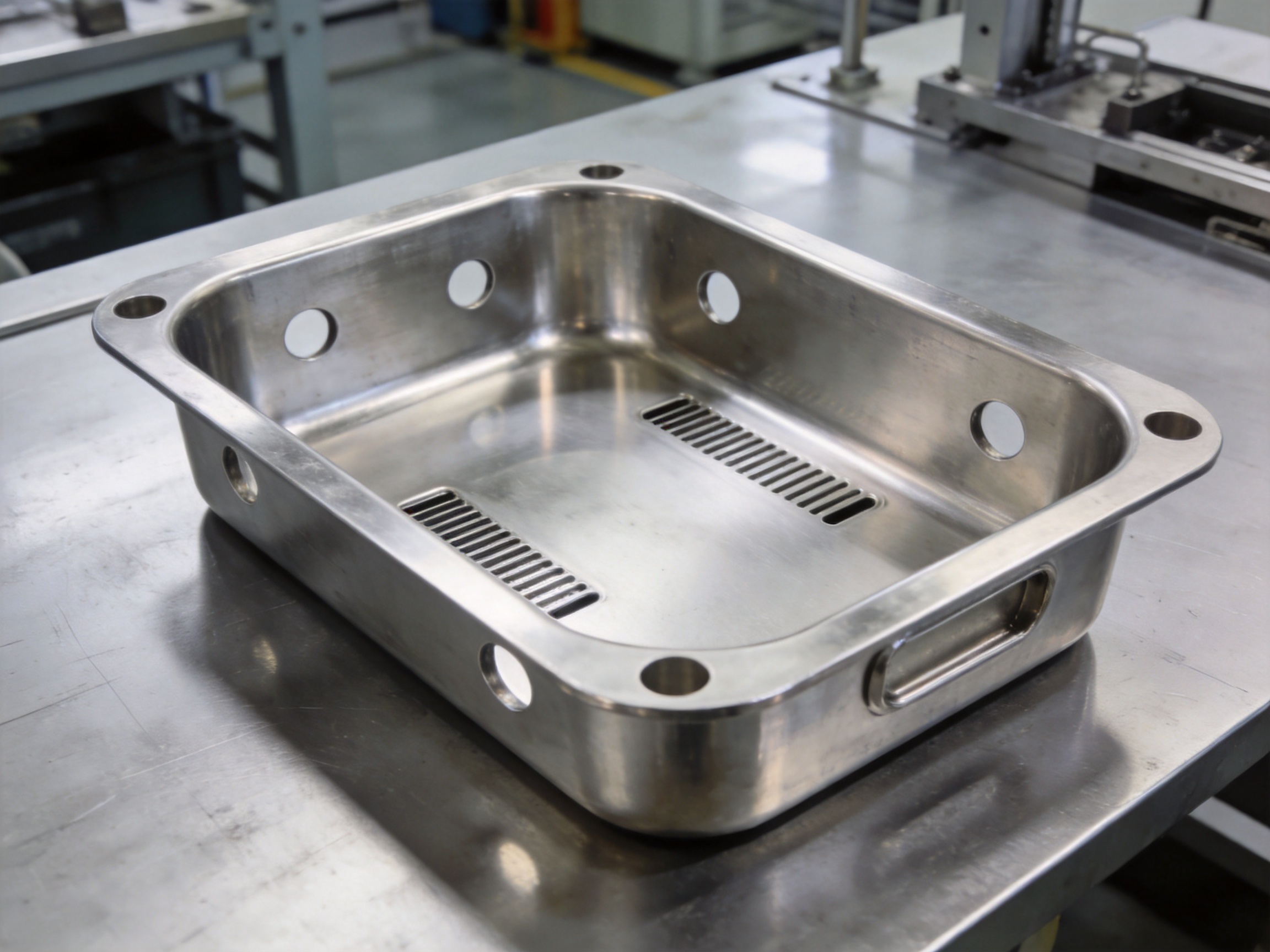
The deep-drawn container with cutouts is designed for customers who need a robust formed-metal container that can be customized for mechanical, functional, hygienic, and assembly requirements. Its one-piece deep-drawn structure eliminates welding seams, reducing the risk of leakage, contamination accumulation, weld cracking, and inconsistent appearance. The product can be manufactured in different materials, dimensions, wall thicknesses, surface finishes, and cutout patterns depending on the intended use.
The container is suitable for industrial housings, food-contact trays, medical equipment components, electronics enclosures, appliance parts, filtration components, drainage structures, machinery covers, and automotive subassemblies. Its cutouts allow designers to integrate additional functions directly into the formed shell. Instead of requiring multiple secondary brackets or welded additions, the container can be shaped and punched to perform several roles in one part.
Available material thicknesses typically range from 0.5 mm to 3.0 mm, allowing the component to serve both lightweight and heavy-duty applications. Surface treatment options may include brushed finishing, polishing, sandblasting, electropolishing, and other customized treatments depending on material and project requirements. These finishes can improve appearance, corrosion resistance, cleanability, and suitability for food, medical, or industrial environments.
The product is especially valuable when customers need both structural integrity and custom opening geometry. Standard containers may require post-processing, manual cutting, or extra mounting accessories. In contrast, a customized deep-drawn container with engineered cutouts can be produced consistently and efficiently, helping customers reduce assembly time, improve product appearance, and maintain stable quality.
Why Deep Drawing Matters
Deep drawing is a metal forming process in which a flat sheet blank is drawn into a die by a punch to create a hollow shape. When properly designed and controlled, the material flows into the cavity while maintaining useful strength and thickness distribution. Unlike fabrication methods that rely on welding separate panels together, deep drawing forms the container as an integrated piece. This creates a smooth, continuous structure with fewer joints and fewer dimensional errors.
The deep drawing process is particularly effective for containers because it can create rounded corners, smooth walls, consistent depth, and high repeatability. These features are difficult to achieve through manual fabrication or simple bending operations. In applications where hygiene, durability, and appearance are important, the seamless geometry of a deep-drawn part provides a clear advantage.
Deep drawing also improves material efficiency. Since the component is formed from sheet metal, the process can be optimized to reduce waste. With proper tooling and blank layout, manufacturers can achieve stable production with controlled costs. For customers ordering larger quantities, investment in proper tooling often leads to lower unit cost, faster production, and better consistency than manually fabricated alternatives.
Another advantage is design flexibility. Deep-drawn containers can be produced in circular, rectangular, oval, square, or custom profiles depending on tooling feasibility. Wall height, corner radius, flange design, mounting features, and bottom geometry can be adjusted to match application needs. When cutouts are added through stamping, punching, laser cutting, or other secondary processes, the container becomes a customized functional component rather than a simple vessel.
Key Advantages Over Conventional Alternatives
Seamless One-Piece Construction
One of the most important advantages of the deep-drawn container with cutouts is its seamless construction. Welded containers often have visible seams, heat-affected zones, and potential weak points. These areas may corrode more quickly, trap residue, or fail under repeated stress. A deep-drawn container avoids these issues by forming the body from one continuous sheet of metal.
This seamless design is particularly beneficial in food processing and medical equipment. In environments where cleaning and sanitation are critical, seams and sharp internal corners can collect contaminants. A deep-drawn surface with smooth transitions is easier to clean, inspect, and maintain. When combined with suitable surface finishing such as polishing or electropolishing, the part can meet demanding cleanliness expectations.
For industrial and automotive applications, seamless construction also improves vibration resistance and fatigue performance. Welded joints may crack under repeated mechanical loading, especially if weld quality varies. A one-piece formed structure distributes stress more naturally through the material, helping the component maintain integrity under long-term use.
High Strength-to-Weight Performance
Deep drawing allows a thin sheet to become a rigid three-dimensional shape. Once the material is formed into a container geometry, the sidewalls, bottom, corners, and flanges contribute to structural stiffness. This means the part can often deliver adequate strength while remaining lighter than a machined, cast, or heavily welded alternative.
Weight reduction is valuable in automotive components, portable equipment, appliances, and assemblies that require easy handling. A lighter container can reduce transportation cost, simplify installation, and improve system efficiency. At the same time, the part retains the toughness and temperature resistance of metal, making it more durable than many plastic alternatives.
The available thickness range of 0.5 mm to 3.0 mm gives customers freedom to select the right balance between weight and strength. A thin-wall container may be appropriate for covers, trays, and light-duty housings, while thicker material can be selected for load-bearing, impact-resistant, or high-wear conditions.
Custom Cutouts for Functional Integration
The cutouts are not simply decorative openings. They can be engineered to serve practical functions that improve the final product. Ventilation slots can support heat dissipation in electronic equipment. Drainage holes can prevent liquid accumulation in food or industrial processing systems. Wiring passages can simplify cable routing in appliance or machine assemblies. Mounting slots can reduce the need for separate brackets. Large access openings can support inspection, cleaning, or sensor installation.
Compared with buying a standard container and modifying it later, integrating cutouts into the manufacturing process improves consistency. Each hole, slot, or opening can be located according to engineering drawings, reducing manual variation. This is important when the container must align with other components in a larger assembly.
Custom cutouts also improve production efficiency for the customer. When a container arrives ready for assembly, downstream labor is reduced. The customer does not need to drill, grind, weld, or deburr the component in-house. This shortens lead time, lowers labor cost, and improves the appearance of the final product.
Superior Cleanability and Hygiene
In food processing, kitchen appliance, laboratory, and medical applications, the ability to clean a component thoroughly is essential. A deep-drawn container with rounded transitions, smooth surfaces, and no welded seams reduces areas where dirt, bacteria, grease, or chemical residue can accumulate. This helps customers design equipment that is easier to maintain and more reliable in hygienic environments.
Surface finish options further enhance cleanability. A brushed finish provides a uniform appearance for visible parts. Polishing can reduce surface roughness and improve visual quality. Sandblasting can create a matte texture and prepare the surface for additional treatments. Electropolishing, when used with stainless steel, can improve corrosion resistance and create a smoother, cleaner surface at the microscopic level.
This combination of seamless forming and appropriate finishing makes the product suitable for applications where hygiene is a major purchasing factor. It can be used in food trays, appliance liners, equipment covers, dispensing systems, storage inserts, and medical device structures where smooth metal surfaces are preferred.
Durability in Harsh Environments
Metal containers are frequently exposed to moisture, chemicals, oils, heat, vibration, and mechanical impact. The deep-drawn container with cutouts is designed to withstand demanding use. Material selection and surface treatment can be adjusted to improve corrosion resistance, wear resistance, and environmental performance.
For corrosive or sanitary environments, stainless steel is often preferred. For cost-sensitive industrial applications, carbon steel with suitable coating may be selected. For weight-sensitive applications, aluminum may be considered depending on forming requirements. The manufacturer can evaluate the application and recommend suitable materials and processing methods.
Impact resistance is another advantage. Unlike brittle plastic components that may crack under shock or age poorly under heat, a metal deep-drawn container maintains stability in tougher operating environments. The formed geometry also increases rigidity, helping the component resist deformation during use.
Technical Specifications and Customization Options
Every project has different requirements. Some customers need a small precision container for an electronic module, while others need a larger tray or housing for industrial equipment. The deep-drawn container with cutouts can be customized according to drawings, samples, or functional requirements. The table below summarizes common customization options.
| Specification Item | Available or Customizable Options | Application Benefit |
|---|---|---|
| Product Type | Deep-drawn container with custom cutouts | Combines seamless forming with functional openings |
| Material Options | Stainless steel, carbon steel, aluminum, and other sheet metals subject to project evaluation | Supports corrosion resistance, strength, weight reduction, or cost control |
| Thickness Range | Typically 0.5 mm to 3.0 mm | Allows lightweight designs or heavy-duty structures |
| Cutout Types | Round holes, slots, vents, drainage openings, wiring holes, mounting windows, custom patterns | Improves assembly, ventilation, drainage, installation, and functional integration |
| Surface Finishes | Brushed, polished, sandblasted, electropolished, coated, or customized finishes | Improves appearance, hygiene, corrosion resistance, and cleanability |
| Production Mode | Prototype, small batch, medium batch, and mass production | Supports development, testing, and scalable manufacturing |
| Service Type | OEM/ODM customization based on drawings, samples, or functional needs | Provides flexible engineering and manufacturing support |
| Typical Industries | Food processing, medical equipment, electronics, kitchen appliances, machinery, automotive, industrial systems | Suitable for multiple environments requiring durable formed-metal components |
The table represents general capabilities. Final feasibility depends on part geometry, material characteristics, draw depth, corner radius, tolerance requirements, cutout size, cutout location, surface finish, annual volume, and tooling design. An experienced manufacturer can review drawings and recommend improvements to make the part easier to produce, more stable, and more cost-effective.
Advanced Manufacturing Process
Engineering Review and Design Optimization
The manufacturing process begins with technical communication. Customers may provide drawings, 3D models, samples, application descriptions, or target specifications. Engineers review the part shape, material, thickness, tolerances, surface requirements, and cutout geometry. This early review is important because deep drawing requires careful control of material flow. Features such as draw depth, corner radius, flange width, and hole placement can affect production feasibility.
Design optimization helps prevent problems such as wrinkling, cracking, thinning, springback, and distortion around cutouts. If a customer’s initial design is difficult to manufacture, the engineering team can suggest practical modifications. For example, increasing a corner radius may improve material flow. Adjusting the location of a slot may reduce stress concentration. Selecting a more suitable material thickness may improve strength without excessive cost.
This collaborative approach is one of the company’s strengths. Instead of simply producing parts without analysis, the manufacturer can help customers convert an idea into a production-ready component. This is especially valuable for OEM/ODM projects where the container must fit into a larger product system.
Tooling Development
Tooling is central to successful deep drawing. A well-designed die controls the shape, dimensional accuracy, and surface quality of the container. Depending on the part complexity, tooling may include blanking dies, drawing dies, trimming dies, punching dies, forming dies, and finishing fixtures. The goal is to achieve stable production with repeatable results.
Tooling development requires practical experience. The die must support material flow while preventing excessive thinning or wrinkling. Punch and die clearances must be matched to material thickness. Blank holder pressure must be controlled. Lubrication must be suitable for the material and surface finish requirements. For containers with complex cutouts, the sequence of forming and punching must also be planned carefully.
In many cases, cutouts are added after drawing to prevent deformation during the forming stage. In other cases, certain openings may be pre-punched before drawing if the geometry allows it. Experienced process engineers determine the best sequence to maintain accuracy and reduce defects.
Material Preparation
Material quality has a direct effect on the finished container. Sheet metal must have suitable mechanical properties, surface condition, thickness consistency, and cleanliness. Before production, material may be inspected for thickness, surface defects, and compatibility with the drawing process. Different materials behave differently under deep drawing. Stainless steel, for example, requires careful process control due to its work-hardening characteristics. Aluminum may be easier to form but requires attention to surface protection and dimensional stability.
Proper blank size is also important. If the blank is too small, the container may not form completely. If it is too large, excess material may cause wrinkling or waste. The blank shape may be round, square, rectangular, or custom depending on the final geometry and material flow analysis.
Deep Drawing Operation
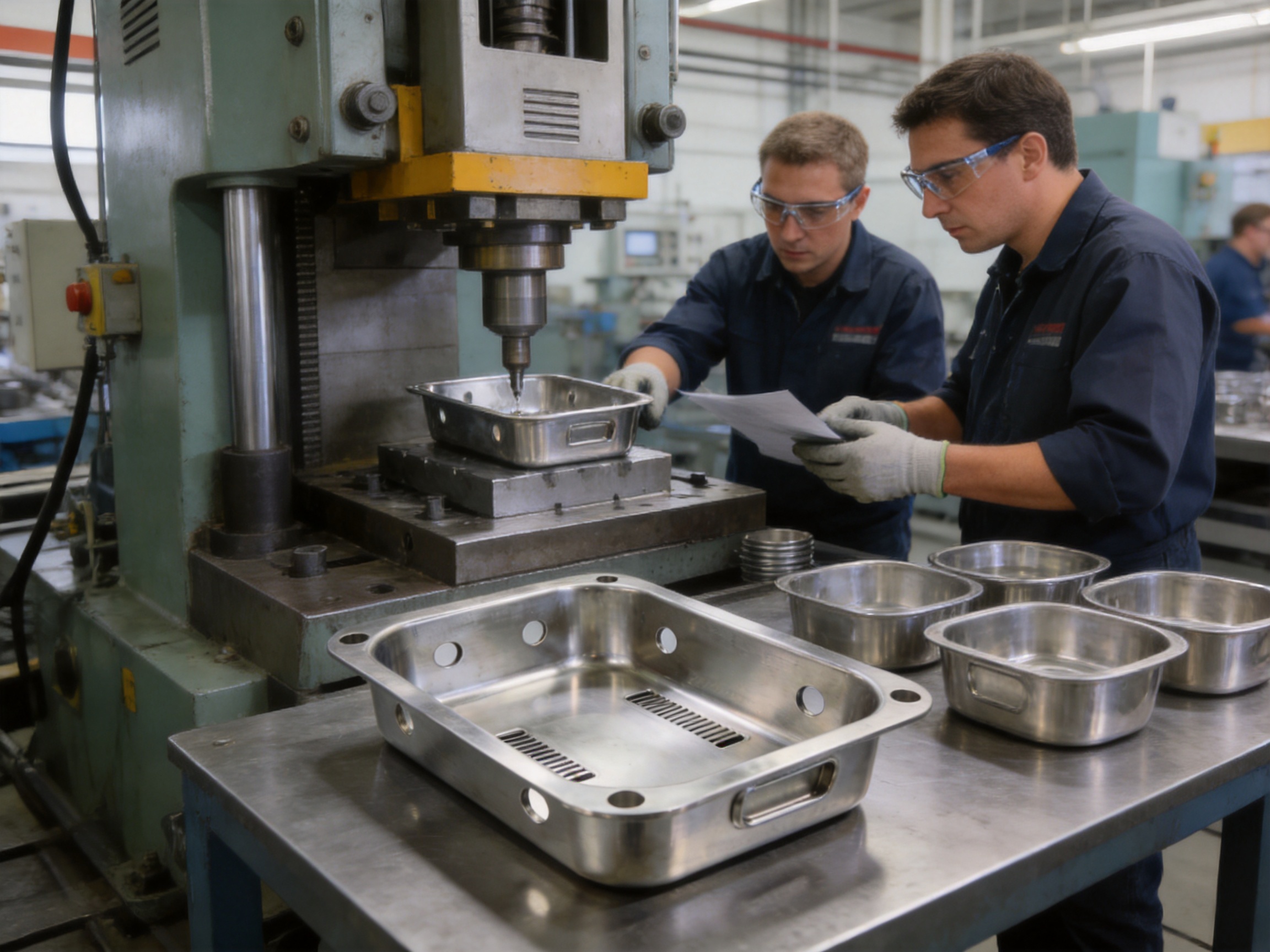
During the deep drawing operation, the prepared blank is positioned over the die and pressed by a punch into the cavity. The blank holder applies pressure to control the sheet as it flows. The forming speed, lubrication, force, and tool geometry all influence the final result. For deeper containers, multiple drawing stages may be required. Intermediate annealing may be considered for some materials and shapes if work hardening becomes significant.
The goal is to create a smooth, uniform container with controlled wall thickness and accurate dimensions. A successful deep-drawn part should have clean surfaces, stable corners, consistent depth, and minimal distortion. The process offers excellent repeatability once tooling and parameters are established.
Trimming, Punching, and Cutout Formation
After drawing, the container may require trimming to achieve the final height or flange shape. Cutouts are then produced according to the design. Depending on the opening type and production volume, cutouts can be made by punching, stamping, laser cutting, or other precision methods. For high-volume production, dedicated punching dies can improve speed and consistency. For prototype or lower-volume orders, flexible cutting methods may be more practical.
Cutout quality is important. Edges should be clean, burrs should be controlled, and openings must align with assembly requirements. Poorly made cutouts can cause installation problems, safety risks, and cosmetic defects. A qualified manufacturer will inspect critical dimensions and perform deburring or edge treatment as needed.
The presence of cutouts also requires structural consideration. Large openings can weaken a container if not properly located or reinforced by geometry. Slots placed too close to corners or deep-drawn walls may cause distortion. Engineers must balance function, strength, and manufacturability.
Surface Finishing
Surface finishing transforms the deep-drawn container from a formed part into a component ready for its intended environment. Brushed finishes are often selected for visible appliance or equipment surfaces because they provide an attractive directional texture. Polished finishes improve reflectivity and smoothness. Sandblasting creates a uniform matte appearance and can hide minor handling marks. Electropolishing can improve stainless steel surfaces by reducing microscopic roughness and enhancing corrosion resistance.
Finishing requirements should be discussed early because they can affect material selection, handling, tooling protection, and process sequence. For example, visible polished components require careful protection against scratches throughout production. Food-contact or medical-related parts may require stricter surface cleanliness and edge treatment. Industrial parts may prioritize corrosion protection and durability over cosmetic appearance.
Quality Inspection
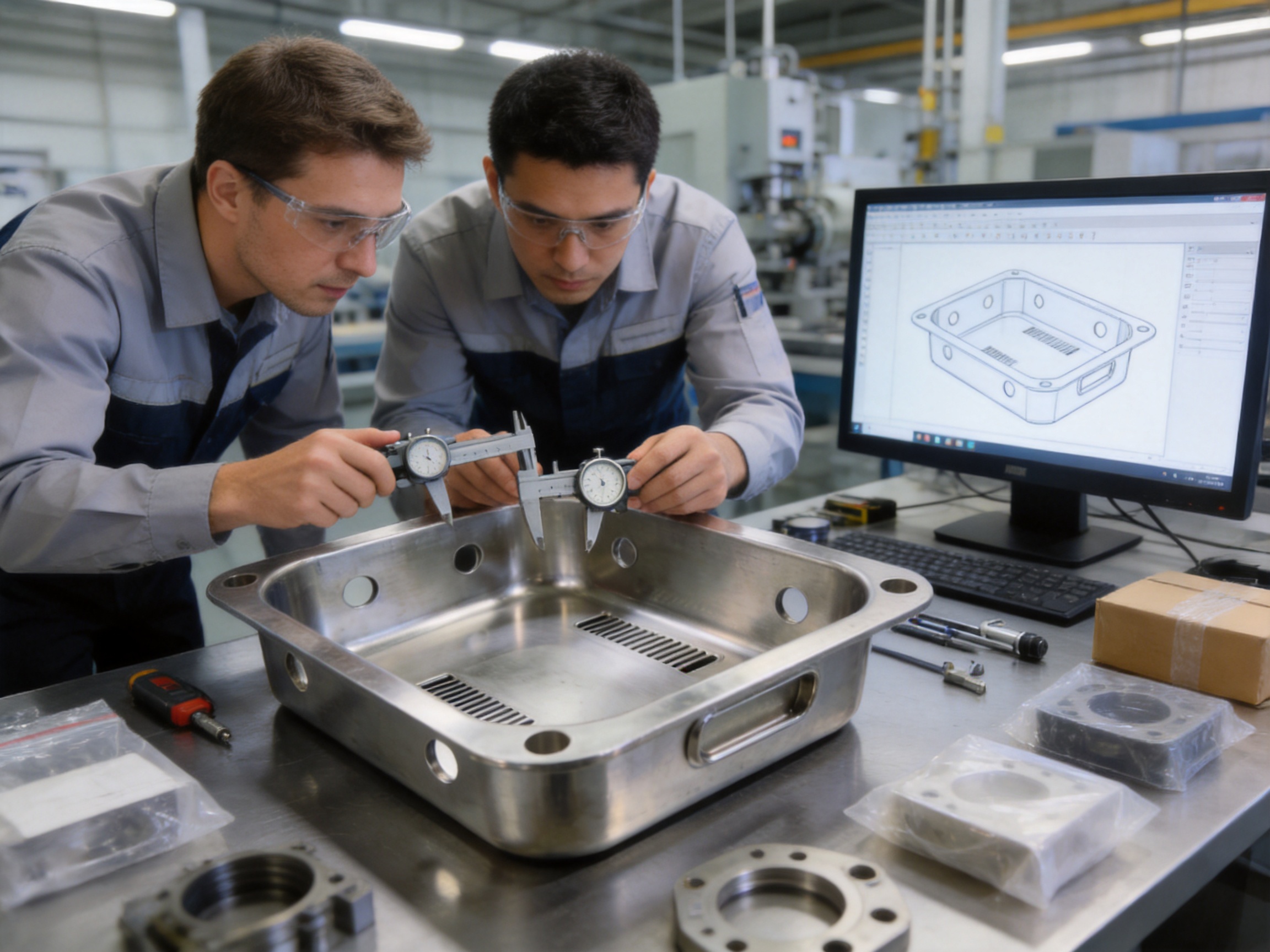
Quality control is essential for deep-drawn containers with cutouts. Inspection may include dimensional measurement, visual inspection, thickness checking, surface finish evaluation, cutout position verification, burr inspection, and fit testing with mating components. For mass production, sampling plans and in-process checks help maintain stability. For critical applications, additional inspection methods may be used based on customer requirements.
The company’s long-term experience in metal stamping and deep-drawn components supports practical quality control. Stable process parameters, trained workers, maintained equipment, and suitable inspection procedures help reduce defects and ensure reliable delivery. Customers benefit from parts that meet drawings and perform consistently in assembly.
Company Manufacturing Strengths
Yuyao Hongli Optoelectronics Co., Ltd. has developed into a comprehensive manufacturing enterprise with a broad product range and strong metalworking capability. Founded in 2000 and supported by more than 20 years of manufacturing experience, the company specializes in metal stamping parts and related products. Its product categories include deep-drawn parts, stamped parts, bending parts, kitchen appliance accessories, and automotive stamping parts.
The company operates a 5,000-square-meter modern factory in Yuyao, Zhejiang Province, China. With multiple stamping workshops and more than 60 employees, it is able to support both customized projects and stable batch production. Its services include manufacturing, processing, wholesale, retail, import, and export. The company serves fields such as educational instruments, optical instruments, household electric heaters, small household appliances, auto parts, hardware products, plastic products, deep-drawn parts, stamped parts, bending parts, and appliance accessories.
A major advantage is flexible OEM/ODM customization. Customers may need a product made according to existing drawings, or they may need assistance developing a new component. The company can support rapid prototyping, sample production, design adjustment, and production conversion. This capability helps customers reduce development risk and shorten the path from idea to market.
The company’s philosophy emphasizes integrity, excellence, innovation, and sharing. In practical terms, this means focusing on reliable communication, continuous process improvement, customer-specific solutions, and long-term cooperation. For buyers seeking a dependable supplier, these values are important because a metal component supplier must provide not only parts, but also stable quality, delivery discipline, and responsive after-sales service.
Application Fields
Food Processing Equipment
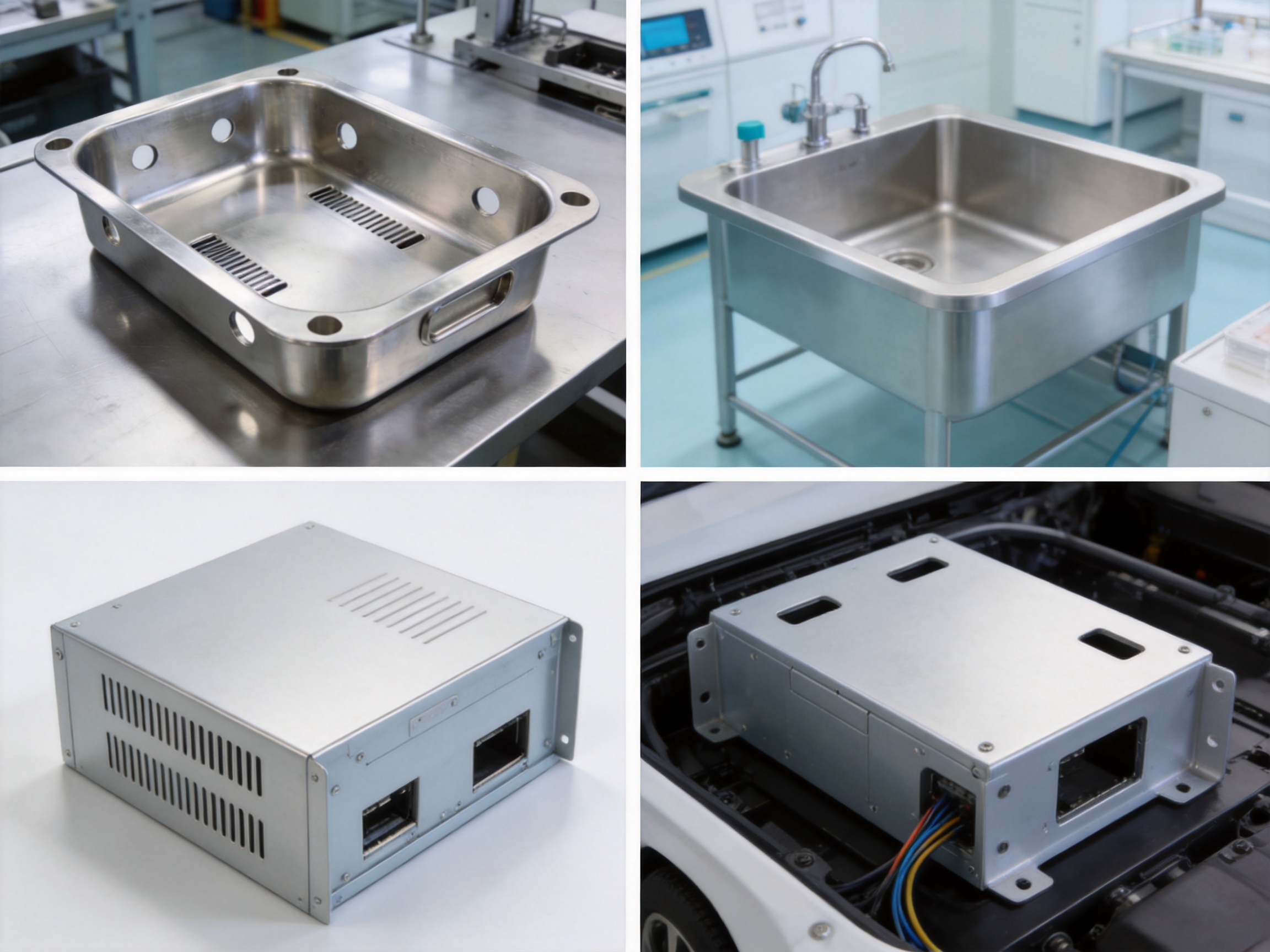
Food processing environments require components that are cleanable, corrosion-resistant, and durable. A deep-drawn container with cutouts can be used for trays, collection containers, drainage parts, covers, filter holders, ingredient handling components, and machine inserts. Custom drainage holes can help liquids flow away, while smooth surfaces reduce residue buildup. Stainless steel with polished or electropolished finishing can be selected for improved hygiene.
Compared with welded food equipment components, the seamless deep-drawn structure reduces crevices and improves appearance. It also simplifies cleaning procedures, helping operators maintain sanitary conditions. The lightweight yet strong structure makes the component easy to handle during cleaning or replacement.
Medical and Laboratory Equipment
Medical and laboratory devices often require precision, cleanliness, and corrosion resistance. Deep-drawn containers may be used in instrument housings, sterilization trays, sample handling systems, protective covers, equipment inserts, and storage components. Cutouts can be designed for ventilation, drainage, sensor access, or assembly fastening.
The absence of weld seams is valuable in these applications because it supports easier cleaning and reduces contamination risk. Surface finishing can be adjusted to meet visual and functional expectations. The ability to customize dimensions and cutout geometry allows the container to integrate with complex equipment assemblies.
Electronics and Electrical Equipment
Electronic systems often require metal housings that provide protection, heat dissipation, grounding, and structural support. A deep-drawn container with vents or cable openings can serve as an enclosure, shield, bracket, or internal mounting shell. Metal construction offers better heat and impact performance than many plastic alternatives. Cutouts allow airflow and wiring access while maintaining a compact design.
The deep-drawn process can reduce the number of parts in an enclosure assembly. Instead of using multiple bent panels and fasteners, a one-piece container can provide the main housing geometry. This improves assembly efficiency and product consistency.
Kitchen Appliance Accessories
Kitchen appliances need components that are attractive, durable, heat-resistant, and easy to clean. Deep-drawn containers are suitable for appliance trays, liners, housings, heating system components, small appliance structures, and internal metal accessories. Brushed or polished finishes can create a high-quality appearance for visible surfaces.
For appliance manufacturers, consistent part quality is critical. Components must fit smoothly into larger assemblies and maintain appearance across production batches. The manufacturer’s experience in kitchen appliance accessories and stamped parts makes it well positioned to support this market.
Automotive Stamping Parts and Vehicle Systems
Automotive applications demand dimensional consistency, vibration resistance, weight control, and durable materials. Deep-drawn containers with cutouts can be used in covers, shields, brackets, reservoirs, protective housings, sensor mounting components, and under-hood or interior assemblies. Cutouts can provide mounting points, ventilation, drainage, and routing channels.
The seamless metal structure offers strength and fatigue resistance, while the deep-drawn process supports repeatable production. For automotive suppliers, the ability to scale from prototype to batch production is especially important. A manufacturer with stamping and deep-drawing capability can help customers refine parts for manufacturability and cost efficiency.
Industrial Machinery
Industrial machinery often requires custom metal containers for collection, protection, transfer, mounting, or shielding. Deep-drawn containers can handle oils, chips, powders, liquids, and mechanical contact depending on material selection. Cutouts can be added for drainage, fastening, access, and integration with mechanical systems.
Compared with fabricated boxes, deep-drawn components offer smoother corners, fewer welds, and improved repeatability. They can also reduce assembly steps by integrating multiple features into one formed part. This makes them useful for manufacturers seeking robust parts with reliable supply.
Design Considerations for Custom Projects
Material Selection
Material selection should reflect the operating environment. Stainless steel is a strong choice for corrosion resistance, hygiene, and premium appearance. Carbon steel may be suitable for industrial applications where cost is important and coating or surface treatment can provide protection. Aluminum can reduce weight and provide good corrosion resistance in certain environments, although forming feasibility must be reviewed. The right material depends on exposure to moisture, chemicals, heat, mechanical loads, cleaning methods, and cosmetic requirements.
Wall Thickness
Thickness affects strength, weight, cost, forming difficulty, and surface quality. Thin materials are lightweight and economical but may deform under heavy loads. Thicker materials improve rigidity and impact resistance but require greater forming force and may increase tooling complexity. The available range of 0.5 mm to 3.0 mm provides flexibility for many applications. Engineers should choose the minimum thickness that satisfies performance requirements while maintaining manufacturability.
Corner Radius and Draw Depth
Deep-drawn components require appropriate corner radii. Sharp corners increase the risk of cracking, thinning, and tool wear. A larger radius supports smoother material flow and better durability. Draw depth is another major factor. Very deep containers may require multiple drawing stages or process adjustments. During design review, the manufacturer can recommend practical radii and forming strategies.
Cutout Placement
Cutouts should be located with both function and manufacturing in mind. Holes placed too close to formed corners, sidewall transitions, or high-stress zones may deform or weaken the part. Large openings may require additional spacing, reinforcement, or design adjustment. If cutouts must align with other parts, tolerance requirements should be clearly defined. The production sequence should also be planned so that cutouts remain accurate after forming.
Surface Finish Requirements
Surface finish should be selected based on application. A visible consumer product may require a consistent brushed or polished finish. A food or medical component may require smooth surfaces and careful edge treatment. An industrial component may require coating or corrosion-resistant treatment. Defining finish expectations early helps avoid misunderstandings and ensures the correct process is selected.
Tolerance and Assembly Fit
Deep-drawn parts can be produced with reliable repeatability, but tolerances must be realistic for the geometry, material, and process. Critical dimensions such as mounting holes, flange width, depth, and mating surfaces should be identified. Non-critical dimensions can often be given wider tolerances to reduce cost. Clear communication about assembly function helps the manufacturer focus inspection on the most important features.
How This Product Helps Customers Reduce Total Cost
The purchase price of a component is only one part of total cost. A well-designed deep-drawn container with cutouts can reduce downstream expenses in several ways. First, it can replace multiple fabricated parts with one formed component. This reduces welding, fastening, alignment, and inspection work. Second, integrated cutouts reduce secondary processing by the customer. Third, stable production quality reduces assembly rejection and rework.
Durability also affects cost. A container that resists corrosion, impact, and fatigue lasts longer and reduces maintenance. In food, medical, or industrial environments, easier cleaning can reduce labor time and improve operational reliability. In appliance or automotive products, consistent appearance and fit reduce warranty risk and improve customer satisfaction.
Tooling investment can also be cost-effective over time. While custom dies require initial expense, they enable efficient batch production and repeatable quality. For medium- and high-volume projects, this often results in lower unit costs compared with manual fabrication or low-efficiency machining. The manufacturer’s ability to support prototyping and production conversion helps customers evaluate designs before committing to mass production.
Competitive Advantages
Integrated Metal Forming Expertise
Not all suppliers have equal experience with deep drawing, stamping, bending, and secondary processing. A supplier with broad metal forming expertise can solve complex manufacturing problems more effectively. Yuyao Hongli Optoelectronics Co., Ltd. has experience across deep-drawn parts, stamped parts, bending parts, kitchen appliance accessories, and automotive stamping parts. This integrated capability allows the company to choose suitable process routes for each component.
Customization Instead of One-Size-Fits-All Parts
Many competitors offer standard containers that require customers to adapt their designs. A customized deep-drawn container with cutouts does the opposite: it adapts the component to the customer’s product. Dimensions, thickness, hole pattern, edge treatment, and finish can be tailored to the application. This improves product integration and helps customers build more efficient assemblies.
Strong Production Capacity
The company’s 5,000-square-meter factory, multiple stamping workshops, and skilled workforce provide the foundation for stable production. For customers, capacity matters because late delivery can disrupt assembly lines and project schedules. A supplier with organized workshops and practical experience is better able to support repeat orders, volume changes, and urgent production needs.
Rapid Prototyping and Production Conversion
Product development often requires iteration. A prototype may reveal that a cutout should be moved, a corner radius increased, or a material changed. The ability to support rapid prototyping helps customers test parts before full-scale production. Once the design is confirmed, efficient conversion to batch production reduces time to market.
Quality Control and After-Sales Support
Reliable quality requires more than equipment. It requires process control, inspection, communication, and responsibility. The company emphasizes strict quality control, stable delivery, and comprehensive after-sales service. For international customers, these factors are especially important because communication, documentation, and consistency influence long-term cooperation.
Quality and Reliability in Real Use
A deep-drawn container with cutouts must perform reliably after it leaves the factory. It may be installed inside a machine, exposed to cleaning chemicals, used in a heated appliance, mounted in a vehicle, or handled repeatedly by operators. The component must maintain shape, resist corrosion, align with mating parts, and support the intended function of each cutout.
Reliability begins with design. The container geometry must be suitable for forming and strong enough for use. It continues with material control, tooling precision, forming stability, cutout accuracy, surface finishing, and inspection. Each step contributes to the final performance. When these steps are managed by an experienced manufacturer, the result is a part that customers can use with confidence.
For demanding industries, repeatability is just as important as first-piece quality. A sample that looks good is not enough; every batch must meet requirements. This is why process discipline, tooling maintenance, and inspection routines are essential. A stable supplier helps customers avoid production delays, fit problems, and unexpected quality issues.
OEM/ODM Cooperation Process
The cooperation process usually begins with inquiry and technical discussion. Customers provide drawings, samples, photos, material requirements, target quantity, and application information. If drawings are not available, the company can discuss functional requirements and help define preliminary specifications. Engineers then review manufacturability and may provide suggestions for optimization.
After technical confirmation, quotation and production planning can proceed. For new custom parts, tooling may be designed and manufactured. Prototype samples can be produced for customer testing. The customer may check dimensions, assembly fit, surface quality, and functional performance. If changes are needed, the design and process can be adjusted.
Once samples are approved, batch production begins. During production, quality checks help ensure consistency. Parts can be packed according to customer requirements to protect surfaces and prevent deformation during transport. After delivery, after-sales communication supports long-term cooperation and future improvements.
Packaging and Delivery Considerations
Deep-drawn containers may have polished surfaces, precise edges, or delicate cutout geometry, so packaging is important. Protective films, separators, cartons, pallets, or custom packaging methods may be used depending on part size, surface finish, and shipping distance. Proper packaging prevents scratches, dents, contamination, and deformation.
For export orders, packaging must also support transportation by sea, air, or land. Clear labeling and organized packing help customers manage receiving and inventory. Stable delivery performance is part of overall supplier value, especially for customers with production schedules and inventory targets.
Sustainability and Material Efficiency
Metal components offer several sustainability advantages when designed and manufactured responsibly. Sheet metal can often be recycled, and deep drawing can be optimized to reduce material waste. Long service life also supports sustainability because durable parts need less frequent replacement. A corrosion-resistant, impact-resistant container can remain in use longer than lower-quality alternatives.
Process optimization further reduces waste. Accurate blank sizing, stable tooling, controlled forming parameters, and quality inspection help reduce scrap. When a one-piece deep-drawn container replaces multi-piece welded assemblies, it may reduce manufacturing steps and energy use associated with welding and rework. For customers seeking efficient and durable components, this product supports both economic and environmental goals.
Q&A Section
Q1: What is a deep-drawn container with cutouts?
A deep-drawn container with cutouts is a hollow metal component formed from sheet metal through a deep drawing process, then customized with openings such as holes, slots, vents, drainage patterns, or wiring passages. It is typically made as a seamless one-piece part without welded seams.
Q2: What are the main advantages of this product?
The main advantages include seamless construction, high strength-to-weight performance, corrosion resistance, cleanability, custom cutout integration, stable repeatability, and suitability for OEM/ODM customization. It can reduce assembly steps and improve reliability compared with welded or multi-piece alternatives.
Q3: What materials can be used?
Common material options include stainless steel, carbon steel, aluminum, and other suitable sheet metals. The final choice depends on corrosion resistance, strength, weight, cost, surface finish, and forming requirements.
Q4: What thickness range is available?
The product can generally be manufactured in thicknesses from 0.5 mm to 3.0 mm. Thin materials are suitable for lightweight applications, while thicker materials can provide higher rigidity and impact resistance.
Q5: What types of cutouts can be customized?
Cutouts may include round holes, elongated slots, ventilation openings, drainage holes, mounting holes, cable passages, access windows, and custom patterns. The exact shape and location can be produced according to drawings and functional needs.
Q6: Is the product suitable for food or medical applications?
Yes, it can be suitable when the correct material and surface finish are selected. Stainless steel with polished or electropolished finishing is often preferred for hygienic applications. The seamless structure helps reduce residue accumulation and supports easier cleaning.
Q7: Can the product be used in automotive or industrial equipment?
Yes. The product is suitable for automotive stamping parts, machinery covers, shields, housings, brackets, drainage components, and other industrial assemblies. Its formed-metal structure provides strength, durability, and dimensional repeatability.
Q8: Why choose a deep-drawn part instead of a welded container?
A deep-drawn part has no welded seams, which improves appearance, hygiene, fatigue resistance, and consistency. It also reduces the risk of leakage, corrosion at weld zones, and manual fabrication variation.
Q9: Can small-batch production be supported?
Yes. The manufacturer can support prototype development, small-batch production, and larger-volume orders. The most suitable production method depends on quantity, geometry, budget, and delivery requirements.
Q10: What information is needed for a quotation?
Useful information includes drawings, 3D models, samples, material requirements, thickness, dimensions, tolerance requirements, surface finish, cutout details, annual quantity, application environment, and packaging needs.
Conclusion
The deep-drawn container with cutouts is a versatile and high-value metal component for industries that require strength, precision, cleanliness, and customization. Its seamless one-piece construction offers clear advantages over welded and multi-piece alternatives. Custom cutouts allow functional integration for ventilation, drainage, wiring, fastening, and assembly. Material and surface finish options make it adaptable to food processing, medical equipment, electronics, kitchen appliances, automotive systems, and industrial machinery.
Yuyao Hongli Optoelectronics Co., Ltd. combines more than 20 years of manufacturing experience with practical capabilities in deep-drawn parts, stamped parts, bending parts, kitchen appliance accessories, and automotive stamping parts. With a modern factory, multiple stamping workshops, skilled employees, OEM/ODM customization, rapid prototyping, strict quality control, and stable delivery, the company provides reliable support for customers seeking custom formed-metal solutions.
For buyers evaluating suppliers, the best choice is not simply the lowest-cost part. It is the component that improves assembly efficiency, performs reliably, reduces long-term maintenance, and arrives with consistent quality. A well-engineered deep-drawn container with cutouts delivers these benefits by combining advanced metal forming, thoughtful design, and professional manufacturing execution.
References
1. Lange, K. Handbook of Metal Forming. Society of Manufacturing Engineers.
2. Kalpakjian, S., and Schmid, S. R. Manufacturing Engineering and Technology. Pearson Education.
3. ASM International. ASM Handbook, Volume 14B: Metalworking: Sheet Forming.
4. Hosford, W. F., and Caddell, R. M. Metal Forming: Mechanics and Metallurgy. Cambridge University Press.
5. Schuler GmbH. Metal Forming Handbook. Springer.
6. Altan, T., and Tekkaya, A. E. Sheet Metal Forming: Processes and Applications. ASM International.
Previous Post
Black Stamped Parts with Connectors for Precision Industrial Integration
Next Post
Deep-Drawn Rectangular Container with Handle for Hygienic Industrial Storage
News
-
-
What Is Deep Drawing Process and What Are Deep-Drawn Parts The deep drawing process is a sheet metal forming operation in which a flat meta...
READ MORE -
A flat mounting plate with three punched holes and a rectangular container with a fitted lid can come off presses in the same workshop, yet...
READ MORE -
Sheet metal bending is one of the most fundamental processes in metal fabrication. It turns a flat sheet of steel, aluminum, or copper into...
READ MORE
Get Fresh Updates Via Email
We promise we will never disclose your email address, and you can opt out at any time.
-
Quick Links
Home About Us Products Service News Contact Us -
Product list
Deep-drawn parts Stamped parts Bending parts Kitchen appliance accessories Automotive stamping parts -
About Us
Factory Honour FAQ -
News
Company News Industry News -
Contact Us
Address: South side of Shunke Road, Yangming Science and Technology Industrial Park, Yuyao City, Zhejiang Province, China Tel: +86-13905842349/+86-13738485724 Email: hongli@hl-stamping.com
Copyright © Yuyao Hongli Optoelectronics Co., Ltd. All Rights Reserved.
Custom Precision-Sheet/Sheet Metal Stamping Manufacturers
