


 English
 русский
 Español
 عربى
عربى

Steel is the backbone of modern manufacturing, yet it is never a single, uniform material. When engineers and buyers ask, "How can you clas...
READ MORE

News
Home / Author / Zhang Meilin — Product Sales Consultant / Black Stamped Parts with Connectors for Precision Industrial Integration
Black Stamped Parts with Connectors for Precision Industrial Integration
2026-06-14
In modern manufacturing, the value of a metal component is measured not only by its shape, but also by its accuracy, durability, surface quality, repeatability, and ease of integration into larger assemblies. Black stamped parts with connectors are designed to answer these demands with a practical combination of precision metal forming, protective surface finishing, and integrated connection features. They are especially suitable for customers who need reliable stamped components for electrical, mechanical, structural, appliance, automotive, and hardware applications.
These components belong to the stamped parts category and are produced through advanced stamping processes that allow sheet metal to be cut, formed, pierced, bent, and shaped into stable, repeatable parts. The black surface treatment gives the parts a clean and professional appearance while improving resistance to corrosion, abrasion, and high-temperature operating environments. The connector design further increases practical value by allowing the stamped component to be assembled, positioned, electrically connected, mechanically fixed, or structurally integrated with other parts more efficiently.
The strongest advantage of black stamped parts with connectors is that they combine multiple functional requirements in one compact component. Instead of purchasing a plain stamped plate and then adding separate connecting brackets, fasteners, terminals, or assembly aids, customers can receive a customized stamped part with integrated connection geometry. This reduces assembly time, improves product consistency, and helps simplify supply chain management. For manufacturers seeking stable quality, repeatable production, and rapid conversion from prototype to mass production, this type of component offers clear technical and commercial advantages.
Yuyao Hongli Optoelectronics Co., Ltd. manufactures these parts with over 20 years of metal stamping experience, a 5,000-square-meter factory, multiple stamping workshops, more than 60 employees, and strong OEM/ODM customization capability. Located in Yangming Science and Technology Industrial Park, Yuyao City, Zhejiang Province, China, the company supports the production of stamped parts, deep-drawn parts, bending parts, kitchen appliance accessories, automotive stamping parts, hardware products, plastic products, household appliance components, optical instrument parts, educational instrument parts, and related metal assemblies. This manufacturing background allows the company to provide not merely a component, but a complete engineering-oriented production service.
Black stamped parts with connectors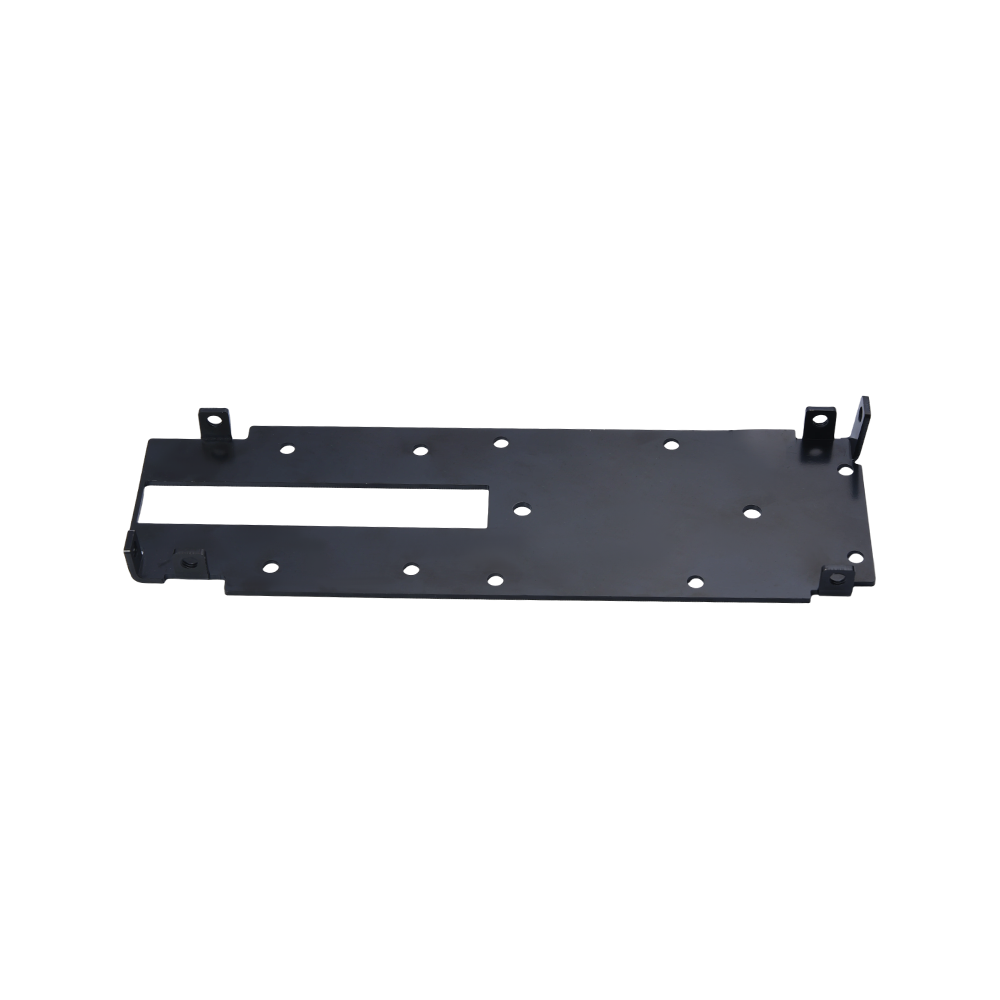
Product Overview
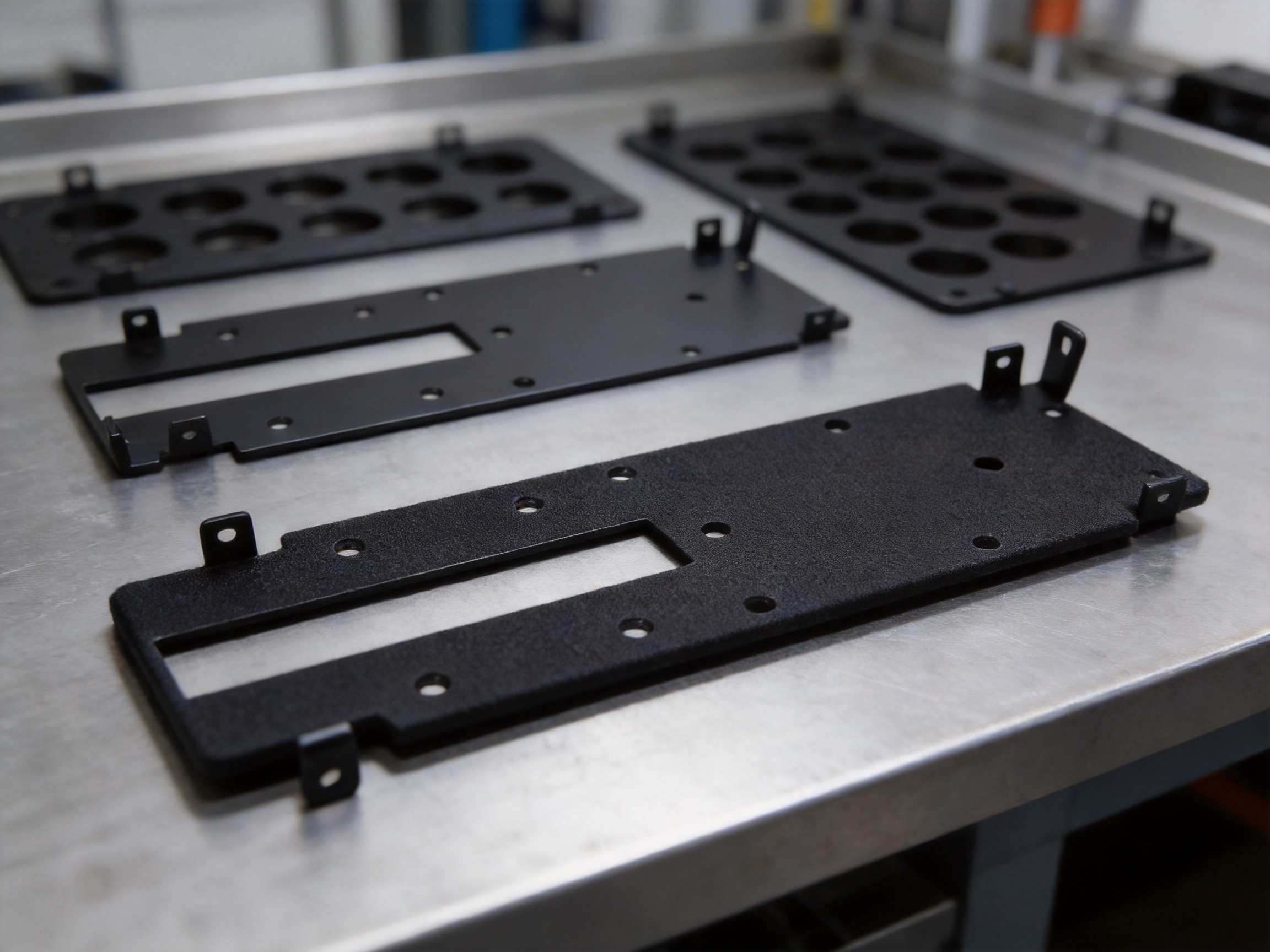
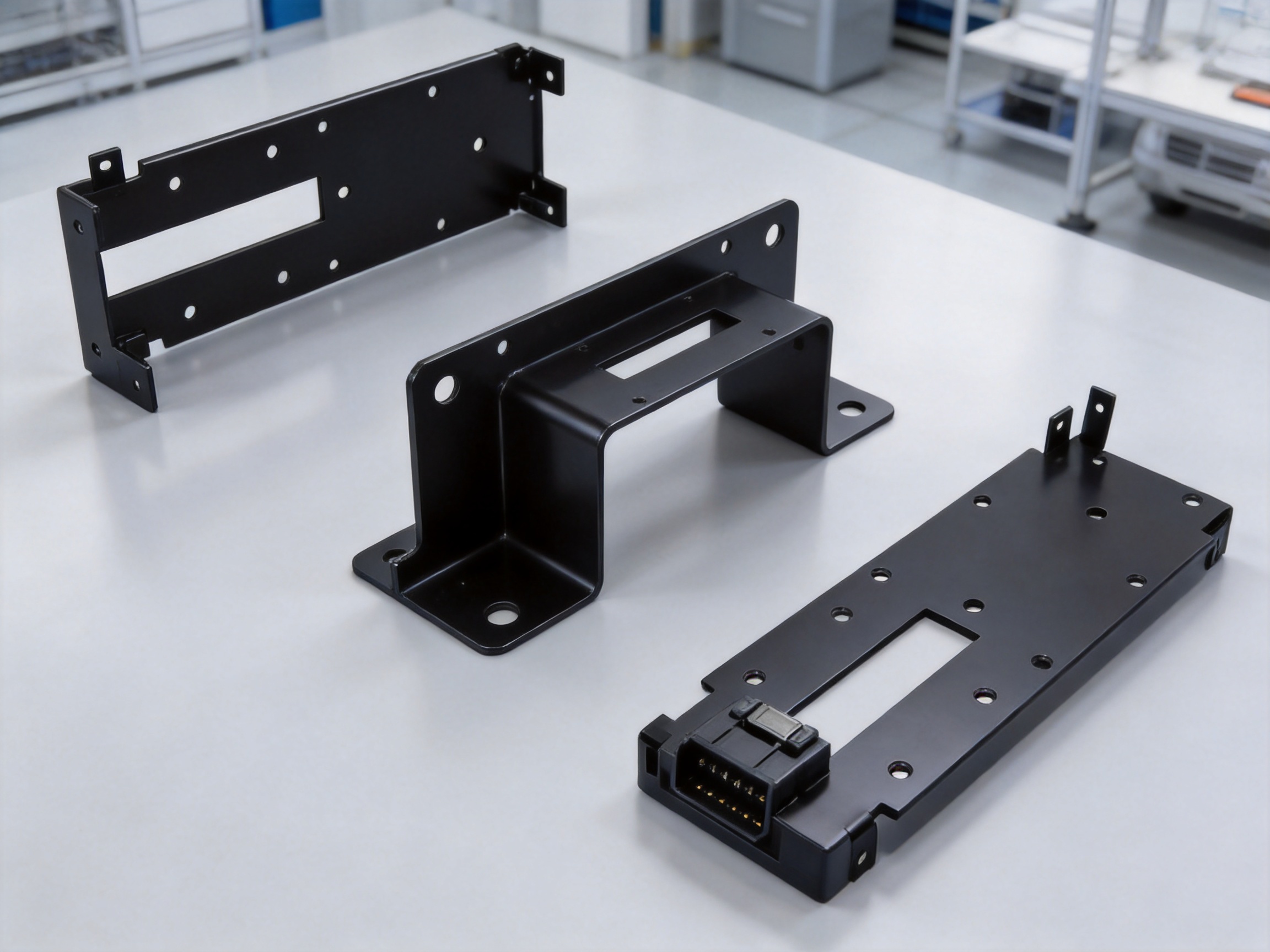
Black stamped parts with connectors are precision-formed metal components manufactured from sheet material by means of stamping dies and presses. Depending on the customer’s drawing or application requirement, the part may include holes, slots, tabs, bent edges, embossed areas, locating structures, reinforcement ribs, fastening points, electrical contact areas, or connection terminals. The integrated connector can serve different purposes, such as mechanical locking, wire connection, mounting to another stamped housing, attachment to a plastic part, or joining to an electrical or structural assembly.
The black finish is a key feature. A high-quality black surface helps the component resist corrosion, scratches, abrasion, and environmental aging. It also gives the part a uniform, modern appearance, which is valuable when components are visible in finished products such as household appliances, electronic devices, kitchen equipment, automotive interiors, and professional instruments. In many cases, the black finish also helps reduce light reflection, improve product aesthetics, and match the design language of surrounding parts.
The typical stamping tolerance can reach approximately ±0.1 mm, depending on the part geometry, material thickness, die condition, and process requirements. This level of precision is important for parts with connector features because poor dimensional control can lead to loose assembly, misalignment, unstable contact, or increased rework. By controlling die design, stamping parameters, material selection, and inspection procedures, the manufacturer helps ensure that the parts remain consistent from batch to batch.
Customization is another essential part of the product value. Customers can request different materials, thicknesses, shapes, connector designs, surface finishes, hole patterns, bending angles, edge treatments, and packaging methods. Whether the component is used as an electrical bracket, appliance mounting part, automotive stamped connector plate, reinforcement part, terminal holder, cover support, or structural interface, the design can be adapted to match the customer’s system.
Why Stamped Parts with Connectors Are Important
In high-volume manufacturing, small design improvements can create large benefits. A stamped part with an integrated connector may appear simple, but it can solve several common production challenges. It can reduce the number of separate parts, eliminate secondary assembly steps, lower labor costs, reduce tolerance stack-up, and improve overall product reliability. The integration of connector features into the stamping process means that the component is formed in a controlled and repeatable manner, instead of being manually modified after production.
For example, a conventional assembly might require a metal bracket, a separate connector, several fasteners, and manual alignment during assembly. Each of these elements creates cost, risk, and potential variation. A black stamped part with an integrated connector can combine these functions into one part, making the assembly cleaner and more efficient. In applications where production speed and quality consistency are critical, this advantage is significant.
The connector design can also improve product performance. Properly designed tabs, slots, hooks, contact points, or mounting features help the part fit into the final assembly with better stability. This can reduce vibration, improve load distribution, ensure electrical continuity, or help maintain a fixed position under repeated use. In automotive or appliance applications, where components may be exposed to vibration, heat, moisture, and mechanical stress, a reliable connector structure can greatly improve product life.
Compared with machined components, stamped parts are often more cost-effective for medium and large production volumes. Once the tooling is developed, stamping can produce large quantities of consistent parts quickly. Compared with simple laser-cut parts, stamped parts can include three-dimensional features, bends, ribs, and formed connectors in a more production-efficient way. Compared with plastic components, metal stamped parts usually offer better strength, heat resistance, conductivity, dimensional stability, and load-bearing capacity.
Key Advantages Over Competing Components
Black stamped parts with connectors offer several advantages over competing alternatives, especially when performance, consistency, and production efficiency are considered together. The first advantage is dimensional repeatability. Advanced stamping dies allow the same geometry to be produced repeatedly with tight tolerance control. This is especially important for connector features, where small dimensional errors may affect assembly fit or contact reliability.
The second advantage is cost efficiency in volume production. Although stamping tools require initial investment, the unit cost becomes highly competitive when production quantities increase. This makes stamped parts ideal for appliance accessories, automotive parts, hardware components, and other products requiring stable supply. Compared with CNC machining, stamping usually reduces cycle time and material waste for thin sheet-metal components.
The third advantage is structural strength. Stamped parts can be designed with bends, flanges, ribs, and reinforcing shapes that improve stiffness without greatly increasing weight. This gives engineers more freedom to design lightweight yet strong components. The connector section can also be formed to provide secure locking, mounting, or alignment functions.
The fourth advantage is surface protection. The black finish helps improve resistance to corrosion, abrasion, and high-temperature environments. A plain untreated metal surface may oxidize, discolor, or wear more easily, while a properly finished black surface can extend service life and maintain a cleaner appearance. This is particularly valuable for parts used in humid environments, kitchen appliances, automotive systems, or equipment exposed to repeated handling.
The fifth advantage is simplified assembly. Because connector functions can be integrated into the stamped part, customers can reduce the number of additional brackets, clips, terminals, or fasteners. This improves assembly efficiency and reduces the chance of missing parts or incorrect installation. A simpler assembly process often results in better quality control and lower total production cost.
The sixth advantage is customization flexibility. The parts can be produced according to customer drawings, samples, or functional requirements. Material thickness, hole diameter, connector shape, bend angle, surface treatment, and packaging can be adjusted. This flexibility makes the component suitable for different industries and helps customers develop products that match exact performance needs.
Technical Characteristics
The technical value of black stamped parts with connectors comes from the combination of material selection, forming accuracy, surface treatment, and connector function. The parts can be manufactured from various metal materials depending on strength, conductivity, corrosion resistance, and cost requirements. Common options may include carbon steel, stainless steel, galvanized steel, aluminum, copper, brass, or other sheet metals suitable for stamping. The final material choice depends on the working environment and the functional role of the part.
Thickness selection is also important. Thin sheets are suitable for lightweight brackets, electrical contacts, shielding parts, and small appliance accessories. Thicker sheets may be selected for load-bearing structures, automotive supports, or parts requiring greater stiffness. The stamping process must be carefully matched to the material thickness to avoid cracking, excessive burrs, springback, or dimensional instability.
Connector features can vary widely. Some connectors are simple tabs designed to insert into slots. Others are bent hooks, locking tongues, terminal-like structures, welded connection points, screw-mounting ears, or formed edges that snap into plastic housings. The most effective connector design depends on how the part interacts with the rest of the system. A good manufacturer evaluates not only the part drawing, but also the final assembly environment.
Surface finishing is another critical technical element. The black surface can be achieved through suitable finishing methods according to application needs. The goal is to create a uniform, adherent, protective coating or treated layer that improves durability and appearance. The finish should resist peeling, scratching, discoloration, and corrosion under normal operating conditions. When parts are used in visible assemblies, color consistency is also important.
Dimensional inspection ensures that the parts meet customer requirements. Typical tolerance control of approximately ±0.1 mm can be achieved for many features, although the final tolerance depends on design complexity and production conditions. Critical dimensions such as connector width, hole location, bend angle, slot spacing, and mounting surface flatness should be controlled carefully to ensure successful assembly.
Manufacturing Process
The production of black stamped parts with connectors begins with requirement analysis. The manufacturer studies the customer’s drawings, samples, 3D files, material requirements, tolerance requirements, surface finish expectations, application environment, and annual volume. This step is important because stamping success depends heavily on design suitability. If a part has sharp corners, unrealistic bends, insufficient material allowance, or difficult connector geometry, early engineering communication can prevent later production problems.
After technical review, the next step is process planning. Engineers determine the best stamping method, such as blanking, piercing, bending, forming, progressive die stamping, compound die stamping, or a combination of processes. The process plan also defines material feeding direction, die structure, forming sequence, burr direction, positioning method, and inspection points. For complex connector parts, the sequence of cutting, bending, and forming must be carefully arranged to avoid interference and deformation.
Tooling design is a core strength in stamped part manufacturing. A well-designed die directly affects part quality, tolerance stability, production speed, and tool life. The die must control material flow, compensate for springback, provide clean cutting edges, and ensure accurate forming of connector structures. For high-volume parts, progressive dies can improve efficiency by completing multiple operations as the strip advances through the press. For lower volumes or special shapes, separate dies may be more economical.
Material preparation follows the approved process plan. Sheet or coil material is selected according to specification. Material quality must be verified to ensure proper thickness, hardness, surface condition, and mechanical performance. Poor material consistency can cause forming cracks, dimensional variation, surface defects, and unstable connector performance. Reliable suppliers and incoming inspection help reduce these risks.
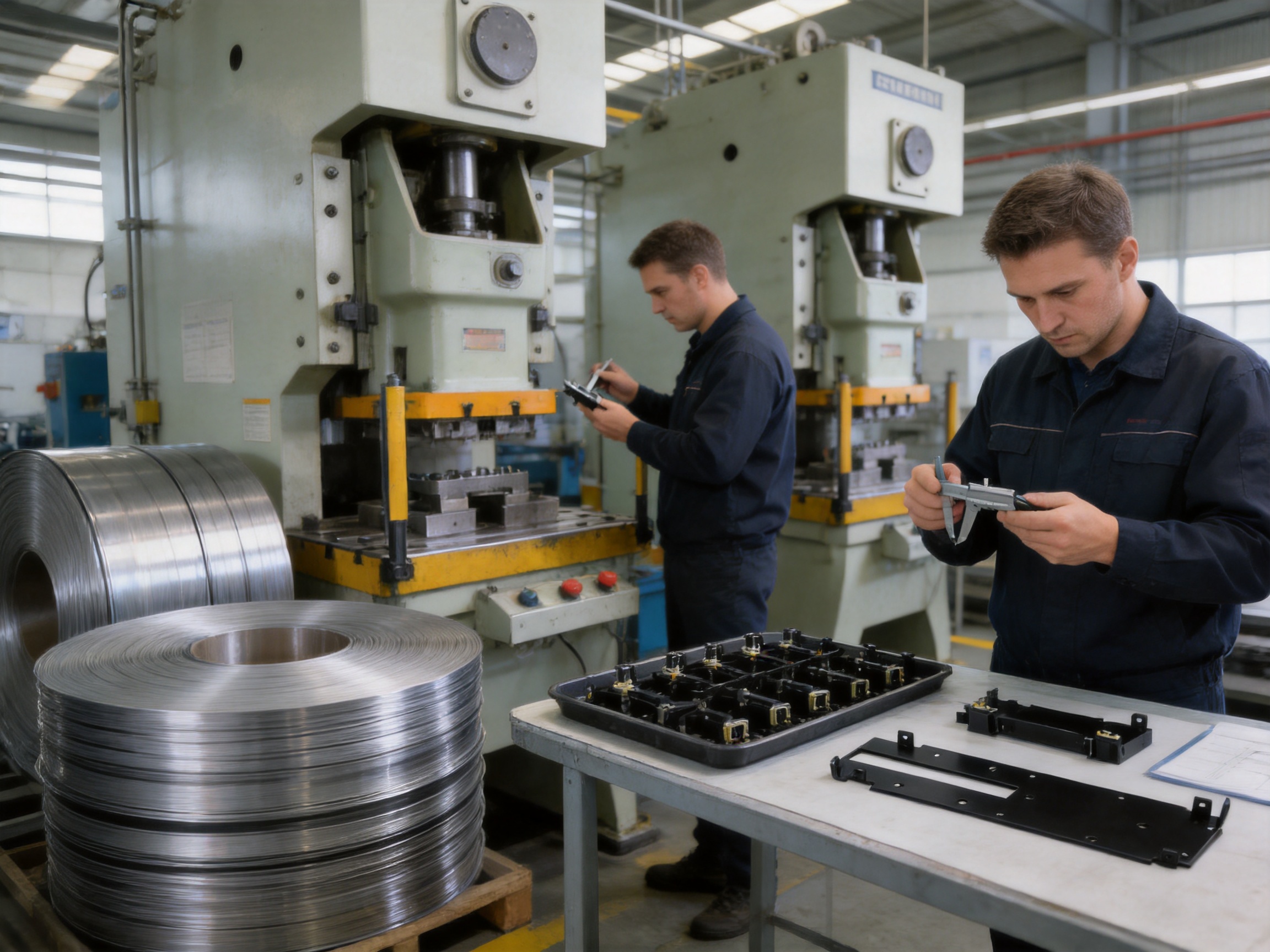
Stamping production is then carried out using appropriate presses and dies. During production, operators and quality personnel monitor press settings, feeding accuracy, lubrication, part appearance, burr condition, bending angle, and key dimensions. Connector features require special attention because they are often small but functionally critical. A tab that is too narrow may loosen; a hook that is too tall may interfere with assembly; a bend angle that is not controlled may prevent correct installation.
After stamping, parts may go through deburring, cleaning, surface preparation, black finishing, drying, and final inspection. Depending on design requirements, secondary operations may include tapping, riveting, welding, assembly with other components, or packaging in protective trays or bags. Surface finishing should be performed under controlled conditions to ensure coating uniformity and adhesion.
Final inspection confirms that the parts meet the approved specification. Inspected items may include overall dimensions, hole locations, connector geometry, surface appearance, coating quality, burr height, flatness, bend angles, and packaging condition. For customized orders, inspection reports or sample approval procedures can be provided according to customer requirements.
Manufacturing Strengths Behind the Product
Yuyao Hongli Optoelectronics Co., Ltd. has developed practical manufacturing strengths through more than two decades of production experience. The company’s background covers metal stamping, deep drawing, bending, household appliance accessories, automotive stamping parts, optical instrument parts, educational instrument components, hardware products, plastic products, and related manufacturing services. This broad capability allows the company to understand different product requirements and provide flexible solutions for customers in multiple industries.
The company’s 5,000-square-meter modern factory provides a stable foundation for production capacity. Multiple stamping workshops support different production tasks, from small customized batches to regular volume manufacturing. More than 60 employees contribute to tooling, stamping, processing, inspection, packaging, and customer service. This scale is large enough to support stable production, while still flexible enough to respond to customized projects.
One important strength is OEM/ODM customization. Many customers do not need standard catalog parts; they need components that fit their own products. The company can work according to drawings, samples, application descriptions, or development requirements. This includes assisting with manufacturability, optimizing stamping design, adjusting connector details, selecting suitable materials, and supporting prototype production before mass manufacturing.
Rapid prototyping is another advantage. In competitive markets, product development schedules are short. Customers need suppliers who can help move from concept to sample quickly. By combining stamping knowledge, tooling capability, and practical production experience, the company can support sample development and efficient production conversion. This reduces delays and helps customers verify assembly performance earlier.
Quality control is central to reliable stamped parts. The company emphasizes strict quality management, stable delivery, and comprehensive after-sales service. For black stamped parts with connectors, quality is not only about appearance. It includes fit, function, surface protection, connector reliability, and long-term consistency. Stable production control helps customers reduce incoming inspection pressure and maintain smooth assembly operations.
The company’s business philosophy of integrity, excellence, innovation, and sharing supports long-term cooperation. In industrial supply chains, reliability is as important as price. Customers need a supplier that communicates clearly, respects technical requirements, maintains delivery commitments, and supports product improvement. This service attitude helps build trust for international cooperation.
Applications in Multiple Industries
Black stamped parts with connectors can be used in a wide range of industries because they combine mechanical strength, precise shape, surface protection, and connection function. One major application area is household appliances. In appliances, stamped parts may be used as brackets, mounting plates, internal supports, heat-resistant components, control panel supports, motor brackets, electrical connection supports, or structural reinforcements. The black finish helps the part match modern appliance designs and resist environmental exposure.
Kitchen appliance accessories are another important area. Kitchen products may be exposed to heat, moisture, oil, cleaning agents, and repeated handling. A metal stamped part with a protective black finish can provide better durability than untreated metal or weak plastic alternatives. Connector features can help the part attach securely inside ovens, heaters, small cooking appliances, ventilation devices, or other kitchen equipment.
Automotive stamping parts require consistency, strength, vibration resistance, and assembly reliability. Black stamped parts with connectors may be suitable for brackets, clips, supports, electrical mounting components, sensor supports, shielding parts, or internal structural interfaces. Automotive environments often involve heat, vibration, humidity, and repeated mechanical stress, so a durable stamped metal component can offer strong performance.
Electrical and mechanical equipment also benefits from these parts. Connector features can support wire routing, terminal positioning, grounding, shielding, or mounting functions. Metal stamped parts can provide conductivity, stiffness, and heat resistance that many plastic parts cannot match. The black finish improves appearance and corrosion resistance, making the component suitable for professional equipment and instruments.
Optical and educational instruments may require small, precise metal parts that support alignment, positioning, or protective functions. The company’s historical experience in optoelectronics educational instruments and optical instrument parts gives it familiarity with components that require careful dimensional control. Stamped connector parts can be adapted to instrument housings, adjustment brackets, supports, and internal fixtures.
Hardware and general industrial products can also use black stamped parts with connectors as mounting accessories, fastening elements, support plates, reinforcement pieces, and enclosure components. Because stamping is suitable for repeated production, customers can achieve reliable supply for standard or custom hardware assemblies.
Product Performance Comparison
The following table summarizes how black stamped parts with connectors compare with several common alternatives. Actual performance depends on the specific material, design, finish, and application, but the comparison shows the general advantages of this product type.
| Comparison Item | Black Stamped Parts with Connectors | Plain Stamped Parts | CNC Machined Metal Parts | Plastic Connector Components |
|---|---|---|---|---|
| Production Efficiency | High efficiency for medium and large quantities after tooling is completed | High, but may require extra assembly steps | Lower for high-volume thin sheet components | High after mold development, depending on material and structure |
| Assembly Convenience | Integrated connector features reduce separate fasteners and alignment steps | Often requires added brackets, clips, or connectors | Can be precise but may not be cost-effective for integrated sheet features | Can integrate connectors but may lack metal strength or heat resistance |
| Dimensional Consistency | Stable repeatability, typically around ±0.1 mm for suitable designs | Stable, but function may depend on secondary parts | Very precise, but slower and more expensive for volume production | Good, but affected by shrinkage, aging, and temperature |
| Surface Durability | Black finish improves corrosion, abrasion, and heat resistance | Depends on surface treatment; untreated parts may corrode | Depends on finishing process | May scratch, deform, or age under heat and load |
| Structural Strength | Strong metal structure with formed reinforcement options | Strong, but connector function may be limited | Strong but may be heavier or more costly | Lower strength and heat resistance in many applications |
| Customization | Highly customizable in shape, connector design, material, and finish | Customizable but may require separate connector design | Customizable, suitable for low volumes or complex solid shapes | Customizable but requires mold and material validation |
| Total Cost Potential | Excellent when assembly savings and volume production are considered | Good, but added parts may increase total cost | Higher for high-volume sheet-metal applications | Good in some cases, but performance limitations may increase risk |
Design Considerations for Custom Projects
Successful custom stamped parts begin with good design communication. Customers should provide drawings, 3D models, samples, or clear descriptions of functional requirements. Important details include material preference, thickness, tolerance, load requirements, connector purpose, assembly method, environmental conditions, surface finish, quantity, and packaging expectations. The more complete the information, the more accurately the manufacturer can evaluate feasibility and cost.
Material selection should be based on real operating conditions. If the part is used in a high-temperature appliance, heat resistance becomes important. If it must carry electrical current, conductivity and contact quality matter. If it is exposed to moisture, corrosion protection is essential. If it bears load or resists vibration, strength and fatigue performance must be considered. A good supplier can help customers compare material options and choose a practical solution.
Connector geometry should be designed for both function and manufacturability. A connector that looks simple in a drawing may be difficult to stamp if the bend radius is too small, the tab is too narrow, or the forming sequence causes interference. Sharp corners can increase the risk of cracking. Insufficient spacing between holes and bends may cause distortion. The manufacturer can recommend adjustments that preserve function while improving production stability.
Tolerance requirements should be realistic and linked to function. Overly tight tolerances increase tooling difficulty and cost, while loose tolerances may affect assembly. Critical dimensions should be clearly identified so that inspection can focus on the most important features. For black stamped parts with connectors, connector width, insertion depth, bend angle, hole position, and locating surfaces are often critical.
Surface finish requirements should also be defined clearly. Customers should specify whether the black surface is mainly for appearance, corrosion resistance, abrasion resistance, heat resistance, or a combination of these functions. If the part will be visible, color uniformity and cosmetic standards should be discussed. If the part will contact electrical terminals, the finishing process must not interfere with electrical performance unless the design accounts for it.
Packaging is sometimes overlooked, but it is important for finished black parts. Scratches, deformation, and contact marks can occur during transportation if packaging is not suitable. Protective packaging, separated layers, bags, trays, or cartons can be selected based on part shape and surface requirements. Proper packaging helps maintain the appearance and dimensional integrity of the parts when they arrive at the customer’s assembly line.
Quality Control and Inspection
Quality control for black stamped parts with connectors must cover the entire production process. It begins with material inspection. Material thickness, hardness, surface condition, and specification must match the approved requirements. If the base material is inconsistent, even a good die cannot guarantee stable parts.
Tooling inspection is also important. Dies wear over time, especially cutting edges and forming surfaces. Worn tools can create larger burrs, poor edge quality, dimensional drift, or unstable connector shapes. Regular tool maintenance helps maintain production accuracy and reduce defective parts. For connector features, die condition is particularly important because small changes can affect assembly performance.
In-process inspection helps identify issues before large quantities are affected. Operators and inspectors can check samples during production for dimensions, bend angles, burrs, surface defects, and connector form. If a problem appears, press settings, material feeding, tooling alignment, or lubrication can be adjusted promptly. This reduces waste and protects delivery schedules.
Surface quality inspection is essential after black finishing. The coating or surface treatment should be uniform and free from obvious peeling, blistering, severe scratches, discoloration, or contamination. The finish should meet the expected level of corrosion and abrasion resistance. For visible parts, appearance criteria may be stricter than for hidden internal parts.
Final inspection confirms that the finished parts meet customer specifications before shipment. Inspection may use calipers, height gauges, gauges, visual standards, fixtures, or other measuring tools according to the feature requirements. For complex connector parts, custom inspection fixtures may be useful to verify assembly fit quickly and consistently. Documentation can be provided when required by the customer.
Quality control does not end at shipment. After-sales service and technical communication are part of long-term quality assurance. If customers encounter assembly questions or improvement opportunities, a responsive manufacturer can analyze feedback and adjust future production. This continuous improvement approach supports stable cooperation.
How the Black Finish Improves Product Value
The black finish is more than an aesthetic feature. It contributes to performance, usability, and market acceptance. A consistent black surface gives the part a refined and professional appearance, which is increasingly important as industrial products become more design-oriented. Even internal components may be visible during maintenance, installation, or product display, so a clean finish can improve perceived quality.
Corrosion resistance is a major benefit. Metal parts used in appliances, vehicles, instruments, or hardware assemblies may face humidity, temperature change, fingerprints, cleaning chemicals, or environmental exposure. A protective black finish helps reduce oxidation and surface degradation. This can extend service life and reduce the risk of performance problems caused by corrosion.
Abrasion resistance is also valuable. During assembly, transportation, and use, parts may rub against other components or tools. A durable finish helps preserve the part’s surface and reduces visible wear. For connector areas, abrasion resistance can help maintain fit and contact surfaces, depending on the specific application and coating type.
High-temperature resistance can be important for kitchen appliances, heating equipment, automotive areas, and electrical systems. Some ordinary finishes may discolor, peel, or deteriorate under heat. A properly selected black surface treatment improves stability in demanding environments. Customers should communicate operating temperature requirements so that the finishing method can be matched correctly.
The black finish can also reduce reflection. In optical instruments, electronic devices, displays, or appliance interiors, unwanted reflection may affect appearance or function. A black surface can help absorb light and create a cleaner visual environment. This is one reason black metal components are often preferred in modern product design.
OEM and ODM Service Capability
OEM and ODM capability is critical for customers who require unique parts. Yuyao Hongli Optoelectronics Co., Ltd. supports customized manufacturing based on customer specifications. OEM service means the company can produce according to an existing customer design. ODM service means the company can assist with design development, manufacturability improvement, and production optimization.
For black stamped parts with connectors, OEM/ODM service may include reviewing part drawings, suggesting bend radius improvements, optimizing hole placement, selecting material thickness, improving connector strength, recommending surface treatment, and designing production tooling. These services help customers avoid costly design changes after tooling is complete.
Prototype support is useful during early development. A prototype allows customers to test fit, assembly sequence, mechanical strength, electrical connection, and appearance before committing to mass production. If the prototype reveals a problem, the design can be adjusted. This reduces risk and helps speed up product launch.
Production conversion is another important service. After the sample is approved, the manufacturer must convert the process into stable batch production. This requires tooling validation, process parameter control, inspection standards, packaging planning, and delivery management. A supplier with long-term stamping experience can make this transition more efficient.
Customization also applies to logistics and cooperation methods. Customers may request specific packaging, labeling, inspection reports, export documents, or delivery schedules. A supplier experienced in import and export services can support international customers more effectively.
Industry-Specific Benefits
For appliance manufacturers, black stamped parts with connectors help reduce assembly complexity. Appliance production lines require parts that are easy to install, consistent in size, and resistant to heat and humidity. Integrated connector structures can simplify mounting and reduce the use of separate fasteners. The black finish supports modern design and improves durability.
For automotive suppliers, repeatability and strength are essential. Stamped parts can be designed for vibration resistance, controlled fit, and lightweight construction. Connector features can improve positioning and assembly speed. The ability to produce customized automotive stamping parts makes this product suitable for many vehicle-related applications.
For electrical equipment manufacturers, metal stamped connector parts can provide mechanical support, grounding potential, shielding, or terminal positioning. The black finish can be selected to protect the surface while maintaining required function. Accurate stamping ensures that connectors align properly with other components.
For hardware product companies, the main benefits are cost efficiency and customization. Stamping is suitable for producing large quantities of brackets, plates, supports, clips, and connecting parts. Black surface treatment improves market appearance and corrosion resistance, making the finished product more attractive and reliable.
For instrument and optical product manufacturers, precision and appearance are important. Small stamped parts must maintain alignment and support stable assembly. A black finish can reduce reflection and create a professional look. The manufacturer’s experience with optical and educational instrument components provides useful background for these applications.
Ordering and Cooperation Process
A typical cooperation process begins when the customer sends drawings, samples, or product requirements. The manufacturer reviews the information and confirms whether stamping is suitable. If necessary, technical questions are discussed, including material, tolerance, surface finish, connector function, quantity, and delivery expectations.
After confirming requirements, the manufacturer prepares a quotation based on material cost, tooling cost, processing complexity, finishing method, inspection needs, packaging, and production volume. For customized parts, tooling cost is an important part of the quotation, but it supports long-term cost efficiency in volume production.
Once the order is confirmed, tooling design and sample production begin. Samples are inspected and submitted for customer approval. The customer tests the samples in the actual assembly and provides feedback. If modifications are needed, the tooling or process can be adjusted before mass production.
After sample approval, batch production begins according to the agreed schedule. In-process inspection and final inspection help ensure stable quality. Finished parts are packed according to customer requirements and shipped with necessary documents. After delivery, technical support remains available for future orders or product improvements.
Frequently Asked Questions
What are black stamped parts with connectors?
They are sheet-metal components produced by stamping processes and finished with a black protective surface. The parts include connector features such as tabs, hooks, mounting points, slots, terminals, or other structures that help them integrate with other components or systems.
What tolerance can these parts achieve?
For many suitable designs, the typical tolerance can reach approximately ±0.1 mm. The exact tolerance depends on material, thickness, geometry, connector complexity, die design, and production requirements.
Why choose stamped parts instead of machined parts?
Stamped parts are usually more efficient and cost-effective for medium and high-volume sheet-metal components. Stamping can produce repeated shapes quickly and can integrate holes, bends, ribs, and connector features into the part. Machining is useful for certain complex solid parts, but it is often slower and more expensive for stamped sheet-metal designs.
What materials can be used?
Material options may include carbon steel, stainless steel, galvanized steel, aluminum, copper, brass, or other stampable sheet metals. The best material depends on strength, conductivity, heat resistance, corrosion resistance, cost, and application environment.
What is the purpose of the black surface?
The black finish improves appearance and can enhance resistance to corrosion, abrasion, and high-temperature exposure. It can also reduce reflection and help the part match the design of surrounding components.
Can the connector design be customized?
Yes. Connector features can be customized according to the customer’s assembly method and functional requirements. They may be designed for mechanical fixing, electrical connection, positioning, locking, mounting, or structural support.
Are these parts suitable for automotive applications?
Yes, they can be used in automotive-related applications such as brackets, supports, connector plates, mounting components, shielding parts, and internal structural interfaces, provided that the material, finish, and design meet the required operating conditions.
Can the manufacturer help improve an existing design?
Yes. OEM/ODM support includes reviewing drawings, improving manufacturability, optimizing connector geometry, selecting materials, and recommending suitable surface treatment. This helps reduce production risk and improve cost efficiency.
What information should be provided for a quotation?
Customers should provide drawings or samples, material requirements, thickness, quantity, tolerance, surface finish expectations, connector function, application environment, packaging requirements, and delivery needs. More complete information helps create a more accurate quotation.
How is product quality controlled?
Quality control includes material inspection, tooling maintenance, in-process inspection, surface finish inspection, dimensional measurement, final inspection, and packaging checks. Critical connector dimensions are controlled carefully to ensure assembly reliability.
Conclusion
Black stamped parts with connectors provide a strong balance of precision, durability, appearance, and assembly efficiency. Their integrated connector features reduce the need for separate components, simplify installation, and improve consistency in mass production. Their black surface offers corrosion resistance, abrasion resistance, high-temperature resistance, and a clean professional look. Their stamped metal structure provides strength and stability for demanding applications.
Compared with plain stamped parts, machined parts, and plastic connector components, black stamped parts with connectors deliver clear advantages in production efficiency, cost potential, structural performance, and customization flexibility. They are especially valuable for household appliances, kitchen appliance accessories, automotive stamping parts, electrical equipment, optical instruments, hardware products, and general industrial assemblies.
Behind the product is a manufacturer with more than 20 years of experience, a modern 5,000-square-meter factory, multiple stamping workshops, skilled personnel, OEM/ODM service capability, rapid prototyping support, and strict quality control. This combination of product function and manufacturing strength allows customers to obtain not only a stamped component, but also a reliable production solution tailored to their specific requirements.
For companies seeking precision metal stamped parts that are easy to integrate, durable in use, and professional in appearance, black stamped parts with connectors offer a practical and competitive choice. Through customized design, stable manufacturing, and responsible service, they can help improve product quality, simplify assembly, and support long-term industrial success.
References
Kalpakjian, S., and Schmid, S. R. Manufacturing Engineering and Technology. Pearson Education.
Groover, M. P. Fundamentals of Modern Manufacturing: Materials, Processes, and Systems. Wiley.
ASM International. ASM Handbook, Volume 14B: Metalworking: Sheet Forming.
Lange, K. Handbook of Metal Forming. Society of Manufacturing Engineers.
Boljanovic, V. Sheet Metal Forming Processes and Die Design. Industrial Press.
Altan, T., and Tekkaya, A. E. Sheet Metal Forming: Processes and Applications. ASM International.
Product: Black stamped parts with connectors
Previous Post
Deep-Drawn Rectangular Container with Handle: Seamless Strength for Hygienic Industrial Storage
Next Post
Deep-Drawn Container with Cutouts for Precision Industrial Applications
News
-
-
What Are Stamped Parts? Stamped parts are metal components produced by pressing flat sheet metal between a die and a punch to cut, bend, or...
READ MORE -
Sheet metal is one of those materials that quietly holds everyday life together. The tray inside your air fryer, the bracket behind a car b...
READ MORE -
Sheet metal bending is one of the most fundamental processes in metal fabrication. It turns a flat sheet of steel, aluminum, or copper into...
READ MORE
Get Fresh Updates Via Email
We promise we will never disclose your email address, and you can opt out at any time.
-
Quick Links
Home About Us Products Service News Contact Us -
Product list
Deep-drawn parts Stamped parts Bending parts Kitchen appliance accessories Automotive stamping parts -
About Us
Factory Honour FAQ -
News
Company News Industry News -
Contact Us
Address: South side of Shunke Road, Yangming Science and Technology Industrial Park, Yuyao City, Zhejiang Province, China Tel: +86-13905842349/+86-13738485724 Email: hongli@hl-stamping.com
Copyright © Yuyao Hongli Optoelectronics Co., Ltd. All Rights Reserved.
Custom Precision-Sheet/Sheet Metal Stamping Manufacturers
