


 English
 русский
 Español
 عربى
عربى

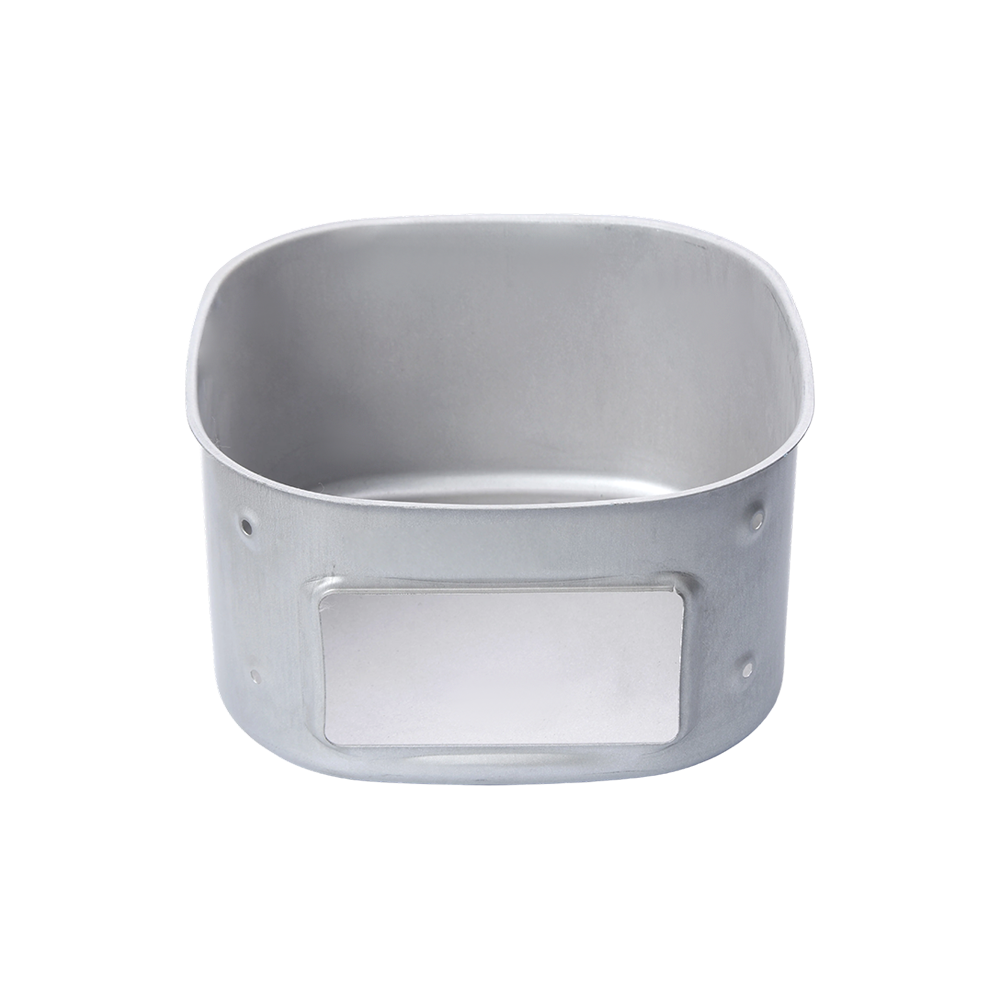
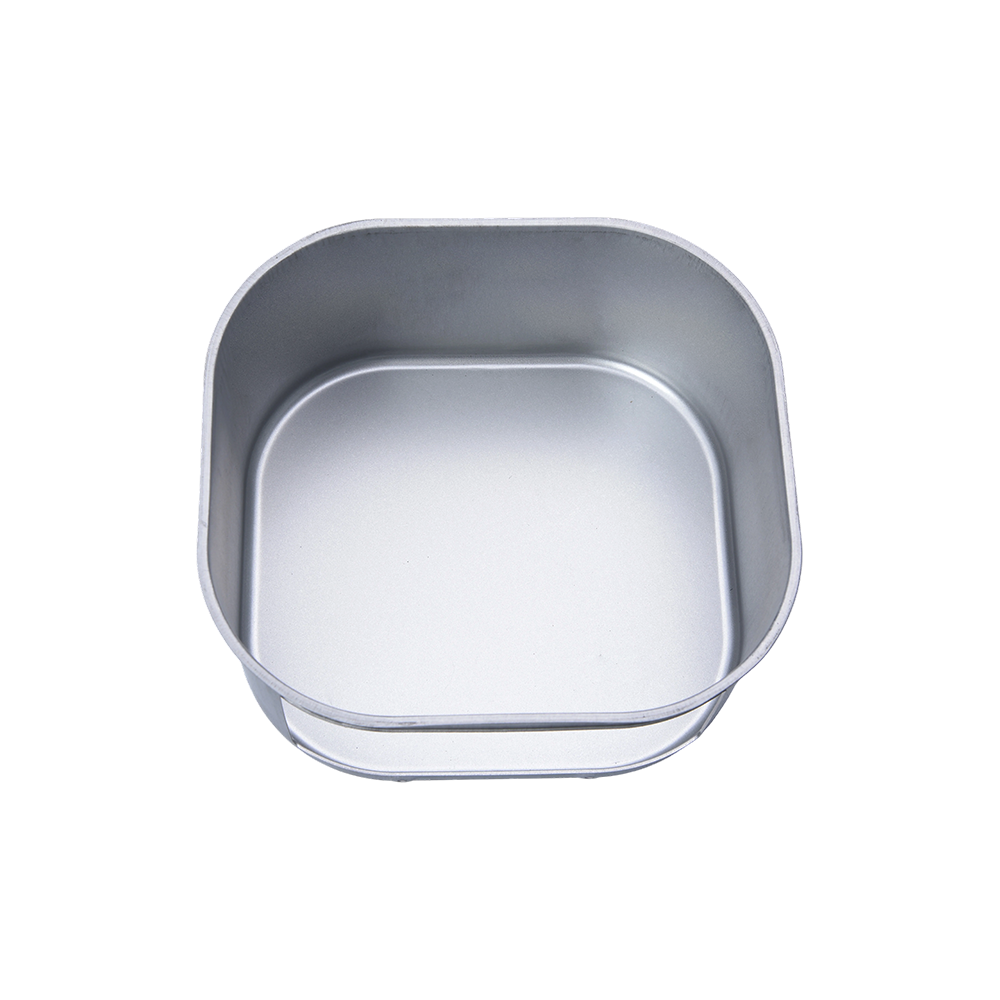
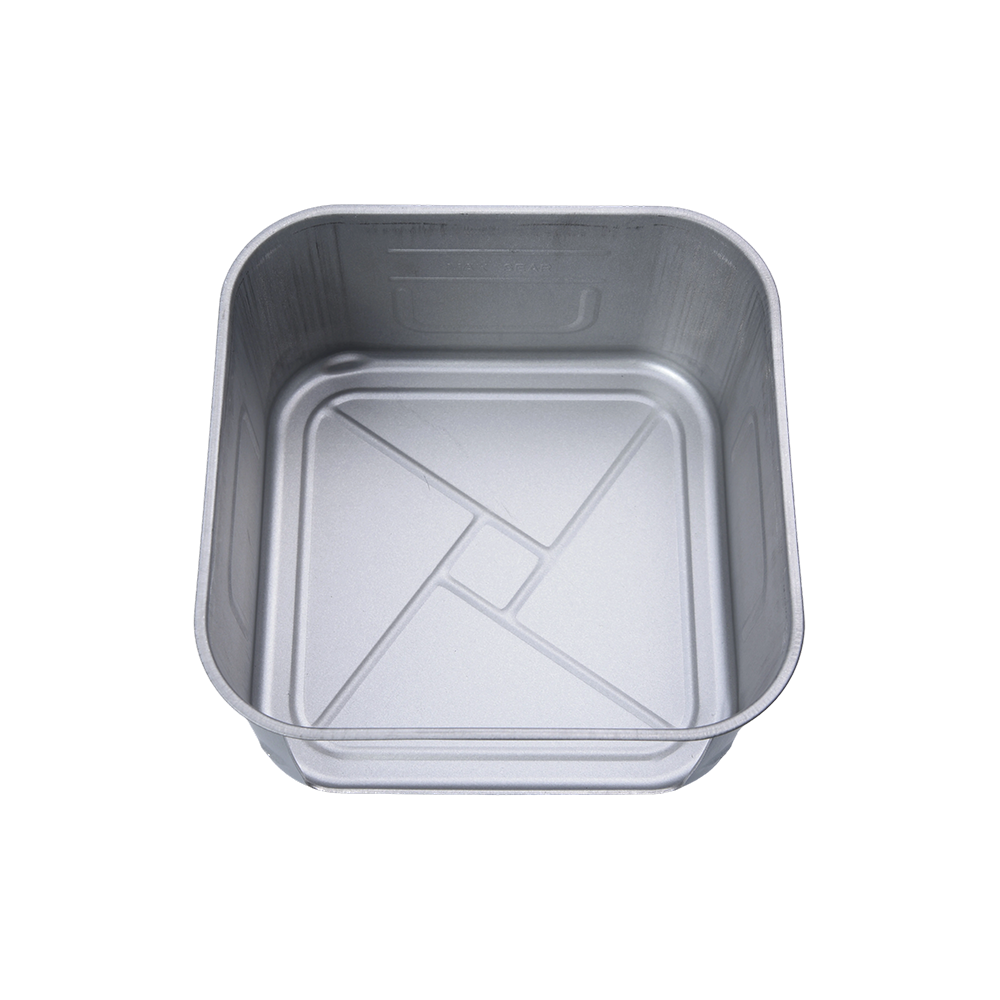
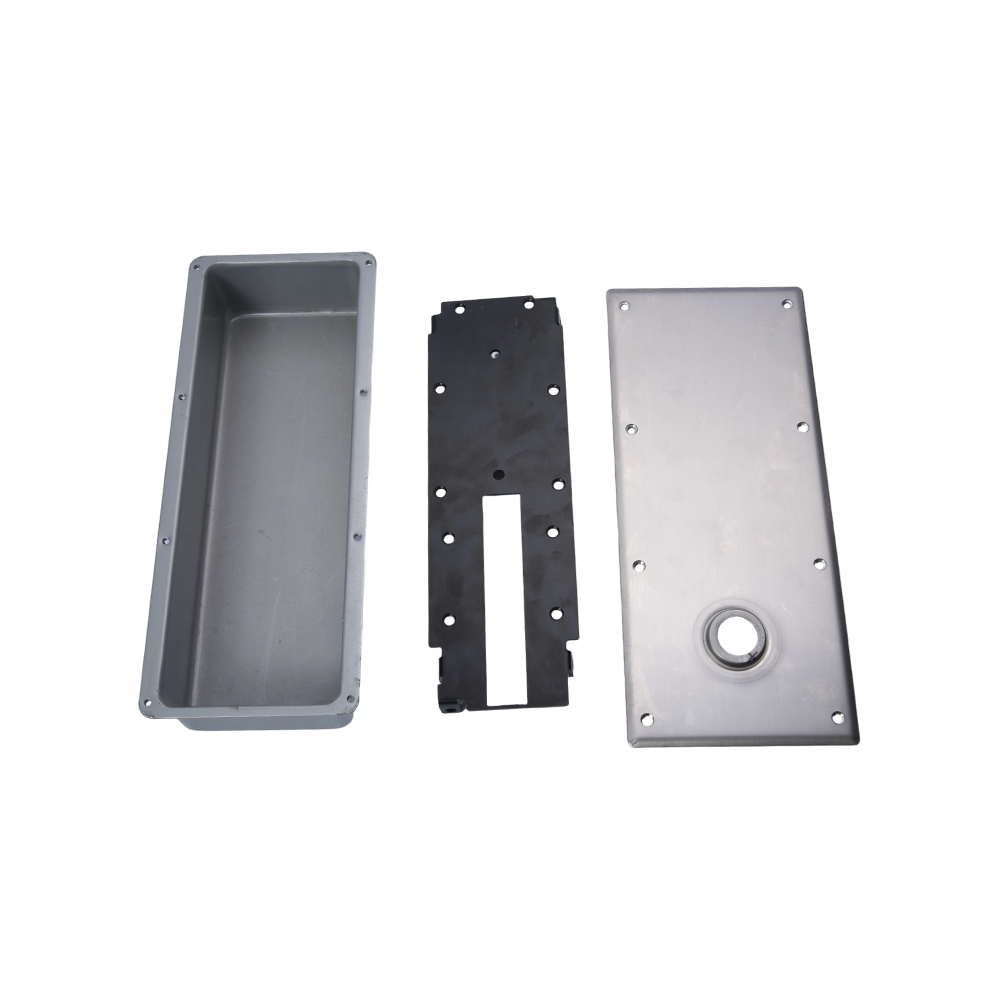
What Is Deep Drawing Process and What Are Deep-Drawn Parts The deep drawing process is a sheet metal forming operation in which a flat meta...
READ MORE

News
Home / Author / Zhang Meilin — Product Sales Consultant / Deep-Drawn Rectangular Container with Handle: Seamless Strength for Hygienic Industrial Storage
Deep-Drawn Rectangular Container with Handle: Seamless Strength for Hygienic Industrial Storage
2026-06-16
In demanding industrial, commercial, food, medical, and technical environments, storage components must do far more than simply hold materials. They must resist corrosion, tolerate repeated handling, remain easy to clean, maintain dimensional accuracy, and perform reliably across long service cycles. The deep-drawn rectangular container with handle is designed precisely for these requirements. Manufactured through advanced deep-drawing technology, it offers a seamless, one-piece structure that improves strength, hygiene, appearance, and long-term stability compared with many conventional fabricated containers.
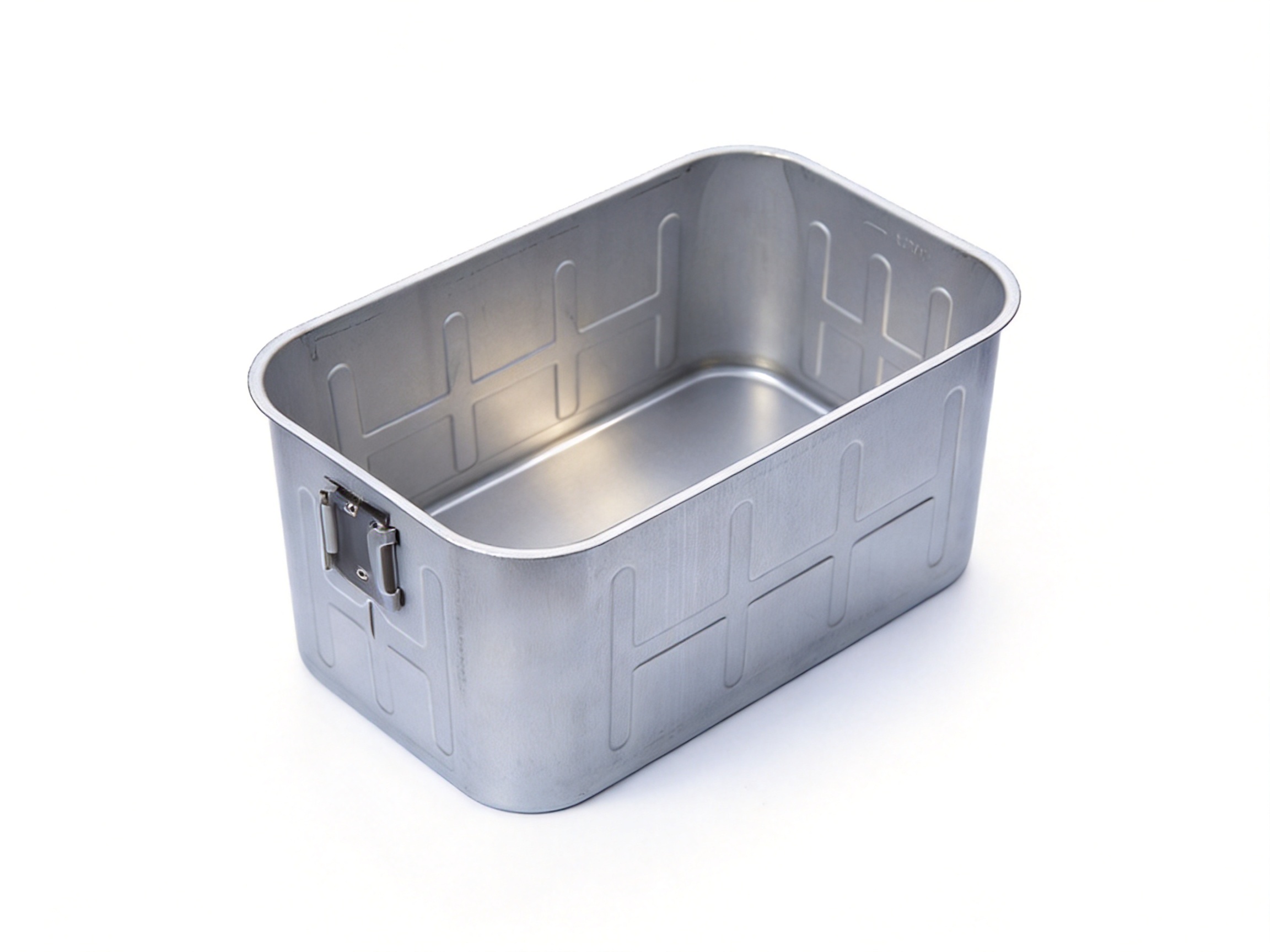
This product belongs to the category of deep-drawn parts, a field that requires careful control of material flow, tooling precision, press parameters, and finishing processes. Unlike containers assembled by welding, riveting, or multiple joined components, a deep-drawn rectangular container is formed from sheet metal into a unified shape. This creates smoother internal surfaces, fewer contamination traps, better structural continuity, and a cleaner professional finish. The integrated handle further improves practicality, allowing users to lift, move, position, or retrieve the container more conveniently in busy working environments.
The container can be produced in a wide variety of sizes and thicknesses, generally ranging from 0.5 mm to 3.0 mm, depending on the application requirements. This flexibility makes it suitable for light-duty storage, repeated manual handling, heavy industrial organization, hygienic processing environments, laboratory use, medical instrument management, and equipment accessories. Surface options such as brushed, polished, and electropolished finishes allow the product to be optimized for appearance, cleaning efficiency, corrosion resistance, and sanitation requirements.
Yuyao Hongli Optoelectronics Co., Ltd. supports the production of this type of deep-drawn container with more than 20 years of manufacturing experience. Located in Yangming Science and Technology Industrial Park, Yuyao City, Zhejiang Province, China, the company operates a modern 5,000-square-meter factory with multiple stamping workshops, more than 60 employees, and strong production capabilities. Its expertise covers deep-drawn parts, stamped parts, bending parts, kitchen appliance accessories, automotive stamping parts, household appliance components, hardware products, optical and educational instrument parts, and OEM/ODM customized metal components.
Deep-drawn rectangular container with handle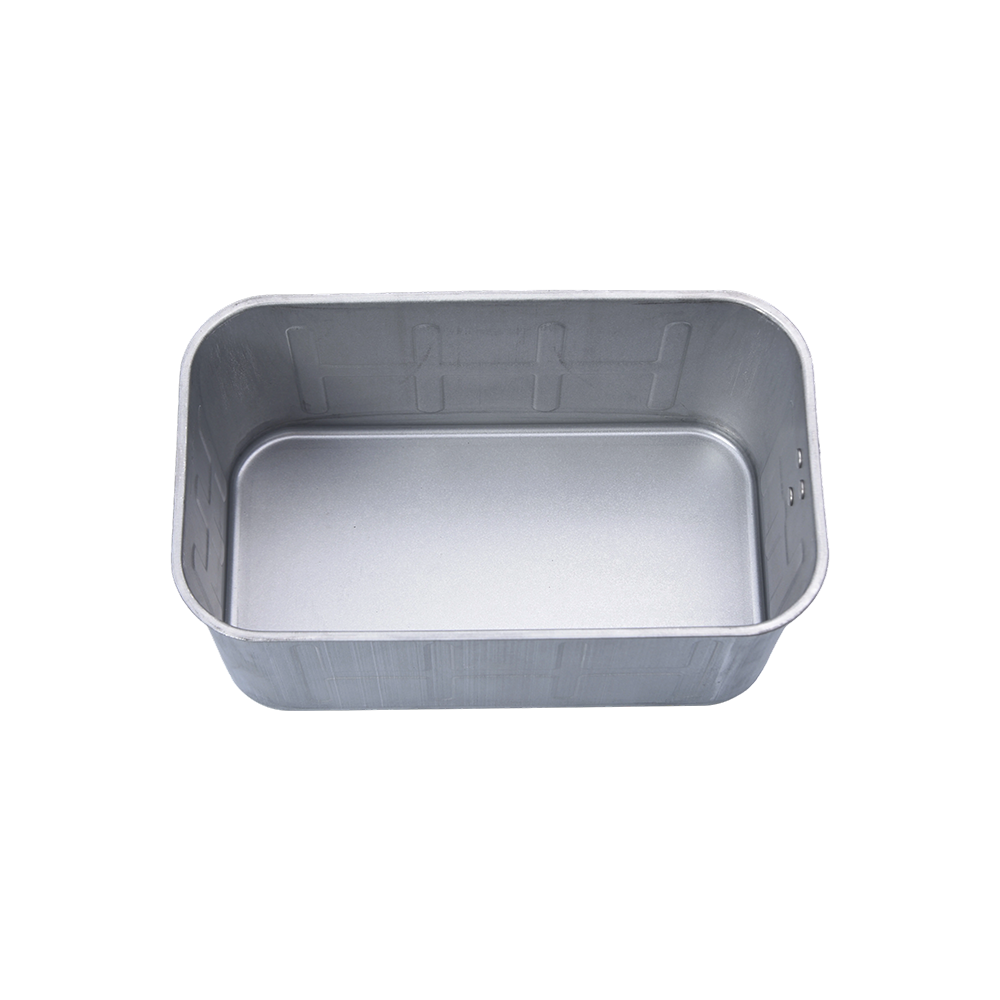
Product Overview: A Rectangular Container Built for Real Working Conditions
The deep-drawn rectangular container with handle is a practical metal storage and handling component designed to meet the needs of industries that require durability, hygiene, and consistent quality. Its rectangular form provides efficient use of space, making it easy to stack, arrange, or integrate into equipment assemblies. The handle improves usability, particularly when the container is frequently removed from a machine, cleaning station, storage rack, countertop, cabinet, cart, or production line.
The one-piece deep-drawn structure is one of the product’s greatest advantages. In many conventional containers, corners and seams are weak points. They may accumulate dirt, retain moisture, or become vulnerable to corrosion. Welded joints can also introduce distortion, discoloration, and post-processing requirements. By contrast, deep drawing forms the container from a single sheet of metal, allowing the material to flow into the die cavity under controlled pressure. The resulting component has a continuous body, smooth transitions, and excellent mechanical integrity.
This structure is especially valuable in environments where cleaning and sterilization are routine. Food production facilities, medical preparation rooms, laboratories, and clean industrial workshops often require containers that do not harbor residues or bacteria. A seamless deep-drawn surface helps reduce contamination risks and makes washing, wiping, sterilizing, and drying more efficient. When combined with polishing or electropolishing, the container surface becomes even smoother and easier to maintain.
Its metal thickness range from 0.5 mm to 3.0 mm provides broad application flexibility. A thinner version may be chosen for lightweight storage, kitchen appliance accessories, laboratory organization, or small component holding. A thicker version may be used where load-bearing strength, impact resistance, or long service life is required. The ability to customize dimensions, wall thickness, handle configuration, corner radius, finish, and material selection allows the product to fit highly specific customer requirements.
Why Deep Drawing Matters
Deep drawing is a metal forming process in which sheet metal is radially drawn into a forming die by the mechanical action of a punch. The process is widely used to produce cups, boxes, housings, covers, containers, shells, and structural components. For rectangular containers, the process is more complex than for simple round cups because material flow must be carefully balanced around straight walls, corners, and bottom transitions. The quality of the die, press control, blank holder force, lubrication, and material selection all influence the final result.
A well-executed deep-drawing process delivers several key benefits. First, it improves strength because the component is formed continuously rather than assembled from multiple pieces. Second, it improves repeatability because the die defines the shape accurately across production batches. Third, it reduces assembly labor and eliminates some welding or fastening operations. Fourth, it can improve material utilization when the blank design and forming sequence are optimized. Fifth, it creates an attractive and functional product that can be finished to meet industrial, commercial, and hygienic standards.
For rectangular containers, corner control is particularly important. Excessive thinning, wrinkling, tearing, or uneven wall height can occur if the process is not properly engineered. Experienced manufacturers use appropriate die radii, drawing ratios, material grades, lubrication systems, and multi-step forming when necessary. This is where the manufacturing experience of Yuyao Hongli Optoelectronics becomes important. With long-term involvement in deep-drawn parts, stamped parts, bending components, and appliance accessories, the company is able to evaluate customer requirements and convert them into manufacturable, stable, and cost-effective production solutions.
Core Advantages Over Conventional Containers
The deep-drawn rectangular container with handle offers clear advantages over many competing alternatives, especially containers made by welding, folding, riveting, plastic molding, or low-precision fabrication. These advantages are not merely cosmetic; they influence durability, hygiene, usability, maintenance, and total cost of ownership.
Seamless One-Piece Construction
The most important advantage is the seamless one-piece body. A fabricated container often includes welded seams, folded joints, or assembled corners. These areas can become stress concentration points and may require grinding, polishing, or sealing. If the weld quality is inconsistent, corrosion may begin around heat-affected zones. If the joints are not fully smooth, cleaning becomes more difficult. The deep-drawn container avoids many of these issues by forming the main body from one continuous piece of metal.
This seamless design helps maintain strength under repeated loading and unloading. It also supports hygienic use by reducing cracks, gaps, and crevices where contaminants can accumulate. In industries such as food processing, healthcare, and laboratory work, this is a major advantage. Even in general industrial storage, a smoother container reduces maintenance time and improves workplace cleanliness.
Improved Structural Stability
Deep drawing creates a stable shape with continuous walls and bottom transitions. The process work-hardens the metal to some degree, which can improve rigidity depending on the material and forming conditions. Compared with thin fabricated trays that may flex or deform easily, a well-designed deep-drawn container can maintain its rectangular shape under routine use. The handle also supports easier handling, reducing the likelihood of accidental dropping or awkward lifting.
For customers requiring higher strength, the container can be produced with thicker material, reinforced geometry, optimized radii, or special edge treatments. Customization allows the product to be adapted to load requirements, impact conditions, installation position, and user handling patterns. This is an important advantage over off-the-shelf containers with fixed specifications.
Better Hygiene and Easier Cleaning
Hygiene is not only a concern for food and medical industries. Many modern factories require clean storage for electronic parts, optical components, appliance accessories, precision hardware, and automotive components. A smooth deep-drawn container reduces dust accumulation and residue retention. When finished by polishing or electropolishing, the surface becomes more resistant to sticking and easier to sanitize.
Electropolishing is especially useful for applications where cleanliness and corrosion resistance are priorities. It removes a microscopic layer from the metal surface, smoothing peaks and reducing roughness. The result is a bright, clean surface that can improve passivation and reduce contamination risks. Brushed finishing provides a uniform industrial appearance, while mechanical polishing offers a brighter and smoother surface for visible or hygiene-sensitive applications.
High Customization Potential
Many competitors provide standard containers only, requiring customers to adjust their equipment or workflow around fixed dimensions. The deep-drawn rectangular container with handle can be customized in size, thickness, depth, edge configuration, handle style, material, surface treatment, and tolerance requirements. This makes it suitable for OEM/ODM projects where the container must match a machine assembly, appliance module, storage station, sterilization tray, kitchen equipment, or industrial process.
Customization also supports branding-neutral industrial integration. The container can be designed as a functional part within larger equipment rather than a standalone commodity. For example, it may be used as a removable collection bin, a sanitary insert, a parts tray, a heating appliance accessory, a medical storage box, or a component for automotive-related production environments.
Efficient Production for Consistent Quality
Once tooling is developed, deep drawing supports stable and repeatable production. This is valuable for customers who need consistent batches over time. Dimensional accuracy, edge consistency, and surface quality can be controlled through proper tooling, inspection, and process management. Compared with manual fabrication, which depends heavily on operator welding and assembly skills, deep drawing provides a more standardized manufacturing route.
Yuyao Hongli Optoelectronics operates multiple stamping workshops and has long-term experience in stamping and deep drawing. This production foundation helps the company support both rapid prototyping and efficient mass production conversion. Customers can begin with drawings, samples, or application requirements, then proceed through design review, tooling development, sample verification, process refinement, and production delivery.
Materials and Thickness Options
The container can be manufactured from suitable metal sheets selected according to corrosion resistance, strength, appearance, cost, and application conditions. Although the exact material choice depends on customer requirements, stainless steel is commonly preferred for hygienic and corrosion-resistant containers. Other metal materials may also be considered for industrial applications where specific mechanical or cost requirements apply.
The thickness range of 0.5 mm to 3.0 mm covers a broad spectrum of use cases. Thin-gauge containers are lighter, easier to handle, and cost-effective for moderate loads. Medium-gauge containers offer a balance between strength and weight. Heavy-gauge containers provide improved durability and are suitable for more demanding industrial conditions.
| Specification Area | Available Options | Application Benefit |
|---|---|---|
| Manufacturing Process | Deep drawing, trimming, deburring, surface finishing, inspection | Creates a seamless and stable container body with consistent quality |
| Material Thickness | Approximately 0.5 mm to 3.0 mm | Supports lightweight, medium-duty, and heavy-duty storage requirements |
| Surface Finish | Brushed, polished, electropolished, or customized | Improves appearance, cleanability, corrosion resistance, and hygiene |
| Structure | Rectangular body with handle | Provides space efficiency and convenient handling |
| Customization | Size, depth, radius, thickness, handle form, finish, tolerance | Allows integration into OEM/ODM projects and specialized equipment |
| Typical Uses | Food, medical, industrial, appliance, laboratory, and component storage | Offers broad compatibility across different working environments |
Choosing the correct thickness is important. A container used only for small lightweight parts may not require heavy material. Conversely, a container used for dense metal components, repeated sterilization, industrial washing, or harsh shop-floor handling may benefit from thicker material. During product development, the manufacturer can help evaluate the best balance among weight, cost, stiffness, forming feasibility, and service life.
Surface Finishing Options and Their Benefits
Surface treatment plays a central role in the performance and appearance of a deep-drawn rectangular container. A raw formed part may be functional, but finishing can transform it into a premium, easy-to-clean, corrosion-resistant component. Different industries require different finishes, and the ability to offer multiple options is a major manufacturing advantage.
Brushed Finish
A brushed finish provides a clean directional texture that is widely used in kitchen equipment, appliance accessories, industrial panels, and visible metal components. It helps reduce the visual impact of minor scratches and gives the container a professional appearance. For commercial environments, brushed surfaces often provide a good balance between cost, aesthetics, and practical durability.
Polished Finish
Polishing creates a smoother, brighter surface. It is useful when the container must be visually attractive or easier to clean. Polished surfaces can reduce residue adhesion compared with rougher finishes. This finish may be preferred for food handling, medical support applications, display-related storage, or high-end equipment accessories.
Electropolished Finish
Electropolishing is a more advanced finishing method often associated with hygienic and corrosion-resistant applications. It can remove surface irregularities at a microscopic level and enhance the passive layer on stainless steel. This makes the container more resistant to corrosion and easier to clean. For medical, laboratory, and high-hygiene food environments, electropolishing can provide a significant performance improvement over basic mechanical finishes.
Because the product can be customized, customers may select finishes according to the intended operating environment. A container used in a dry industrial workshop may require only a brushed finish. A container exposed to frequent washing or sanitizing agents may benefit from polished or electropolished treatment. This flexibility makes the product suitable for many market segments without forcing customers into a single fixed specification.
Manufacturing Strength Behind the Product
A high-quality deep-drawn container depends not only on design but also on manufacturing discipline. Deep drawing rectangular shapes requires experience in tooling, press operation, material behavior, and quality control. Yuyao Hongli Optoelectronics has developed manufacturing capabilities over more than two decades, serving a wide range of industries involving metal stamping parts, deep-drawn components, bending parts, household appliance parts, kitchen appliance accessories, automotive stamping parts, and hardware products.
The company’s 5,000-square-meter factory provides the physical foundation for stable production. Multiple stamping workshops allow it to handle different product types and batch sizes. More than 60 employees support production, processing, inspection, administration, customer communication, and after-sales service. This combination of equipment, experience, and workforce gives the company the flexibility to serve both standard product needs and customized OEM/ODM projects.
Tooling and Process Development
For deep-drawn rectangular containers, tooling design is critical. The die must guide material flow evenly into the rectangular shape. The punch and die radii must be selected to prevent tearing while achieving the desired corner definition. The blank holder must control wrinkles without restricting material movement excessively. Depending on the final depth and material thickness, the part may require single-stage drawing or multiple forming steps.
Experienced process development reduces trial-and-error time. Before production, engineers can review drawings, identify forming risks, suggest radius adjustments, recommend material thickness, and determine whether additional operations such as trimming, piercing, edge rolling, or surface finishing are needed. This support is especially valuable for customers who have a functional requirement but may not yet have a fully optimized manufacturing drawing.
Rapid Prototyping and Production Conversion
The company supports rapid prototyping and efficient production conversion. This is important because many customers need to verify fit, function, appearance, and handling before committing to mass production. A prototype can reveal whether the container depth is suitable, whether the handle is comfortable, whether the thickness feels appropriate, and whether the finish meets expectations.
After prototype confirmation, the process can be refined for stable production. Production conversion includes tooling optimization, process documentation, inspection criteria, packaging planning, and delivery scheduling. This structured approach helps reduce risk and supports reliable long-term cooperation.
Quality Control
Strict quality control is essential for deep-drawn parts. Dimensional accuracy, wall thickness, surface condition, edge smoothness, and handle integrity must be checked according to customer requirements. Containers used in hygienic environments must be free from obvious defects that could trap contaminants. Containers used in equipment assemblies must meet dimensional tolerances to fit correctly.
Quality control may include visual inspection, dimensional measurement, surface inspection, thickness verification, and packaging checks. For customized orders, inspection standards can be defined based on drawings, samples, or agreed specifications. Stable quality is one of the most important advantages for customers who need repeat orders over months or years.
Applications Across Industries
The deep-drawn rectangular container with handle is highly versatile. Its combination of strength, hygiene, and customization makes it suitable for a broad range of uses. While the exact application depends on customer specifications, several major industry categories demonstrate its practical value.
Food Processing and Commercial Kitchen Environments
Food environments require containers that are easy to clean, resistant to corrosion, and durable under repeated handling. A deep-drawn stainless steel container with a polished or electropolished surface can be used for ingredient holding, temporary storage, utensil organization, processing support, or kitchen appliance integration. The seamless construction reduces residue buildup and supports sanitation routines.
Compared with plastic containers, metal deep-drawn containers can offer better heat resistance, longer life, and improved resistance to deformation. Compared with welded metal boxes, they provide smoother corners and fewer joints. This makes them especially useful in commercial kitchens, food preparation areas, and equipment manufacturing for kitchen appliance accessories.
Medical and Laboratory Use
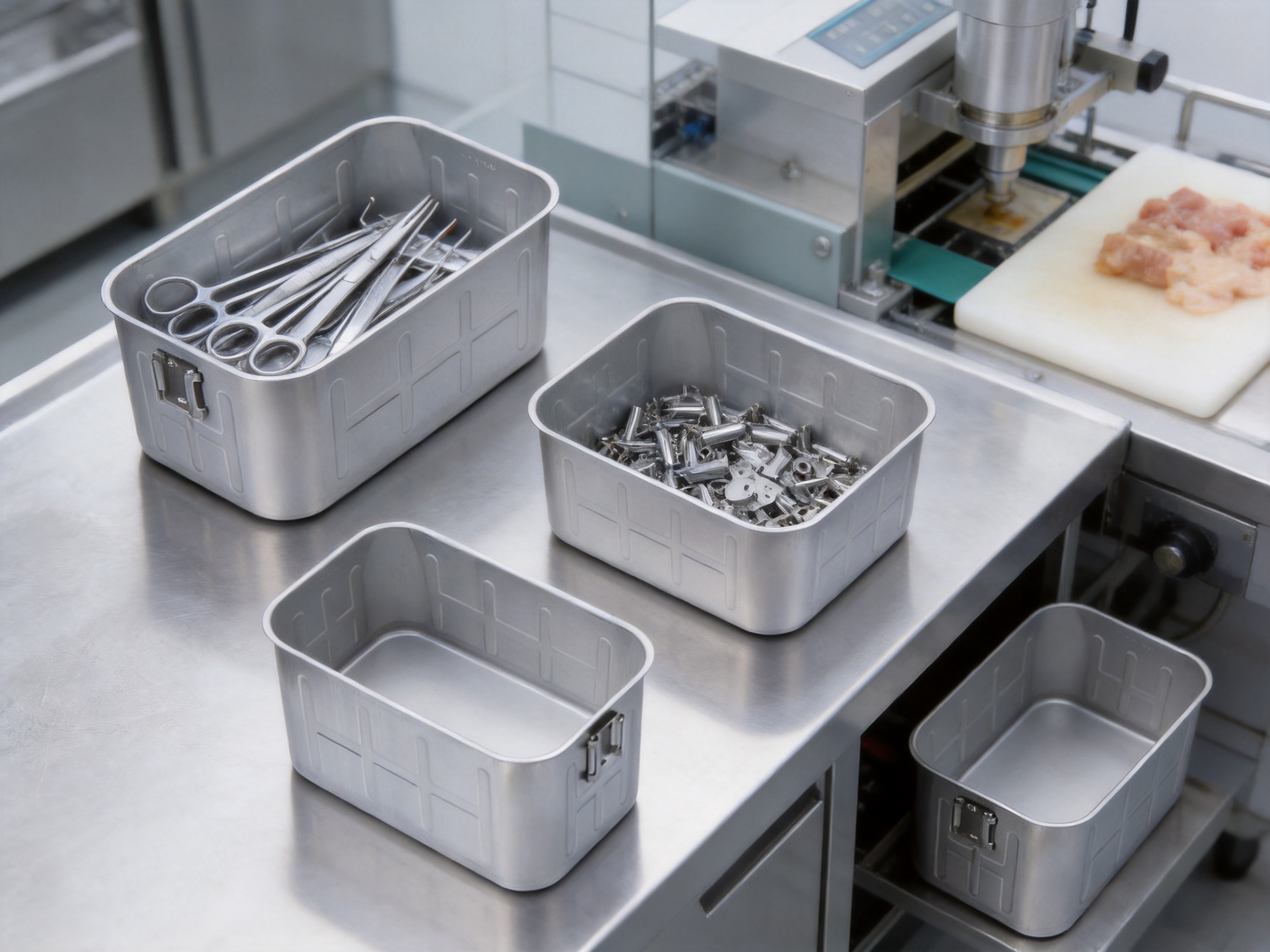
Medical and laboratory environments demand cleanliness, reliability, and resistance to cleaning agents. A seamless metal container can be used for instrument organization, sample handling support, sterilization-related storage, or equipment integration. The handle improves handling when gloves are worn or when the container must be moved between stations.
Electropolished surfaces may be particularly valuable in such environments because they can improve cleanability and surface passivation. While specific medical compliance depends on the final design, material, process validation, and applicable standards, the deep-drawn structure provides a strong foundation for hygienic component design.
Industrial Storage and Parts Handling
Factories frequently require durable containers for screws, stamped parts, machined components, assembly hardware, maintenance tools, and production-line materials. A rectangular container uses storage space efficiently and can be placed on benches, shelves, carts, or within equipment. The handle allows operators to move the container quickly and safely.
In industrial environments, containers are often exposed to abrasion, impact, oil, dust, and repeated loading. The deep-drawn metal body offers better long-term durability than many lightweight plastic or thin fabricated alternatives. Custom thickness selection allows the container to match the required duty level.
Automotive and Appliance Manufacturing
Because Yuyao Hongli Optoelectronics has experience in automotive stamping parts and household appliance components, the container can also be developed for manufacturing support or as a component within larger systems. Automotive-related production often requires reliable metal parts with consistent dimensions. Appliance manufacturing requires clean appearance, repeatable quality, and cost-effective production.
A deep-drawn rectangular container may serve as an internal tray, collection box, accessory housing, removable bin, protective cover, or storage insert. Its rectangular form and customizable dimensions allow it to fit into compact assemblies where space efficiency is important.
Design Considerations for Custom Orders
When ordering a customized deep-drawn rectangular container, several design considerations influence performance and manufacturability. Customers who understand these factors can achieve better results and reduce development time.
Size and Depth
The length, width, and depth of the container determine storage capacity and forming complexity. Deeper containers may require more careful process design, especially for rectangular shapes. The drawing ratio, corner radius, and material elongation properties must be considered. If the container must fit an existing machine or rack, dimensional tolerances should be defined clearly.
Corner Radius
Sharp corners may look precise, but they are more difficult to form and may increase the risk of tearing or thinning. A suitable corner radius improves material flow, strength, cleanability, and manufacturability. In hygienic applications, larger internal radii are often preferred because they are easier to clean.
Edge Treatment
The upper edge may be trimmed, deburred, flanged, rolled, or otherwise finished depending on user requirements. A smooth edge improves safety during handling. A reinforced edge can increase rigidity. If the container will be inserted into equipment, the edge design must also support proper fit and removal.
Handle Configuration
The handle can be designed for manual lifting, hanging, pulling, or equipment integration. Its size, location, and strength should match how the container will be used. A comfortable handle reduces operator fatigue and improves safety. If the handle is formed as part of the container or attached through a secondary process, the design should account for load and repeated use.
Surface Finish and Cleaning Requirements
The operating environment should guide finish selection. Dry storage may require a simple brushed finish. Food and medical environments may require polishing or electropolishing. If the container will be exposed to chemicals, salt, humidity, or high-temperature cleaning, material and finish selection become even more important.
Competitive Advantages in the Global Supply Chain
Customers choosing metal components today often evaluate more than the part itself. They consider the manufacturer’s experience, customization ability, communication efficiency, production stability, quality control, delivery reliability, and long-term cooperation potential. The deep-drawn rectangular container with handle benefits from the manufacturing background of Yuyao Hongli Optoelectronics in several ways.
First, the company has more than 20 years of industry experience. Long-term manufacturing experience helps solve practical production issues that may not appear in a drawing. For example, a design may require adjustment to avoid forming cracks, improve surface quality, reduce material waste, or shorten production time. Experienced manufacturers can provide suggestions that improve both quality and cost.
Second, the company has a diversified product foundation. Its experience includes deep-drawn parts, stamped parts, bending parts, kitchen appliance accessories, automotive stamping parts, hardware products, household appliance parts, optical instrument components, and educational instrument products. This broad background supports cross-industry problem solving. A technique used in appliance components may help improve appearance; a tolerance control method from automotive parts may improve assembly fit; a finishing method from kitchen accessories may improve hygiene.
Third, the company supports OEM/ODM customization. Many customers do not want a generic container; they need a part designed for their equipment, workflow, or market. OEM/ODM capability allows the container to be produced according to drawings, samples, or functional requirements. This provides a competitive advantage over suppliers that only sell standard items.
Fourth, the company emphasizes stable delivery and after-sales service. For industrial buyers, a low unit price is not enough if delivery is unreliable or quality varies from batch to batch. Stable supply helps customers maintain production schedules, reduce inventory risk, and plan long-term projects.
Finally, the company’s business philosophy of integrity, excellence, innovation, and sharing supports long-term cooperation. In customized manufacturing, trust and communication are essential. Customers benefit when a supplier is willing to discuss improvements, respond to technical questions, and support product development rather than simply process orders.
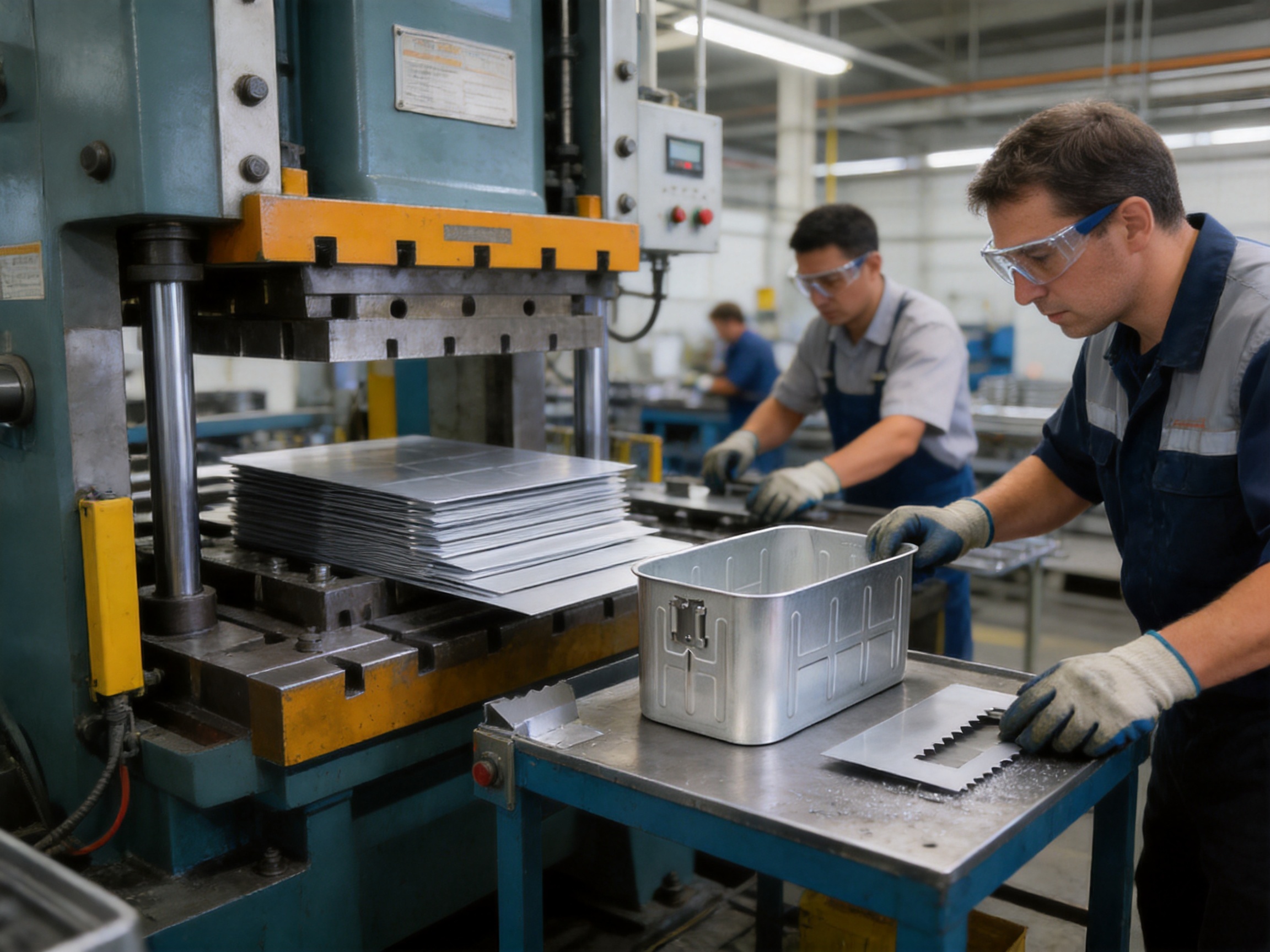
How the Product Supports Hygiene and Safety
Hygiene and safety are closely connected. A container that is difficult to clean may create contamination risks. A container with sharp edges may injure operators. A container with weak joints may fail during handling. The deep-drawn rectangular container with handle addresses these concerns through its structure, finish, and customization options.
The seamless body reduces crevices. Smooth internal transitions make it easier to wipe or rinse the container. Proper surface finishing can reduce roughness and residue adhesion. Deburred or finished edges help prevent cuts. A well-designed handle improves grip and reduces awkward lifting. For environments requiring sterilization, material and finish can be selected to withstand repeated cleaning cycles.
In food-related use, these features can support cleaner production workflows. In medical or laboratory use, they can help maintain organized and sanitary handling. In industrial settings, they can reduce downtime caused by damaged containers or unsafe handling. Over the product’s service life, these benefits can reduce replacement frequency, cleaning labor, and operational inconvenience.
Durability, Corrosion Resistance, and Abrasion Resistance
The product description emphasizes corrosion and abrasion resistance, both of which are critical for long-term performance. Deep drawing itself does not automatically make every metal corrosion-proof, but the combination of suitable material selection, seamless geometry, and surface finishing can significantly improve service performance.
Corrosion often begins at defects, seams, scratches, heat-affected zones, or areas where moisture and contaminants remain trapped. A seamless deep-drawn container reduces many of these risk points. If stainless steel is used and properly finished, corrosion resistance can be further improved. Electropolishing can enhance the passive surface condition, making it especially useful for wet or hygienic environments.
Abrasion resistance matters when containers are repeatedly filled with parts, tools, utensils, or industrial materials. Smooth finishes help reduce friction and make scratches less likely to develop into severe surface damage. Thicker material can also extend service life in abrasive conditions. Customers can choose the appropriate thickness and finish based on expected use.
Cost Efficiency Beyond the Purchase Price
When comparing storage containers, buyers often focus on initial cost. However, the total cost of ownership includes service life, cleaning time, maintenance, replacement frequency, downtime, and product failure risk. The deep-drawn rectangular container with handle can deliver cost efficiency through durability, cleanability, and production consistency.
A cheaper welded container may require more cleaning effort, may corrode at seams, or may deform under repeated use. A plastic container may crack, stain, absorb odors, or deform under heat. A low-precision fabricated metal box may not fit properly into equipment. By contrast, a deep-drawn container designed for the application can last longer, clean faster, and perform more predictably.
For OEM customers, consistency is especially important. If a container is part of a larger product, inconsistent dimensions can cause assembly problems, rework, or customer complaints. Deep-drawing tooling supports repeatable geometry, helping reduce these hidden costs. Although tooling investment may be required for customized production, the long-term unit consistency and efficiency can make it highly economical for repeated orders.
Integration with OEM and ODM Projects
The container is well suited for OEM and ODM cooperation. Customers may provide drawings, samples, CAD files, application descriptions, or performance requirements. The manufacturer can then evaluate feasibility and propose a production plan. This may include material selection, thickness recommendation, tooling design, forming process, surface treatment, inspection standards, and packaging method.
For OEM projects, the container is manufactured according to the customer’s established design. For ODM projects, the manufacturer may support design development and optimization. This is valuable for customers developing new equipment, appliance accessories, industrial storage systems, or specialized handling tools.
Rapid prototyping helps customers confirm the design before mass production. A prototype can be tested for capacity, cleaning, handling, equipment fit, and visual appearance. Any necessary adjustments can be made before final tooling or full-scale production. This reduces risk and improves final product satisfaction.
Quality Expectations for Deep-Drawn Containers
High-quality deep-drawn containers should meet clear expectations. The body should have uniform shape and stable dimensions. The bottom should sit properly if flatness is required. The corners should be smooth without tearing, severe thinning, or wrinkling. The upper edge should be safe to handle. The surface should match the agreed finish. The handle should be secure and practical. Packaging should protect the surface during transportation.
For industrial customers, inspection criteria should be established before production. Important dimensions may include length, width, depth, wall thickness, flange width, handle position, corner radius, and edge condition. Surface criteria may include scratch limits, polishing direction, burr control, stain removal, and cleanliness. Defining these expectations early helps ensure smooth cooperation and stable batch quality.
Environmental and Operational Benefits
Metal deep-drawn containers can support sustainable operations when designed for long life and repeated use. Durable containers reduce replacement frequency and waste. Stainless steel and many metal materials are recyclable, which can be an advantage compared with disposable or short-life alternatives. Easy cleaning can reduce excessive use of detergents, water, or labor when compared with containers that trap residues.
Operationally, the rectangular shape supports efficient space utilization. Containers can be arranged closely on shelves or workbenches. The handle supports quick movement and retrieval. The seamless interior supports faster cleaning and drying. These practical details contribute to smoother daily workflows, especially in environments where many containers are used simultaneously.
Recommended Use Scenarios
The deep-drawn rectangular container with handle is recommended for customers who need a combination of durability, hygiene, appearance, and customization. It is particularly suitable for food processing support, commercial kitchen equipment, medical and laboratory organization, industrial parts storage, appliance manufacturing, automotive component handling, clean workshop storage, and custom machine accessories.
It is also suitable for customers replacing welded or plastic containers that fail too quickly or are difficult to clean. If a current container has seam corrosion, residue buildup, deformation, poor fit, or uncomfortable handling, a customized deep-drawn solution may provide a significant upgrade.
Practical Purchasing Guidance
Before placing an order, customers should prepare several key details. These include the intended application, approximate size, required capacity, preferred material, thickness range, surface finish, handle requirements, cleaning conditions, load requirements, annual quantity, tolerance needs, and whether samples or drawings are available. If the container must fit into existing equipment, accurate installation dimensions are essential.
For new product development, it is useful to discuss the application openly with the manufacturer. The manufacturer may suggest changes that improve manufacturability or reduce cost while maintaining performance. For example, adjusting a corner radius slightly may improve forming stability. Choosing an appropriate thickness may reduce unnecessary weight. Selecting a suitable finish may improve cleanability without overengineering the product.
Company Manufacturing Profile
Yuyao Hongli Optoelectronics Co., Ltd. is a comprehensive manufacturing enterprise founded in 2000. The company is located on the south side of Shunke Road, Yangming Science and Technology Industrial Park, Yuyao City, Zhejiang Province, China. With over 20 years of industry experience, it has developed from its former name, Yuyao Hongli Optoelectronics Educational Instruments Co., Ltd., into a professional manufacturer specializing in metal stamping parts and related customized products.
The company provides manufacturing, processing, wholesale, retail, import, and export services. Its product and service scope includes educational instruments, optical instruments, household electric heaters, small household appliances, auto parts, hardware products, plastic products, deep-drawn parts, stamped parts, bending parts, kitchen appliance accessories, and automotive stamping parts. This wide manufacturing base gives the company strong technical adaptability and the ability to serve customers from multiple industries.
For customers interested in the deep-drawn rectangular container with handle, the company can be contacted by email at hongli@yyhlgd.net or by phone at +86-13905842349 and +86-13738485724. Its location in Yuyao, Zhejiang Province, provides access to a mature regional manufacturing ecosystem, supporting efficient sourcing, processing, and export operations.
Q&A: Deep-Drawn Rectangular Container with Handle
Q1: What is the main advantage of a deep-drawn rectangular container compared with a welded container?
The main advantage is its seamless one-piece construction. Because the body is formed from a single sheet of metal, it has fewer joints, fewer contamination traps, and better structural continuity. This improves hygiene, durability, appearance, and cleaning efficiency compared with many welded containers.
Q2: What thickness options are available?
The container can generally be customized within a thickness range of approximately 0.5 mm to 3.0 mm. The best thickness depends on the expected load, handling frequency, weight requirements, forming feasibility, and application environment.
Q3: Can the size and shape be customized?
Yes. The container can be customized in length, width, depth, corner radius, edge design, handle configuration, material, surface finish, and tolerance requirements. This makes it suitable for OEM and ODM projects as well as specialized industrial use.
Q4: Which surface finish is best for hygienic applications?
Polished and electropolished finishes are often preferred for hygienic environments because they create smoother surfaces that are easier to clean. Electropolishing can further improve surface smoothness and corrosion resistance, especially for stainless steel parts used in food, medical, or laboratory environments.
Q5: Is the container suitable for food-related use?
Yes, it can be suitable for food-related use when manufactured from appropriate material and finished according to hygiene requirements. Its seamless structure, smooth surface, and easy-clean design make it a strong option for food processing support and commercial kitchen equipment applications.
Q6: Can it be used in medical or laboratory environments?
Yes, the container can be designed for medical or laboratory support applications. For such environments, customers should specify material, finish, cleaning method, sterilization conditions, and any applicable standards so that the product can be manufactured appropriately.
Q7: Why is the handle important?
The handle improves usability by making the container easier to lift, move, pull, or position. This is especially useful in busy industrial, kitchen, laboratory, or equipment environments where containers are frequently handled.
Q8: What information should customers provide for a custom order?
Customers should provide drawings or samples if available, along with size, thickness, material preference, surface finish, handle requirements, load expectations, application environment, tolerance requirements, quantity, and packaging needs. If drawings are not available, functional requirements can be discussed to develop a suitable design.
Q9: What makes Yuyao Hongli Optoelectronics suitable for this product?
The company has more than 20 years of manufacturing experience, a 5,000-square-meter factory, multiple stamping workshops, more than 60 employees, and expertise in deep-drawn parts, stamped parts, bending parts, kitchen appliance accessories, and automotive stamping parts. It supports OEM/ODM customization, rapid prototyping, stable production, quality control, and after-sales service.
Q10: Is deep drawing cost-effective for custom containers?
Deep drawing can be highly cost-effective when repeatable quality and batch production are required. Although tooling may be needed, the process supports consistent dimensions, reduced assembly operations, improved durability, and lower long-term maintenance or replacement costs.
Conclusion
The deep-drawn rectangular container with handle is a high-value solution for customers who require strength, hygiene, durability, and customization. Its seamless one-piece construction provides advantages over welded, riveted, plastic, and low-precision fabricated alternatives. The rectangular shape supports efficient storage, while the handle improves everyday usability. With thickness options from 0.5 mm to 3.0 mm and surface finishes such as brushed, polished, and electropolished, the container can be adapted to food, medical, laboratory, industrial, appliance, and automotive-related environments.
Behind the product is a manufacturing process that requires experience and control. Deep drawing rectangular parts demands careful tooling, material selection, press operation, trimming, deburring, finishing, and inspection. Yuyao Hongli Optoelectronics Co., Ltd. brings more than 20 years of experience, modern factory capacity, multiple stamping workshops, and strong OEM/ODM support to this product category. For customers seeking a reliable customized metal container, the combination of product design and manufacturing capability provides a strong foundation for long-term cooperation.
In modern industrial purchasing, the best component is not merely the cheapest part. It is the part that performs reliably, cleans easily, fits correctly, lasts longer, and supports efficient operations. The deep-drawn rectangular container with handle meets these expectations by combining seamless metal forming, practical design, surface finishing flexibility, and professional manufacturing support.
References
ASM International. Sheet Metal Forming: Fundamentals and Applications. ASM Handbook Series.
Kalpakjian, S., and Schmid, S. R. Manufacturing Engineering and Technology. Pearson Education.
Schuler GmbH. Metal Forming Handbook. Springer.
Dieter, G. E. Mechanical Metallurgy. McGraw-Hill.
International Organization for Standardization. ISO 9001 Quality Management Systems: Requirements.
International Organization for Standardization. ISO 2768 General Tolerances for Linear and Angular Dimensions.
American Society for Testing and Materials. ASTM Standards for Stainless Steel Sheet and Strip Materials.
Groover, M. P. Fundamentals of Modern Manufacturing: Materials, Processes, and Systems. Wiley.
Product: Deep-drawn rectangular container with handle
Previous Post
High-Performance Kitchen Sink Components for Durable, Hygienic, and Modern Kitchens
Next Post
Black Stamped Parts with Connectors for Precision Industrial Integration
News
-
-
When you need a metal component whose depth clearly exceeds its width, such as a one-piece battery enclosure, an air-fryer inner container,...
READ MORE -
A flat mounting plate with three punched holes and a rectangular container with a fitted lid can come off presses in the same workshop, yet...
READ MORE -
Manufacturing & Materials Engineering Why Deep Draw Components Outperform Fabricated Sheet Metal Parts in Leak-Proof Applications Seam...
READ MORE
Get Fresh Updates Via Email
We promise we will never disclose your email address, and you can opt out at any time.
-
Quick Links
Home About Us Products Service News Contact Us -
Product list
Deep-drawn parts Stamped parts Bending parts Kitchen appliance accessories Automotive stamping parts -
About Us
Factory Honour FAQ -
News
Company News Industry News -
Contact Us
Address: South side of Shunke Road, Yangming Science and Technology Industrial Park, Yuyao City, Zhejiang Province, China Tel: +86-13905842349/+86-13738485724 Email: hongli@hl-stamping.com
Copyright © Yuyao Hongli Optoelectronics Co., Ltd. All Rights Reserved.
Custom Precision-Sheet/Sheet Metal Stamping Manufacturers
