


 English
 русский
 Español
 عربى
عربى

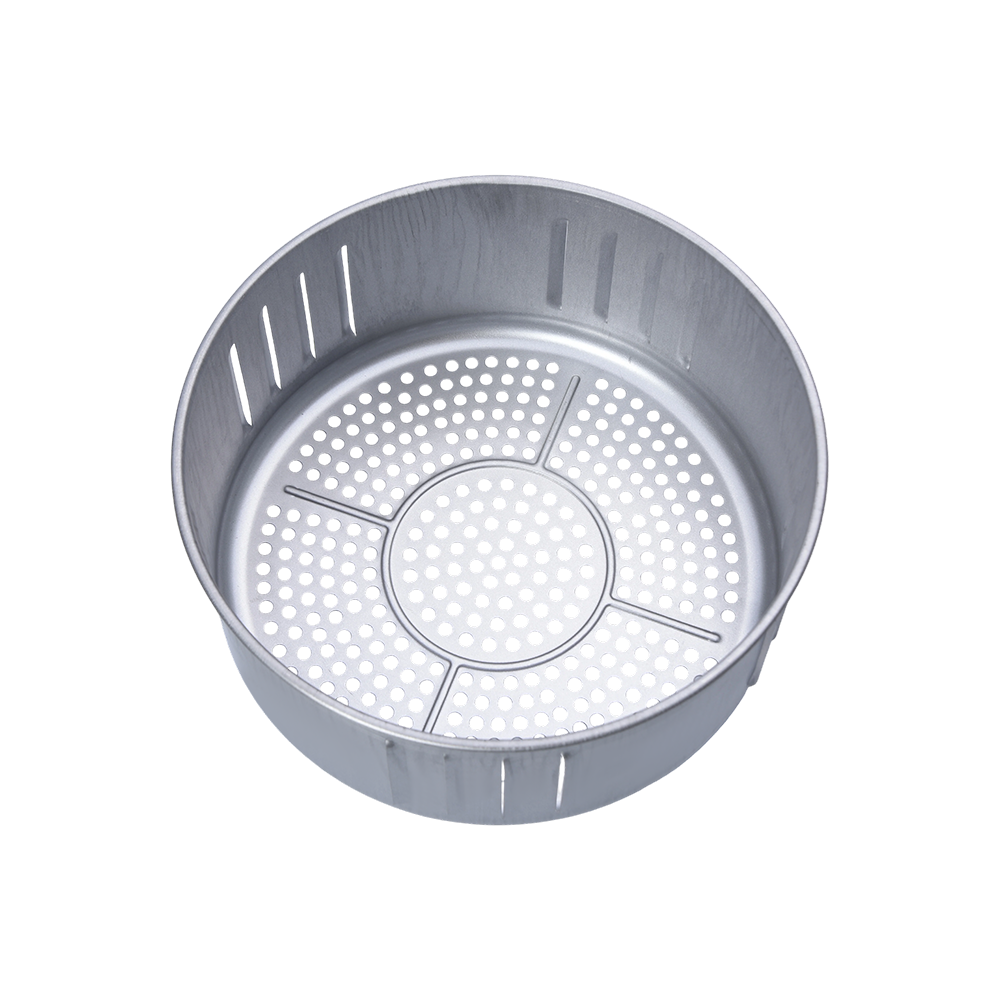
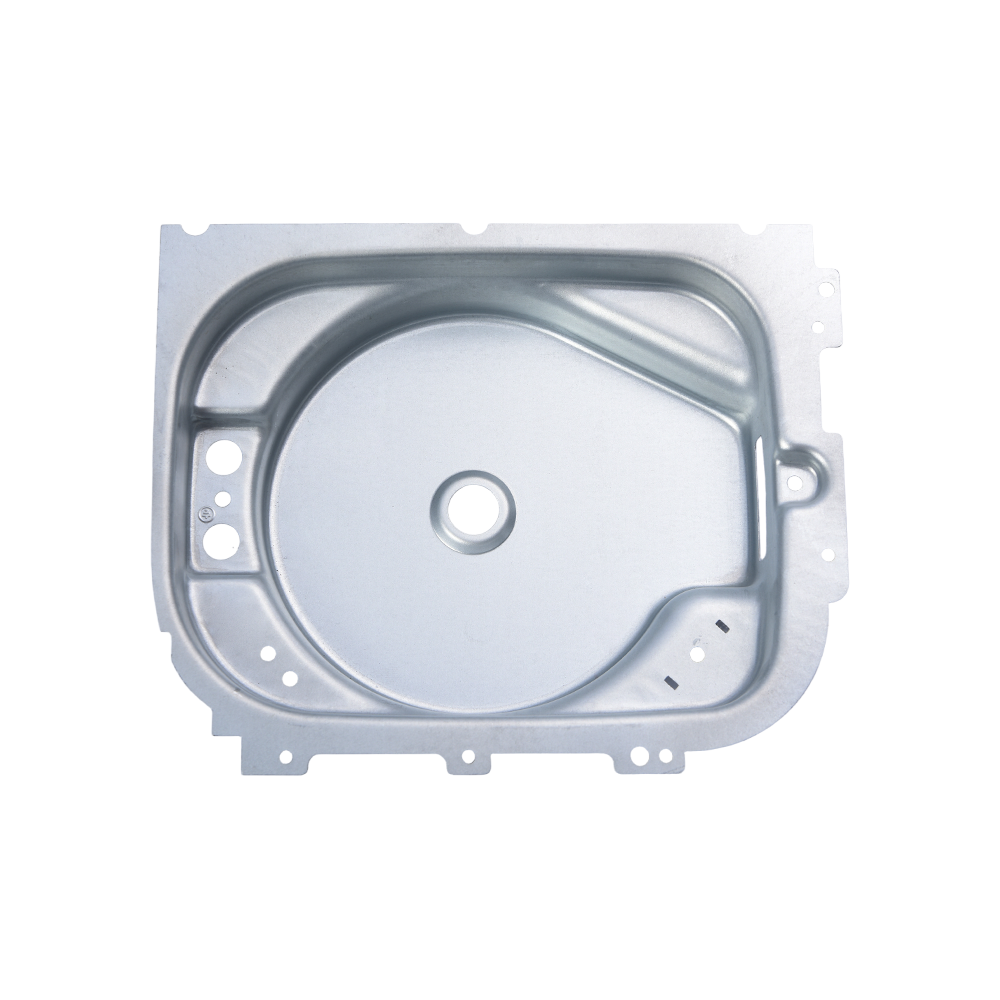
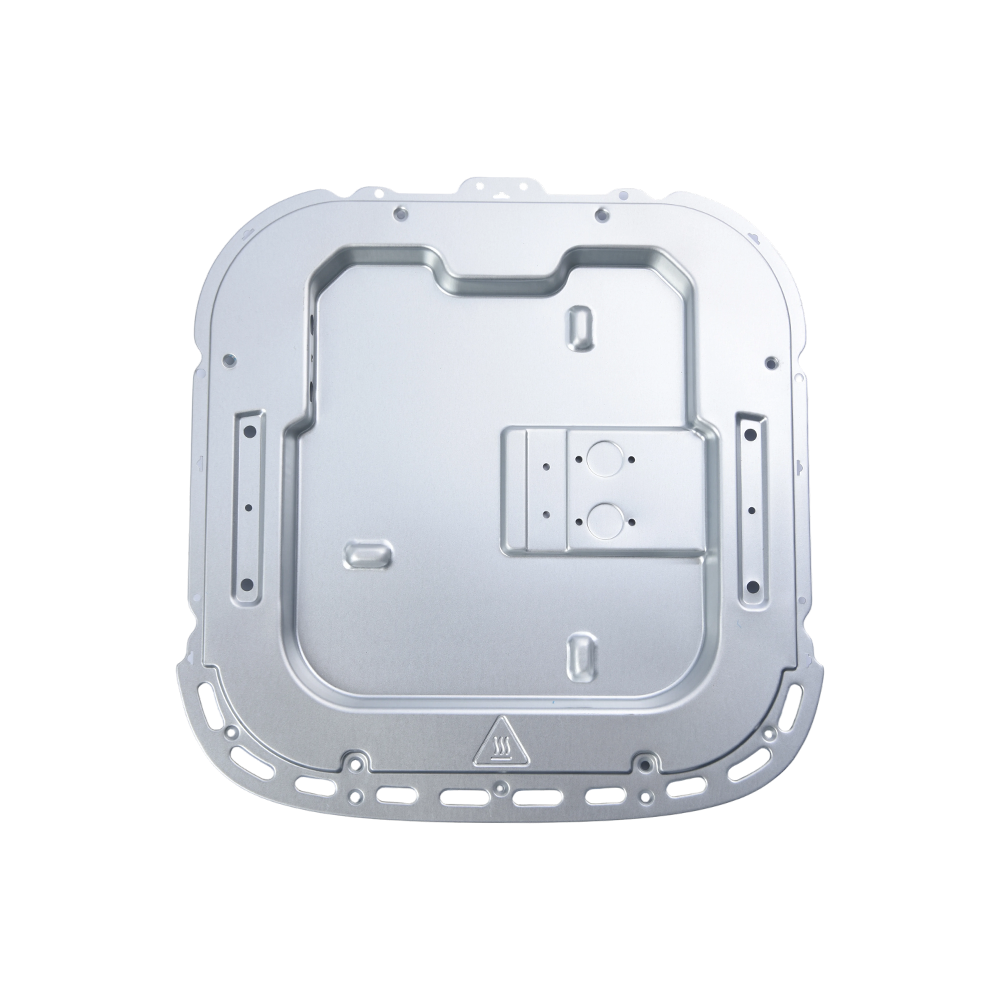
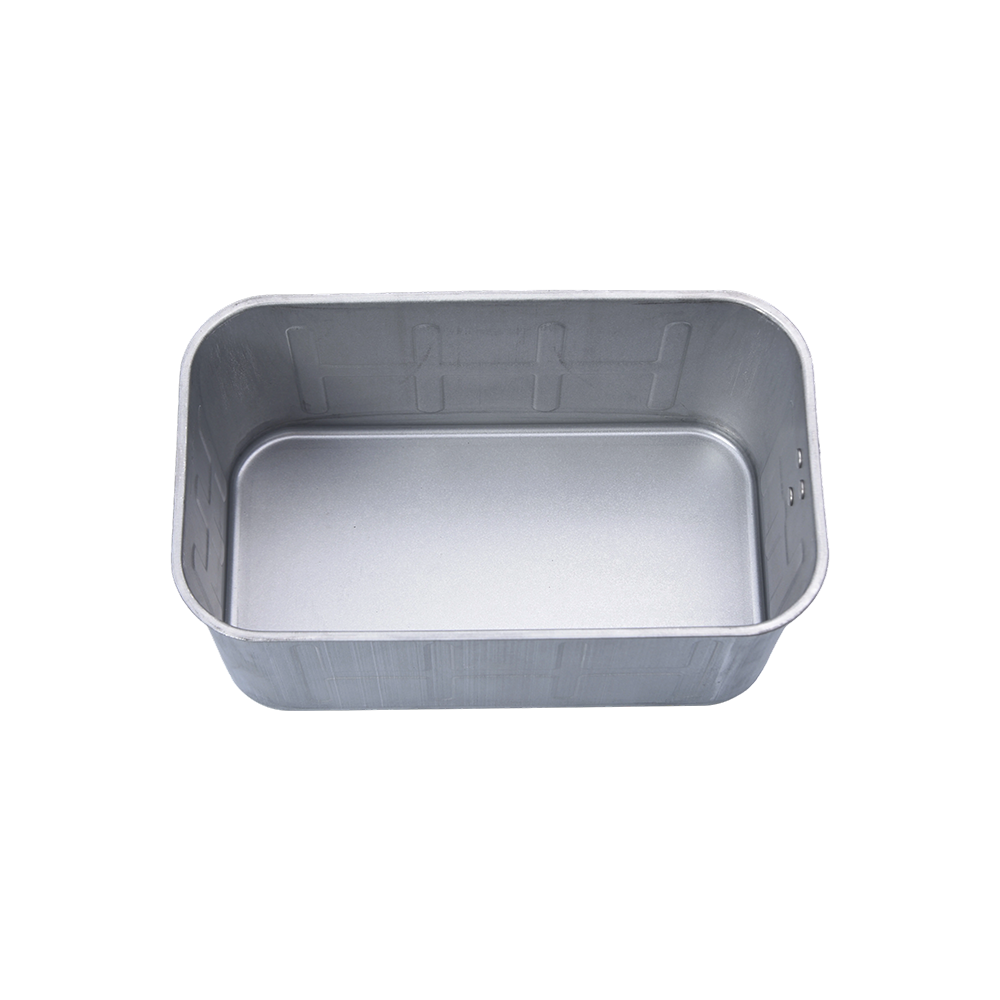
What Are Stamped Parts? Stamped parts are metal components produced by pressing flat sheet metal between a die and a punch to cut, bend, or...
READ MORE

News
Home / Author / Zhang Meilin — Product Sales Consultant / Perforated Kitchen Container for Fresher, Cleaner, and More Organized Storage
Perforated Kitchen Container for Fresher, Cleaner, and More Organized Storage
2026-06-26
In modern kitchens, storage is no longer just about putting ingredients away. It is about preserving freshness, maintaining cleanliness, improving workflow, saving space, and creating an environment where everyday cooking feels more efficient and pleasant. The Perforated Kitchen Container is designed for exactly these needs. With a practical ventilated structure, durable metal-formed construction, smooth surface, and refined appearance, it offers a dependable solution for storing produce, herbs, dry ingredients, kitchen tools, and many other items that benefit from airflow and easy access.
Unlike fully enclosed boxes that trap humidity, or lightweight plastic baskets that may deform, absorb odors, or become difficult to clean, this perforated container is built to support long-term use in demanding kitchen environments. Its ventilation holes allow air to circulate through the container, helping moisture escape and reducing the chance of dampness, mold, unpleasant smells, and premature spoilage. For foods such as potatoes, onions, garlic, fruits, vegetables, and herbs, proper airflow is an essential part of maintaining good storage conditions.
As a kitchen appliance accessory, the product is also a representative example of precision metal manufacturing. It reflects the capabilities of an experienced factory specializing in stamped parts, bending parts, deep-drawn parts, kitchen appliance accessories, and automotive stamping parts. Backed by more than 20 years of manufacturing experience, a 5,000-square-meter modern production facility, multiple stamping workshops, skilled staff, and OEM/ODM customization capacity, the container combines user-friendly design with industrial-grade production expertise.
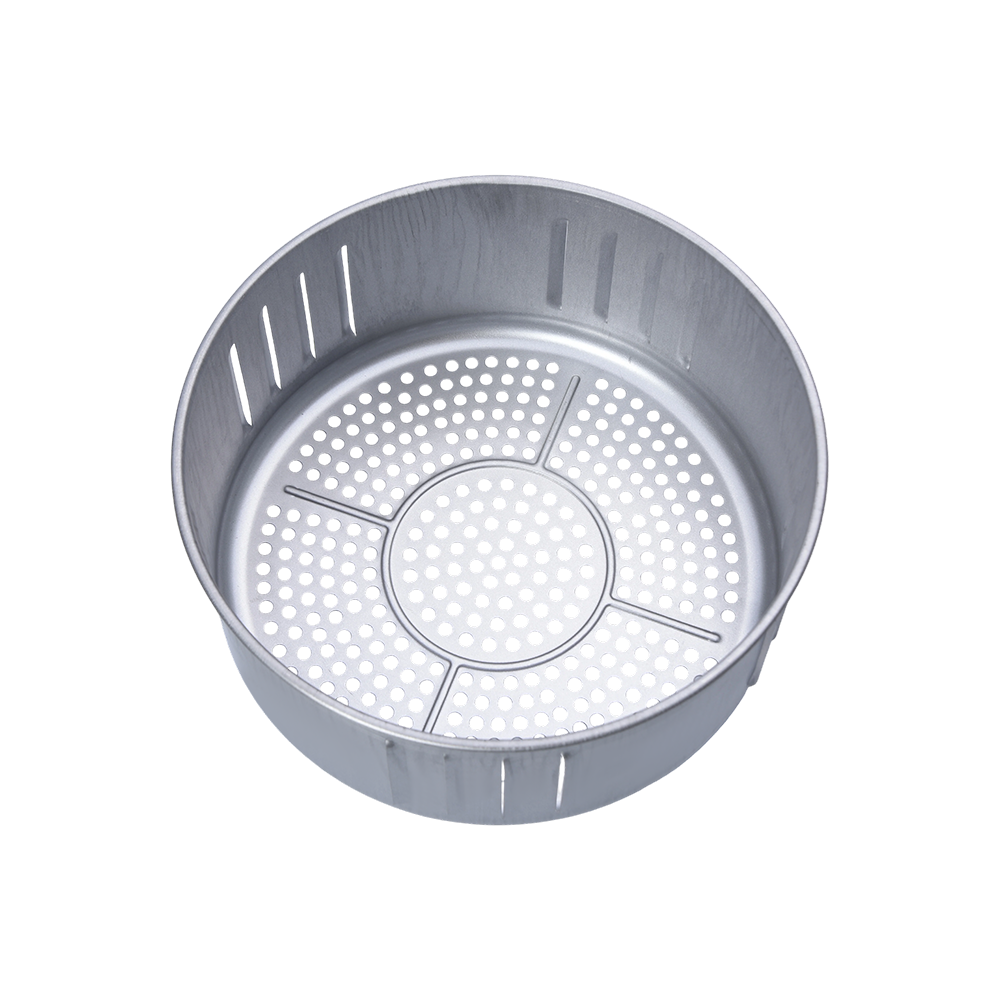
Perforated Kitchen Container
Why Ventilated Kitchen Storage Matters
Many common kitchen storage problems begin with trapped moisture. Fresh produce continues to release moisture after purchase, while freshly washed vegetables, fruits, and herbs may retain water on their surfaces. When these items are stored in sealed containers or poorly ventilated drawers, humidity can build up quickly. This creates a favorable environment for mold, softening, discoloration, and odor formation. A perforated kitchen container addresses this problem directly by allowing air exchange.
The airflow created by the perforated pattern helps stored items remain drier and fresher for longer. This does not mean the container replaces refrigeration where refrigeration is necessary, but it does create a better environment for foods that are commonly stored in open shelves, cabinets, pantry zones, or kitchen counters. Potatoes, onions, garlic, citrus fruits, apples, and certain vegetables all benefit from storage that avoids excessive moisture accumulation.
Ventilation is also important for kitchen tools. After washing utensils, small accessories, or removable appliance parts, placing them in a ventilated container helps remaining moisture evaporate. This can support a cleaner and more hygienic kitchen routine. For busy households, restaurants, catering spaces, food preparation rooms, and small appliance assembly areas, the ability to keep items organized while allowing airflow is a valuable advantage.
The Perforated Kitchen Container is built around this principle. Its perforated wall structure improves breathability without sacrificing strength. The container can hold a variety of items while helping maintain a dry and orderly storage environment. This balance between airflow and durability is what makes the product more functional than many ordinary baskets or closed storage boxes.
Product Overview
The Perforated Kitchen Container is a durable, lightweight, and practical storage accessory designed for kitchen environments. Its defining feature is the perforated design, which supports ventilation and moisture release. The container is suitable for storing fruits, vegetables, potatoes, onions, herbs, dry food items, small kitchen tools, appliance accessories, and other goods that benefit from a breathable storage structure.
The product is manufactured using metal-forming processes associated with stamping, bending, and related fabrication methods. These processes help create a stable shape, consistent perforation pattern, smooth edges, and a strong finished structure. The result is a container that feels solid in use while remaining convenient to move, clean, and maintain.
The smooth surface resists grease and food residue better than many rough or absorbent materials. This makes routine cleaning easier. In kitchens, surfaces are often exposed to oil mist, food splashes, moisture, dust, and repeated handling. A container that can be wiped clean quickly contributes to better hygiene and lower maintenance effort.
Visually, the product has a clean and modern appearance. Its simple perforated form fits well with contemporary kitchen interiors, stainless-tone appliances, utility shelves, pantry systems, and food preparation areas. It is suitable for both home kitchens and commercial environments where appearance, cleanliness, and efficiency all matter.
Core Advantages of the Perforated Design
The perforated design is not just decorative. It is the product’s main functional advantage. Each opening contributes to air circulation, and the overall pattern helps create a breathable storage environment. This is especially useful for produce that should not be sealed in moist containers. When air can move around the stored items, moisture does not accumulate as quickly, and the risk of spoilage is reduced.
Compared with a solid-wall container, the perforated container offers improved ventilation. Compared with an open wire basket, it provides a more structured surface and can prevent smaller items from falling through. Compared with many plastic baskets, it provides a stronger and more heat-resistant body, with better resistance to deformation under normal kitchen use. Compared with fabric or woven storage, it is easier to clean and less likely to retain residue.
The perforations also make the container lighter without removing its practical strength. A fully solid metal container may be heavier and may trap air and moisture. A carefully perforated body reduces material weight while retaining rigidity through stamped and bent structural geometry. This creates a useful combination: the product feels robust but remains easy to carry and reposition.
Another advantage is visual access. Because of the perforated structure, users can often see part of the contents without opening a lid or emptying the container. This makes kitchen organization faster. Ingredients can be identified more easily, reducing forgotten items and food waste.
Freshness Benefits for Fruits, Vegetables, Potatoes, and Onions
Fresh produce is one of the most common categories of food wasted in kitchens. Sometimes produce spoils because it is purchased in excess, but often it spoils because of unsuitable storage conditions. A damp bag, sealed container, or crowded drawer can accelerate deterioration. The Perforated Kitchen Container gives users a better way to store produce that requires ventilation.
Potatoes, for example, should generally be kept in a cool, dry, ventilated place away from excessive moisture. Onions also benefit from airflow and should not be kept in sealed humid containers. Garlic, shallots, and similar ingredients also store better when they can breathe. The perforated container provides a practical place for these items in a pantry, cabinet, shelf, or countertop area.
Fruits and vegetables that are stored temporarily before washing or cooking can also benefit from this container. The airflow can help reduce surface humidity, especially when produce is not packed tightly. Herbs may be placed in the container for short-term handling, sorting, or drying after rinsing, depending on the user’s storage method. The container’s open and breathable design supports flexible kitchen routines.
The product is not limited to fresh foods. It can also be used for dry ingredients in packages, coffee accessories, tea sachets, spice packets, small jars, snack packs, baking tools, and other kitchen necessities. Its versatility is one reason it stands out from single-purpose storage products.
Cleanliness and Easy Maintenance
A kitchen container must be easy to clean. If a storage product is difficult to wash, traps food particles, absorbs grease, or develops odors, it becomes a problem rather than a solution. The Perforated Kitchen Container is designed with a smooth surface that resists grease and food residue. This makes it suitable for regular use in busy kitchens.
The smooth formed surface can be wiped with a damp cloth or cleaned according to the surface finish and customer requirements. Because the structure is not absorbent like fabric or untreated natural materials, it is less likely to retain smells from onions, garlic, or other strong ingredients. The perforated pattern supports drainage and drying, helping prevent water from sitting inside the container after cleaning.
The container also supports better kitchen hygiene by encouraging organized storage. Items that are scattered on counters, placed in plastic bags, or mixed loosely in cabinets are more likely to collect dust, become hidden, or contaminate nearby surfaces. A dedicated container creates a defined storage zone. This supports cleaner food handling and a more professional kitchen environment.
Durability for Daily Kitchen Use
Durability is one of the most important differences between a well-made metal kitchen accessory and low-cost alternatives. In daily use, storage containers may be moved, loaded, cleaned, stacked, bumped, or placed near appliances. A weak basket can crack, warp, bend out of shape, or lose its appearance quickly. The Perforated Kitchen Container is built with a sturdy structure intended for repeated handling.
The manufacturing background behind the product is especially important. Precision stamping and bending allow the container to maintain consistent shape and structural integrity. Metal forming can create reinforced edges, stable corners, and accurate dimensions. These characteristics help the product resist ordinary kitchen wear and maintain a clean appearance over time.
Although the container is durable, it is also lightweight enough for convenient use. The perforated design reduces unnecessary weight, and the formed body supports practical handling. This makes the product suitable for households, pantry organizers, appliance accessory kits, storage systems, and customized kitchen solutions.
In competitive markets, many storage products focus on appearance but lack strength. Others are strong but too heavy or industrial-looking. The Perforated Kitchen Container offers a balanced combination of strength, usability, and modern style, making it a practical choice for customers who want both performance and aesthetic value.
Manufacturing Strength Behind the Product
The quality of a perforated container depends heavily on the manufacturer’s process capabilities. A simple-looking product still requires accurate design, stable tooling, controlled punching or stamping, consistent bending, edge treatment, surface finishing, and quality inspection. When perforation patterns are inconsistent or edges are poorly finished, the product may look cheap, feel rough, or fail to meet customer requirements. Advanced manufacturing experience helps avoid these problems.
The manufacturer behind this product is a comprehensive production enterprise with more than 20 years of experience in metal stamping and related components. Established in 2000 and located in Yangming Science and Technology Industrial Park, Yuyao, Zhejiang Province, China, the company has developed strong capabilities in stamping parts, deep-drawn parts, bending parts, kitchen appliance accessories, hardware products, small household appliance components, and automotive stamping parts.
Its 5,000-square-meter modern factory, multiple stamping workshops, and team of more than 60 employees support stable production capacity. The company provides manufacturing, processing, wholesale, retail, import, and export services, making it capable of serving both domestic and international customers. For a product such as the Perforated Kitchen Container, this industrial background ensures that design concepts can be translated into repeatable, scalable, and commercially reliable production.
The company also supports OEM and ODM customization. This is a major advantage for buyers who need special dimensions, hole patterns, shapes, surface finishes, packaging options, or assembly requirements. Instead of offering only a fixed standard product, the manufacturer can adapt the container to different market demands, appliance systems, retail programs, or brand-specific kitchen accessory collections.
Advanced Stamping and Forming Processes
Metal stamping is a highly efficient manufacturing method for producing consistent parts from sheet material. For a perforated kitchen container, stamping-related processes may include blanking, punching, perforating, bending, forming, trimming, and edge refinement. Each step must be controlled to achieve accurate dimensions and a safe, attractive finished product.
The perforation process is especially important. Hole size, spacing, alignment, and edge quality all influence the product’s function and appearance. If holes are too small or unevenly distributed, airflow may be insufficient. If holes are too large or poorly positioned, the container may lose strength or allow smaller items to fall out. A well-designed perforation pattern balances ventilation, material strength, weight reduction, and visual style.
Bending and forming processes give the container its final shape. Accurate bending ensures that sides align properly, corners remain stable, and the container sits evenly. For kitchen products, shape accuracy is not only about appearance; it affects stacking, packaging, storage efficiency, and user comfort. Consistent forming also helps customers integrate the product into appliance sets or modular storage systems.
Deep drawing and related forming knowledge add further value. Even if a specific container model uses perforated bending rather than deep drawing, the manufacturer’s experience with deep-drawn parts shows broader capability in controlling metal flow, wall shape, tooling pressure, and dimensional stability. This expertise supports the development of more complex kitchen appliance accessories when customers require custom designs.
Tooling, Prototyping, and Production Conversion
A major strength of an experienced stamping manufacturer is the ability to move from product idea to production efficiently. Buyers often require more than a catalog item. They may need samples, modified dimensions, different hole arrangements, special corner treatments, logo options, packaging layouts, or compatibility with an appliance cavity or retail shelf system. Rapid prototyping and efficient production conversion are therefore critical.
With its manufacturing background, the company can support OEM/ODM development from initial concept through tooling and batch production. For the Perforated Kitchen Container, this means customers can discuss target use, load requirements, size limits, ventilation needs, surface preferences, and expected order volume. The technical team can then evaluate forming feasibility, tooling structure, production efficiency, and cost control.
Tooling quality has a direct impact on product consistency. A precise die helps ensure repeatable hole patterns, clean cuts, stable bending lines, and accurate dimensions. Good tooling also improves production efficiency and reduces defect rates. For customers, this means better quality, more stable delivery, and lower long-term risk.
Efficient production conversion is particularly valuable for customers launching new kitchen accessory programs. When market demand changes quickly, suppliers must respond with sample adjustments, production planning, and quality verification. A manufacturer with stamping workshops, skilled staff, and flexible processing capability can provide better support than a trading-only supplier or a factory with limited forming expertise.
Quality Control and Reliability
Quality control is essential for kitchen appliance accessories. Products that contact or store kitchen items must be safe to handle, easy to clean, dimensionally consistent, and visually acceptable. The Perforated Kitchen Container benefits from strict manufacturing control, including attention to material selection, cutting accuracy, perforation consistency, bending precision, surface smoothness, edge safety, and final inspection.
Edges are a key quality point. A perforated metal product must avoid sharp burrs that could scratch users, damage produce, or affect packaging. Proper deburring, edge refinement, and inspection help ensure a safer user experience. Smooth transitions and clean finishing also improve the perceived quality of the product.
Dimensional consistency is another major factor. If containers vary too much in size, they may not stack properly, fit packaging, or match customer specifications. Stamping and bending processes must be controlled to maintain repeatable geometry. This is especially important for OEM orders, where the container may be part of a larger appliance, storage system, or branded product line.
Surface quality affects both appearance and maintenance. A smooth, clean surface supports easy wiping and resists grease and food residue. Surface defects, scratches, uneven finishing, or staining can reduce product value. By maintaining inspection standards throughout production, the manufacturer can deliver containers that meet customer expectations for both function and presentation.
Comparison with Common Alternatives
The Perforated Kitchen Container competes with many types of kitchen storage products, including plastic bins, wire baskets, woven baskets, solid metal boxes, fabric organizers, and disposable packaging. Each alternative has advantages, but many also have limitations. The perforated metal container provides a strong combination of airflow, durability, cleanliness, and modern design.
| Storage Option | Main Strength | Common Limitation | Advantage of the Perforated Kitchen Container |
|---|---|---|---|
| Solid plastic box | Lightweight and inexpensive | Traps moisture and may retain odors | Allows airflow while remaining easy to clean |
| Wire basket | Good ventilation and visibility | Small items may fall through and wires may deform | Provides ventilation with a more continuous formed structure |
| Woven basket | Decorative appearance | Can absorb moisture, dust, and food residue | Smooth surface supports easier cleaning and better hygiene |
| Solid metal box | Strong and durable | Limited ventilation and often heavier | Combines metal strength with lighter perforated airflow design |
| Fabric organizer | Soft and flexible | Difficult to clean and less suitable for damp foods | More robust, wipeable, and suitable for kitchen environments |
This comparison shows why the product is especially useful for customers who want storage that is more hygienic than woven or fabric options, more durable than many plastic products, and more structured than wire baskets. It also highlights the value of professional metal manufacturing. The container is not simply a basket; it is a formed kitchen accessory engineered for practical use.
Applications in Home Kitchens
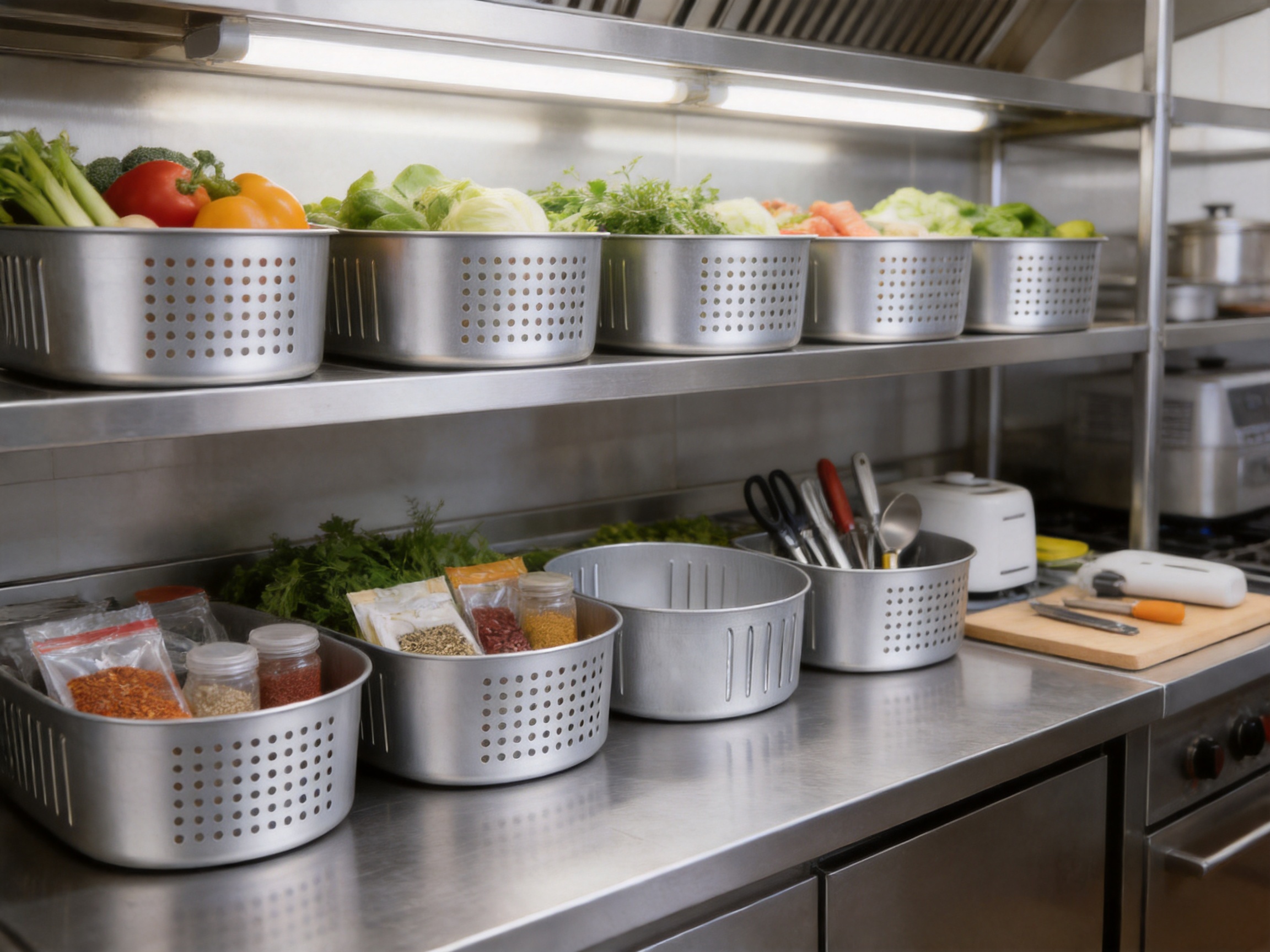
In home kitchens, the Perforated Kitchen Container can be used in many locations. On countertops, it can store fruits, onions, potatoes, garlic, or frequently used cooking ingredients. In pantry areas, it can organize packaged snacks, spice bags, tea packets, baking supplies, or dry goods. In cabinets, it can hold small kitchen tools, lids, appliance accessories, or cleaning items.
Because the container is ventilated, it is particularly suitable for ingredients that should not be sealed in airtight plastic containers. Home users often keep onions and potatoes in original bags, which can become messy or trap dirt. A dedicated perforated container creates a cleaner and more attractive storage solution. It also makes it easier to check remaining quantities before shopping.
The modern appearance allows it to remain visible in the kitchen without looking out of place. Instead of hiding storage containers inside cabinets, users can display produce neatly on shelves or countertops. This can support healthier cooking habits because fresh ingredients are more visible and accessible.
The product also helps reduce clutter. Kitchen counters often become crowded with loose packages, produce bags, utensils, and small accessories. By creating a stable storage zone, the container helps users keep their kitchen more organized. A tidy kitchen is easier to clean and more enjoyable to use.
Applications in Commercial and Professional Environments
Commercial kitchens, catering services, food preparation areas, cafés, and small restaurants can also benefit from ventilated storage. In these environments, ingredients move quickly from delivery to preparation to service. Containers must be durable, easy to clean, and practical for repeated use. The Perforated Kitchen Container meets these needs with its robust formed structure and breathable design.
Commercial users may use the container for produce staging, ingredient sorting, tool organization, or drying small washed items. Because the product is lightweight but sturdy, staff can move it between storage shelves, preparation tables, and washing areas. The perforations help reduce water retention after cleaning and support airflow around stored items.
For appliance manufacturers and kitchen equipment suppliers, the container can be integrated as an accessory in storage systems, small household appliance packages, or customized kitchen organization sets. OEM/ODM support is particularly important in this context because commercial customers may need special sizes, packaging, surface treatments, or performance requirements.
The factory’s experience with kitchen appliance accessories and hardware products allows it to understand both consumer and industrial expectations. This makes the product suitable not only as an independent kitchen container but also as a component in a larger product ecosystem.
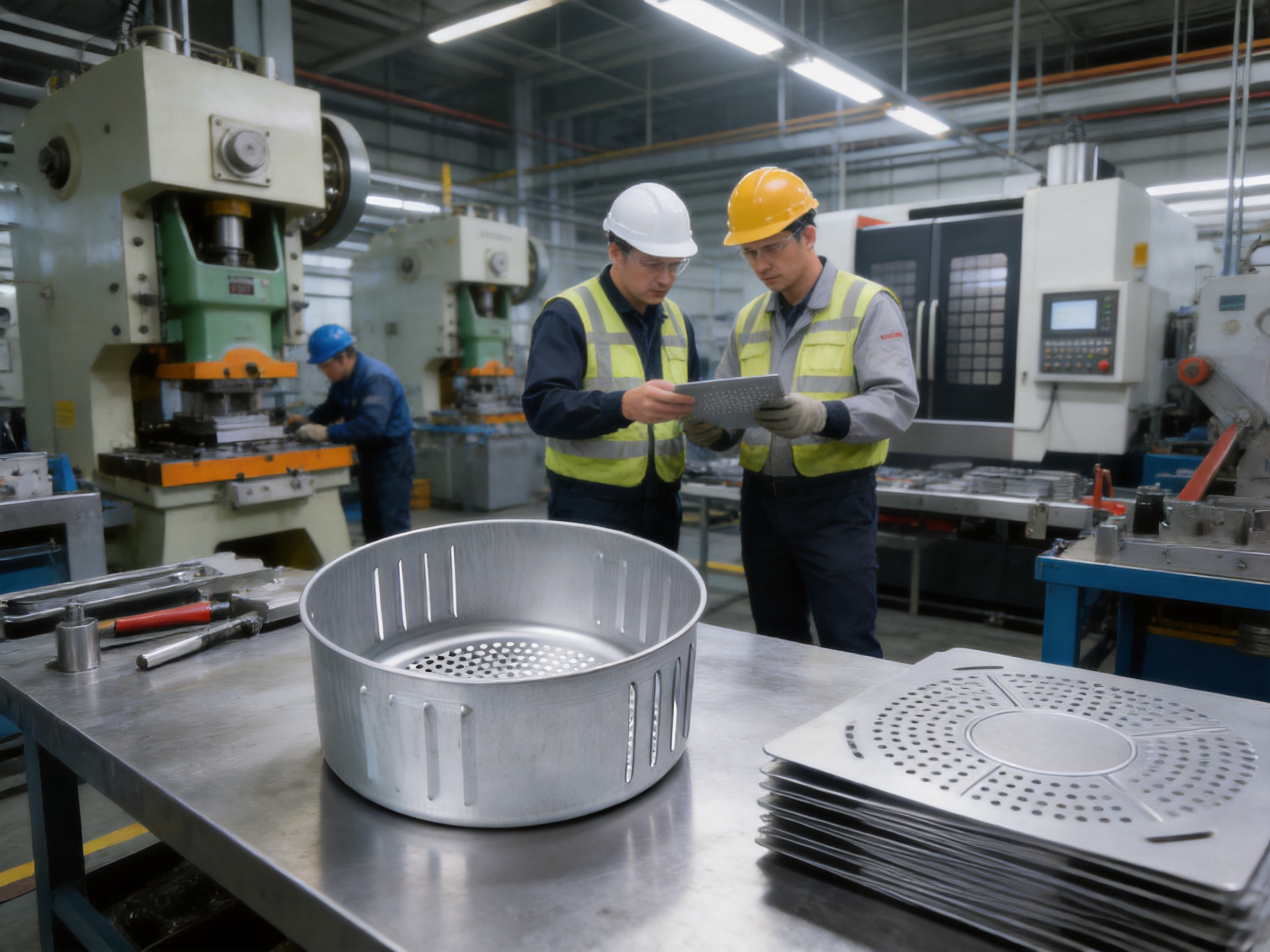
Design Balance: Airflow, Strength, and Aesthetics
A good perforated container requires careful design balance. Too many holes may reduce strength. Too few holes may reduce ventilation. Large openings may weaken the structure or allow items to fall through. Small openings may clog more easily or provide less airflow. The Perforated Kitchen Container is designed to balance these factors for practical daily use.
The perforated pattern supports moisture escape while maintaining a stable formed body. The container can hold a range of kitchen items without feeling flimsy. Its clean visual rhythm also gives the product a modern look. Perforation is therefore both functional and aesthetic.
The smooth surface enhances the design. Kitchen products must not only work well; they must also fit into the user’s living environment. A container that looks industrial, rough, or poorly finished may be rejected even if it is functional. This product presents a stylish and simple appearance suitable for contemporary kitchens, utility rooms, pantry shelves, and appliance display areas.
From a manufacturing perspective, achieving this balance requires tooling accuracy, process control, and finishing experience. The company’s background in stamped parts and bending parts supports these requirements. Consistency across batches is especially important for buyers who need retail-ready products or repeat OEM supply.
Customization Possibilities for OEM and ODM Buyers
One of the major advantages of working with an experienced manufacturer is customization flexibility. The Perforated Kitchen Container can be adapted to different customer requirements, subject to engineering evaluation and production feasibility. Customization may involve size, shape, perforation style, edge design, surface finish, packaging, and intended application.
For example, a customer may need a shallow container for countertop fruit display, a deeper container for pantry vegetables, or a compact size for appliance accessory storage. Another customer may require a specific hole pattern to match a design language or improve airflow for a particular application. A brand owner may request packaging suitable for retail shelves or e-commerce shipment.
OEM/ODM support can also include prototype development. Samples allow customers to test usability, appearance, weight, stacking, cleaning, and packaging before committing to mass production. This reduces risk and improves the final product’s market fit. Rapid prototyping and efficient production conversion help shorten development cycles.
For international buyers, customization must be supported by reliable communication, stable production, quality control, and delivery planning. The company’s export and manufacturing experience provides a foundation for long-term cooperation. Customers can work with a supplier that understands both production details and market expectations.
Material and Surface Considerations
The performance of a kitchen container depends partly on material and surface treatment. Metal kitchen accessories must be selected and processed according to intended use, customer requirements, cost targets, and environmental conditions. The Perforated Kitchen Container benefits from a smooth surface that resists grease and residue, making cleaning easier and supporting a hygienic user experience.
Surface finish can influence corrosion resistance, appearance, texture, and maintenance. Depending on customer requirements, kitchen metal products may use different material grades, coatings, polishing levels, or surface treatments. A professional manufacturer can help evaluate practical options based on application and budget.
For kitchen use, it is important that surfaces be smooth enough for easy wiping and that edges be comfortable to handle. Food storage accessories should avoid rough corners and difficult-to-clean crevices where residue may accumulate. The container’s formed structure and perforated design are developed with these everyday usability factors in mind.
Customers purchasing for appliance brands or retail programs may also require consistency in color, surface brightness, packaging protection, and batch appearance. Manufacturing experience helps maintain these standards from sample approval through mass production.
Supply Capacity and Stable Delivery
In business-to-business purchasing, product quality is only one part of supplier evaluation. Buyers also need stable delivery, reliable communication, scalable capacity, and after-sales support. A well-designed product becomes difficult to use commercially if the supplier cannot meet deadlines or maintain consistency. The manufacturer’s production foundation gives the Perforated Kitchen Container a stronger supply advantage.
The company operates a 5,000-square-meter factory with multiple stamping workshops and more than 60 employees. This production base supports batch manufacturing, processing flexibility, and efficient order conversion. For customers requiring steady supply, these resources help reduce procurement risk.
Stable delivery is especially important for seasonal kitchen product sales, appliance launches, retail promotions, and export orders. Delays can disrupt product schedules and increase costs. A manufacturer with established production systems and quality control can plan orders more effectively and support long-term cooperation.
Comprehensive after-sales service is another strength. If customers require technical adjustments, quality feedback, packaging changes, or repeat-order improvements, responsive support helps maintain a successful business relationship. This is particularly valuable for customized products, where small refinements can improve market acceptance.
Sustainability and Long-Term Value
Durable kitchen products can support more sustainable consumption by reducing the need for frequent replacement. Many low-cost storage items fail quickly due to cracking, warping, staining, or odor absorption. A robust perforated metal container can provide longer service life under normal use, creating better long-term value for both consumers and commercial buyers.
The product may also help reduce food waste by improving storage conditions for selected ingredients. When vegetables, onions, potatoes, and fruits are kept in a more ventilated environment, users may experience fewer moisture-related storage problems. While proper food handling still depends on temperature, humidity, and ingredient type, the container supports a more thoughtful approach to freshness preservation.
For brands and retailers, long-term value also comes from customer satisfaction. A product that is attractive, practical, and durable is more likely to generate repeat purchases and positive feedback. When combined with customization options, stable manufacturing, and quality control, the container becomes a strong product candidate for kitchen organization lines and appliance accessory programs.
How the Product Improves Kitchen Workflow
Efficient cooking begins before food reaches the pan. Ingredients must be visible, accessible, and properly stored. The Perforated Kitchen Container improves workflow by organizing frequently used items in a clear and reachable location. Instead of searching through plastic bags, crowded drawers, or mixed cabinets, users can quickly identify and retrieve what they need.
For meal preparation, the container can hold washed vegetables temporarily while excess moisture drains or evaporates. It can also be used to collect ingredients before cooking, sort produce after shopping, or stage small tools near a preparation area. Its versatility makes it useful throughout the cooking process.
In small kitchens, organization is especially important. Limited counter and cabinet space can make clutter a daily challenge. A durable container that can be moved easily and placed on shelves, counters, or inside cabinets helps users adapt their storage layout. The clean appearance also allows open storage without making the space feel untidy.
For families, the product can help separate different ingredient groups. One container may be used for onions and garlic, another for fruits, and another for snacks or appliance accessories. For commercial users, multiple containers can support ingredient sorting and workflow zoning.
Competitive Advantages for Buyers
For importers, distributors, appliance manufacturers, retailers, and kitchenware brands, the Perforated Kitchen Container offers several competitive advantages. First, it addresses a real user need: breathable, clean, durable storage. Second, it has broad application potential across home and commercial kitchens. Third, it can be customized to different product lines. Fourth, it is backed by an experienced manufacturer with stamping and forming capability.
Many low-cost containers compete mainly on price. However, buyers who focus only on low price often face quality complaints, inconsistent appearance, weak packaging, and short product life. This container provides a better value proposition by combining practical function with reliable manufacturing. Its smooth surface, sturdy construction, and modern style help position it above ordinary storage baskets.
The product also fits well with current kitchen organization trends. Consumers increasingly value clean countertops, visible ingredients, pantry systems, and products that combine function with design. A perforated metal container aligns with these trends while offering a clear practical benefit: ventilation.
For OEM buyers, the company’s ability to provide rapid prototyping and production conversion can shorten development time. For distributors, stable manufacturing capacity supports repeat orders. For retailers, the product’s attractive appearance and clear usage story make it easier to explain to consumers.
Recommended Use and Care
To get the best results from the Perforated Kitchen Container, users should store suitable items according to their freshness requirements. Potatoes, onions, garlic, fruits, and vegetables that benefit from airflow can be placed in the container, preferably without overcrowding. Overfilling may reduce air circulation and increase pressure on delicate produce.
The container should be placed in an appropriate environment based on the stored food. Some items require cool, dry, and dark conditions, while others may need refrigeration or different humidity levels. The container supports ventilation, but users should still follow proper food storage guidance for each ingredient.
For cleaning, users can wipe or wash the container according to the selected surface finish and supplier instructions. Food residue should be removed promptly. After cleaning, the perforated design helps the container dry more easily, but it should still be allowed to drain fully before storing dry goods.
Users should also avoid inappropriate loading beyond the product’s intended capacity. Although the container is sturdy, every storage accessory has practical load limits. For customized orders, buyers can discuss target load requirements with the manufacturer during product development.
Q&A Section
What is the main purpose of the Perforated Kitchen Container?
The main purpose is to provide breathable, durable, and easy-to-clean kitchen storage. Its perforated design allows airflow, helping moisture escape and supporting better storage conditions for produce, herbs, onions, potatoes, fruits, vegetables, and selected kitchen accessories.
Why is the perforated design better than a fully closed container?
A fully closed container can trap humidity, which may increase the risk of mold, odor, and spoilage for foods that require ventilation. The perforated design allows air to circulate, helping stored items remain drier and fresher under suitable storage conditions.
Can the container be used for items other than food?
Yes. It can also organize small kitchen tools, appliance accessories, spice packets, tea bags, snack packs, removable parts, and other household or commercial kitchen items. Its breathable and sturdy structure makes it versatile.
How does it compare with plastic storage baskets?
Plastic baskets are often lightweight and inexpensive, but they may deform, absorb odors, stain, or trap moisture depending on design. The perforated metal container offers improved durability, easier wiping, better airflow, and a more refined appearance.
Is the product suitable for commercial kitchens?
Yes. Its sturdy construction, ventilated design, and easy-clean surface make it useful for commercial kitchens, catering spaces, cafés, food preparation areas, and appliance accessory applications.
Can the size or design be customized?
Yes. OEM and ODM customization are supported. Buyers may request changes in size, shape, perforation pattern, surface finish, packaging, and other specifications, subject to engineering evaluation and production feasibility.
What manufacturing processes are used for this type of product?
The product is associated with precision metal stamping, perforating, bending, forming, trimming, edge treatment, and surface finishing. These processes help create consistent holes, stable shape, smooth surfaces, and reliable durability.
Why is manufacturing experience important for a simple container?
A perforated container may appear simple, but it requires accurate tooling, consistent hole patterns, safe edges, stable bending, clean finishing, and quality inspection. Experienced manufacturing reduces defects and improves batch consistency.
Does the container help reduce food waste?
It can help reduce moisture-related storage problems for suitable foods by improving airflow. While proper storage also depends on temperature, humidity, and ingredient type, the container supports better organization and ventilation, which may help extend usable freshness for certain items.
What makes this product valuable for distributors and kitchenware brands?
It combines a clear consumer benefit, modern appearance, practical durability, easy cleaning, and customization potential. It is also supported by a manufacturer with strong stamping, bending, prototyping, and production capabilities.
Conclusion
The Perforated Kitchen Container is a practical and well-engineered solution for modern kitchen storage. Its perforated structure supports airflow, helps moisture escape, and creates better conditions for produce and other ventilated storage needs. Its smooth surface makes cleaning easier, while its sturdy formed construction provides durability for daily use.
Compared with plastic bins, solid boxes, woven baskets, and ordinary wire storage, the product offers a stronger balance of ventilation, cleanliness, strength, and appearance. It is suitable for home kitchens, pantry organization, commercial food preparation, kitchen appliance accessory programs, and customized storage solutions.
The product’s value is further strengthened by the manufacturing capabilities behind it. With more than 20 years of industry experience, a modern 5,000-square-meter factory, multiple stamping workshops, skilled employees, OEM/ODM customization, rapid prototyping, quality control, stable delivery, and after-sales support, the manufacturer can provide more than a standard container. It can provide a reliable production partnership for customers seeking high-quality metal kitchen accessories.
For buyers who want a durable, attractive, and functional kitchen storage product, the Perforated Kitchen Container offers a compelling combination of everyday usability and professional manufacturing strength. It is designed not only to store items, but also to improve freshness, organization, hygiene, and long-term value in the kitchen.
References
1. Fellows, P. Food Processing Technology: Principles and Practice. Woodhead Publishing.
2. Robertson, G. L. Food Packaging: Principles and Practice. CRC Press.
3. Kalpakjian, S., and Schmid, S. Manufacturing Engineering and Technology. Pearson.
4. Groover, M. P. Fundamentals of Modern Manufacturing: Materials, Processes, and Systems. Wiley.
5. The Culinary Institute of America. The Professional Chef. Wiley.
6. McGee, H. On Food and Cooking: The Science and Lore of the Kitchen. Scribner.
Product: Perforated Kitchen Container
Previous Post
Stamped Ultra-Thin Parts for Precision, Lightweight, and Durable Applications
Next Post
Precision Circular Stamped Parts with Central Holes for Reliable Industrial Assembly
News
-
-
What Is Deep Drawing Process and What Are Deep-Drawn Parts The deep drawing process is a sheet metal forming operation in which a flat meta...
READ MORE -
Manufacturing & Materials Engineering Why Deep Draw Components Outperform Fabricated Sheet Metal Parts in Leak-Proof Applications Seam...
READ MORE -
A flat mounting plate with three punched holes and a rectangular container with a fitted lid can come off presses in the same workshop, yet...
READ MORE
Get Fresh Updates Via Email
We promise we will never disclose your email address, and you can opt out at any time.
-
Quick Links
Home About Us Products Service News Contact Us -
Product list
Deep-drawn parts Stamped parts Bending parts Kitchen appliance accessories Automotive stamping parts -
About Us
Factory Honour FAQ -
News
Company News Industry News -
Contact Us
Address: South side of Shunke Road, Yangming Science and Technology Industrial Park, Yuyao City, Zhejiang Province, China Tel: +86-13905842349/+86-13738485724 Email: hongli@hl-stamping.com
Copyright © Yuyao Hongli Optoelectronics Co., Ltd. All Rights Reserved.
Custom Precision-Sheet/Sheet Metal Stamping Manufacturers
