


 English
 русский
 Español
 عربى
عربى

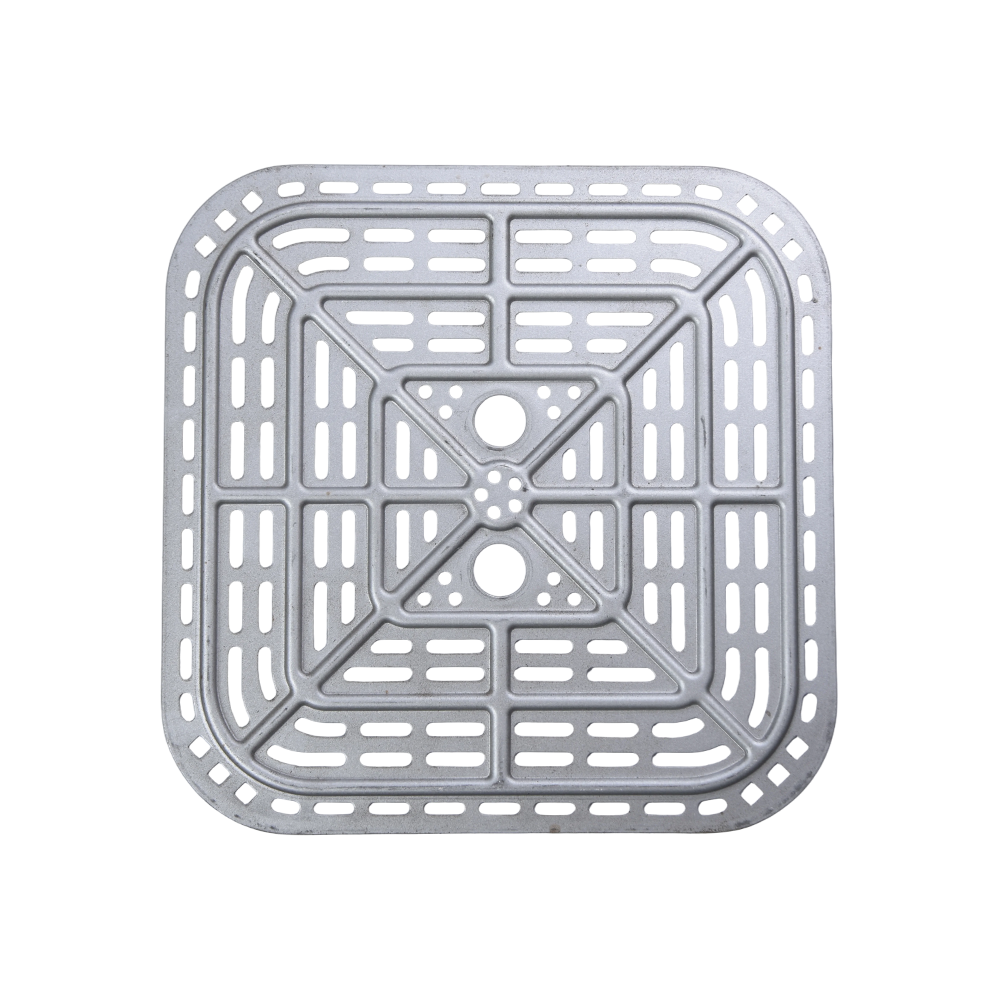
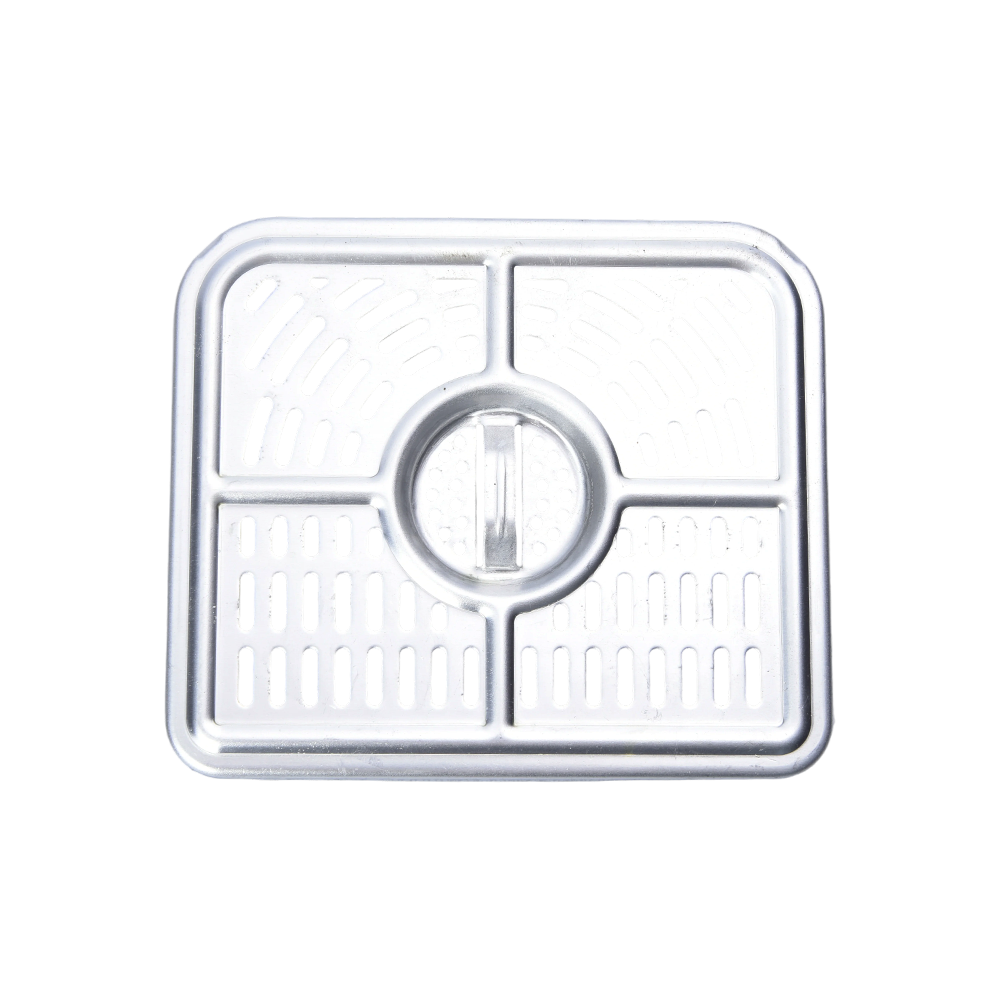
Steel is the backbone of modern manufacturing, yet it is never a single, uniform material. When engineers and buyers ask, "How can you clas...
READ MORE

News
Home / Author / Zhang Meilin — Product Sales Consultant / Precision Stamped Square Parts with Holes for Reliable Industrial Assembly
Precision Stamped Square Parts with Holes for Reliable Industrial Assembly
2026-08-03
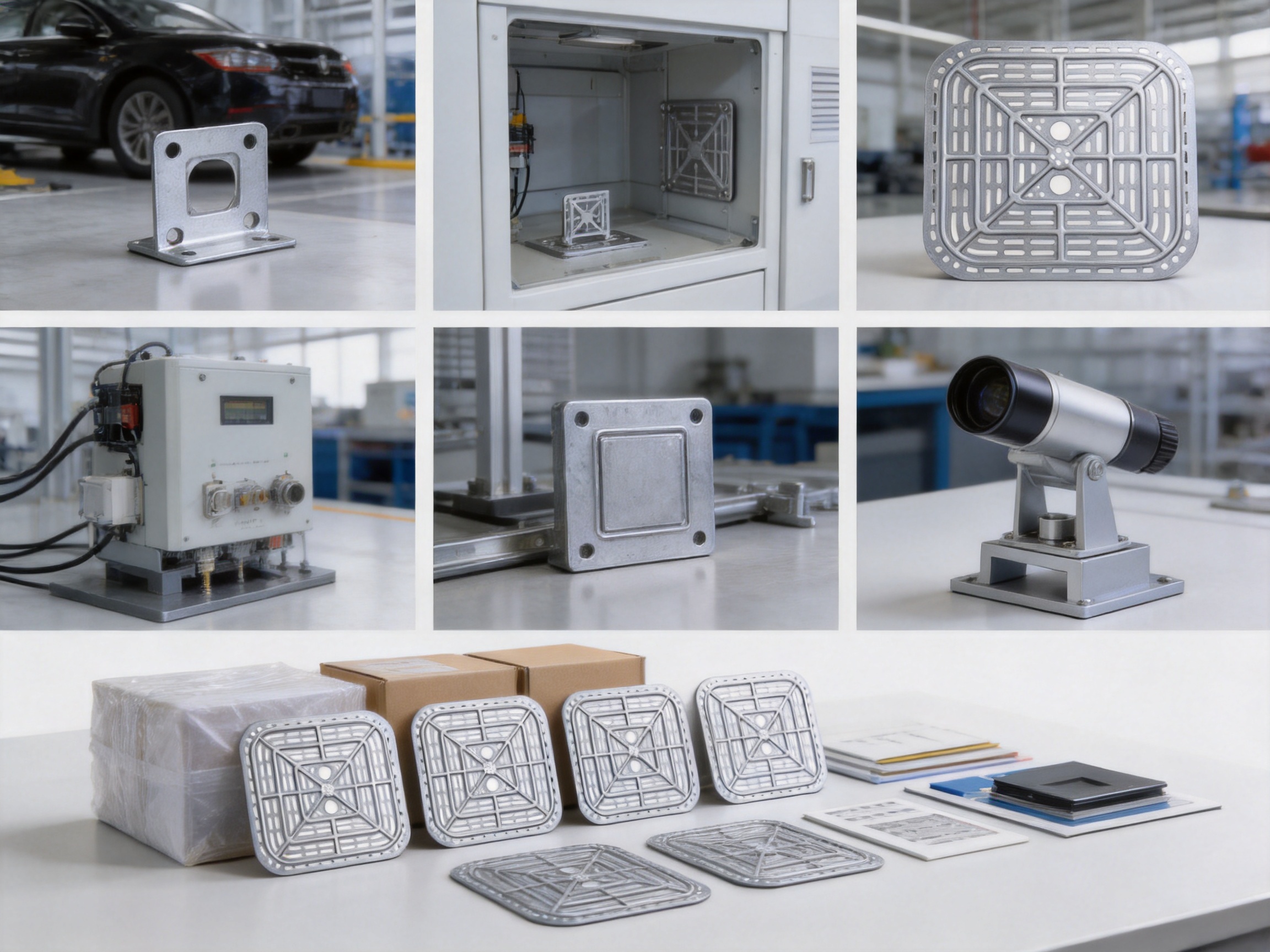
Stamped square parts with holes are compact but highly functional metal components used in fastening, mounting, positioning, reinforcement, shielding, and structural assembly applications. Their straightforward geometry makes them suitable for many industries, while their stamped construction provides the consistency, repeatability, and production efficiency required for commercial manufacturing. When carefully designed and produced, a square stamped part can deliver accurate dimensions, dependable hole placement, strong mechanical performance, and efficient integration into a finished product.
Yuyao Hongli Optoelectronics Co., Ltd. manufactures customized stamped square parts with holes for customers seeking reliable metal components and responsive production support. The company’s capabilities include metal stamping, deep drawing, bending, and the manufacture of components for household appliances, automotive applications, electrical equipment, hardware products, optical instruments, and other industrial assemblies. With more than 20 years of manufacturing experience, a modern 5,000-square-meter factory, multiple stamping workshops, and a workforce of more than 60 employees, the company is positioned to support both standard orders and application-specific projects.
This article examines the design features, manufacturing advantages, material considerations, finishing options, quality requirements, and practical applications of stamped square parts with holes. It also explains how an experienced manufacturer can help customers move from an initial drawing or sample to stable, repeatable mass production.
Understanding Stamped Square Parts with Holes
A stamped square part with holes is generally produced from sheet metal through a forming process that uses a punch, die, or combination of tooling to cut and shape the material. The basic component may have a flat square or rectangular profile, one or more through-holes, formed edges, bends, embossments, or other secondary features. The exact configuration depends on the intended application.
The holes may be used for screws, rivets, bolts, pins, clips, shafts, wiring, or alignment features. Their diameter, location, spacing, and quantity can be adapted to the customer’s assembly requirements. A simple four-hole plate may serve as a mounting bracket, while a more complex stamped component may combine holes with bends, slots, tabs, and raised sections to create a functional installation part.
Although the appearance of a square stamped part may seem simple, its performance depends on many technical details. Material thickness, corner radius, hole-to-edge distance, flatness, burr control, dimensional tolerances, surface condition, and forming sequence all influence the final result. A component that is correctly designed and consistently manufactured can reduce assembly problems and improve the service life of the equipment in which it is installed.
Stamped square parts are often selected when a customer needs a repeatable metal component at a competitive production cost. Compared with individually machined parts, stamping can offer faster cycle times and lower material waste for suitable geometries. Compared with manually fabricated brackets, stamping provides better consistency and more efficient large-volume production. These advantages make stamped parts particularly valuable for manufacturers that require hundreds, thousands, or larger quantities of similar components.
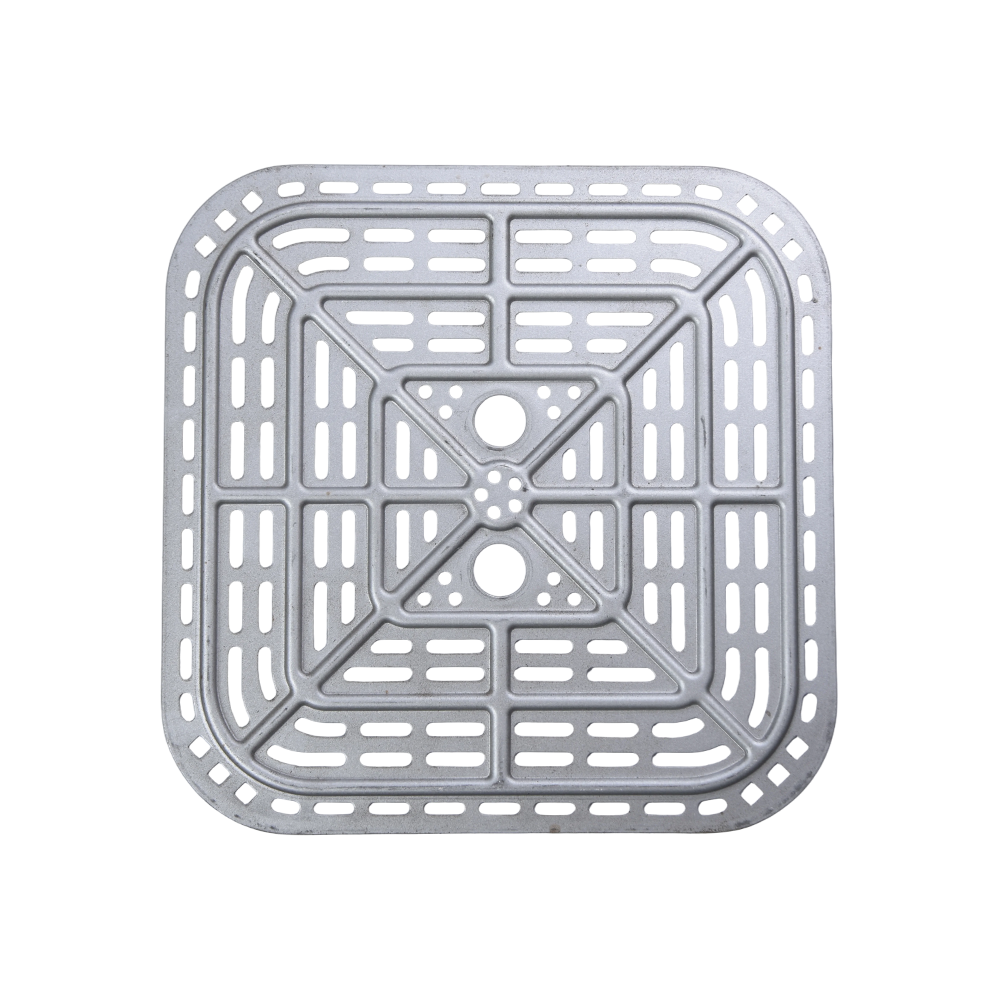
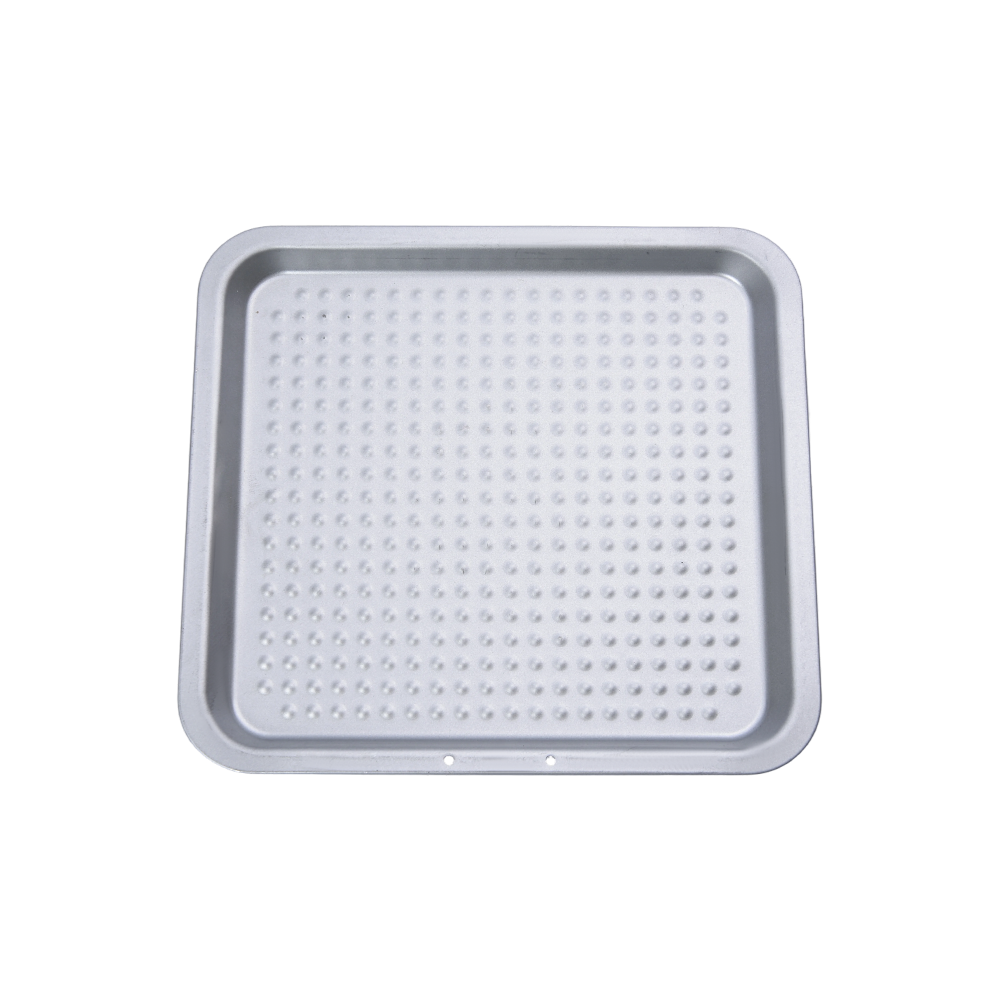
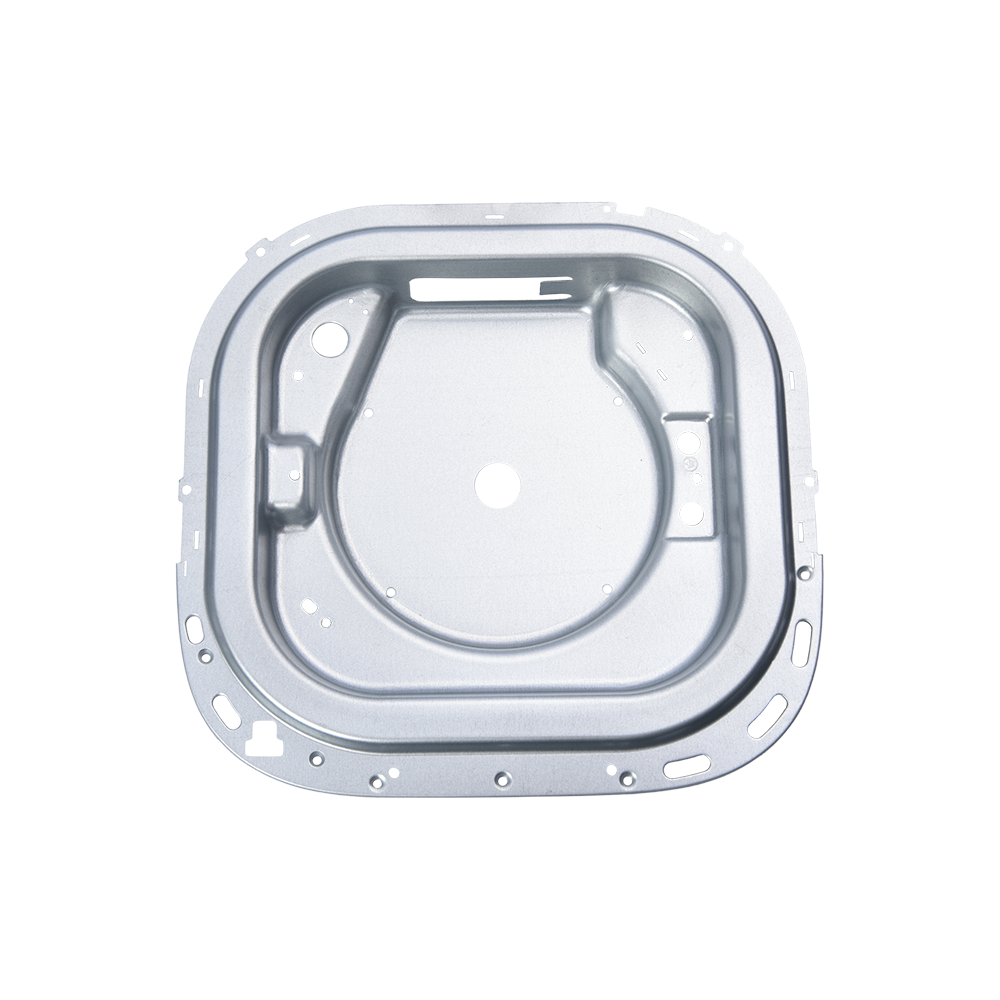
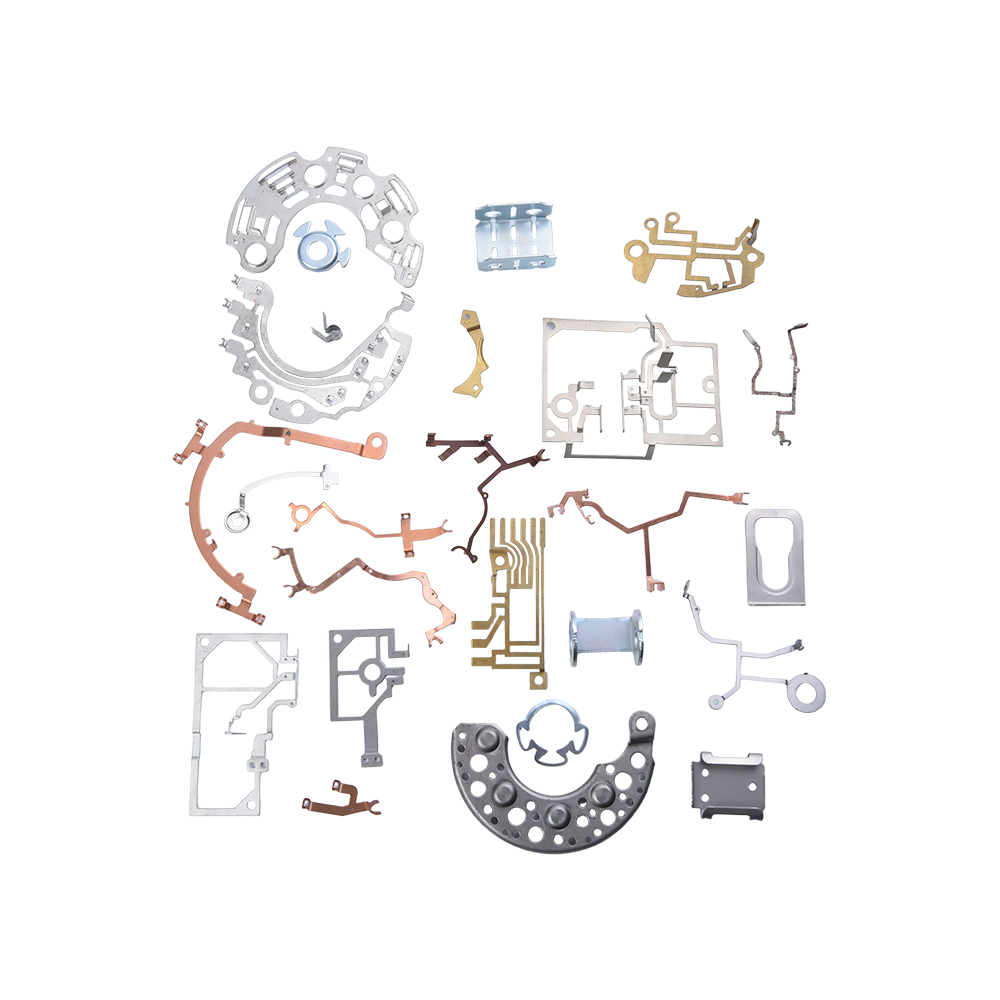
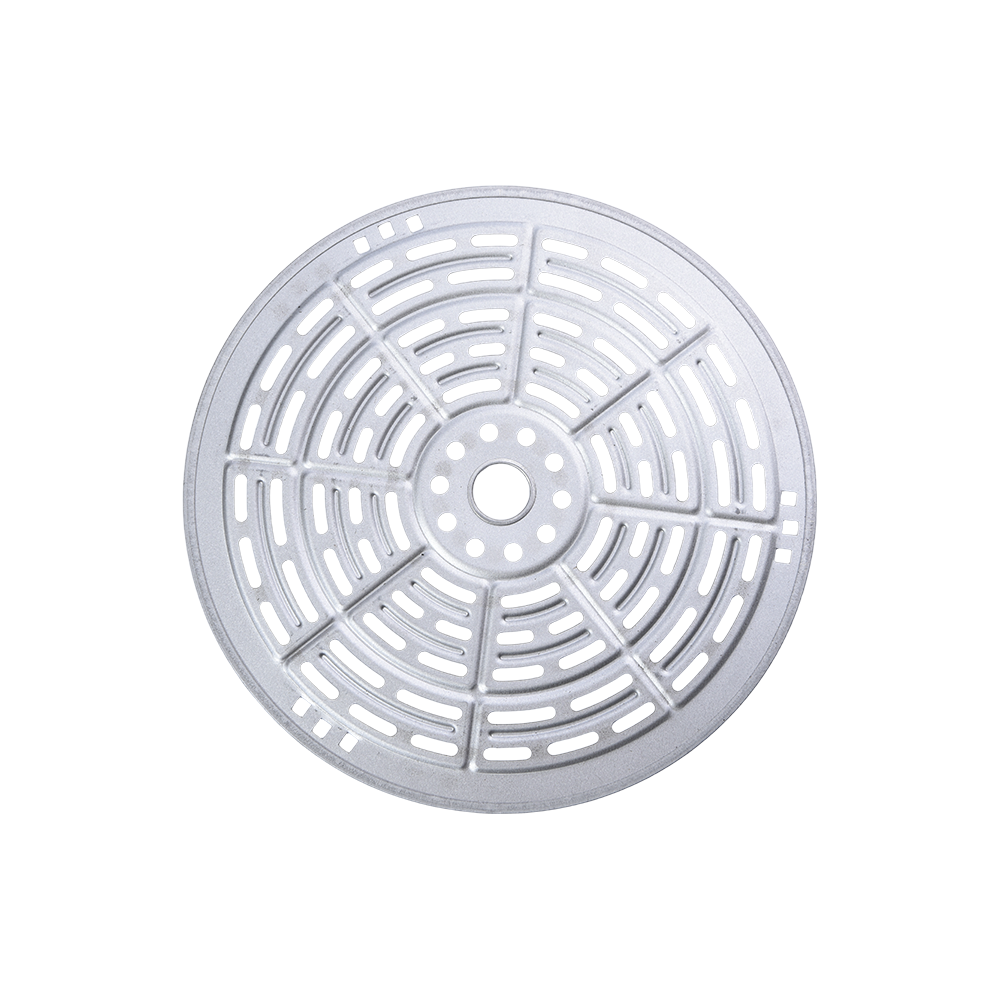
Stamped square parts with holes
Key Product Advantages
Consistent Dimensions and Repeatable Production
One of the principal advantages of stamped square parts with holes is the repeatability created by dedicated tooling and controlled production conditions. Once the die and process parameters have been properly established, each production cycle can reproduce the same basic shape. This consistency is important when the part must fit a predefined assembly, match other components, or maintain a specific relationship between its holes and edges.
For applications requiring tight control, the typical dimensional tolerance can be approximately ±0.1 mm, depending on the material, geometry, thickness, tooling design, and customer specification. Tolerance requirements should always be confirmed during engineering review because not every feature can automatically achieve the same precision. Nevertheless, a controlled stamping process can provide a high level of dimensional stability for many common square plate and bracket designs.
Efficient Hole Placement
Hole placement is often the most important feature of a mounting or fastening component. A hole that is slightly misplaced can create installation delays, interfere with a screw or rivet, or produce uneven loading in the finished assembly. Stamped square parts with holes are designed to maintain the relationship between the hole pattern and the outside profile, helping the part fit the customer’s assembly system.
Hole size, shape, position, and quantity can be customized. Round holes are common for screws and rivets, while slots may be used when adjustment or tolerance compensation is needed. Multiple holes can be arranged symmetrically or according to a customer’s drawing. When several holes are required, the stamping tool can be designed to produce them in a controlled sequence, reducing variation between individual components.
High Strength and Structural Reliability
Sheet-metal stamping can produce parts with favorable strength-to-weight characteristics. The material remains relatively compact, and formed edges or bends can add stiffness without requiring a large increase in weight. For a square part used as a mounting plate, reinforcement element, or support component, the correct material and geometry can provide reliable resistance to ordinary assembly loads and operating vibration.
In applications involving repeated loading, the design should consider hole-edge stress, corner transitions, bending lines, and the relationship between material thickness and unsupported span. A professional manufacturer can review these details before production and recommend changes such as increasing the edge distance, adding a bend, adjusting a corner radius, or selecting a more suitable material thickness.
Corrosion and Wear Resistance
Stamped square parts may be used in environments exposed to moisture, humidity, temperature variation, dust, cleaning chemicals, or corrosive substances. The material and surface treatment must therefore be selected according to the operating conditions. Stainless steel can provide inherent corrosion resistance, while carbon steel may be protected through plating, coating, painting, or other treatments.
Available surface treatment options may include polishing, coating, and anodizing when compatible with the selected material. These treatments can improve appearance, reduce the risk of corrosion, enhance surface hardness, or provide additional wear resistance. The specific treatment should be matched to the application rather than selected only for visual reasons. For example, a component installed inside a humid appliance may require a different treatment from a visible decorative hardware part.
Flexible Customization
Customization is a major advantage of stamped square parts over generic off-the-shelf plates. Customers can specify the overall length and width, material grade, thickness, hole pattern, corner geometry, bends, surface treatment, and packaging requirements. The part can be optimized for the available installation space and designed to work with the customer’s existing fasteners or assembly tools.
Customization also makes it possible to combine several functions into a single component. A part may include holes for fastening, a formed tab for positioning, a bend for support, and an embossed area for added stiffness. Combining functions can reduce the number of separate components in an assembly and may simplify inventory, installation, and quality inspection.
Manufacturing Process
Engineering Review and Product Definition
Production begins with a clear understanding of the required component. Customers may provide a two-dimensional drawing, three-dimensional model, physical sample, written specification, or even a description of the intended function. The manufacturer reviews the product dimensions, material requirements, hole pattern, tolerances, surface treatment, expected quantity, and application environment.
At this stage, the manufacturing team evaluates whether the proposed geometry is suitable for stamping. Important considerations include the distance from each hole to the part edge, the relationship between hole diameter and material thickness, the required bend radius, the possibility of material distortion, and the amount of clearance needed for the stamping tool. Early review can prevent avoidable tooling problems and reduce the risk of late design changes.
For customers without a finalized drawing, the manufacturer may help convert a sample or functional requirement into a production-ready design. This support is especially valuable for OEM and ODM projects, in which the supplier contributes to product development rather than simply producing a finished drawing.
Material Selection
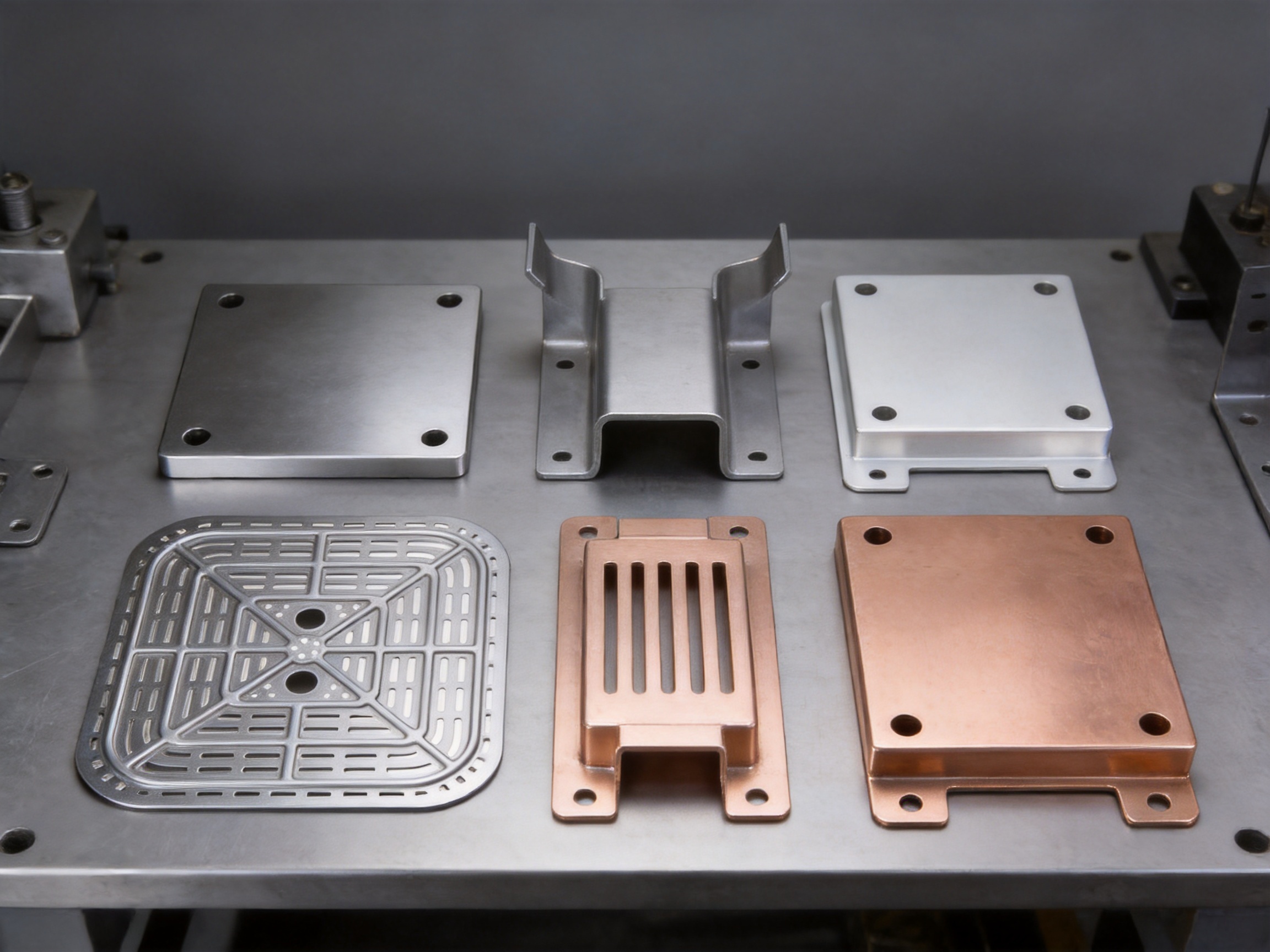
Material selection affects strength, formability, corrosion resistance, appearance, cost, and service life. Common choices for stamped components include carbon steel, stainless steel, aluminum, copper, and other suitable sheet metals. The most appropriate material depends on the component’s operating conditions and manufacturing requirements.
Carbon steel is often selected for general-purpose brackets and structural parts where strength and cost efficiency are important. Stainless steel may be preferred for humid, corrosive, hygienic, or visually exposed applications. Aluminum offers low weight and useful corrosion resistance, while copper and copper alloys can be considered for electrical and thermal applications. The material thickness must also be selected carefully because it influences rigidity, hole quality, forming behavior, and the final mass of the part.
A manufacturer with experience across several product categories can help balance technical and commercial requirements. The goal is not simply to choose the strongest material, but to select a material that can be formed reliably, finished appropriately, and supplied at a sustainable cost.
Tooling and Die Preparation
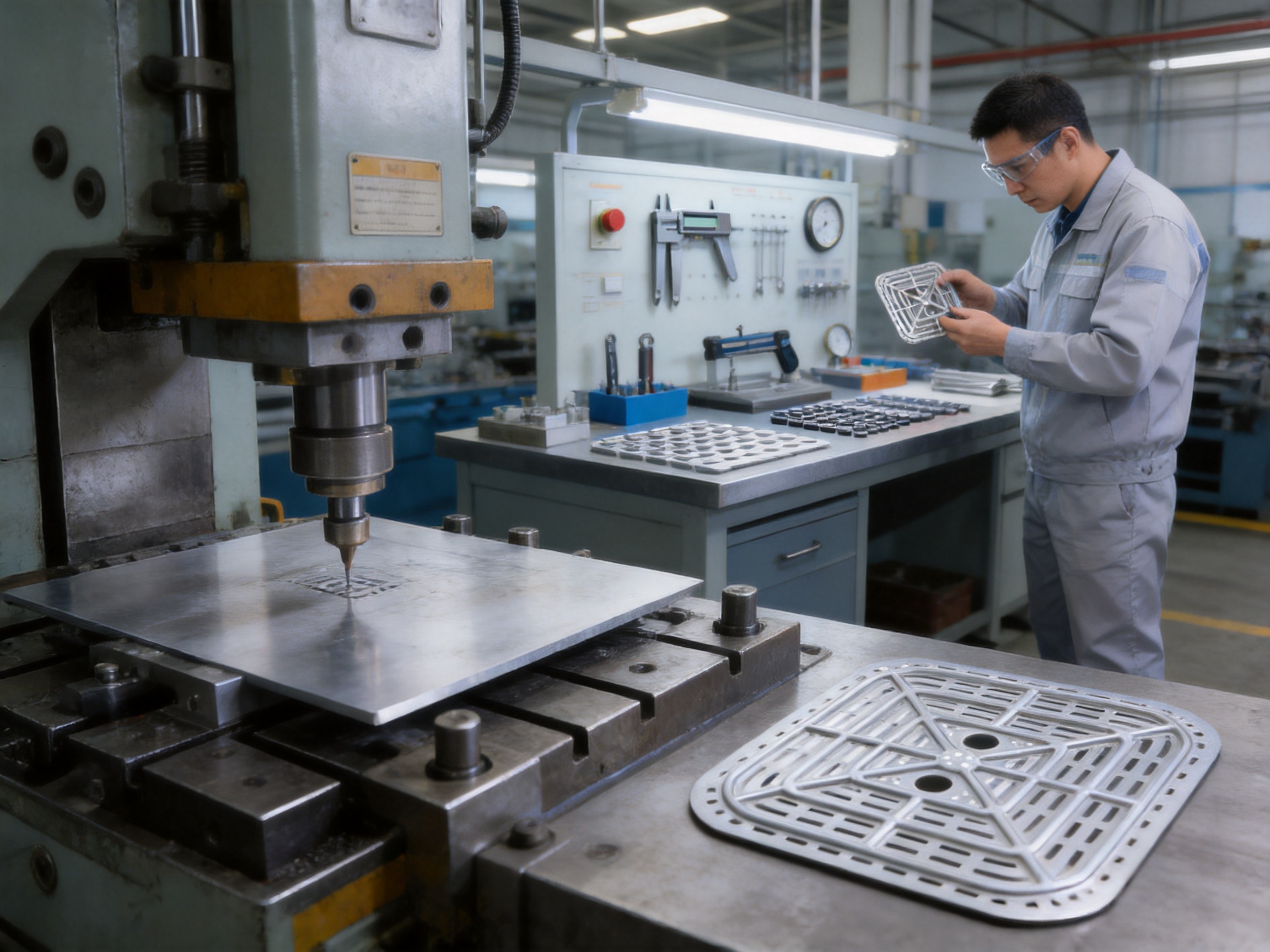
Stamping dies control the shape and features of the component. Depending on the design, production volume, and required operations, the tooling may be simple or highly integrated. A basic die may blank the outside profile and pierce the holes, while a more advanced tool may perform several cutting and forming operations during one production cycle.
Tooling design must account for material flow, clearance, punch strength, die wear, burr formation, and ease of maintenance. The arrangement of the holes and external profile can influence how efficiently the sheet is used. Proper layout may reduce scrap and improve production economy, particularly for high-volume orders.
For complex parts, the stamping sequence may include blanking, piercing, bending, forming, embossing, and trimming. The sequence is selected to reduce deformation and maintain the position of critical features. Trial production and sample inspection allow the manufacturing team to confirm that the tooling produces the required result before full-scale production begins.
Blanking and Piercing
Blanking cuts the outer profile of the part from the sheet, while piercing creates the required holes or slots. These operations must be controlled to achieve clean edges and acceptable burr levels. Punch and die clearance is influenced by material type and thickness. Improper clearance can lead to excessive burrs, rough edges, premature tool wear, or distortion around the holes.
Hole quality is especially important for fastened components. A clean, accurately located hole supports reliable screw, rivet, bolt, or pin installation. If the customer requires a particular burr direction or edge condition, this should be included in the technical specification so that it can be considered in the tooling and inspection plan.
Bending and Secondary Forming
Some square stamped parts remain flat, while others require bends, tabs, flanges, or raised sections. Bending can increase rigidity, create a mounting angle, or provide a surface for an additional fastener. Secondary forming may also improve the part’s ability to locate itself during assembly.
During bending, springback must be considered. Springback occurs when the material partially returns toward its original shape after the forming force is removed. The amount depends on material strength, thickness, bend radius, and forming method. Tooling and process parameters can be adjusted to compensate for this behavior and achieve the required final angle.
Deburring and Edge Control
After stamping, sharp edges and burrs may remain on the cut surfaces. Deburring helps improve handling safety, assembly performance, and surface quality. The appropriate method depends on the part geometry, material, quantity, and required finish. Mechanical methods, tumbling, brushing, or other controlled approaches may be used where appropriate.
Edge control is particularly important for components that will be handled manually, installed near wiring, or placed against painted, coated, or sensitive mating surfaces. A properly controlled edge can reduce the risk of cutting, scratching, interference, or premature wear.
Surface Treatment
Surface treatment is selected according to the material and application. Polishing can improve visual quality and smoothness. Coating can provide color, protection, or additional resistance to environmental exposure. Anodizing may be considered for suitable aluminum parts to improve surface durability and corrosion resistance.
Other treatments may be available depending on the customer’s specification and the selected substrate. The treatment process should be evaluated for coating thickness, adhesion, appearance, dimensional impact, and compatibility with subsequent assembly. For example, a coating applied to a hole may affect fastener fit if the tolerance is too narrow, so critical holes may require special process planning or masking.
Quality Control and Dimensional Assurance
Quality control is essential because stamped components are often installed in assemblies where a small dimensional issue can affect the final product. Inspection begins with incoming material verification and continues through tooling trials, first-piece approval, in-process checks, final inspection, and packaging review.
Typical inspection points include overall length and width, material thickness, hole diameter, hole position, corner dimensions, flatness, bend angle, burr condition, surface finish, and visual appearance. The inspection plan should focus particular attention on dimensions that directly affect assembly or performance.
For repeat production, process stability is as important as the inspection of individual pieces. A reliable manufacturer monitors production conditions and responds to variation before it becomes a large batch problem. Tool wear, material changes, press settings, and surface-treatment variation can all affect the finished component.
Sample approval provides an opportunity for the customer to verify the physical part before full production. The approved sample can serve as a reference for later batches, while the drawing and agreed specifications define the formal acceptance criteria. Clear communication at this stage helps ensure that the supplier and customer share the same understanding of fit, finish, and function.
Typical Inspection Considerations
| Inspection Item | Purpose | Common Considerations |
|---|---|---|
| Overall dimensions | Confirm that the part fits the intended installation space | Length, width, thickness, corner size, and dimensional tolerance |
| Hole diameter | Ensure compatibility with screws, rivets, bolts, or pins | Nominal diameter, burrs, coating buildup, and roundness |
| Hole position | Maintain correct alignment with mating components | Center-to-center spacing, edge distance, and pattern accuracy |
| Flatness or bend angle | Support proper seating and assembly | Material springback, deformation, and fixture requirements |
| Edge condition | Improve safety and prevent assembly interference | Burr height, sharp corners, scratches, and deformation |
| Surface finish | Provide appearance and environmental protection | Polishing quality, coating coverage, adhesion, and color consistency |
| Material verification | Confirm mechanical and environmental suitability | Grade, thickness, supplier documentation, and traceability |
Measurement equipment and inspection methods should be selected according to the precision required. Calipers, micrometers, gauges, height gauges, templates, optical equipment, and dedicated fixtures may all be useful. The right inspection method helps distinguish between a cosmetic variation and a feature that could affect functional assembly.
Advantages Over Alternative Manufacturing Methods
Compared with Machined Parts
CNC machining can produce highly detailed metal components and is valuable for complex three-dimensional parts, prototypes, and low-volume work. However, machining removes material to create the final shape, which can result in longer cycle times and higher costs for simple flat or formed components. Stamping is often more efficient when the required product is based on sheet metal and has a repeatable profile with holes.
Machining may still be appropriate when the design requires deep pockets, complex three-dimensional contours, unusual tolerances, or features that cannot be produced effectively by stamping. The best choice depends on geometry, quantity, material, and performance requirements. For suitable square plates, brackets, and mounting components, stamping offers a practical combination of speed, repeatability, and cost control.
Compared with Manual Fabrication
Manual cutting, drilling, and bending can be useful during one-off repair work or early prototypes. However, manual methods may introduce greater variation in hole placement, edge quality, bend angle, and overall dimensions. They also require more labor and may be difficult to scale when order quantities increase.
Once a design is established, stamping can provide a more stable production method. The tooling defines the main features, and the process can be repeated with less dependence on individual operator technique. This is especially helpful for customers that need consistent components across multiple production batches.
Compared with Generic Standard Components
Standard plates and brackets may be readily available, but they do not always match the customer’s installation space or fastening pattern. Using a generic component may require additional drilling, cutting, or modification, which can increase labor and create inconsistent results.
A customized stamped square part can be designed around the finished assembly. The hole pattern, external dimensions, material, and finish are selected for the actual application. This can reduce adaptation work, simplify installation, and improve the overall appearance of the finished product.
Applications Across Multiple Industries
Automotive Components
Automotive manufacturing uses many small stamped components for mounting, reinforcement, positioning, shielding, and attachment. A square part with holes may support a sensor, secure a trim component, connect a bracket, or provide a fastening surface within a vehicle system. Automotive applications typically require stable dimensions, good resistance to vibration, and suitable protection against moisture and temperature variation.
Because automotive assemblies are produced in significant quantities, the repeatability and production efficiency of stamping are important advantages. The material and surface treatment should be selected according to whether the component is installed inside the passenger compartment, in the engine area, beneath the vehicle, or in another environment.
Household Appliances
Household electric heaters, small appliances, kitchen equipment, and related products may use stamped metal parts for mounting, reinforcement, heat-related support, panel attachment, and internal positioning. Components used in kitchens or humid environments may require corrosion-resistant materials or protective finishes.
Square parts with holes can also help organize internal assemblies by providing stable points for screws, clips, or other fastening systems. Their compact geometry allows designers to make efficient use of limited space while maintaining a dependable connection between components.
Electrical and Electronic Equipment
Electrical equipment frequently incorporates stamped metal parts as brackets, supports, mounting plates, cable-management components, and protective elements. Accurate holes can simplify installation and support consistent assembly across repeated units. When electrical conductivity, grounding, shielding, or heat dissipation is relevant, material selection becomes especially important.
Edges and surface treatment must also be controlled when the part is installed near cables, insulation, connectors, or sensitive electronic components. Deburring and suitable finishing can help reduce the risk of abrasion or interference.
Construction and Hardware Products
Construction hardware and general industrial equipment often require robust metal components that can be installed quickly and withstand ordinary environmental exposure. Stamped square parts may be used as joining plates, support plates, reinforcing elements, or attachment hardware.
For these applications, the design should consider load direction, fastener size, edge distance, corrosion exposure, and installation tools. A simple component can perform effectively when these factors are addressed during the engineering stage.
Optical and Educational Instruments
Optical instruments and educational equipment may require small, accurately positioned metal parts for mounting, alignment, enclosure support, and adjustment mechanisms. In these products, dimensional consistency and clean edges are particularly valuable because the parts may be installed near precision assemblies or visible product surfaces.
Yuyao Hongli Optoelectronics has experience serving product areas that include optical instruments and educational instruments, in addition to household appliances, automotive parts, hardware, and other metal products. This broad application experience supports practical communication between product designers and the manufacturing team.
Design Recommendations for Better Results
Maintain Suitable Edge Distances
The distance between a hole and the outside edge should be sufficient to preserve material strength and reduce distortion during piercing. If a hole is positioned too close to the edge, the remaining material may crack, deform, or fail under load. The appropriate distance depends on material type, thickness, hole diameter, and the intended force on the component.
Consider Material Thickness Early
Material thickness affects rigidity, weight, cost, hole quality, bend behavior, and corrosion protection. A thicker sheet may provide greater stiffness but could require more forming force and increase the component’s weight. A thinner sheet may be economical and easy to form but could require reinforcement features to prevent bending or vibration.
Use Appropriate Corner Geometry
Sharp external corners can increase the risk of cutting injuries and may create stress concentrations. Rounded corners are often easier to handle and can support smoother material flow during stamping. The corner radius should be selected according to the material and the required appearance or fit.
Allow for Coating and Finishing Effects
Surface treatments can change the final dimensions slightly, particularly in holes, slots, and closely fitted areas. If the part will receive coating, plating, polishing, or anodizing, the finishing process should be included in the dimensional review. Critical interfaces may require process allowances or selective treatment.
Define Critical and Noncritical Features
Not every dimension on a component has the same functional importance. Customers can help improve manufacturing efficiency by identifying critical features such as hole location, mounting width, bend angle, or contact surface flatness. This allows the inspection plan and tooling design to focus attention where it matters most.
Plan for Production Volume
Expected order quantity influences the most economical tooling and production method. A low-volume project may be suitable for simpler tooling, while a high-volume program may justify more integrated tooling that combines multiple operations. Discussing forecast quantities and future demand helps the manufacturer recommend a practical solution.
OEM and ODM Support
OEM and ODM customers often need more than a basic stamping service. They may require design assistance, sample development, material recommendations, tooling coordination, surface treatment, inspection, packaging, and delivery planning. An experienced supplier can coordinate these activities through one manufacturing program, reducing communication gaps between separate vendors.
Yuyao Hongli Optoelectronics supports OEM and ODM customization, rapid prototyping, and efficient production conversion. Rapid prototyping allows customers to evaluate fit and function before committing to larger volumes. Once the design is approved, the production process can be transferred into a repeatable manufacturing schedule.
Efficient production conversion is particularly important when a customer is moving from a prototype or manually fabricated sample to commercial production. The production part may require adjustments to hole layout, bend sequence, material thickness, or tooling strategy. Addressing these details before mass production can improve quality and reduce unnecessary rework.
Communication is another important element of OEM and ODM cooperation. Drawings should clearly identify units, tolerances, material grade, surface treatment, inspection requirements, packaging, and any special handling instructions. When these details are complete, the manufacturer can prepare a more accurate quotation and production plan.
Factory Strength and Manufacturing Capacity
Yuyao Hongli Optoelectronics Co., Ltd. was founded in 2000 and has more than two decades of industry experience. Located in Yangming Science and Technology Industrial Park in Yuyao, Zhejiang Province, China, the company operates a modern factory covering approximately 5,000 square meters. Its production organization includes multiple stamping workshops and more than 60 employees.
The company’s product and service scope extends beyond one individual component. It provides manufacturing, processing, wholesale, retail, import, and export services for educational instruments, optical instruments, household electric heaters, small household appliances, automotive parts, hardware products, plastic products, deep-drawn parts, stamped parts, bending parts, kitchen appliance accessories, and automotive stamping parts.
This range of capabilities can be beneficial to customers whose projects involve more than one manufacturing process. A product may require a stamped plate, a bent bracket, a deep-drawn shell, or a combination of metal and plastic components. Working with a supplier familiar with these related processes can support more coordinated product development and sourcing.
The company emphasizes strict quality control, stable delivery, and comprehensive after-sales service. These factors are important for industrial customers because component quality must be supported by dependable communication and supply continuity. A stable supplier relationship can make it easier to manage repeat orders, engineering changes, replenishment schedules, and product improvements.
Packaging, Delivery, and Long-Term Supply
Packaging requirements should protect the stamped parts from scratching, deformation, moisture, and mixing during transport. The packaging method depends on the part size, surface finish, quantity, and sensitivity of the hole edges or formed features. Interleaf material, partitioned cartons, bags, pallets, or customized packaging may be considered.
Parts with polished or coated surfaces may require additional protection to preserve appearance. Small parts should be packed in a way that prevents excessive movement, while larger or more rigid components may require separators to avoid contact damage. Labeling should identify the part number, quantity, batch information, and any relevant customer reference.
Stable delivery depends on more than production speed. It also requires material planning, tooling maintenance, process scheduling, inspection coordination, and clear order communication. Customers with recurring requirements can benefit from establishing forecast information and agreed replenishment arrangements with the supplier.
For international customers, export experience and responsive after-sales service can simplify cooperation. Questions concerning samples, specifications, production progress, packaging, or replacement requirements should be handled through a clear communication channel. Yuyao Hongli Optoelectronics provides import and export services and works with customers worldwide.
Why Choose a Specialized Stamping Manufacturer?
A specialized stamping manufacturer understands the relationship between design, tooling, material, production speed, and quality control. This knowledge helps the supplier identify potential issues before they result in rejected parts or delayed deliveries. It also allows the customer to make informed decisions about tolerances, finishes, and production quantities.
Specialization provides advantages in process familiarity. A manufacturer that regularly produces stamped, deep-drawn, and bent parts is more likely to recognize common forming challenges, recommend practical geometries, and establish efficient production sequences. Experience across automotive, appliance, electrical, hardware, and optical applications also exposes the manufacturing team to a wide range of performance requirements.
Another advantage is the ability to support product development. Rather than treating a drawing as an isolated order, an experienced supplier can consider how the component will be made, inspected, packed, and installed. This broader view may lead to a part that is easier to produce and more reliable in the customer’s assembly process.
Ordering and Project Information
To request a quotation for stamped square parts with holes, customers should ideally provide a drawing or sample, material requirement, thickness, dimensions, hole information, surface treatment, estimated quantity, and intended application. If some information is not yet available, a functional description and reference sample can still help start the discussion.
The customer should also identify any critical tolerances, special edge requirements, inspection standards, packaging preferences, and delivery expectations. If the component will be exposed to humidity, heat, chemicals, vibration, or outdoor conditions, this information should be communicated during the quotation stage.
After technical review, the manufacturer can confirm feasibility, recommend adjustments, and prepare a quotation based on tooling, material, processing, finishing, inspection, packaging, and logistics requirements. Sample production can then be arranged for customer approval before the order enters regular production.
For technical inquiries and customized projects, customers may contact Yuyao Hongli Optoelectronics Co., Ltd. by email at hongli@hl-stamping.com or by telephone at +86-13905842349 and +86-13738485724. The company is located on the south side of Shunke Road, Yangming Science and Technology Industrial Park, Yuyao City, Zhejiang Province, Zhejiang Province, China.
Q&A
What are stamped square parts with holes used for?
They are used for mounting, fastening, reinforcement, positioning, support, shielding, and structural connection. Typical applications include automotive components, household appliances, kitchen equipment, electrical products, construction hardware, optical instruments, and industrial assemblies.
Can the hole size and layout be customized?
Yes. The hole size, shape, quantity, spacing, and position can be customized according to the customer’s drawing or assembly requirements. Round holes, slots, and other suitable openings may be considered depending on the design and manufacturing process.
What materials can be used?
Material options may include carbon steel, stainless steel, aluminum, copper, and other suitable sheet metals. The final selection depends on strength, corrosion resistance, electrical requirements, weight, formability, appearance, and cost.
What dimensional tolerance can be achieved?
Typical tolerances may be approximately ±0.1 mm for suitable features and geometries, but the achievable tolerance depends on material, thickness, tooling, feature size, production volume, and inspection requirements. Critical dimensions should be reviewed and confirmed before production.
Do the parts require surface treatment?
Surface treatment depends on the material and service environment. Polishing, coating, and anodizing are among the options that may be available for improving appearance, corrosion resistance, wear resistance, or surface durability. The treatment should be specified together with the base material and critical dimensions.
Can the parts include bends or formed features?
Yes. In addition to a flat square or rectangular profile, the parts may include bends, tabs, flanges, embossments, or other formed details when the design and material are suitable. These features can improve stiffness, positioning, or assembly functionality.
Can the manufacturer produce prototypes?
Yes. The company supports rapid prototyping and can help customers evaluate a sample before moving to larger-scale production. Prototype review is useful for checking fit, hole alignment, surface finish, and overall function.
What information should be included in a quotation request?
A quotation request should include a drawing or sample, material, thickness, dimensions, hole pattern, tolerance requirements, surface treatment, estimated quantity, packaging needs, and delivery destination. The intended application and environmental conditions are also helpful.
How does stamping compare with machining?
For suitable sheet-metal geometries and repeat production, stamping can offer faster cycles, consistent dimensions, and lower unit costs than machining. Machining may remain preferable for complex three-dimensional shapes, deep pockets, unusual features, or certain low-volume applications.
Why is edge control important?
Controlled edges reduce handling risks, prevent interference during assembly, and help protect nearby cables, coatings, insulation, and mating surfaces. Deburring and suitable edge specifications should be included when the application requires them.
Can the company support international customers?
Yes. The company provides import and export services and supports customers worldwide. Communication regarding samples, technical specifications, production, inspection, packaging, and delivery can be coordinated as part of the project.
Conclusion
Stamped square parts with holes provide an efficient and adaptable solution for industrial fastening, mounting, positioning, and reinforcement requirements. Their advantages include repeatable dimensions, customizable hole patterns, strong sheet-metal construction, practical production efficiency, and compatibility with a wide range of surface treatments. When designed correctly, these components can help simplify assembly and support dependable performance in demanding environments.
The quality of the finished part depends on the complete manufacturing process, including engineering review, material selection, tooling, blanking, piercing, bending, deburring, surface treatment, inspection, packaging, and delivery planning. Choosing a manufacturer with experience across these stages can reduce technical risk and improve supply reliability.
With more than 20 years of experience, a 5,000-square-meter factory, multiple stamping workshops, OEM/ODM support, rapid prototyping, and capabilities covering stamped, deep-drawn, bending, appliance, hardware, optical, and automotive components, Yuyao Hongli Optoelectronics Co., Ltd. offers a comprehensive manufacturing resource for customized metal parts. Its stamped square parts with holes can be developed to meet specific dimensional, functional, environmental, and production requirements.
References
1. American Society for Metals, Metals Handbook: Forming and Forging, technical reference on sheet-metal forming principles and process control.
2. American Society of Mechanical Engineers, Engineering Drawing Practices, reference for dimensional documentation, tolerances, and technical drawings.
3. International Organization for Standardization, Quality Management Systems—Requirements, general reference for controlled manufacturing and quality management practices.
4. International Organization for Standardization, Geometrical Product Specifications, reference for dimensional accuracy, geometric tolerances, and inspection planning.
5. Metal Forming Institute, Fundamentals of Sheet-Metal Stamping, reference on blanking, piercing, bending, tooling, and production considerations.
6. Society of Automotive Engineers, Automotive Engineering Materials and Manufacturing Practices, reference on stamped components used in vehicle applications.
7. Manufacturer-provided product and company information for customized stamped square parts with holes, manufacturing capabilities, surface-treatment options, and industrial applications.
Product: Stamped square parts with holes
Previous Post
Air Fryer Containers: Performance, Manufacturing Excellence, and Reliable OEM Solutions
Next Post
Deep-Drawn Container with Cutouts for Precision Industrial Applications
News
-
-
What Are Stamped Parts? Stamped parts are metal components produced by pressing flat sheet metal between a die and a punch to cut, bend, or...
READ MORE -
Sheet metal is one of those materials that quietly holds everyday life together. The tray inside your air fryer, the bracket behind a car b...
READ MORE -
Sheet metal bending is one of the most fundamental processes in metal fabrication. It turns a flat sheet of steel, aluminum, or copper into...
READ MORE
Get Fresh Updates Via Email
We promise we will never disclose your email address, and you can opt out at any time.
-
Quick Links
Home About Us Products Service News Contact Us -
Product list
Deep-drawn parts Stamped parts Bending parts Kitchen appliance accessories Automotive stamping parts -
About Us
Factory Honour FAQ -
News
Company News Industry News -
Contact Us
Address: South side of Shunke Road, Yangming Science and Technology Industrial Park, Yuyao City, Zhejiang Province, China Tel: +86-13905842349/+86-13738485724 Email: hongli@hl-stamping.com
Copyright © Yuyao Hongli Optoelectronics Co., Ltd. All Rights Reserved.
Custom Precision-Sheet/Sheet Metal Stamping Manufacturers
