


 English
 русский
 Español
 عربى
عربى

Steel is the backbone of modern manufacturing, yet it is never a single, uniform material. When engineers and buyers ask, "How can you clas...
READ MORE

News
Home / Author / Wang Xinyi — Senior After-Sales Coordinator / Air Fryer Base: Durable, Stable, and Efficient Metal Support for Modern Kitchen Appliances
Air Fryer Base: Durable, Stable, and Efficient Metal Support for Modern Kitchen Appliances
2026-08-03
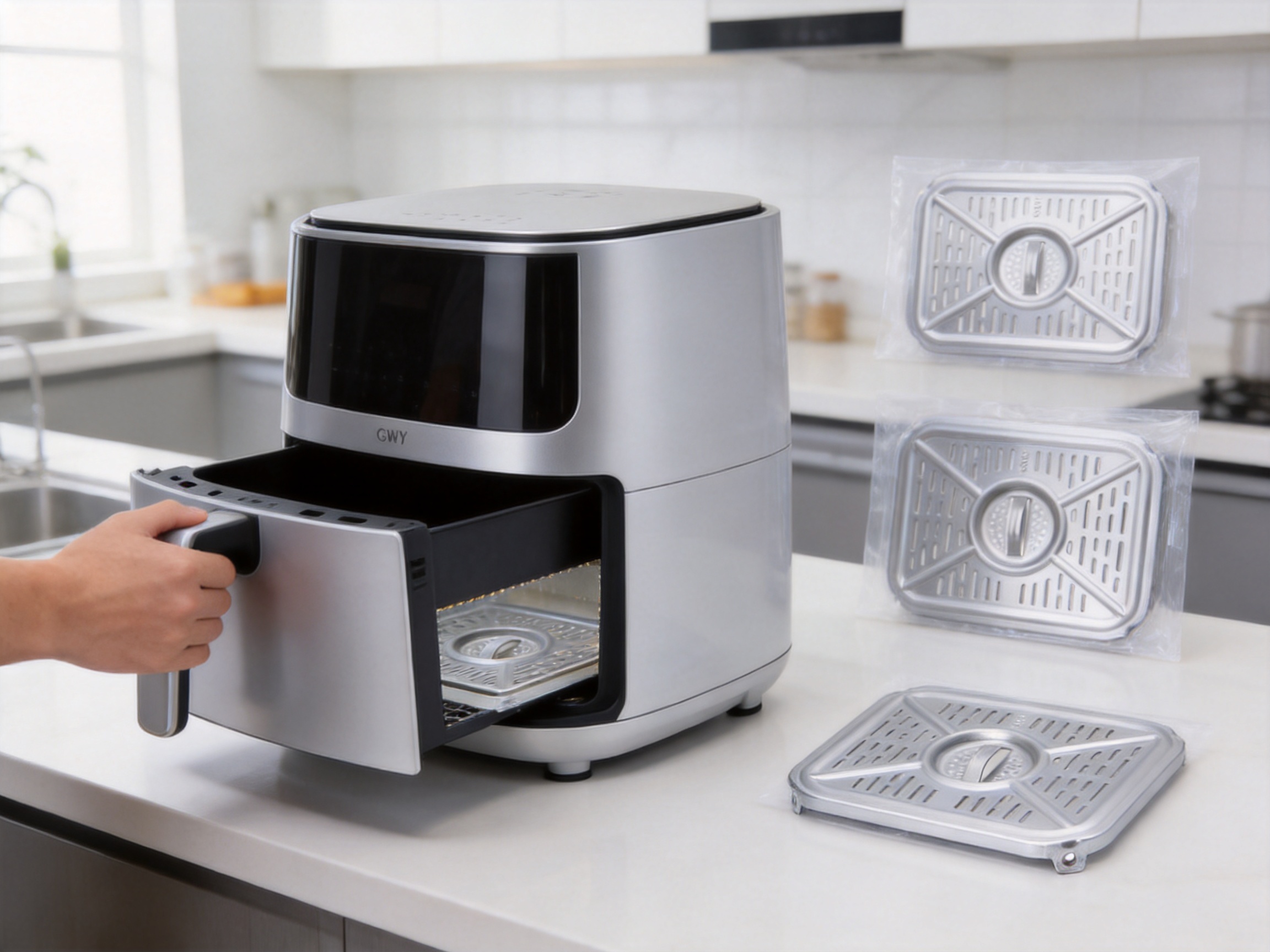
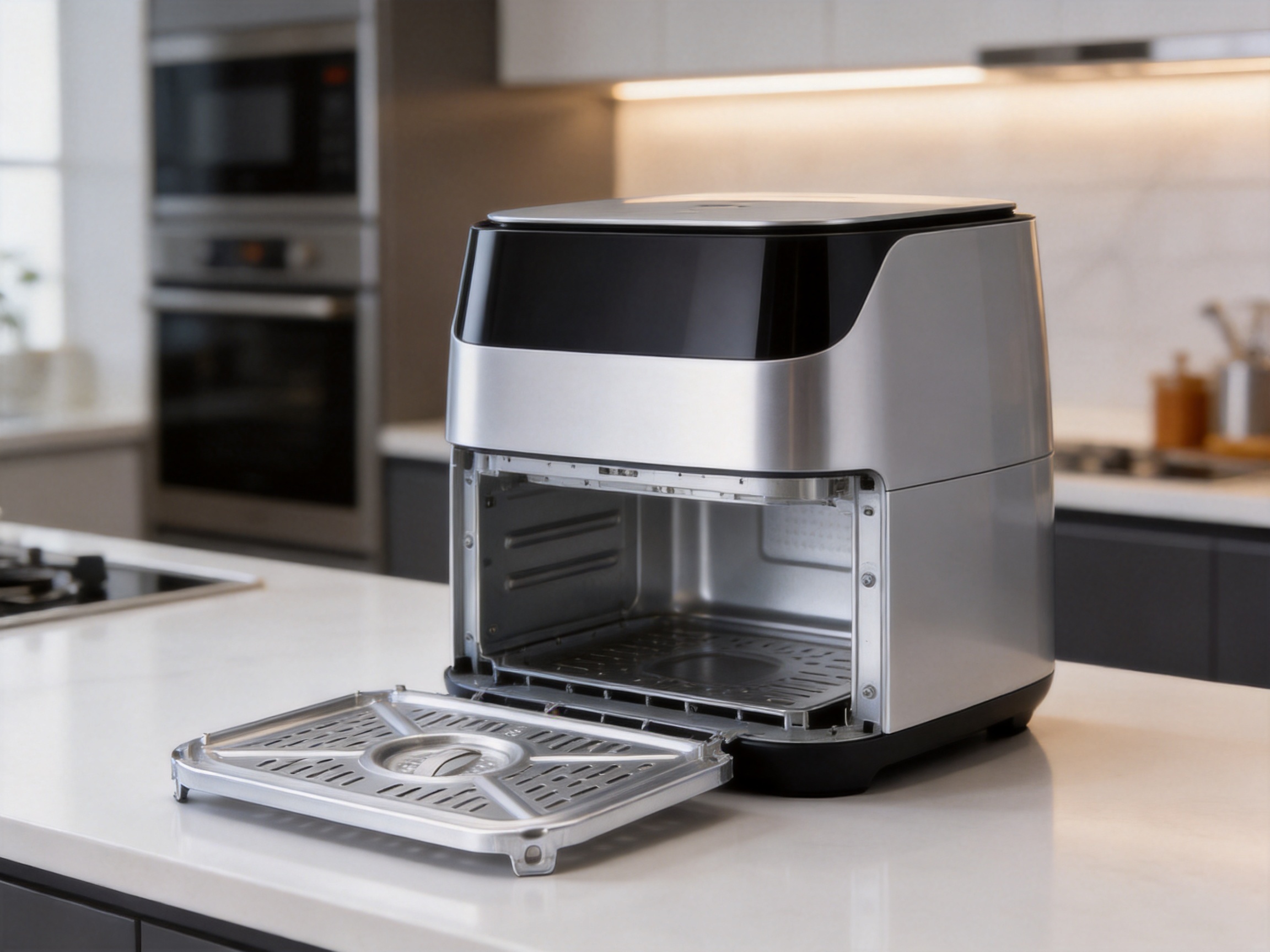
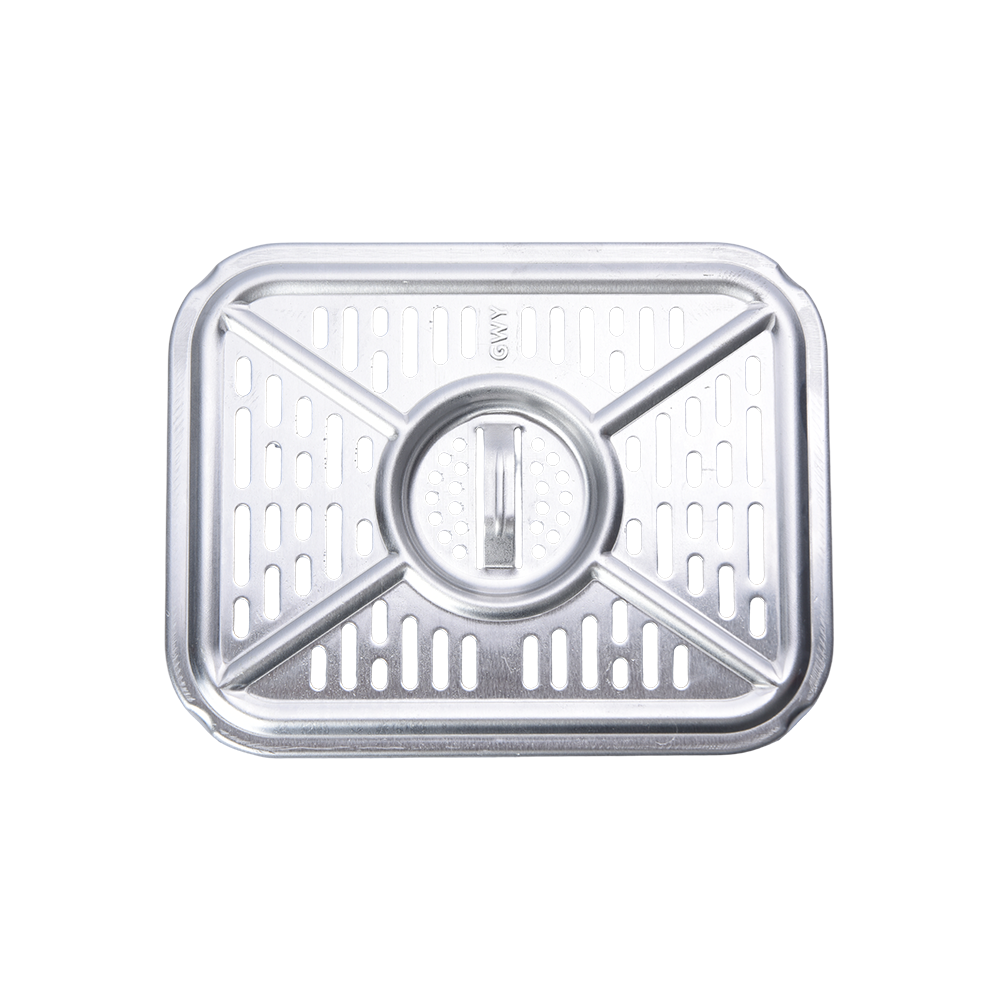
Air Fryer Base
The air fryer has become an important appliance in modern kitchens because it offers a practical way to prepare crisp, flavorful food with less oil than conventional deep frying. Although consumers usually focus on the air fryer basket, heating system, controls, and cooking capacity, the base is equally important to the appliance’s safety, stability, service life, and everyday usability. A well-designed air fryer base provides the structural foundation that supports the appliance during cooking, cleaning, handling, and storage.
The Air Fryer Base is developed as a robust kitchen appliance accessory for manufacturers seeking dependable performance and consistent production quality. It is designed to withstand high temperatures, repeated operation, frequent cleaning, grease exposure, and the mechanical demands associated with household use. Its construction supports appliance stability, helps distribute the appliance’s weight, and contributes to a reliable user experience.
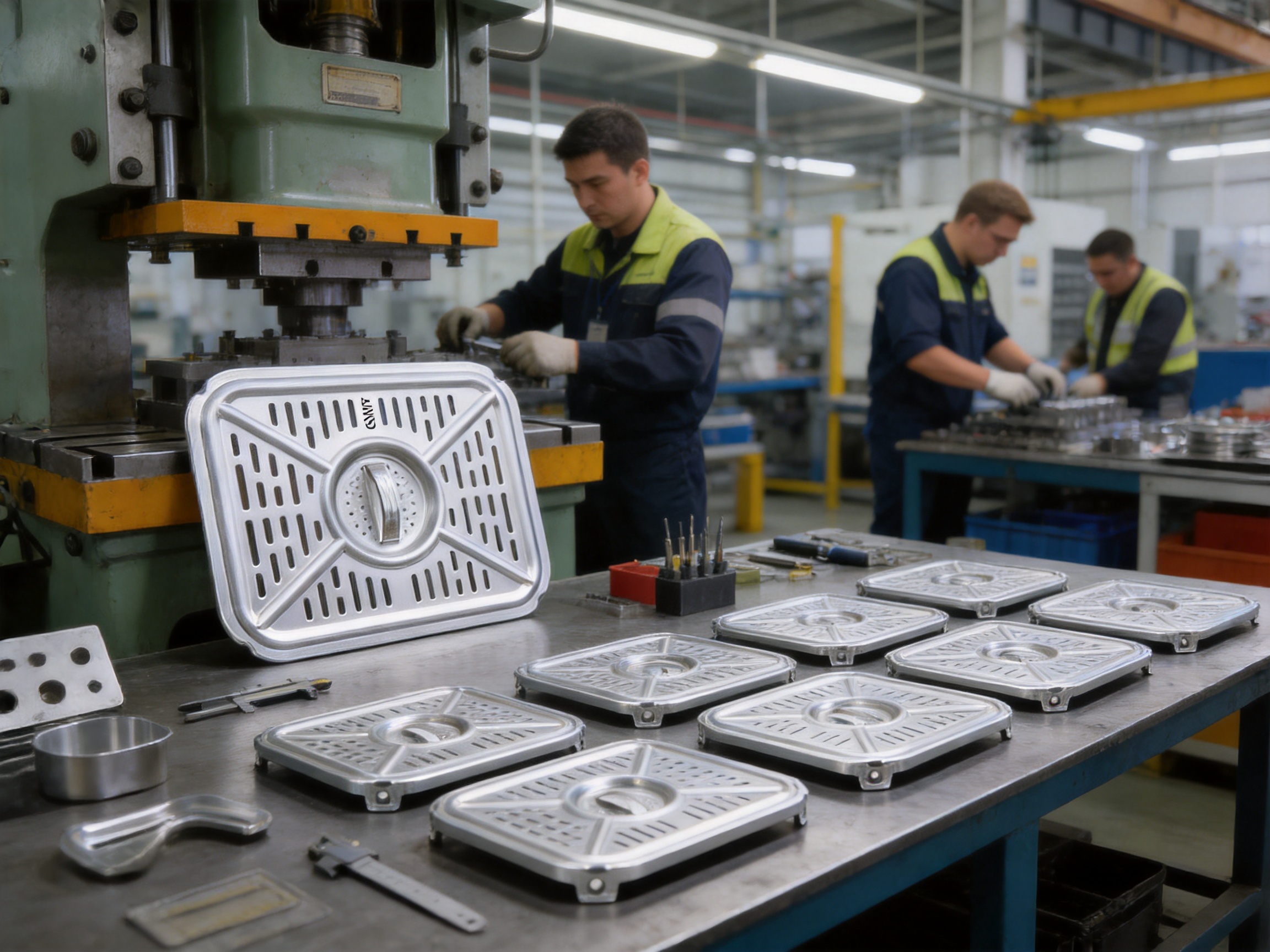
Manufactured by Yuyao Hongli Optoelectronics Co., Ltd., the product benefits from the company’s more than 20 years of experience in metal stamping, deep drawing, bending, and related component manufacturing. With a modern factory, multiple stamping workshops, experienced employees, and OEM/ODM capabilities, the company can support the development and production of air fryer bases for different appliance designs and customer requirements.
The Importance of an Air Fryer Base
An air fryer base is more than a simple bottom panel. It is a functional structural component that helps connect the appliance body with the surface on which it stands. During operation, the base must support the weight of the appliance, the food container, and the food being cooked. It must also tolerate heat generated by the heating system and resist the effects of grease, moisture, cleaning agents, and repeated handling.
A poorly designed base may lead to several practical problems. The appliance may wobble on a countertop, the lower housing may become distorted after repeated exposure to heat, or the surface may become difficult to clean. Weak or inconsistent forming can also create fitting problems during assembly. These issues can affect production efficiency, product appearance, customer satisfaction, and the long-term reputation of the finished air fryer.
The Air Fryer Base addresses these requirements through a combination of structural strength, dimensional consistency, heat resistance, corrosion resistance, and a practical surface design. It is intended to provide a stable platform while supporting the appliance’s overall appearance and functional performance.
For appliance manufacturers, the base can also contribute to efficient product development. A suitable stamped or formed component can be integrated into an existing air fryer housing with fewer modifications than a complex custom assembly. When the component is designed and produced according to the customer’s drawings, tooling requirements, and assembly conditions, it can become a reliable part of a repeatable manufacturing process.
Core Product Advantages
Robust Structural Support
The primary function of the Air Fryer Base is to provide a strong and dependable foundation. Its formed metal structure is designed to support the appliance body during normal operation. The base helps distribute weight across the contact area instead of concentrating load in a small number of points.
This load distribution is important because an air fryer may experience movement when the cooking drawer is opened or closed. The appliance may also be repositioned frequently on a kitchen counter. A rigid base reduces unnecessary movement and helps the air fryer remain steady when users operate the controls or remove food.
Compared with thin, poorly supported bottom components, a properly formed metal base can offer greater resistance to deformation. This is especially valuable for appliances that are used several times each week or moved regularly between storage and cooking locations.
High-Temperature Performance
Air fryers operate in a heated environment, and the lower portion of the appliance may be exposed to elevated temperatures during normal cooking. The Air Fryer Base is designed for this type of application, providing a durable support component that can tolerate repeated heating and cooling cycles.
Repeated thermal cycling can place stress on appliance components. Materials and forming methods must therefore be selected with attention to dimensional stability, structural integrity, and long-term appearance. A base that retains its shape under ordinary operating conditions helps protect the alignment of surrounding components and supports the overall reliability of the finished appliance.
The product is intended to withstand frequent use without becoming a weak point in the appliance structure. Its heat-resistant performance also supports safer operation by helping maintain a stable lower housing and reducing the risk of deformation caused by routine cooking temperatures.
Rust and Corrosion Resistance
Kitchen appliances are exposed to moisture, steam, food particles, grease, and cleaning products. The lower area of an air fryer may come into contact with condensation or residue, particularly when the appliance is cleaned frequently or used in a humid kitchen environment.
The Air Fryer Base is designed with rust resistance and corrosion resistance in mind. These properties help preserve the component’s appearance and functionality over time. Corrosion resistance is especially important for a structural part because surface deterioration can eventually affect both visual quality and mechanical performance.
A corrosion-resistant base can also reduce maintenance concerns for appliance owners. When the component is less vulnerable to staining and surface damage, it is better suited to the repeated cleaning cycles expected from a kitchen appliance. For manufacturers, improved resistance can support product durability claims and reduce the likelihood of premature component replacement.
Stable Appliance Positioning
Stability is a central performance requirement for any air fryer base. The appliance should remain steady on a kitchen counter while it is heating, while the cooking drawer is being operated, and while food is being removed. A well-formed base helps prevent wobbling, sliding, tipping, or uneven contact with the countertop.
Stable positioning is beneficial for both safety and convenience. Users can open the appliance with greater confidence, and the air fryer is less likely to shift during normal operation. Stability also helps preserve the alignment between the appliance body, cooking chamber, drawer, and control area.
The base can be adapted to the overall shape and structural requirements of the air fryer. Depending on the customer’s design, features may be incorporated through stamping, bending, or other forming operations to create suitable edges, mounting areas, contact surfaces, or reinforcement zones.
Easy-Clean Surface
Kitchen appliance accessories must be practical to maintain. The Air Fryer Base is designed with a surface that resists stains, grease, and food residue, making routine cleaning more convenient. A smooth and appropriately finished surface can help users remove dirt without excessive scrubbing.
Easy cleaning is not only a consumer benefit. It is also relevant to product quality and customer perception. An air fryer that remains clean and presentable after repeated use is more likely to be viewed as durable and well designed. A base that traps grease or residue in difficult-to-reach areas may increase maintenance time and contribute to unpleasant odors or visible discoloration.
When developing a customized version, the surface treatment, geometry, and edge design can be considered together. The goal is to balance cleanability, appearance, strength, assembly requirements, and production efficiency.
#######Design Features for Appliance Manufacturers
The Air Fryer Base can be developed according to the specific configuration of the finished air fryer. Different appliance models may require different external dimensions, mounting positions, corner radii, support heights, ventilation clearances, or connection methods. A flexible manufacturing approach allows the component to be adapted to these requirements.
Dimensional Adaptability
Air fryers are produced in a wide range of shapes and capacities. Compact personal models may require a small and lightweight base, while family-sized appliances may need a broader support area and additional reinforcement. The base can be developed to match the customer’s design drawings and assembly conditions.
Dimensional adaptability is particularly important when the component must fit within an existing housing. The base should align correctly with the outer shell, internal support points, fasteners, or other connected parts. Consistent dimensions help reduce assembly adjustments and support smoother production on the customer’s manufacturing line.
Formed Strength and Reinforcement
Metal stamping and bending processes can be used to create structural features without relying on a large number of separate parts. Formed edges, flanges, ribs, steps, and other geometric features can increase stiffness and support the required load-bearing performance.
These features may also improve the efficiency of material use. Instead of simply increasing thickness, engineers can use suitable forming geometry to improve rigidity in important areas. The best approach depends on the customer’s material selection, target cost, load requirements, appearance expectations, and production volume.
Assembly Compatibility
A high-quality accessory must function as part of the complete appliance. The Air Fryer Base can be considered in relation to the air fryer’s housing, heating system, fan, electrical components, feet, fasteners, and internal support structure. Correct positioning and reliable fit are essential for efficient final assembly.
During product development, attention may be given to hole locations, edge conditions, fastening areas, formed surfaces, and clearance requirements. Early review of these details can prevent interference between the base and other components. It can also reduce the need for secondary modifications after tooling has been completed.
For OEM and ODM customers, this integrated approach is valuable because it connects component manufacturing with the practical requirements of the finished product. The base is not treated as an isolated metal part but as an important element in the overall appliance design.
Comparison with Generic Air Fryer Bases
Many low-cost or generic appliance bases may appear similar at first glance, but differences in forming accuracy, surface quality, structural design, corrosion resistance, and production control can influence their real-world performance. The Air Fryer Base is positioned as a component for manufacturers that require dependable quality rather than a basic bottom piece with limited engineering support.
| Evaluation Area | Air Fryer Base | Basic Generic Alternative | Manufacturer Benefit |
|---|---|---|---|
| Structural support | Designed to provide a stable and durable foundation | May rely on simple flat geometry with limited reinforcement | Improved appliance stability and reduced deformation risk |
| Heat exposure | Developed for repeated use in a heated kitchen appliance | Performance may vary according to material and forming quality | Better suitability for routine cooking cycles |
| Corrosion resistance | Designed to resist rust, moisture, grease, and corrosion | Surface protection may be inconsistent or limited | Longer-lasting appearance and service performance |
| Cleanability | Surface is intended to resist stains and food residue | Edges or surface defects may make cleaning more difficult | Improved user convenience and product perception |
| Customization | Can be developed for OEM/ODM dimensions and assembly needs | Often limited to standard sizes or fixed designs | Better integration with different air fryer models |
| Production support | Supported by stamping, deep drawing, bending, and related capabilities | May depend on a narrow or less flexible process range | More practical support from prototype to volume production |
The comparison does not mean that every generic alternative will have the same limitations. Product quality depends on material, tooling, processing, surface treatment, inspection, and application requirements. However, it demonstrates why manufacturers should evaluate a base according to its complete performance rather than only its purchase price.
A component that costs slightly less but creates assembly delays, inconsistent fit, surface defects, or premature failure can increase the total cost of the appliance program. A durable and carefully controlled base may provide greater value by supporting production efficiency, reducing quality risks, and improving the end user’s experience.
Advanced Manufacturing Capabilities
The Air Fryer Base is supported by Yuyao Hongli Optoelectronics Co., Ltd.’s experience in metal component manufacturing. The company was founded in 2000 and has developed from its former name, Yuyao Hongli Optoelectronics Educational Instruments Co., Ltd., into a comprehensive manufacturer serving multiple industrial sectors.
With more than 20 years of experience, the company understands the importance of process stability, dimensional control, production planning, and customer communication. These capabilities are especially important for appliance accessories because the component must combine structural performance with an attractive and consistent appearance.
Metal Stamping
Metal stamping is an efficient method for producing repeatable components in medium- and high-volume applications. The process can create consistent outlines, holes, flanges, formed surfaces, and other features required by the air fryer base design.
When the tooling and process parameters are properly developed, stamping supports repeatable production and efficient material handling. It can also help reduce manual labor in comparison with purely hand-fabricated methods. For appliance manufacturers, this is important because stable production supports predictable lead times and consistent component quality.
Stamping is particularly suitable for air fryer bases that require a defined profile and repeatable mounting features. The process can be adjusted according to the selected material, thickness, part geometry, expected production volume, and required tolerances.
Deep Drawing
Deep drawing is used to form metal into deeper or more complex shapes. Although not every air fryer base requires deep drawing, the company’s experience with deep-drawn parts provides additional engineering flexibility for customers whose designs include recessed areas, deeper profiles, or integrated structural forms.
Deep-drawing expertise can be valuable during product development because it expands the range of geometries that can be considered. It may allow a component to combine support, positioning, protection, and appearance functions within a more integrated form.
Successful deep drawing depends on material behavior, tooling design, forming depth, corner radii, lubrication, production speed, and inspection. Experience in these areas helps manufacturers identify potential forming risks before mass production and select a process that balances quality with cost.
Bending and Secondary Forming
Bending operations can add strength, mounting surfaces, and precise connection features to a stamped blank. Properly controlled bending helps create the angles and flanges needed for assembly and structural support.
Secondary forming may also be used to refine edges, create reinforcement features, or meet customer-specific requirements. Combining stamping and bending in an organized production flow can reduce the number of suppliers involved in a project and simplify quality coordination for the customer.
Tooling and Process Conversion
Efficient production depends on more than the press operation itself. Tooling must be developed to match the design, material, forming sequence, and expected output. The company supports rapid prototyping and efficient production conversion, helping customers move from an initial concept toward repeatable manufacturing.
Rapid prototyping allows design details to be reviewed before full-scale production. Samples can be evaluated for fit, appearance, stability, assembly compatibility, and practical handling. Any required modifications can then be incorporated into the production approach.
Efficient production conversion is also important when a customer moves from a prototype or small batch to regular manufacturing. A design that works in a prototype environment may require adjustments to tooling, inspection, material flow, or process sequencing before it can be produced consistently at higher volumes.
Quality Control and Production Reliability
Quality control is central to the performance of an air fryer base. Since the part must fit into a finished appliance, small differences in dimensions or forming can affect assembly. Quality management therefore needs to consider both the individual component and its role within the complete product.
Dimensional Inspection
Dimensional inspection helps verify the key features of the base, including overall length and width, height, hole positions, formed angles, edge locations, and contact surfaces. The exact inspection criteria can be established according to customer drawings, technical specifications, and assembly requirements.
Consistent inspection supports stable production by identifying process variation. If a forming operation begins to shift outside the required range, corrective action can be taken before a large quantity of nonconforming parts is produced.
Appearance Inspection
Appearance is important for visible kitchen appliance components. Inspectors may review the surface for scratches, dents, cracks, stains, burrs, deformation, incomplete forming, or other defects that could affect the finished air fryer’s appearance or safety.
Clean edges are especially important. Sharp burrs or irregular edges can create assembly difficulties and may present a handling concern. Proper tooling maintenance and suitable finishing processes help support a clean, professional component.
Functional Fit Verification
Where required, the base can be evaluated in relation to mating components or customer-provided fixtures. Functional fit checks help confirm that the part can be assembled correctly and that it provides the intended support.
Fit verification is valuable because a component may satisfy individual dimensional measurements but still create interference when installed in the complete appliance. Practical assembly evaluation provides an additional level of confidence before production release.
Stable Delivery
Reliable delivery is a significant advantage for appliance manufacturers. Production schedules often depend on the timely arrival of many components, and delays in a relatively small accessory can interrupt the assembly of an entire product.
The company’s production capacity, multiple stamping workshops, and manufacturing experience support organized order execution. Stable delivery also depends on clear technical communication, material planning, tooling preparation, production scheduling, and inspection coordination.
Company Manufacturing Strengths
Yuyao Hongli Optoelectronics Co., Ltd. operates a 5,000-square-meter modern factory in Yangming Science and Technology Industrial Park, Yuyao, Zhejiang Province, China. The company has more than 60 employees and multiple stamping workshops, providing a production foundation for different types of metal components and related products.
The company’s product and service scope includes educational instruments, optical instruments, household electric heaters, small household appliances, automotive parts, hardware products, plastic products, deep-drawn parts, stamped parts, bending parts, kitchen appliance accessories, and automotive stamping parts.
This broad manufacturing experience is useful for customers that require more than a single isolated component. Knowledge gained from different product categories can support practical problem solving in areas such as sheet-metal forming, component integration, tooling development, surface requirements, and production conversion.
OEM and ODM Support
OEM and ODM support allows customers to request components according to their own product designs, drawings, branding strategies, and application requirements. For an air fryer manufacturer, this may include a base with a specific profile, a customized mounting arrangement, a particular surface appearance, or compatibility with a new appliance housing.
OEM/ODM cooperation is most effective when technical information is shared early. Important details may include the intended application, operating environment, expected volume, material preferences, dimensional tolerances, surface requirements, assembly method, and inspection standards.
The manufacturer can then assess the design from a production perspective. This may involve considering whether a feature should be stamped, bent, drawn, or completed through a secondary operation. Early process review can help control tooling costs and reduce unnecessary redesign.
Product Development Cooperation
Product development cooperation may begin with drawings, samples, sketches, three-dimensional data, or a description of the intended appliance function. The manufacturer can use this information to review the component structure and identify practical production options.
For new air fryer models, cooperation between the appliance designer and the component manufacturer can improve the final result. The base can be considered at the same time as the lower housing, ventilation arrangement, feet, fastening system, and cleaning requirements. This integrated approach helps prevent late-stage changes that could increase cost or delay production.
Export and Service Orientation
The company provides manufacturing, processing, wholesale, retail, import, and export services. Its business philosophy emphasizes integrity, excellence, innovation, and sharing. These principles support a customer-oriented approach focused on quality, customized solutions, stable delivery, and long-term cooperation.
For international customers, effective communication is essential. Clear specifications, sample confirmation, production updates, packaging requirements, and after-sales support all contribute to a smoother supply relationship. A component manufacturer that understands these requirements can become a more reliable partner for repeated appliance programs.
#######Material and Surface Considerations
The ideal material and surface treatment for an air fryer base depend on the customer’s design, cost target, operating conditions, appearance requirements, and applicable product standards. Material selection should be completed through technical discussion rather than based on a single general recommendation.
Important considerations may include strength, formability, heat exposure, corrosion resistance, weight, surface finish, compatibility with adjacent components, and ease of cleaning. The material must also be suitable for the selected stamping or forming process.
Surface treatment can influence appearance and durability. Depending on the product design, customers may require a particular finish, protective treatment, coating, plating, or other process. The selected treatment should be compatible with the expected temperature, moisture, grease exposure, cleaning practices, and assembly conditions.
Edges and corners also deserve attention. Rounded or properly formed edges can improve handling safety, reduce stress concentration, and support a more refined appearance. At the same time, the geometry must remain practical for tooling and production.
Because the supplied product information does not specify one universal material grade or coating system, the final material and surface specification should be confirmed according to the customer’s technical documentation. This approach allows the Air Fryer Base to be adapted to different air fryer models and market requirements.
Application Benefits for End Users
Although the Air Fryer Base is primarily a business-to-business component, its advantages are experienced directly by the people who use the finished appliance.
Improved Confidence During Cooking
A stable air fryer feels more secure during operation. When the appliance remains firmly positioned while the cooking drawer is opened or closed, users can prepare food more comfortably. Reduced wobbling also helps create a more positive perception of product quality.
Long-Term Durability
Frequent cooking places repeated demands on the appliance. A durable base helps support the air fryer through many heating and cooling cycles, routine movement, and regular cleaning. This contributes to a longer-lasting product and can reduce the likelihood that the lower structure becomes damaged or distorted.
Convenient Maintenance
Because the base is designed to resist stains, grease, and food residue, users can clean it more easily. This is particularly useful in households where the air fryer is used frequently. A cleanable base supports better kitchen hygiene and helps the appliance retain a neat appearance.
Better Product Experience
Consumers often judge an appliance by details that are not listed in the basic product specifications. Stability, solid construction, easy cleaning, and resistance to visible wear can all influence the overall impression. A well-made base supports these everyday qualities and contributes to a more complete product experience.
#######Why Manufacturing Process Matters
The performance of an air fryer base is determined by more than its shape. Manufacturing process control has a direct effect on strength, fit, appearance, and reliability. Even a well-designed part may fail to perform properly if the forming sequence is unstable or inspection is insufficient.
For example, inconsistent forming may cause variation in the height of support surfaces. This can make the air fryer wobble or create difficulty during assembly. Excessive burrs may cause handling problems. Poor surface protection may reduce resistance to corrosion. Distortion may interfere with the lower housing or connected components.
A capable manufacturer addresses these risks through process planning and quality control. Tooling, press settings, material handling, forming sequence, secondary operations, inspection methods, and packaging all need to work together.
The company’s experience in stamped, deep-drawn, and bent parts provides a foundation for choosing suitable methods for each design. It also enables customers to discuss the balance between performance, production efficiency, tooling investment, and target cost.
From Prototype to Mass Production
A successful air fryer base project typically passes through several stages. The first stage is design communication. The customer provides drawings, samples, specifications, or a product concept. The manufacturer reviews the information and identifies the key production requirements.
The second stage is process evaluation. Engineers consider forming methods, tooling structure, material behavior, surface requirements, assembly features, and inspection points. If a design contains complex shapes, early review can help identify areas that may require drawing, bending, multiple stamping steps, or secondary finishing.
The third stage is prototype or sample production. Samples allow the customer to evaluate fit, appearance, strength, stability, and compatibility with the appliance housing. If changes are needed, they can be discussed before production tooling and process parameters are finalized.
The fourth stage is production conversion. The approved design is transferred into an organized manufacturing process capable of meeting the expected volume and quality requirements. Production planning, material preparation, tooling maintenance, inspection, and packaging are coordinated at this stage.
The final stage is ongoing supply. For repeat orders, process records and established inspection criteria help maintain consistency. Regular communication allows the manufacturer to respond to design updates, forecast changes, packaging needs, and future product development.
Packaging and Handling Considerations
Metal appliance components should be packaged in a way that protects their surfaces and edges during storage and transportation. Appropriate packaging can help prevent scratches, dents, deformation, moisture exposure, and contact damage between individual parts.
The packaging method may depend on the size, weight, surface finish, stacking requirements, and customer assembly process. Separators, protective materials, trays, cartons, or other solutions can be considered according to the part design and shipping conditions.
Good packaging also supports warehouse efficiency. Components that are arranged clearly and protected adequately are easier to count, inspect, move, and release to an assembly line. Customers should communicate any special packaging or labeling requirements during the quotation and order confirmation stages.
Applications Beyond a Single Air Fryer Model
The Air Fryer Base is primarily developed for air fryer applications, but the manufacturing methods used for this product are also relevant to other household appliance accessories. Similar forming, stamping, or bending capabilities may support components for small kitchen appliances, electric heaters, cooking equipment, and other metal product assemblies.
This broader capability can benefit customers with multiple product categories. A company developing several appliances may prefer to work with a supplier that can support different types of metal parts rather than managing many specialized suppliers.
The company’s experience with household electric heaters, small household appliances, hardware products, deep-drawn parts, stamped parts, and bending parts provides a wider manufacturing base. Each project remains subject to its own technical evaluation, but the overall capability supports flexible cooperation.
Technical Questions Customers Should Consider
Before requesting a quotation for an air fryer base, customers should prepare as much technical information as possible. Useful information includes the component drawing, three-dimensional data, expected annual quantity, prototype quantity, target delivery date, material preference, surface finish, dimensional tolerances, assembly method, and inspection standard.
Customers should also identify the operating environment. Information about expected temperatures, exposure to moisture or grease, cleaning methods, contact with other materials, and the intended service life can help guide material and surface decisions.
If the base will be visible to consumers, appearance requirements should be specified clearly. These may include acceptable surface marks, color or finish expectations, edge conditions, and packaging protection. Clear requirements reduce uncertainty and help both sides evaluate samples accurately.
Q&A
What is the main function of an air fryer base?
The main function is to provide a strong and stable foundation for the air fryer. It supports the appliance body, distributes weight, helps prevent wobbling or tipping, and contributes to the durability of the finished product.
Can the Air Fryer Base withstand high temperatures?
The base is designed for use in a heated kitchen appliance and is intended to withstand repeated exposure to ordinary air fryer operating conditions. Final temperature performance depends on the selected material, surface treatment, appliance design, and actual operating environment.
Is the base resistant to rust and corrosion?
The product is designed with rust resistance and corrosion resistance in mind. The exact level of protection depends on the material and surface treatment selected for the customer’s application. These details should be confirmed during technical development.
Is the surface easy to clean?
Yes. The surface is designed to resist stains, grease, and food residue, helping users clean the component more conveniently after regular cooking and maintenance.
Can the base be customized for different air fryer models?
Yes. OEM/ODM customization is supported. The base can be developed according to customer drawings, dimensions, mounting requirements, assembly conditions, surface specifications, and production needs.
What manufacturing processes can be used to produce the base?
Depending on the design, the component may be manufactured through metal stamping, bending, deep drawing, secondary forming, and related processing operations. The most suitable process depends on geometry, material, volume, tolerance, and cost requirements.
Does the company support prototypes?
Yes. The company supports rapid prototyping and efficient production conversion. Samples can be developed for fit, appearance, stability, and assembly evaluation before regular production begins.
What company experience supports this product?
Yuyao Hongli Optoelectronics Co., Ltd. was founded in 2000 and has more than 20 years of industry experience. It operates a 5,000-square-meter factory, has multiple stamping workshops and more than 60 employees, and manufactures stamped, deep-drawn, bent, and other related components.
Can the company support large-volume production?
The company has strong production capacity and organized stamping workshops to support regular manufacturing programs. The appropriate production volume and delivery schedule should be confirmed according to the part design, tooling requirements, and customer forecast.
What information is needed for a quotation?
Customers should ideally provide drawings or samples, material requirements, surface specifications, dimensions and tolerances, estimated quantity, prototype needs, packaging requirements, and target delivery information. The more complete the information, the more accurately the project can be evaluated.
Is the Air Fryer Base suitable for export-oriented appliance manufacturers?
Yes. The company provides import and export services and works with customers seeking manufacturing, processing, wholesale, retail, and customized production support. International projects benefit from clear technical specifications and agreed quality and packaging requirements.
Conclusion
The Air Fryer Base is a practical and important component for manufacturers of modern kitchen appliances. By providing structural support, stable positioning, high-temperature suitability, rust resistance, corrosion resistance, and easy cleaning, it contributes to the safety, durability, and convenience of the finished air fryer.
Its advantages over basic generic alternatives are found in the combination of functional design, customizable dimensions, formed strength, assembly compatibility, and manufacturing support. A well-produced base can help reduce wobbling, protect the lower appliance structure, improve long-term appearance, and support a better user experience.
The product is backed by Yuyao Hongli Optoelectronics Co., Ltd., a manufacturer with more than 20 years of industry experience, a 5,000-square-meter factory, multiple stamping workshops, and a workforce of more than 60 employees. The company’s capabilities in metal stamping, deep drawing, bending, OEM/ODM customization, rapid prototyping, and production conversion provide a strong foundation for air fryer component programs.
For customers developing new air fryer models or improving existing appliance designs, the Air Fryer Base can be evaluated as a durable and adaptable solution. Through early technical communication, suitable process selection, controlled production, and careful inspection, the component can be developed to meet the practical requirements of both appliance manufacturers and end users.
References
1. Product information supplied for the Air Fryer Base, including stated performance characteristics, application category, and customization information.
2. Company information supplied for Yuyao Hongli Optoelectronics Co., Ltd., including company history, factory size, employee count, manufacturing capabilities, and service scope.
3. General principles of sheet-metal stamping, bending, deep drawing, tooling development, and dimensional inspection used in appliance component manufacturing.
4. General considerations for household appliance design, structural stability, thermal exposure, corrosion resistance, cleanability, and repeated-use performance.
5. General quality-control practices for metal components used in small household appliances and kitchen equipment.
#######Product: Air Fryer Base
Previous Post
High-Performance Air Fryer Parts for Reliable, Hygienic, and Efficient Cooking
Next Post
High-Performance Household Oven Base Plate for Durable and Heat-Resistant Kitchen Appliances
News
-
-
If you have ever asked yourself, “How do I find a reputable metal fabricator?” you are not alone. As a manufacturer with more than 20 years...
READ MORE -
Sheet metal bending is one of the most fundamental processes in metal fabrication. It turns a flat sheet of steel, aluminum, or copper into...
READ MORE -
Bend allowance is one of those numbers that quietly determines whether a sheet metal part fits the first time or becomes rework on the shop...
READ MORE
Get Fresh Updates Via Email
We promise we will never disclose your email address, and you can opt out at any time.
-
Quick Links
Home About Us Products Service News Contact Us -
Product list
Deep-drawn parts Stamped parts Bending parts Kitchen appliance accessories Automotive stamping parts -
About Us
Factory Honour FAQ -
News
Company News Industry News -
Contact Us
Address: South side of Shunke Road, Yangming Science and Technology Industrial Park, Yuyao City, Zhejiang Province, China Tel: +86-13905842349/+86-13738485724 Email: hongli@hl-stamping.com
Copyright © Yuyao Hongli Optoelectronics Co., Ltd. All Rights Reserved.
Custom Precision-Sheet/Sheet Metal Stamping Manufacturers
