


 English
 русский
 Español
 عربى


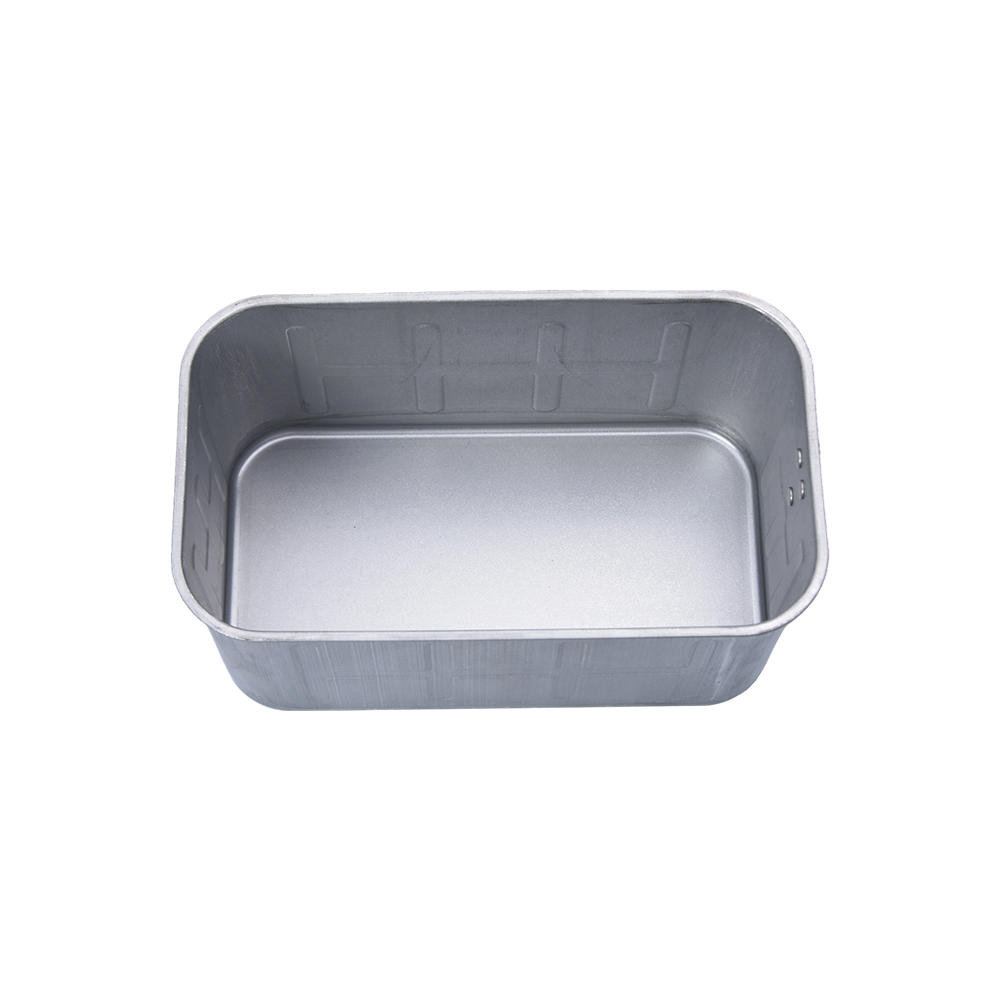
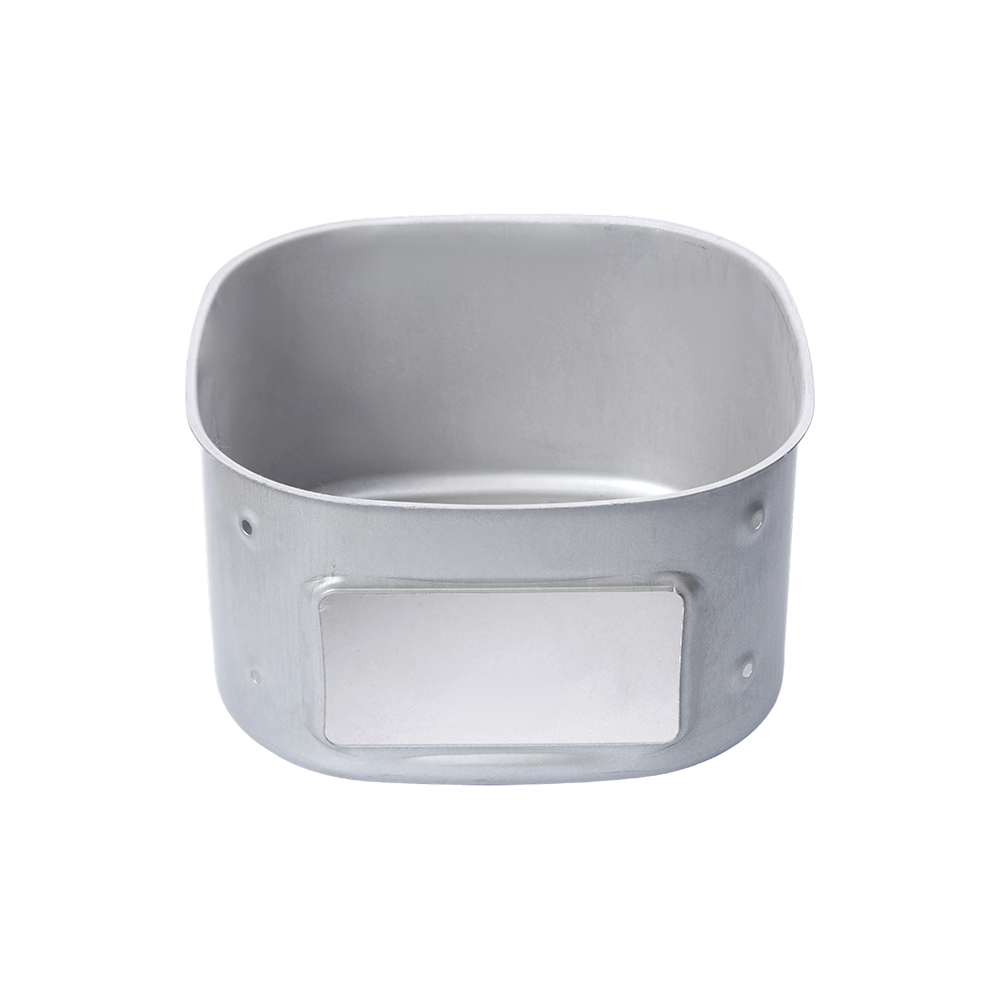
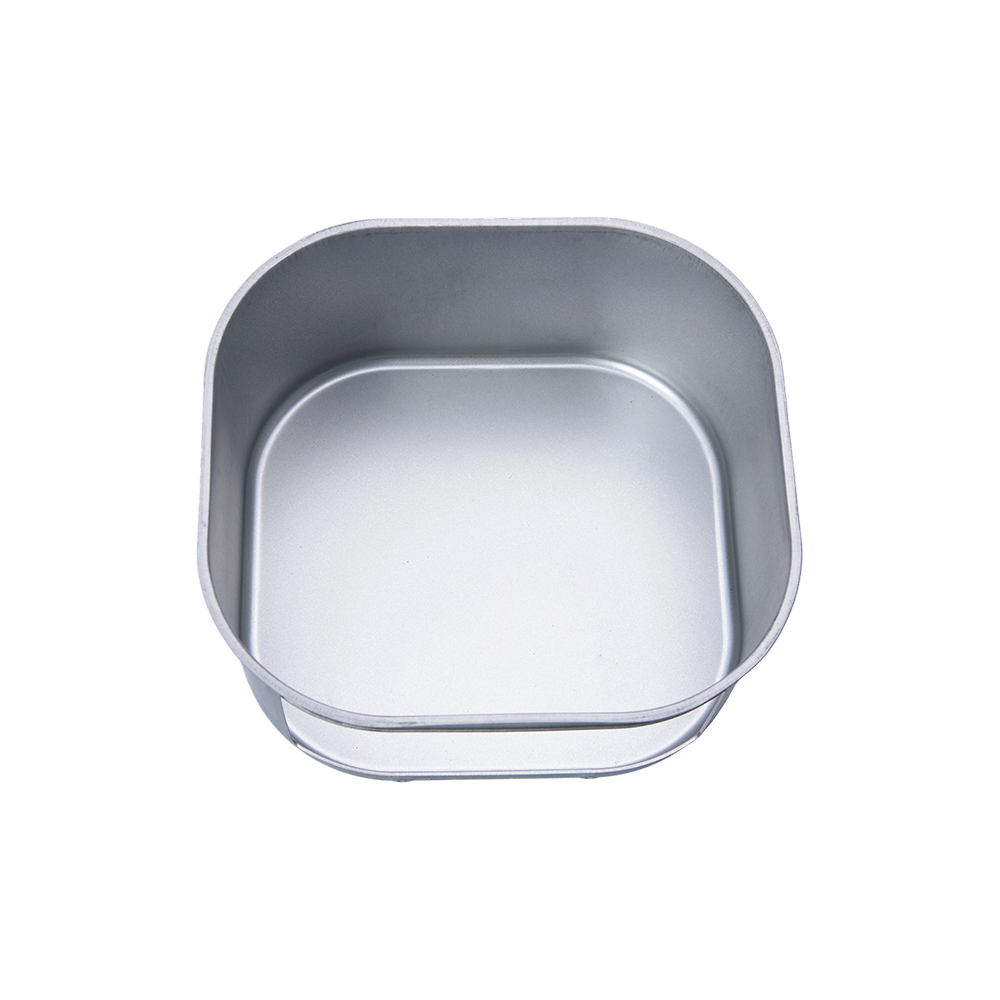
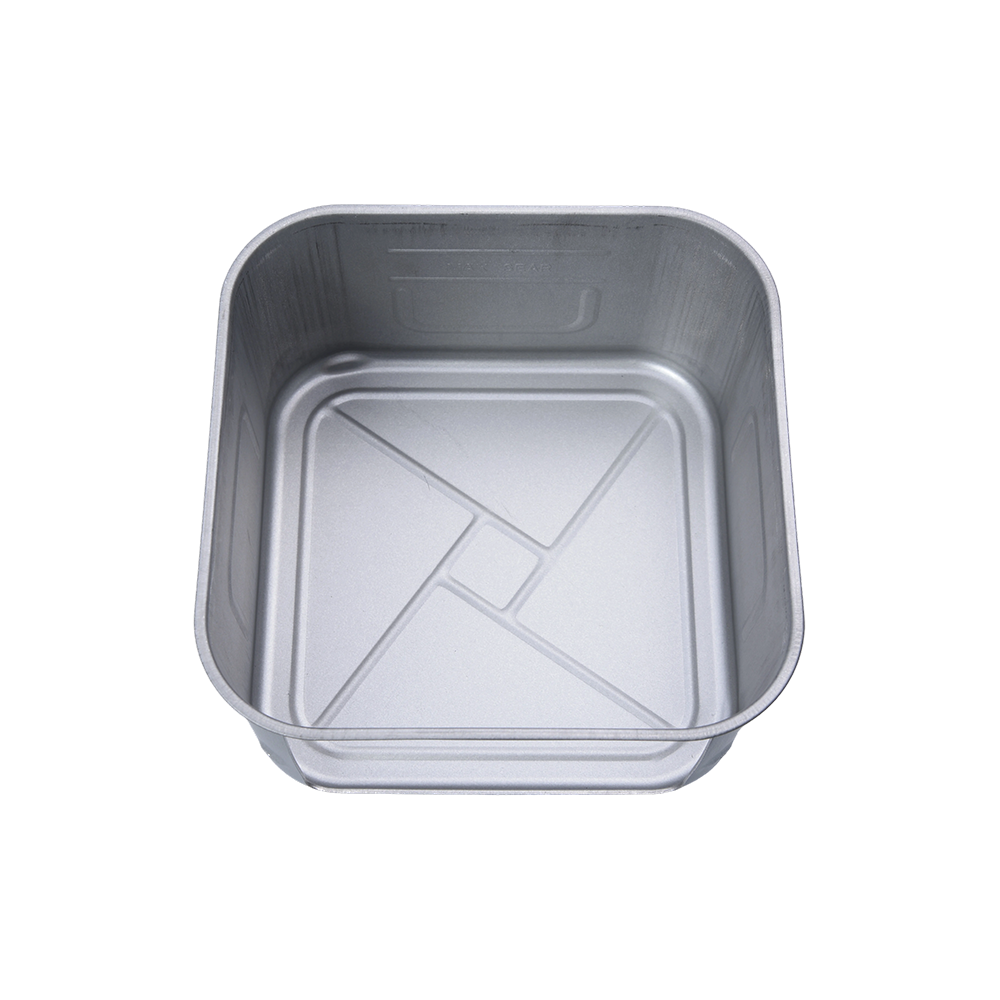
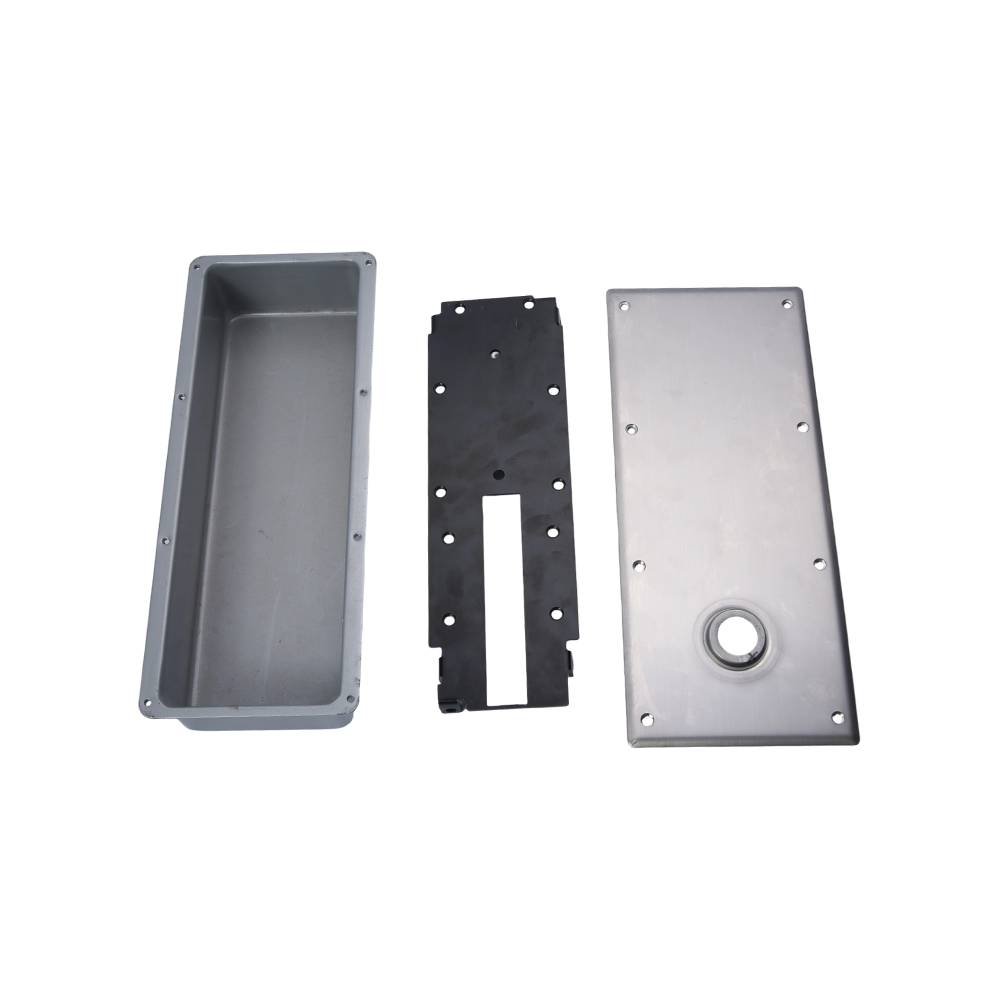
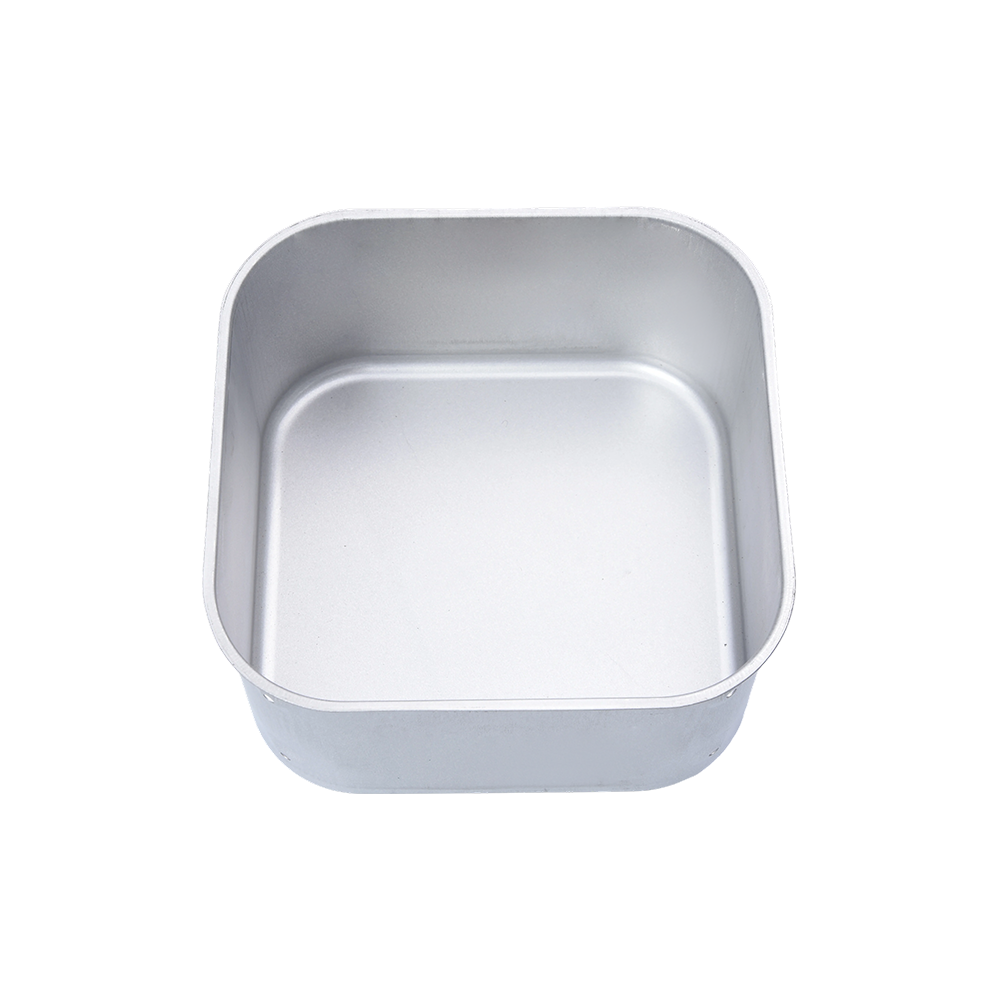
When you need a metal component whose depth clearly exceeds its width, such as a one-piece battery enclosure, an air-fryer inner container,...
READ MORE

News
Home / Author / Wang Xinyi — Senior After-Sales Coordinator / Deep-Drawn Rectangular Containers with Lids: Strength, Hygiene, and Precision for Demanding Applications
Deep-Drawn Rectangular Containers with Lids: Strength, Hygiene, and Precision for Demanding Applications
2026-09-30
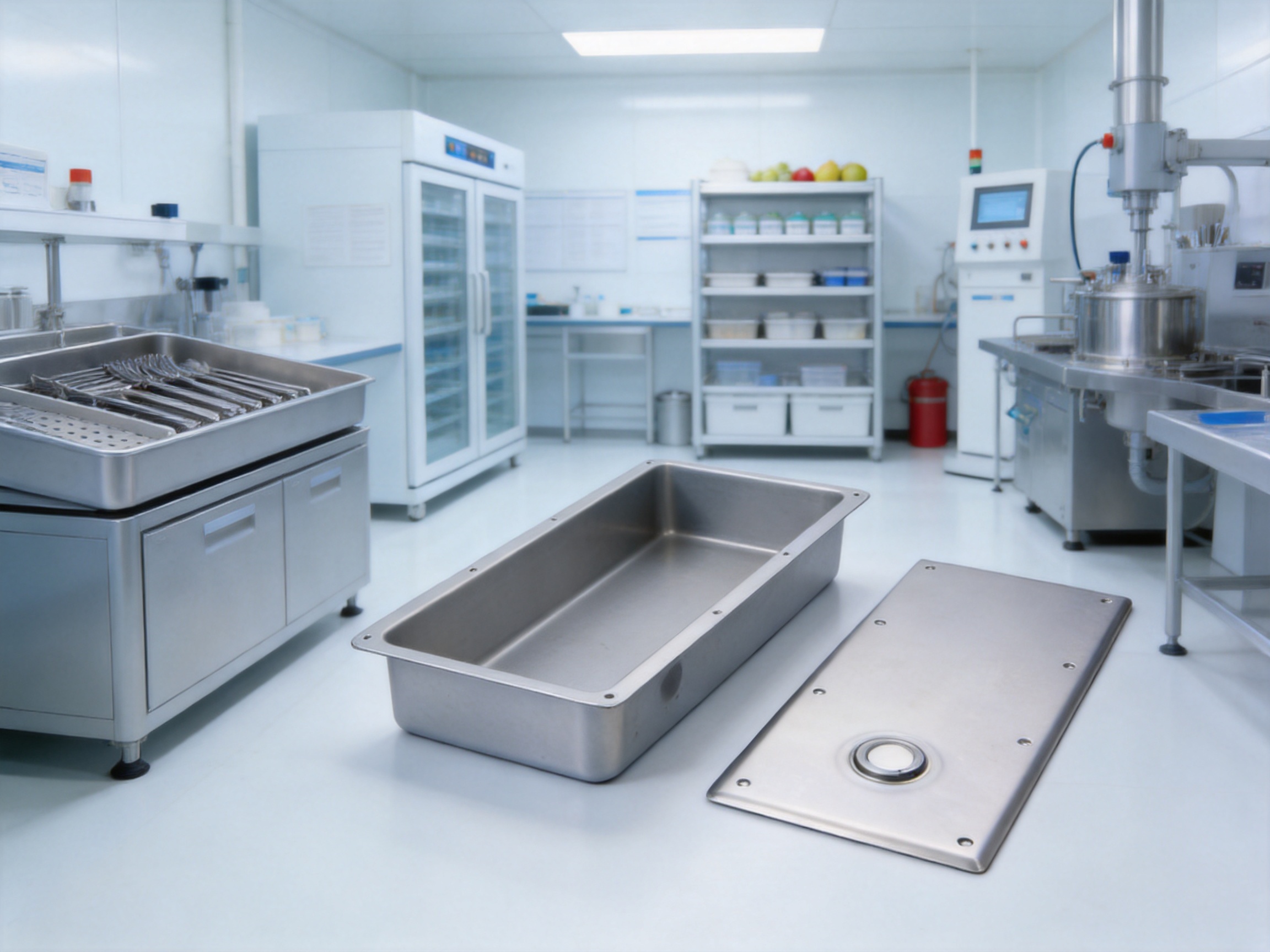
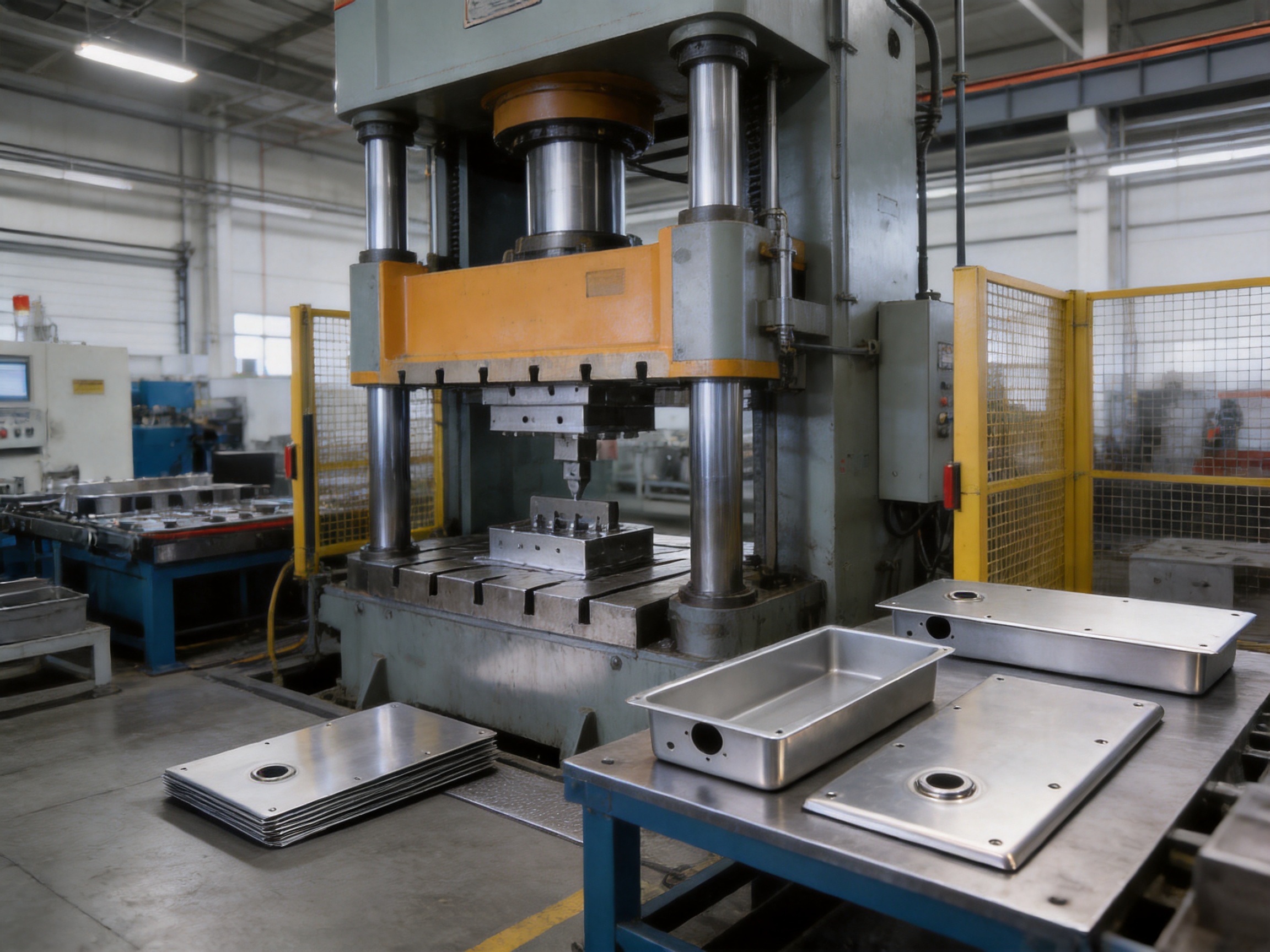
Deep-drawn rectangular containers with lids are engineered metal products designed to provide reliable protection, efficient storage, and long-term service in demanding industrial and commercial environments. Unlike containers assembled from several separately cut and joined panels, a deep-drawn container is formed from a single sheet of metal through a controlled forming process. This creates a seamless or substantially seamless body with consistent geometry, excellent structural strength, and a clean internal surface.
The rectangular container described in this article combines advanced deep-drawing technology with a carefully fitted lid. The result is a durable enclosure capable of protecting contents from contamination, moisture, dust, impact, and other external conditions. Its design makes it suitable for food processing, medical storage, laboratory use, kitchen equipment, household appliances, industrial handling, and other applications where cleanliness and dependable performance are essential.
Yuyao Hongli Optoelectronics Co., Ltd. manufactures this type of product as part of its broader portfolio of drawn metal products, deep-drawn metal parts, precision sheet metal stamping, bending parts, kitchen appliance accessories, and automotive stamping parts. With more than 20 years of industry experience, a modern production facility, multiple stamping workshops, and an experienced technical team, the company supports both standard manufacturing and customer-specific OEM and ODM projects.
What Is a Deep-Drawn Rectangular Container?
A deep-drawn rectangular container is a metal enclosure produced by pressing a flat sheet blank into a die with a punch. The process progressively transforms the flat sheet into a three-dimensional container. Depending on the required depth, material, corner radius, and shape complexity, the component may be formed in one operation or through several controlled drawing stages.
The rectangular geometry provides efficient use of space. Compared with a round container, a rectangular design can be positioned closely beside other containers, installed inside cabinets, integrated into machinery, or used in storage systems with minimal unused space. Straight sides and defined corners also make the product suitable for applications involving trays, housings, pans, reservoirs, covers, and modular equipment assemblies.
The accompanying lid is designed to fit the container securely. A properly matched lid can help reduce the risk of spills, airborne contamination, moisture entry, and accidental opening during movement. The exact sealing performance depends on the lid structure, gasket selection, closure method, dimensional tolerances, and application requirements. For customers who require a particular degree of sealing, these factors can be developed during the customization stage.
Deep drawing is especially valuable when a product requires a strong body without excessive assembly. By reducing the number of seams, fasteners, and welded joints, the process can improve cleanliness and reduce potential weak points. The resulting container is well suited to environments where ease of cleaning, structural integrity, and repeatable dimensions are important.
Key Product Features
One-Piece Deep-Drawn Construction
The most important feature of the container is its deep-drawn body. Forming the body from one sheet of metal helps create a continuous structure with fewer joints than a fabricated container made from multiple panels. Fewer joints can mean fewer locations where dirt, liquids, or contaminants may accumulate.
A one-piece construction also supports better load distribution. When the container is subjected to handling, vibration, stacking, or localized pressure, the formed body can distribute forces across its walls and base. This contributes to dependable performance in industrial and commercial use.
Deep drawing can also improve appearance. The smooth body has a consistent, professional appearance that is appropriate for visible appliance components, laboratory equipment, kitchen accessories, and finished industrial products. Depending on the selected material and finishing process, the surface may be further treated to meet visual, functional, or hygienic requirements.
Securely Fitted Lid
The lid is designed to correspond with the opening of the container. A well-fitted lid helps protect the contents from external exposure and can provide a stable closure during storage or transportation. It may also contribute to product safety by reducing the possibility of accidental spillage.
For different applications, the lid can be developed with a range of design features. These may include a recessed or raised profile, overlapping edges, retaining flanges, hinge points, handles, fasteners, or space for a sealing element. The appropriate structure depends on whether the customer prioritizes frequent opening, long-term closure, pressure resistance, splash protection, or ease of cleaning.
In applications requiring a more controlled seal, the container and lid can be manufactured with suitable contact surfaces and consistent dimensional tolerances. A gasket or sealing strip may be added when required by the design. The final sealing performance should always be verified according to the intended operating conditions.
Smooth and Cleanable Surfaces
The smooth interior of a deep-drawn container is a major advantage in hygienic applications. Fewer seams and reduced surface discontinuities make the container easier to wipe, wash, disinfect, or sterilize, depending on the material and process used.
Food processing and laboratory environments often require equipment that can be cleaned efficiently and repeatedly. A container with a smooth internal surface can reduce the retention of residue and make inspection easier. This is particularly valuable when the container is used to hold ingredients, samples, tools, components, or materials that must be kept separate from contaminants.
Cleanability also has practical economic benefits. A container that can be cleaned quickly may reduce maintenance time and help improve workflow efficiency. In repeated-use applications, durable surfaces can support a longer service life and lower replacement frequency.
Resistance to Impact and Abrasion
Metal containers are commonly selected when durability is more important than low initial weight alone. The deep-drawn body provides a rigid structure that can withstand ordinary handling, contact with equipment, and repeated movement. The product is suitable for environments where containers may be placed on work surfaces, loaded into machinery, transported between production areas, or exposed to moderate impact.
Its resistance to abrasion depends on the selected material, thickness, surface finish, and operating environment. Nevertheless, the formed metal construction provides a strong foundation for heavy-duty use. Additional surface treatment may be considered when the container must resist specific chemicals, moisture, heat, or repeated cleaning operations.
Corrosion-Resistant Design Options
Material selection is an important part of corrosion control. Depending on the application, the container may be designed using materials with suitable resistance to humidity, cleaning agents, food contact conditions, or industrial exposure. Surface treatments and finishes can also be evaluated to improve protection and appearance.
Customers should provide information about temperature, humidity, chemical contact, cleaning procedures, and expected service life. This enables the manufacturer to recommend a suitable material and process route. No single metal or finish is appropriate for every environment, so application-specific assessment is essential.
Advantages Compared with Multi-Piece Fabricated Containers
Deep-drawn rectangular containers offer several advantages over containers manufactured by cutting, bending, and joining multiple individual panels. The best choice depends on the required shape, production volume, material, and performance requirements, but deep drawing is particularly competitive when the design calls for repeated production and a strong, clean body.
| Performance or Manufacturing Factor | Deep-Drawn Rectangular Container | Typical Multi-Piece Fabricated Container |
|---|---|---|
| Body construction | Formed from a single sheet or a highly integrated structure | Usually assembled from several panels |
| Number of joints | Reduced number of seams and joining points | May require welding, riveting, or fastening at several locations |
| Internal cleanability | Smooth surface with fewer areas for residue accumulation | Joints and corners may require additional cleaning attention |
| Structural continuity | Continuous formed body helps distribute loads | Strength depends on joint design and joining quality |
| Repeatability | Die-based production supports consistent dimensions | Manual fabrication may involve more variation |
| Appearance | Uniform formed appearance | Visible welds, fasteners, or panel transitions may be present |
| High-volume suitability | Efficient after tooling and process setup | May require more individual assembly operations |
| Maintenance potential | Reduced risk of seam-related maintenance issues | Joints may require inspection or repair over time |
One of the strongest competitive advantages is the reduction of joining operations. Each additional seam, fastener, or weld can introduce a potential point for distortion, contamination retention, leakage, or mechanical weakness. Deep drawing does not eliminate all manufacturing considerations, but it can simplify the body design and improve overall product integration.
Another advantage is repeatability. Once the die, press settings, lubrication method, and inspection controls have been established, production can achieve consistent shape and dimensions across multiple batches. This is important when the container must fit a lid, rack, appliance housing, production line, or other mating component.
Deep drawing can also provide a favorable balance between strength and material efficiency. The formed walls and base can be designed to support the required load without adding unnecessary components. In suitable production volumes, the process may reduce per-unit labor compared with a construction requiring cutting, bending, welding, grinding, and final assembly.
Applications Across Multiple Industries
Food Processing and Food Service
The container can be used for food-related storage, preparation, processing, or handling when the selected material and finish meet the requirements of the intended application. Its smooth surface supports cleaning, while the lid helps protect contents during storage and movement.
Possible uses include ingredient storage, preparation trays, equipment inserts, collection containers, and enclosed processing components. The rectangular shape allows efficient use of shelf, cabinet, and worktable space. A fitted lid may help prevent dust, splashes, and accidental contact with stored contents.
Food-related applications require careful consideration of material compatibility, temperature, cleaning chemicals, and applicable regulations. Customers should communicate whether the container will be exposed to hot materials, refrigeration, steam cleaning, detergents, or repeated sanitization.
Medical and Healthcare Storage
Medical and healthcare environments often require durable containers that are easy to inspect and clean. The deep-drawn design can support storage of instruments, supplies, components, or materials where a smooth internal surface and protective lid are beneficial.
Where sterilization is required, the material, finish, lid design, and manufacturing process must be selected for compatibility with the sterilization method. Different processes can involve heat, steam, pressure, chemicals, or radiation. The container should be validated for the specific conditions rather than being assumed suitable for every sterilization environment.
The secure lid can also help organize supplies and reduce exposure during internal transport. Its rectangular format can make it easier to label, stack, and place within existing medical storage systems.
Laboratory Environments
Laboratories use specialized containers for sample handling, equipment organization, component storage, and process control. A metal deep-drawn container can provide a stable enclosure where durability, cleanliness, and resistance to routine handling are required.
The product may be adapted for laboratory equipment by incorporating mounting features, access openings, handles, or customized internal dimensions. Depending on the laboratory process, customers may also require a particular surface finish or material grade to reduce the risk of unwanted reactions or contamination.
Because laboratories often use controlled procedures, dimensional consistency is valuable. A repeatable container can fit into racks, instruments, cabinets, or automated handling systems with reduced adjustment.
Kitchen Appliances and Household Equipment
Deep-drawn parts are widely used in household appliances because they can combine structural rigidity, attractive appearance, and efficient production. This rectangular container may serve as an internal tray, protective housing, collection pan, water-related component, heating-area accessory, or storage section in a kitchen appliance.
The design can be customized to suit the appliance envelope and installation method. Features such as flanges, mounting holes, embossed reinforcement, formed steps, handles, and lid interfaces may be incorporated into the tooling or secondary operations.
For kitchen applications, the surface finish and material selection should reflect exposure to heat, food residues, water, detergents, and repeated cleaning. The manufacturer can review these conditions during the product development stage.
Automotive and Transportation Components
Automotive stamping and deep-drawn components must often meet demanding requirements for dimensional stability, durability, and production consistency. A rectangular deep-drawn container or housing may be used as an enclosure, cover, shield, tray, bracket-related component, or specialized storage element within a vehicle or transport system.
Automotive applications can involve vibration, temperature variation, moisture, dust, and repeated assembly. The product may therefore require carefully controlled tolerances, formed reinforcement, mounting features, or secondary operations. Prototype evaluation and production validation are important before full-scale implementation.
Industrial Equipment and Hardware Products
Industrial machinery, electrical equipment, workshop systems, and hardware products often require compact metal enclosures that protect contents and integrate efficiently with larger assemblies. The deep-drawn container can be developed for use as a cover, reservoir, protective box, equipment tray, or internal support component.
Its strong body and fitted lid make it suitable for applications where stored parts or materials must remain protected during handling. Depending on the design, the lid may be removable for access or retained for more permanent enclosure.
Advanced Deep-Drawing Manufacturing Process
The quality of a deep-drawn container depends on more than the pressing operation itself. It is the result of coordinated design, material preparation, tooling, press control, forming analysis, trimming, finishing, inspection, and packaging. Yuyao Hongli Optoelectronics applies its experience in stamping and metal forming to manage these stages as an integrated manufacturing process.
Design and Technical Review
Manufacturing begins with an evaluation of the product drawing, three-dimensional model, sample, or application description. Engineers review the required length, width, height, wall profile, corner radius, base shape, lid interface, material, thickness, and tolerance requirements.
Deep-drawing designs must account for material flow. If the design contains excessively sharp corners, abrupt changes in depth, or unsuitable wall proportions, the sheet may wrinkle, split, or become uneven during forming. Early technical review helps identify these risks before tooling is produced.
The lid and container are evaluated together. The opening dimensions, rim structure, clearance, overlap, and closure method must be coordinated so that the completed parts fit correctly. This integrated approach is more effective than treating the body and lid as unrelated components.
Material Preparation
Material preparation influences both forming performance and final appearance. Sheet material must be selected according to the required strength, ductility, corrosion resistance, surface quality, thickness, and intended use.
Before forming, the material may be inspected for surface defects, dimensional consistency, and suitability for the production process. Correct blank size is also important. A blank that is too small may not provide sufficient material for the final shape, while an oversized blank can increase waste and cause unnecessary forming difficulties.
Material traceability and controlled storage can help protect the sheet from contamination, moisture, scratches, or deformation before it enters production. These practices support stable quality across manufacturing batches.
Tooling and Die Development
The die and punch define the geometry of the deep-drawn part. Tooling must be designed to guide the material smoothly while controlling wall thickness, corner formation, and dimensional stability.
Important tooling considerations include punch radius, die radius, clearance, draw depth, blank-holder pressure, forming sequence, and provisions for trimming or secondary operations. For more complex products, multiple forming stages may be used to achieve the required depth without damaging the material.
Tooling quality directly affects repeatability. A properly maintained die can help reduce variation, protect the surface of the part, and maintain consistent production performance. The company’s experience in stamping and forming supports the development of practical tooling solutions for customized parts.
Controlled Press Forming
During the deep-drawing operation, the sheet blank is positioned over the die and shaped by the punch. The blank holder controls material movement and helps prevent wrinkles, while the punch applies the force required to form the container.
Press speed, forming force, lubrication, blank-holder pressure, and stage sequence must be controlled according to the material and geometry. Excessive force can cause tearing or thinning, while insufficient control can result in wrinkles, distortion, or uneven walls.
Production personnel monitor the forming process and adjust parameters when required. Stable process conditions are particularly important for products that must fit closely with a lid or integrate into another assembly.
Trimming and Secondary Operations
After drawing, the container may require trimming to establish the final rim height and opening profile. Additional operations can include piercing, slotting, embossing, flanging, bending, beading, leveling, deburring, or forming of mounting features.
The lid may undergo separate stamping, bending, or forming operations. Its edge profile must be controlled to achieve the intended fit and appearance. If a gasket, handle, hinge, or closure component is included, the required attachment or mounting features can be prepared during secondary processing.
Secondary operations should be planned to preserve the dimensional accuracy achieved during deep drawing. Poorly sequenced operations can introduce distortion, so manufacturing engineers consider the entire process route rather than optimizing only one operation.
Surface Treatment and Finishing
Surface treatment depends on the material and the application. Finishing may include cleaning, deburring, polishing, brushing, coating, plating, or other customer-specified processes. The purpose may be to improve appearance, corrosion resistance, cleanability, wear resistance, or compatibility with an assembly.
Edges are carefully reviewed because sharp or unfinished edges can create safety and handling problems. Proper deburring helps make the container more suitable for operators, maintenance personnel, and end users.
Where a hygienic surface is required, the finish should be selected to minimize roughness and reduce the retention of residue. Where appearance is important, the surface may be specified to provide a consistent visual result across production batches.
Quality Control and Production Reliability
Quality control is essential for a container that must protect contents and fit a matching lid. A product can appear acceptable while still having dimensional variation that affects sealing, stacking, assembly, or performance. For this reason, inspection should cover both visible characteristics and functional requirements.
Incoming Material Control
Incoming material is reviewed for dimensions, surface condition, thickness consistency, and suitability for forming. Controlling the starting sheet helps reduce variation in the finished product.
Material selection is also verified against the approved technical requirements. When customers specify a particular material grade, finish, or thickness, the production process must maintain traceability and prevent unintended substitution.
In-Process Inspection
In-process inspection may focus on critical dimensions such as length, width, height, wall profile, opening size, rim flatness, corner shape, and lid interface. The inspection frequency can be adjusted according to production volume and product risk.
Operators and quality personnel may also check for wrinkles, cracks, scratches, dents, deformation, incomplete forming, burrs, and other defects. Early detection allows corrective action before a large quantity of nonconforming parts is produced.
Dimensional and Fit Verification
The container and lid should be checked as a matched set. Important verification points include lid seating, edge alignment, closure force, clearance, interference, and resistance to accidental displacement.
For products installed in an appliance or machine, fixture-based inspection can be used to confirm that the component fits the intended assembly. This is especially useful for customized OEM parts with multiple mounting or alignment features.
Functional Evaluation
Functional testing depends on the application. It may include closure checks, leak testing where appropriate, load evaluation, stacking assessment, surface inspection, cleaning trials, or environmental exposure testing.
If the product is intended for high-temperature, corrosive, or sterilization-related service, the test plan should reflect actual operating conditions. Testing should be agreed with the customer because requirements vary substantially between food, laboratory, appliance, automotive, and industrial uses.
Customization and OEM/ODM Support
The illustrated container is a product concept that can be adapted to customer requirements. Customization may involve the overall dimensions, depth, wall thickness, corner radius, lid profile, closure structure, surface finish, material, and packaging method.
Customers can provide a drawing, three-dimensional file, physical sample, reference photograph, or written specification. The manufacturer can then review the proposed design for manufacturability and recommend improvements where needed.
Dimensional Customization
Rectangular containers can be adjusted to match available installation space or storage requirements. The length-to-width ratio, container height, opening size, and corner shape may be changed to suit a particular application.
Dimensional changes must be evaluated in relation to forming depth and material flow. A deeper container or sharper corner may require multiple drawing stages, modified tooling, or a different material thickness. Early engineering review helps balance product performance with production feasibility.
Lid and Closure Customization
The lid may be designed for rapid removal, secure retention, repeated access, or more controlled sealing. Options can include a simple press fit, overlapping rim, formed retention edge, hinge, handle, fastener, or gasket interface.
The lid design should reflect the intended handling environment. A container used in a stationary laboratory cabinet may need a different closure from one transported through a factory or installed in a vibrating vehicle.
Additional Formed Features
Embossments, ribs, steps, flanges, mounting holes, slots, handles, and locating features can be incorporated when required. These features may improve rigidity, installation, handling, or alignment.
Formed reinforcement can be useful when the container must resist pressure or maintain shape across a broad surface. However, each additional feature affects tooling complexity and material flow, so its functional value should be considered during design review.
Prototype and Production Transition
Rapid prototyping and efficient production conversion help customers evaluate a design before committing to full-scale manufacturing. Prototype parts can be used to assess fit, handling, cleaning, closure, appearance, and integration with surrounding components.
Once the design is approved, the manufacturing process can transition toward repeatable production. Tooling, inspection methods, packaging, and delivery schedules are then organized according to the expected order quantity and production requirements.
Why Manufacturing Experience Matters
Deep-drawn containers may appear simple, but successful production requires an understanding of material behavior, tool design, press operation, dimensional control, and finishing. A supplier with broad stamping experience can identify issues that may not be visible from a basic product sketch.
Yuyao Hongli Optoelectronics Co., Ltd. has more than two decades of experience in metal stamping and related manufacturing. Founded in 2000, the company developed from its earlier business identity into a manufacturer serving multiple product categories. Its experience includes educational instruments, optical instruments, household electric heaters, small household appliances, automotive parts, hardware products, plastic products, drawn metal products, stamped parts, bending parts, kitchen appliance accessories, and automotive stamping parts.
This broad product background is valuable because different industries require different combinations of strength, appearance, dimensional accuracy, surface treatment, and cost control. Experience with both simple and complex stamped components enables the company to select practical process routes for individual projects.
The company operates a modern factory of approximately 5,000 square meters with multiple stamping workshops and a workforce of more than 60 employees. Its capabilities support manufacturing, processing, wholesale, retail, import, and export services. For international customers, this broad organization can simplify communication by providing a coordinated source for development and production.
Production Capacity and Delivery Support
Reliable delivery depends on more than press capacity. It also requires organized material purchasing, tooling preparation, production scheduling, quality control, packaging, and communication. A supplier must understand the customer’s expected demand and plan each stage accordingly.
For repeat orders, established tooling and standardized process parameters can help improve production efficiency. For new projects, clear technical information reduces delays during quotation, sampling, and approval. Customers can support efficient production by providing target quantities, delivery expectations, drawings, application conditions, and inspection requirements at the beginning of the project.
Packaging is also important. Deep-drawn containers and lids should be protected from scratches, dents, contamination, and deformation during storage and transport. Packaging methods may be adapted according to surface finish, product size, stacking requirements, and shipment distance.
The company’s export and import experience supports cooperation with customers in different markets. Its business philosophy emphasizes integrity, excellence, innovation, and sharing, with a focus on stable delivery, strict quality control, comprehensive after-sales service, and long-term cooperation.
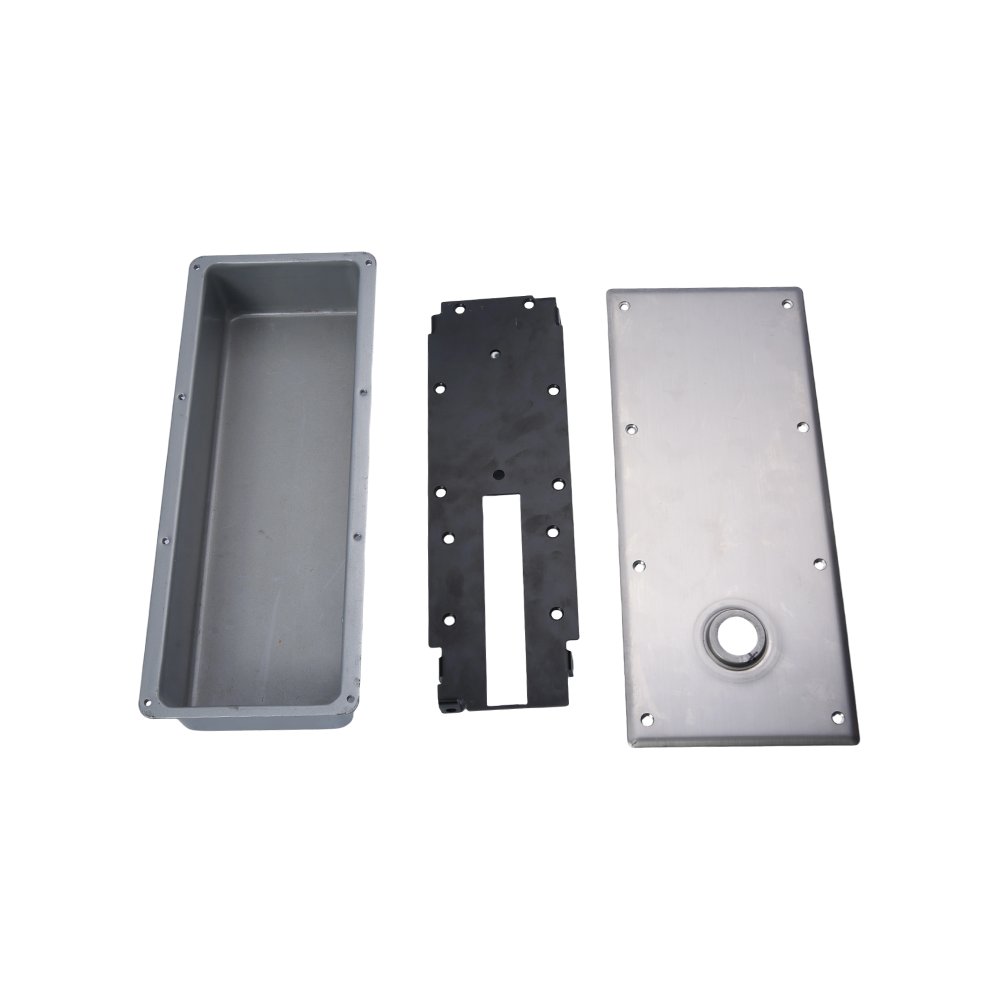
Deep-drawn rectangular container with lid
Cost and Value Considerations
The cost of a deep-drawn container includes material, tooling, pressing, secondary operations, finishing, inspection, packaging, and logistics. Tooling may represent a significant initial investment, especially for customized products. However, the per-unit cost can become competitive when production quantities are sufficient to distribute the tooling cost across a larger number of parts.
Deep drawing may also create value beyond the purchase price. A one-piece body can reduce assembly labor and lower the number of components that must be managed. Improved durability may reduce replacement frequency. Easier cleaning may reduce maintenance time. Better dimensional repeatability may simplify installation and reduce fitting problems.
A fair comparison should therefore consider total cost of ownership rather than only the initial unit quotation. Customers should evaluate service life, maintenance, cleaning, assembly time, rejection rates, transportation efficiency, and the cost of product failure or leakage.
For low-volume or highly complex products, alternative manufacturing processes may be appropriate. For medium- and high-volume production involving a repeatable metal shape, deep drawing can provide an attractive combination of quality, strength, and manufacturing efficiency.
Design Guidelines for Better Deep-Drawn Results
Use Suitable Corner Radii
Sharp internal or external corners can increase forming stress and make material flow more difficult. Suitable corner radii help reduce the likelihood of tearing, thinning, and wrinkling. The best radius depends on the material, thickness, depth, and intended appearance.
Consider Wall Height and Drawing Depth
Very deep shapes may require more than one drawing operation. Customers should identify the required internal capacity while allowing the manufacturer to evaluate a practical forming sequence. In some cases, a small change in depth or corner geometry can significantly improve manufacturability.
Define the Lid Interface Clearly
The lid must be designed with the container opening, rim, and intended closure in mind. Important information includes whether the lid should be removable, hinged, locked, gasketed, or simply seated over the opening.
Specify the Operating Environment
Information about temperature, moisture, chemicals, cleaning agents, vibration, impact, pressure, food contact, and sterilization helps guide material and finish selection. A container that works well in a dry indoor environment may require different protection in a humid or chemically active environment.
Identify Critical Dimensions
Not every dimension has the same functional importance. Customers should identify critical features such as opening size, mounting points, lid fit, internal capacity, flatness, or external envelope. This helps focus tooling and inspection resources on the characteristics that matter most.
Plan for Handling and Packaging
If the container will be stacked, transported, or handled frequently, the design should include suitable rigidity and edge treatment. Packaging should protect surfaces and prevent lids from separating or shifting during shipment.
Environmental and Operational Benefits
A durable reusable metal container can support waste reduction when it replaces disposable packaging or short-life plastic products. Its service life depends on material choice, care, operating conditions, and cleaning practices, but a robust container may be used repeatedly over an extended period.
Reduced assembly can also support material efficiency. When a product is formed from one sheet rather than several panels, fewer joining materials and fewer separate components may be required. Production efficiency must still be evaluated carefully because forming involves tooling and process energy.
Long-term value is strongest when the container is designed for the actual application. Over-specifying material thickness or surface treatment can add unnecessary cost, while under-specifying the product may lead to early damage or replacement. Application-based engineering provides a better balance.
Maintenance and Service Recommendations
Routine maintenance should follow the material and application requirements. The container should be cleaned using agents compatible with its surface and should be inspected periodically for dents, cracks, deformation, corrosion, damaged edges, or lid misalignment.
If a gasket is used, it should be checked for compression loss, cracking, contamination, or chemical degradation. A damaged gasket can reduce sealing performance even when the metal body and lid remain in good condition.
Containers used in food, medical, or laboratory environments should be cleaned according to the applicable internal procedures. Where sterilization is required, the complete container-and-lid system should be evaluated rather than testing only the body.
During storage, containers should be protected from unnecessary moisture, corrosive materials, heavy impact, and excessive stacking loads. Correct handling helps preserve the dimensions and appearance established during manufacturing.
Questions and Answers
What makes this container different from a welded rectangular box?
The main difference is the body construction. A deep-drawn container is formed from sheet metal through a die and punch, which can reduce the number of seams and joining operations. A welded box is generally made from several panels that are cut, bent, and joined. Deep drawing can provide a smoother internal surface, stronger structural continuity, and better repeatability for suitable production volumes.
Is the container completely airtight or leak-proof?
The container is designed with a securely fitted lid that can help provide protection against spills and external exposure. Actual airtight or leak-proof performance depends on the lid structure, dimensional tolerances, gasket design, closure force, material, and application conditions. Specific sealing requirements should be confirmed through design review and testing.
Can the dimensions be customized?
Yes. The length, width, height, depth, corner radius, wall thickness, rim, and lid dimensions can be developed according to customer requirements. Custom dimensions must be reviewed for deep-drawing feasibility and tooling considerations.
What materials can be used?
Material selection depends on strength, ductility, corrosion resistance, surface appearance, temperature, cleaning conditions, and intended use. Customers should provide the operating environment and any material standards or regulatory requirements so the manufacturer can recommend a suitable option.
Can the container be used for food processing?
It may be suitable for food-related applications when the selected material, surface finish, manufacturing process, and cleaning procedure meet the requirements of the intended use. Food contact requirements should be discussed before production, and the completed product should be evaluated according to applicable regulations.
Can it be used in medical or laboratory environments?
Yes, the smooth deep-drawn structure and fitted lid can be advantageous in medical and laboratory storage applications. However, sterilization, chemical compatibility, contamination control, and material requirements must be evaluated for the specific process.
Can additional features be added?
Additional features may include flanges, holes, slots, handles, hinges, embossments, ribs, mounting points, and sealing interfaces. These features can be introduced during drawing or through secondary operations, depending on their shape and location.
Is deep drawing suitable for small orders?
Deep drawing can be used for different production quantities, but customized tooling creates an initial cost that may be easier to justify for medium- or high-volume orders. For small quantities, prototype methods or simplified tooling may be considered. The most suitable approach depends on geometry, material, quantity, and required accuracy.
How is the lid matched to the container?
The lid and body are designed as a coordinated set. The opening, rim, overlap, clearance, and closure method are controlled so the lid can seat correctly. Sample fitting and dimensional inspection help confirm compatibility before production approval.
What quality checks are available?
Quality checks may include material inspection, dimensional measurement, visual inspection, edge and surface checks, lid-fit verification, functional evaluation, and application-specific testing. The inspection plan can be agreed according to the product drawing and customer requirements.
Can the product be used in automotive applications?
The deep-drawn construction can be adapted for automotive and transportation components that require durable, repeatable sheet metal parts. The design must be reviewed for vibration, temperature, moisture, installation, dimensional tolerance, and any applicable automotive quality requirements.
What information should be provided for a quotation?
Useful information includes drawings or samples, material preference, dimensions, estimated annual or monthly quantity, surface finish, lid requirements, application environment, tolerances, packaging needs, and target delivery schedule. The more complete the information, the more accurately the manufacturing process and tooling can be evaluated.
Choosing a Reliable Manufacturing Partner
Selecting a supplier for a deep-drawn container requires consideration of technical capability, production experience, communication, quality management, and delivery reliability. A supplier should be able to discuss both the product’s intended function and the manufacturing details needed to achieve it.
Yuyao Hongli Optoelectronics Co., Ltd. offers experience in deep-drawn parts, stamped parts, bending parts, kitchen appliance accessories, automotive stamping parts, and related products. Its more than 20 years of manufacturing experience provides a foundation for handling projects that require coordinated forming, stamping, secondary processing, and assembly-related features.
The company’s approximately 5,000-square-meter factory, multiple stamping workshops, and team of more than 60 employees support customized production and stable order fulfillment. Its OEM and ODM services allow customers to develop products from drawings, samples, or concepts, while rapid prototyping can help verify designs before volume production.
Its broad industry coverage also enables cross-sector experience. Lessons from appliance components may support a kitchen accessory project, while experience with automotive stamping can contribute to dimensional control and durability in industrial products. This knowledge can help customers identify practical solutions rather than relying on a one-size-fits-all process.
For long-term cooperation, after-sales support is equally important. Questions about fit, packaging, process changes, repeat orders, or additional features should be handled through clear technical communication. A manufacturing relationship is strongest when both sides focus on consistent quality, transparent requirements, and continuous improvement.
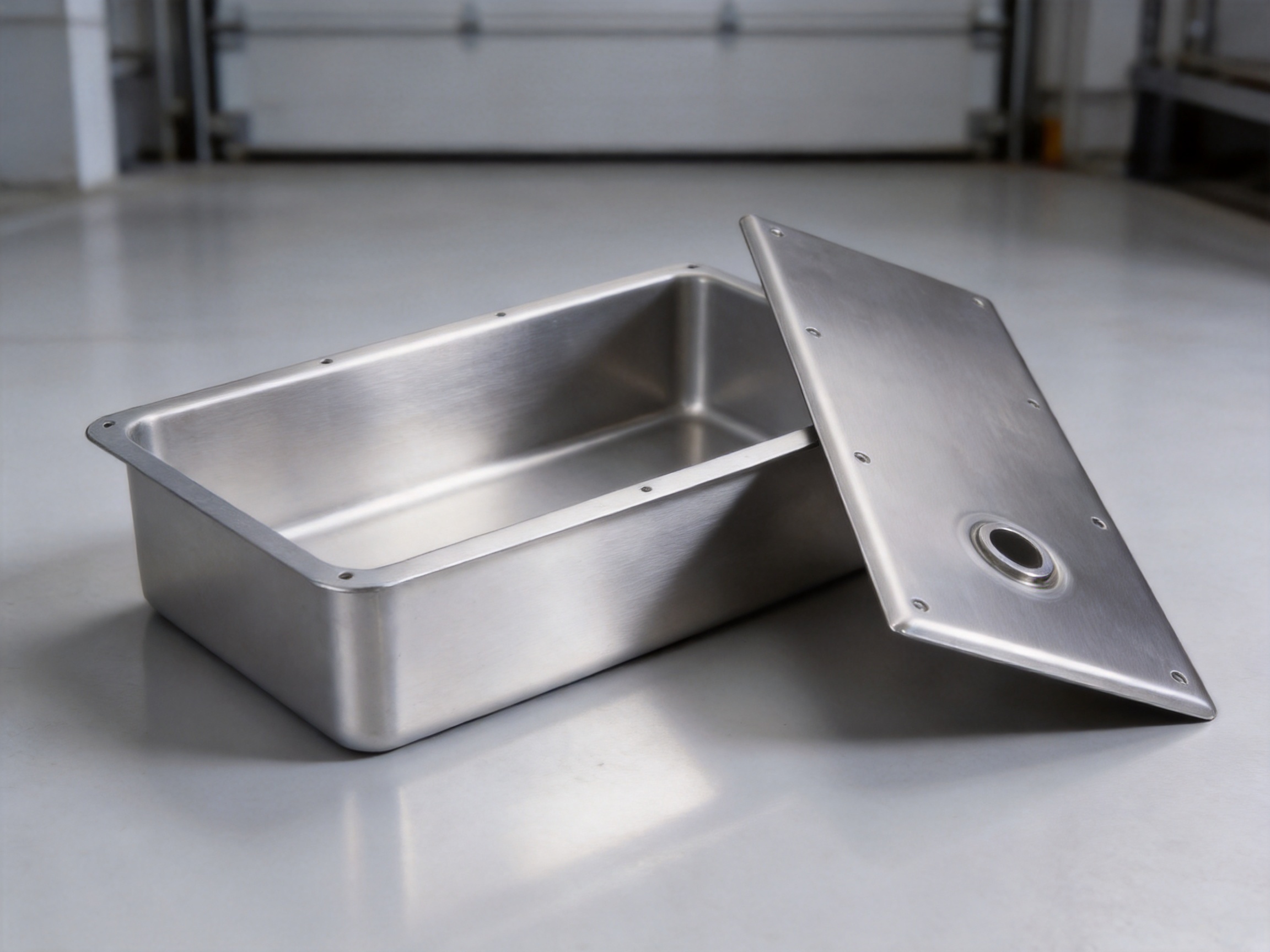
Conclusion
The deep-drawn rectangular container with lid is a practical and versatile metal product designed for strength, cleanliness, and dependable protection. Its one-piece formed body reduces unnecessary joints, supports structural continuity, and provides a smooth surface that is easier to clean and maintain. The fitted lid helps protect contents from contamination, spills, and external exposure, while the rectangular form makes efficient use of storage and installation space.
Compared with many multi-piece fabricated containers, the deep-drawn design can offer improved repeatability, reduced assembly, better surface continuity, and competitive production efficiency in suitable volumes. Its applications extend across food processing, medical storage, laboratory equipment, kitchen appliances, household products, automotive components, industrial machinery, and hardware systems.
Successful production depends on careful material selection, practical tooling design, controlled press forming, accurate trimming, appropriate finishing, and systematic inspection. Yuyao Hongli Optoelectronics Co., Ltd. combines these manufacturing capabilities with more than 20 years of industry experience, a modern factory, multiple stamping workshops, OEM/ODM support, rapid prototyping, and international order service.
For customers seeking a durable, customizable, and hygienic metal container, the product provides a strong starting point for both standard and specialized applications. By defining dimensions, material, sealing expectations, operating conditions, and inspection requirements at the beginning of the project, customers can work with the manufacturer to develop a container that delivers reliable performance throughout its service life.
References
1. ASM International. ASM Handbook: Forming and Forging. Technical principles of sheet metal forming and deep-drawing operations.
2. American Society of Mechanical Engineers. Design and Manufacturing Considerations for Metal Formed Components. General guidance on design, tolerances, and production control.
3. Society of Manufacturing Engineers. Sheet Metal Forming: Processes, Tooling, and Applications. Reference material covering stamping, drawing, trimming, and secondary operations.
4. International Organization for Standardization. Quality Management Principles and Manufacturing Process Control. General principles for consistent production and inspection.
5. Food and Agriculture Organization of the United Nations. Good Practices for Food Handling and Hygienic Equipment Design. General considerations for cleanable food-processing equipment.
6. International Organization for Standardization. Guidance on Stainless Steel and Corrosion-Resistant Metal Applications. General information concerning material selection and environmental resistance.
7. Yuyao Hongli Optoelectronics Co., Ltd. Product and company information supplied for the deep-drawn rectangular container with lid and related metal manufacturing capabilities.
Product: Deep-drawn rectangular container with lid
Previous Post
Deep-Drawn Square Containers with One-Sided Cutouts: Precision, Functionality, and Custom Manufacturing
Next Post
Precision Stamped Chassis Parts for Structural and Industrial Applications
News
-
-
What Is Deep Drawing Process and What Are Deep-Drawn Parts The deep drawing process is a sheet metal forming operation in which a flat meta...
READ MORE -
A flat mounting plate with three punched holes and a rectangular container with a fitted lid can come off presses in the same workshop, yet...
READ MORE -
What Are Stamped Parts? Stamped parts are metal components produced by pressing flat sheet metal between a die and a punch to cut, bend, or...
READ MORE
Get Fresh Updates Via Email
We promise we will never disclose your email address, and you can opt out at any time.
-
Quick Links
Home About Us Products Service News Contact Us -
Product list
Deep-drawn parts Stamped parts Bending parts Kitchen appliance accessories Automotive stamping parts -
About Us
Factory Honour FAQ -
News
Company News Industry News -
Contact Us
Address: South side of Shunke Road, Yangming Science and Technology Industrial Park, Yuyao City, Zhejiang Province, China Tel: +86-13905842349/+86-13738485724 Email: hongli@hl-stamping.com
Copyright © Yuyao Hongli Optoelectronics Co., Ltd. All Rights Reserved.
Custom Precision-Sheet/Sheet Metal Stamping Manufacturers
