


 English
 русский
 Español
 عربى


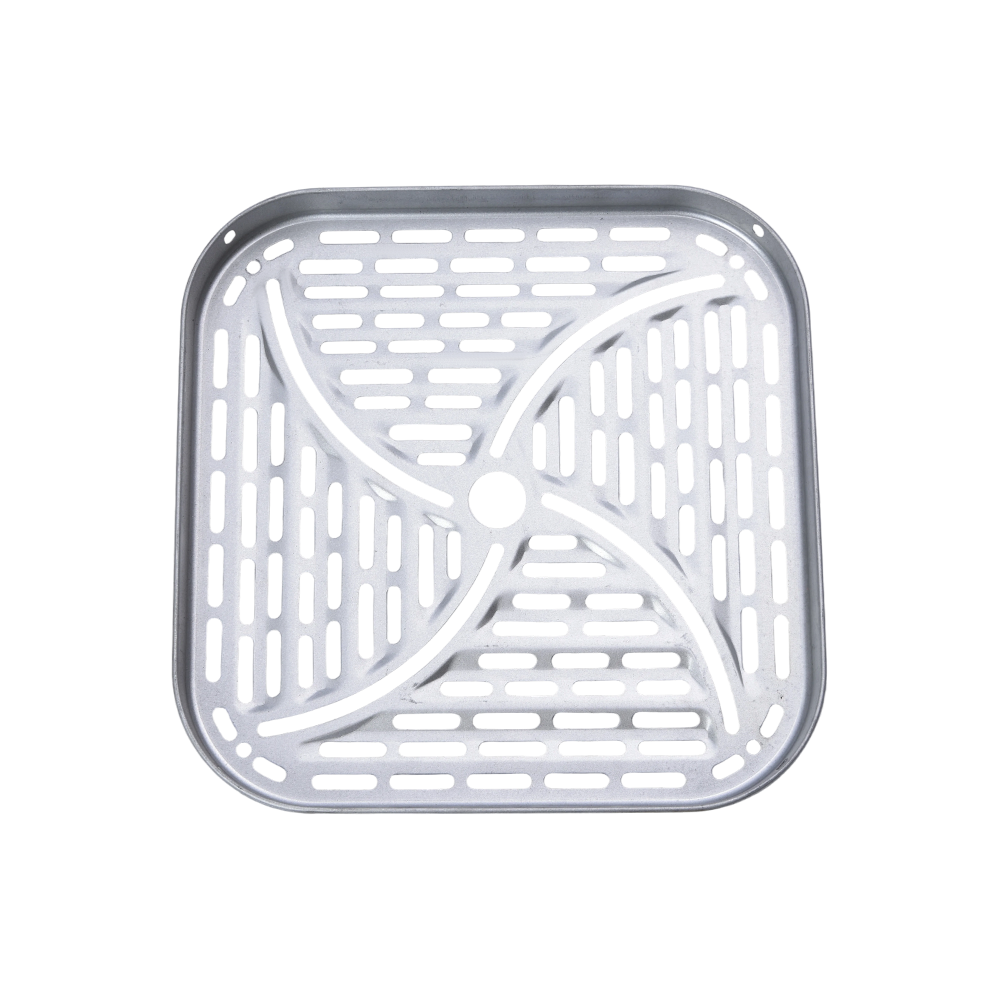
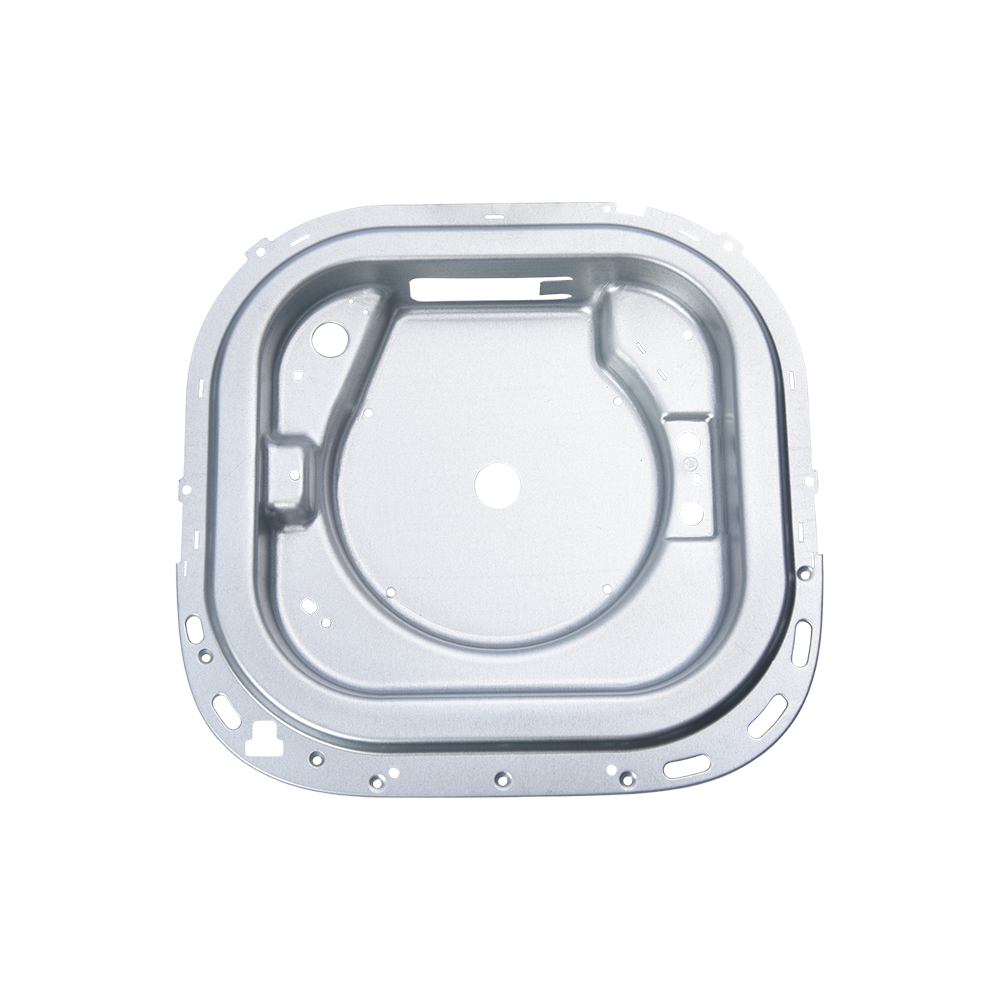
What Are Stamped Parts? Stamped parts are metal components produced by pressing flat sheet metal between a die and a punch to cut, bend, or...
READ MORE

News
Home / Author / Wang Xinyi — Senior After-Sales Coordinator / Precision Stamped Miniature Parts for Demanding Industrial Applications
Precision Stamped Miniature Parts for Demanding Industrial Applications
2026-09-01
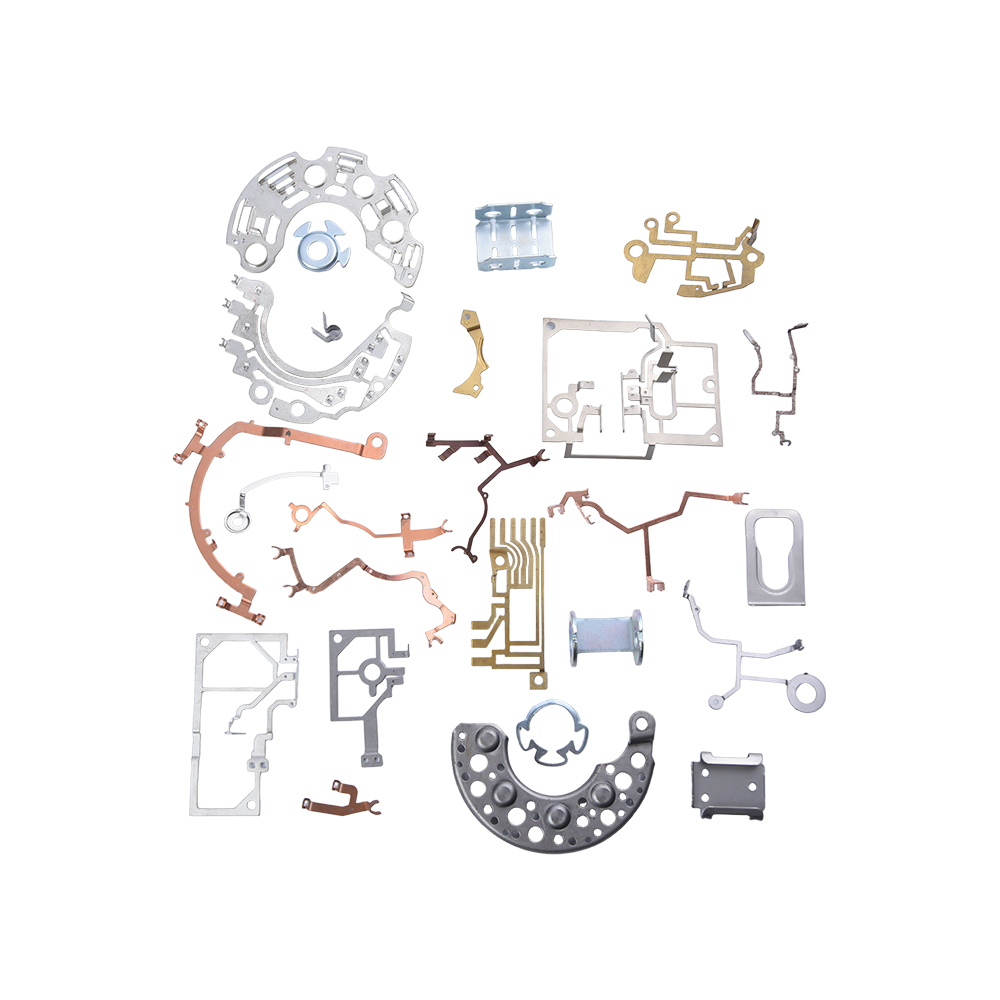
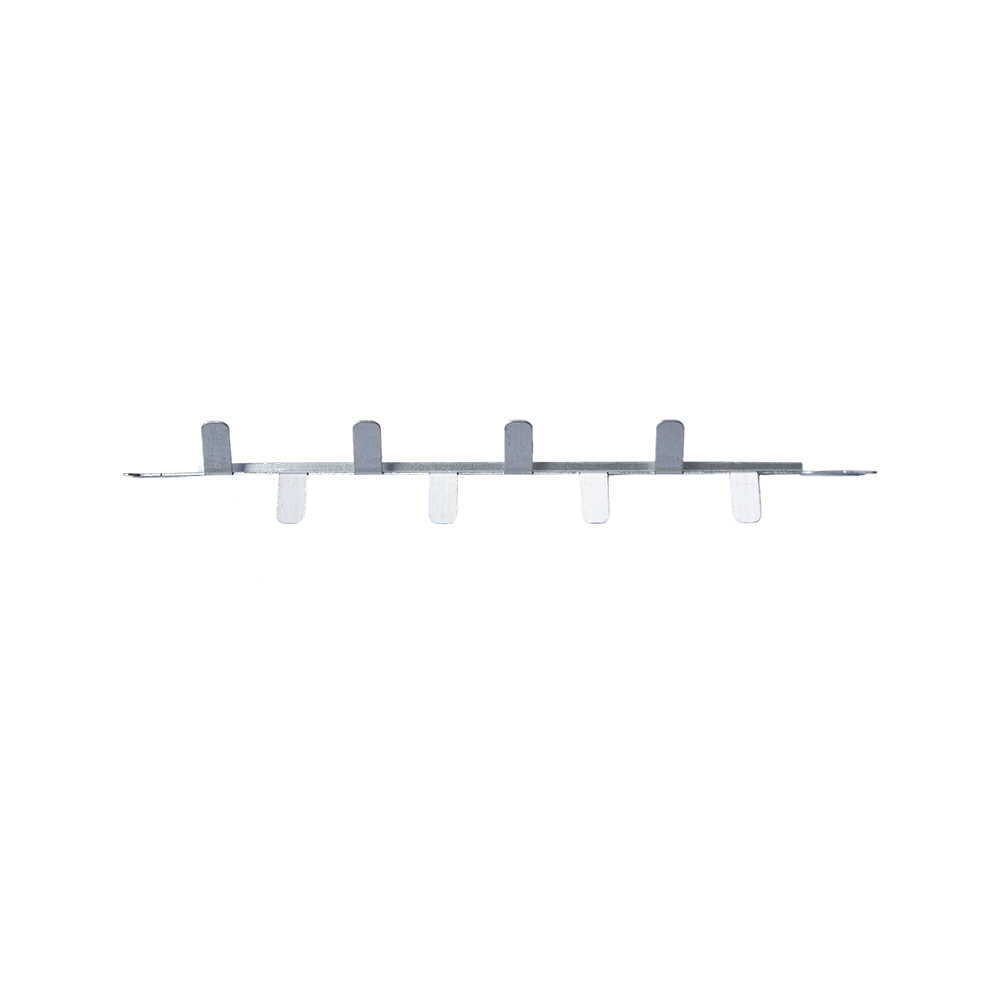
Stamped miniature parts are essential components in products where space is limited, dimensional accuracy is critical, and long-term reliability cannot be compromised. Although these components may be small in size, they often perform important mechanical, electrical, structural, or positioning functions. A miniature stamped part may serve as a connector, clip, shield, bracket, spring element, fastening component, contact piece, retaining part, or internal support. Its quality can directly affect the performance, safety, service life, and assembly efficiency of the finished product.
Modern manufacturers increasingly require miniature parts that combine precision, strength, corrosion resistance, consistent repeatability, and flexible customization. Conventional machining may be unsuitable for high-volume production because it can generate excessive material waste, require longer cycle times, and involve more complex secondary processing. Precision stamping provides an efficient alternative by forming sheet metal or strip material with dedicated dies and controlled press operations. When the process is supported by suitable materials, careful tooling, strict inspection, and experienced production management, stamping can deliver reliable miniature components at a competitive cost.
Our stamped miniature parts are developed for applications that demand compact dimensions and dependable performance. Manufactured from premium materials and produced with advanced stamping technology, these components typically achieve dimensional precision of approximately ±0.1 mm, subject to part geometry, material selection, tooling design, and inspection requirements. Their strong corrosion resistance, mechanical strength, wear resistance, rust resistance, and high-temperature performance enable reliable operation in equipment exposed to demanding working conditions.
The parts can be customized in size, shape, thickness, configuration, and surface finish. This flexibility allows them to support a wide range of industrial requirements, from household appliances and kitchen equipment to automotive components, optical instruments, educational instruments, and specialized hardware assemblies.
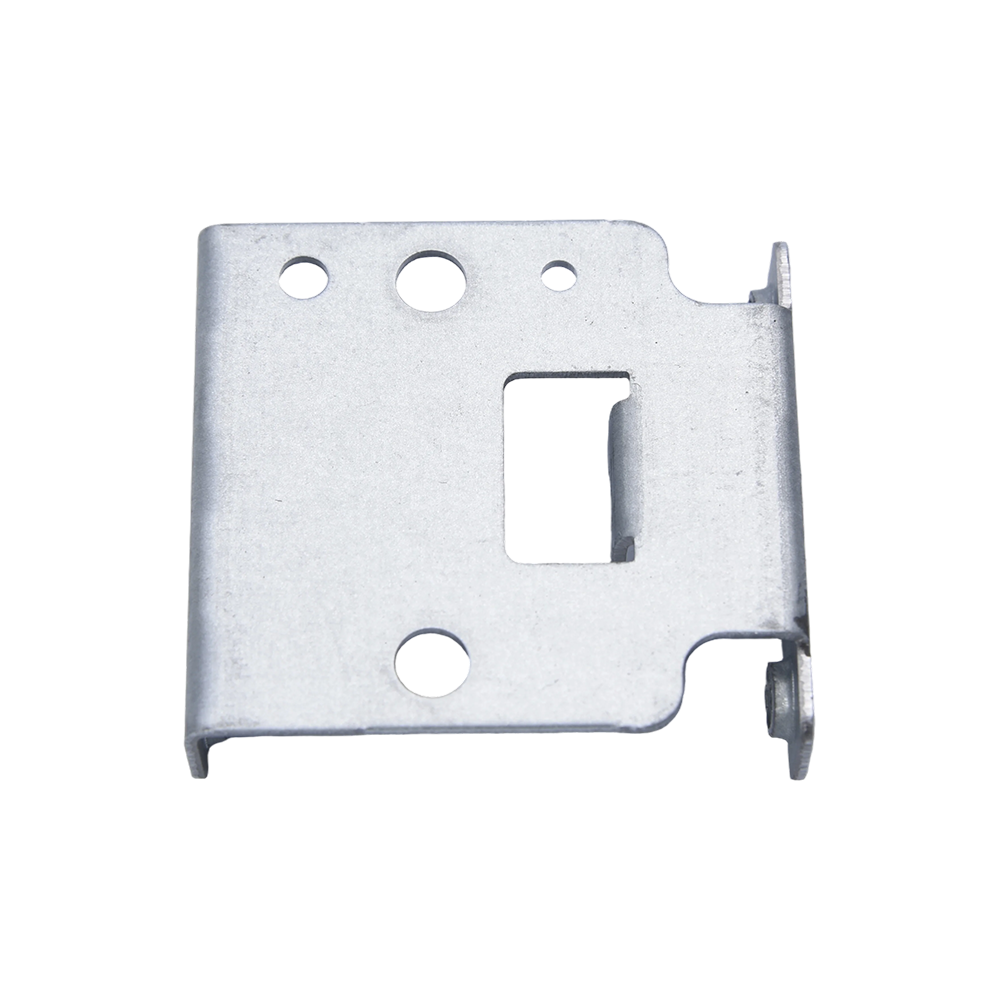
Stamped miniature parts
Understanding Stamped Miniature Parts
Stamped miniature parts are small metal components produced through a controlled forming process. During production, sheet metal or metal strip is placed into a stamping die, and a press applies force to cut, bend, draw, pierce, emboss, or otherwise form the material. Several operations may be combined within a progressive die or performed through separate stages, depending on the design and production volume.
The term “miniature” does not refer only to overall dimensions. It also describes the need for controlled features, narrow tolerances, fine edges, small holes, precise bends, compact profiles, and consistent repeatability. A part may be physically small but still include several functional details. For example, a miniature bracket may have mounting holes, locating tabs, bent flanges, and a spring section. Each feature must be formed correctly so that the component fits the final assembly without interference or excessive movement.
Precision stamped parts are commonly selected when a customer needs many identical components with stable quality. Once the tooling has been designed and validated, the production process can repeat the same geometry over a large batch. This repeatability is particularly valuable for manufacturers that assemble thousands or millions of products and cannot accept frequent dimensional variation.
Miniature stamping also supports efficient material utilization. Proper nesting and strip layout can reduce scrap, while high-speed press production can shorten manufacturing cycles. Compared with producing every feature through machining, stamping can offer a more efficient balance between tooling investment, unit cost, production speed, and product consistency.
Key Product Advantages
High Dimensional Precision
Precision is one of the most important advantages of stamped miniature parts. Small components are often installed into compact assemblies where even a minor dimensional error can affect alignment, movement, electrical contact, or fastening performance. Advanced stamping technology and carefully controlled tooling help maintain stable dimensions during production.
Our miniature stamped parts are manufactured with typical precision of approximately ±0.1 mm. The achievable tolerance depends on material thickness, part size, geometry, forming depth, bend radius, die construction, and customer specifications. Before mass production, these factors can be evaluated to establish a practical and reliable tolerance range for the intended application.
Consistent accuracy is not achieved through the press alone. It depends on the entire production system, including material quality, die alignment, press condition, feeding accuracy, lubrication, process parameters, operator experience, and inspection procedures. By controlling these elements together, manufacturers can reduce variation and improve the fit and function of the finished component.
Strong Mechanical Performance
Despite their compact size, miniature stamped components may be exposed to vibration, pressure, repeated assembly, impact, or mechanical loading. Premium materials provide the strength and stability required for these conditions. Depending on the application, material selection may be made according to tensile strength, hardness, ductility, fatigue resistance, conductivity, corrosion resistance, or temperature performance.
Good material selection also reduces the risk of cracking, deformation, premature wear, or loss of spring function. When a part includes formed tabs, retaining arms, or flexible contact sections, the balance between strength and ductility is especially important. The material must withstand forming without fracture while still providing the required performance during service.
Reliable mechanical strength helps miniature components retain their original shape after installation. This is essential for clips, brackets, fasteners, structural supports, and other parts that must maintain pressure or positioning force over time.
Corrosion and Rust Resistance
Components used in household appliances, automotive systems, kitchens, optical equipment, or industrial environments may encounter moisture, condensation, cleaning agents, salt, dust, or chemical contaminants. Corrosion can weaken a part, increase friction, reduce electrical performance, and eventually cause assembly failure.
Our stamped miniature parts are produced from materials selected for strong corrosion resistance and rust resistance. Surface finishing can also be customized according to the application. Suitable finishing options can improve appearance, protect exposed surfaces, support electrical performance, or provide additional resistance to wear and environmental exposure.
Corrosion resistance is particularly important for parts located inside appliances or equipment where access for replacement is difficult. A small component that remains stable under humid or demanding conditions can contribute significantly to the service life of the complete product.
Wear Resistance and Long Service Life
Many miniature parts are involved in repeated contact or movement. They may slide against another component, hold a moving section in position, or experience repeated insertion and removal. In these applications, wear resistance helps maintain the original dimensions and functional surfaces.
Material properties, surface condition, edge quality, and forming accuracy all influence wear performance. A smooth and properly finished surface can reduce unnecessary friction. Accurate forming can prevent localized pressure points that might accelerate wear. Stable hardness and suitable surface treatment can further improve durability when the part operates under repeated mechanical stress.
By combining appropriate materials with controlled stamping and finishing processes, miniature components can provide dependable performance for extended periods. This reduces maintenance requirements and helps protect the reliability of the larger assembly.
High-Temperature and Harsh-Environment Resistance
Household heating equipment, automotive systems, kitchen appliances, and certain industrial products may operate at elevated temperatures. Components in these environments must retain their shape, strength, and surface condition without excessive oxidation or deformation.
Our stamped parts are designed to offer high-temperature resistance and reliable performance in harsh environments when the selected material and surface treatment are appropriate for the operating conditions. During product development, customers can provide information about temperature range, exposure time, humidity, chemicals, vibration, pressure, and service cycles. This information supports better material and process selection.
Harsh-environment resistance is not limited to temperature. A part may also need to withstand vibration, repeated thermal cycling, airborne contaminants, moisture, or contact with other metals. Considering these factors during the design stage helps prevent performance problems after assembly.
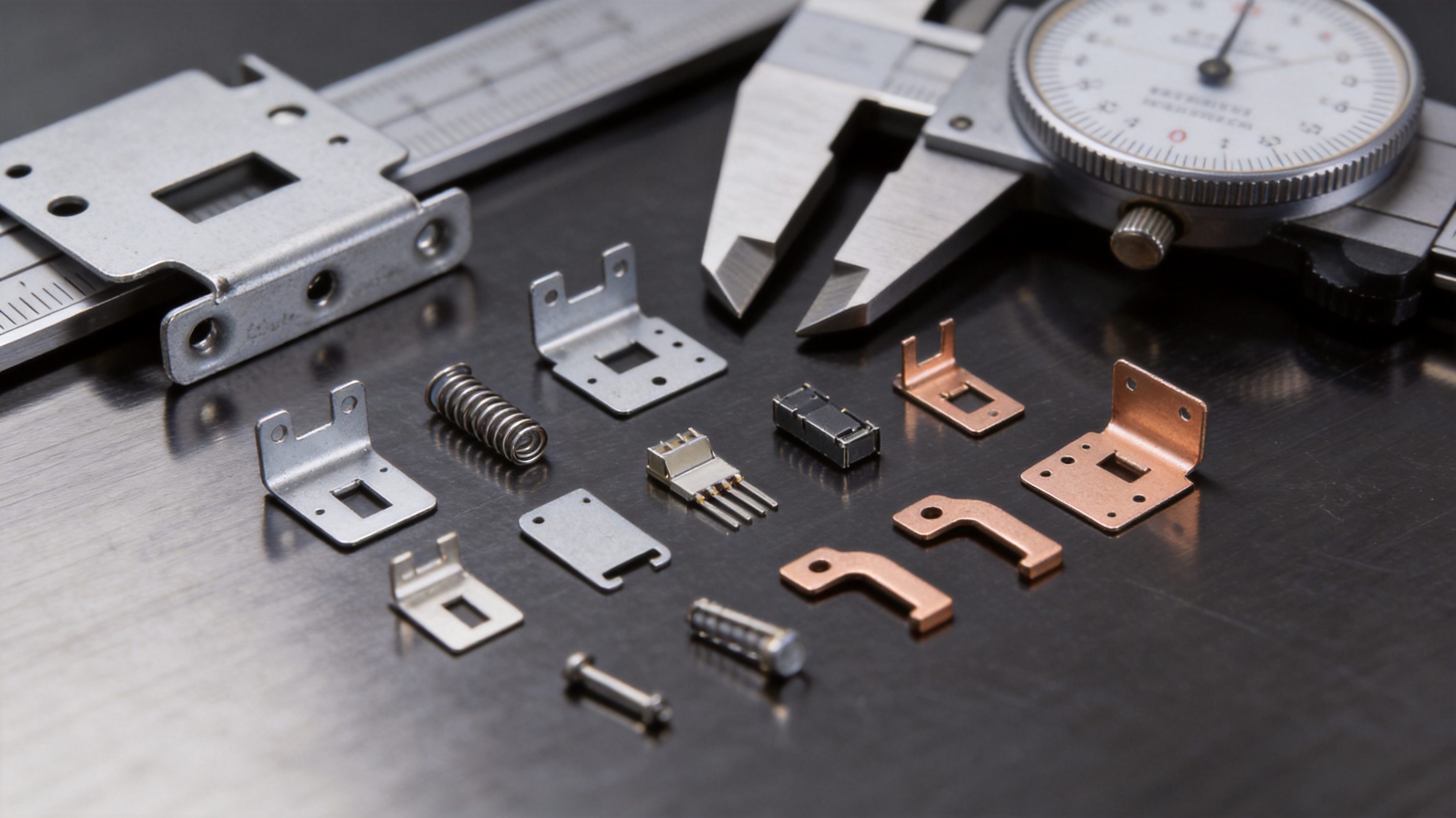
Advanced Manufacturing Process
Application and Design Review
Production begins with a clear understanding of the customer’s requirements. Drawings, samples, three-dimensional models, material specifications, dimensional tolerances, surface requirements, and expected order quantities are reviewed before tooling and production planning begin.
The design review considers the part’s functional features as well as its manufacturability. Small holes, narrow slots, sharp bends, deep drawn sections, thin walls, and close feature spacing may affect die design and production stability. Identifying these factors early helps reduce later modifications and supports a more efficient manufacturing route.
A professional review may also examine the forming direction, bend sequence, material flow, corner radii, carrier design, scrap layout, and inspection points. If a feature could create cracking, distortion, excessive burrs, or unstable feeding, the design can be evaluated before mass production.
Material Preparation
Material quality has a direct effect on stamping performance. Sheet or strip material must have stable thickness, suitable hardness, consistent mechanical properties, and a surface condition appropriate for the customer’s requirements. Material is selected according to the application and the required balance of strength, ductility, corrosion resistance, conductivity, temperature resistance, and surface appearance.
Before forming, material may be inspected for thickness, flatness, surface defects, edge condition, and general consistency. Proper storage is also important. Materials should be protected from unnecessary moisture, contamination, and damage that could affect production or final appearance.
Stable material preparation contributes to stable press operation. When material properties vary significantly from one batch to another, forming force, springback, burr formation, and dimensional results may also change. Controlled sourcing and incoming inspection help reduce this risk.
Tooling and Die Development
The stamping die is one of the most important elements in miniature part production. It determines the shape, feature location, forming sequence, and repeatability of the component. A well-designed die must provide accurate guidance, appropriate clearances, balanced force distribution, effective material support, and reliable part release.
Tooling may be configured for blanking, piercing, bending, forming, drawing, embossing, or a combination of operations. For high-volume production, progressive dies can perform multiple operations as the strip moves through the press. For lower-volume or more complex products, separate dies or staged operations may be more suitable.
Die design must account for material thickness, tensile behavior, bend allowance, springback, cutting clearance, punch strength, and expected production volume. Miniature features require particular attention because small errors in punch alignment or clearance can create burrs, deformation, or premature tool wear.
Tooling development is also connected to cost control. A properly designed die can improve production speed, reduce scrap, minimize secondary operations, and extend tool life. These benefits support more competitive unit pricing, particularly for repeat orders and large production quantities.
Precision Stamping Operations
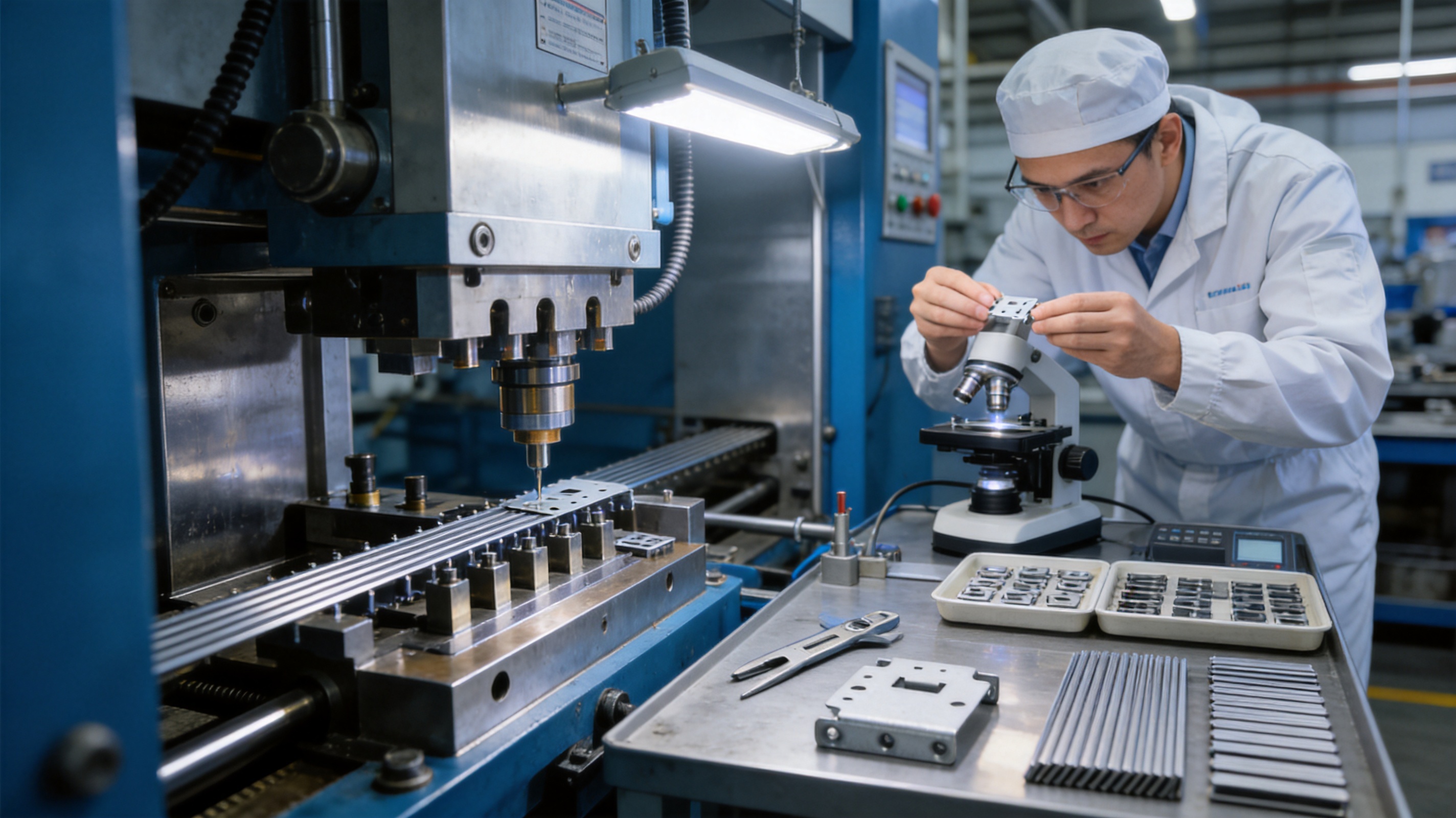
During stamping, the material is positioned and processed under controlled press conditions. The press applies a measured force to the die, allowing the material to be cut or formed into the required geometry. Feeding, alignment, stroke, speed, and pressure must remain stable to maintain consistent results.
Different parts require different combinations of operations. Blanking creates the external profile. Piercing forms holes and slots. Bending creates angles or flanges. Forming produces three-dimensional features. Drawing creates deeper shapes from flat material. Embossing adds raised or recessed details. These operations can be integrated into a planned process sequence according to the product design.
For miniature parts, the process must be carefully balanced. Excessive force may damage the material or die, while insufficient force may result in incomplete forming. Poor alignment can shift features or create uneven edges. Controlled press operation and regular monitoring help maintain the required quality throughout the production run.
Deburring and Edge Control
Cutting operations can leave small burrs along the edge of a stamped component. Although a burr may appear insignificant, it can interfere with assembly, create a sharp edge, affect electrical contact, or accelerate wear. For this reason, edge control is an important part of miniature component manufacturing.
Depending on the design and customer requirements, deburring may be completed through mechanical, vibratory, brushing, tumbling, or other suitable methods. The selected approach must remove unwanted sharp edges without damaging critical dimensions or surface features.
Some designs are optimized during die development to minimize burr formation. Appropriate cutting clearance, sharp tooling, stable alignment, and regular die maintenance all support better edge quality. If the finished part requires extremely controlled edges, inspection criteria can be defined specifically for burr height and edge condition.
Surface Finishing
Surface finish can influence corrosion resistance, appearance, friction, electrical conductivity, solderability, and compatibility with other materials. Depending on the application, a stamped miniature part may be supplied with a standard surface, cleaned surface, polished surface, plated surface, coated surface, or another customized treatment.
Surface finishing requirements should be established in relation to the part’s working environment. A component used inside a dry indoor product may have different requirements from one installed in an automotive system or exposed kitchen environment. Finishing specifications may include color, gloss, roughness, coating thickness, adhesion, corrosion resistance, and visual acceptance standards.
Careful handling is necessary after finishing because miniature components can be easily scratched, bent, or mixed if packaging is not properly organized. Protective packaging and suitable separation methods help preserve quality until the parts reach the customer’s assembly line.
Inspection and Quality Control
Quality control is integrated throughout the manufacturing process rather than being limited to a final inspection. Incoming material inspection, first-article verification, in-process checks, tooling monitoring, dimensional inspection, appearance inspection, and final batch review all contribute to product consistency.
Critical dimensions may be checked using calipers, micrometers, gauges, optical equipment, or other appropriate inspection tools. Depending on the part, inspection may include overall length and width, hole diameter, bend angle, formed height, material thickness, flatness, burr condition, and surface appearance.
Functional inspection may also be required. A part may need to fit into a mating component, maintain a specified spring force, withstand repeated insertion, provide a stable electrical connection, or support a defined load. Functional testing helps confirm that dimensional accuracy translates into reliable performance in the final application.
Process monitoring is particularly valuable for high-volume orders. It can identify gradual die wear, feeding changes, material variation, or dimensional drift before a large quantity of nonconforming parts is produced. This approach reduces waste and supports stable delivery.
Customization Capabilities
Every application has different requirements, which is why miniature stamped parts are available through a flexible customization process. Customers can specify dimensions, geometry, thickness, material, hole patterns, bend angles, surface finish, packaging, and inspection requirements.
Customized Size and Geometry
The external profile and internal features can be adapted to the available installation space. Compact designs may include small mounting holes, locating points, retaining tabs, slots, hooks, flanges, ribs, and formed contact areas. The geometry can be developed to support the functional purpose of the component while remaining suitable for efficient stamping.
When a product must fit into a narrow or irregular space, a customized stamped part can often reduce the need for multiple separate components. Combining several features into one formed part may simplify assembly, lower part count, and reduce the possibility of incorrect installation.
Customized Thickness
Material thickness affects strength, flexibility, weight, forming behavior, electrical performance, and installation clearance. A thicker material may be appropriate for a load-bearing bracket, while a thinner material may be more suitable for a shield, contact, spring, or compact clip.
Thickness selection should consider the complete application rather than a single dimension. The part must be strong enough to perform its function but also compatible with the available space and forming process. Our production team can evaluate the relationship between thickness, geometry, tolerance, and required performance.
Customized Surface Treatment
Surface treatment may be selected to provide improved corrosion resistance, wear resistance, appearance, conductivity, or compatibility with the mating product. Customers can communicate their environmental conditions and performance expectations so that an appropriate finishing approach can be considered.
For parts used in visible locations, appearance consistency may be important. For hidden internal parts, functional protection may be the primary concern. In either case, a clear surface specification helps align manufacturing and inspection expectations.
Prototype and Production Transition
Product development often begins with a prototype or small trial order. Prototyping allows customers to verify installation, function, clearances, and interaction with surrounding components before committing to larger quantities.
Our support for rapid prototyping and efficient production conversion helps customers move from an initial concept toward stable mass production. Lessons learned during prototype evaluation can be applied to tooling, material selection, forming sequence, and inspection planning. This reduces the risk of discovering major issues only after a production die has been completed.
Applications Across Multiple Industries
Household Appliances
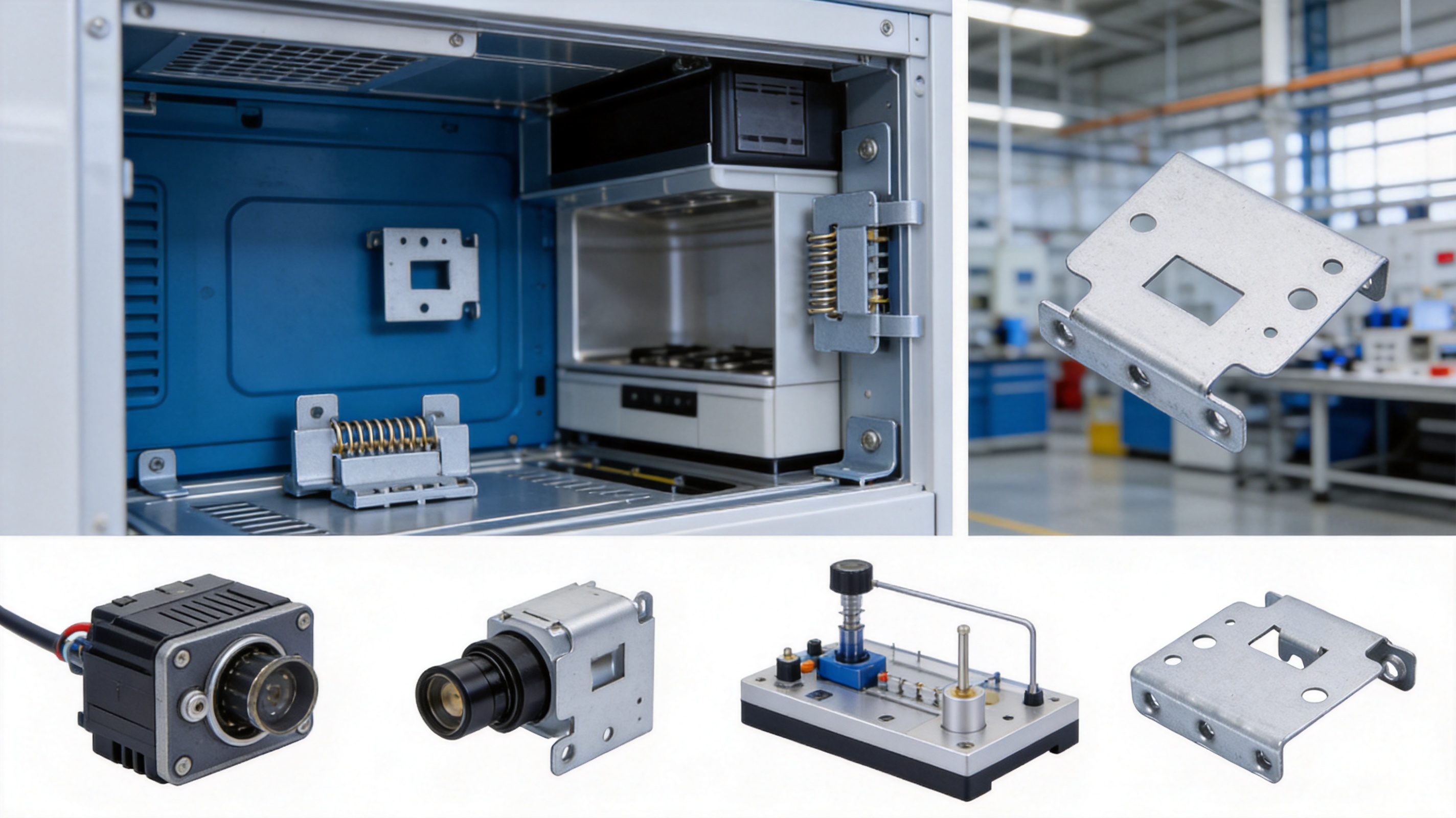
Household appliances contain many compact metal components that support structure, movement, heating, fastening, shielding, and electrical functions. Miniature stamped parts can be used inside small appliances, electric heaters, control systems, switches, housings, and internal support structures.
Appliance components may experience heat, vibration, moisture, cleaning chemicals, and repeated operation. Corrosion resistance, dimensional accuracy, and stable mechanical properties therefore play an important role in product reliability. Customized shapes can also help manufacturers simplify assembly and make efficient use of limited internal space.
Kitchen Appliance Accessories
Kitchen equipment often combines metal, plastic, glass, heating elements, motors, sensors, and electrical components. Small stamped parts may be used as mounting brackets, clips, retainers, reinforcing elements, protective pieces, hinges, or connection components.
Because kitchen environments can involve steam, water, grease, cleaning products, and elevated temperatures, the selected part must be suitable for the operating conditions. Rust resistance and a suitable surface finish can help maintain long-term appearance and function.
Automotive Stamping Parts
Automotive systems require components that can withstand vibration, temperature changes, moisture, road contaminants, and repeated operation. Miniature stamped parts may be integrated into vehicle electrical systems, interior mechanisms, body hardware, sensor assemblies, fastening systems, and other compact modules.
Automotive applications often require stable batch-to-batch consistency because a dimensional problem can affect automated assembly or the performance of many finished vehicles. Precision stamping supports repeatable production, while strong materials and suitable surface protection help parts remain dependable throughout service.
Optical Instruments
Optical instruments frequently require small, accurately positioned components. A miniature bracket, frame, retainer, or shield may need to hold an optical element in a precise location without excessive movement. Dimensional control and surface quality are therefore important.
Stamped parts can support compact optical assemblies by providing thin, strong, and customized features. When the design is optimized for stamping, the part can be produced consistently while maintaining the required alignment and mounting function.
Educational Instruments
Educational instruments and laboratory teaching products often include mechanical frames, adjustment components, clips, supports, and protective covers. These products may be manufactured in different configurations and quantities, creating a need for both customization and dependable repeat production.
Stamped miniature parts can provide practical solutions for these products because they combine efficient production with flexible design. Their consistent dimensions help simplify assembly, while appropriate materials support repeated handling in educational environments.
Hardware and General Industrial Products
Hardware products and industrial equipment use small metal components in fastening, positioning, protection, connection, and reinforcement functions. The parts may be installed individually or as part of a larger assembly.
By supplying customized stamped parts, a manufacturer can help customers reduce reliance on generic components that may require modification during assembly. A purpose-designed part can improve fit, reduce secondary work, and contribute to a cleaner and more reliable final product.
Why Precision Stamping Can Outperform Conventional Alternatives
Several manufacturing methods can produce small metal parts, but precision stamping offers particular advantages for applications requiring repeatability and volume efficiency. Machining is highly flexible, but it may remove significant material and require longer cycle times for simple thin-gauge components. Casting can produce complex shapes, but it may involve additional finishing, material limitations, or dimensional considerations. Manual fabrication can be suitable for prototypes, but it is generally less consistent for large quantities.
Stamping uses dies to create consistent geometry at an efficient production rate. Once the tooling has been validated, each press cycle can produce one or more repeatable components. This reduces variation and supports predictable scheduling. For suitable designs, material utilization can also be favorable because the blank layout is planned before production.
Another advantage is the ability to combine multiple operations. A progressive stamping process can pierce, form, bend, and cut a part in a coordinated sequence. Reducing the number of separate operations can lower handling requirements, shorten production time, and minimize opportunities for misalignment.
Precision stamping is also suitable for customization. Although the die is specialized for a particular design, the resulting component can be tailored closely to the customer’s product. This is especially valuable when a standard catalog part cannot meet space, strength, or assembly requirements.
Manufacturing Strengths and Service Capability
Yuyao Hongli Optoelectronics Co., Ltd. is a comprehensive manufacturing enterprise with more than 20 years of industry experience. Founded in 2000, the company has grown from its former name, Yuyao Hongli Optoelectronics Educational Instruments Co., Ltd., into a professional manufacturer of metal stamping parts and related products.
The company operates a modern factory covering approximately 5,000 square meters and has more than 60 employees. Multiple stamping workshops support production across several product categories, including deep-drawn parts, stamped parts, bending parts, kitchen appliance accessories, automotive stamping parts, hardware products, and components for household appliances, optical instruments, educational instruments, and other applications.
This broad manufacturing background provides practical advantages for customers requiring more than a basic stamping service. Experience across different industries helps the production team understand how material selection, geometry, tolerance, surface treatment, and environmental conditions influence final performance.
The company supports OEM and ODM customization, rapid prototyping, production processing, wholesale, retail, import, and export services. This range of capabilities allows customers to work with one manufacturing partner from early development through repeat production and international delivery.
Efficient production conversion is another important strength. After a prototype or design is confirmed, the company can organize tooling, process planning, production, inspection, and packaging as coordinated activities. This helps reduce communication delays and supports a smoother transition from product concept to commercial supply.
Strict quality control and stable delivery are central to the company’s manufacturing approach. Customers depend on miniature parts to arrive with consistent dimensions, correct quantities, suitable packaging, and reliable documentation. Stable production management helps support assembly schedules and reduces the risk of interruptions.
Comprehensive after-sales service further strengthens long-term cooperation. If a customer needs a design adjustment, replacement batch, production clarification, or technical discussion, effective communication helps resolve issues efficiently. The company’s business philosophy of integrity, excellence, innovation, and sharing reflects its commitment to dependable customer relationships.
Quality, Reliability, and Delivery Considerations
For miniature stamped parts, quality is measured by more than visual appearance. A component may look acceptable while still having an incorrect hole position, inconsistent spring force, excessive burrs, poor flatness, or an unsuitable surface condition. A complete quality approach therefore considers dimensions, materials, function, appearance, packaging, and traceability.
Before placing an order, customers should identify the most important characteristics of the part. These may include critical dimensions, fit requirements, load conditions, operating temperature, corrosion exposure, surface finish, electrical properties, and expected service life. Clear specifications allow the manufacturer to establish appropriate process and inspection controls.
Packaging is also significant because miniature components can be easily mixed, scratched, bent, or lost during handling. Packaging may be customized according to part size, quantity, surface sensitivity, assembly method, and shipping requirements. Organized packaging can help customers count parts quickly and feed them into later production processes more efficiently.
Delivery planning should consider tooling lead time, prototype approval, production volume, material availability, finishing requirements, inspection time, and shipping arrangements. Early communication makes it easier to develop a realistic schedule and avoid preventable delays.
| Requirement | Manufacturing Consideration | Customer Benefit |
|---|---|---|
| Dimensional accuracy | Tooling precision, press stability, material control, and in-process inspection | Reliable fit and consistent assembly performance |
| Corrosion resistance | Material selection, surface condition, and suitable finishing process | Longer service life in humid or demanding environments |
| Mechanical strength | Appropriate material grade, thickness, forming sequence, and geometry | Improved resistance to load, vibration, and deformation |
| High-volume production | Progressive tooling, efficient feeding, process monitoring, and batch control | Stable quality and competitive unit cost |
| Customized design | Application review, prototype validation, and dedicated die development | Better integration with the customer’s product |
| Surface quality | Deburring, cleaning, finishing, protective handling, and visual inspection | Improved appearance, safety, and functional performance |
| Delivery reliability | Coordinated material, tooling, production, inspection, and packaging planning | Reduced risk of assembly interruptions |
Design Guidelines for Better Stamped Miniature Parts
A successful miniature stamping project begins with a design that balances function and manufacturability. Designers should avoid unnecessary complexity when a simpler feature can provide the same performance. Simplified geometry may reduce tooling cost, improve production speed, and increase dimensional stability.
Bend radii should be selected with consideration for material thickness and ductility. Extremely sharp bends can increase the risk of cracking or distortion. Appropriate radii support smoother material flow and improve tool life. Similarly, holes and slots should be positioned with enough surrounding material to prevent tearing or deformation.
Feature spacing is important for small parts. Closely positioned holes, narrow webs, and thin connecting sections may weaken the component or make the die more difficult to maintain. Where possible, a design should provide sufficient material around critical features and avoid abrupt changes in width.
Flatness and springback should also be considered. After forming, metal may naturally attempt to return partially toward its original shape. The amount of springback depends on material properties, thickness, bend angle, and tooling conditions. Compensation can be incorporated into the die design when necessary.
Customers should also distinguish between critical and noncritical dimensions. Requiring extremely tight tolerances on every feature can increase cost without improving function. Defining realistic tolerances for each feature helps focus inspection resources on the dimensions that matter most.
Surface finish specifications should be clear and practical. If the part will be hidden inside an appliance, a visual standard may differ from that required for an exposed decorative component. If the part will slide, conduct electricity, or resist corrosion, the surface requirement should be connected to that function.
From Prototype to Mass Production
Prototype production provides an opportunity to evaluate the real behavior of the design. A prototype can confirm whether the part fits the assembly, whether the bend angles are correct, whether the material has sufficient flexibility, and whether installation can be completed efficiently.
During prototype evaluation, customers may discover that a tab is too short, a hole requires repositioning, a flange interferes with another component, or the surface finish needs adjustment. Addressing these issues before mass production is generally more efficient than modifying a large finished batch.
Once the prototype is approved, the production process can be formalized. The manufacturer confirms the final drawing, material, tolerance, surface finish, inspection plan, packaging, and order quantity. Tooling is then developed or refined, followed by trial stamping and first-article verification.
Mass production begins after the sample meets the agreed requirements. Process controls are used to maintain consistency throughout the batch. For repeat orders, production records and established tooling can help shorten preparation time and support stable reordering.
This structured transition is valuable for OEM and ODM customers because it connects engineering, manufacturing, inspection, and supply planning. It also creates a clearer basis for future product improvements or related part development.
Q&A About Stamped Miniature Parts
What are stamped miniature parts used for?
They are used in compact mechanical, electrical, optical, household appliance, kitchen equipment, automotive, educational instrument, and hardware assemblies. Typical functions include fastening, positioning, shielding, retaining, supporting, connecting, reinforcing, and controlling movement.
What level of precision can these parts achieve?
The typical manufacturing precision is approximately ±0.1 mm. The actual achievable tolerance depends on the material, thickness, part geometry, forming method, tool design, production volume, and inspection requirements. Critical dimensions should be reviewed during the design stage.
Can the size and shape be customized?
Yes. The size, shape, thickness, hole pattern, bend configuration, formed features, and surface finish can be customized according to the customer’s application and technical drawings.
Which materials can be used?
Material selection is based on the required mechanical strength, corrosion resistance, wear resistance, conductivity, temperature performance, ductility, thickness, and surface requirements. The appropriate material should be confirmed through an application and design review.
Are the parts suitable for humid or harsh environments?
They can be designed for humid and demanding environments when suitable materials and surface treatments are selected. Customers should provide information about moisture, chemicals, temperature, vibration, and expected service conditions so that the manufacturing solution can be matched to the application.
Can the parts withstand high temperatures?
High-temperature performance depends on the material, thickness, surface finish, operating temperature, exposure duration, and mechanical load. The parts can be developed for elevated-temperature applications when these conditions are defined during product planning.
What is the difference between stamping and machining?
Stamping forms sheet or strip material with dies and presses, while machining removes material with cutting tools. Stamping is often advantageous for thin, repeatable components produced in medium or high quantities. Machining may be preferred for certain solid shapes, highly complex three-dimensional features, or low-volume parts without dedicated tooling.
Can a prototype be produced before mass production?
Yes. Rapid prototyping and trial production can help verify fit, function, material behavior, appearance, and assembly compatibility before full production. Prototype feedback can then be applied to tooling and process planning.
How are burrs and sharp edges controlled?
Burrs are controlled through appropriate die clearance, tool sharpness, alignment, maintenance, and suitable deburring or finishing processes. Inspection requirements can be established for edge condition and allowable burr height.
Can surface finishing be customized?
Yes. Surface requirements may include cleaning, polishing, protective treatment, plating, coating, or another specified finish. The selection depends on corrosion resistance, wear, appearance, conductivity, temperature, and environmental requirements.
What information should be included in an inquiry?
Useful information includes drawings or samples, material preference, thickness, dimensions, tolerances, surface finish, application, expected quantity, packaging requirements, inspection standards, and delivery expectations. More complete information supports faster technical evaluation and quotation.
Can the manufacturer support OEM and ODM projects?
Yes. OEM and ODM customization is supported, including product development assistance, prototype production, tooling coordination, stamping, finishing, inspection, packaging, and repeat production.
Choosing a Reliable Manufacturing Partner
When selecting a supplier for miniature stamped parts, customers should evaluate more than the quoted unit price. A low initial price may not provide good value if the supplier lacks tooling experience, quality control, delivery stability, or technical communication.
Manufacturing experience is important because miniature parts often involve details that are not obvious from a simple product image. The supplier should understand how material properties, die clearance, bend sequence, springback, burrs, surface protection, and packaging affect final performance.
Production capacity also matters. A supplier with multiple stamping workshops, a modern factory, experienced employees, and established process management is better positioned to support both prototype development and larger orders. Capacity should be considered together with quality systems and delivery planning.
Communication is another key factor. Technical questions should be addressed clearly before tooling begins. Drawings, samples, revisions, inspection methods, and acceptance criteria should be recorded so that both parties share the same expectations.
Long-term cooperation is supported by consistent quality and responsive service. When a supplier can provide manufacturing, processing, customization, inspection, packaging, and after-sales support, customers may reduce the complexity of managing multiple vendors.
Conclusion
Stamped miniature parts provide an efficient and reliable solution for products that require compact dimensions, accurate geometry, strong mechanical performance, corrosion resistance, wear resistance, and dependable operation in challenging environments. Advanced stamping technology enables repeatable production, while customized tooling and material selection allow each part to be adapted to its intended application.
The advantages of these components extend beyond their small size. Precision manufacturing can improve assembly fit, reduce material waste, simplify product structure, support high-volume production, and lower the need for secondary machining. Suitable surface finishing and careful quality control further improve durability and appearance.
Yuyao Hongli Optoelectronics Co., Ltd. combines more than 20 years of industry experience with a 5,000-square-meter factory, multiple stamping workshops, more than 60 employees, OEM and ODM capabilities, rapid prototyping, and broad product experience. Its manufacturing scope covers stamped parts, deep-drawn parts, bending parts, kitchen appliance accessories, automotive stamping parts, hardware products, household appliances, optical instruments, educational instruments, and related components.
From design review and material preparation to die development, precision stamping, deburring, surface finishing, inspection, packaging, and delivery, each stage contributes to the quality of the final product. By working with an experienced and comprehensive manufacturing partner, customers can obtain miniature stamped components that are accurately engineered, efficiently produced, and customized for long-term performance.
References
1. Manufacturing Engineering and Technology, principles of sheet metal forming and precision stamping.
2. Metal Forming Handbook, fundamentals of blanking, bending, drawing, tooling, and material behavior.
3. ASM Handbook, Volume 14A: Metalworking—Sheet Forming.
4. Quality Management Systems—Guidelines for Manufacturing Process Control and Product Inspection.
5. General Engineering Design Principles for Tolerances, Surface Finish, Burr Control, and Assembly Fit.
6. Industrial Materials Selection Guidelines for Corrosion Resistance, Mechanical Strength, Wear Resistance, and Temperature Performance.
Product: Stamped miniature parts
Previous Post
Precision Stamped Part Extension Covers for Reliable Protection and Fit
Next Post
High-Performance Air Fryer Parts for Reliable, Hygienic, and Efficient Cooking
News
-
-
When you need a metal component whose depth clearly exceeds its width, such as a one-piece battery enclosure, an air-fryer inner container,...
READ MORE -
Steel is the backbone of modern manufacturing, yet it is never a single, uniform material. When engineers and buyers ask, "How can you clas...
READ MORE -
Sheet metal is one of those materials that quietly holds everyday life together. The tray inside your air fryer, the bracket behind a car b...
READ MORE
Get Fresh Updates Via Email
We promise we will never disclose your email address, and you can opt out at any time.
-
Quick Links
Home About Us Products Service News Contact Us -
Product list
Deep-drawn parts Stamped parts Bending parts Kitchen appliance accessories Automotive stamping parts -
About Us
Factory Honour FAQ -
News
Company News Industry News -
Contact Us
Address: South side of Shunke Road, Yangming Science and Technology Industrial Park, Yuyao City, Zhejiang Province, China Tel: +86-13905842349/+86-13738485724 Email: hongli@hl-stamping.com
Copyright © Yuyao Hongli Optoelectronics Co., Ltd. All Rights Reserved.
Custom Precision-Sheet/Sheet Metal Stamping Manufacturers
