


 English
 русский
 Español
 عربى


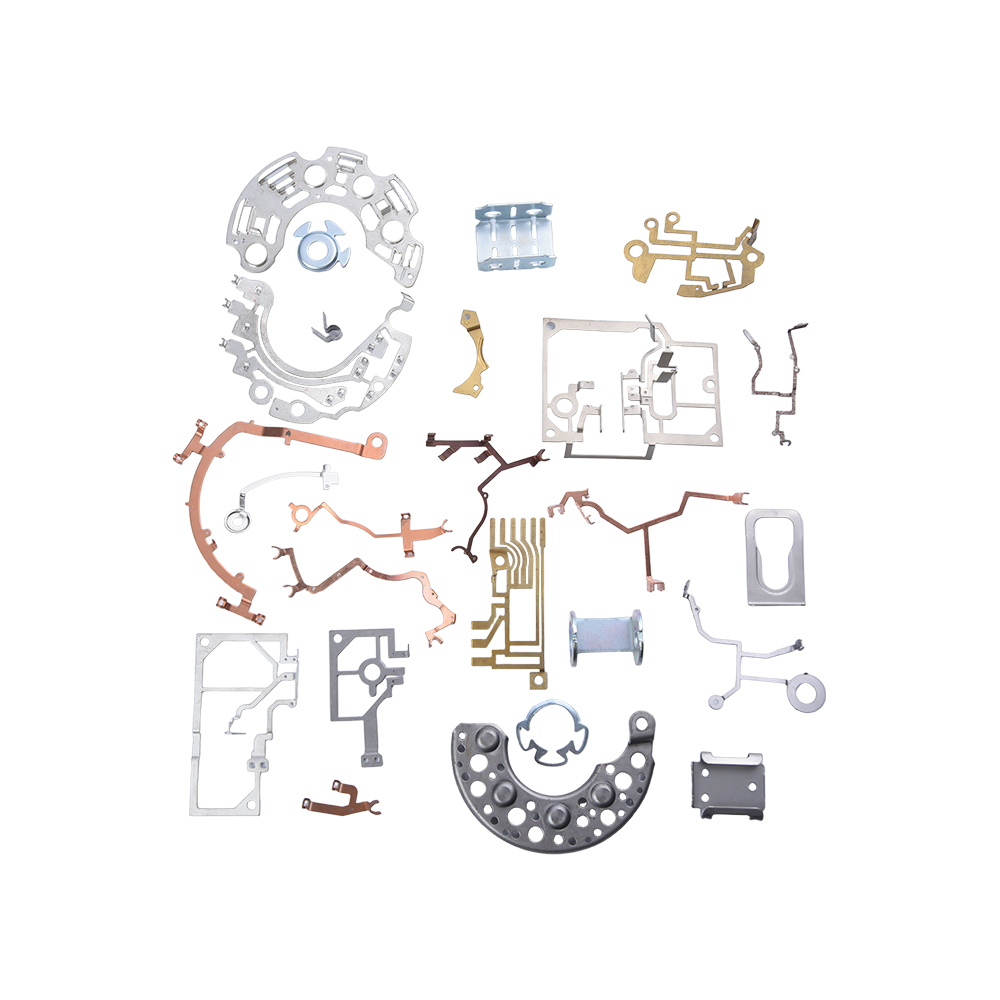
What Are Stamped Parts? Stamped parts are metal components produced by pressing flat sheet metal between a die and a punch to cut, bend, or...
READ MORE

News
Home / Author / Wang Xinyi — Senior After-Sales Coordinator / Precision Stamped Part Extension Covers for Reliable Protection and Fit
Precision Stamped Part Extension Covers for Reliable Protection and Fit
2026-09-04
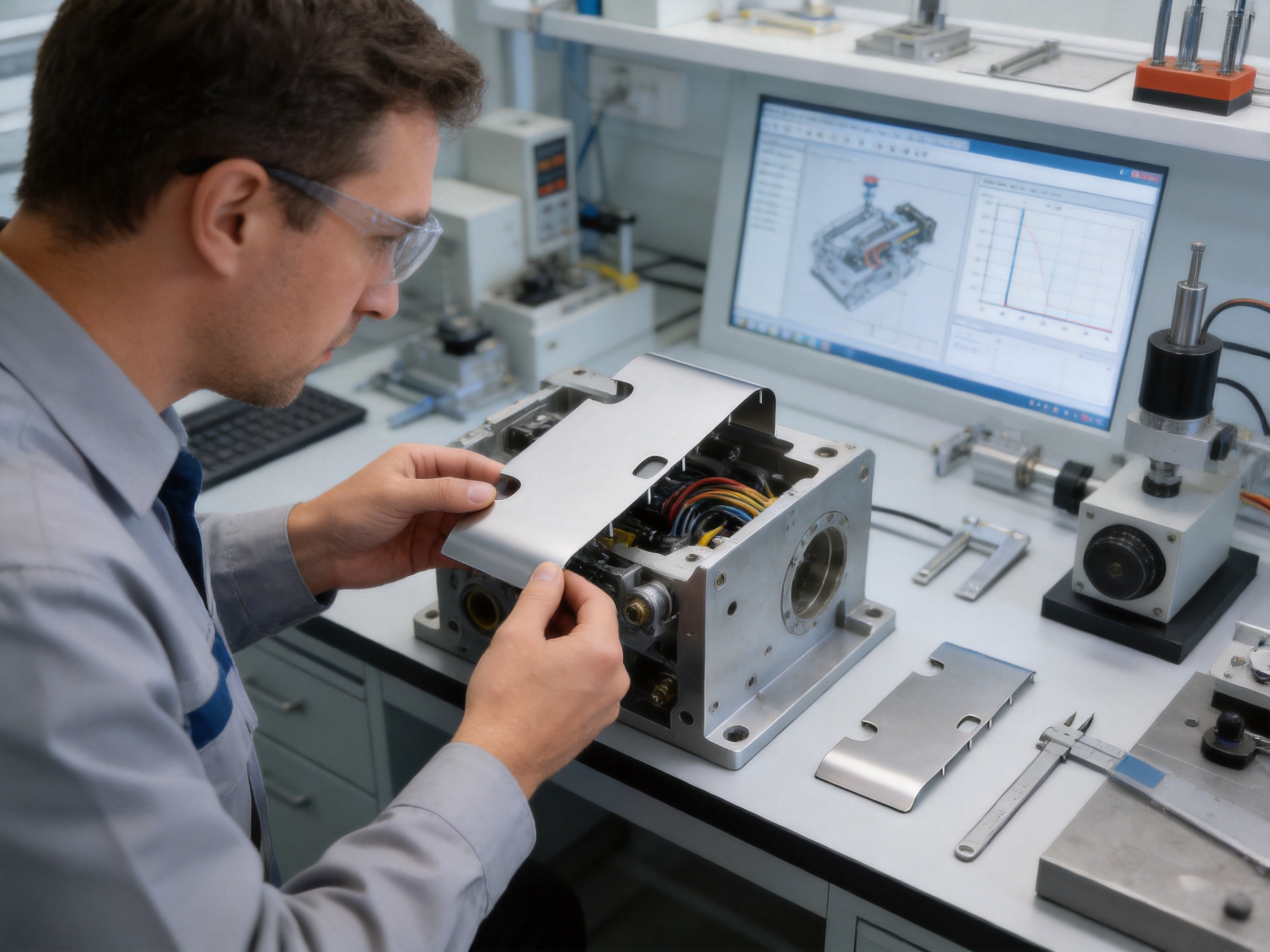
A stamped part extension cover is a practical metal component designed to protect, reinforce, or complete a mechanical assembly. Although its appearance may be simple, the quality of the cover has a direct effect on product safety, service life, assembly efficiency, and overall appearance. A well-designed extension cover must combine accurate dimensions, consistent forming, smooth edges, dependable surface protection, and compatibility with the surrounding components.
The Stamped Part Extension Cover described in this article is manufactured for applications that require a secure enclosure or protective extension around mechanical assemblies, equipment, housings, and related structures. Produced through precision sheet metal stamping and forming processes, it is suitable for use in automotive components, industrial machinery, electronic equipment, household appliances, consumer products, and other applications where reliable metal protection is required.
Its key value lies in the balance between structural strength and manufacturing efficiency. Compared with many manually fabricated or less precisely formed alternatives, a stamped cover can offer repeatable dimensions, consistent production quality, efficient material usage, and fast assembly. It can also be produced in multiple sizes and configurations, allowing customers to specify the shape, openings, mounting features, material, thickness, and surface finish required for a particular application.
Yuyao Hongli Optoelectronics Co., Ltd. provides customized metal stamping and related manufacturing services from its production facility in Yuyao, Zhejiang, China. With more than 20 years of industry experience, a modern factory covering approximately 5,000 square meters, multiple stamping workshops, and a workforce of more than 60 employees, the company supports OEM and ODM programs from initial development through volume production.
The following discussion explains the product’s construction, performance advantages, manufacturing process, customization options, quality considerations, application value, and purchasing guidance.
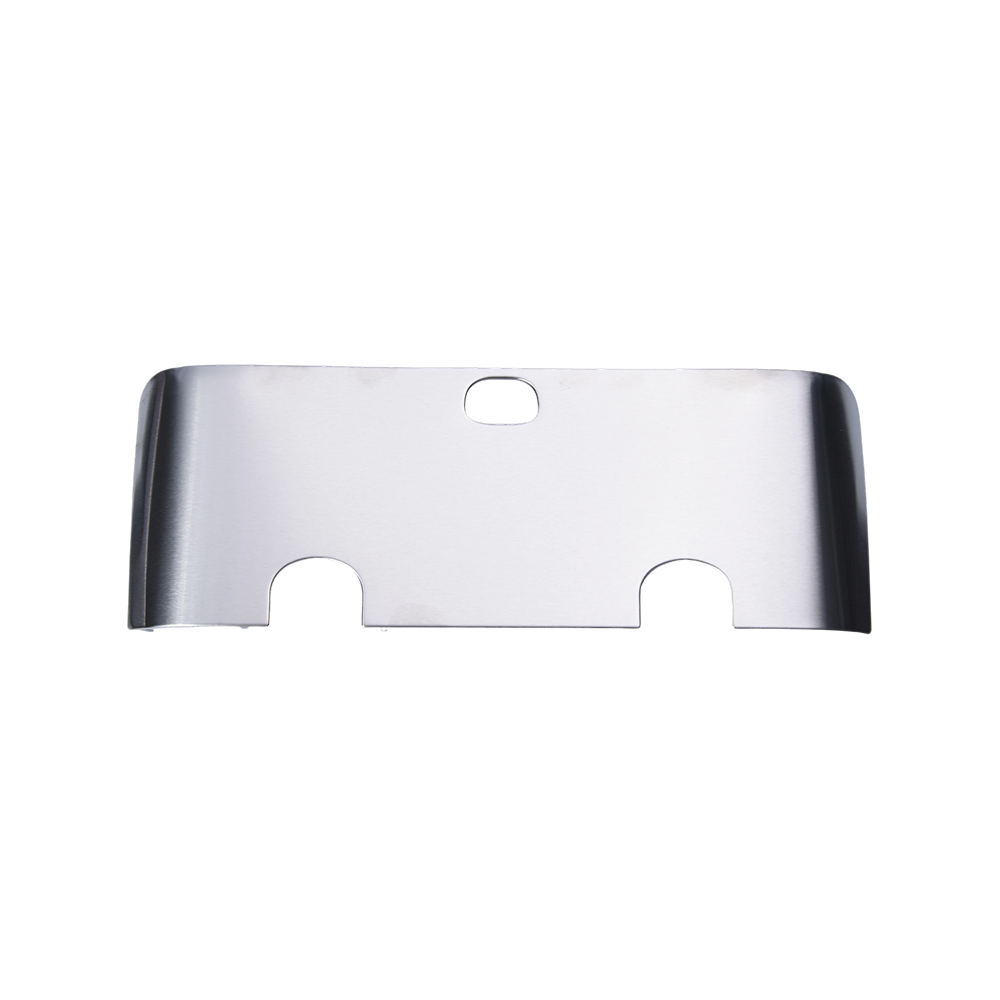
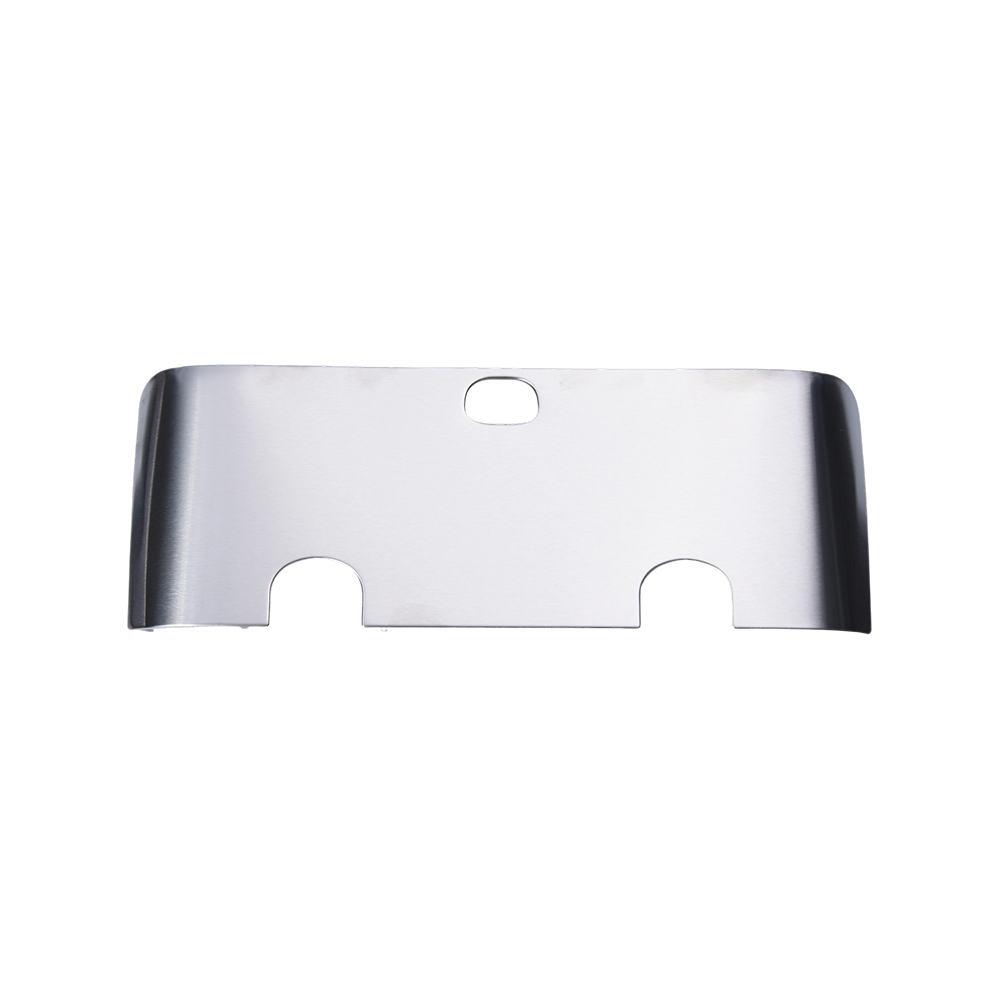
Stamped part extension cover
Product Overview
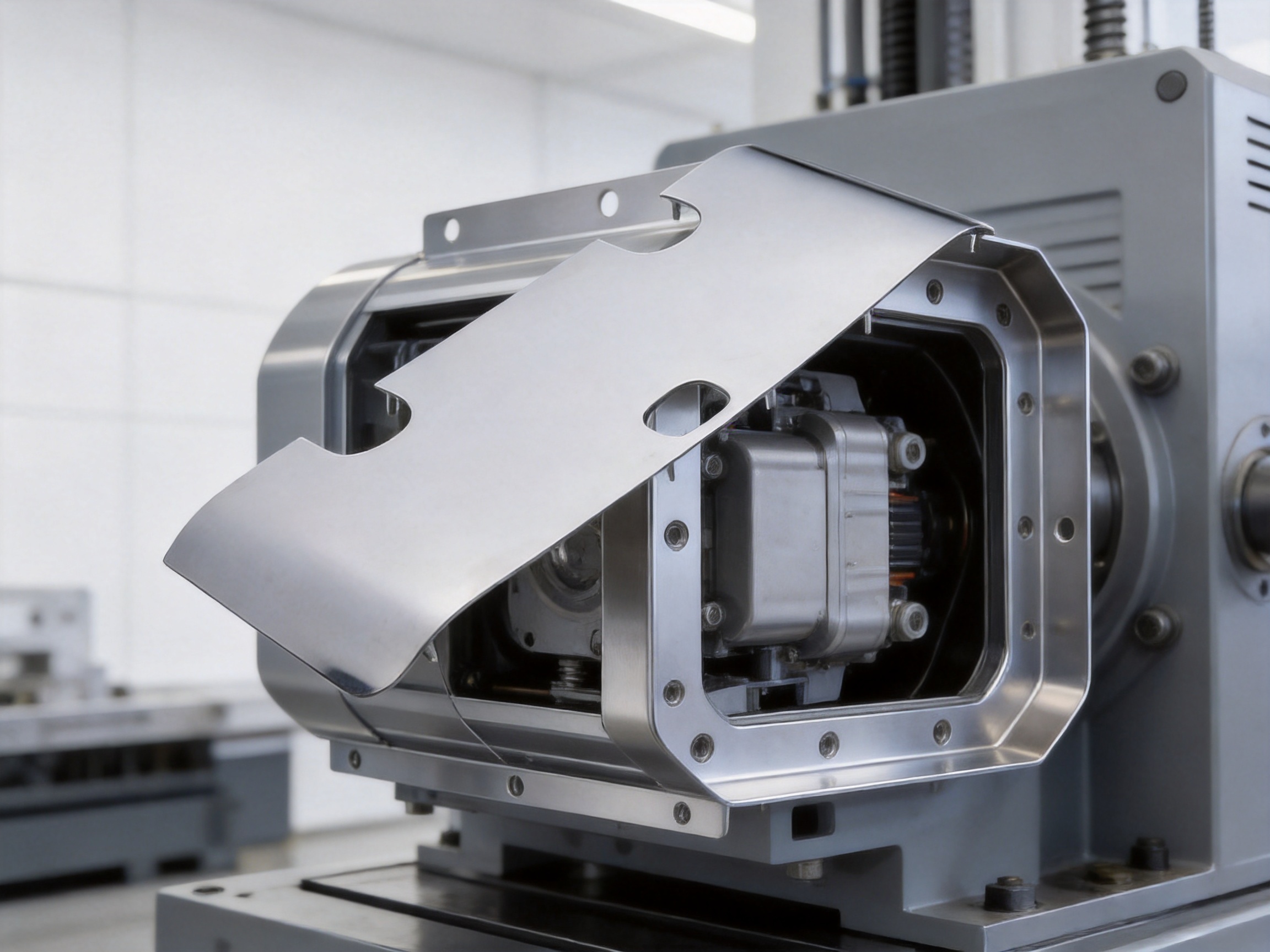
The Stamped Part Extension Cover is a formed metal component intended to create a protective extension, cover an exposed area, or provide a finished enclosure for a larger assembly. Depending on the application, the component may be installed over a connection, opening, bracket, housing, wiring area, moving mechanism, or structural transition point.
The part is manufactured from sheet metal using stamping, forming, bending, piercing, trimming, and other precision operations. These processes enable the production of a component with a controlled profile and accurately positioned openings. The result is a part that can be integrated into a larger assembly with minimal adjustment during installation.
The cover may include flat sections, flanges, curved surfaces, stepped profiles, mounting tabs, ventilation openings, fastening holes, embossed areas, or other formed details. The final geometry depends on the customer’s design requirements and the function of the equipment in which the cover will be used.
In many applications, a cover must perform several functions at the same time. It may protect internal components from dust, moisture, impact, and accidental contact. It may help prevent contamination from entering a housing. It may also improve the appearance of the finished product by concealing rough edges, unfinished surfaces, or exposed internal structures.
Because the product can be manufactured in different configurations, it is suitable for both simple protective applications and more demanding assemblies that require precise interaction with adjacent components. Its design can be adjusted to suit the available installation space, fastening method, required clearance, and operating environment.
Functional Advantages of the Extension Cover
Protection from External Conditions
One of the primary purposes of the cover is to reduce the exposure of internal or adjacent components to external conditions. Dust, debris, moisture, oil mist, and other contaminants can reduce the performance of mechanical and electrical equipment. A properly fitted extension cover helps create a barrier between sensitive areas and the surrounding environment.
The level of protection depends on the overall assembly design, including the shape of the cover, the use of seals or gaskets, the installation method, and the selected surface treatment. However, accurate stamping provides an important foundation because consistent dimensions help the cover sit correctly against mating surfaces.
In automotive and industrial equipment, protection from contamination can support more stable operation and reduce the likelihood of premature wear. In household appliances and electronic products, a cover can help improve product cleanliness and protect internal components during normal use.
Accurate Fit and Consistent Assembly
Precision is essential when a cover must align with a housing, mounting bracket, panel, or other metal part. If the component is too large, too small, or incorrectly formed, installation may require rework. Poor fit can also produce vibration, unwanted movement, sharp gaps, or interference with nearby components.
Stamping tools are developed to produce a repeatable profile across a production batch. When the tooling, material, press settings, and inspection procedures are properly controlled, the resulting covers can maintain consistent dimensions and hole positions. This repeatability supports efficient assembly and reduces dependence on manual adjustment.
Efficient Use of Material
Sheet metal stamping can be more efficient than machining a complete cover from a solid block or fabricating each component individually. The stamping process forms the required geometry from a sheet or strip of material, allowing the manufacturer to reduce unnecessary material removal and shorten processing time.
Efficient nesting of parts on the raw material can further improve utilization. For larger production programs, the savings in material, labor, and cycle time can become significant. These advantages are especially valuable for automotive stamping parts, appliance components, and other products manufactured in repeatable quantities.
Stable Mechanical Structure
Formed sheet metal can provide a strong and lightweight structure. Bends, flanges, ribs, and embossed features can increase rigidity without requiring a substantial increase in material thickness. This allows designers to achieve the required strength while controlling weight and cost.
The actual performance of the cover depends on material selection, thickness, geometry, loading conditions, and installation method. A cover intended only as a dust shield may require a different construction from one that must resist vibration, handling forces, or repeated service access. The manufacturer can help align the forming design with the intended use.
Easy Installation and Maintenance
The product can be designed with accessible fastening points and carefully positioned openings to support fast installation. Smooth edges and controlled forming details can make handling safer and reduce the risk of damaging adjacent parts during assembly.
Where regular maintenance is required, the cover may be designed for convenient removal and reinstallation. This is useful for equipment that requires inspection, cleaning, wiring access, or replacement of internal components. A well-designed cover should protect the assembly without making routine servicing unnecessarily difficult.
Advantages Compared with Alternative Manufacturing Methods
Compared with Manually Fabricated Covers
Manually fabricated covers are often produced by cutting, bending, and joining individual pieces. This approach may be suitable for prototypes or very small quantities, but it can produce variations in dimensions, corner geometry, hole location, and surface appearance. Each additional manual operation can increase the risk of inconsistency.
A stamped cover is formed using controlled tooling that defines the shape more consistently. This provides a stronger basis for repeatable assembly, especially when the product is manufactured in medium or high volumes. Stamping can also reduce the number of separate pieces and joining operations required.
Compared with Machined Metal Covers
Machining can deliver high dimensional accuracy, but producing a complete cover from a solid block may involve extended cycle times, significant material removal, and higher costs. Machined parts are often most appropriate when the component requires complex three-dimensional features, extremely tight tolerances, or low-volume production.
For a cover based on a sheet metal profile, stamping and forming can provide a more economical solution. The material is shaped directly into the required geometry, while secondary operations create the necessary openings and finishing details. This approach can help reduce weight and support more competitive pricing.
Compared with Plastic Alternatives
Plastic covers can be lightweight and economical, but they may not provide the same combination of rigidity, temperature resistance, impact strength, or electromagnetic shielding potential as a metal component. In automotive, industrial, and appliance environments, metal may be preferred where the cover must tolerate heat, vibration, handling, or contact with other metal structures.
Material selection should always be based on the actual environment. Metal stamping is particularly valuable when the design requires a durable, thin-walled cover with formed mounting features and a professional finished appearance.
Compared with Generic, Non-Custom Components
Standard covers may appear convenient, but they often require modifications when the dimensions or mounting pattern do not match the equipment. Cutting, drilling, or reshaping a generic component can weaken the part, damage its finish, or create additional labor costs.
A custom Stamped Part Extension Cover is developed around the customer’s assembly. The dimensions, openings, bends, fastening points, and surface treatment can be adapted before production begins. This improves the likelihood of a direct fit and reduces corrective work at the customer’s facility.
Manufacturing Process
Design Review and Engineering Preparation
The manufacturing process begins with a review of the product drawing, three-dimensional model, sample, or functional description. Engineers examine the required dimensions, material, thickness, bend locations, hole positions, tolerances, assembly clearances, and surface requirements.
This stage is important because a successful stamped component depends on more than the final outline. The design must also consider material flow, forming direction, corner radii, springback, tool access, scrap management, and the sequence of operations. Early engineering review can identify potential production problems before tooling is completed.
For customers without a finalized drawing, the manufacturer may work from a physical sample, application description, or preliminary concept. OEM and ODM support allows the component to be refined according to performance requirements, production quantity, and target cost.
Material Selection
Material selection depends on the required strength, corrosion resistance, appearance, weight, conductivity, temperature exposure, and forming behavior. Common choices for stamped covers may include carbon steel, stainless steel, aluminum, galvanized steel, and other sheet metal grades suitable for forming.
Carbon steel can provide a practical balance of strength and cost. Stainless steel is useful where corrosion resistance, cleanliness, or appearance is especially important. Aluminum may be selected where low weight and corrosion resistance are priorities. Galvanized materials can provide additional protection for applications exposed to moisture or demanding service conditions.
The selected material must be compatible with the forming process and the required surface treatment. A material that is too hard or unsuitable for the planned bend radius may increase the risk of cracking or dimensional variation. Material certificates, thickness checks, and incoming inspection can help ensure that production begins with the correct raw material.
Tooling and Die Preparation
Stamping dies control how the material is cut and formed. Depending on the part geometry and production volume, the process may use progressive dies, compound dies, single-operation dies, or a combination of press operations.
The tooling may include cutting sections for blanking and trimming, piercing features for holes and slots, and forming sections for bends, flanges, channels, or other profiles. Tool design must account for the thickness and properties of the material, the required tolerances, and the expected production quantity.
For repeat orders, durable tooling supports stable production and consistent part quality. Tool maintenance is also essential. Wear on cutting edges or forming surfaces can gradually affect hole dimensions, edge quality, and overall shape. Regular inspection and timely maintenance help preserve process reliability.
Blanking and Piercing
Blanking separates the initial part shape from the sheet or strip. Piercing creates holes, slots, or other openings needed for fasteners, ventilation, cable routing, alignment, or access. These operations may be performed separately or integrated into a progressive sequence.
Edge quality is important because rough burrs can interfere with assembly, create handling hazards, or affect the appearance of the finished cover. Appropriate tooling clearance, sharp cutting edges, controlled press operation, and deburring procedures help maintain clean edges.
Forming and Bending
After the basic profile is cut, the part is formed into its final three-dimensional shape. Bending may create side walls, mounting flanges, stepped areas, reinforcement features, or extension sections. The sequence must be carefully planned to avoid deformation of previously formed areas.
Springback is a normal characteristic of sheet metal forming. After the forming force is released, the material may recover slightly toward its original shape. Tool design and process adjustment compensate for this behavior so that the final dimensions remain within the required range.
For covers with multiple bends, accurate control of the bend sequence is important. Incorrect sequencing can cause interference between the workpiece and the tooling or result in an improperly positioned flange. Controlled forming improves both dimensional accuracy and visual consistency.
Secondary Processing
Some designs require additional operations after stamping. These may include deburring, tapping, riveting, welding, clinching, flattening, calibration, or assembly with other components. The exact operations depend on the function of the cover and the customer’s assembly requirements.
Deburring is particularly important for parts that will be handled by operators or installed next to wiring, seals, painted panels, or sensitive components. A controlled edge treatment improves safety and can prevent damage during installation.
Surface Treatment
The Stamped Part Extension Cover can be supplied with different surface treatments according to the intended environment and appearance requirements. Potential options include powder coating, anodizing, plating, painting, or other suitable protective finishes.
Powder coating can provide a durable decorative layer and is available in a range of colors and textures. Anodizing is commonly associated with aluminum components and can improve surface hardness, corrosion resistance, and visual appearance. Plating may be selected to enhance corrosion resistance, conductivity, wear performance, or the appearance of the metal surface.
Surface preparation is a critical part of finishing quality. Cleaning, degreasing, removal of contaminants, and appropriate pretreatment help improve coating adhesion and reduce the risk of premature finish failure. The finish should be selected according to the product’s exposure to moisture, chemicals, heat, abrasion, and handling.
Manufacturing Strengths and Company Capabilities
Yuyao Hongli Optoelectronics Co., Ltd. has been engaged in manufacturing since 2000 and has developed extensive experience in metal stamping and related product categories. Its capabilities cover deep-drawn parts, stamped parts, bending parts, kitchen appliance accessories, automotive stamping parts, and other customized hardware products.
The company operates from a modern factory of approximately 5,000 square meters. Multiple stamping workshops support the production of different component types and help organize manufacturing activities according to product requirements. A workforce of more than 60 employees contributes to engineering, production, quality control, administration, logistics, and customer service functions.
One of the company’s important strengths is its ability to support different stages of a customer’s project. Customers may require a single custom part, a prototype for evaluation, or a repeat production program. The company supports rapid prototyping and efficient production conversion, helping customers move from an initial concept to a manufacturable component.
OEM and ODM services provide flexibility for customers with different levels of design readiness. A customer may supply complete drawings and specifications, or request assistance in refining the part for stamping, reducing unnecessary operations, and improving production efficiency.
Quality control is integrated into the manufacturing process rather than being limited to final inspection. Raw materials, tooling condition, stamping operations, dimensions, surface condition, and packaging can all be reviewed according to the project requirements. This process-based approach supports stable delivery and reduces the risk of receiving parts that do not match the approved design.
The company also provides manufacturing, processing, wholesale, retail, import, and export services. This broad business scope allows it to work with customers in educational instruments, optical instruments, household electric heaters, small household appliances, automotive components, hardware products, plastic products, and other industrial sectors.
For international customers, practical communication and consistent documentation are important. Clear drawings, approved samples, packing requirements, inspection standards, and delivery schedules help establish a reliable production relationship. The company’s long operating history and commitment to integrity, excellence, innovation, and sharing support long-term cooperation.
Customization Options
Dimensions and Configuration
The cover can be customized to match the available installation space and the shape of the assembly. Length, width, height, wall profile, extension distance, corner radius, and flange dimensions can all influence the final fit.
Customers may request a flat cover, stepped cover, channel-shaped cover, curved cover, or another formed configuration. The design can also include reliefs or local changes that prevent interference with bolts, connectors, wiring, shafts, or adjacent structures.
Openings and Mounting Features
Openings may be included for screws, rivets, clips, cables, ventilation, inspection, or alignment. Their position and size should be defined according to the mating component and the assembly sequence.
Mounting tabs and flanges can be formed as part of the stamping process. Integrating these features into the cover may reduce the need for separate brackets and simplify assembly. Where appropriate, threaded holes, clinch nuts, studs, or other fastening solutions can be added through secondary operations.
Material and Thickness
Material thickness affects strength, weight, forming behavior, cost, and appearance. A thicker material may provide additional rigidity, while a thinner material may reduce weight and material consumption. The correct choice depends on the operating conditions and the function of the cover.
The manufacturer can review the application and recommend a suitable material range. The final selection should consider vibration, impact, temperature, humidity, chemical exposure, contact with dissimilar metals, and expected service life.
Surface Finish and Appearance
Customers can select a finish based on corrosion protection, color, texture, conductivity, wear resistance, or visual presentation. In consumer products and appliance accessories, appearance may be as important as mechanical function. In industrial equipment, the priority may be long-term protection and easy cleaning.
Finish requirements should specify color standards, coating thickness, gloss level, masking areas, visible surfaces, and acceptance criteria where necessary. Clear specifications reduce misunderstandings during production and inspection.
Packaging and Delivery Requirements
Stamped covers should be packaged to prevent scratching, deformation, contamination, and moisture damage during transportation. Separators, protective films, cartons, pallets, or customized packaging may be selected according to the part geometry and surface finish.
For export orders, packaging should also account for handling, stacking, loading, unloading, and extended transit time. Clear labeling and quantity control support efficient receiving and warehouse management.
Quality Control Considerations
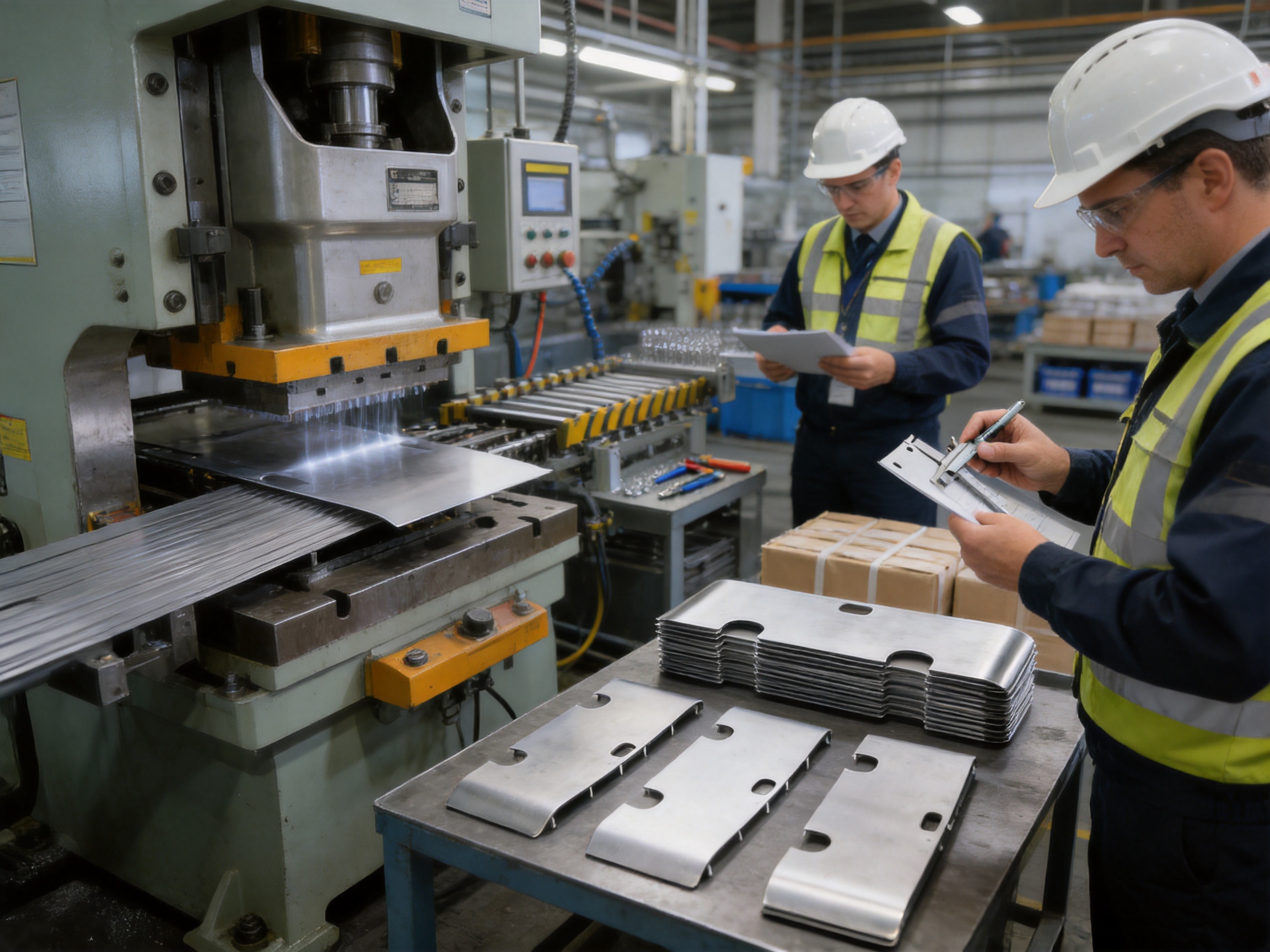
Quality control for a stamped extension cover should address both functional and cosmetic requirements. Important dimensional checks may include overall length and width, height, bend angle, flange position, hole diameter, hole spacing, flatness, and alignment with mating features.
Visual inspection should check for cracks, wrinkles, excessive burrs, dents, scratches, oil contamination, incomplete forming, and surface defects. If the product is coated or plated, inspection may also include coverage, adhesion, color consistency, gloss, and evidence of corrosion or peeling.
Sampling frequency should reflect the production volume, part complexity, customer requirements, and quality history. First-piece inspection is useful after tooling setup or process changes. In-process checks help identify drift before a large quantity of parts is completed. Final inspection confirms that the shipment meets the approved standard.
Measurement equipment should be suitable for the tolerance range and part geometry. Calipers, micrometers, height gauges, gauges, templates, coordinate measuring equipment, and visual standards may be used as appropriate. The inspection method should be agreed upon when the purchase order or technical specification is established.
Traceability can also be valuable for recurring production. Recording material batches, production dates, tooling information, inspection results, and shipment quantities helps clarify the history of each order. This is particularly useful for automotive and industrial customers with formal supplier quality systems.
Application Areas
Automotive Components
Automotive stamping parts often require stable dimensions, high repeatability, and resistance to vibration and environmental exposure. An extension cover may be used around brackets, housings, protection zones, body structures, or accessory assemblies.
Automotive applications may require specific material grades, corrosion protection, dimensional controls, and inspection documentation. The part design should also consider assembly speed and compatibility with existing vehicle components.
Industrial Machinery
Industrial equipment frequently contains moving parts, electrical systems, drive mechanisms, and control assemblies that require protection from dust, oil, chips, and accidental contact. A formed metal cover can provide a practical barrier while preserving access to service points.
The cover may be designed for fixed installation or repeated removal. In either case, mounting stability and resistance to vibration are important considerations.
Household Appliances
Kitchen appliance accessories and small household appliances often require compact covers with clean edges and attractive finishes. The component may protect heating elements, wiring, motors, fan assemblies, control areas, or structural joints.
For appliance applications, the cover may need to withstand heat, cleaning agents, humidity, and frequent handling. Surface treatment and material selection should reflect the expected use environment.
Electronic and Optical Instruments
Electronic and optical instruments may require covers that protect sensitive components while maintaining a precise external profile. Metal can provide mechanical protection and may also contribute to shielding or grounding when the design calls for it.
Openings and mounting points must be carefully located so that the cover does not obstruct connectors, adjustment controls, lenses, sensors, or ventilation paths.
Consumer and Hardware Products
Consumer products and hardware assemblies often benefit from a cover that improves appearance, protects internal parts, and supports straightforward assembly. Consistent surface quality is especially important where the component is visible to the end user.
Customized stamping allows the manufacturer to meet product-specific visual and functional requirements without relying on a generic component.
| Requirement | Recommended Consideration | Product Benefit |
|---|---|---|
| Protection from dust and moisture | Accurate profile, suitable overlap, and corrosion-resistant finish | Helps protect internal components and supports longer service life |
| Fast assembly | Precisely positioned holes, tabs, and accessible fastening points | Reduces installation time and manual adjustment |
| Structural rigidity | Appropriate material thickness, bends, flanges, or embossed features | Improves resistance to deformation and vibration |
| Corrosion resistance | Stainless steel, galvanized material, plating, anodizing, or coating | Supports reliable use in humid or demanding environments |
| Appearance | Controlled forming, deburring, and selected decorative finish | Creates a cleaner and more professional finished product |
| Repeat production | Dedicated tooling, process control, and inspection standards | Maintains consistent quality across production batches |
Design Guidance for Buyers and Engineers
When requesting a quotation for a Stamped Part Extension Cover, customers should provide as much technical information as possible. A two-dimensional drawing, three-dimensional model, sample part, or assembly photograph can help the manufacturer understand the intended function.
Important information includes material type, thickness, dimensional tolerances, surface finish, annual or monthly quantity, packaging requirements, inspection standards, and delivery schedule. Customers should also identify critical features, visible surfaces, sealing areas, and interfaces that require special attention.
If the cover will be exposed to heat, moisture, salt spray, oil, chemicals, abrasion, or outdoor conditions, these details should be communicated during the design stage. Environmental information affects material choice, coating selection, edge treatment, and validation requirements.
Assembly information is equally important. The manufacturer should know whether the cover will be attached by screws, rivets, clips, welding, adhesive, or another method. The installation direction, available tooling, operator access, and required removal frequency can influence the placement of flanges and openings.
For new projects, requesting a prototype or first article can reduce risk before full-volume production. The sample can be checked against the mating assembly, evaluated for appearance and function, and adjusted if necessary. Once the design is approved, production tooling and inspection standards can be finalized.
Designers should avoid unnecessary complexity when a simpler formed profile will provide the same performance. Fewer operations can reduce tooling cost, cycle time, and the risk of dimensional variation. At the same time, important functional features such as reinforcement bends, reliefs, and access openings should not be removed if they are necessary for reliable operation.
Why Choose a Specialized Stamping Manufacturer
A specialized stamping manufacturer offers more than press capacity. The value also comes from practical experience in material behavior, tool design, production sequencing, surface treatment, quality inspection, and customer-specific requirements.
Experienced engineers can identify whether a design is suitable for stamping, deep drawing, bending, or a combination of processes. They can recommend changes that improve material flow, reduce waste, simplify tooling, and support consistent production.
A manufacturer with capabilities across stamped parts, deep-drawn parts, bending parts, kitchen appliance accessories, and automotive stamping parts can also support broader product development needs. Customers may source several related components from one supplier rather than coordinating multiple vendors for different metal forming operations.
Integrated communication can simplify project management. Design changes, sample approvals, process adjustments, finishing requirements, and delivery schedules can be coordinated through a single manufacturing partner. This may help reduce lead times and improve accountability.
Long-term supplier relationships are especially valuable for components that require repeat orders. Once tooling, inspection standards, packaging methods, and approved samples are established, future production can proceed more efficiently and with greater consistency.
Q&A
What is a stamped part extension cover?
It is a formed sheet metal component designed to protect, extend, reinforce, or enclose part of a mechanical, electrical, automotive, appliance, or industrial assembly. It may include bends, flanges, holes, slots, tabs, or other customized features.
What industries can use this product?
The product can be used in automotive components, industrial machinery, electronic equipment, optical instruments, kitchen appliances, household electric products, consumer products, and general hardware assemblies.
Can the extension cover be customized?
Yes. Dimensions, material, thickness, profile, mounting holes, slots, tabs, bend angles, surface treatments, colors, and packaging can be customized according to the application and customer specifications.
Which materials are suitable for the cover?
Possible materials include carbon steel, stainless steel, aluminum, galvanized steel, and other sheet metal grades that are suitable for the required forming process. The best choice depends on strength, corrosion resistance, weight, temperature, appearance, and cost requirements.
What surface treatments are available?
Depending on the material and application, options may include powder coating, anodizing, plating, painting, and other suitable finishes. Surface treatment can improve corrosion resistance, wear performance, appearance, and service life.
Is the product suitable for high-volume production?
Yes. Stamping is well suited to repeat production because dedicated tooling can produce consistent shapes at an efficient cycle time. Production planning and tooling selection should be based on the required quantity and part complexity.
Can prototypes be produced before mass production?
Prototype and sample development can be arranged to verify dimensions, assembly fit, appearance, and function before volume production. This is useful for new products or designs that have not yet been tested in the final assembly.
How can customers begin a project?
Customers should provide a drawing, three-dimensional model, sample, or detailed description of the required cover. Material, thickness, finish, quantity, application environment, inspection requirements, and delivery expectations should also be included whenever possible.
How does stamping compare with machining?
For sheet metal covers, stamping can provide efficient material usage, repeatable dimensions, lower production time, and competitive unit cost. Machining may be more suitable for highly complex solid shapes or very low-volume parts. The best process depends on geometry, tolerance, quantity, and performance requirements.
How does the company support OEM and ODM customers?
The company supports customized manufacturing, rapid prototyping, production conversion, quality control, delivery coordination, and after-sales service. Customers may provide their own design or request assistance in developing a production-ready stamped component.
Conclusion
The Stamped Part Extension Cover is a versatile and efficient solution for protecting and completing a wide range of mechanical assemblies. Its value comes from accurate forming, stable dimensions, flexible configuration, easy installation, and the ability to receive protective or decorative surface treatments.
Compared with manually fabricated, heavily machined, plastic, or generic alternatives, a customized stamped cover can provide a stronger combination of repeatability, material efficiency, production speed, and application-specific fit. These advantages make it suitable for automotive stamping parts, industrial machinery, household appliances, electronic equipment, optical instruments, and consumer products.
Successful production depends on careful design review, correct material selection, reliable tooling, controlled stamping operations, suitable secondary processing, and consistent inspection. A specialized manufacturer with experience in stamped parts, deep-drawn parts, bending parts, and related metal products can help customers achieve these objectives.
With more than two decades of manufacturing experience, a 5,000-square-meter facility, multiple stamping workshops, more than 60 employees, OEM and ODM capabilities, rapid prototyping support, and a commitment to quality and reliable delivery, Yuyao Hongli Optoelectronics Co., Ltd. is positioned to support customized extension cover projects from initial concept to repeat production.
For buyers seeking precision-sheet and sheet metal stamping services, the most effective approach is to define the application clearly, provide accurate technical information, confirm the required finish and inspection standards, and evaluate a prototype or first article before full production. This process creates a sound foundation for a dependable, well-fitting, and cost-effective stamped cover.
References
1. General principles of sheet metal stamping, blanking, piercing, and forming technology.
2. Manufacturing considerations for deep-drawn metal parts and precision sheet metal components.
3. Standard engineering practices for material selection, bend allowance, springback compensation, and formed-part inspection.
4. Industrial guidance on corrosion protection through powder coating, anodizing, plating, and related surface treatments.
5. Quality control practices for automotive stamping parts, appliance components, and customized metal hardware.
Product: Stamped part extension cover
Previous Post
Precision Stamped Base Plates with Multiple Holes for Reliable Industrial Assembly
Next Post
Precision Stamped Miniature Parts for Demanding Industrial Applications
News
-
-
What Is Deep Drawing Process and What Are Deep-Drawn Parts The deep drawing process is a sheet metal forming operation in which a flat meta...
READ MORE -
When you need a metal component whose depth clearly exceeds its width, such as a one-piece battery enclosure, an air-fryer inner container,...
READ MORE -
Steel is the backbone of modern manufacturing, yet it is never a single, uniform material. When engineers and buyers ask, "How can you clas...
READ MORE
Get Fresh Updates Via Email
We promise we will never disclose your email address, and you can opt out at any time.
-
Quick Links
Home About Us Products Service News Contact Us -
Product list
Deep-drawn parts Stamped parts Bending parts Kitchen appliance accessories Automotive stamping parts -
About Us
Factory Honour FAQ -
News
Company News Industry News -
Contact Us
Address: South side of Shunke Road, Yangming Science and Technology Industrial Park, Yuyao City, Zhejiang Province, China Tel: +86-13905842349/+86-13738485724 Email: hongli@hl-stamping.com
Copyright © Yuyao Hongli Optoelectronics Co., Ltd. All Rights Reserved.
Custom Precision-Sheet/Sheet Metal Stamping Manufacturers
